Og Feasted Unnamed While Jobs Friends Were Saved
Og ate at Abraham's table and left no name in the joy. Jobs three friends came to a house of ash, kept their names, and Gehinnom (afterlife of judgment) lost.
Table of Contents
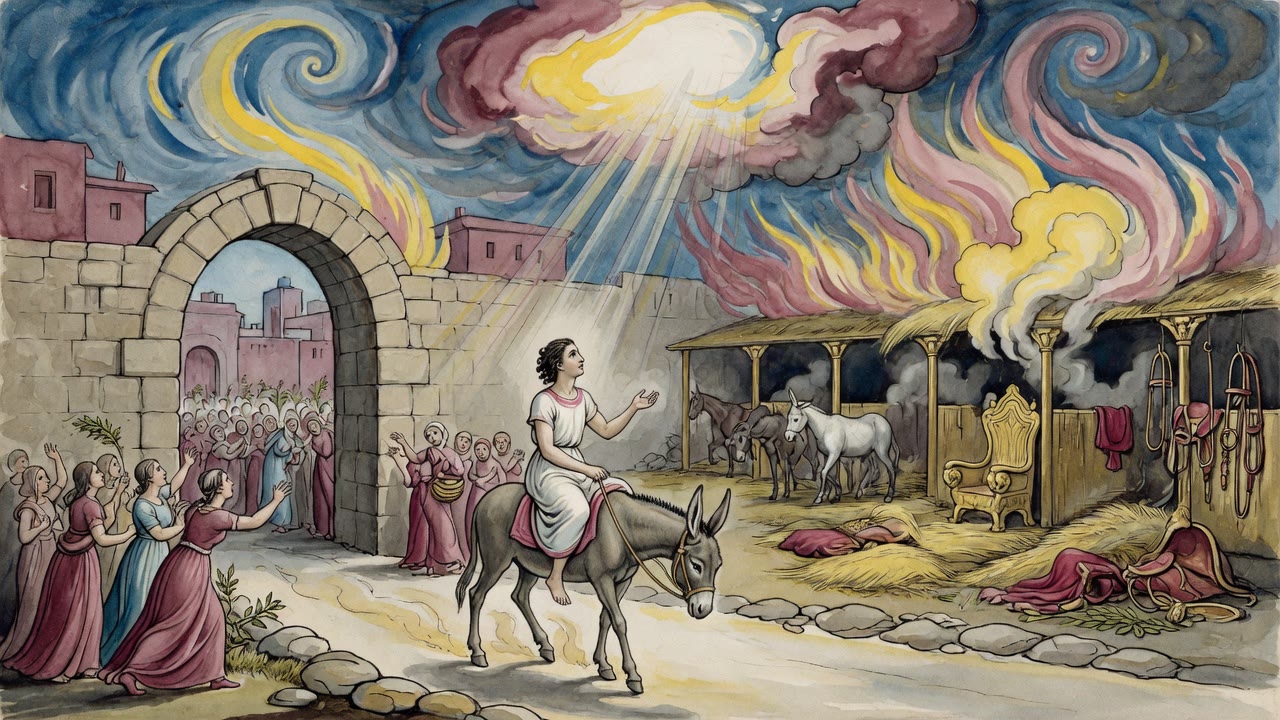
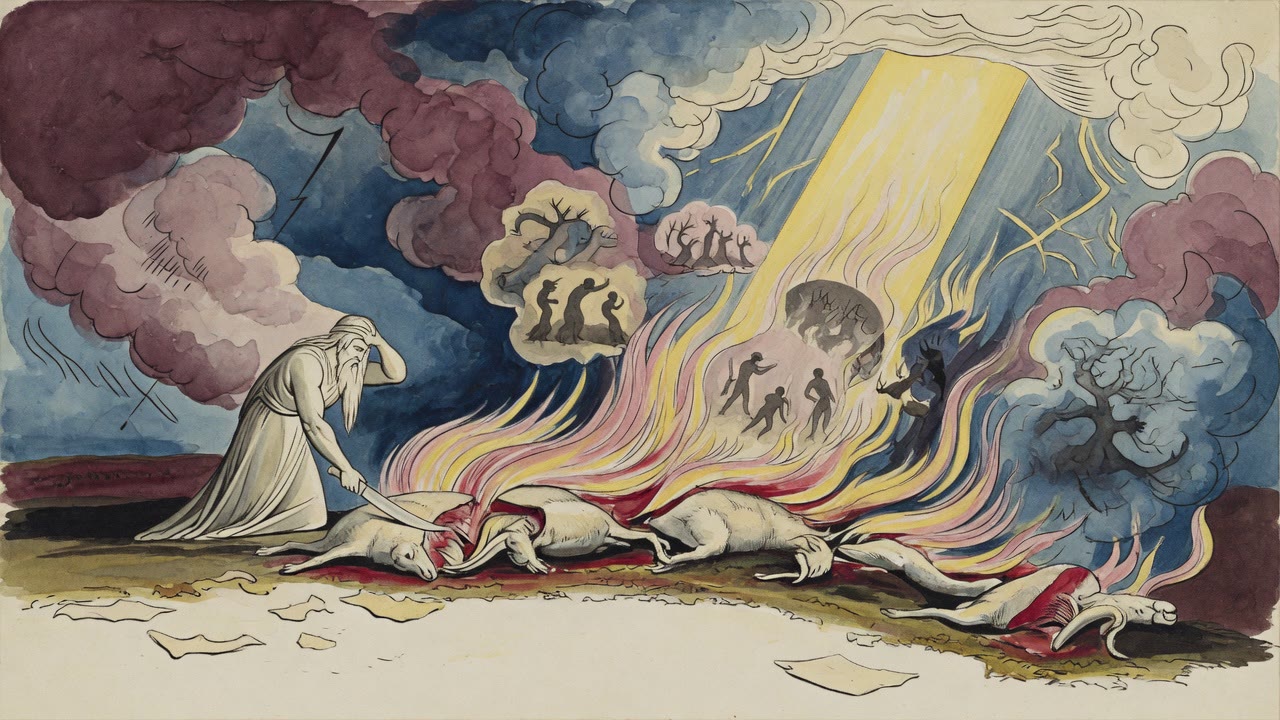
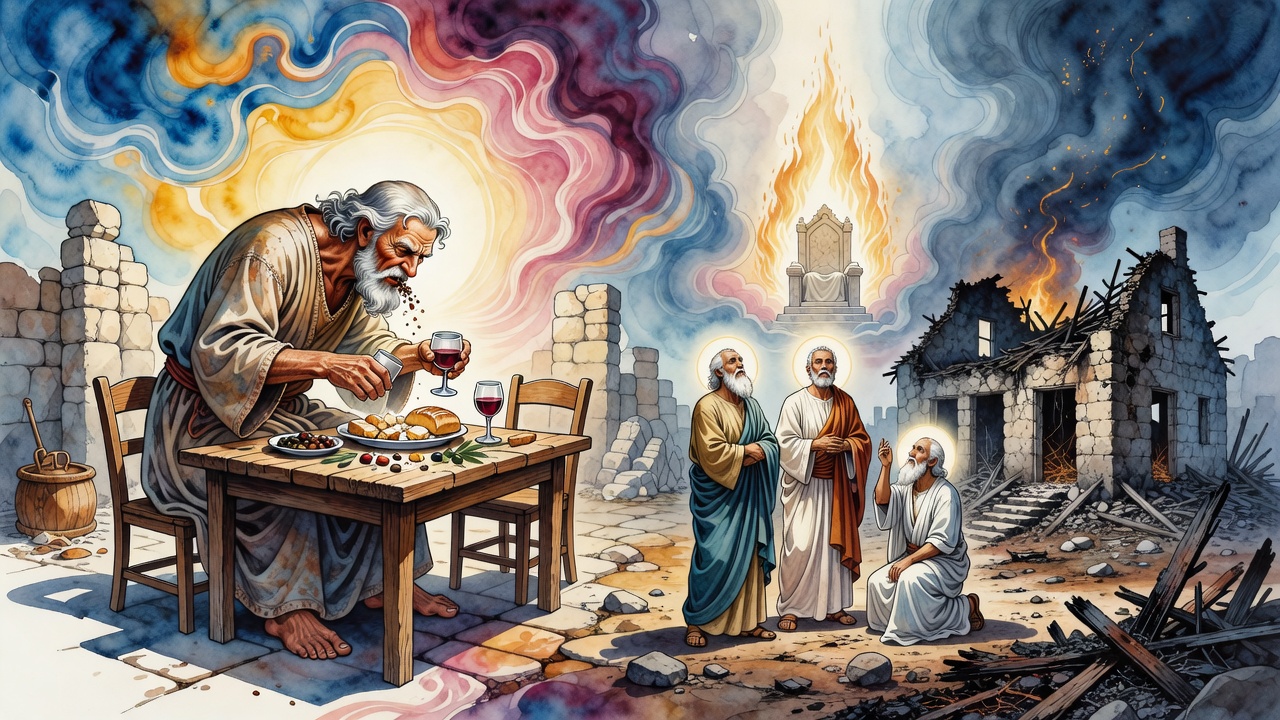
Og the giant sat at Abraham's feast and tore meat with hands the size of shields. The wine went around. Laughter rose under the trees. When the story of that joy was later told, Og's name slipped out of the telling like a guest who never paid the host and never asked the sick man's name.
 Click for full size
Names stick harder in houses of ash than in houses of song.
The Feast That Forgot Its Giant
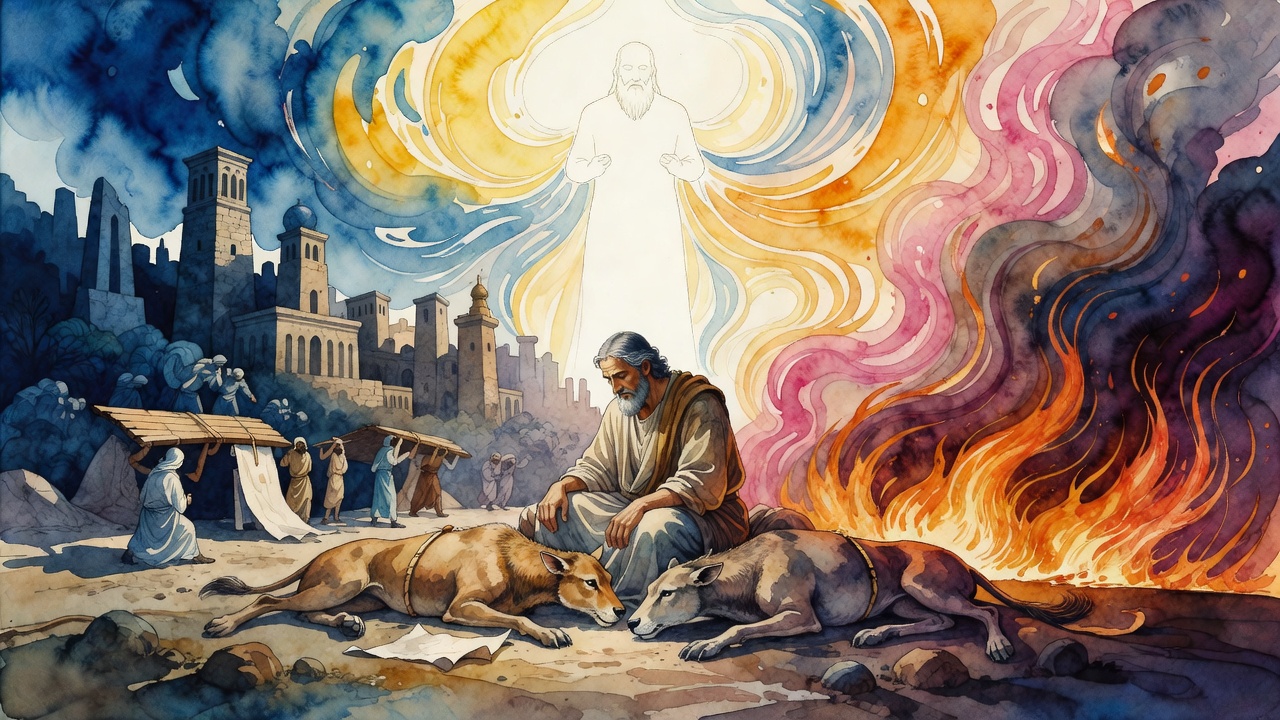
Rabbi Simon noticed the pattern and would not let it go. At celebrations, names often blur into a general brightness. At mourning, names are carved clear so the living know who came. Og dines and fades. Elifaz, Bildad, and Zofar walk toward Job across a ruined plain and keep every syllable of their names in the book.
It is not that joy is cursed or that every feast is empty. It is that presence without mercy leaves a thin mark on the world. The giant who only eats does not earn the ink that the friends who sit in silence seven days will earn with sore backs and dust in their beards.
Abraham's table was holy hospitality. Og took the food and left the holiness on the plate.
From the Place Prepared in Gehinnom
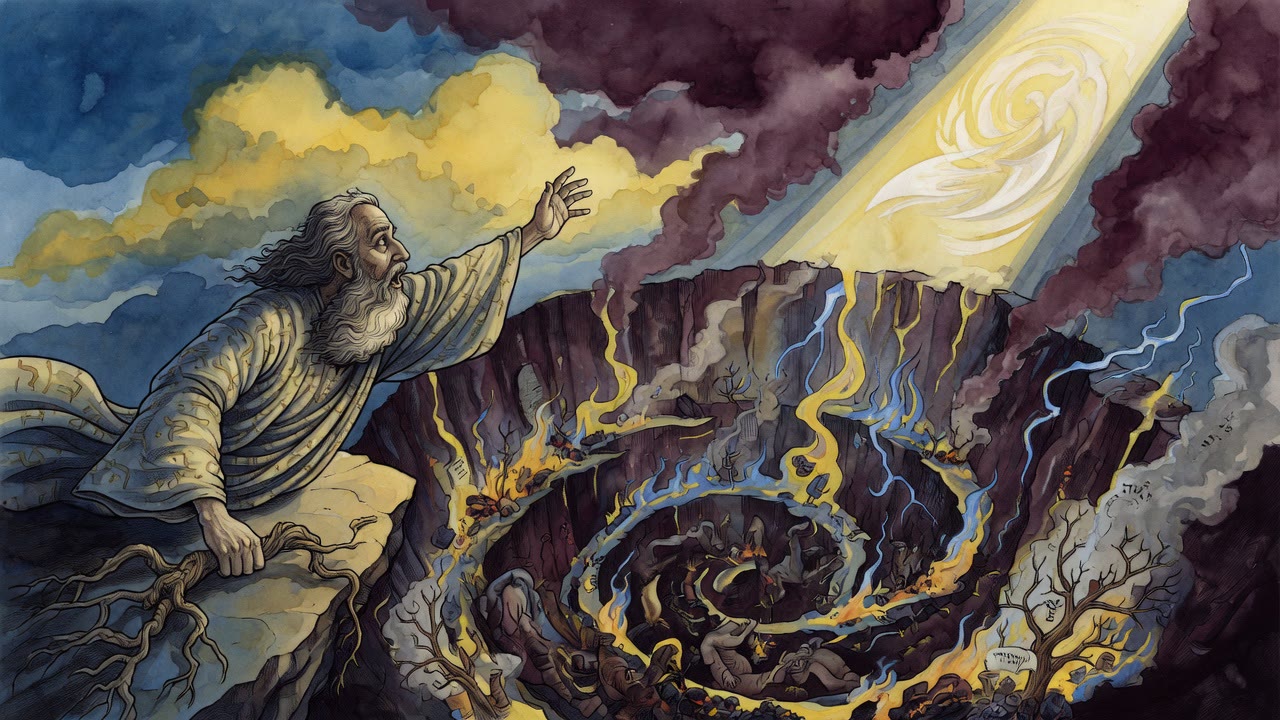
Rabbi Yissakhar of Kefar Mandi went further than memory. The wicked are struck down toward the lowest depths of Gehinnom, that place of purification the tradition will not soften into a joke. Job's friends, he taught, were pulled from the very place reserved for them in that dark when they rose to comfort. "Each man came from his place" (Job 2:11) is not only geography of Teman and Shuah and Naamah. It is rescue from a seat already set with their names on it in the pit.
Compassion moved them off that seat. The Divine Spirit rested on their answering speech when they finally opened their mouths. Words spoken as true answer came in the sacred tongue with breath that was not only their own. They would argue badly later, as friends sometimes do when pain is too large for speech. The first mercy still counted. They came. They sat. Gehinnom (the realm of judgment after death) lost three reservations because three men chose ash over banquet.
Og had strength enough to lift a city gate in other tales. They had strength enough to show up when the music had stopped.
Put Who Almost Vanished from the Page
Other names thin out for different reasons, and the midrash tracks the silence like a hunter. Ham's sons are listed in order: Kush, Mitzrayim, Put, Canaan (Genesis 10:6). Egypt and Canaan fill chapters and wars and promises. Put falls quiet until Ezekiel names him again among those who fall by the sword (Ezekiel 30:5), still a people, still on the map of judgment.
Silence in Torah is not always erasure. Sometimes a nation walks offstage and waits for a prophet to call the roll centuries later. Nimrod rises from Kush as a mighty hunter before the Lord, and later teachers hear in "like Nimrod" the shape of other hunters who trap with words, including the deeds of Esau's line that wear the same cruelty in a different cloak.
Giants, lost tribes, and hunters share this: the scroll decides who is remembered for mercy and who for appetite, who returns when called and who only returns as a warning.
Solomon Counting What the Eye Misses
Kohelet's midrash also loves hidden counts. Solomon spoke of trees from the cedar in Lebanon to the hyssop on the wall, of beasts and birds and creeping things held in wise speech (1 Kings 5:13). The same tradition that measures Solomon's knowledge measures moral weight in smaller scenes. Who is named at a feast. Who is named at a grave. Who returns from a destined pit because he sat in dust with a friend and refused the easy road of looking away.
Og will meet Israel later as an enemy king with a bedstead of iron, a war story that fills the mouth of children. That future fame is war fame. It does not rewrite the blank where his name should have stood at Abraham's table when the meat was hot and the need was small.
Job's friends argued until heaven interrupted them. The first mercy still stood. They came when the house fell. Og ate when the house was full. Only one of those acts pulls a name out of Gehinnom's ledger and writes it into the book of the living with a steady hand.
Years later storytellers would still argue whether a giant at a feast deserves a name. The midrash settles the argument without mercy. Ink follows compassion. Silence follows appetite. The bedstead of iron can wait for the war chapters. The empty seat at Abraham's table already delivered its verdict.
← All myths