Parshat Naso5 min read

Solomon's Throne Where a Herald Cried a Law at Every Step

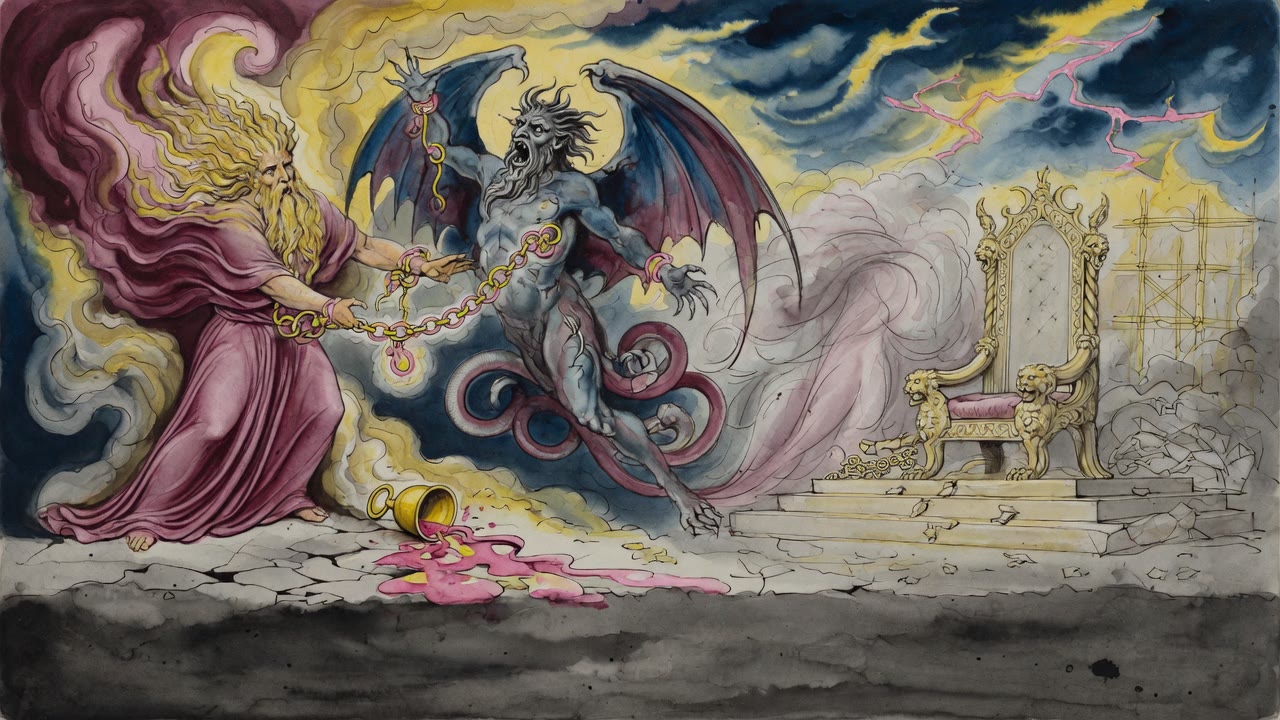
Solomon's golden throne was a machine of restrained beasts, and a herald cried a forbidden law at every step he climbed toward judgment.

Curated by Arthur · Told by Maggid ·
Table of Contents
  1. The Beasts That Would Not Fight
  2. What the Herald Cried at Every Step
  3. The Crown the Eagle Carried
  4. The Order That Outlasted the King

The herald did not wait for the king to be seated. He waited for the king to climb.
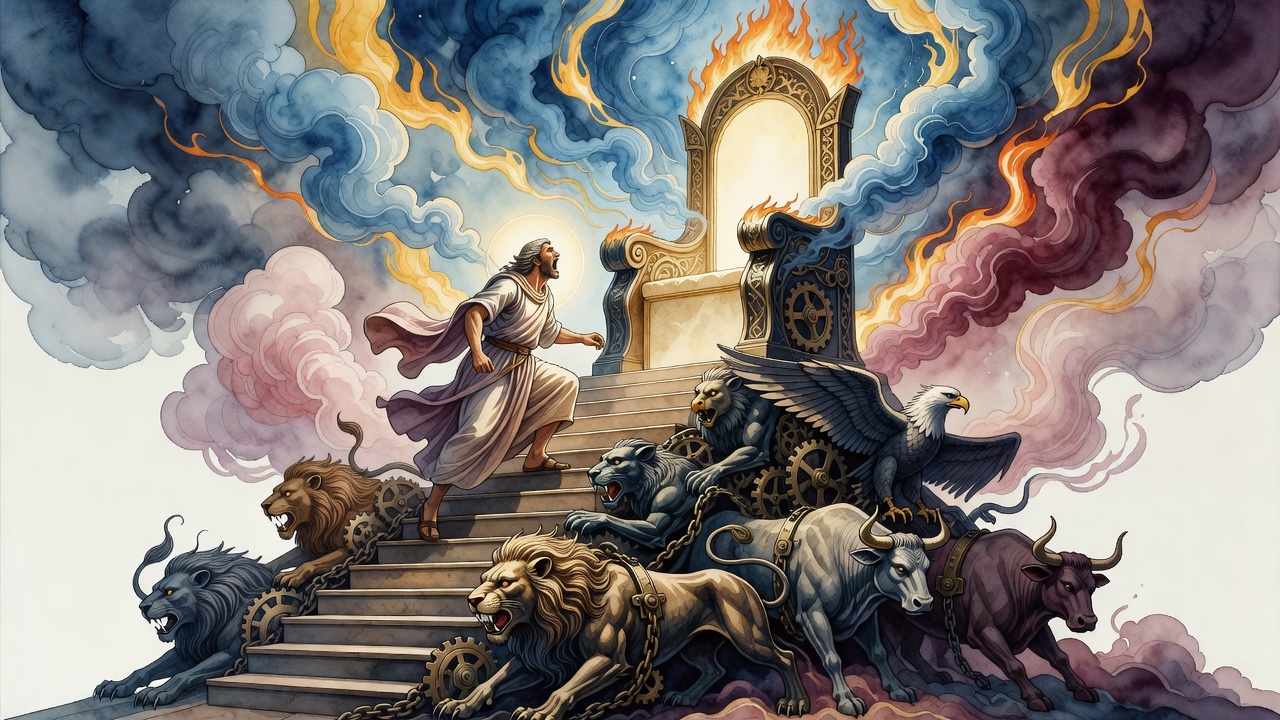
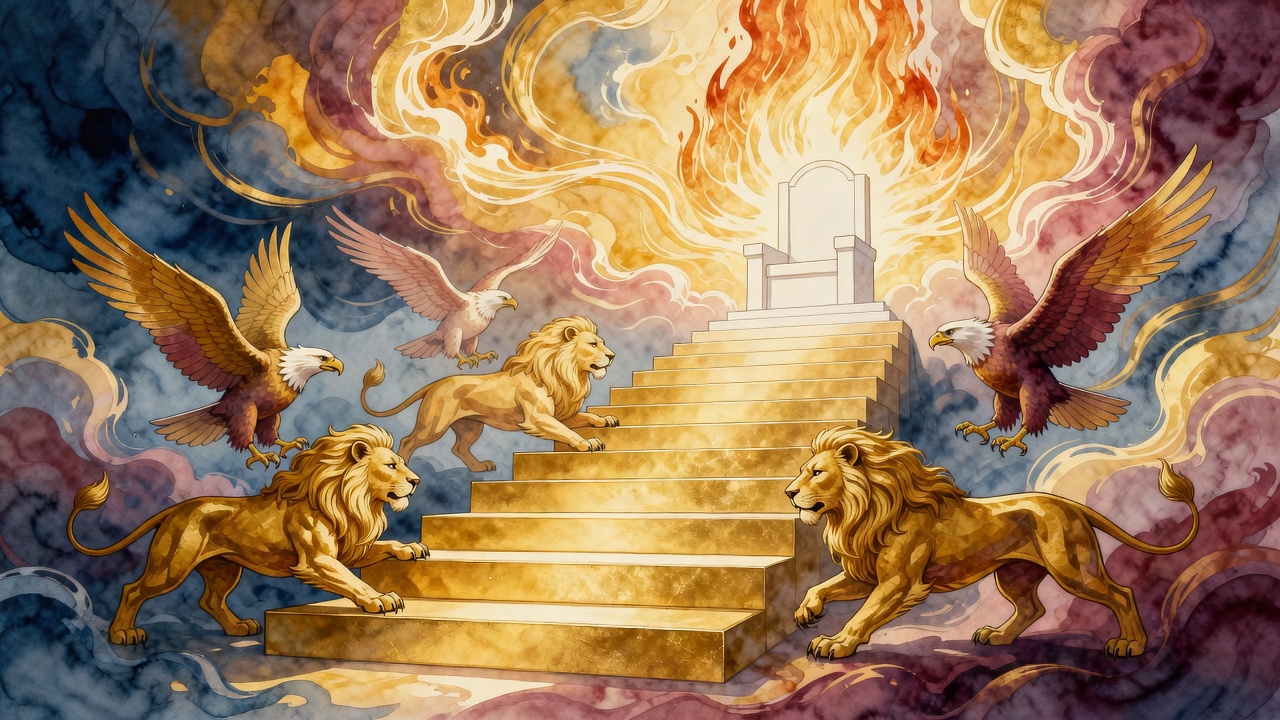
Solomon's throne stood at the heart of the judgment hall like a hill of fire-bright gold, and it did not merely hold him. It moved under him. The whole apparatus had been overlaid with gold from Ophir and crusted with stones that threw small fires across the marble floor. At its base twelve golden lions faced twelve golden eagles, jaw to talon, and they did not maul each other. They held their pose, restrained, as if some wisdom older than the goldsmith had taught them to stand down.

The Beasts That Would Not Fight

Six steps rose to the seat, and on each step the craftsmen had paired creatures that should have torn each other apart. Ox stood beside lion. Bear beside lamb. Panther beside owl, eagle beside peacock, cat beside hen, hawk beside dove. In any field these were predator and prey, the eaten and the eater. On Solomon's steps they were arranged like a single thought. The dove sat under the hawk's curved beak and did not tremble. The lamb leaned its golden flank against the lion and the lion looked away.

This was the order a king was supposed to carry up to judgment with him. Not the muscle to crush, but the wisdom to make even enemies stand in their places.

What the Herald Cried at Every Step

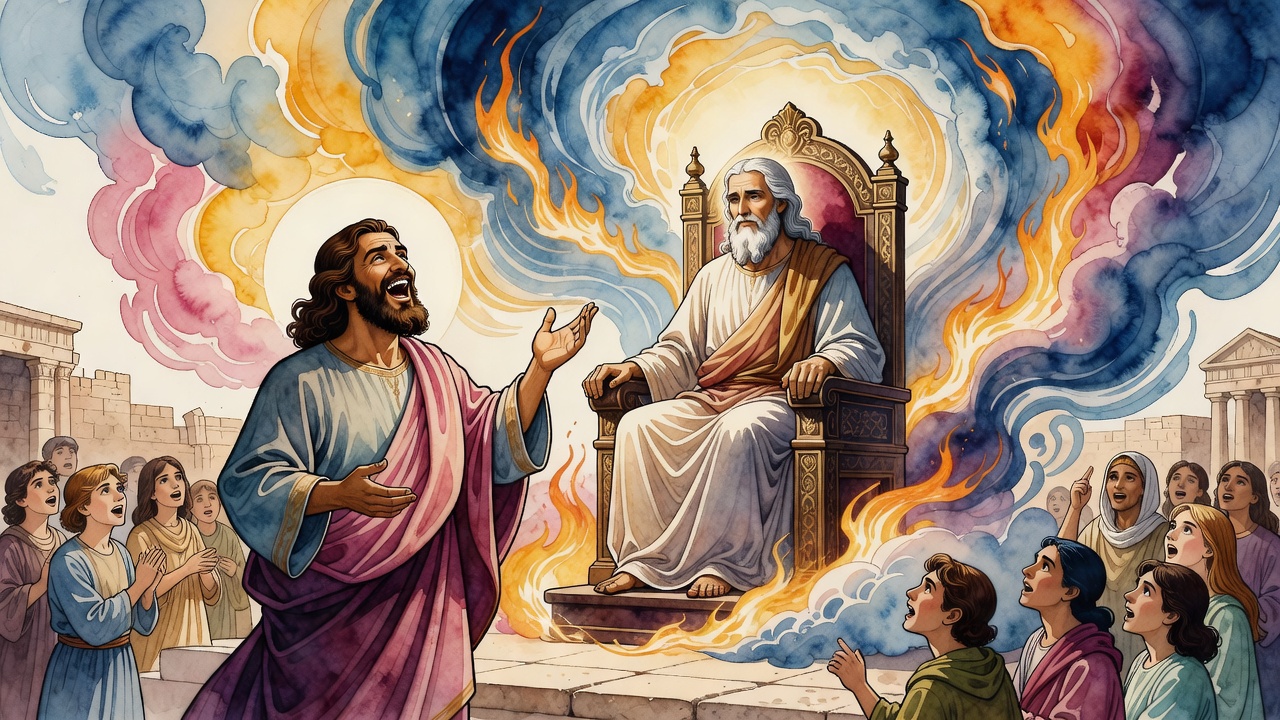
Solomon set his foot on the first step, and a herald's voice went out across the hall.

"He shall not multiply wives to himself."

The king climbed to the second step.

"He shall not multiply horses to himself."

The third.

"And silver and gold he shall not greatly multiply to himself."

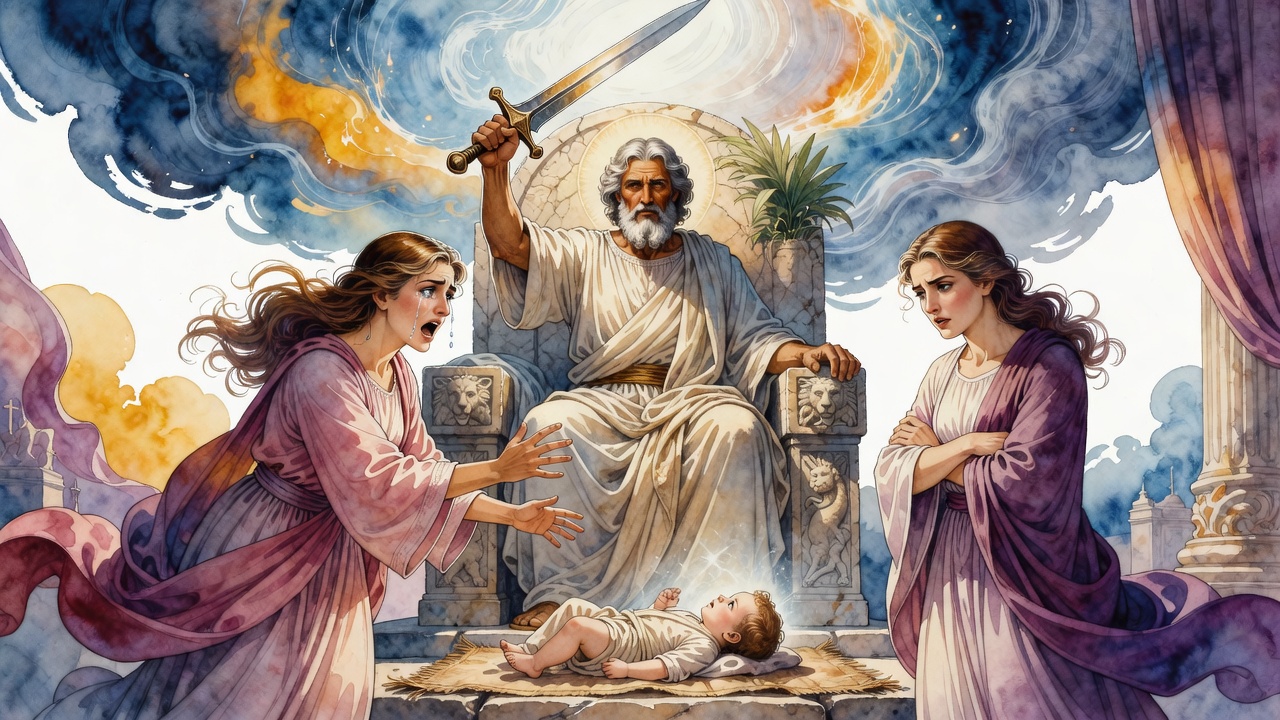
Each step was a law the king was forbidden to break, called out in the open before the whole court, so that no man rose toward the seat of judgment without being judged on the way up. The fourth step. "You shall not pervert justice." The fifth. "You shall not show favor." The sixth. "You shall not take a bribe." Six commandments for six steps, and a king who could not bear to hear them had no business reaching the top.

Then Solomon came to the seventh step, the seat itself, and the heralds fell silent. In the hush a single line was spoken to him, close, almost private.

"Know before whom you are sitting."

Above him there were six firmaments, and beyond them a seventh, the precious palace where the King over kings keeps His own throne. The wisest man in the world sat down beneath all of it and remembered that he, too, stood under judgment.

The Crown the Eagle Carried

The throne's mechanism did its work as he settled. A wheel turned. The beasts stirred on their steps, gold grinding against gold, and an eagle lifted the crown and set it upon Solomon's head, and a serpent of gold uncoiled toward the seat so that no one could climb to it by stealth. Behind the seat a scepter of gold hung suspended in the air, and at its top perched a golden dove with a golden crown held in its beak.

On the Sabbath the king sat beneath that dove, and the crown above him touched his head and did not touch it. It hovered. It came down to the hair and held there, neither resting nor rising, the way the whole throne held its caged predators neither feeding nor fleeing. Everything in the hall was poised in a tension that only wisdom could keep from snapping.

The Order That Outlasted the King

The throne was a small map of the world as it was meant to be ruled. Six wagons had once come up out of Egypt before the Tabernacle, six for the six days of creation, six for the six orders of law, six for the six mothers of Israel, Sarah and Rebekah, Rachel and Leah, Bilhah and Zilpah. Now six steps carried a king upward through that same patterned creation, past the proclaimed laws, into the seat where he would weigh the lives of the people below him.

And the throne looked forward past Solomon. The golden dove gripped the golden hawk, prey holding predator, and in that frozen grip lay a promise: that one day every nation and every language would be gathered, the strong made to serve the weak, all of it delivered into the hands of the King Messiah and the house of Israel. The seat was built for a king wise enough to be judged on his way to judging. The beasts waited, restrained, for the one who would finally deserve to sit where Solomon sat.


← All myths
From the tradition

Sources

3 sources

The texts this telling draws on, in full. Open a card to read inline, or expand it for a wider, quieter read.

Targum Sheni on Esther 1:2:2Targum Sheni on Esther

Solomon's throne did not merely hold him. It moved under him like a court of golden creatures.

Targum Sheni on (Esther 1:2) preserved in Paulus Cassel's 1888 public-domain English translation, says the throne was overlaid with gold from Ophir and set with precious stones. Twelve golden lions stood opposite twelve golden eagles. Higher up, six golden steps paired creatures that should have been enemies: ox and lion, bear and lamb, panther and owl, eagle and peacock, cat and hen, hawk and dove.

The throne turns royal judgment into a visible order of creation. Solomon rises through a world where beasts are arranged, restrained, and made to serve wisdom. The animal pairs do not fight. They flank the king's ascent.

The targum also looks forward. The golden dove grasps the hawk, and the text says that one day all nations and languages will be delivered into the hands of the King Messiah and the house of Israel. Solomon's throne is therefore not only a marvel of craftsmanship. It is a miniature prophecy of kingship made peaceful, ordered, and answerable to Torah.

Full source
Pesikta DeRav Kahana 1:7Pesikta de-Rav Kahana

[7] "And the princes of Israel offered, they were the heads of the tribes" (Numbers 7:2) -- in Egypt. "And they were over those who were counted" (ibid.) -- over the banners. "And they brought their offering before the LORD, six wagons, and the rest" (ibid., verse 3) -- corresponding to the six days of creation. Six corresponding to the six orders of the Mishnah. Six corresponding to the six matriarchs, and these are they: Sarah, Rebekah, Rachel, and Leah, Bilhah, Zilpah. Rabbi Yohanan said: six corresponding to the six commandments that the king is commanded concerning, and these are they: "He shall not multiply wives to himself" (Deuteronomy 17:17), "and he shall not multiply horses to himself" (ibid., verse 16), "and silver and gold he shall not greatly multiply to himself" (ibid., verse 17), "You shall not pervert justice, and you shall not show favor, and you shall not take a bribe" (Deuteronomy 16:19). Six corresponding to the six steps that the throne had.

How so? When he went up to sit on the first step, the herald goes out and says, "He shall not multiply wives to himself." When he went up to sit on the second step, the herald goes out and says, "He shall not multiply horses to himself." When he went up to sit on the third step, the herald goes out and says, "And silver and gold he shall not greatly multiply to himself." When he went up to sit on the fourth step, the herald goes out and says, "You shall not pervert justice." When he went up to sit on the fifth step, the herald goes out and says, "You shall not show favor." When he went up to sit on the sixth step, the herald goes out and says, "You shall not take a bribe." When he came to sit on the seventh step, they say to him, "Know before whom you are sitting."

"And the top of the throne was round behind it" (1 Kings 10:19) -- Rabbi Aha said: like the chair of Moses. "And there were arms on either side by the place of the seat" (ibid.) -- how so? A scepter of gold was suspended for him behind it, and a dove was at its top, and a crown of gold was in the mouth of the dove, and he would sit beneath it on the Sabbath, and it touched and did not touch. Six corresponding to the six firmaments. But are they not seven? Rabbi Abin said: the one in which the King dwells is the precious palace.

Full source
Exempla of the Rabbis, No. 115Exempla of the Rabbis (Gaster, 1924)

Solomon's Throne.

Kolbo, § 1 19.

Yoma, f. 44b.

J. Yoma, f. 41a.

Targum II to Esther.

Bahya (ed. Krakau) f. 36b, 64d, 106b, 142c, 213b.

Jerahmeel,ch. LXXXI V, p. 251 & CIX.

Cassel, Targum Sheni.

Midr. Aba Gorion, ed. Buber, p. 2, 6.

Yalk. II, § 1046.

Farhi, O. P. I, f. 16a.

Eisenstein, Oser, p. 526.

Yalk. Sip. II, p. 225.

Eisenmenger, II, 370.

Steinschneider, Heb. Bibl. IV, 49; XII, 5.

Ginzburg, IV, p. 157.

cf. Benfey, Pantschat. I, 22 and 23.

Cassel, Thron.

cf. Garcin de Tassy, Hist, de la Lit. Hin- dou, etc. II, 233; III, 186.

Grunbaum, Z. D. M. G. vol. 31, p. 303.

Hammer, Rosenol I, p. 185 ff.

cf. Lescallier, Le Trone Enchante.

cf. Massmann, Kaiser- chronik III, p. 889.

(Cosroe’s Throne; more like No. 4.)

Ouseley, Oriental Collections, I, p. 235.

Perles, Thron. u. Circus d. Ko. Salomo.

Cod. Monac. 222, 8.

Cod. Oxf. 2797.

Cod. G. 1094 g. (Arabic Version.)

n6. Calendar.

Berakhot, f. 63 a, b. Midr. Hagadol, Exod. Bo.

11 7. Rare Tree Reward for Sabbath Observance.

Sabbath, f. 150a.

J. Sabbath, ch. 15. Pesikta R. ch. 23. Levit. R. 34 § 16. Yalk. II § 496.

Yalk. Sip. I, p. 18. Maase Buch No. 8.

Cod. G. 184, No. 137.

1 18. Pearl in Fish, Reward for Sabbath Observance.

Sabbath, f. 119a. Pesikta R. ch. 23.

Tos. Ketubot s. v. Uldi- bre, 94.

Midr. Hagadol, Exod. Jithro.

Gen. R. ch. 11 § 4. Midr. Decalogue,

No. IV, 2.

Ben Atar No. 8. Nissim, f. 10a.

Aboab, Men. Ham. ch. 295.

Asheri, Tur Or. Hayyim, ch. 605.

Sirkis, Bayit Hadash ad loc. (Or. Hay.) Husin, Maasim Tobim, No. 49.

Yalk. Sip. Ill, p. 94. Maase Buch No. 6.

Ben Gorion II, p. 108, 344-

Clouston, Pop. Tales & Fiction, I, p. 398ft. Codd. G. 184, No. 207; 185, No. 19.

1 19. Riches Reward for Sabbath Observance.

Sabbath, f. 119a. Pesikta R. ch. 23.

Midr. Hagadol, Exod. Jithro.

Gen. R. 11 §4. Nissim, f. 10a.

Maase Buch No. 7. Codd. G. 184, Nos. 23, 203; 185, No. 19.

Full source