The Golden Beasts That Steadied Solomon on the Steps of Justice
Thirty-three steps of gold, lions and eagles that moved, and six steps of justice that tested whether a king deserved to sit and judge at all.
Table of Contents
 Click for full size
A Throne That Was Really a Machine
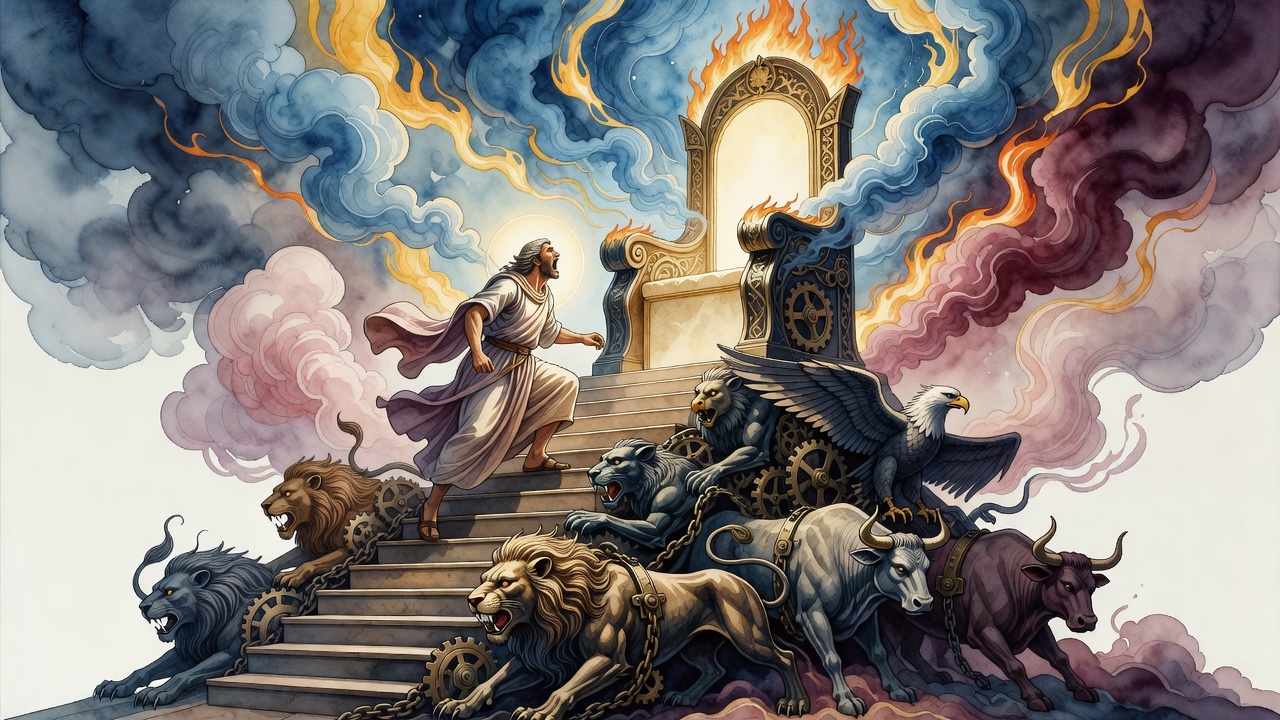
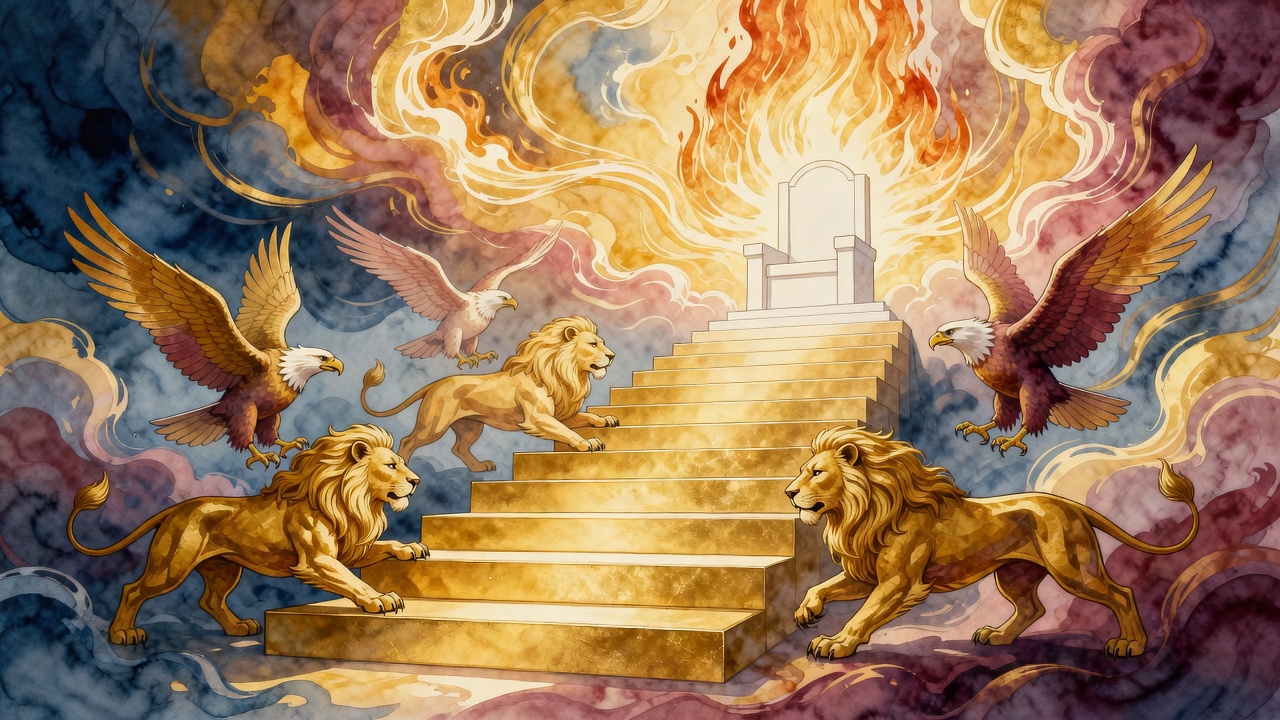
Solomon did not have a chair. He had an engine of gold. Thirty-three steps climbed toward a high seat, and on every step stood beasts cast in metal: twelve golden lions to one side, and facing each lion a golden eagle, with bears set among them. Above the seat hung a kind of canopy, and from the canopy fell a golden chain, and at the end of the chain perched a golden dove. In the dove's beak sat a crown, and inside the crown burned a single jewel so bright that, the tellers swore, its light reached the far edge of the world.
No one had built a throne like it before. No king after him could copy it. The wheels at its base did not turn for show. They turned for a reason, and the reason was justice.
The Animals That Reached for the King
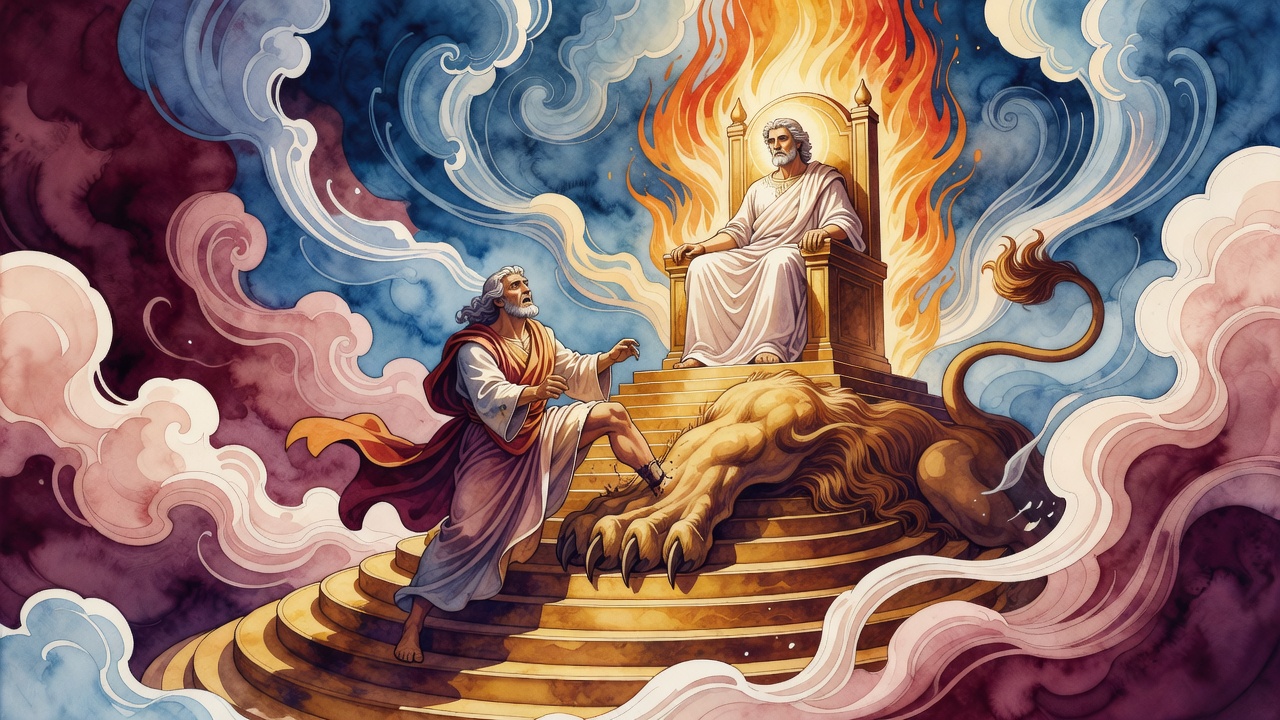
When Solomon set his foot on the first step, the throne came alive. On the first step a golden lion stood opposite a golden ox. On the second a bear faced a lamb. On the third a panther stood across from a small child. On the fourth an eagle and a hart. On the fifth a peacock and a cock. On the sixth a hawk faced a dove. As the king climbed, the wheels beneath the structure began to move, and the metal beasts stretched out their paws and wings toward him. The lion lowered its golden shoulder. The eagle spread a wing under his arm. Step by step the animals lifted him and steadied him, passing him upward from beast to beast, so that the wisest man in the world ascended his own seat carried in the grip of lions.
On each lion's outstretched paw a verse stood written. The verses were not decoration. They named the Law, and they pressed it on him as he rose, urging him to judge uprightly, to carry out what was written and not bend it. A man cannot read a command off the paw of a lion that is holding him up and pretend he never saw it.
Six Steps, Six Warnings
The first six steps were the steps of judgment, and a herald stood ready for each one. As Solomon's foot touched the first step, the herald's voice rang out across the hall. "You shall not distort judgment!" The king climbed to the second, and again the voice came. "You shall not show preference!" The third step. "You shall not take a bribe!"
And the warnings kept coming as he climbed: against planting a sacred tree beside the altar, against raising up a standing monument, against offering a blemished animal in sacrifice. Six steps, and on each one a different mouth of the Law shouting at the king before he could reach the place where he was allowed to decide anything at all. By the time Solomon sat, he had been accused of nothing and reminded of everything. The seat was high, but the climb to it was an interrogation.
The Scroll the Dove Laid Open
When the king reached the top, the golden dove left its perch on the chain. It flew down, opened an ark set into the throne, and drew out the scroll of the Law. The dove laid the scroll open before Solomon, on the seat itself, before his hand could rest on the gold. He could not judge a single case in the land until the book was open in front of him. From that seat, with the scroll spread under his eyes and the verses still glinting on the lions' paws behind him, Solomon judged the whole world.
So the structure of justice was not an idea kept somewhere in the king's head. It was bolted into the throne. The man who wanted to rule first had to be carried, warned, accused, and handed the Law, in that order, every time he climbed.
Why No False Judge Could Sit There
A true king could mount the steps because the beasts wanted to lift him. The story drew a hard line under that idea. The throne was built to test the one who climbed it, and it answered only to a judge who came bound to the Law it carried. A man who meant to twist judgment, take a bribe, or favor the powerful would have to climb past a herald screaming the exact words of his crime, past lions holding open the verses that forbade it, to a seat where a dove was already laying the scroll under his hand.
That was the wonder of it. Solomon did not sit because he was strong. He sat because the lions agreed to raise him, the heralds let him pass, and the dove brought him the book. The throne decided whether the king deserved the throne.
← All myths