Solomon Judged a Snake, a Stolen Cow, and a Boiled Egg
David found for the snake. The man left with coils on his throat. Outside the palace a boy fished a stick out of a well without reaching.
Table of Contents
 Click for full size
The Snake Warmed and Paid Evil for Good
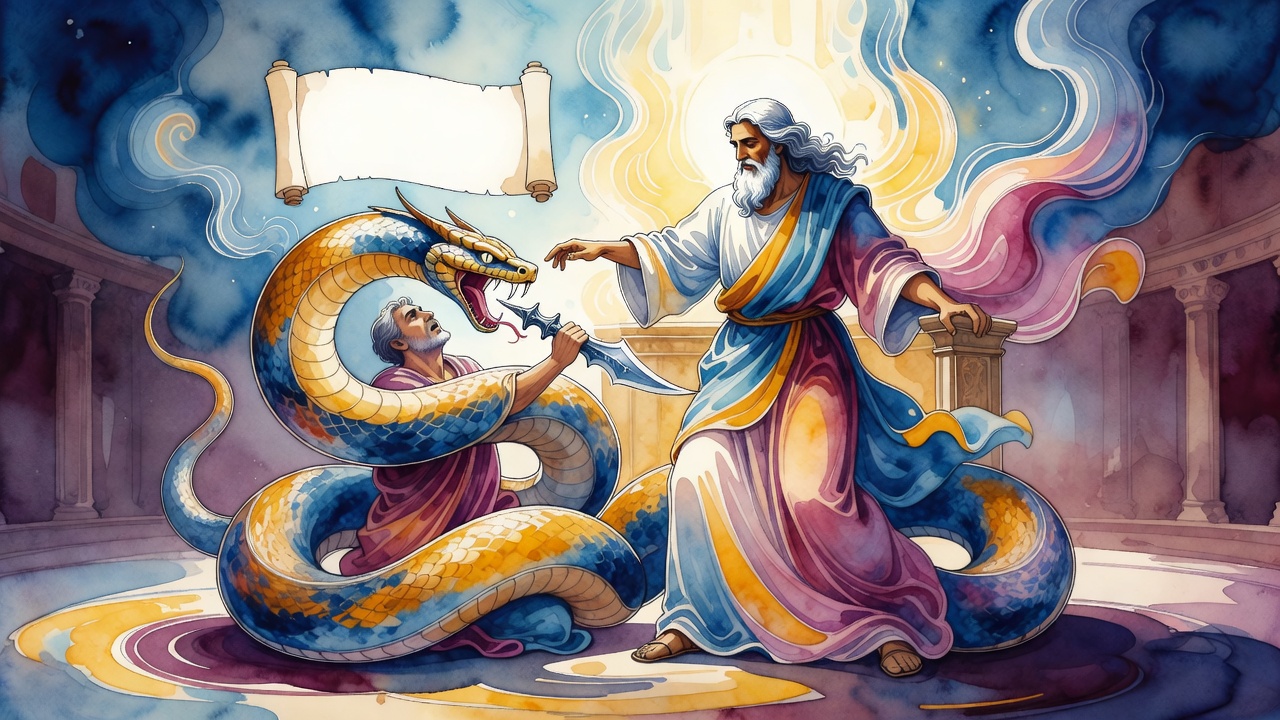
A man crossed a frozen field and saw a snake lying stiff in the snow. Pity moved his hand before sense could stop it. He lifted the creature, slid it inside his shirt against the warm skin of his chest, and walked on. Heat woke the snake. The moment it could move, it wound itself around his neck and began to squeeze.
"To repay evil for good," the snake hissed against his ear, "is the way of the world."
The man choked out a protest. They agreed to find a judge. On the road they met an ox, and the ox sided with the snake. They met a donkey, and the donkey sided with the snake. They came at last before King David, who listened and then ruled with a verse on his lips, that the serpent would bruise the heel of man (Genesis 3:15). He found for the snake.
A Boy Raised Water to Lift a Stick
The man left the court with the coils still tight on his throat, certain he was walking to his death. Outside the palace he passed a small boy playing near a well. The boy's stick had dropped into the water, far below the reach of any arm, and the attendants stood helpless around the mouth of the shaft.
The boy did not reach. He ordered the men to widen the channel beneath the well so the water would rise. They dug. The level climbed, lifted the stick to the rim, and the boy plucked it out. The man watched a child raise water to do what hands could not, and something in him turned. He told the boy everything. The snow. The snake. The verse. The sentence.
The boy was Solomon, David's son, not yet king. He went to his father and asked leave to try the case himself, and David, curious, granted it.
The Verse Forced the Snake to the Dirt
Solomon summoned the parties. "Snake," he said, "on whose authority did you act?"
"On the authority of the Lord, who said the serpent shall bruise the heel."
"Then abide by the word of the Lord," Solomon answered. "When two come before the Torah, they must stand apart, each facing the other. Snake, uncoil. Stand on the ground, separate from the man."
The snake, bound by the very verse it had chosen for armor, slid from the man's neck and dropped to the dirt.
"Now," Solomon said to the old man, "do what is written. Bruise its head." The stick that had been raised from the well came down once. The snake lay still. The same words that had nearly hanged a man had, in a sharper mouth, freed him.
A Cow Walked In and a Father Rose
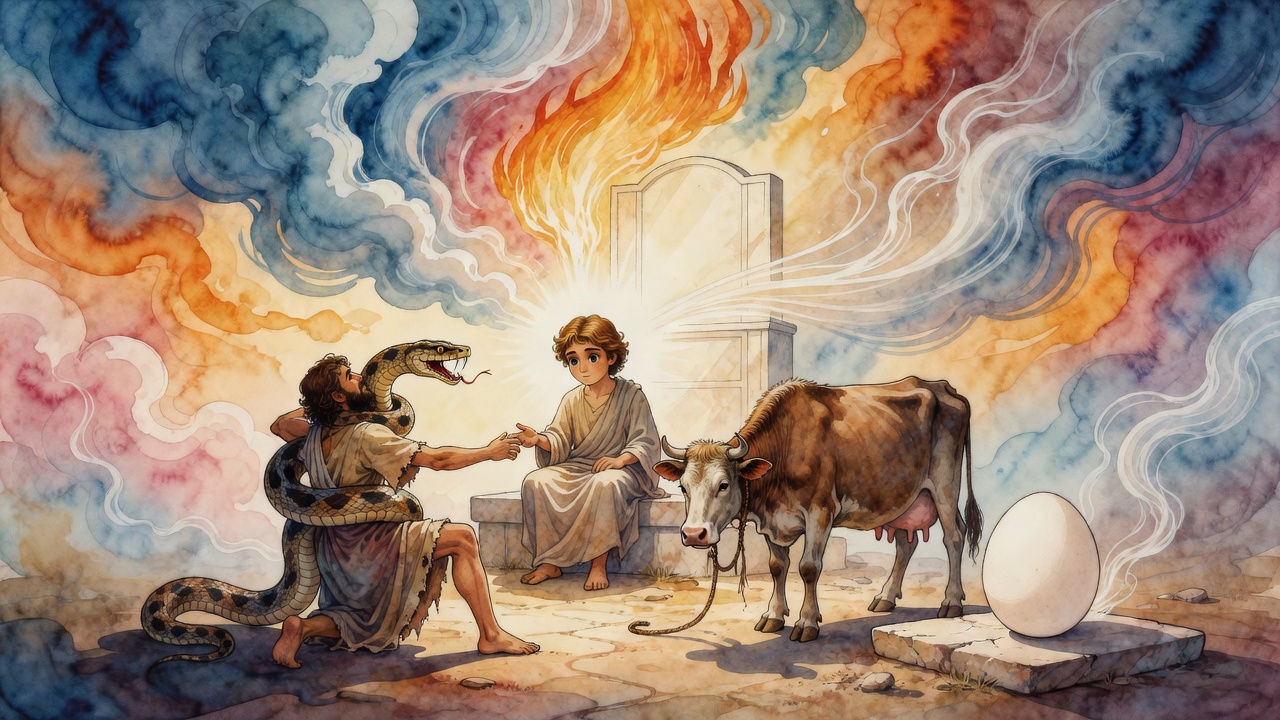
Another case came, and this one began with hunger. A poor man, unable to work, had shut himself in his house to wait for God to provide. On a day when he had nothing at all, a fat cow wandered through his open door. He took it as a gift from heaven, slaughtered the animal where it stood, and ate, praising God for the mercy.
The cow had an owner, a rich man, who came demanding its value. The case went to David, who ruled by the plain shape of it. The poor man must pay. He left weeping, with no coin to pay with, and on the road he met Solomon again.
"Go back," the boy said when he had heard it. "Ask your father to let me judge." David, puzzled, consented once more.
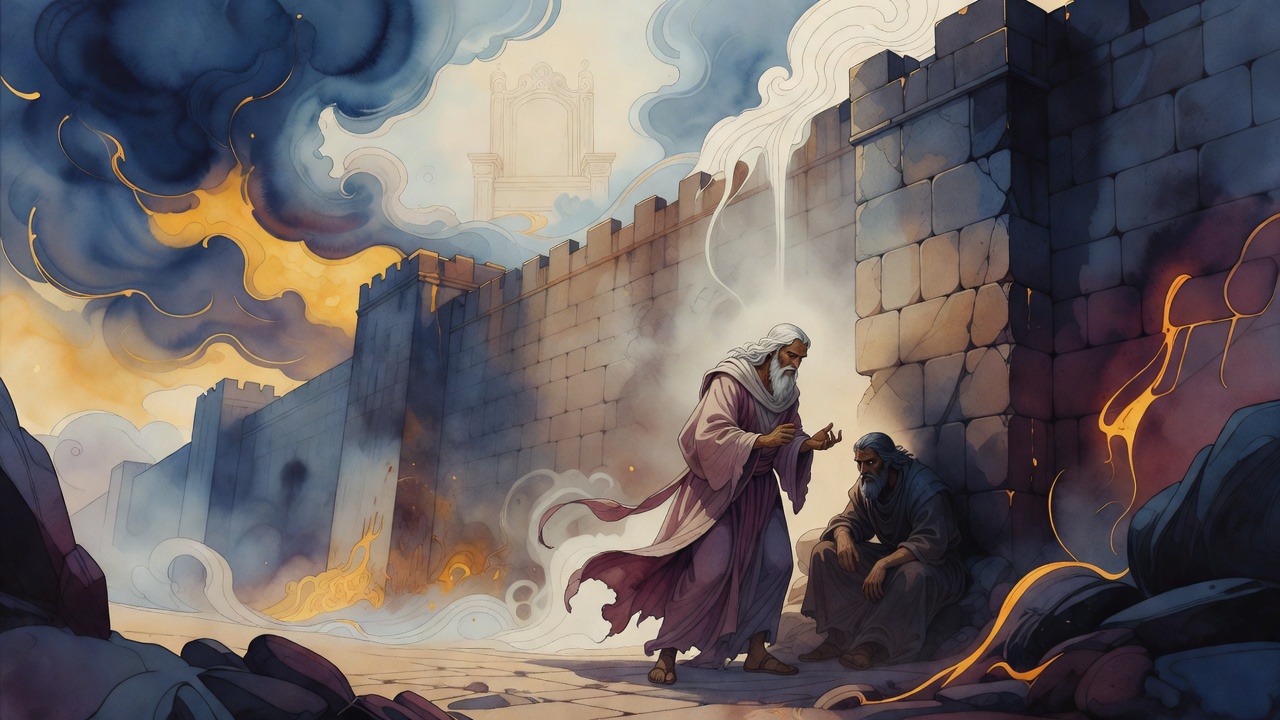
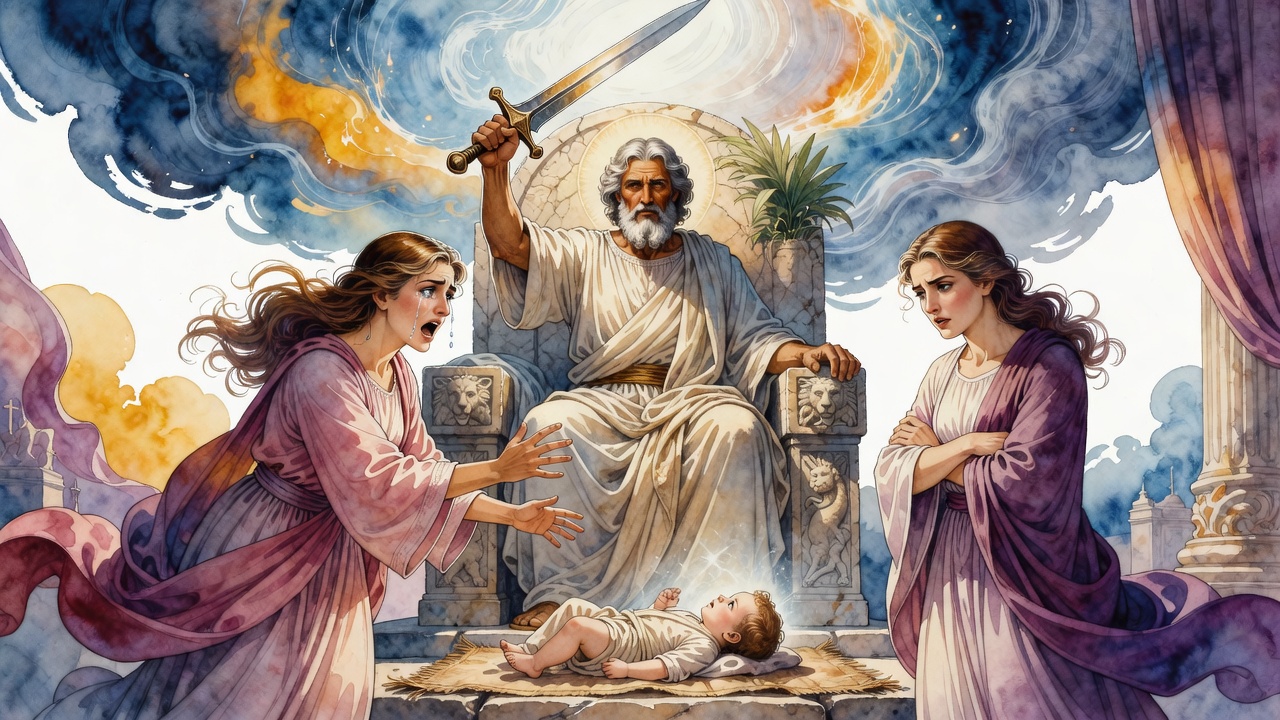
Solomon called all Israel out beyond the walls of Jerusalem. He asked the rich man, in front of the gathered crowd, to forgive the debt. The rich man refused. So Solomon led them to a certain tree and said a body lay buried beneath its roots. They dug, and the earth gave up a corpse, the poor man's father, gone missing long ago and never found.
Then Solomon raised the dead man, and the father rose from the broken ground and spoke. He named the slaves who had killed him on his road home and stripped him of his wealth. And he named the man who had paid them to do it, the same rich man now standing in the court, demanding payment for a cow.
The wealth came back to the son. So did the herd, for the cow had always been the dead father's, grazed by the rich man on stolen land. The rich man was led away to die. David had ruled by the letter of the loss. Solomon had dug down to the root, and the root was a murdered man under a tree in the king's own yard.
Boiled Seeds Would Not Sprout
The strangest plaintiff came last. A man had once accepted a single boiled egg from his neighbor. Years later he came demanding payment, not for the egg, but for all it might have become. The chicks that could have hatched. The hens those chicks would have grown into. The eggs those hens would have laid, and the flocks and the fortune that one egg, given time, might have raised. He laid the arithmetic out like a fortune owed.
Solomon ordered his servants to fill a pot with seeds and boil them, and then to plant the boiled seeds in the ground. The court waited. Nothing rose. The earth stayed bare. Boiled seeds cannot sprout, and the fortune the plaintiff had counted on was suddenly an impossible sum built on nothing.
"The moment you boil an egg," Solomon ruled, "you destroy its future. You cannot kill a thing's tomorrow and then bill another man for the tomorrow you killed. This egg was given as food, cooked as food, eaten as food. Its destiny was a stomach, never a henhouse."
Three times the surface had told one story while the depth told another. A verse that hanged a man set him loose. A simple debt hid a murder under a tree. A clever fortune withered in a pot of dead seeds. The boy who once raised water from a well to lift a fallen stick had grown into the king whose wisdom raised buried things into the light.
← All myths