The Soul Walks Seven Portals Toward Arabot
A dead soul faces Adam at Machpelah, the flaming sword at Eden, and the climb toward Arabot where the righteous become angels.
Table of Contents
 Click for full size
Adam at the First Door
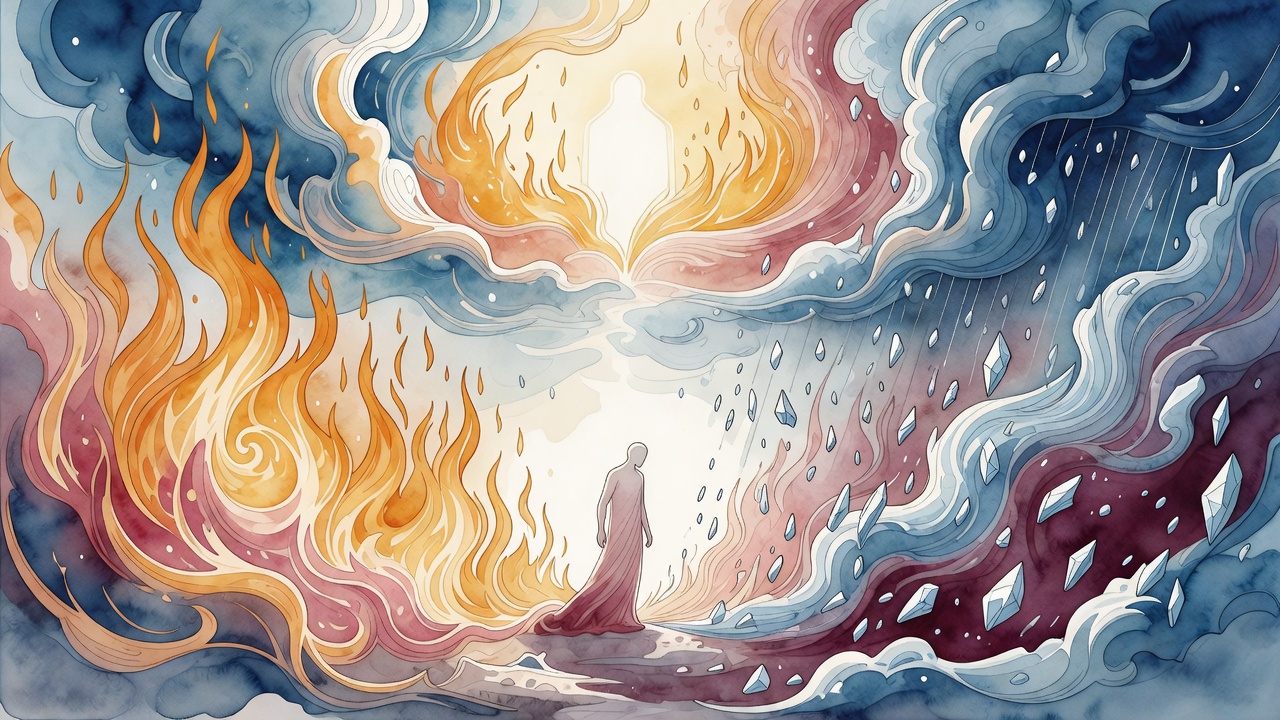
Adam stood in the mouth of the Cave of Machpelah and watched a new soul approach. Dust still clung to the memory of the body it had left. The first man did not raise a sword. He raised a voice. Worthy souls heard welcome. Unworthy souls heard silence thick enough to turn them around before they ever saw the garden light.
This was not the Eden of fruit and rivers alone. After death, Gan Eden (the Garden of Eden, paradise) became a station on a longer road, a checkpoint before the heights called 'Arabot. The soul that wanted heaven first had to pass a human gate, the eyes of the one who had tasted exile and still held the keys of memory.
Somewhere behind that cave, generations slept in the double burial house. The living world went on without noticing. The dead walked single file through a story older than any empire, and Adam's judgment was the first light they met.
The Ever-Turning Blade
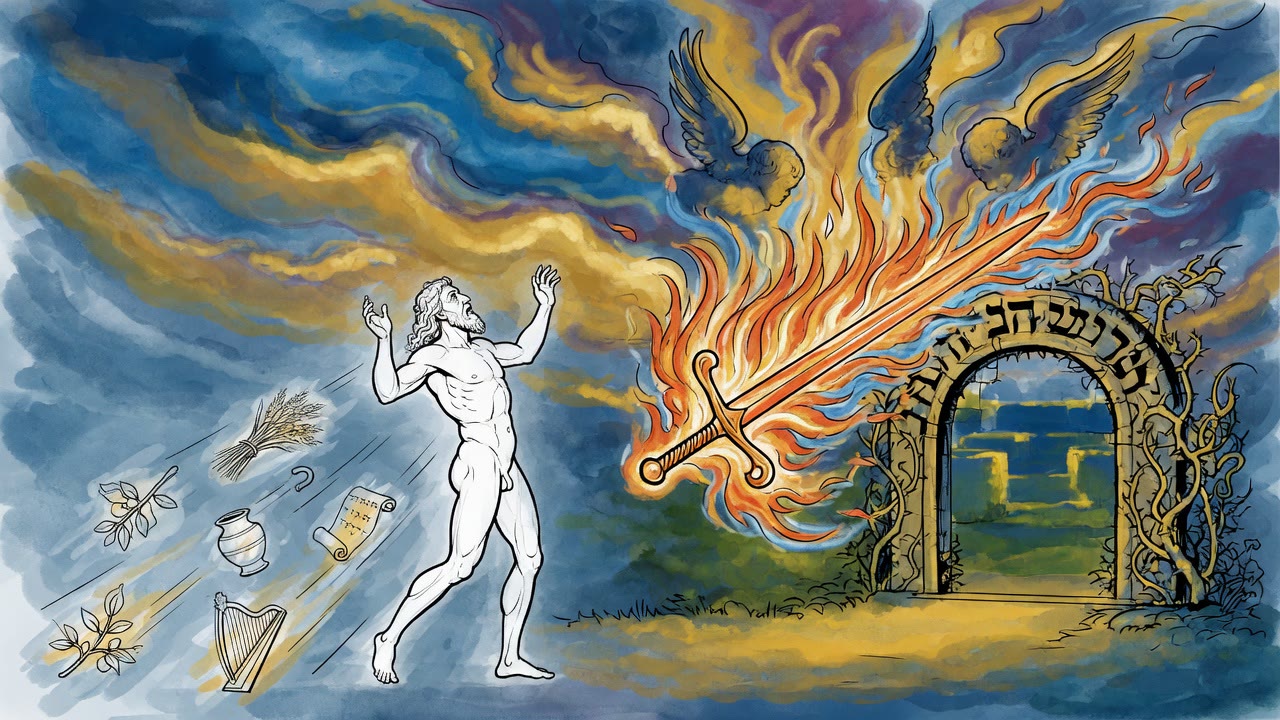
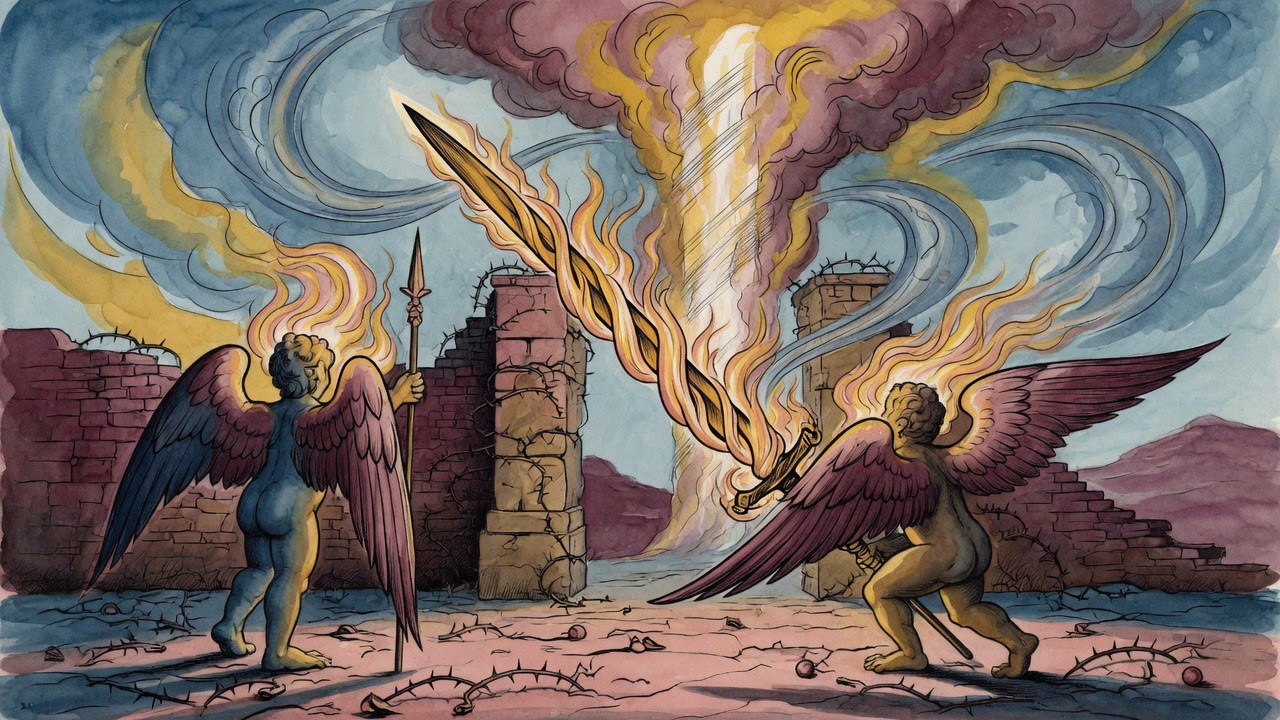
East of the garden the cherubim kept their post, and with them the sword that never rested (Genesis 3:24). Flame turned on itself like a wheel that refused sleep. After the serpent and the fruit, God had set that guard so that mortality would not snatch the Tree of Life and freeze sin into forever flesh.
Later ages learned a second use for the same fire. The righteous still approached. The unworthy still burned back. Legend says even a conqueror as loud as Alexander could not force the gate with armies. The sword did not care for crowns. It cared for the weight of a life.
A soul that failed here found no bargain, no second language of pleading. Scorch was the answer. Pass, and a kind of pass-bill opened the earthly Paradise, a green room before the harder climb. The cherubim did not explain their measure. Discernment was their work, and the flame was its signature.
Pillar of Smoke and Light
Inside that Paradise a pillar rose, smoke and light braided, stretching toward the gate of heaven. Climbing it was not a sport of muscles. Character decided grip. Some souls rose as if the light recognized them. Others slid back into shade, still breathing the perfume of a garden they could see and not keep.
The third portal, Zebul, waited at heaven's entrance. A guard opened for the worthy and admitted them toward a heavenly Temple. There Michael the archangel took charge, presenting the soul before God, then guiding it toward the seventh gate, the last name on the road, 'Arabot.
Seven portals, seven refusals of hurry. The journey refused to treat death as a single door. It treated death as a sequence of tests that still honored the first garden and the first man.
What the Soul Was Before Breath
Long before any portal, the soul had already known states without a body. In the teaching of later masters, it first lived in potential within the Ein Sof, the Infinite, holding the form it would wear after repair of the world. Then it descended into the work of years, flesh, choice, and wound. Only after that labor did it return to the gates Adam still watched.
So the road after death was not a surprise invented at the last minute. It was a homecoming with examinations. The blueprint remembered itself. The sword remembered the exile. Michael remembered the throne he served.
A soul climbing the pillar might feel, for one terrible clear instant, that it had always been walking this path, even while it thought it was only buying bread or arguing with a neighbor. Time folded. The portals stayed strict.
Arabot and the Angelic Choir
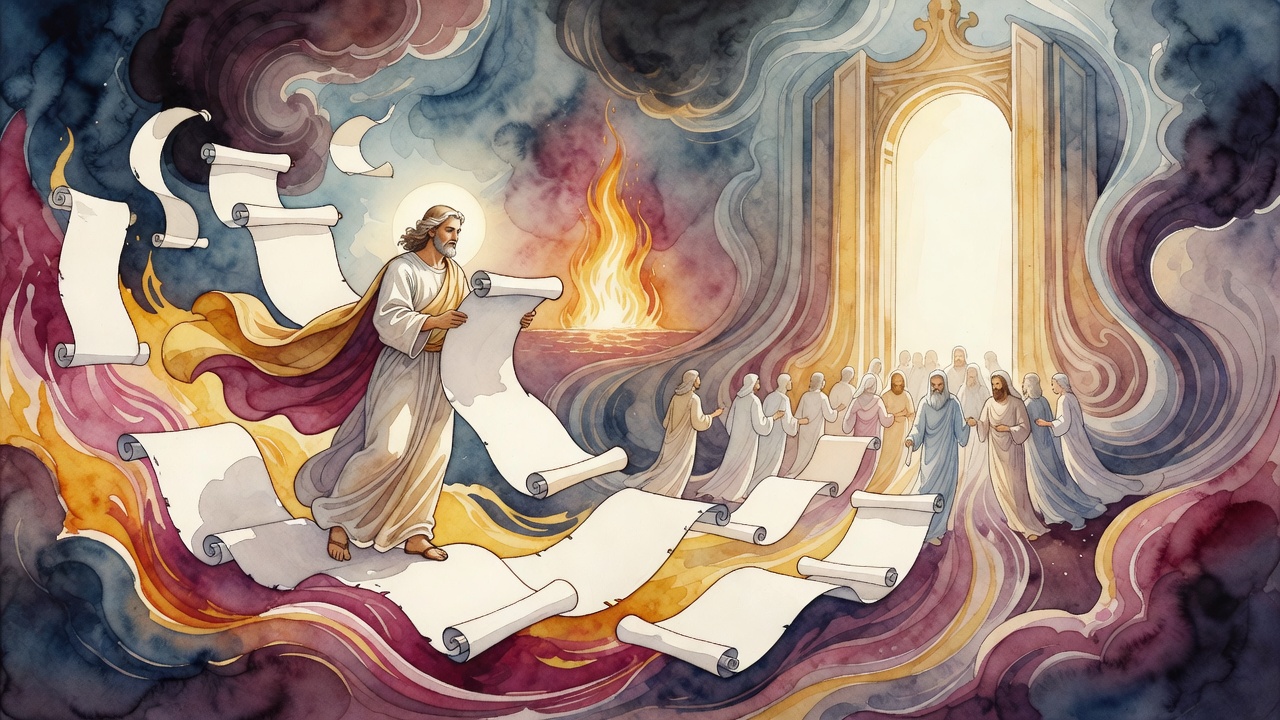
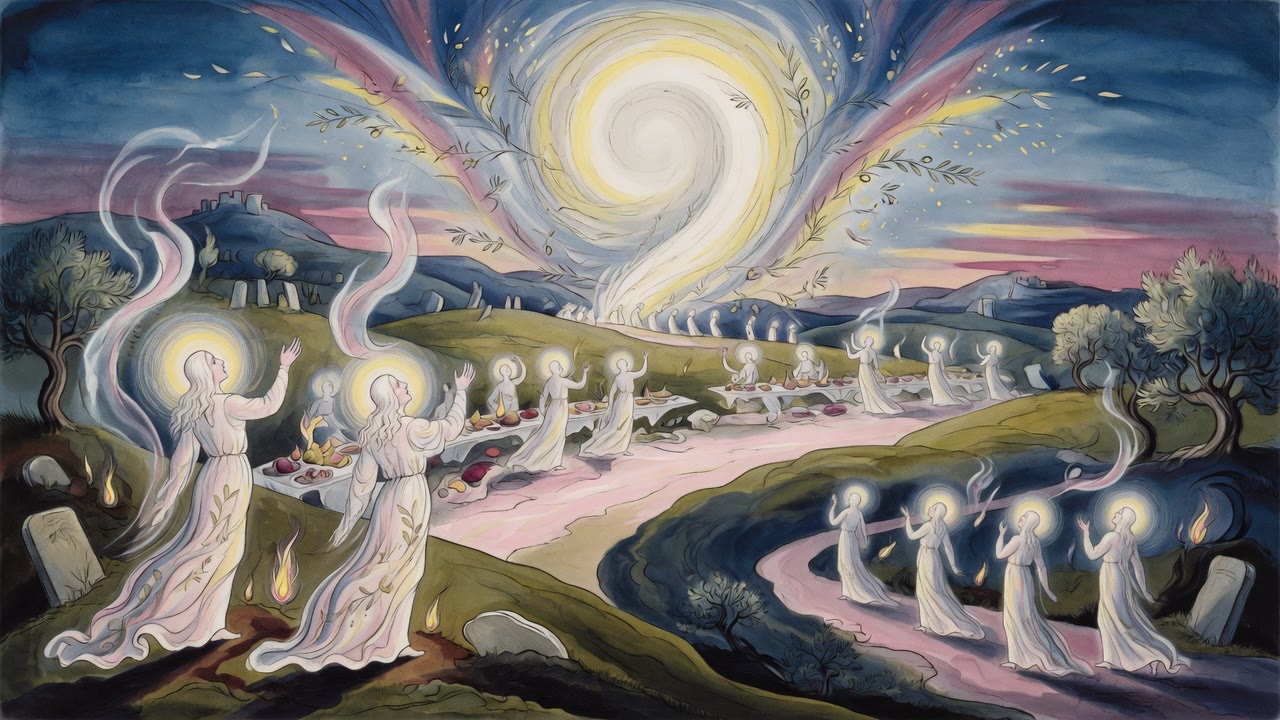
In 'Arabot, the highest heaven of this map, the souls of the righteous are said to become as angels, praising God without the fatigue of hunger, basking near the Shekhinah (God's indwelling presence). The journey ends not in silence but in speech that never dulls, a praise that is work and rest at once.
Behind every welcome sits the memory of refusal. Behind every angelic song sits the sword that almost took them. Jewish myth does not cheapen paradise into a free road. It keeps Adam at the first door and fire at the second so that arrival means something a life can still shape.
On earth, a mourner washes a body and does not see Machpelah. A child learns Genesis and thinks the cherubim only belong to the first couple. The dead know better. They walk the seven names. They meet the first human. They either climb the pillar or fall from light into ash.
← All myths