5 min read

Gehenna Fire and Hail Refine the Guilty Soul

The soul arrived without the body it had argued with for years. Its guides did not explain. They pointed at the half that burned and the half pelting ice.

Curated by Arthur · Told by Maggid ·
Table of Contents
  1. Where and When the Fire Began
  2. Hail Worse Than Flame
  3. The Enemy That Refines
  4. Walk Out Cleaner

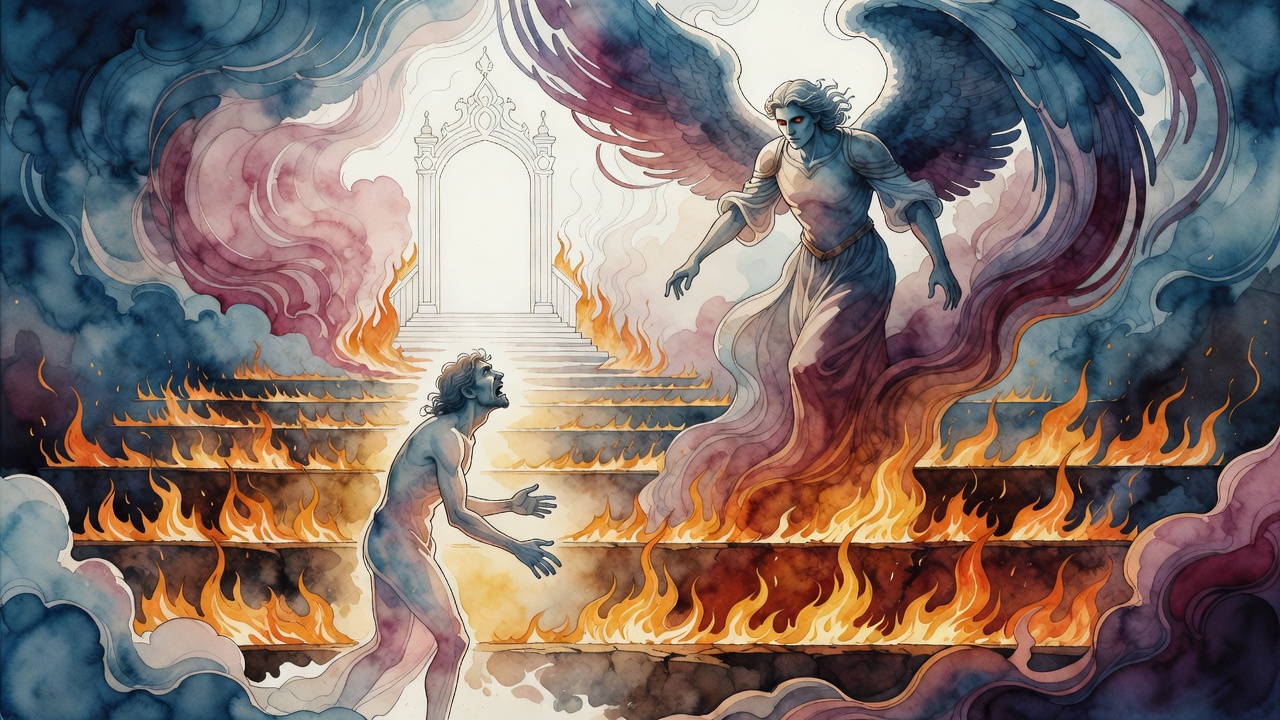
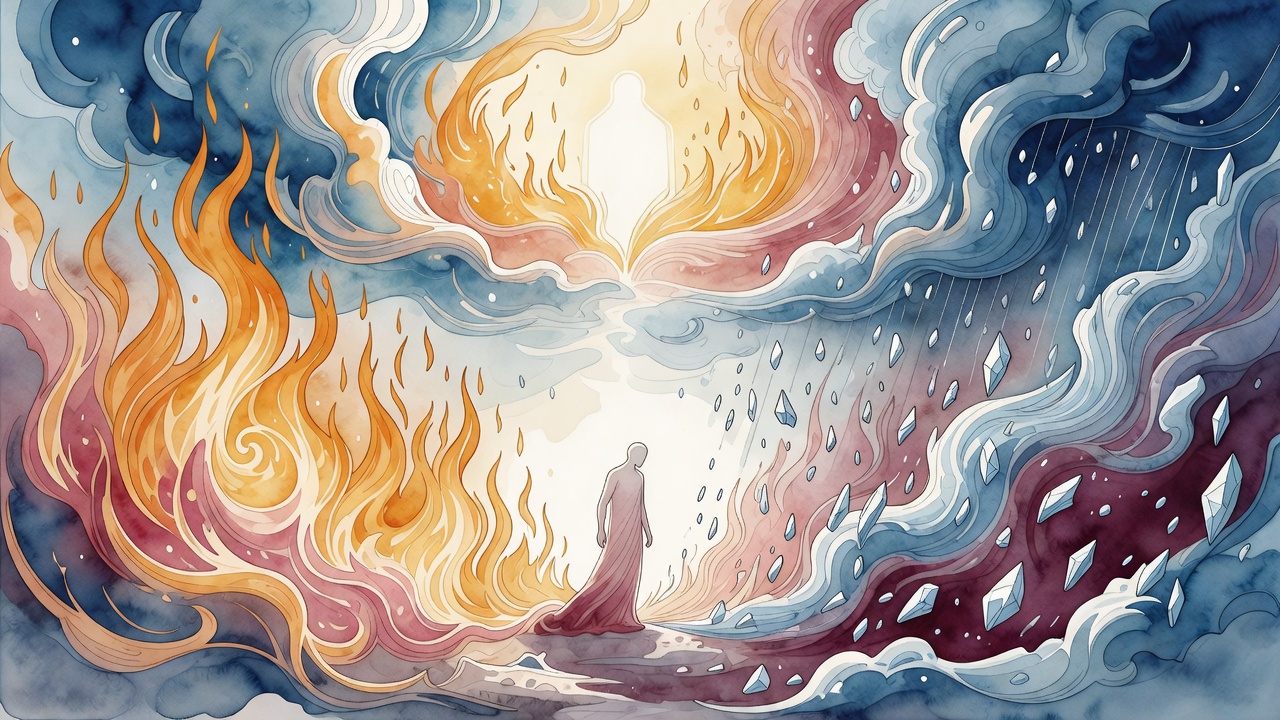
The soul arrived without the body it had argued with for years. Heat rose first, then a cold so sharp it felt like another kind of flame. Ahead, the landscape refused a single climate. Half the expanse burned. Half pelted ice. Guides who were not human did not explain. They pointed.
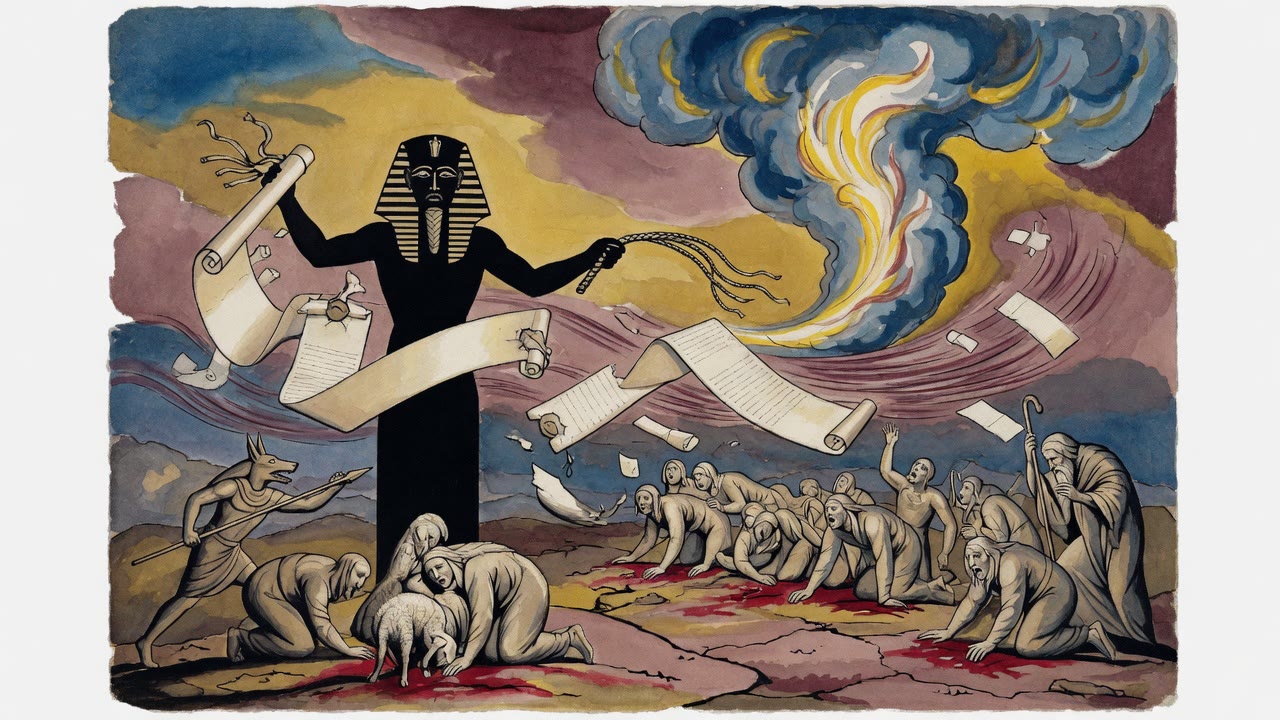
Gehenna Fire and Hail Refine the Guilty Soul Click for full size

This was Gehenna (the realm of judgment after death), not a tourist story and not a simple mirror of other nations' hells. Jewish memory treats it more often as purification than as forever, a laundry of the spirit that still scalds. The soul took one step and learned that "more often" does not mean gentle.

Size alone would have been enough to unmake pride. Some say Gehenna matches Eden in scale, and Eden is spoken of as boundless. A place that large does not need to shout.

Where and When the Fire Began

Ask where it is and the answers multiply. Above the firmament. Below the earth. Behind the Mountains of Darkness. The tradition is not embarrassed by the surplus. A realm that judges hidden deeds may also hide its own address.

Ask when it began and the surplus continues. Some say Gehenna existed before the world. Some say its space was prepared early and its fires kindled on the eve of the first Sabbath. Some place the kindling on the second day of creation. Ordinary fire for roasting and warmth, by one strand, waited until after that first Sabbath ended. Gehenna's fire got the earlier pass, as if judgment required a flame before kitchen comfort did.

Evening's red sun, some said, is the sun passing over those fires. Whether poetry or map, the image sticks: even daylight carries a rumor of the assay.

Hail Worse Than Flame

Fire was expected. Hail was the insult. After burning, ice. After ice, burning again. The dual climate is not decoration. It blocks the fantasy that a soul can choose its preferred pain and settle. Refinement that only uses one tool leaves corners unworked.

The soul that had loved its own excuses found them poor shields. Heat stripped one layer. Cold stripped another. What remained was smaller and more true, which is the only kindness Gehenna offers.

Never extinguished, the fires still serve a purpose that is not pure rage. Purpose does not make them pleasant. It makes them meaningful, which can be harder.

The Enemy That Refines

In life the Psalmist cried that the enemy pursues the soul. Midrash hears in overwhelming trouble a furnace already lit: You have tested us, O God; You have refined us like silver (Psalm 66:10). Silver does not refine in cool water. It refines in heat that looks, from inside the metal, like destruction.

Gehenna continues the grammar. The pursuer is not always a human foe. Sometimes the pursuer is consequence with a face. After the testing, judgment still asks for an account. Endurance is not a free pass. It is the condition for a later word: you have endured much, do not be afraid from now on, a reassurance the tradition links to Nahum's line of survival after crushing days (Nahum 1:12).

Fear shrinks when the metal has already known the worst heat and discovered it was being made into something that can hold shape.

Walk Out Cleaner

Not every soul stays. Purification implies an end for most, a release into whatever comes after the last unnecessary dross falls away. The soul in the dual climate did not clock the hours. It learned only the difference between who it had performed and who it was when performance burned off.

Back among the living, people who heard the old descriptions sometimes laughed them off as scare tales for children. The ones who had survived a private Gehenna in illness, shame, or loss did not laugh. They recognized the map: fire and hail, size without edge, a pursuit that felt personal until it proved chemical, the chemistry of a life being forced honest.

Live as if the assay is already scheduled. Speak as if words leave residue. Spare the cruel edge that thinks it will never meet ice after its own fire. Gehenna is not only elsewhere. It is the name tradition gives to the place where excuses end and a self is weighed in weather it cannot bribe.

When the cold stops and the heat stops, what remains should be able to stand in ordinary sun without flinching from itself.

Memories arrived out of order: a cruel joke, a withheld wage, a prayer faked for an audience. Each met the climate that fit it. The soul stopped bargaining for a preferred weather. Bargaining is for markets. This place is an assay office.

Somewhere above the living still argued whether Gehenna is place, process, or parable. The soul inside the argument had no vote and needed none. Pain that purifies does not pause for metaphysics. It pauses when there is nothing left to burn that is not essential.

When release came, it came without trumpet. The dual weather simply ceased. What walked onward was lighter and less decorated. If that is mercy, it is mercy with a hard face. The living who fear only soft stories will not recognize it until their own silver goes into the fire.


← All myths
From the tradition

Sources

2 sources

The texts behind this telling. Some cards carry a translation of the source; others are our own retelling of it, and each card says which. Every card links out to the original.

Beit HaMidrash 5:42Beit HaMidrash (Jellinek)

Retold in our words. Read the original at the link below.Sefaria-hosted English translation · CC-BY

Gehenna.

What exactly is Gehenna? And where is it?

Well, that’s where things get interesting. It's not quite as simple as "heaven" and "hell." Jewish tradition sees Gehenna more as a place of purification, a cosmic laundry cycle, if you will, than a place of eternal damnation for most. But that doesn’t mean it’s a pleasant vacation spot.

So, where do we find this… spiritual spa treatment center? The descriptions are as varied as the opinions on pineapple on pizza. Some say it’s above the firmament, that great expanse we see as the sky. Others place it deep, deep below the earth, in the planet’s basement. And still others imagine it lurking behind the Mountains of Darkness, a truly remote and forbidding location.

And size? Oh, the scale is epic! According to some accounts, Gehenna is as big as the Garden of Eden. And we all know that Eden, paradise itself, is said to be boundless, infinite. Talk about a large plot of land.

Now, when did this place come into being? That's another point of debate. Some believe Gehenna existed even before the universe itself was created! Others suggest the space for Gehenna was created first, a sort of pre-emptive measure, but its fires didn’t actually ignite until the eve of the first Sabbath.

Then there are those who claim the fires of Gehenna were specifically created on the second day of creation. But here's a twist – ordinary fire, the kind we use to roast marshmallows (or, you know, more practical things), wasn’t created until after the end of the Sabbath. It's like Gehenna got the express pass on fire technology.

Now, these aren’t your average campfire flames. The fires of Gehenna are so intense, so incredibly powerful, that they supposedly make the sun appear red in the evening as it passes over them. That's one heck of a visual. And these fires? According to tradition, they will never be extinguished.

But wait, there's more! As Tree of Souls (Schwartz) tells us, Gehenna isn’t just about fire. It's a dual-climate destination. It’s half fire and half… hail. Yes, you read that right: scorching flames and bone-chilling ice. And here’s the kicker: the hail is said to be much, much worse than the fire. You might think, "Oh, fire, that's bad," but imagine being constantly bombarded by icy shards after being burned. Ouch!

So, what does this all mean? Is Gehenna a literal place? A metaphor? A terrifying warning? Perhaps it's all of the above. Maybe it's a reminder that our actions have consequences, that the choices we make in this life matter. Maybe it's a promise that even after death, there's a chance for purification and growth.

Full source
Midrash Tehillim 143:2Midrash Tehillim

Retold in our words. Read the original at the link below.Rabbi Mike Feuer, Jerusalem Anthology · CC-BY

The Psalmist certainly did. "For the enemy pursues my soul.." That's the opening line

It's a raw, vulnerable cry. But what does it mean for us, here and now?

The Midrash (rabbinic interpretive commentary), in its insightful way, suggests that when we, like the Israelites, are overwhelmed by troubles, there's something profoundly valuable happening. It's a process of being tested, scrutinized, refined. Think of it like this: "For You have tested us, O God; You have refined us like silver," as (Psalm 66:10) so beautifully puts it.

Refining silver isn’t a gentle process. It involves intense heat, burning away the impurities until only the pure metal remains. Ouch. Does that sound familiar? Those difficult moments, those periods of intense pressure… they’re not just random suffering. They are, according to this understanding, the very things that elevate us. They’re the crucible in which we become stronger, more resilient, more ourselves.

But here's the kicker. The Midrash doesn't stop there. It acknowledges the hard truth: after all this testing, there’s still judgment. We still have to answer for our actions, our choices, our very being. It's not a "get out of jail free" card.

So, what's the good news?

God, recognizing the immense endurance we show, offers a promise, a profound reassurance: "You have endured so much, from now on do not be afraid." This comes from the prophet Nahum, 1:12. After all the trials, the tribulations, the feeling of being relentlessly pursued... there's a point where the fear subsides.

It’s not a guarantee of a life free from difficulty. Nope. But it is a promise that we won’t be consumed by fear. We've been through the fire, we've been refined, and we've emerged with a newfound strength, a deeper understanding, and a diminished fear of what lies ahead.

The Midrash paints a picture of a God who sees our struggles, acknowledges our pain, and ultimately offers solace. It's a reminder that even in the darkest moments, even when we feel pursued, there's a purpose to our suffering, and a promise of peace on the other side.

Full source