6 min read

The Prince of Gehenna and the Seven Chambers of the Dead

A newly dead man reaches the gates of Gehenna (afterlife of judgment), where a fierce angel decides who is scorched and who is spared across seven descending.

Curated by Arthur · Told by Maggid ·
Table of Contents
  1. The Gate That Waited for a Word
  2. The Prosecutor Turns His Back on the Dead
  3. The Many Names of the Warden
  4. The Seven Descending Fires
  5. The Chambers Reserved for the Holy Dead
  6. The Silver at the Bottom of the Fire
The Prince of Gehenna and the Seven Chambers of the Dead Click for full size

The Gate That Waited for a Word

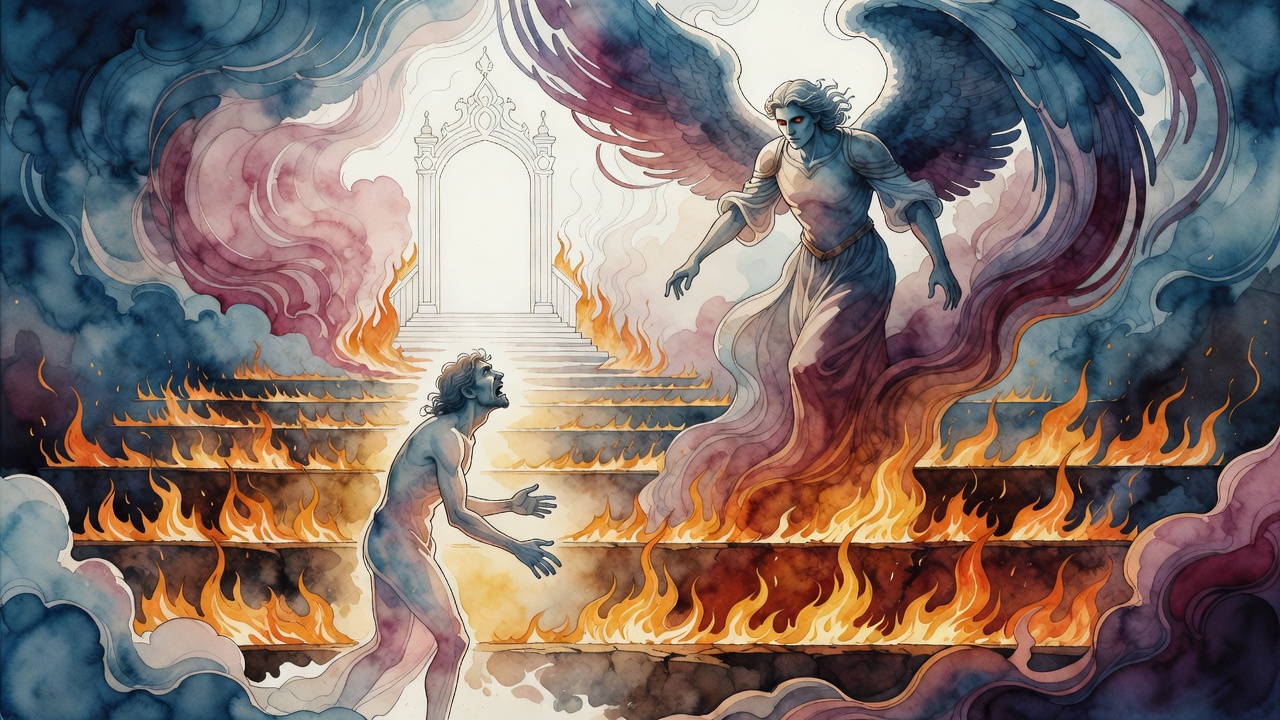
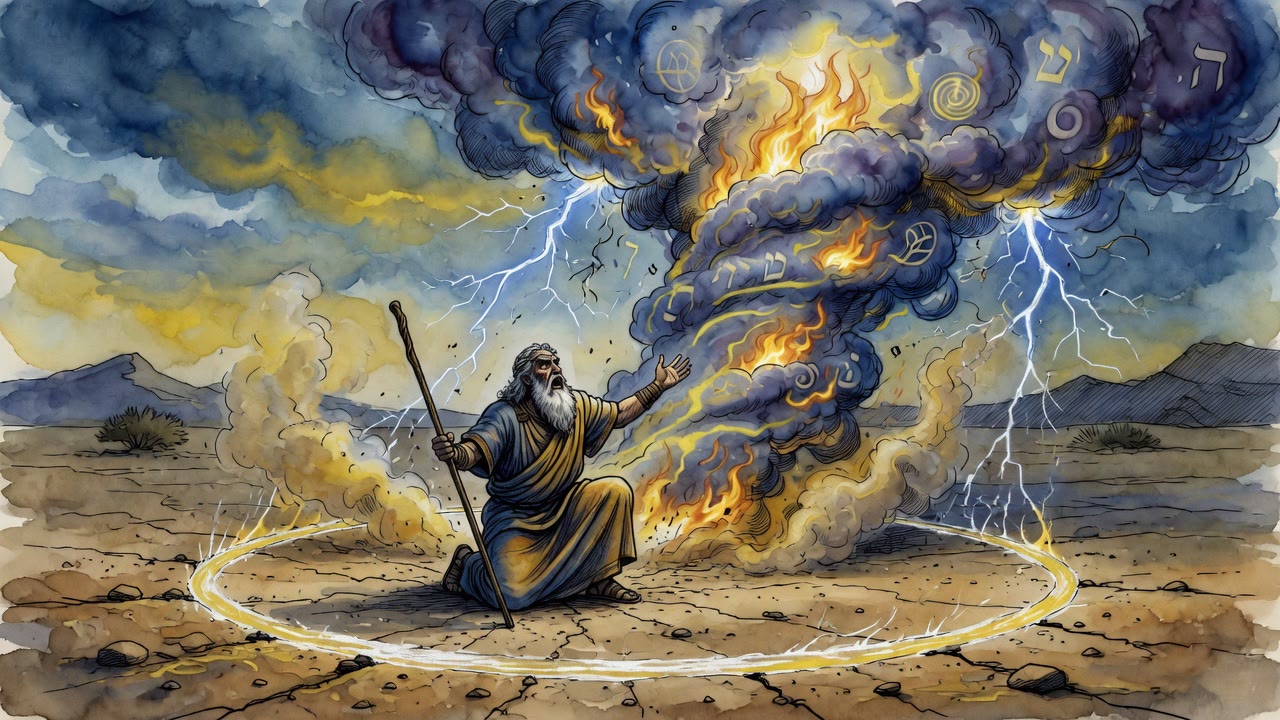
The soul arrived at the gate still wearing the shape of the man it had been, and the heat found it before the gate did. Somewhere below, a red light moved like breath. It had expected darkness. It had not expected the smell of a forge.

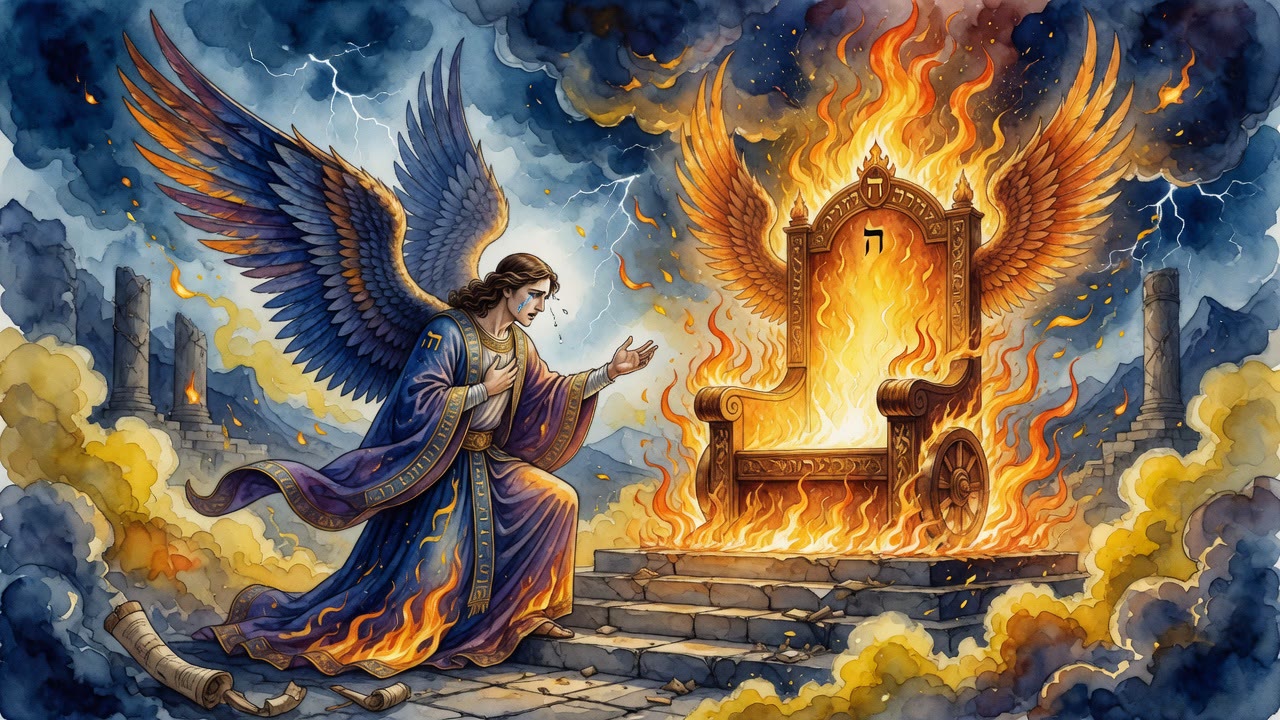
A figure stood in the opening, taller than the arch that framed him, and he did not step aside. This was Arsiel, the Prince of Gehenna, warden of the descending fires. He held no scroll and no scale. He only looked, and the looking was itself a kind of weighing.

"You are early," Arsiel said. "Or late. I have not been told."

The soul did not follow this. Arsiel did. He was forbidden to take a single soul below until the command came down, spoken plainly, from above. Until it came he could threaten, and circle, and wait. He had done all three for longer than the world was old.

The Prosecutor Turns His Back on the Dead

But the soul at the threshold was not the danger in that place. The danger came from above, thin and rising, the sound of the living at prayer. On the earth the righteous had heard that this man had died, and they were pleading for him, and their words climbed toward the Throne like sparks going the wrong way up a chimney.

Arsiel knew what those words could do. He had watched a single prayer, aimed well, empty a chamber that had been packed for a generation. So he did what he always did. He turned his back on the trembling soul and lifted his face to the ones who prayed.

"Give me the souls," he called up to them. "They are mine. The ledger is closed. Stop your mouths and let me work."

He was not lying to frighten them. He was trying to break their aim. If he could make the righteous doubt, or grieve, or simply fall silent for the space of one breath, the prayer would scatter before it landed, and the man at the gate would go down by default.

The Many Names of the Warden

Those who had come this way before did not agree on who he was. Some said the warden at the fire was Samael, the angel of death, the same hand that had loosed them from their bodies now standing at the door to receive them. Some said he was Ashmedai, who ruled the kingdom of demons and had climbed up to claim his share. Others said only that he was the angel set over the punishment of the wicked, and that his name mattered less than his patience.

To the soul at the gate it made no difference. Whatever he was called, he wanted it to go down, and he wanted the voices above to stop.

The Seven Descending Fires

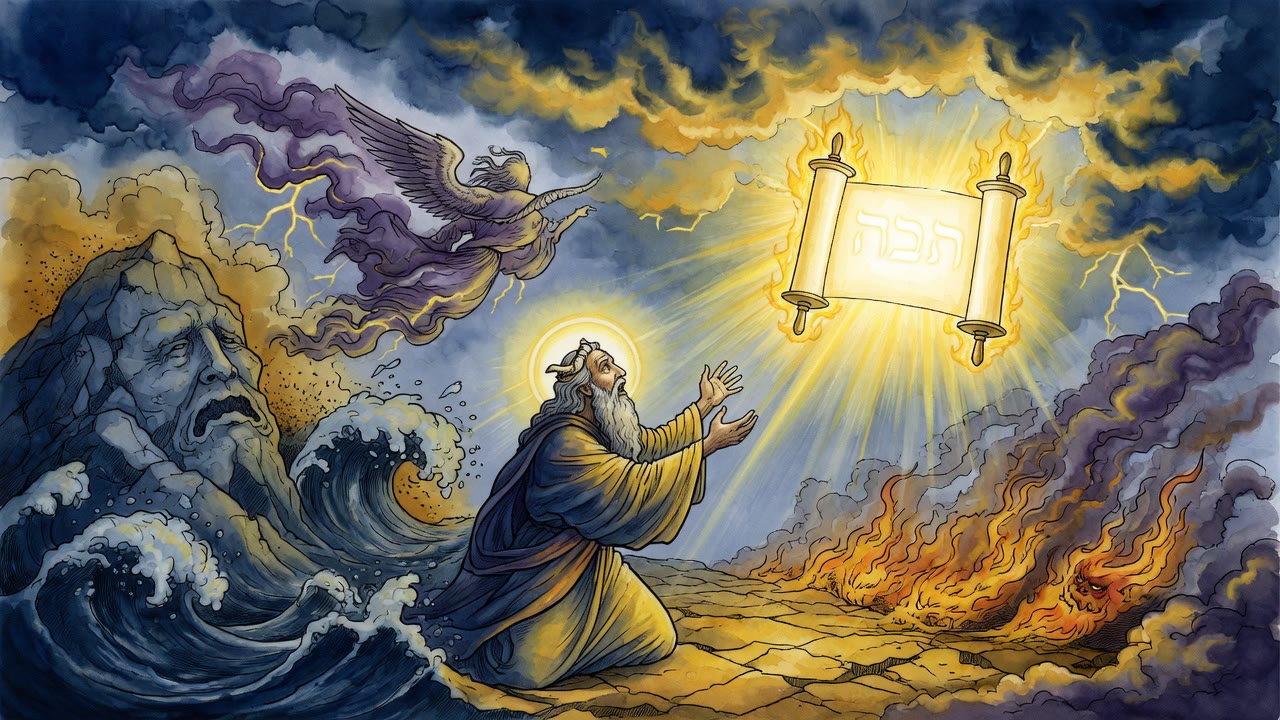
Then the command came. Not to the soul, and not for it. Far above, God spoke a word, and the ledger opened, and Arsiel felt it the way a man feels a door swing open behind his back. He stopped calling to the righteous. He turned to the work.

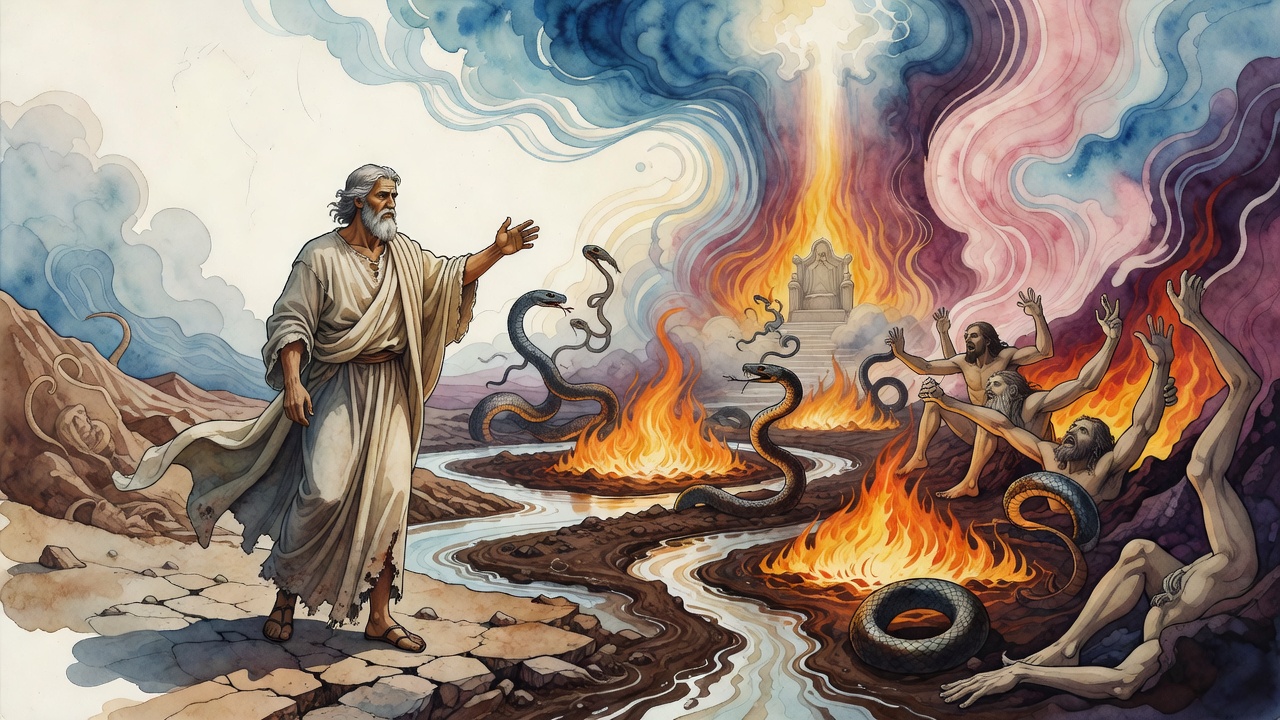
The gate gave onto a stair, and the stair went down, and the down had floors. Seven of them, one beneath the other, each hotter and each narrower than the last. On the upper floors walked the souls the man had expected to find, the cruel and the false and the ones who had eaten what was not theirs, each standing in the fire fitted to what he had done. The soul braced to be counted among them.

But the stair kept going, past the crowded floors, down into a quiet the soul had not thought fire could hold.

The Chambers Reserved for the Holy Dead

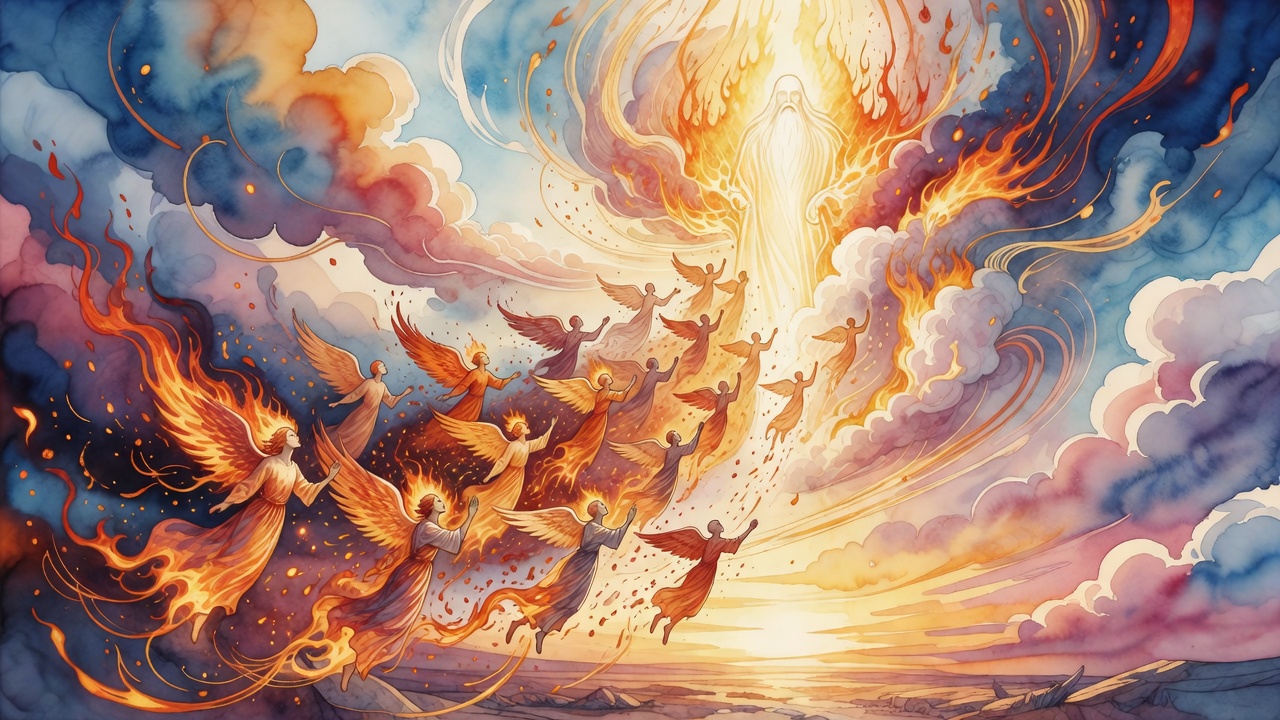
On the sixth floor the fire burned and touched no one in torment. Here stood the souls of those who had died in the middle of a good deed, struck down with a coin still in the hand meant for the poor, or the last word of a blessing still on the lips. They had not finished. Death had caught them mid-mitzvah (a commandment), and so they had been carried past the chambers of the guilty and set here, in a fire that did not punish but held.

The seventh floor was the deepest, and the soul could barely stand to look at it. Here were those who had died of the sicknesses heaven had laid on them not for their own sins but for the sins of all Israel. Their bodies had been broken so that a whole people could walk free. The fire around them was the hottest in all of Gehenna, and it was not burning them. It was burning off everything that was not them, the way a smith burns the ore away to find the silver inside.

The Silver at the Bottom of the Fire

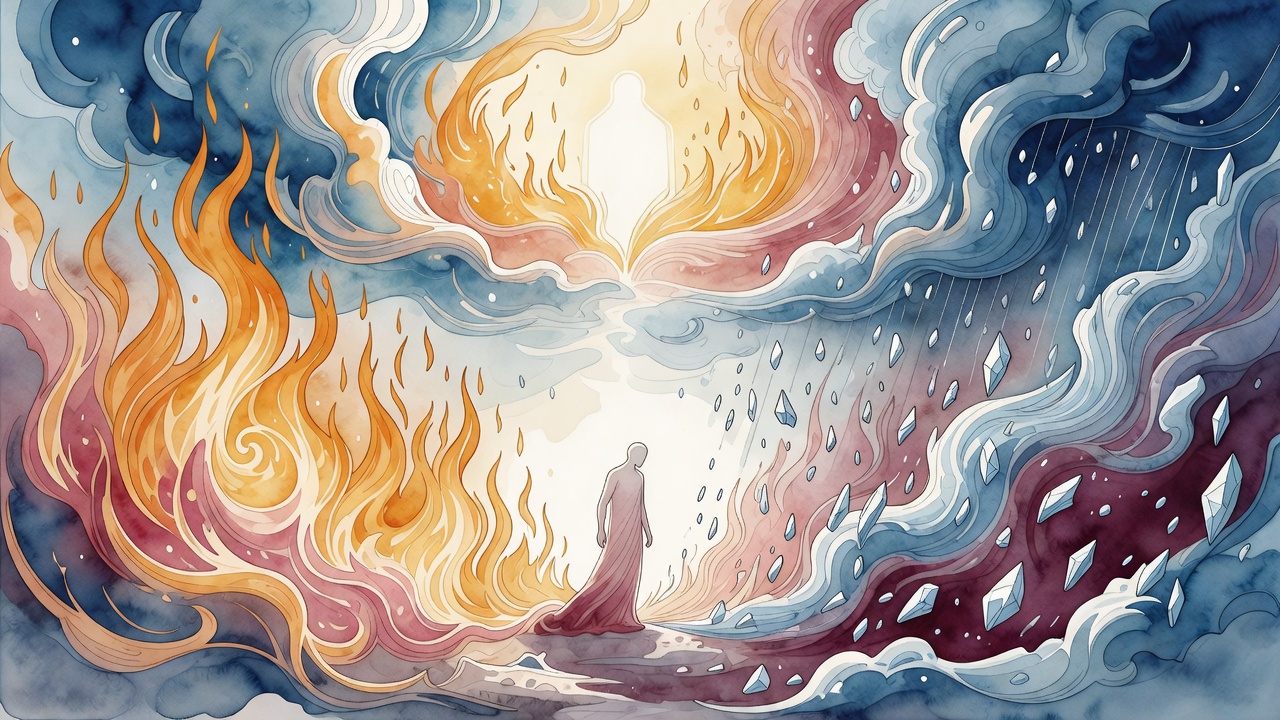
Nothing had been explained, but the shape of the place spoke for itself. The deepest floor was not the worst floor. Arsiel guarded the fire, yet the fire at the bottom was no mouth waiting to swallow. It was a forge. The chambers grew holier as they grew hotter, and the hottest of all belonged to the ones whose agony had bought back every soul standing on the floors above them.

Arsiel climbed back to the top of the stair and faced the world again, waiting for the next word and the next soul. Above him the righteous were still praying. Their prayers were still landing. And he still could not stop a single one of them from reaching the Throne. That was the arrangement he had been given. He held the gate. He never held the outcome.


← All myths
From the tradition

Sources

2 sources

The texts behind this telling. Some cards carry a translation of the source; others are our own retelling of it, and each card says which. Every card links out to the original.

Midrash ha-Ne'elamZohar (Midrash HaNeelam)

Retold in our words. Read the original at the link below.Sefaria-hosted English translation · CC-BY

Jewish tradition has a concept called Gehenna, often translated as Hell, though it’s more of a purgatorial realm of purification. And guarding the gates, or at least playing a key role in the process? Well, that's where the Prince of Gehenna comes in.

This figure isn't just a simple gatekeeper. He's a complex character with a rather… challenging job description.

Before the souls of the wicked are consigned to the netherworld, there's Arsiel. According to some accounts, Arsiel is the Prince of Gehenna himself. He waits, poised, for God's direct command to escort these souls to their… well, let's call it their destination.

Here's the really interesting part.

The Midrash (rabbinic interpretive commentary) ha-Ne'elam, quoted in the Zohar Hadash (25a-b), tells us that the Prince of Gehenna doesn't just stand idly by. Oh no. He actively confronts the righteous. He stands before them, demanding, "Give me the souls!" It seems a bit counterintuitive. Why would he do that?

The reason, it turns out, is strategic. The Prince of Gehenna understands something crucial: the immense power of prayer. He knows that if the righteous were to focus their prayers on behalf of the wicked, they might actually alter their fate! So, he attempts to distract them, to disrupt their connection to the Divine, to keep those prayers from reaching their intended target.

Who exactly is this Prince of Gehenna, though? Well, that's where it gets even more interesting. Several figures are associated with this role. Sometimes it's simply described as the angel in charge of punishing the wicked in Gehenna. But more often, familiar names like Satan and Samael (the angel of death) pop up. Some even point to the demon Ashmedai, who is said to rule the Kingdom of Demons. "Prince of Darkness" is another title you might hear.

In this particular instance, as mentioned earlier, the role is attributed to Arsiel. He embodies that almost satanic function of confronting the righteous, throwing obstacles in the path of their compassionate prayers. Only after God gives the explicit order does Arsiel finally take the wicked down to Gehenna.

It's a stark reminder that, even in the face of divine judgment, the prayers of the righteous hold immense power. They are, in many ways, the last line of defense, the final hope for redemption. (For more on this, check out the concept of "The Ashes of Sinners.")

So, what does this tell us? Perhaps it's a call to recognize the weight of our own prayers, to understand that even in the darkest of circumstances, compassion and intercession can make a difference. It suggests that even those deemed "wicked" are not beyond the reach of hope, as long as there are righteous hearts willing to offer their prayers on their behalf. And maybe, just maybe, it makes us think a little harder about the ripple effect of our own actions and intentions in the grand scheme of things.

Full source
Legends of the Jews 1:43Legends of the Jews

Retold in our words. Read the original at the link below.The Legends of the Jews by Louis Ginzberg (1909) · Public Domain

In Legends of the Jews, in the afterlife, the sixth division is reserved for those who died while performing a pious act, a mitzvah. And the seventh? It's for those who died from illnesses sent as atonement for the sins of the entire people of Israel. Imagine, their suffering becomes a sacrifice on behalf of everyone.

The familiar story centers on Genesis. But have you ever pondered the behind-the-scenes drama of the sun and moon?

The fourth day of creation, according to tradition, is when the sun, moon, and stars were placed in the heavens. But here's a twist: these celestial bodies weren't actually made on the fourth day. No, they were created on the first day! The fourth day was simply their installation date, their grand debut in the cosmic theater.

Initially, the sun and moon were equals! Two radiant powers sharing the sky, each with equal status. But, as readers often find in stories of siblings or co-workers, jealousy crept in.

The moon, it seems, wasn't happy with this arrangement. The moon challenged GOD directly, asking, "O Lord, why didst Thou create the world with the letter Bet?" Bet, ב, is the second letter of the Hebrew alphabet, and it begins the word Bereshit, "In the beginning."

God replied, "That it might be made known unto My creatures that there are two worlds." The moon, still probing, asked which world was larger, "this world or the world to come?" God revealed that "the world to come is the larger." According to Ginzberg's retelling in Legends of the Jews, the moon wasn’t satisfied. It pointed out the inherent imbalance in creation: a greater and lesser world, a heaven exceeding the earth, water stronger than fire. And then, the zinger: Shouldn't the sun and moon also reflect this hierarchy, with one being greater than the other?

The moon, essentially, wanted a promotion. And God, reading between the lines, wasn't pleased. "I know well," God responded, "thou wouldst have me make Thee greater than the sun. As a punishment I decree that thou mayest keep but one-sixtieth of thy light."

Ouch. Talk about a demotion.

The moon, understandably, protested! "Shall I be punished so severely for having spoken a single word?" God, showing a sliver of mercy, relented somewhat. "In the future world I will restore thy light, so that thy light may again be as the light of the sun." A promise of future glory!

But the moon, bless its ambitious heart, wasn't done. "O Lord," she said, "and the light of the sun, how great will it be in that day?"

This was the last straw. The wrath of God was enkindled. "What, thou still plottest against the sun? As thou livest, in the world to come his light shall be sevenfold the light he now sheds." Sevenfold! The decree was final. The sun’s dominance was sealed.

And what about the sun itself? The sun, according to this legend, runs his course "like a bridegroom," full of joy and purpose. "He sits upon a throne with a garland on his head." Ninety-six angels accompany him on his daily journey, in relays of eight every hour, two to the left of him, and two to the right, two before Him, and two behind. According to Legends of the Jews, as strong as he is, he could complete his course from south to north in a single instant, but three hundred and sixty-five angels restrain him by means of as many grappling-irons. Every day one looses his hold, and the sun must thus spend three hundred and sixty-five days on his course.

What's more, the sun's journey is fueled by song! "The progress of the sun in his circuit is an uninterrupted song of praise to God. And this song alone makes his motion possible." This is why, when Joshua needed the sun to stand still, he commanded it to be silent. According to Ginzberg's retelling, "His song of praise hushed, the sun stood still."

So, what does this ancient story tell us? Is it about celestial politics? The dangers of ambition? Or perhaps it's a reminder that even the brightest lights in the universe are governed by a divine order, an order that values humility and praise. Maybe it is about the power of song and praise and how integral it is to the sun’s role. Whatever you take away from it, it's a story that continues to shine, illuminating the mysteries of creation and the complexities of the cosmos within us all.

Full source