The Spies Opened Their Report With Amalek and Broke Israel's Courage
Ten scouts opened their report with the name that still stung from the wilderness road, and courage fell out of Israel like water from a cracked jar.
Table of Contents
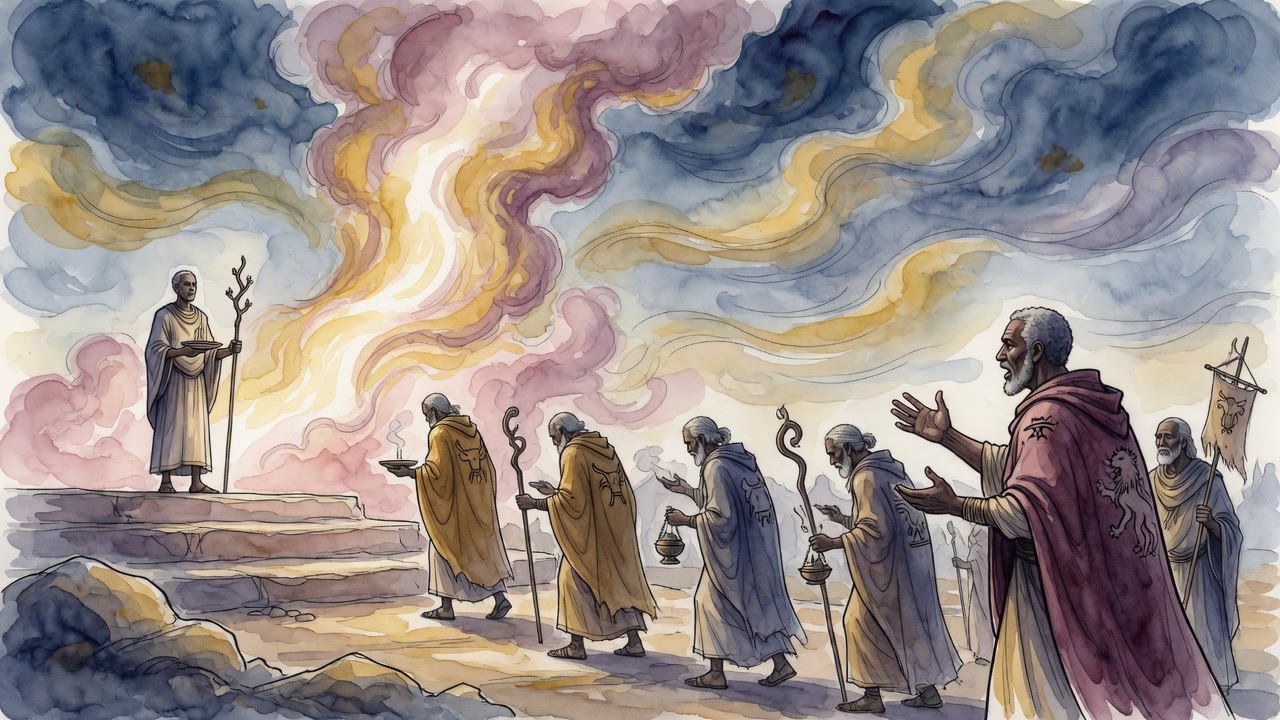
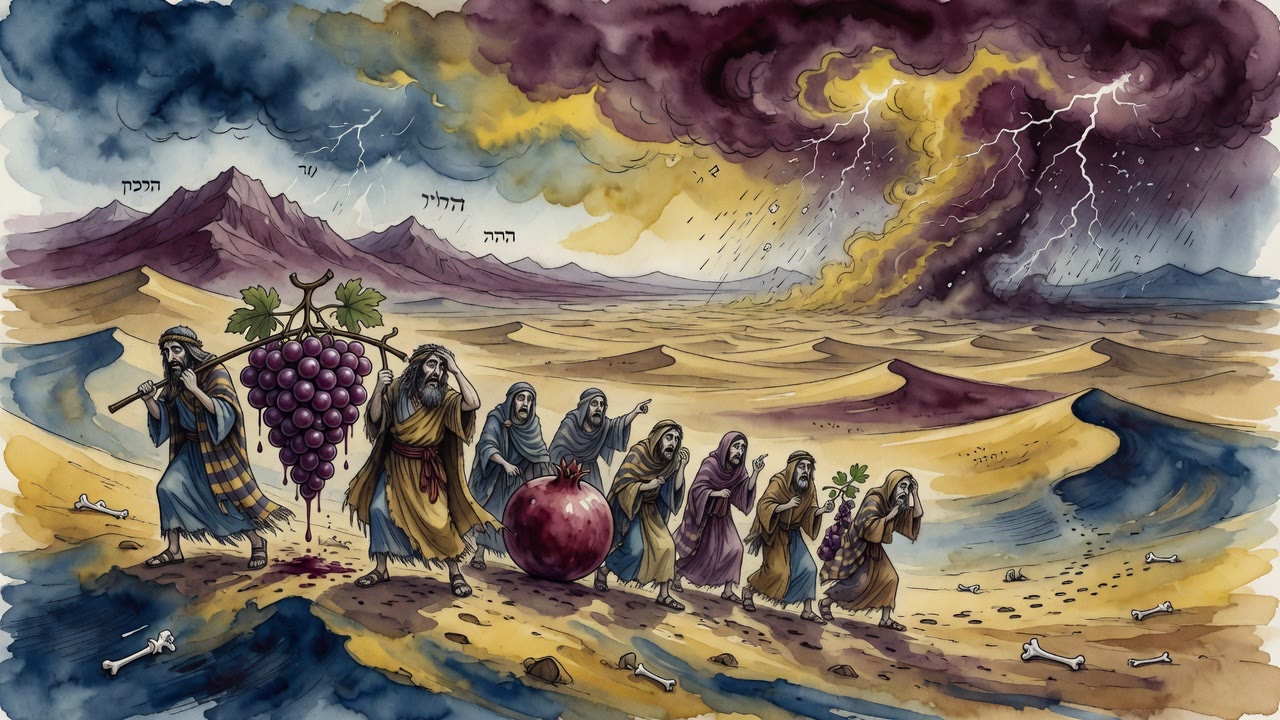
Amalek was the first word out of their mouths. Not the grapes. Not the milk and honey. Not the walled cities that rose like teeth from the hills. Ten men who had walked the land for forty days stood before the camp and opened with the enemy who had once cut down the stragglers at the rear of the line.
 Click for full size
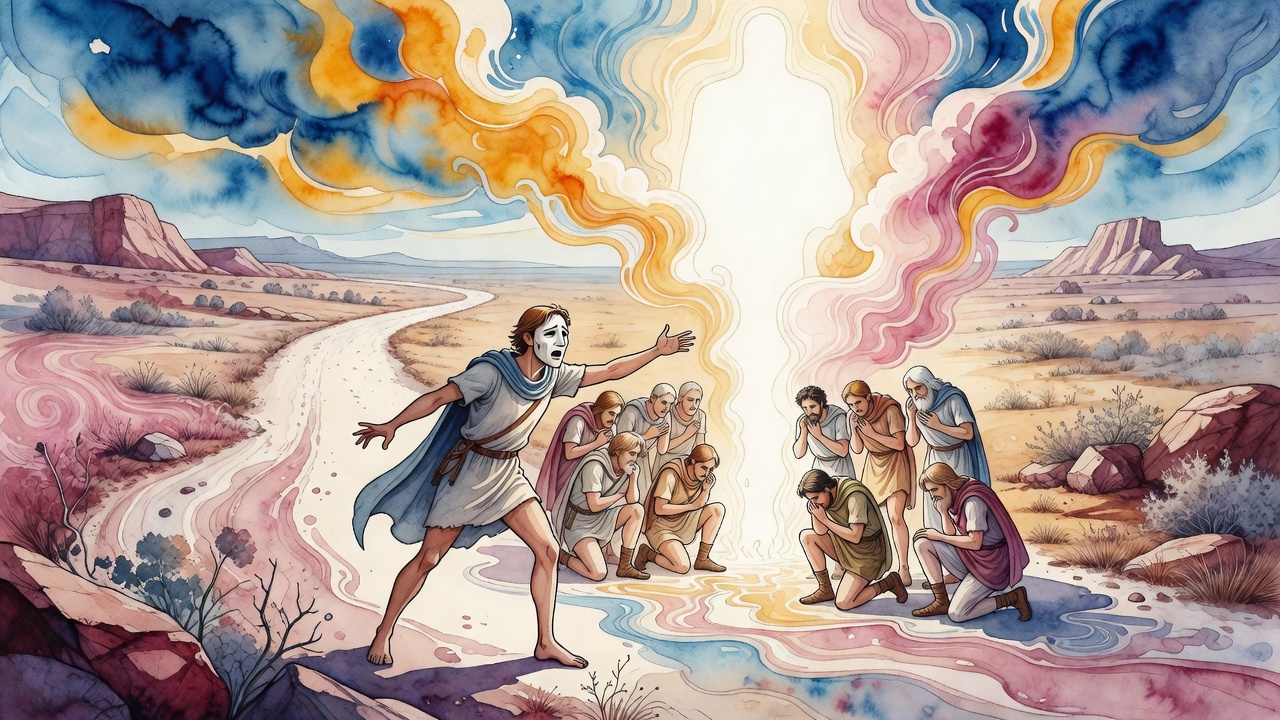
The name did its work before the rest of the report could arrive. Old men stiffened. Mothers pulled children closer. The desert wind that had once carried the taste of victory now tasted of the strap.
The Strap Lifted Before the Eyes
Teachers later told it with a parable a child could feel in the body. A boy who had already felt the strap did not need a long speech. Lift the leather in front of his eyes and the fear returned whole. So the spies lifted Amalek.
They knew what that name meant on the road out of Egypt. Amalek had not waited for a fair fight in the center of the column. He had torn himself up from his own place and planted himself astride the path, because Esau had charged his line to confront Jacob's children. Naming him first was not geography. It was a blow to memory.
Then they stacked the other names like a wall. The Hittite, the Jebusite, the Amorite in the hill country. The Canaanite by the sea and along the Jordan. Every approach guarded. Every route already claimed. The land still waited, but the report made it sound as if the land had already decided against them.
The Heart That Turned Away
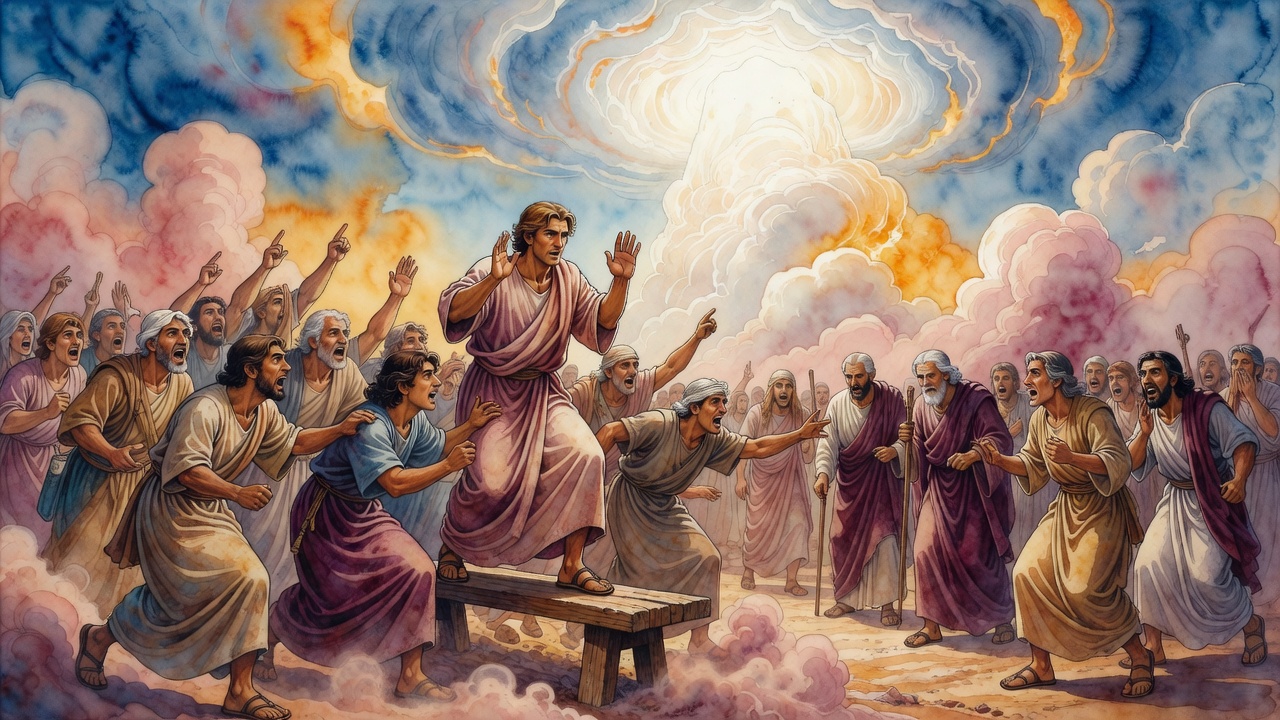
Scripture says they turned away the heart of the children of Israel (Numbers 14:1-4). The turning was not an argument won by careful measures of fortresses and food. It was a flood. Night fell on the camp with weeping that did not come from hunger. It came from a story told in the wrong order.
A people can survive hard news. Hard news that begins with the old terror becomes something else. It becomes a verdict. The ten men had walked the same soil as the two who would stand against them, yet they returned as if the soil itself had sworn allegiance to giants.
Caleb and Joshua heard the same dust under their sandals. They tasted the same fruit. They measured the same walls. The difference was not in the map. It was in the order of the telling, and in the courage the telling either kept or spent.
A Time to Be Born and a Time to Die
Far later, teachers of Israel would hear Ecclesiastes' pendulum swinging over this generation. There is a time to be born and a time to die (Ecclesiastes 3:2). They said the Holy One had once been midwife to Israel, washing birth-blood from a people just out of Egypt, covering an abandoned infant until it could stand (Ezekiel 16:4). That was a time to be born.
Then came a time to die in the wilderness, spoken as decree against the generation that believed the first name more than the promise (Numbers 14:35). Only Caleb and Joshua were spared the full weight of that sentence. The rest would learn that a report can open a grave without lifting a sword.
Between birth and death the same voice that midwifed them also planted and uprooted, killed and healed, breached and built. The spies chose the breach. They handed the camp a time to weep before anyone had buried a body. A time to laugh would wait for another generation's mouths (Psalms 126:2).
Caleb Against the Crowd
Caleb did not answer with a longer catalog of enemies. He stilled the people toward Moses and said the land was exceedingly good, that if the Lord delighted in them He would bring them in (Numbers 14:7-9). Against ten trained mouths he set one clear refusal to kneel to the strap.
Joshua stood with him. Two against ten is bad arithmetic in a public square, and the square nearly stoned them. Fear loves company. Courage often stands with empty hands and a thinner crowd. The fruit they had carried became an exhibit nobody wanted to taste while the first name still rang.
The Holy One heard both the weeping and the protest. The generation that let Amalek open the night would not open the land. Their children would. The spies had wanted safety. They purchased forty years of graves marked by the same sand they had feared to cross as free men.
The Name That Still Works
Amalek remains a name that can be lifted like a strap. Any storyteller who begins with the worst threat first can break a camp before breakfast. The Torah does not hide how well it worked. It shows the cost in bodies that never entered the inheritance, and in a people who had to raise children who would not remember Egypt's whip yet would still inherit Egypt's caution.
Caleb's answer still cuts against that craft. Put the promise before the panic. Put the fruit before the fortresses. Put the God who midwifed a people at the sea before the enemy who once struck the rear. Order is not decoration. Order is life or death in the ear of a tired nation.
The ten returned with truth twisted by sequence. The two returned with the same facts held in a different grip. Israel lived for a generation inside the difference, walking circles while the land waited, ripe and unentered, beyond a fear that had been spoken first on purpose.
← All myths