The Ten Spies Whose Fear Cost Israel Forty Years
Twelve men brought back a report from Canaan. Ten of them described the truth and condemned their entire nation to wander until they died.
Table of Contents
 Click for full size
What They Saw Was Real
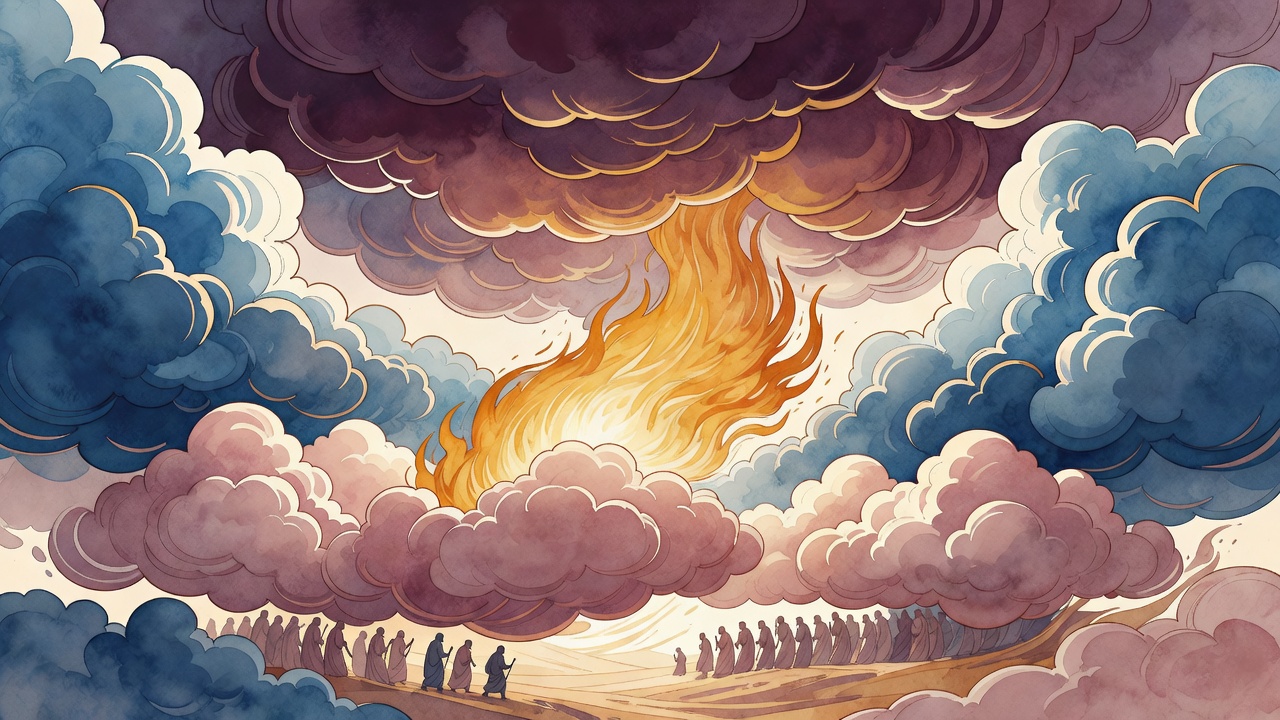
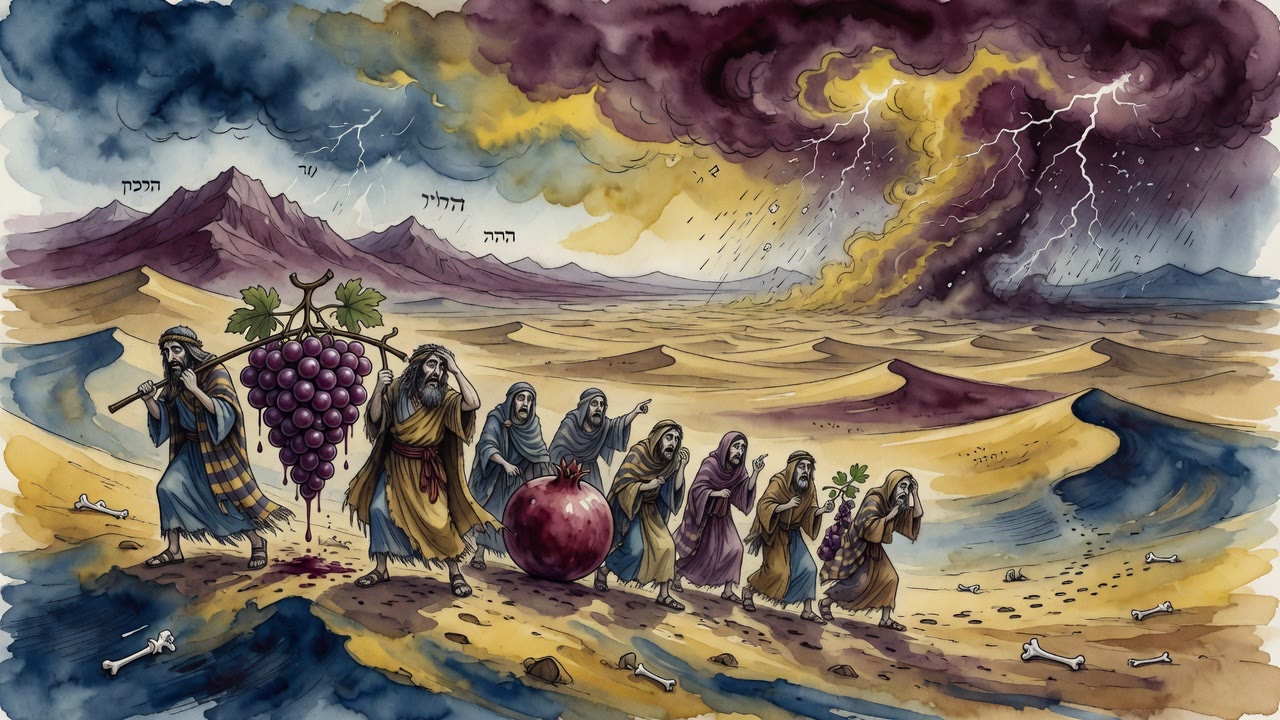
The spies came back carrying a cluster of grapes so heavy it required two men to carry it on a pole between them. They had been in the land forty days. They had walked through fortified cities and looked up at walls built to last. They had seen the sons of Anak, who by comparison made them feel the size of insects. This is what they reported, and every word of it was accurate.
Moses had sent the twelve men to bring back an honest assessment. The land, the people, the fortifications, the soil, the fruit. They brought back fruit as evidence. They brought back a completely truthful account of what they had seen. And ten of them, in the same breath as describing the land's abundance, announced that Israel could not take it.
The Night That Became a Permanent Wound
The people heard the report and wept through the night. They wept not in grief but in panic, and the rabbis noticed the date. It was the ninth of Av. God, in the tradition's telling, looked down at a people weeping without cause on a night that had not yet earned its sorrow, and said: you want to weep? I will give you something to weep about on this night, forever.
That night became the date of the destruction of the First Temple. Of the Second Temple. Of the expulsion from Spain. Of other catastrophes layered across centuries onto the same calendar date. The rabbis were not saying the spies caused all of these things. They were saying that a people who gave themselves to fear on that night imprinted something into history that could not be undone.
What Caleb Did That the Others Could Not
Two men brought back a different report. Caleb silenced the crowd and said the land could be taken. Joshua stood with him. The other ten turned on them and said they had lost their minds. The congregation discussed stoning them.
The question the rabbis pressed on was what made Caleb and Joshua different. They had seen the same cities. They had carried the same grapes. They had walked beside the same giants. The difference was not information. Both sides had the same information. The difference was what they chose to do with the fear they certainly also felt.
Forgiveness That Did Not Change the Sentence
Moses interceded, as he always interceded, and God agreed not to destroy the people. The golden calf had nearly ended them, and Moses had won their survival then too. But this time the pardon came with a sentence unchanged. God said: I have pardoned, according to your word. And then announced that every adult who had wept that night would die in the wilderness before Israel crossed into the land.
The pardoned and the sentenced were the same people. The rabbis found this precise. Forgiveness did not mean the consequences dissolved. A generation had decided what it could not do, and that decision became the shape of the next forty years. They would wander exactly as long as the spies had spent in the land, one year for each day, until that generation was gone.
What the Sea Left on the Shore
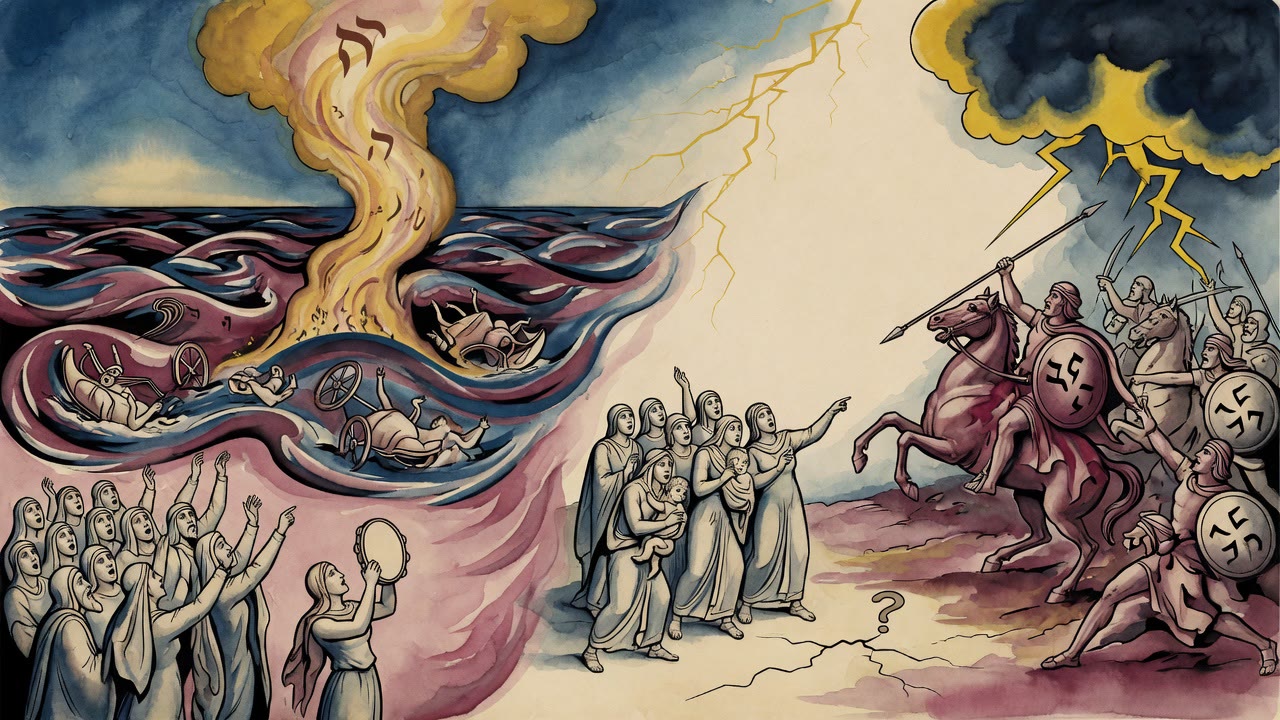
There was a detail from an earlier moment that the tradition held alongside this one. When Israel crossed the sea and Egypt's army drowned, the bodies washed up on the shore. Israel saw them. The rabbis said this was important because it removed any remaining doubt that the Egyptians were gone. Egypt was finished. There was nothing behind them.
A people who had seen Egypt finished behind them and a good land ahead of them, who had eaten quail and manna and drunk from a traveling rock, still could not trust that the land was theirs to enter. That was what the rabbis meant when they said the fear at the border was the most expensive emotion in Jewish history.
← All myths