Tarfon and Akiva Argue Learning Against Doing
Dust from the road still clung to Tarfon's sandals. In Nitzah's house in Lod the lamp smoked, and a question cut the room in half.
Table of Contents
 Click for full size
The Question in Nitzah's House
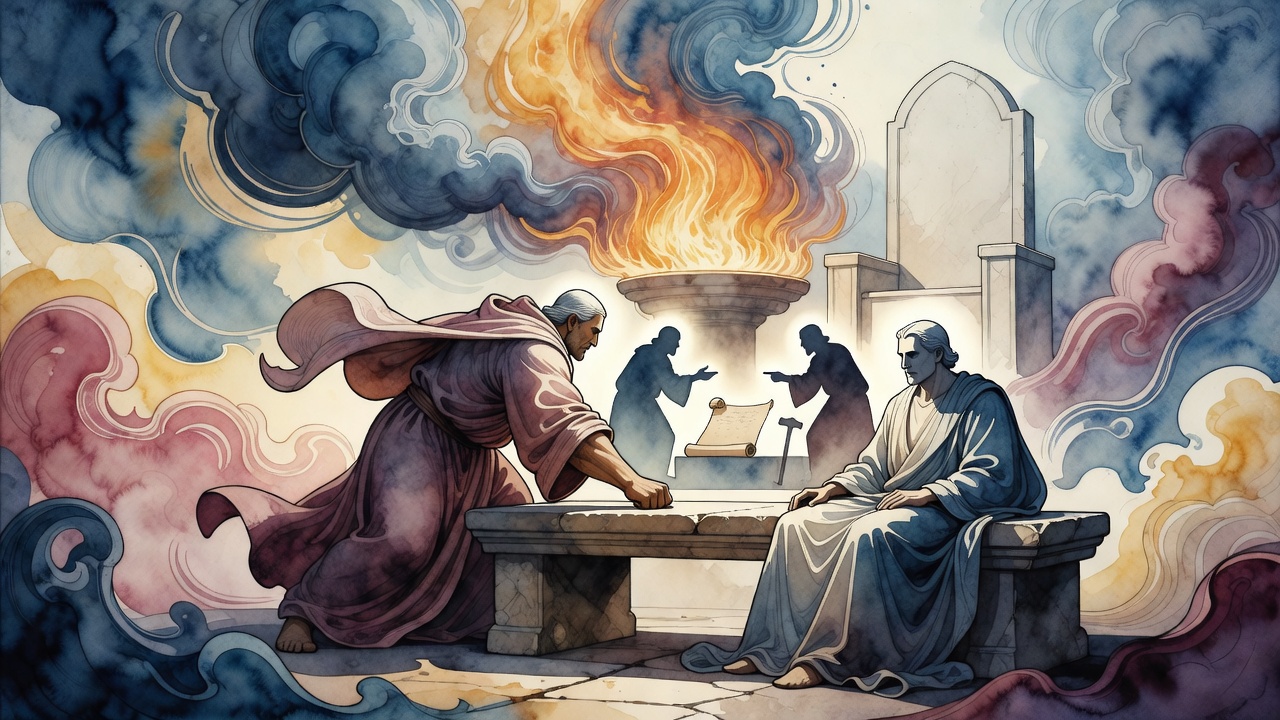
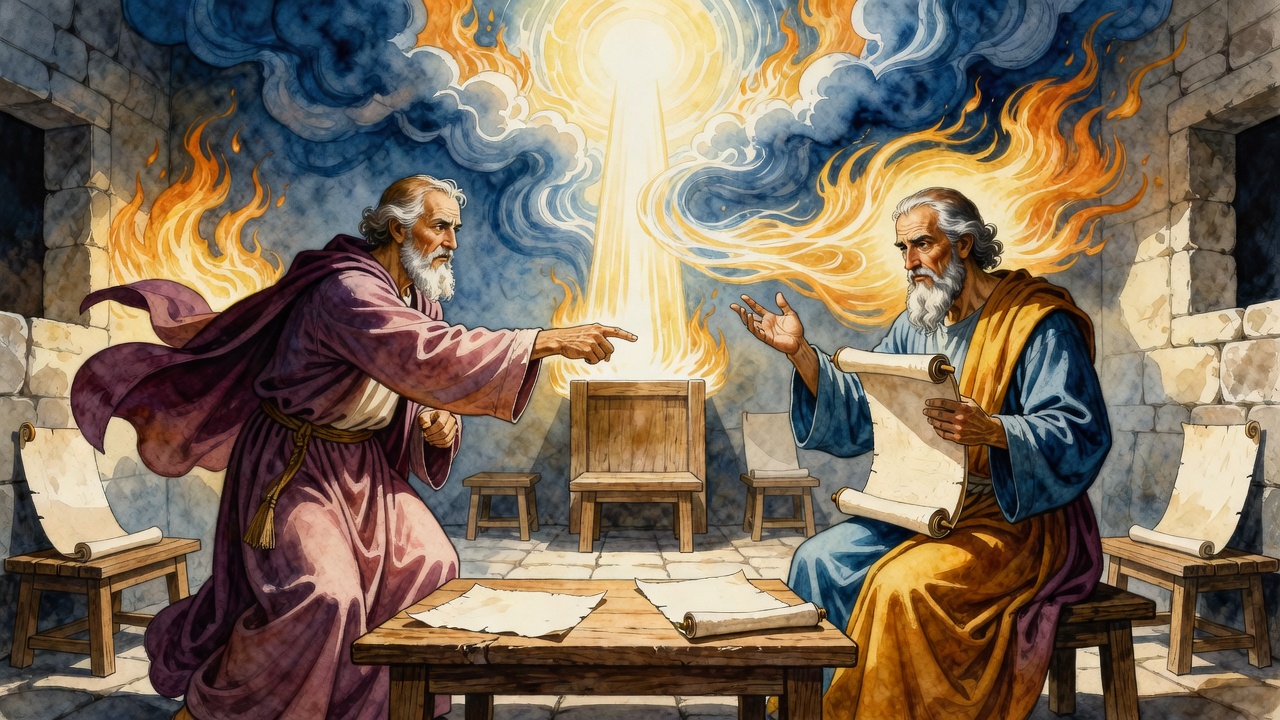
Rabbi Tarfon set his palm flat on the table as if the wood itself might answer. Dust from the road still clung to his sandals. Outside, Lod's market clattered. Inside the house of Nitzah, oil-lamp smoke hung in the rafters, and three teachers sat with a hard question between them.
Someone asked it plain. What is greater, learning or doing?
Tarfon did not hesitate. "Doing is greater." A mitzvah (a commandment) without a body is a crown with no head to wear it. Rabbi Akiva lifted his chin. "Learning is greater." The hand that never studied will cut the wrong animal, free the wrong slave, bless the wrong name.
Rabbi Yossi HaGlili watched both men. The question was not clever. It was a knife laid between two hearts that both loved God.
The Room Closes Ranks
They argued learning against doing until the lamp guttered. Tarfon's voice stayed on the deed. Akiva's stayed on the verse. Then the room closed ranks. All of them answered together.
"Learning is greater, because learning leads to doing."
Tarfon's mouth tightened. He had not lost a fight about love of deed. He had been told the order inside a Jew: first the ear, then the arm. Study is not the rival of the mitzvah. Study is the road the mitzvah walks on.
Yossi Counts the Years
Yossi pressed further. He counted on his fingers in the smoke. Learning preceded challah, the portion of dough given to the priest, by forty years. It preceded terumah and maaser, the tithes, by fifty-four. It preceded shemittah, the sabbatical year, by sixty-one, and the Yovel, the jubilee, by one hundred and three.
"Before Israel ever measured a field," he said, "the people already carried the words that would one day command their hands."
Tarfon stared at the table. The numbers hung in the air like weights. Torah is older than the first challah dough. That age is hierarchy, not trivia.
Akiva Will Not Smile
Akiva did not smile. He had watched too many courts where ignorance wore the robes of zeal.
"A man who never opens a book can still stumble into a kindness by accident," he said. "A man who never learns will misread the world with confidence."
Yossi spoke Hosea's quarrel of Heaven with the land itself. No truth. No lovingkindness. No knowledge of the Lord. He did not begin with a missed offering. He began with an empty mind that can no longer recognize the face of mercy.
"Freeing oneself from water is the beginning of punishment," Akiva said, and in that room they heard Torah in the water. Dryness is not rest. Dryness is the first crack in the wall.
Another pressure waited behind the first. Why learn at all? A student might say: so I grow rich. So they call me Rabbi. So I bank reward in the world to come. Akiva answered with Deuteronomy's single demand. Love the Lord your God. All that you do shall be out of love alone.
Service itself becomes learning. In Eden, God set Adam to serve and guard a garden that had no plow yet. Altar service is called service. Learning is called service. The same word carries both fire and book.
They Walked Out Into the Market
Night settled on Lod. Somewhere a dog barked at a cart. Inside, Tarfon still carried the weight of deed in his shoulders. A man who only studies while a neighbor starves has not finished becoming a Jew. The room had not denied that. The room had ordered the sequence.
Akiva's path ran the other way through the same fear. Without learning, zeal becomes a blunt knife. A free man who never learned the calendar of release will keep a slave past the year. A farmer who never learned the edge of the field will harvest the poor man's corner as if God had not spoken.
When they finally rose, no one crowned a winner for the market to gossip about. They left with a shared sentence that could travel: learn so you can do, and do not call the deed greater if the mind that should guide it is empty. The house of Nitzah kept that refusal like a seal on wax.
They stepped into the street. The market was still making its noise. Tarfon walked with the deed still in his hands. Akiva walked with the verse still in his mouth. Between them the ruling held: the mitzvah waits on learning, not the reverse.
← All myths