The Judge Who Dared Not Fear the Man Before Him
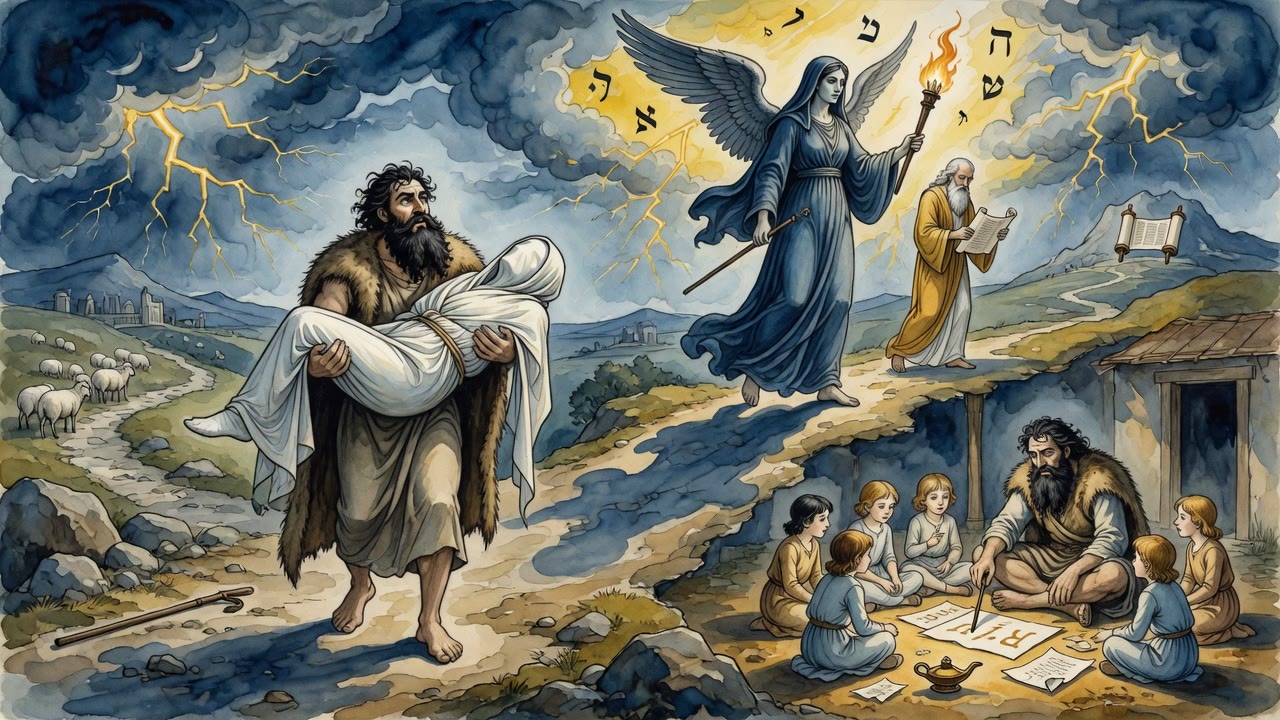
The mule stamped outside where the gifts sat packed for a softer ruling. Inside, the poorer man would not lift his face. The judge named the field anyway.
Table of Contents
The powerful man smiled with his mouth only.
 Click for full size
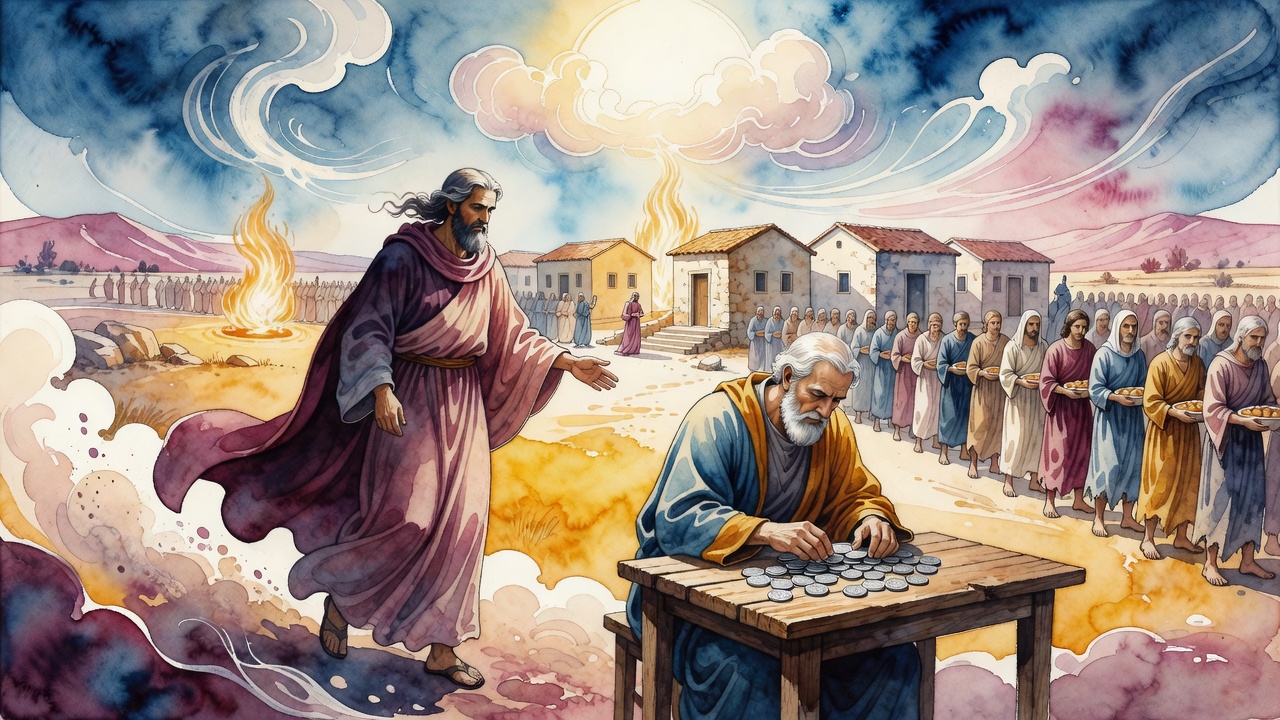
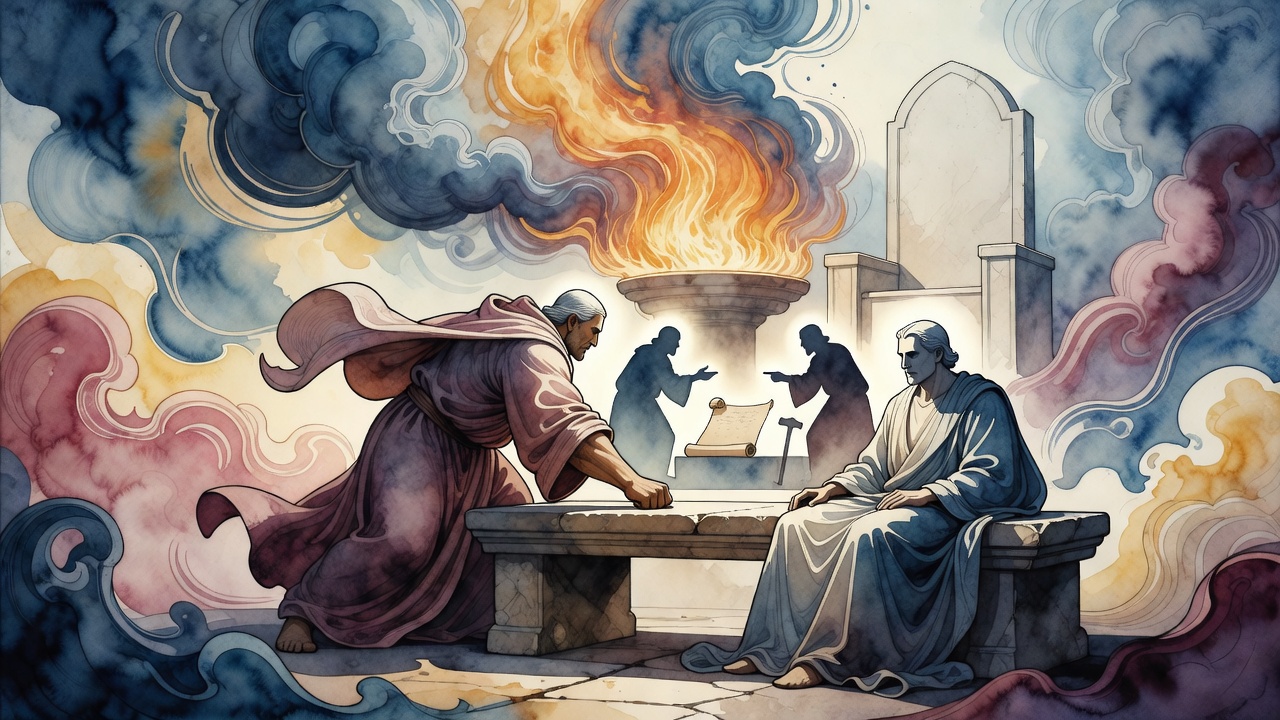
He sat across from the judge in a room that still smelled of lamp oil and wet wool. His servant had already named the gifts waiting outside if the case found a softer path. The facts were finished. The law was finished. Everyone in the room knew which way the ruling had to fall. The only open question was whether the judge would still have a spine when the smile hardened.
"Do not fear any man," the old teaching said. The judge felt the fear anyway, cold under the ribs, and stood up into it.
Silence Before Clarity, Not After
Earlier that morning he had been allowed to keep still. Two litigants had entered shouting. He had not spoken before he heard them. Even after the first speeches, when the path to guilt or clean hands still fogged, silence was still a tool. Take time. Ponder. Let no verdict leave a mouth that has not yet found the road.
Compromise had been lawful then too. Before the case clarified, he could send them to settle. After hearing, if he truly did not know, he could still urge them to leave the quarrel alone, as one leaves water before the breach is fully opened (Proverbs 17:14). That mercy belonged to fog. It did not belong to noon.
By noon the fog had burned off. The boundary stone, the witnesses, the dates, the torn cloak of the poorer man, all of it lined up. The powerful man saw the line as clearly as the judge did. That was why the smile came. Clarity is when bribes get polite.
He Named the Field
"Surely we can find a middle," the powerful man said. "Neighbors. Peace in the street. You would be praised for wisdom."
The judge heard the trap inside the praise. Once judgment is clear, compromise is not peace. It is a blade wrapped in soft cloth. He remembered the hard line he had learned as a boy: the compromiser sins, and the one who blesses the compromiser sins, until praise of a bent ruling sounds like rejecting the Lord (Psalms 10:3). His tongue wanted the easy middle the way a tired body wants a bed. He bit the inside of his cheek until the iron taste steadied him.
"You want silence from me now," he said. "Silence after clarity is not patience. It is fear wearing a scholar's cloak."
The powerful man's servant shifted by the door. Outside, a mule stamped. The poorer litigant stared at the packed earth as if looking up might break him.
The judge named the verdict in a voice that did not rise. Field restored. Stone reset. Penalty fixed. He did not look at the gifts that would never come inside. He looked at the poorer man's hands and watched them unclench one finger at a time.
Tarfon Spoke for the Hands
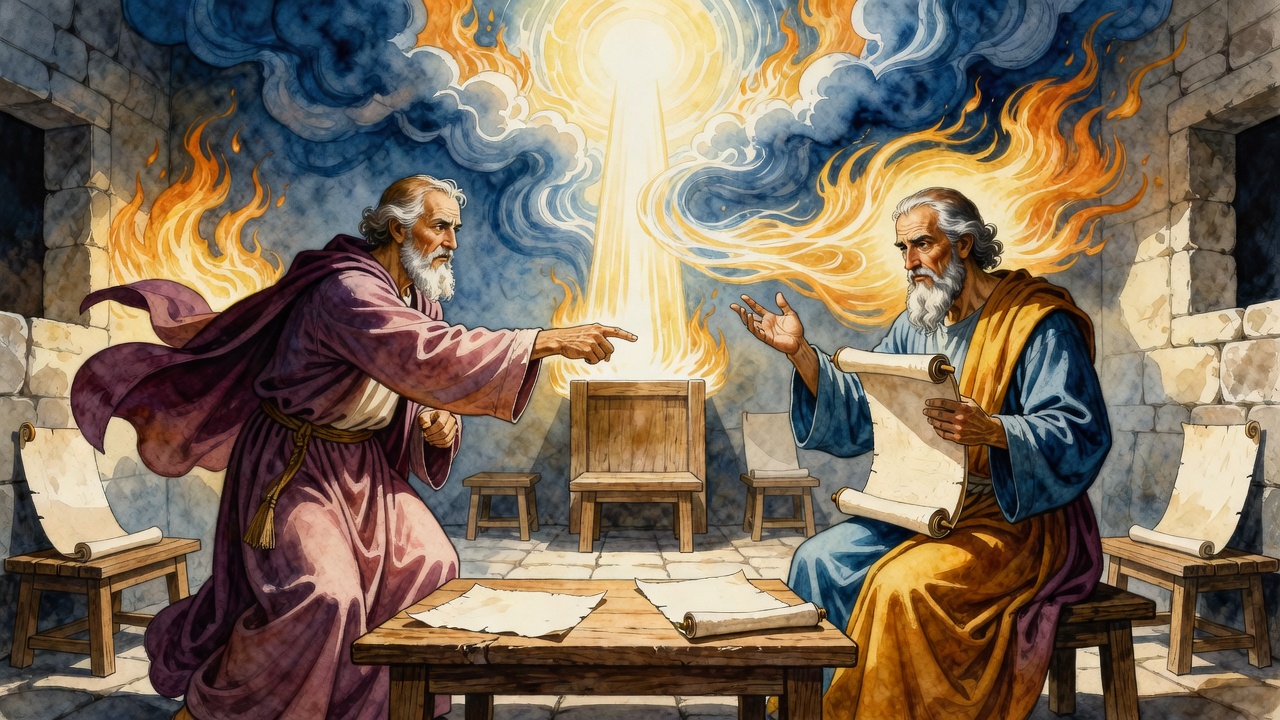
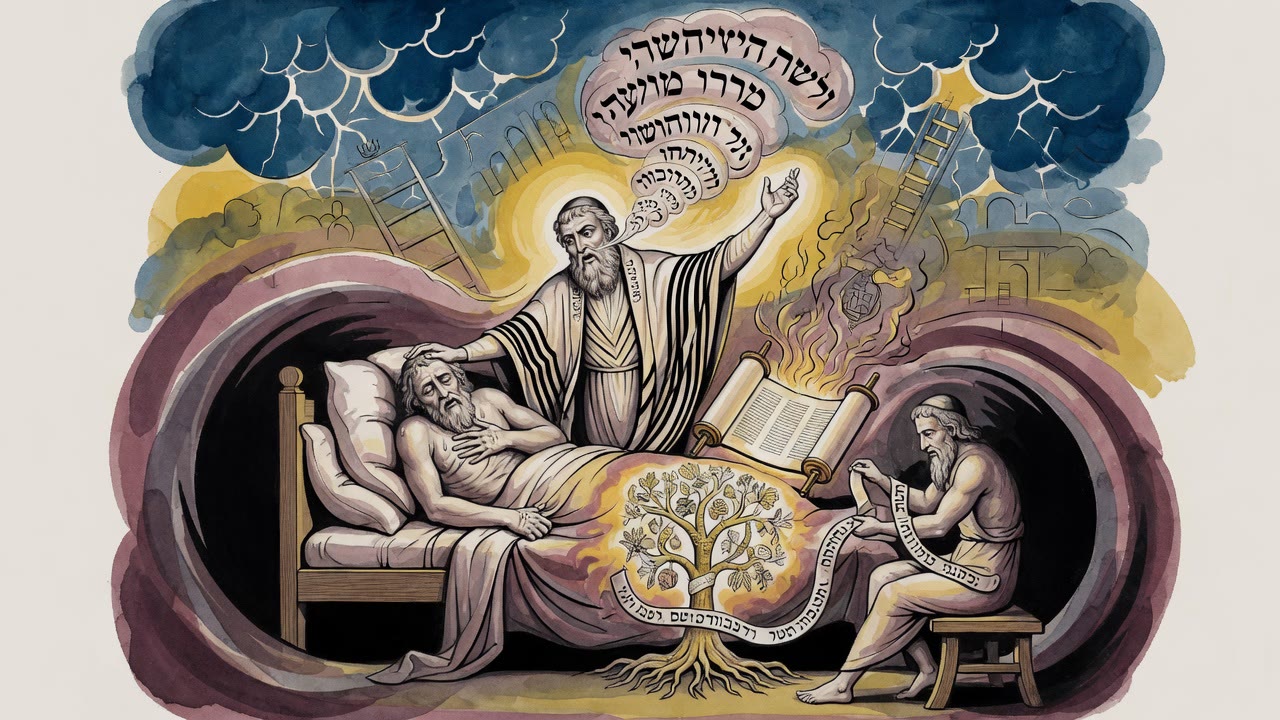
Far from that room, in the house of Nitzah in Lod, another kind of pressure filled a study. Rabbi Tarfon, Rabbi Akiva, and their company locked on a question that had no mule at the door and still cut deep: which is greater, learning or doing.
Tarfon spoke for the hands. Doing is greater. A mitzvah completed is heavier than a page turned. Akiva answered for the book. Learning is greater. Then all of them closed the gap the only way they would allow: learning is greater because learning leads to doing. Study that never leaves the mouth is a lamp under a bowl. Action without study is a road walked blind.
Rabbi Yossi set the claim on a calendar. Israel learned before several commandments landed in full. Challah came some forty years after the first learning. Tithes later still, fifty-four. Sabbatical at sixty-one. Jubilee at a hundred and three, measured from the first hearing. The foundation had to sit before the house of deeds could rise without cracking.
If neglect of learning carries a heavier punishment than neglect of a single act, it is because cutting the water at the source leaves every field dry (Proverbs 17:14). If the reward of learning runs higher, it is because teaching sons to speak in the words is the root that keeps the fruit coming (Deuteronomy 11:19).
The Scroll Rolled Shut
That night the judge sat alone with the case scroll rolled shut. No angel visited. No fire fell. He ate bread that tasted of ordinary grain and listened to a dog bark twice in the lane. The teaching had not promised drama. It had promised that once he knew, he could not stay quiet, and that fear of any man was not a third option hiding between guilt and innocence.
He thought of Tarfon's hands and Akiva's mouth and the way both finally pointed at the same chain: learn so you can do, do because you have learned what the doing means. His own doing that day had been a sentence spoken while a richer mouth waited for him to flinch. He had not flinched. The field would keep the poorer name. The powerful man would find another court or another year.
The scroll on the table stayed shut, and for once the silence in the room was the right kind, the kind that comes after speech, not instead of it. Morning would bring other faces. Some would be harder. The rule would not change. Do not fear any man. When you know, speak. When you do not know, wait. The mule outside was gone. The law was not.
← All myths