5 min read

The King Poured Poison Before It Touched His Lips

The eunuchs praised the water. Excellent, they said, good, even choice, why pour it out? He made them pour it anyway, and the poison caught the light.

Curated by Arthur · Told by Maggid ·
Table of Contents
  1. Water in a Golden Jug
  2. One Tree, Two Bodies
  3. Do Not Fear Any Man
  4. Mordecai and the Box of Chronicles
  5. After the Spill
The King Poured Poison Before It Touched His Lips Click for full size

Water in a Golden Jug

The king woke rattled from a sleep that had not been rest and asked for water. A simple request in a palace built for complicated desires. His eunuchs, whose job was to keep his body alive and comfortable, brought a golden jug as if the night were ordinary and thirst were the only plot.
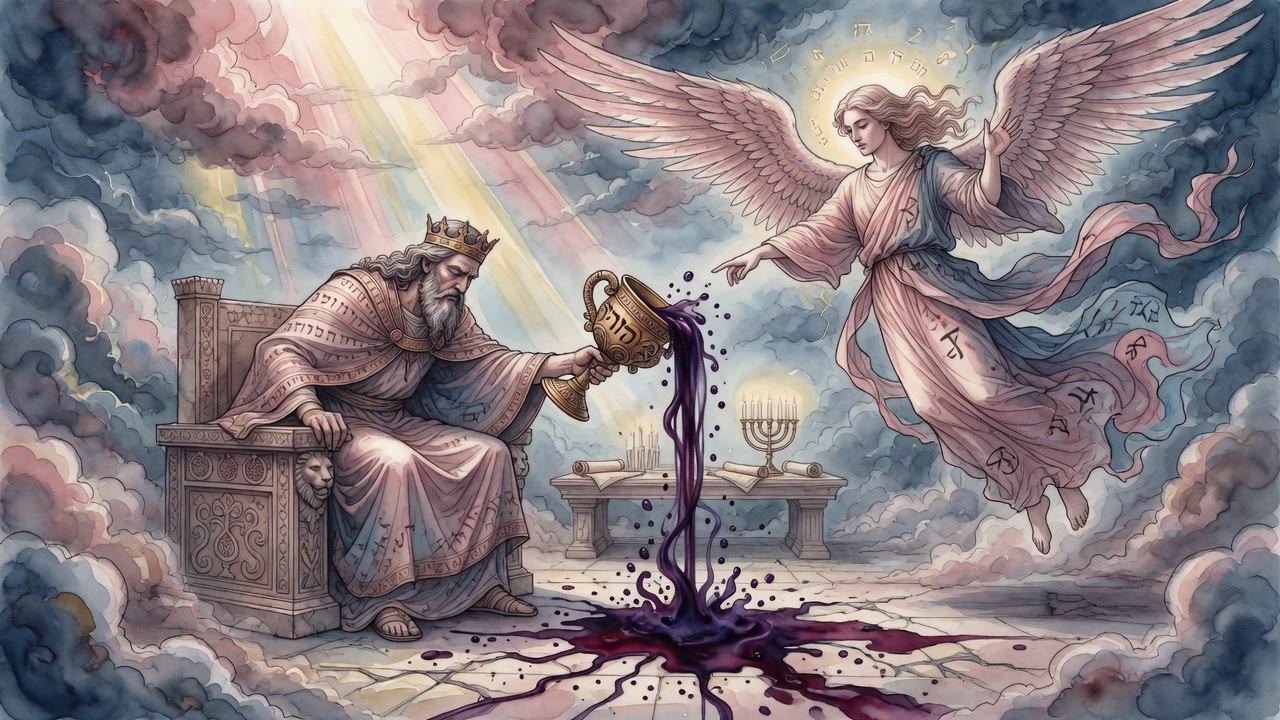
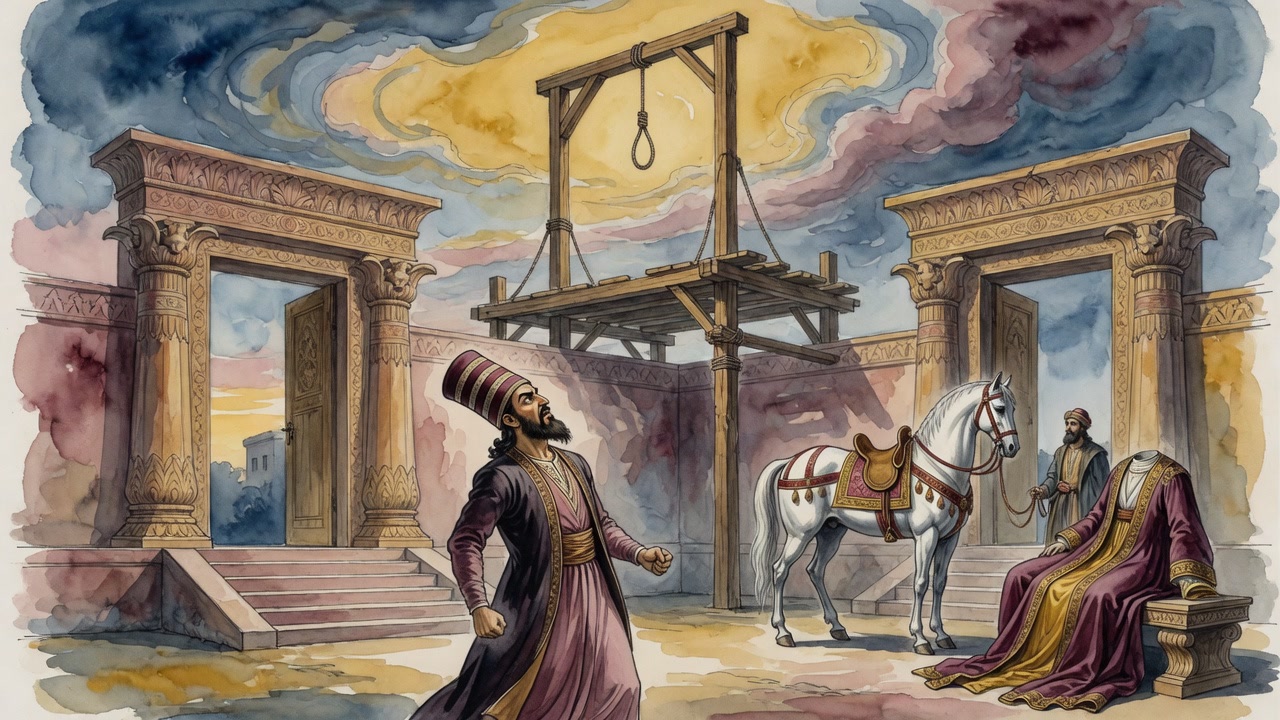
Something in the room felt wrong. The air. The haste. The way the servants' eyes did not meet his. He ordered them to pour the water out before it reached his mouth. They tried to dissuade him with music of flattery. "O our lord, O king, this water is excellent, good, even choice. Why should we pour it out before thee?" Their praise thickened his suspicion the way oil thickens a fire.

He insisted. When they poured, sam hamavet, deadly poison, showed itself in the light, a sheen no thirst could excuse. The cup that should have soothed him had been built to finish him. The pour saved a life and ended two careers in the same motion of the wrist.

One Tree, Two Bodies

The king ordered the eunuchs hanged. They were both hanged on one tree, one after the other. Scripture does not say "upon trees" in the plural. One timber held two traitors against the sky of Shushan (Esther 2:23). Justice moved fast enough to leave a single silhouette for the morning market to discuss.

Bailiffs and enforcers exist for nights like this. Courts need more than soft speech when poison has already entered the palace inventory. The midrash does not linger on pity for the plotters. It lingers on the pour that revealed them and on the tree that did not need a partner. Lashes and silence keep order in systems that have learned how easily gold jugs can lie.

The city smelled of fear and relief in unequal measure. A king who almost died becomes more dangerous and more grateful at once. In the morning the market talked about the tree.

Do Not Fear Any Man

A judge must not fear any man. Before a case is clear, silence is allowed. Gathering facts has its quiet. After the path of justice becomes plain, silence is forbidden. Compromise has its hour before the ruling hardens; once truth stands up in the room, the mouth must stand with it or the court becomes theater.

The king of Persia was no Sanhedrin, but the same nerve is on display in a royal bedroom. He refused the flattery of servants who wanted him to drink in the dark. He forced the evidence into open air. Fear of their smooth voices would have left him dead with a clean jug story for the morning scribes, a tragic accident, a funeral with excellent water praised in the eulogy.

Deliberation has a place. Cowardice does not. The pour was deliberation made visible, a judgment that began before any formal court sat.

Mordecai and the Box of Chronicles

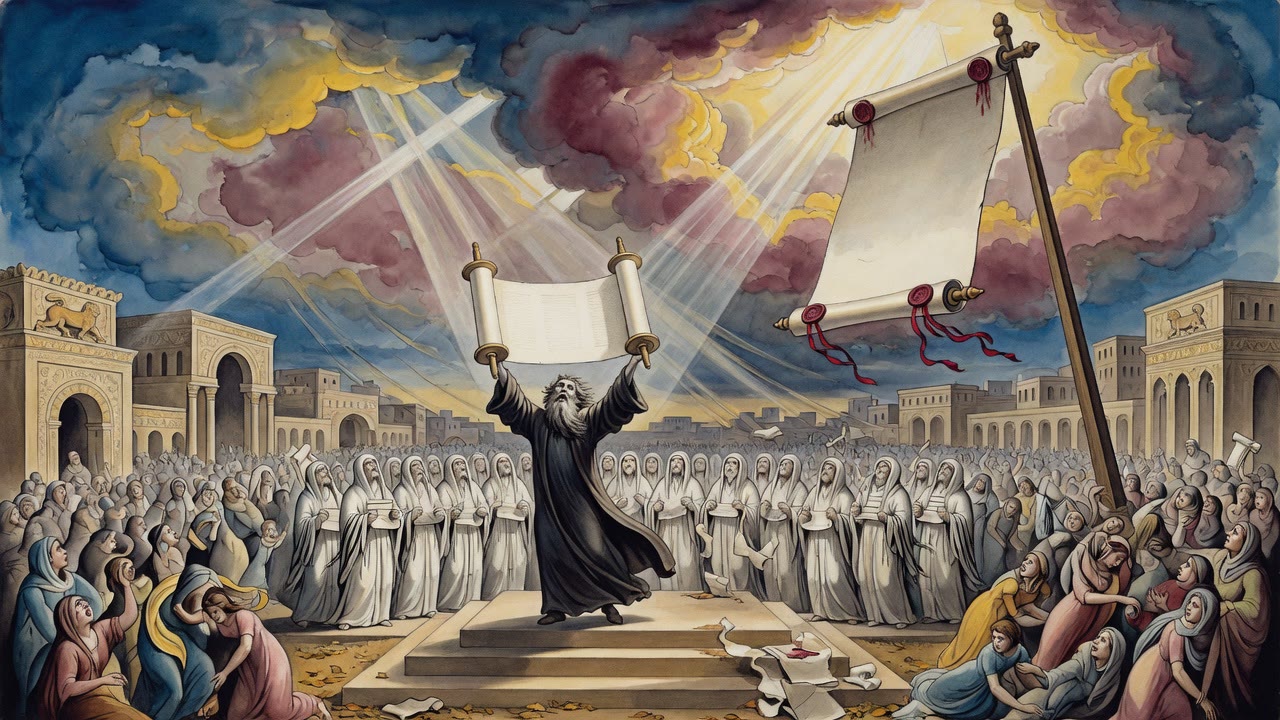
Everything that transpired before the king was recorded. The records lived in the king's box, the royal archive he opened when memory needed a witness more reliable than courtiers. Mordecai's act of loyalty, his warning that saved the king from assassination, was written in the book of the chronicles (Esther 2:23). Ink dried on Jewish courage while the tree still held its fruit.

Years later that box would refuse to sleep through a night of royal insomnia. The sleepless king would call for the book. The ink that preserved a Jew's courage would rise when the empire needed a reason to honor him, and Haman's timing would collide with a ledger entry born from poison that never reached royal lips.

Mordecai did not hang the eunuchs. He did not pour the jug. He stood in the chain of fidelity that made the pour matter for more than one night. In the archive a scribe sanded a page and wrote names that would outlive the timber. Poison had failed. Memory had begun.

After the Spill

Shushan kept its gold and its plots. Mordecai kept his place at the gate, hearing languages and watching faces. The king kept a story he could not forget: servants singing the excellence of water that wanted him dead. The golden jug became a teacher. Trust no praise that resists inspection. Force the pour. Write the names.

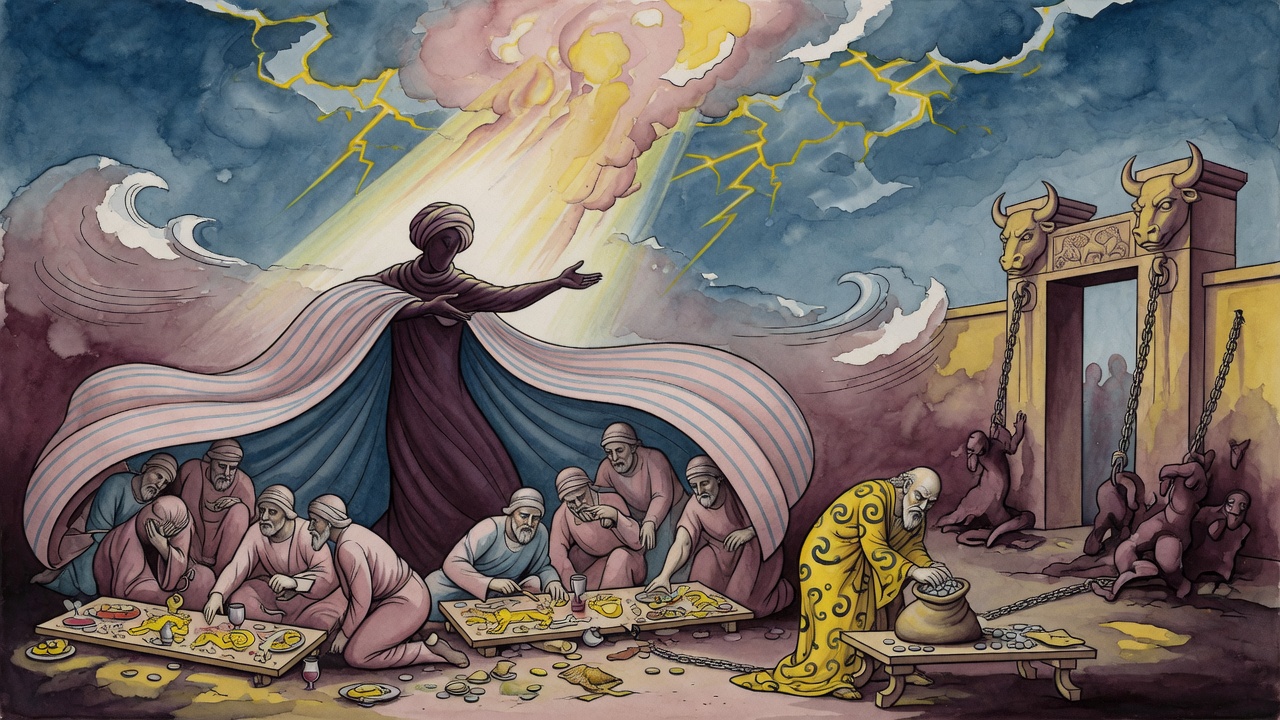
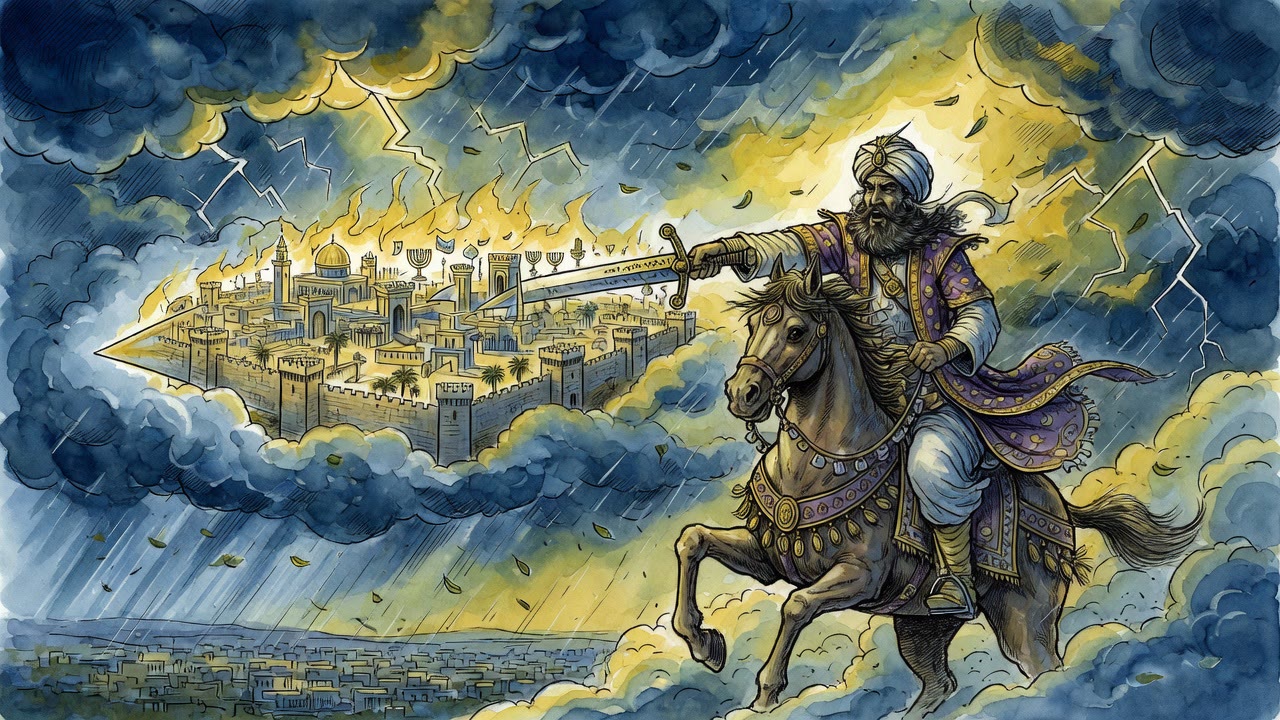
The tree stood as a warning. The chronicle box stood as a promise. Between them moved a people who would need both memory and nerve when a later decree tried to finish what poison had failed to start. Purim waits inside that box like a spring under pressure. A poured jug, a double hanging, and a line of ink would one day tip an empire. A poured jug, a double hanging, a line of ink: three small motions that would one day tip an empire's night.


← All myths

From the tradition

Sources

3 sources

The texts behind this telling. Some cards carry a translation of the source; others are our own retelling of it, and each card says which. Every card links out to the original.

Pirkei DeRabbi Eliezer 50:4Pirkei DeRabbi Eliezer

Translation of the source text.Pirke DeRabbi Eliezer, Sefaria Vocalized Edition · Public Domain

And when the king arose from his sleep, he said to his two eunuchs who were accustomed to give him drink, "Give me a little water," and they brought a golden pitcher with the poison of death within it. He said to them, "Pour out the water before me." They said to him, "Our lord the king, it is clear water, good and fair, and why should we pour it out before you?" He said to them, "Thus it has arisen in my heart, to pour it out before me." And they poured the water out before him, and he found the poison of death within it, and he commanded that they be hanged, as it is said, "and they were both hanged on a tree" (Esther 2:23). And they were both hanged on a single tree, one after the other, as it is said, "on a tree," and it is not written "on trees."

And every matter that was done before the king they would write down before him and place in the king's archive. And when the king wished to see what had happened to him, they would read in the records, and he would know what had happened to him. And they wrote the matter that Mordecai had reported in a record, as it is said, "and it was written in the book of the chronicles" (Esther 2:23).

Full source
Sifrei Devarim 17:4Sifrei Devarim

Retold in our words. Read the original at the link below.Sifrei by Rabbi Shraga Silverstein · CC-BY

The ancient text of Sifrei Devarim (a legal commentary on the book of Deuteronomy) wrestles with this very challenge, offering guidance to judges on how to work through the complexities of law and justice. It begins with a powerful injunction: "Do not fear any man." This isn't just about physical courage; it's about having the moral fortitude to deliver impartial justice, regardless of who stands before you.

The text then explores the process of judgment itself. If two people come before you seeking a ruling, it's permissible to remain silent initially, before hearing their arguments. That makes sense. You need to gather all the facts. And, even after hearing the case, if you're unsure how to rule, if the path to exoneration or incrimination remains unclear, silence is still an option. Take your time. Ponder.

This is crucial, once the judgment is clear, once you know the just and righteous path, you cannot remain silent. Justice demands to be spoken.

What about compromise? Is there a place for it in the pursuit of justice? Sifrei Devarim offers a fascinatingly nuanced perspective. Before you've heard the case, or even after hearing it if you’re truly unsure of the right ruling, you can suggest the parties try to reach a compromise on their own. Let them work it out, if possible.

However, once you understand the case and know how to rule, you can no longer suggest compromise. Why? Because true justice must prevail. As (Proverbs 17:14) puts it: "As the letting loose of water is the beginning of contention, and before the (law of) the quarrel is revealed, leave it." In other words, once the legal truth is known, don't muddy the waters with compromise.

And here’s where it gets even more interesting. The sages go so far as to say that "the compromiser is a sinner, and one who praises the compromiser is a sinner." Strong words, indeed! The text even quotes (Psalms 10:3): "And the blesser of the compromiser rejects the L-rd. Why such a strong condemnation of compromise? Because praising a judge who compromises when a clear judgment is possible is seen as rejecting God's law and justice itself.

R. Shimon b. Gamliel offers a further insight: "Compromise is raising the small and lowering the great." In other words, it can distort justice by benefiting the less deserving party at the expense of the one who is rightfully entitled.

But then, R. Yehoshua b. Karcha presents a seemingly contradictory view: "It is a mitzvah (a commandment or good deed) to compromise." He supports this with a verse from (Zechariah 8:16): "These are the things that you shall do: Speak the truth, one man to his neighbor. Truth and a judgment of peace shall you judge in your gates." He asks: What is "a judgment of peace"? Compromise!

So, which is it? Is compromise a sin or a mitzvah?

The key lies in understanding the context. Compromise is valuable before a clear judgment is possible, when it can prevent further strife and promote reconciliation. But when justice demands a clear and unequivocal ruling, compromise becomes a betrayal of that justice.

This passage from Sifrei Devarim challenges us to think deeply about the nature of justice, the role of a judge, and the importance of both truth and peace. It's a call to seek truth, to act with courage, and to strive for a world where righteousness prevails. A world where those in positions of power seek true justice.

Full source
Sifrei Devarim 16:1Sifrei Devarim

Retold in our words. Read the original at the link below.Sifrei by Rabbi Shraga Silverstein · CC-BY

It was also about… bailiffs. Yep, the folks tasked with keeping order, sometimes with a little more… persuasion.

Sifrei Devarim, a fascinating text that expands on the Book of Deuteronomy, illuminates these often-overlooked figures. When it says, "and bailiffs for your tribes," it's talking about the guys wielding the lash. Ouch. Think of them as the enforcers of the court's decisions. We see this role echoed in other parts of the Tanakh (Hebrew Bible). For example, II (Chronicles 19:11) mentions "the Levite bailiffs before you," and (Nehemiah 8:11) tells us how "the Levites silenced all the people." These weren’t always gentle encouragements, were they?

So, what does it mean to be a shofer, a bailiff, in this context? It means you’re part of a system designed to uphold justice, even if the methods seem a bit harsh to our modern sensibilities.

It wasn't just about brute force. (Deuteronomy 1:16) tells us, "And I charged your judges at that time, saying: Hear among your brothers." This isn't just a procedural instruction; it's a call for deep, considered judgment. The text emphasizes, "Be deliberate in judgment." This wasn’t a rubber-stamp operation. Each case demanded careful thought.

Imagine being a judge in those days. A similar case comes before you not once, not twice, but three times! It would be so easy to just say, "I've already ruled on this before!" But no. The Sifrei Devarim insists on fresh deliberation each time. This reminds us that justice isn't a formula; it's a process. Every individual deserves to have their case heard with the same attentiveness as the last.

And this idea, this constant striving for just and considered judgement, wasn't new. The men of the Knesset HaGedolah, the Great Assembly, the forerunners of the Sanhedrin (the supreme rabbinic court), understood this deeply. They said, "Be deliberate in judgment, and set up many disciples, and make a fence for the Torah."

"Make a fence for the Torah." What does that even mean? It means creating safeguards, additional layers of protection, to prevent people from accidentally stumbling into transgression. It's about building a system of checks and balances, ensuring that justice isn't just done, but that it's seen to be done. It's about educating and training the next generation of judges and legal minds. It's a holistic approach to justice that encompasses deliberation, education, and preventative measures.

So, the next time you think about justice, remember it's not just about the final verdict. It's about the entire process: the thoughtful deliberation of the judges, the role of the bailiffs in maintaining order, and the ongoing effort to "make a fence for the Torah," ensuring a just and equitable society for all. It’s a reminder that justice isn't a destination, but a continuous journey. A journey we’re still on today.

Full source