Parshat Chayei Sarah5 min read

The Angel Waited in the Street for Rebecca

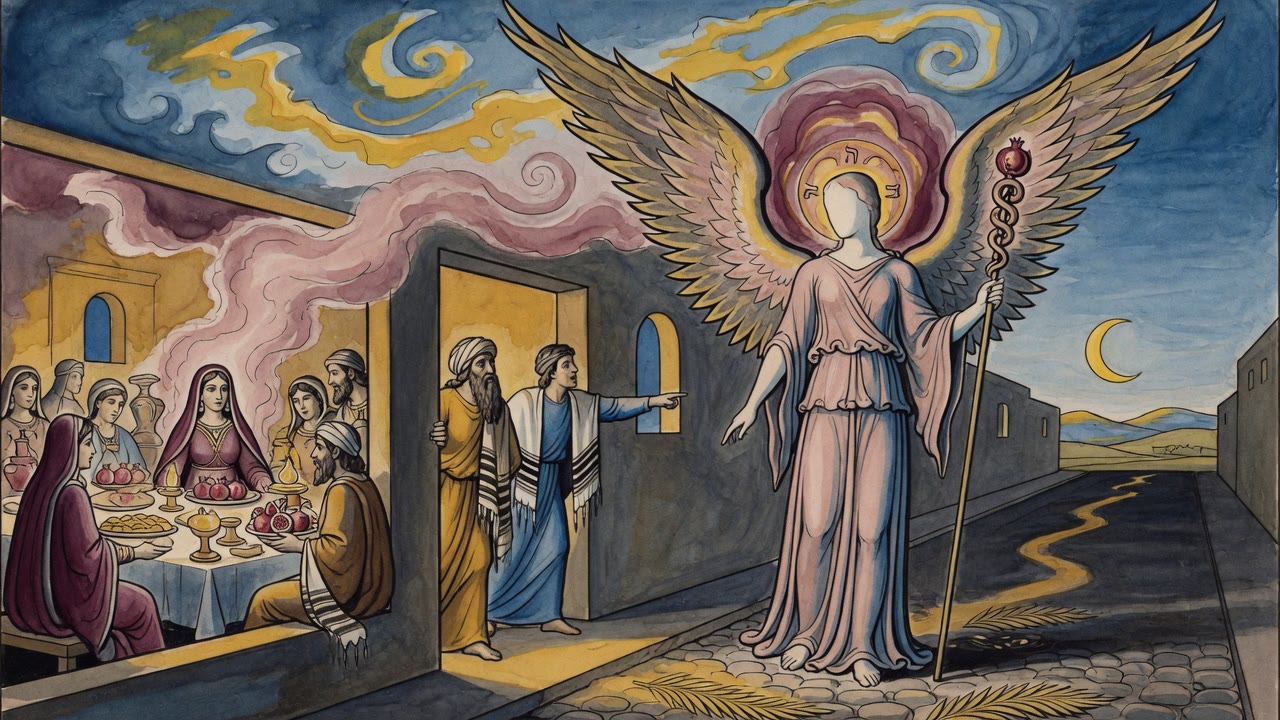
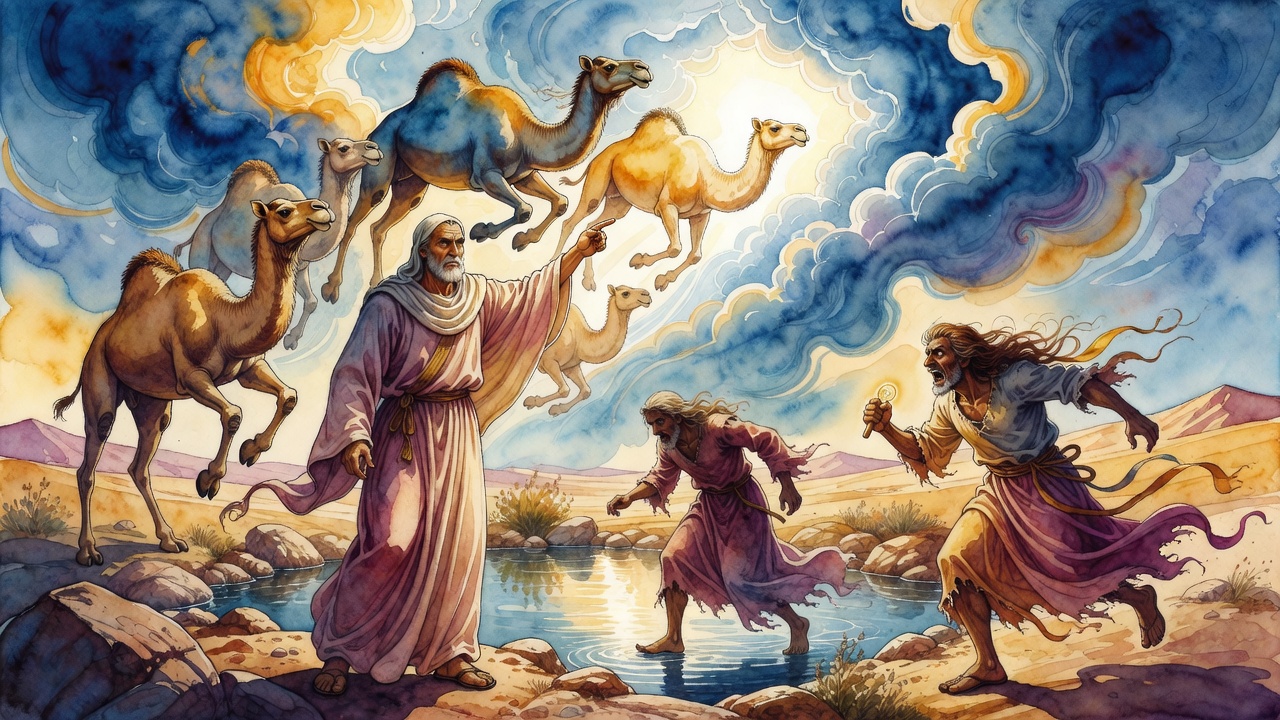
At Rebecca's farewell feast an angel stood outside in the street. The servant pointed to him and told Laban the road was already open.

Curated by Arthur · Told by Maggid ·
Table of Contents
  1. The Feast and the Door
  2. Do Not Hinder Me
  3. The Man in the Street
  4. Sister, Become Thousands
  5. Night Vision on the Road of Nations
The Angel Waited in the Street for Rebecca Click for full size

The Feast and the Door

Rebecca stood under the noise of her own leave-taking while men argued over whether she could go. Cups knocked against cups. Women blessed in overlapping voices. Fat hissed on the fire. Outside, past the threshold dust, a figure waited in the street as if the road itself had sent a messenger ahead of the camels and refused to come in for bread.

Laban and Bethuel had already said the hard sentence, the one that empties a family's right to stall. "Since this word has come forth from the mouth of the Almighty, we cannot prevent it." They quoted what their mouths could not improve: the thing proceeded from the Lord; they could speak neither bad nor good against it (Genesis 24:50).

"Behold, Rebecca is before thee; take her and go," they told Abraham's servant (Genesis 24:51).

Then the night lengthened into a banquet, and delay put on the clothes of celebration. Consent can wear perfume and still be a kind of rope.

Do Not Hinder Me

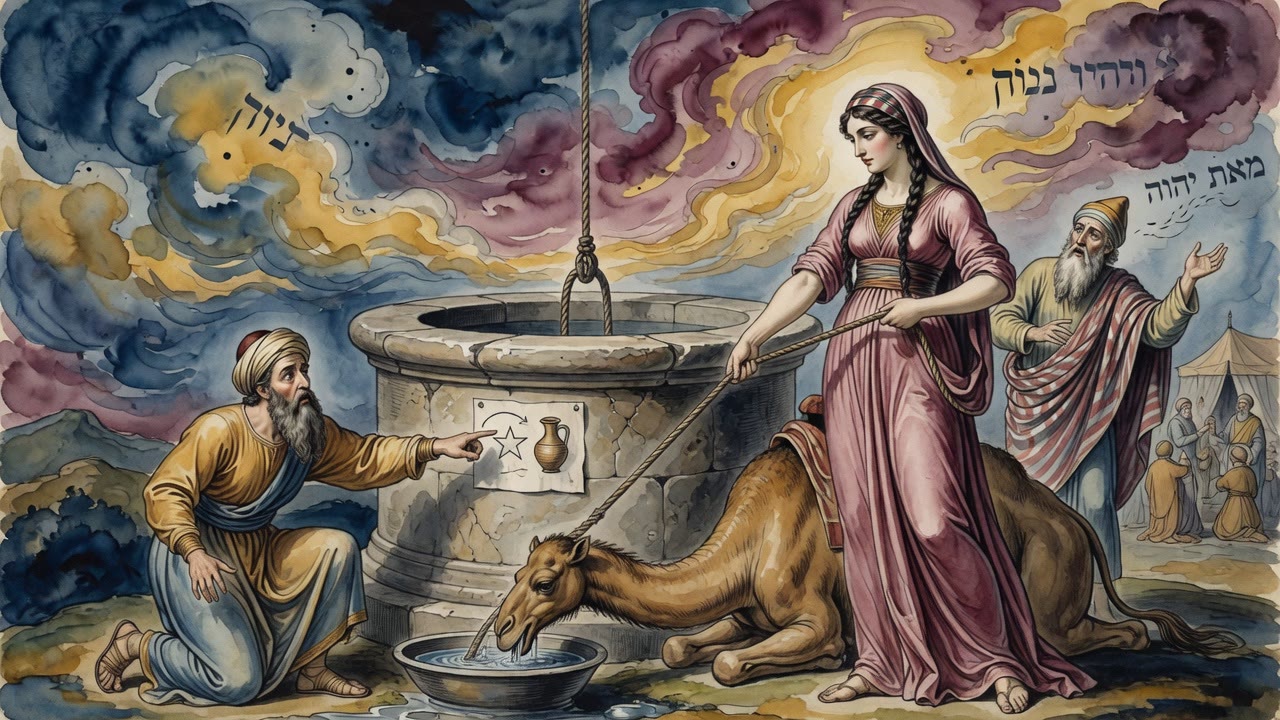
At dawn the servant rose with a traveler's impatience that no host can fully love. He had found the woman at the well by a test of water and kindness. He had watched gold settle on her wrists like a verdict. He had prayed under his breath when she ran for the camels. He had no appetite for another day of Aramean hospitality that might turn into a leash made of kinship and more wine.

"Do not hinder me," he said, "for the Lord hath prospered my way" (Genesis 24:56).

They wanted one more morning, one more chance to look at the girl who was about to become someone else's future. He wanted the road before second thoughts grew teeth. Between those wants stood Rebecca, listening harder than the men who claimed to decide for her, weighing a stranger's God against the only walls she had ever slept inside.

Her brother spoke of family. The servant spoke of a prospered path. She would have to choose which voice would ride with her on the camel.

The Man in the Street

Pirkei DeRabbi Eliezer freezes the argument with a gesture no banquet can answer. The servant points past the door, past the circle of relatives, into the ordinary dirt where messengers and beggars stand.

"For behold, the man who came with me yesterday, he has prospered my way; behold, he is standing and waiting for me in the street."

The man is an angel. Not a metaphor polished for later sermons. A presence with dust on its patience, posted where guests pause before they knock, refusing to enter the feast so the household cannot pretend the journey is only human bargaining over bride-price and distance.

Laban's mouth had already admitted heaven. The angel made admission visible. You do not keep a bride indoors for another round of songs when the road's escort is already waiting outside like a creditor who does not need your stew. Rebecca saw the pointing hand. She saw the open street. Something in her spine decided before her tongue did.

Sister, Become Thousands

They blessed her the way a cantor blesses under a canopy, the midrash says, turning the family circle into a portable chuppah of words when no poles had been raised.

"Our sister, be thou the mother of thousands of ten thousands, and let thy seed possess the gate of those which hate them" (Genesis 24:60).

Rebecca received the blessing and the risk together. She would ride toward a man she had never seen, into a tent still haunted by Sarah's absence, carrying water-jars of courage no scale at the door could weigh. The women who loved her wiped their eyes and still let her go. That is what the angel in the street forces: love that releases.

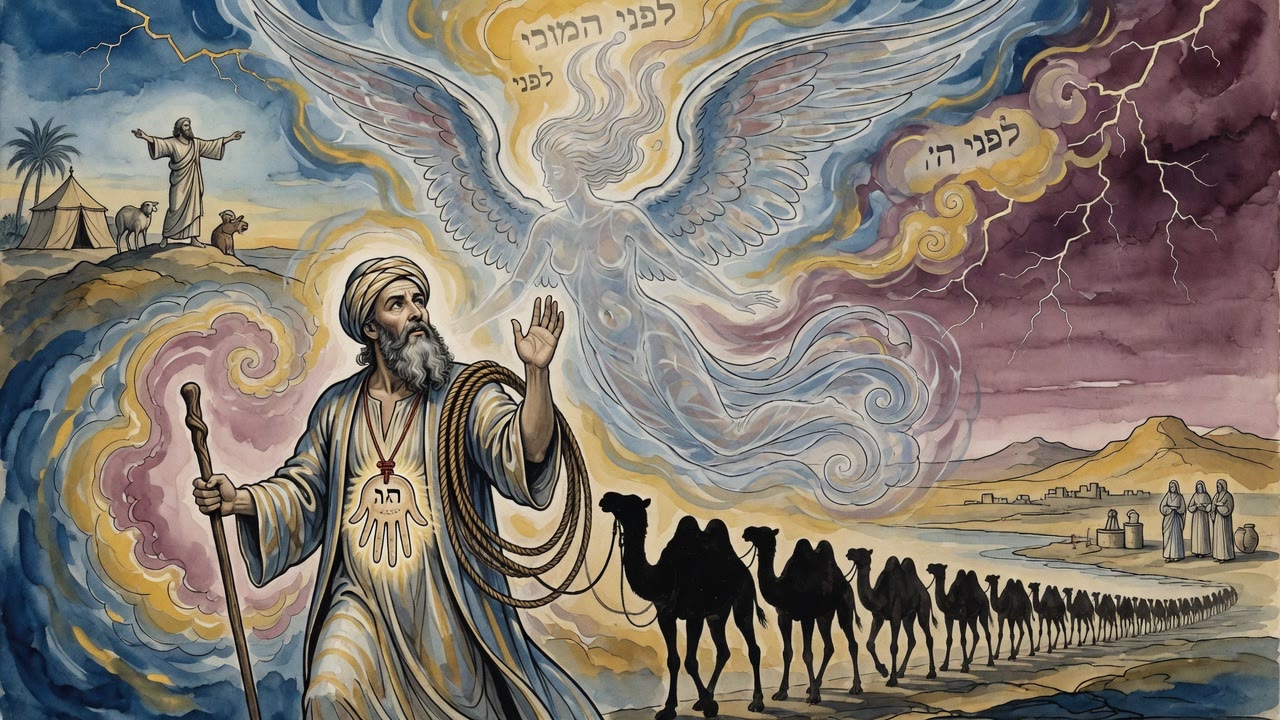
The camels knelt. Packs tightened. The angel, if still in the street, did not need a saddle. Some escorts only need the traveler to step across the sill and keep walking when homesickness starts its quiet work at mile three.

Night Vision on the Road of Nations

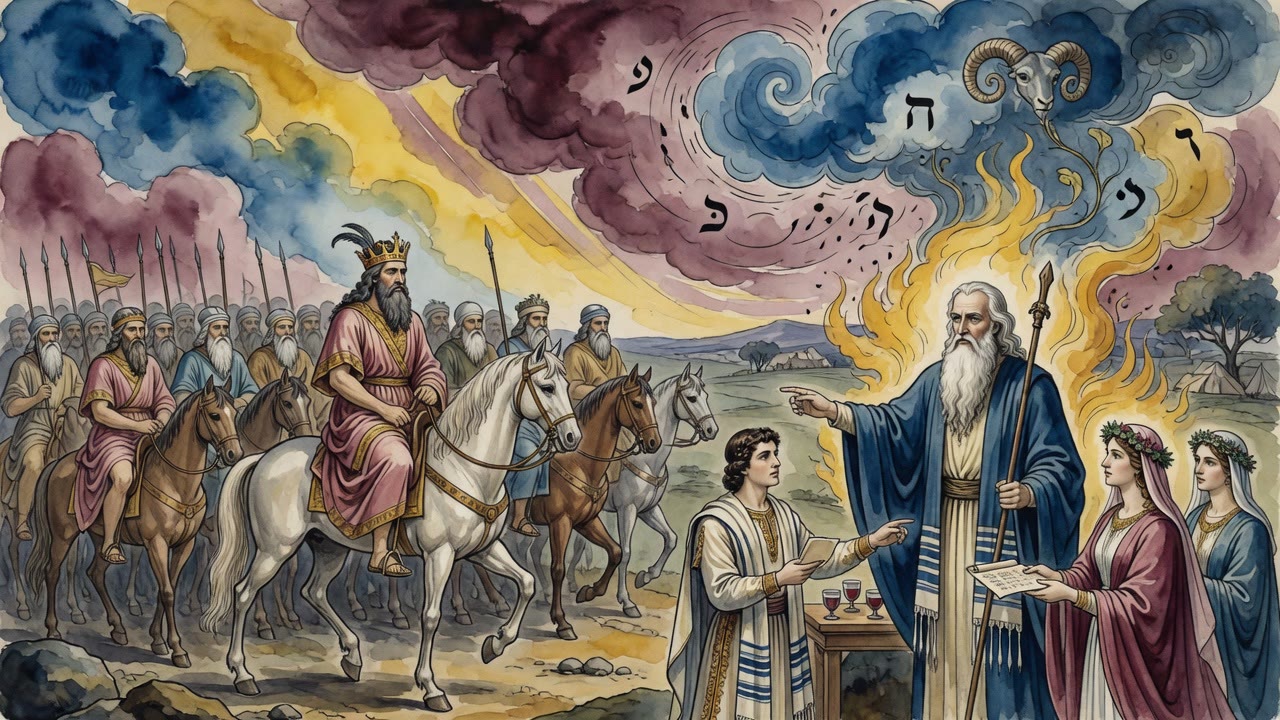
Jubilees remembers other nights when heaven did not wait for polite consensus around a family table. Dreams cut through maps of land. Lots were spoken while men slept and woke to borders they had not drawn with their own fingers. Hidden orders arrived when mouths were closed and eyes were forced open by a vision that did not ask permission to enter.

Rebecca's departure sits in that same weather. The word had gone out. Human delay tried to soft-pad it with food and kinship and one more song for the sister. The street answered with a figure that does not eat at your table and does not care how good the wine is.

She left. The feast emptied of its reason the way a shell empties when the living thing moves on. Far to the south, Isaac would lift his eyes in a field at evening and see the answer to a prayer walking toward him on camel-back, and the angel's work would already be finished in the dust of Padan-aram. Rebecca would dismount into a life that began with a well, a test, a refusal to be hindered, and a stranger of light who waited in the street until she chose the road.


← All myths
From the tradition

Sources

2 sources

The texts behind this telling. Some cards carry a translation of the source; others are our own retelling of it, and each card says which. Every card links out to the original.

Pirkei DeRabbi Eliezer 16:10Pirkei DeRabbi Eliezer

Retold in our words. Read the original at the link below.Pirke de Rabbi Eliezer, trans. Rabbi Gerald Friedlander, London (1916) · CC-BY

The servant finds Rebecca, and her family, Laban and Bethuel, are faced with a decision: Do they let Rebecca go with this stranger? What do they do?

Their response, according to Pirkei DeRabbi Eliezer 16, is pretty striking. They say, "Since this word has come forth from the mouth of the Almighty, we cannot prevent it." They even quote (Genesis 24:50): "The thing proceedeth from the Lord: we cannot speak unto thee bad or good." In other words, they felt this was bashert – destined. Predetermined.

"Behold, Rebecca is before thee; take her and go," they say (Genesis 24:51). It’s a powerful statement about recognizing a divine hand at work. But does it mean they had no choice? Were they just puppets in a divinely orchestrated play?

The story continues. The servant, eager to get back to Isaac, is ready to leave the very next morning. He urges Laban and Bethuel not to delay him, saying, "Do not hinder me, for the Lord hath prospered my way" (Genesis 24:56). What's really interesting here is the implication that an angel is helping him, smoothing the path. Pirkei DeRabbi Eliezer tells us that the servant says, “For behold, the man who came with me yesterday, he has prospered my way; behold, he is standing and waiting for me in the street." The "man" is an angel.

Now, imagine the scene. Everyone's celebrating at Rebecca’s pre-wedding banquet. And get this: Pirkei DeRabbi Eliezer compares it to a chazzan, a cantor, blessing the bride under the chuppah, the wedding canopy. The family blesses Rebecca, echoing the words of (Genesis 24:60): "And they blessed Rebecca, and said unto her, Our sister…"

So, what does it all mean? Is it about surrendering to destiny? Recognizing the divine in everyday events? Or is it simply a beautiful story about finding love and building a family? Perhaps it’s all of those things. This passage from Pirkei DeRabbi Eliezer Are we truly in control, or are we, like Rebecca, guided by something greater? Something…divine?

Next time you face a big decision, ask yourself: Is this my choice alone, or is there something else at work here?

Full source
Book of Jubilees 32:35Book of Jubilees

Retold in our words. Read the original at the link below.Sefaria Community Translation · CC-BY

Sometimes, the answers are more layered than we expect, tucked away in ancient texts that offer glimpses into how our ancestors understood time, ritual, and divine will.

It's considered apocryphal by many, meaning it's not part of the standard biblical canon. But it’s still a treasure trove of Jewish thought and tradition.

Here, we encounter a figure experiencing something extraordinary. He wakes from sleep, not just refreshed, but transformed. He remembers everything he has read and seen in some kind of vision or dream, and immediately, he writes it all down.

What was so important that it needed to be recorded immediately?

Well, the text goes on to describe a celebration. He celebrates "another day," adding to a pre-existing seven-day feast. He offers sacrifices, mirroring what he had done on previous days. And he gives this new day a name: "Addition" (some translations say "Assembly").

Why "Addition"? Because, quite literally, this day was added. The preceding seven days were called "The Feast." This new day, "Addition," was an extension, a supplement.

But here's where it gets really interesting. The verse reads, "And thus it was manifested that it should be, and it is written on the heavenly tables." What does that even mean?

The Book of Jubilees often refers to these "heavenly tables." Think of them as a divine blueprint, a cosmic record of how things are meant to be. According to Jubilees, God revealed that this "Addition" day should be celebrated and added to the existing seven days of the feast. It was preordained, written in the stars, or, well, on those heavenly tables!

The reason for this addition? "Because that it was recorded amongst the days of the feast days, according to the number of the days of the year." It seems this "Addition" day somehow completes or perfects the observance, aligning it with the solar cycle, with the very rhythm of the year.

So, what are we to make of this?

It’s a powerful illustration of how tradition evolves. It wasn’t just made up. It was, according to Jubilees, divinely ordained and integrated into the fabric of Jewish practice. It shows us a dynamic relationship between human observance and divine will. Think of it: A day born of a dream, solidified by ritual, and justified by cosmic decree. What could be more compelling?

Full source