The Angel Who Cursed Meroz and the Birth of the Ban
After Sisera drowned in the Kishon, an angel cursed the town of Meroz for staying home, and from that one bitter word the sages built the ban.
Table of Contents
 Click for full size
The Morning After the Kishon
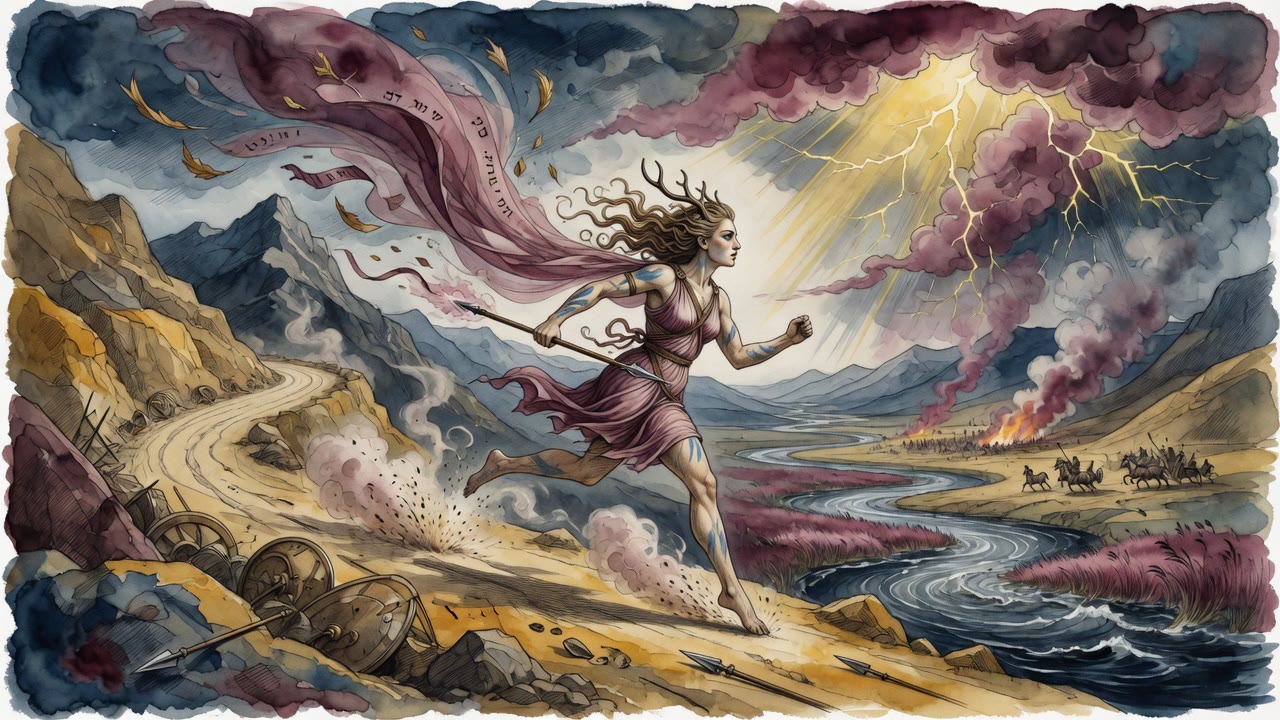
The river had done the killing. All night the Kishon ran high and brown, and by first light the iron chariots of Sisera lay tipped in the mud, drivers gone, horses gone, the whole nine hundred of them swallowed by a stream that should have been a trickle. Deborah's song was still in the air. Barak walked the bank and counted the dead, and the tribes who had come down to the valley stood dripping around him. Zebulun. Naphtali. The men of Issachar who had run downhill on foot against iron and won.
But not every town had come. There was a place called Meroz, and while Israel bled in the valley, Meroz had kept its gates shut and its fighters at home.
The Angel Lifts Its Voice
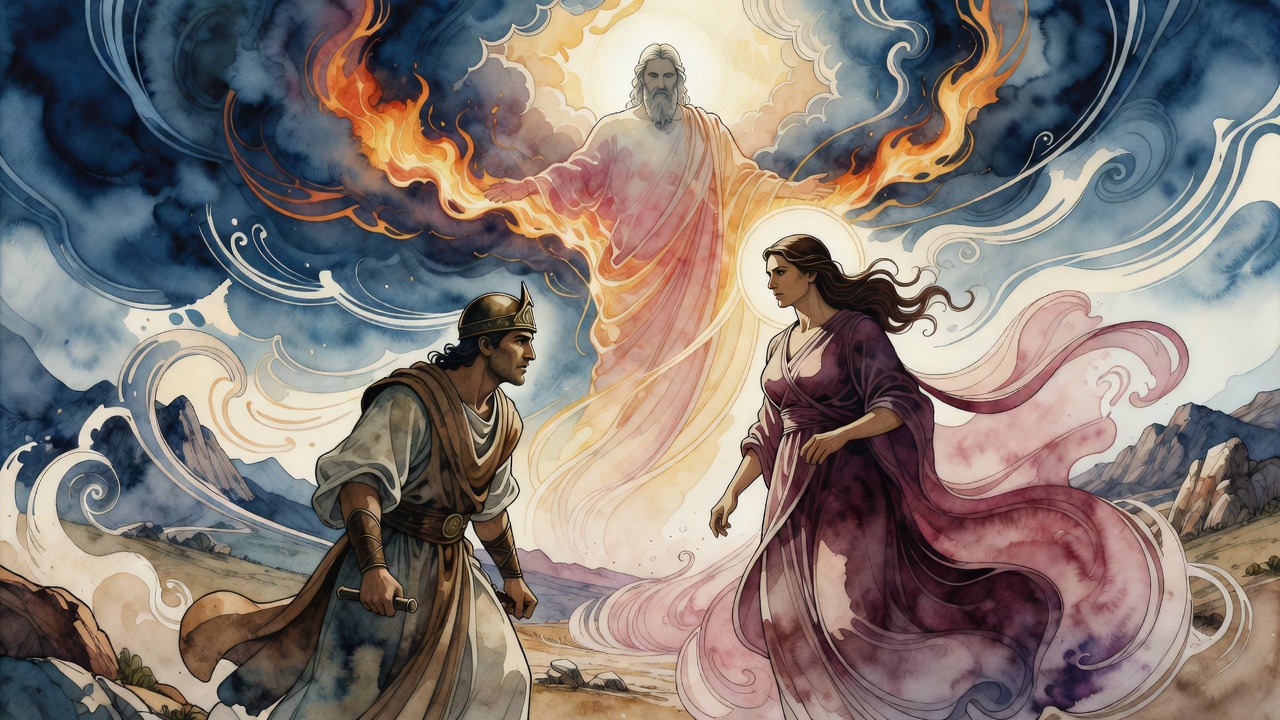
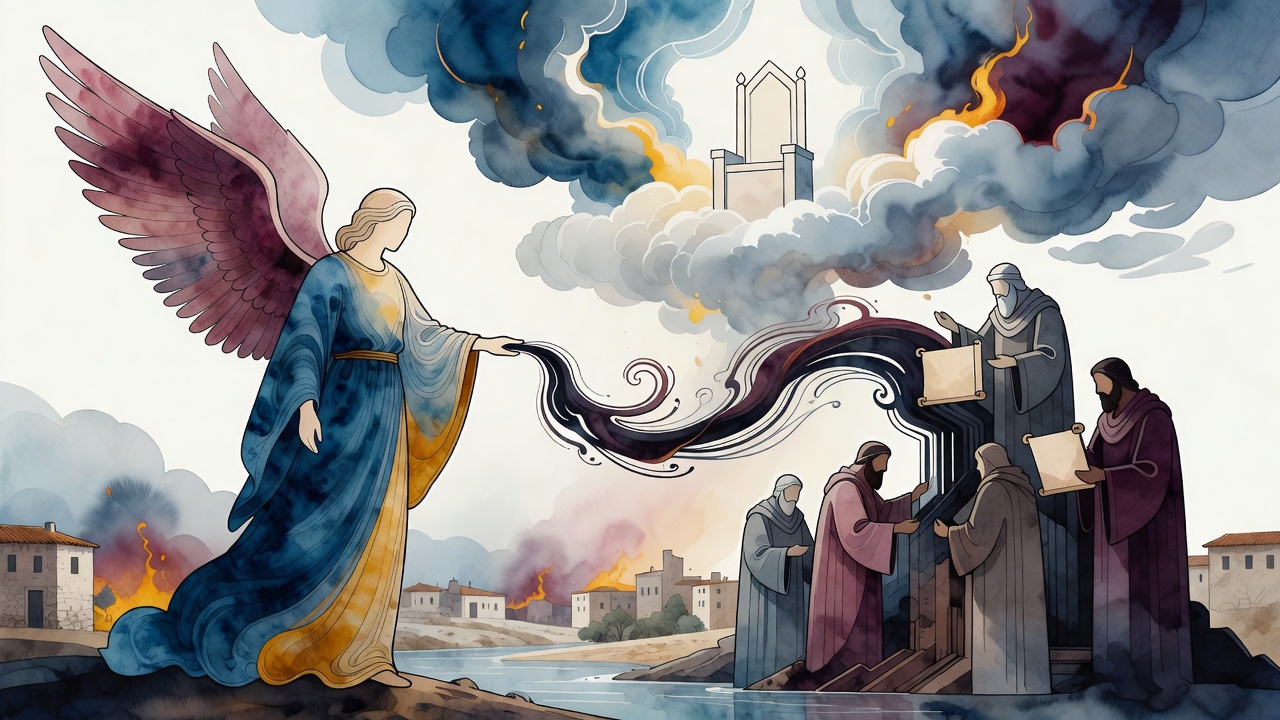
Then an angel of the LORD stood in the valley, and it had not come to bless. It had come to curse. "Curse Meroz," the angel said, "curse its people bitterly, because they did not come to the help of the LORD, to the help of the LORD against the mighty."
The word landed strangely. Kings were cursed for shedding blood. Cities were cursed for their idols, for cruelty, for burning their own children. Meroz had done none of that. Meroz had simply done nothing. It had watched the smoke climb over the Kishon and decided the war belonged to someone else. For that, and only that, an angel opened its mouth in the middle of a victory and spent the day's first breath on a curse.
A Man, or a Star
Who was Meroz, that heaven should hate it so? The sages who carried the story afterward could not agree. Some said Meroz was a great man, a lord with armed men under his hand, close enough to the fighting that his sword would have tipped it, who chose instead to leave that sword on the wall. Others said Meroz was no man at all. Meroz was a star.
For the song had already said it. "From heaven they fought," Deborah sang. "The stars from their courses fought against Sisera." Every point of light had left its track that night and bent down to hurl itself at the enemy. Every one but a single star that held its place and would not move. That star had a name, and the name was Meroz, and the angel cursed it where it hung.
Four Hundred Blasts of the Horn
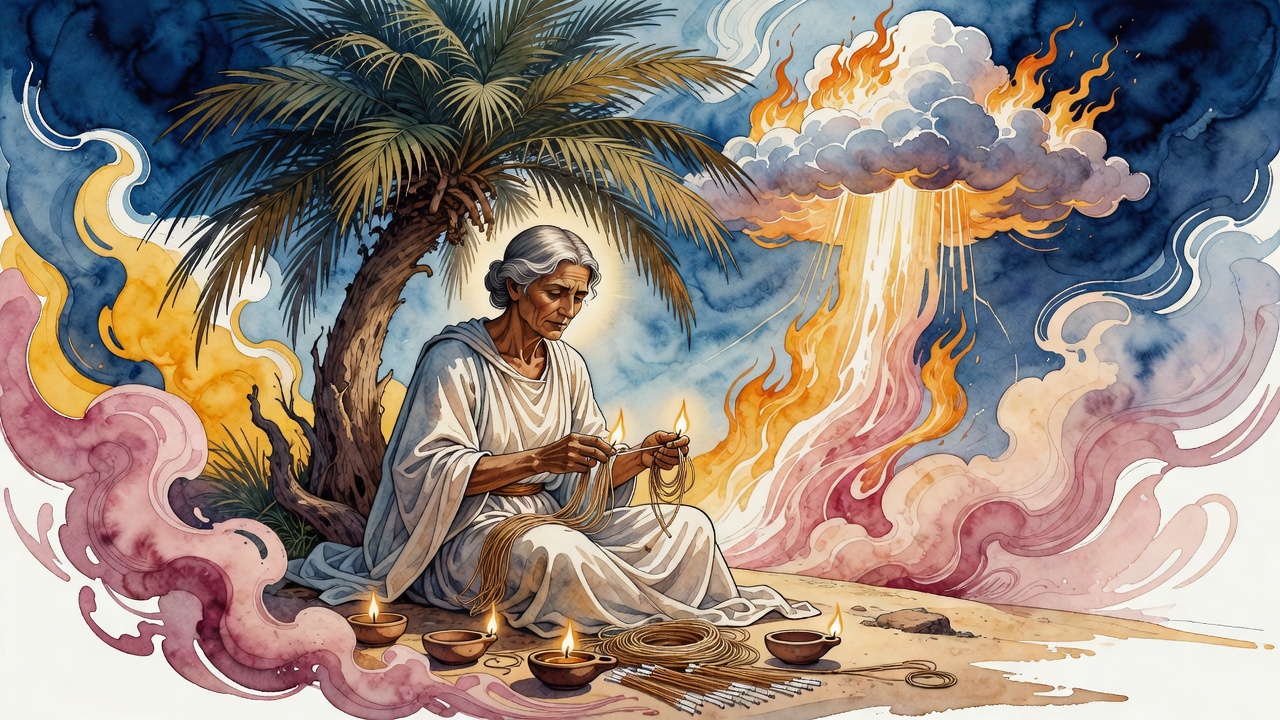
Barak would not let the curse stay a word. He took up the ram's horn and blew, and blew again, four hundred times, until the sound of it fenced Meroz off from the living. This was the ban.
Out of that one line of Deborah's song the sages later drew the whole machinery of it, piece by dreadful piece. "Curse" gave them the lesser ban, the niddui. "Bitterly" gave them the harsher one, the cherem, from which there is almost no road back. "Its inhabitants" taught them that the ban falls not only on the offender but on anyone who eats with him, drinks with him, or stands within four cubits of him, so that the banned one walks the world inside a moving ring of empty ground no living person will cross. "Because they did not come to the help of the LORD" taught them to name his sin aloud, in public, so all would know why the horn had sounded.
And a later hand set down the rest. His fields declared ownerless, his goods forfeit. The ban laid on him at once, spoken again after thirty days, sealed into cherem after sixty. Cried out on a Monday, and a Thursday, and a Monday again, until the whole assembly had heard.
The Apple of the Eye
Still the question hung over the valley. Why so much wrath for a town that only stayed home? The answer was folded into the angel's own words, into a single turn of phrase the sages refused to let pass. The angel had not said Meroz failed to come to our help, or to Israel's help. The angel said Meroz did not come to the help of the LORD.
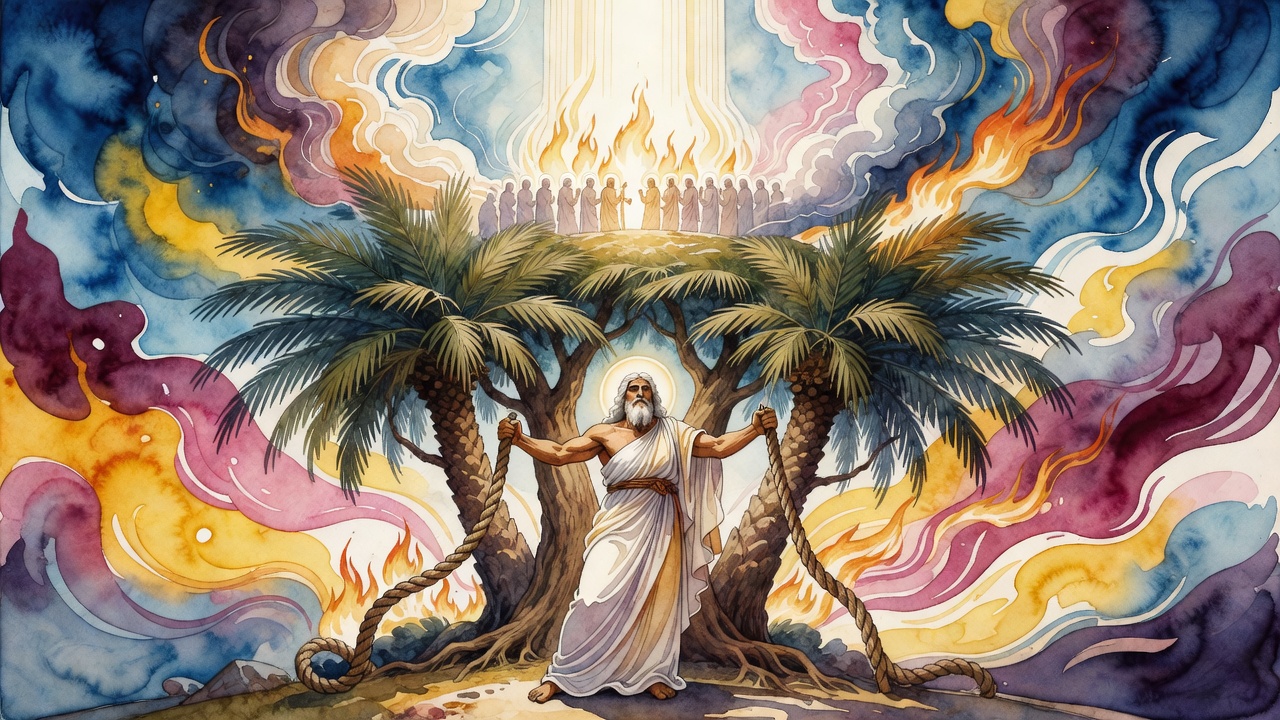
So this was the reckoning. Whoever comes down to fight for Israel fights for the One who spoke and the world came into being. And whoever holds back, whoever bars his gates and leaves his sword on the wall while Israel bleeds, has not merely failed his neighbors. He has drawn his hand back from God. For it stood written elsewhere, and the sages laid it beside the curse: whoever touches Israel touches the apple of God's own eye. Israel's enemies are His enemies. Israel's helpers are His helpers. There was no neutral ground on the day of battle, and Meroz had tried to stand on it.
The Name That Kept Only a Curse
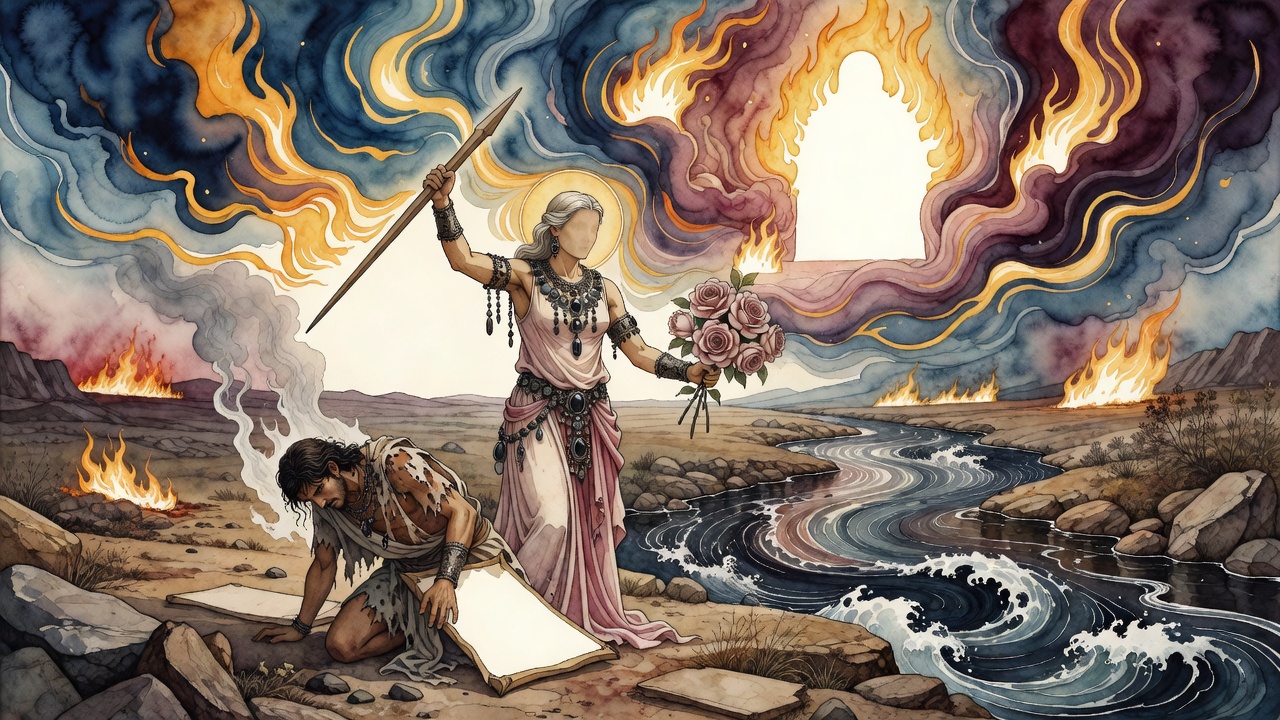
The song outlived everything in that valley. It outlived Sisera in the mud, and the drowned horses, and the four hundred blasts of Barak's horn. Only Meroz kept nothing. No one now can set it on a map or find it in the sky, whether it was a city, a lord, or one cold and stubborn star. The single thing that survived was the word the angel hung on it, the curse it earned by doing nothing at all.
← All myths