Parshat Shoftim6 min read

The Armpit Voice and the Breath That Climbed to Heaven

A necromancer squeezes a dead man's voice from his armpits while a starving student's breath of Torah climbs past the sky toward Heaven.

Curated by Arthur · Told by Maggid ·
Table of Contents
  1. The Voice That Climbs From the Armpits
  2. What Rabbi Akiva Heard in the Warning
  3. The Hungry Student in the Study House
  4. The Savor That Rose to Heaven
  5. Two Hungers, One Sky

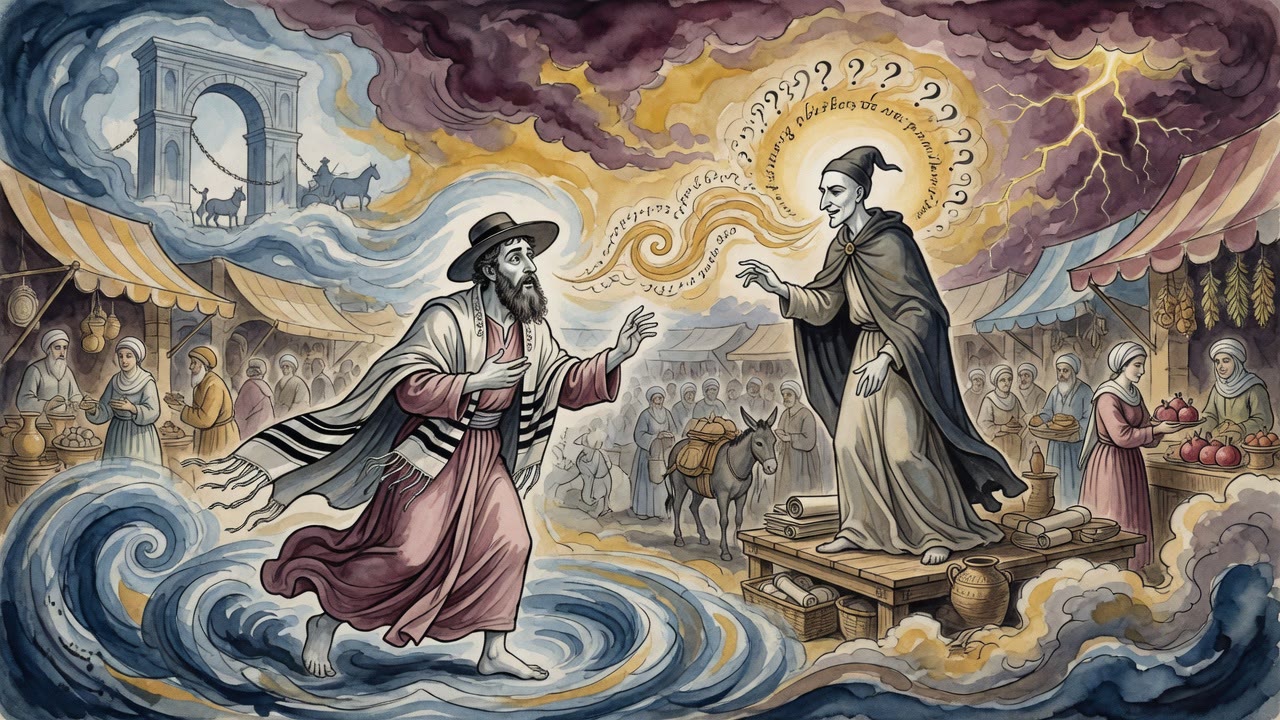
Outside the study house a man knelt over a fresh grave with his arms pressed tight against his ribs, and from the hollows under his arms came a thin voice that was not his own. He had not eaten in days. He had slept three nights on the cold ground between the tombs, waiting for the spirit of tumah, the breath of uncleanness, to settle on a body emptied out enough to receive it. Now it answered. The voice rose chirping from his armpits, the way the dead were said to speak, low and dry, promising to tell him what the buried knew.
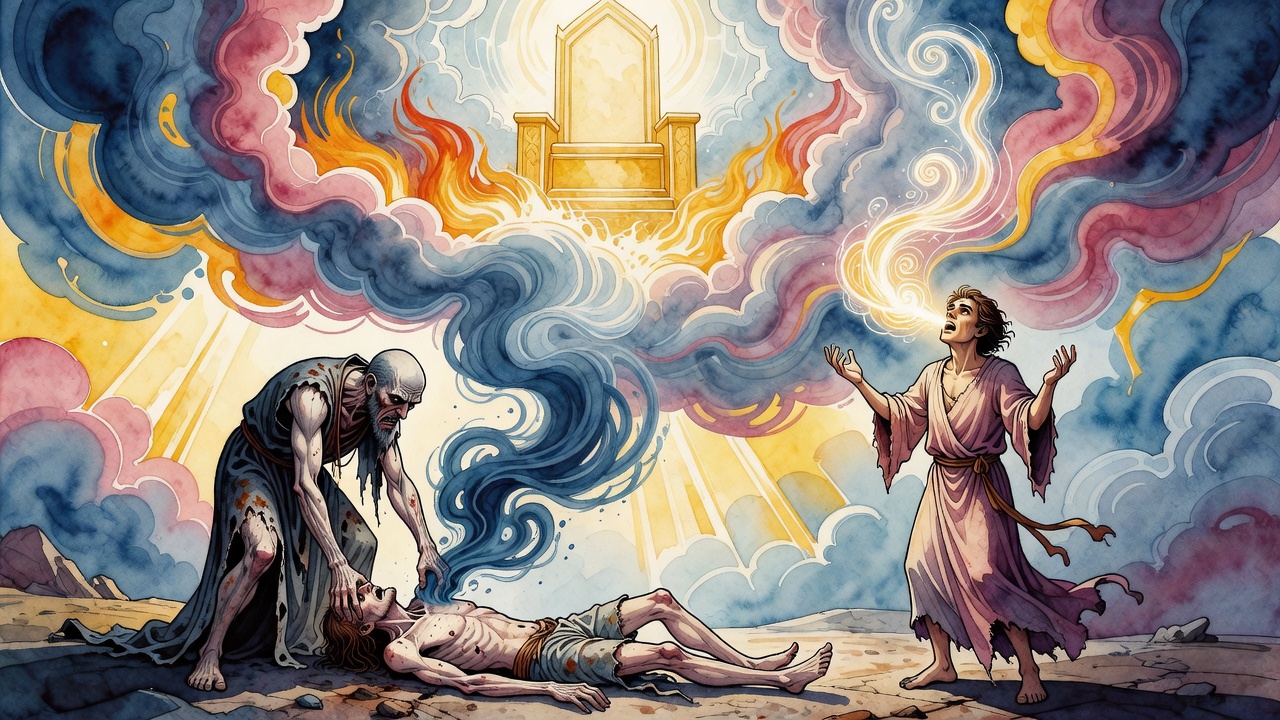
This is the baal ov, the master of the ghost, the necromancer the Torah forbids on pain of being cut off. He starves himself and lies among graves until the dead seem to speak through his own flesh. The voice does not come from above. It comes from the seams of his body, squeezed out from under the arm, a hollow mimicry dressed up as the speech of those who have crossed over.

The Voice That Climbs From the Armpits

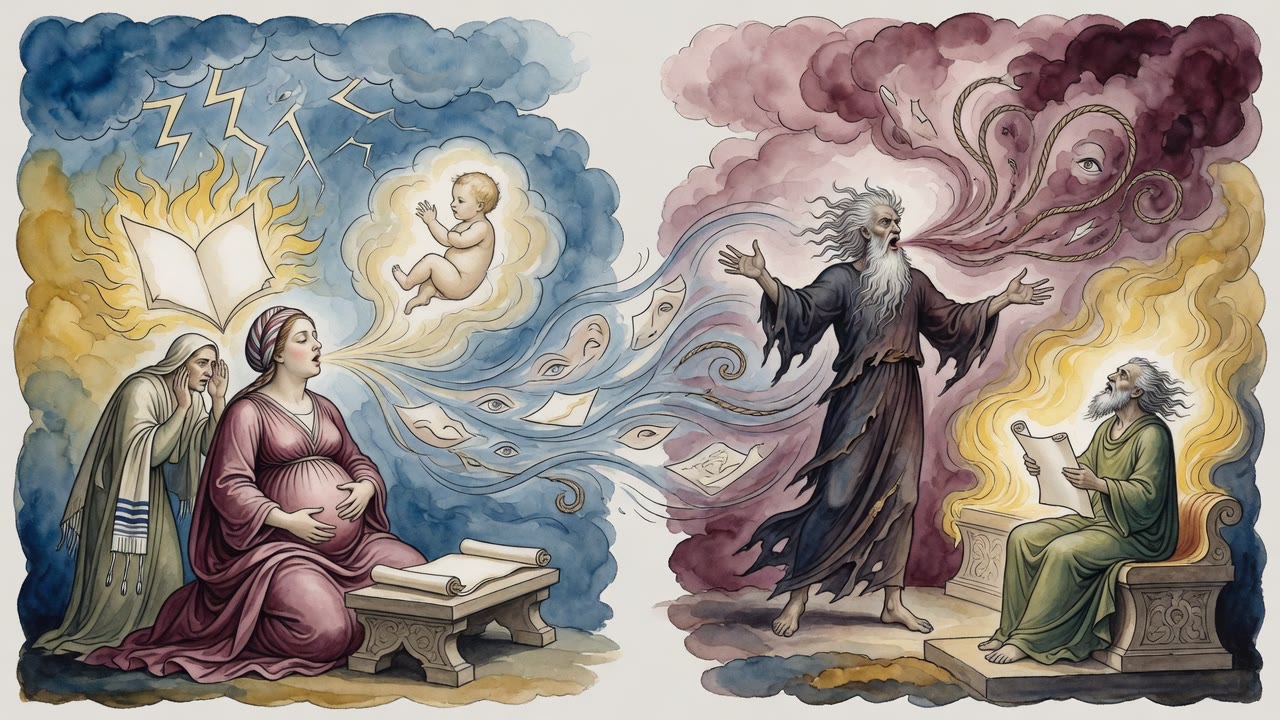
The strangeness of it was the whole force of the warning. A spirit could be raised through a man's own member, but then it would not rise on its own and could not be questioned on the Sabbath. A spirit summoned through a skull rose more freely and could be consulted even on the holy day. These were the gradations of a forbidden art, measured like impurities in a ledger, and all of them were sealed under the same prohibition. The man and the dead he conjured were both in transgression together. The one who consults the dead and the dead voice he drags up share one guilt.

So the necromancer worked downward. He emptied his stomach to make room for a ghost. He lay in the dirt to invite the breath of uncleanness onto his skin. And the reward for all that hunger and filth was a voice with no height in it, a counterfeit ascent, the dead pretending to speak while never leaving the ground.

What Rabbi Akiva Heard in the Warning

Rabbi Akiva read the verse that condemned the man among the graves, and the thing that struck him was not the horror. It was the bargain. He cried out, "Woe unto us!" If the spirit of uncleanness will repose on a man who cleaves to uncleanness, who starves and sleeps in a cemetery to court it, then how much more should the holy spirit repose on a man who cleaves to the Shechinah, the Divine Presence.

The logic cut both ways and Akiva refused to soften it. Impurity rushes to the one who reaches for it. Holiness should rush faster to the one who reaches up. So what holds it back? "What brought this about?" he asked, meaning the silence, the distance, the absence of the holy breath on those who long for it. And he answered himself without mercy. "Your sins sundered you from your God." The necromancer's hunger was answered from below. A different hunger, Akiva insisted, would be answered from above, if only the reaching were clean.

The Hungry Student in the Study House

Inside the walls, far from the graves, another hungry man was reaching. Eliezer ben Hyrcanus had come to learn and could not even say the words to begin. Rabbi Jochanan ben Zakkai had asked him a small thing, whether he knew the Shema that declares God one, the standing prayer, the blessing after bread, and the grown man had to answer no. He knew none of it. So Jochanan taught him the three prayers like a child, and Eliezer sat down and wept.

"My son, why dost thou weep?" the master asked.

"Because I desire to learn Torah," Eliezer said. The prayers were not enough for him. He wanted the depths.

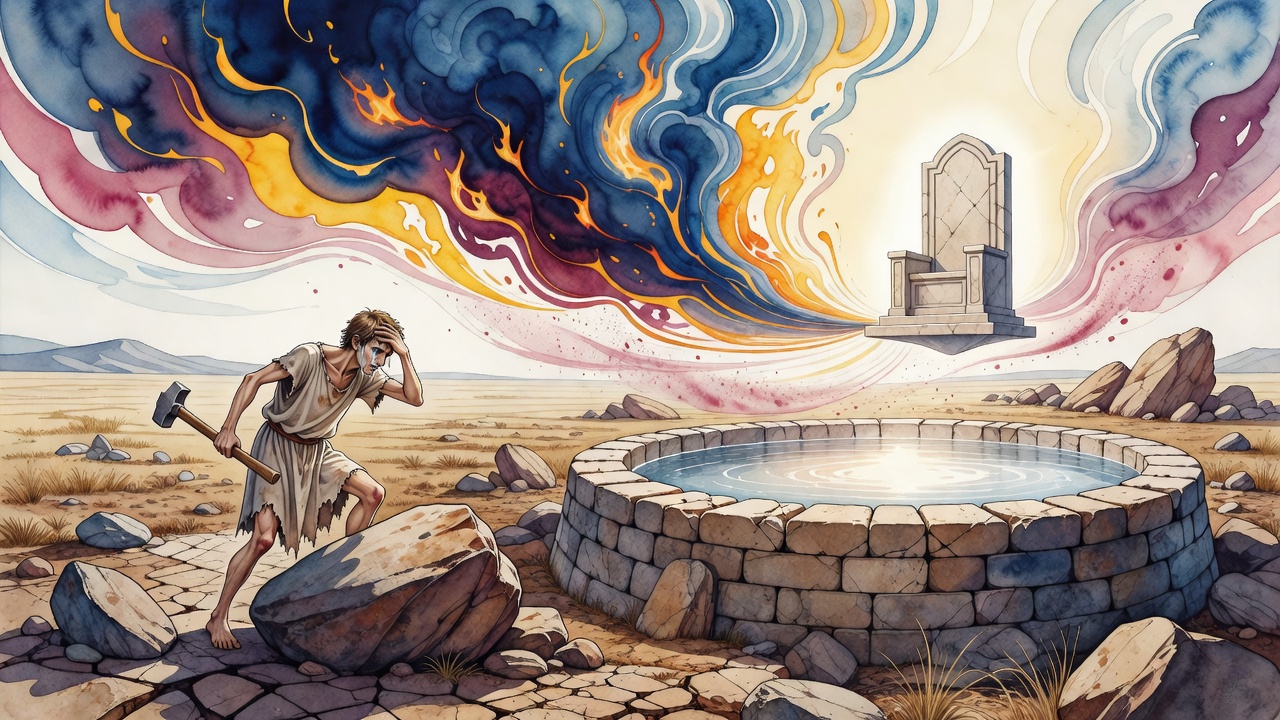
Jochanan fed him two laws a day, and Eliezer swallowed them whole and chewed them over every Sabbath until they were his. Then the hunger turned on his body. He fasted eight days straight. The odor that rose from his starved mouth filled the room, and the master had to ask him to step back.

The Savor That Rose to Heaven

Eliezer wept again, harder this time, because the man who had lifted him up now seemed to push him away like a leper sent outside the camp. But Jochanan was not recoiling. He was watching a thing climb.

"My son," he said, "just as the odor of thy mouth has ascended before me, so may the savor of the statutes of the Torah ascend from thy mouth to Heaven."

There was the answer to the man among the graves, spoken without ever naming him. The necromancer starved his body to drag a hollow voice up from his armpits, a voice that never left the dirt. Eliezer starved his body and what rose from his mouth was the smell of Torah, climbing past the room, past the master, toward the firmament. One hunger pulled a counterfeit down out of the seams of the flesh. The other sent something true upward.

When Jochanan learned the starving student was the son of Hyrcanus, a man of wealth, and pressed him to dine, Eliezer declined. He had already eaten with plainer company, with Rabbi Joshua ben Chananjah and Rabbi José the Priest. The rich man's son stayed low to the ground on purpose, and from that low place the savor still rose.

Two Hungers, One Sky

Two men starved themselves. Two voices answered. From the necromancer pressed against his grave came a dry chirp under the arm, the dead refusing to rise, the breath of uncleanness settling onto skin that had begged for it. From the fasting student in the study house came the savor of the law, lifting toward the sky that the forbidden voice could never reach. Akiva had named the rule that governs both. Reach down into the dirt and the dirt answers. Reach up with clean hands and Heaven answers louder.


← All myths
From the tradition

Sources

2 sources

The texts this telling draws on, in full. Open a card to read inline, or expand it for a wider, quieter read.

Sifrei Devarim 172:5Sifrei Devarim

The Sifrei Devarim, a legal midrash on the Book of Deuteronomy, introduces us to this shoel av. The text defines him as a necromancer – someone who attempts to communicate with the dead – who projects speech from… well, from his armpits. Yes, you read that right.

It sounds bizarre, almost comical, doesn't it? But within this strangeness lies a serious point. The text emphasizes that both the necromancer and those who consult them are in transgression.

The passage then presents a rather unsettling comparison. It discusses raising a spirit using one's "male member" (a practice explicitly condemned) versus consulting a skull. What's the difference, the text asks? Apparently, when conjuring a spirit through the former method, the spirit doesn't rise “naturally” and can’t be consulted on the Sabbath. However, consulting a skull allows the spirit to ascend “naturally” and can be consulted on the Sabbath.

It's a chilling distinction, highlighting the varying degrees of impurity and the perceived control one might have over the spirit world. The underlying principle? All these practices are firmly prohibited.

But there's more. The text elaborates on "one who consults the dead," explaining that this individual starves themselves and sleeps in a cemetery, hoping that the spirit of tumah (ritual impurity) – uncleanliness – will rest upon them. Imagine the desperation, the spiritual hunger, that would drive someone to such extremes.

And here, Rabbi Akiva, one of the greatest sages in Jewish history, offers a powerful reflection. Upon encountering this verse, he exclaims, "Woe unto us! If the spirit of tumah reposes upon one who cleaves to tumah, how much more so should the holy spirit repose upon one who cleaves to the Shechinah!" Shechinah is the Divine Presence.

Rabbi Akiva’s words cut to the heart of the matter. If impurity so readily clings to those who seek it, how much more readily should holiness embrace those who strive for connection with God? What, then, prevents us from experiencing this Divine closeness?

"What brought this (absence of the holy spirit) about?" Rabbi Akiva asks. "Your sins sundered you from your G-d!" This powerful statement, echoing throughout Jewish tradition, reminds us that our actions have consequences. Our choices either draw us closer to the Divine or push us further away.

The story of the shoel av and the necromancer isn't just a strange tale from the past. It's a mirror reflecting our own spiritual journeys. Are we seeking connection in the right places? Are we actively cultivating holiness in our lives, or are we allowing ourselves to be drawn to the shadows? Perhaps by confronting these darker corners of our tradition, we can find a clearer path towards the light.

Full source
Pirkei DeRabbi Eliezer 1:2Pirkei DeRabbi Eliezer

The story begins with a simple question. Rabbi Jochanan, noticing something amiss, asks Eliezer if he knows the Shema' (the central Jewish prayer affirming God's oneness), the Tephillah (the Amidah, the central prayer recited three times daily), or even the Grace after Meals. The answer? A heartbreaking no.

The scene. Eliezer, a grown man, admitting he's ignorant of these foundational Jewish practices. Rabbi Jochanan, moved by compassion, takes him under his wing and teaches him these three essential prayers. But it's what happens next that truly gets to the heart of the story.

Eliezer sits down and weeps. Rabbi Jochanan, concerned, asks him, "My son, why dost thou weep?" And Eliezer replies with raw honesty: "Because I desire to learn Torah." He doesn't just want to recite prayers; he wants to explore the depths of Jewish law and wisdom.

So, Rabbi Jochanan begins teaching him, diligently imparting two rules of law each day of the week. Eliezer, for his part, is a dedicated student. He internalizes the teachings, reviewing them and making them his own every Shabbat (the Sabbath).

But here's where the story takes an unexpected turn. Eliezer's zeal borders on the extreme. He fasts for eight straight days! His dedication is so intense that the odor from his mouth becomes noticeable. According to Pirkei DeRabbi Eliezer, Rabbi Jochanan ben Zakkai has to ask him to step away.

Again, Eliezer weeps. This time, he cries because he feels rejected, cast out like someone afflicted with leprosy. Can you feel the depth of his despair?

But Rabbi Jochanan, wise and perceptive, offers words of comfort and prophecy. "My son," he says, "just as the odor of thy mouth has ascended before me, so may the savour of the statutes of the Torah ascend from thy mouth to Heaven." It's a powerful blessing, a promise that Eliezer's dedication will be rewarded.

Then comes a surprising revelation. Rabbi Jochanan asks Eliezer about his family, and Eliezer reveals that he is the son of Hyrkanos, a wealthy and influential man. Rabbi Jochanan is astonished. Why didn't he say so? He insists that Eliezer dine with him, but Eliezer declines, explaining that he has already eaten with his hosts – Rabbi Joshua ben Chananjah and Rabbi José the Priest. Even the son of a wealthy man is eating with everyday rabbis, showing his humility and dedication to Torah.

This brief passage from Pirkei DeRabbi Eliezer offers so much. It's a story about the transformative power of learning, the pain of feeling excluded, and the importance of recognizing the potential in everyone, regardless of their background. It reminds us that the pursuit of knowledge, especially the profound wisdom found in Torah, can be a deeply emotional and spiritual journey. And it speaks to the importance of teachers recognizing the internal hunger of their students.

What does it mean for us today? Perhaps it's a reminder to embrace our own yearning for knowledge, to not be afraid to admit what we don't know, and to seek out teachers who will nurture our intellectual and spiritual growth. And maybe, just maybe, it's a call to be more like Rabbi Jochanan, to see the potential in others and to help them on their own journeys of discovery.

Full source