The Small Aleph That Mapped God's Full and Half Speech
A shrunken aleph, the first Hebrew letter, and a missing one teach Akiva that God calls Israel in full speech and the nations in half.
Table of Contents
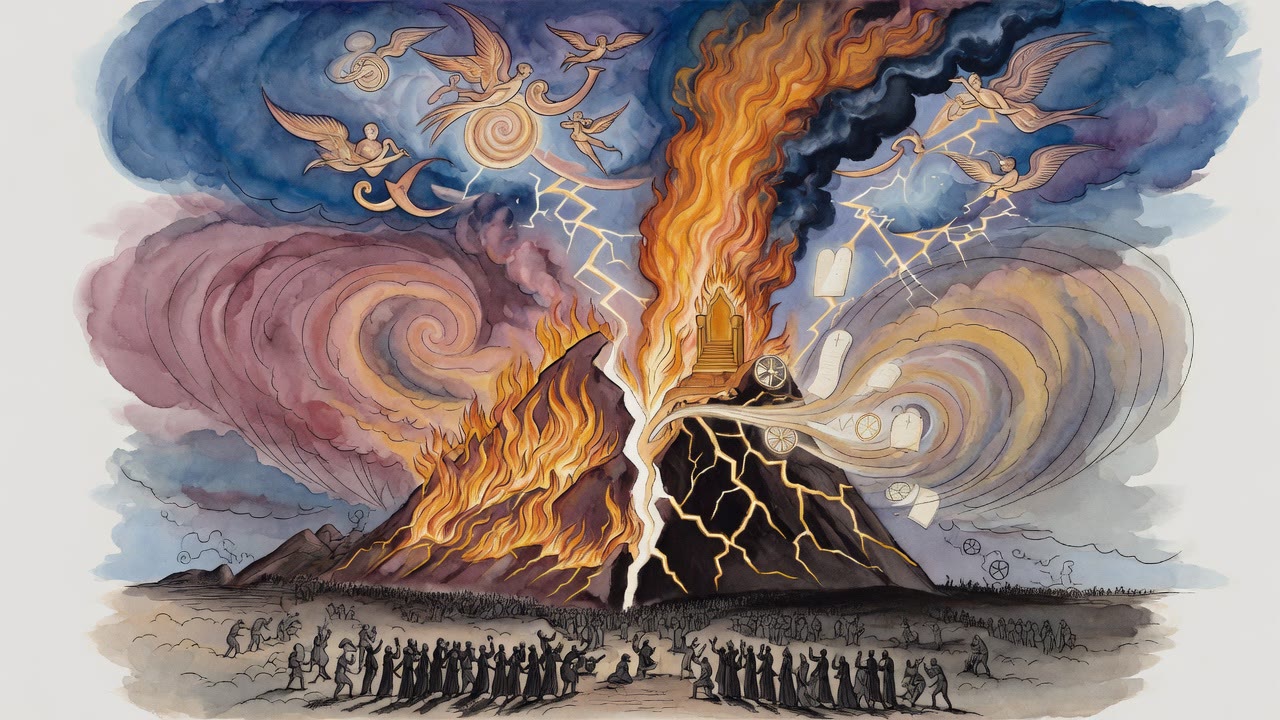
Before dawn the study house in Bnei Brak smelled of cold lamp oil and parchment, and Rabbi Akiva stood at the open Torah scroll with one finger hovering above a single letter. He did not touch the ink. He had spent his whole life teaching that nothing in this scroll was idle, that a man could expound mounds and mounds of laws from the little spikes and crowns that a scribe hung on the heads of the letters. Now he bent close to the place where the third book began, and the letter he watched was wrong. It was too small.
 Click for full size
The Letter That Shrank on the Page
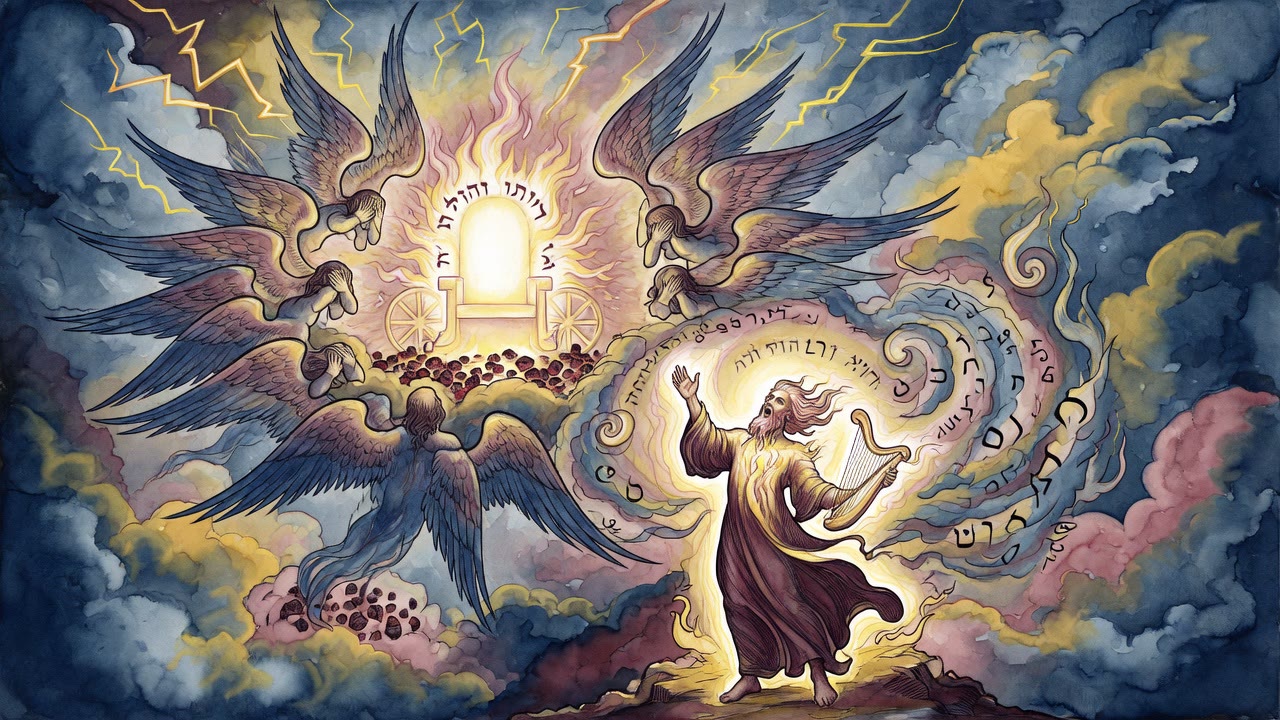
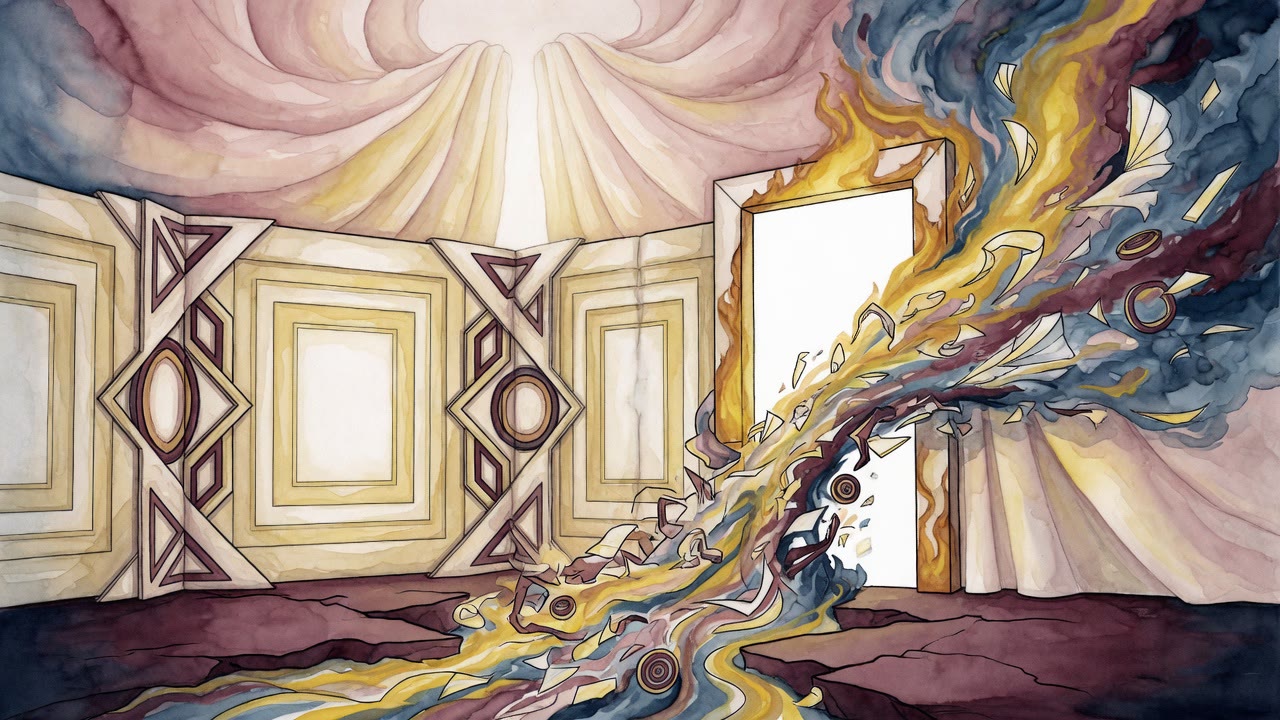
The word was vayikra. "And He called." It opened the whole book of the priests, the verse where the voice came out of the Tent and named Moses before it said anything else. Akiva had heard it chanted a thousand times. But here, on the parchment, the last letter of the word, the aleph, was written shrunken, dwarfed, a child of a letter crouching beside its grown neighbors. No scribe had erred. The shape had been copied small from scroll to scroll back to Moses, deliberately, like a secret folded into the cloth and carried forward by hand.
A young student stood at the doorway with the morning still dark behind him. "Master," he said, "the aleph is broken. Should the scribe not be told to make it whole?"
Akiva did not look up. "It is not broken," he said. "It is hiding something. Bring me the book of Bilaam."
The Verb Without the Aleph
The student fetched the place in the wilderness where the gentile seer Bilaam went out to meet God on the bare hills, hoping to curse Israel for a foreign king's gold. There the scroll said something colder. "And God happened upon Bilaam." Vayikar. The same root as Akiva's word, the same call going out from heaven to a man. But the aleph (the first Hebrew letter) was simply gone. Not small. Absent. God came to the foreign prophet by chance, the way a traveler stumbles on a stranger at a well, met him in the dust and spoke the bare bones of a sentence and left.
Akiva set his two fingers down, one on each scroll, the full word beside the half word. "Look how the Holy One speaks," he murmured. "To Bilaam, vayikar, a verb stripped to its bones. Half speech. He happens upon the nations of the earth the way a man clears his throat at a door he does not intend to enter. No name spoken in love. No tenderness in the calling. Just enough to deliver the message, and not a letter more."
The student stared at the two pages. "And to Moses?"
"To Moses, vayikra. The aleph returns. The whole word. He called him by name into the Tent before He gave a single law. Full speech, the way a father calls a child he means to embrace." Akiva touched the shrunken aleph again. "And yet the scribes wrote even that aleph small. Do you see why?"
Why the Full Word Wears a Small Crown
The student did not see. Akiva straightened, and the lamp threw his shadow tall across the wall.
"Because the man who received the full speech would not boast of it," he said. "Moses, who alone heard the voice as a son hears a father, took the pen and made the aleph of his own calling small. He could have written it large, a tower of a letter, a monument to his own nearness to God. Instead he shrank it, almost to nothing, almost to the half word the nations got. The honor is whole. The pride is dwarfed. The aleph carries both at once, the fullness of the love and the smallness of the man who would not seize it."
He let the words sit in the cold air. Then he moved his finger back to the head of the entire scroll, to the very first word, where a different letter stood swollen and proud above all the rest.
The Crowns and the Mounds of Law
At the beginning of creation the bet of Bereshit was written huge, a great gate of a letter swung open at the start of everything. And scattered through the five books were other letters bent out of their ordinary size by the same hidden hand. In the scroll of Esther, when the queen wrote her decree, the tav of "And Esther wrote" stood enlarged, because she had sent word to the sages, "Write me down for all the generations," and demanded a permanent place in the holy books, and the oversized letter was her insistence pressed into the parchment forever. Elsewhere a small zayin marked the seventh slander Haman spoke against a scattered people. Each crooked size was a voice. Each was a thing the plain reading could not say.
"They think the Torah is only the words," Akiva said, almost to himself. "But the Holy One wrote in two hands at once. There is the line a child reads aloud. And under it, in the height and the shrinking of the letters, there is a second scroll, a map of who heaven draws close and who heaven keeps at the door."
The student looked at the small aleph until his eyes ached, as if he could see down through the ink into the thing it concealed. "And the nations," he said slowly, "will they ever read the second scroll?"
The Map Folded Into the Ink
Akiva closed the scroll with both hands, gently, the way a man closes a door on a sleeping house. The lamp had burned to almost nothing and the window had gone from black to grey.
"They have their half word," he said. "A God who happens upon them on the road and speaks the necessary thing. That is no small mercy. But the full word, the aleph that returns, the name called into the Tent, that He saved for the people who would carry the scroll from hand to hand for a thousand years and copy the broken letter exactly, never fixing it, because they understood it was not broken." He set the scroll on its shelf. "Israel is the only nation that knows to keep the small aleph small."
Outside, the first light reached the rooftops of Bnei Brak. Inside, on the closed and bound parchment, in a darkness no reader could see, the dwarfed aleph of "And He called" went on holding its secret, a single crouched letter at the head of the book of the priests, marking the exact place where God speaks in full to one people and in half to all the rest.
← All myths