The Seer Who Saddled His Own Hatred for Israel
A gentile seer who could gaze on the Shekhinah, the Divine Presence, shoves past his servants at dawn to saddle his own donkey, hungry to curse Israel.
Table of Contents
Dawn had not yet broken over Pethor when the prophet rose. Two young servants slept in the courtyard, hired to do exactly this, to fetch the saddle, to cinch the girth, to lead the beast out to the road. Balaam stepped over them. He did not wake them. He wanted no hands but his own on the leather this morning.
 Click for full size
The donkey stood waiting in the gray light. Balaam threw the blanket across her back himself, reached under her belly for the strap, pulled it tight with the eagerness of a man who has waited a long time for a single errand. The princes of Moab were already mounted. He could have let the servants work while he ate. Instead he labored in the cold like a stablehand, because hatred had broken the order of his house, and a man who hates that much will do the small ugly tasks himself rather than wait for someone else to do them.
The Man Whose Door the Kings Knocked On
It had not always been saddles and dust. Pethor was the name of his city, and the city had been built around him. Kings of the nations came to that door the way merchants crowd a money-changer's table, each one shoving forward with his coin, each one certain his question could not wait. Balaam weighed their futures the way a changer weighs silver. Egypt sent. Moab sent. Whoever feared a war or coveted a kingdom climbed the road to Pethor and paid for a word.
He had risen by stages, and every stage was a descent. In the beginning he read dreams, sorting the night-visions of frightened men. From dreams he slid to divination, to the omen and the entrail and the muttered formula. And from divination, somehow, the Holy Spirit had come to rest on him, the only prophet the nations would ever be given to match the prophet Israel had in Moses. He held the highest gift in his hand and spent it like a fortune-teller's fee.
The Counsel He Gave Pharaoh
There was a donkey under him now that was older than the kingdoms whose kings had knocked on his door. She had been made at twilight on the sixth day of creation, in that last hour before the first Shabbat, and she had passed from hand to hand down the generations until Jacob himself gave her away. Jacob gave her to Balaam on purpose. The hope was a bribe of sorts. Let the seer keep this ancient beast, and perhaps he would hold his tongue in the courts of Pharaoh and give no counsel against Jacob's children.
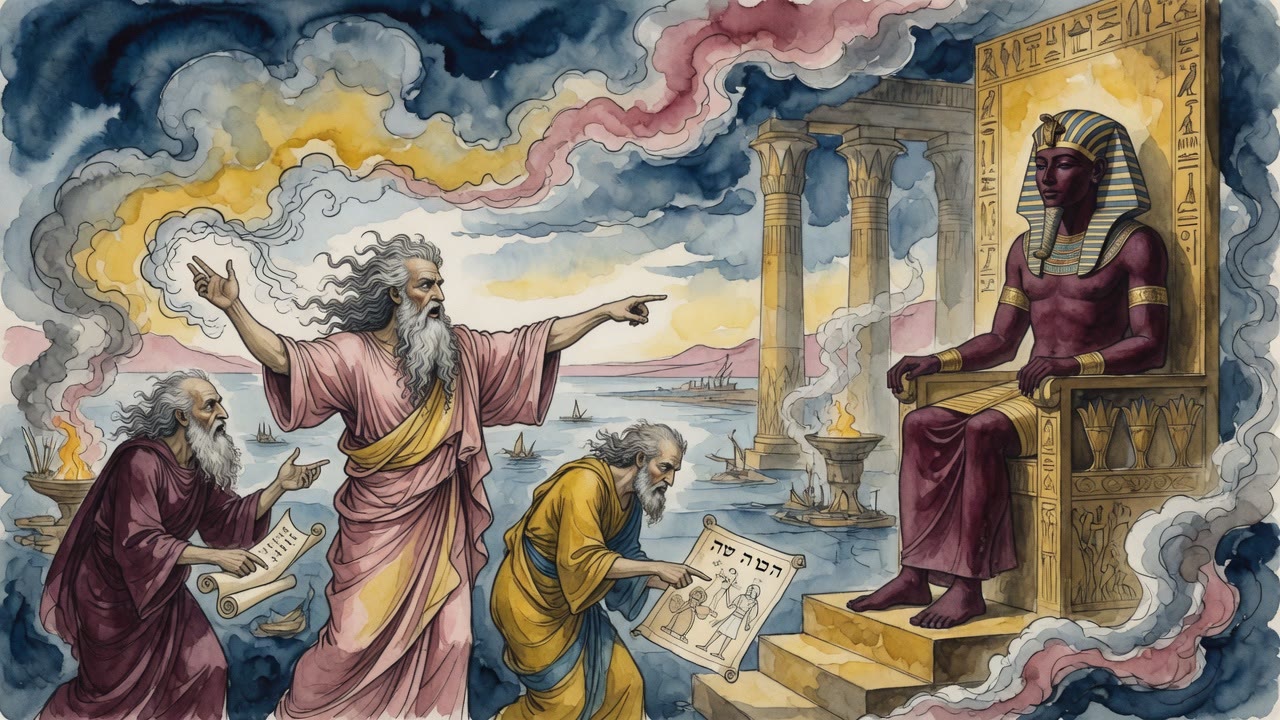
It did not work. Pharaoh had gathered his advisors when the Hebrews multiplied past counting, and Balaam stood among them and spoke. He did not say kill them outright. He said something colder. Break them with bricks. Bury them in labor until the men were too crushed to make sons. The gift of the donkey bought nothing. The man who owned the oldest animal in the world handed Pharaoh the slow murder of an entire people and went home to Pethor.
Why He Had to Fall to See
And still the Shekhinah (God's indwelling presence) spoke with him. This was the strangeness of Balaam, the thing that made him dangerous and made him pitiable at once. When he wished to receive a word, the Holy One would answer. Shaddai would show him a vision, and Balaam would gaze on the Presence itself, on light no diviner had any right to see.
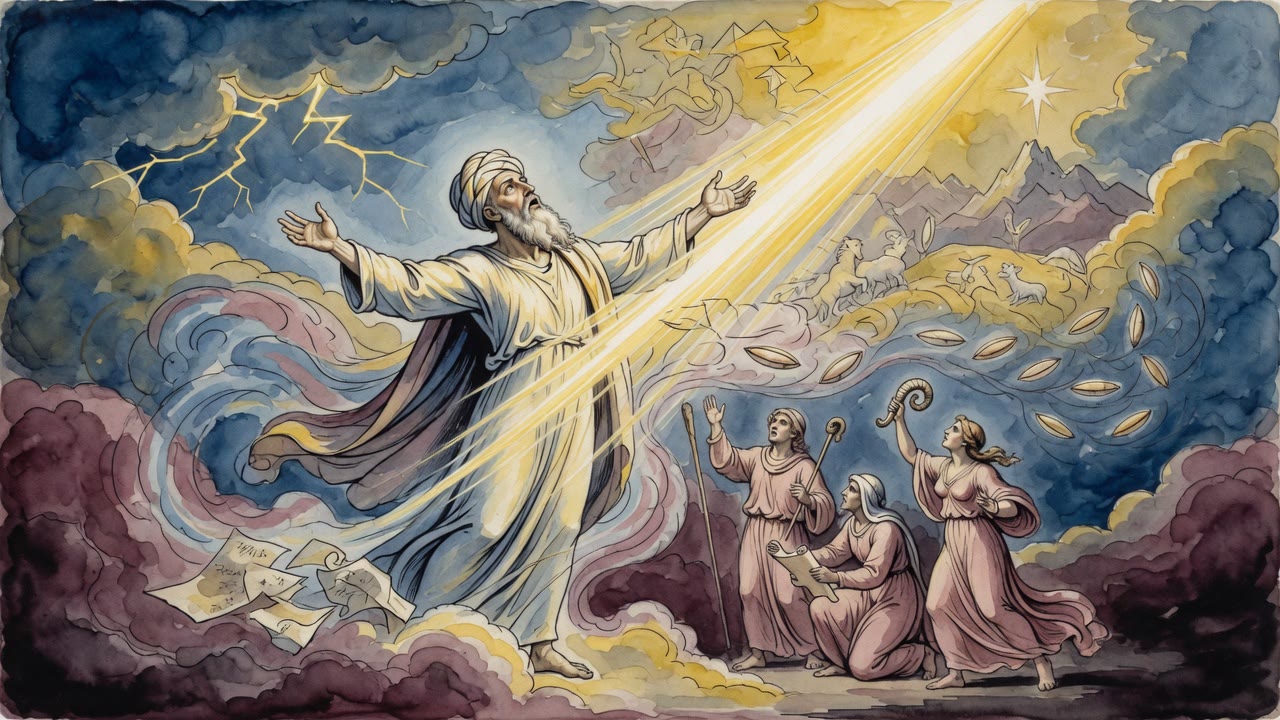
But he could not see it standing. He had to throw himself to the ground first. At the gate he would prostrate his whole body, fall flat with his face in the dirt, and only then, only down there with his eyes open against the earth, would the vision open above him. He could not remain on his feet before the Presence. He was uncircumcised, unmarked by the covenant, and his flesh would not let him stand where Moses stood upright. So the seer of the nations took his prophecies the way a beggar takes alms, flat on the ground, mouth near the dust, calling himself the man who hears the words of God and sees the vision of Shaddai, falling down, yet with open eyes.
The Saddle Cinched at Last
All of that history rode out of Pethor with him that morning. The man who had once read the dreams of kings. The man who had taken Egypt's silver and sold a people into bricks. The man who could not look at God without lying in the mud. He had servants to spare and an animal under him that remembered the sixth day of the world, and he used none of it to slow himself down.
He led the donkey out to where the princes of Moab waited with their reward. The girth was tight. He had cinched it with his own hands before the sun came up. Whatever blessing the Holy One would force out of his mouth on the hills above the camp of Israel, whatever curse he had been hired to deliver and would never manage to speak, the road began here, with a prophet who would not wait for help to do the work he wanted most in the world. He climbed onto the back of the oldest creature alive and turned her toward Israel.
← All myths