Israel Begged for the Banner of Love and Woe Came With It
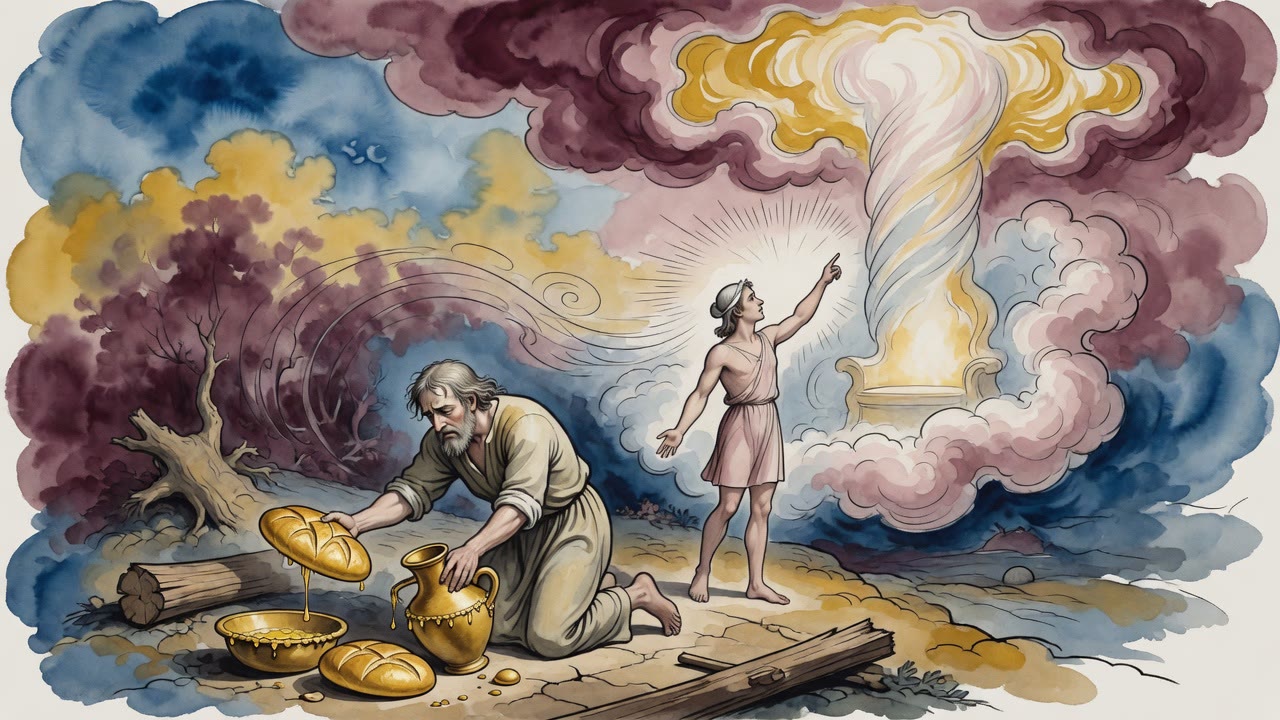
The angels came down in companies, each under its own cloth. Israel looked up from the dust and wanted the same flags.
Table of Contents
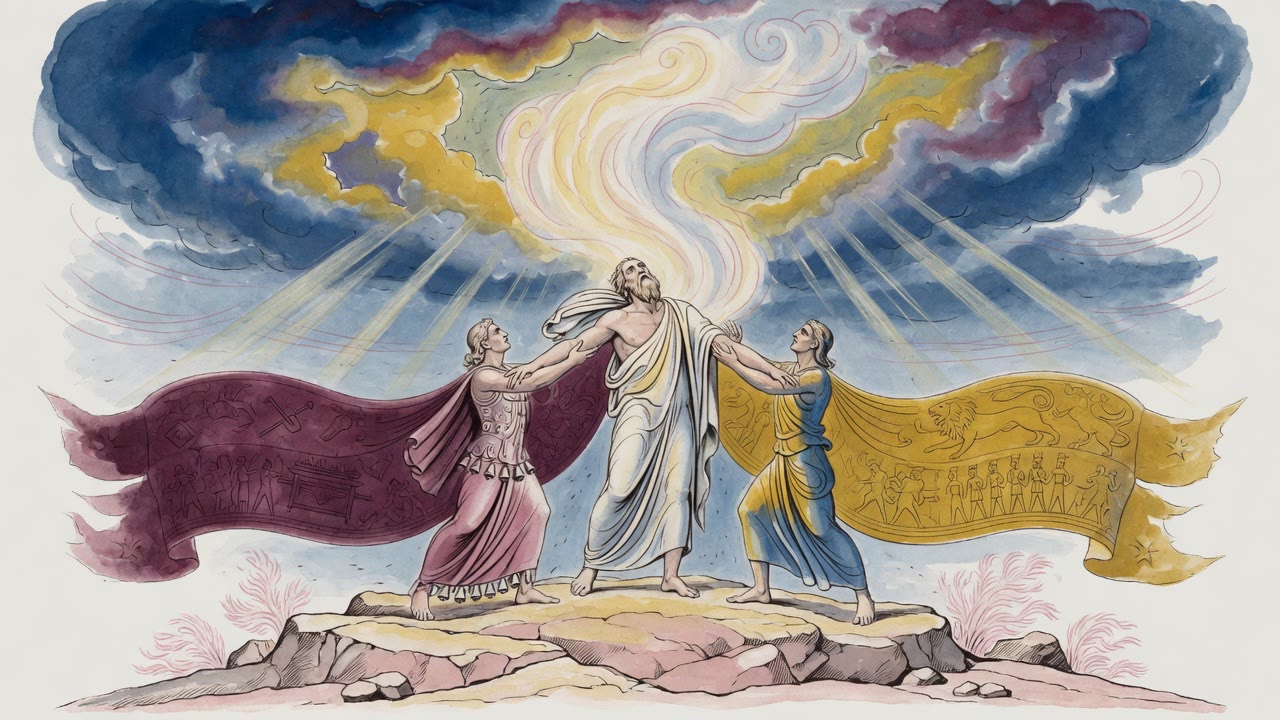
The mountain shook. The sky filled with formations. Twenty-two myriads of angels came down with the Holy One at Sinai, and they did not arrive as a crowd. Each company came under its own standard, colors ordered, ranks holding their spacing in the air.
 Click for full size
Israel stood in the dust at the foot of the mountain and looked up. What rose in them was not only fear. It was envy. "If only we could stand in banners like them."
God heard it. "You have wanted banners," He said. "By your life, I will grant what you wanted." Then He turned to Moses. Go down and arrange them under standards, the way they asked.
The cloth they begged for was called a banner of love. Woe came folded inside it.
Sixty-Nine Casks of Vinegar
Rabbi Abahu, teaching in Caesarea, wanted to say what that favor was worth. The picture he reached for was not flattering.
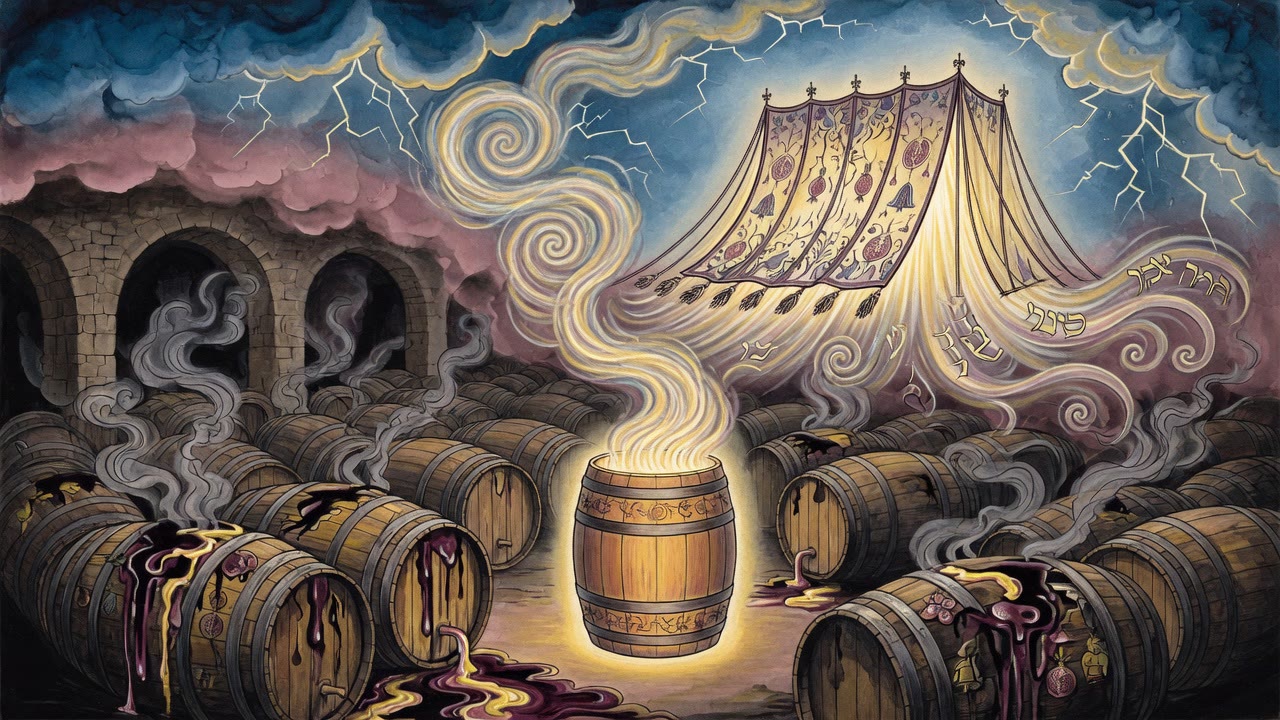
A wealthy man walks down into his own wine cellar to check the stock. He lifts a lid. Vinegar. He lifts the next. Vinegar. He goes down the whole row in that sour smell, prying and setting the lids back, and every cask in the storehouse has turned. At the door, on his way out, he opens one last barrel and it is wine.
"For me," he says, "this one cask is worth a full storehouse."
Count the word for wine, yayin (יין), and the letters come to seventy. Seventy nations were made. The banner is the cloth thrown over the one barrel a man carries up the stairs himself. All nations have flags. Only this one is dear.
The Finger on the Name
Rabbi Hanina turned the same verse toward something small enough to miss. Point a finger at a king's portrait in the old empires and they killed the person who did it. The image was the man. No one touched it. No one aimed anything at it.
Then he set beside that a room full of children in a study hall, running a finger along the line, stopping on the Name, saying it out and moving on. Nobody stops them. God looks at the small hand on the page and calls the finger beloved. The Hebrew for his banner and the Hebrew for his finger share the same letters. Love, in that room, is a child's hand that is not struck.
Rabbi Yisakhar took it further down. A man sits with the text and cannot hold a straight course. He skips from one ruling to another, from a verse here to a verse three columns over, doubling back, losing the thread. Even his skipping, God said, is dear to Me.
That is the love in the banner. It is not a parade. It is permission to touch what other courts would kill a person for pointing at.
The Firstborn Cried Woe
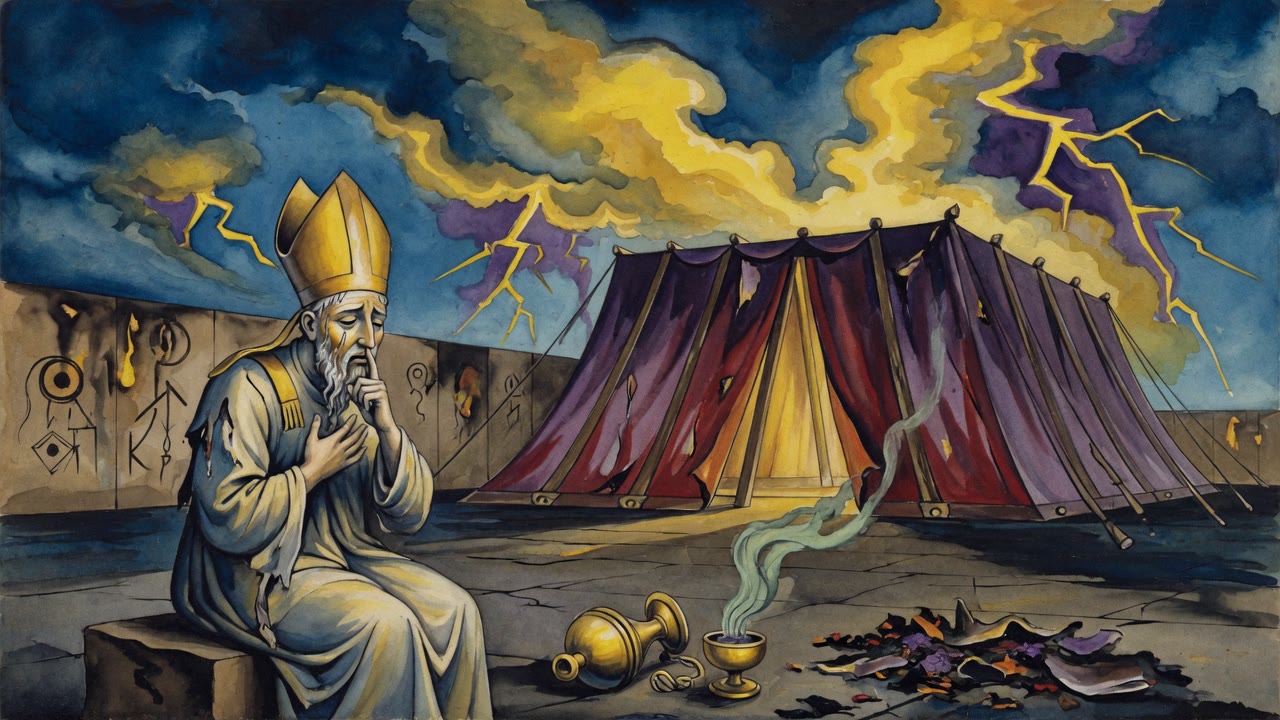
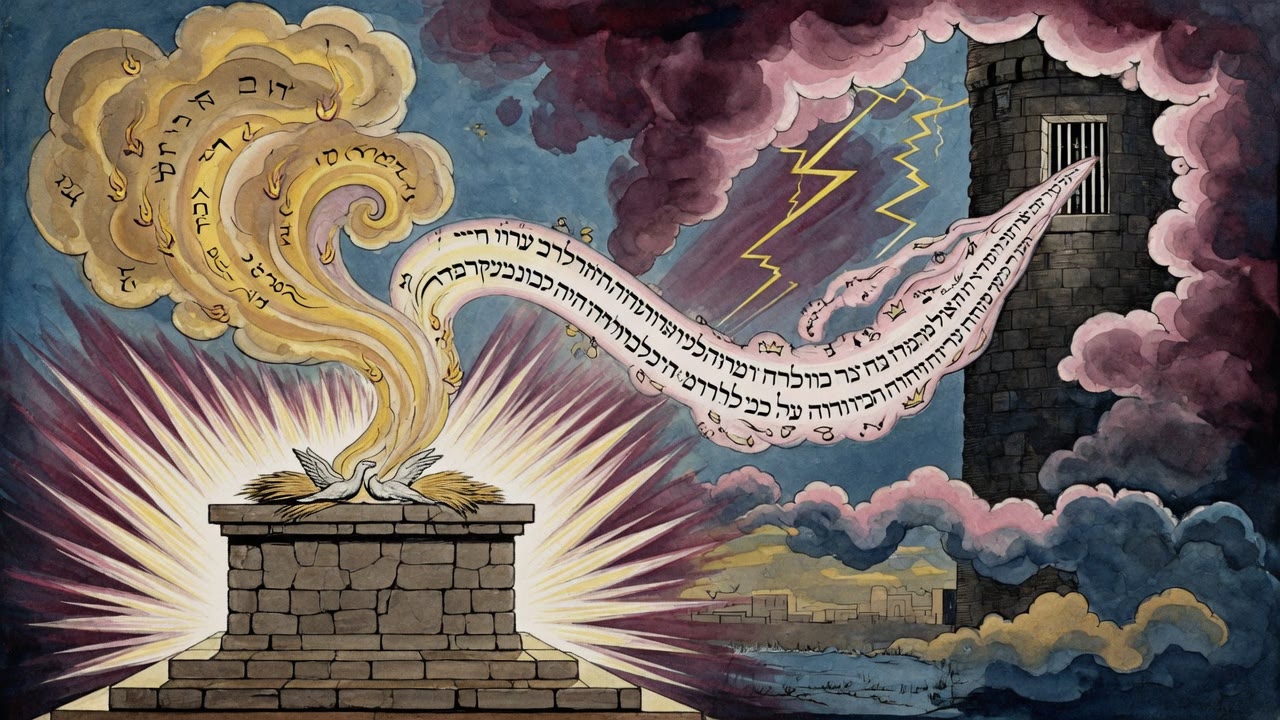
On the first of Nisan the Tabernacle went up. Boards into sockets. Curtains hung. The Ark carried in. Fire falling on the altar. Trumpets. A cloud settling over the tent.
Underneath the noise, the firstborn of Israel said woe.
They had served. Before there was a priesthood, the young men of Israel had brought up burnt offerings on the open altars, and those young men were the firstborn. On the day the tent was finished, the service passed to Aaron and his sons, and the men who had carried it stood in the crowd and watched somebody else climb the ramp.
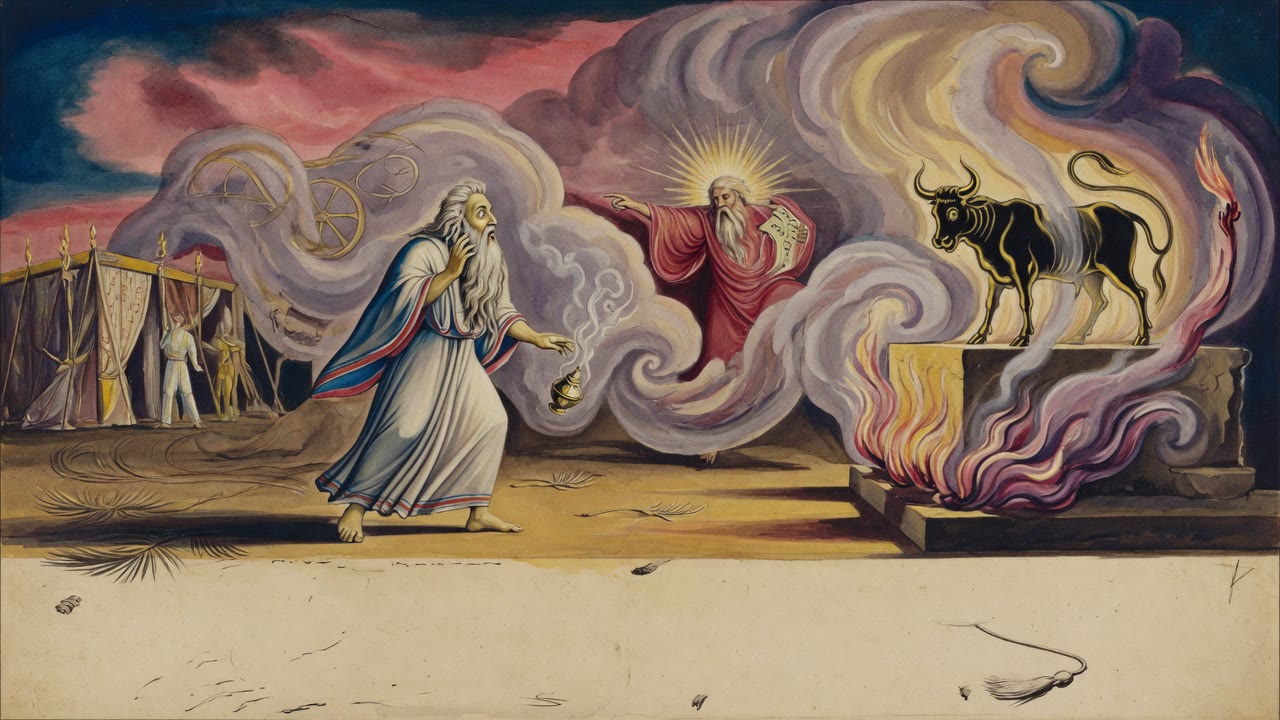
Rabbi Abba bar Mamal said why. They had sacrificed to the calf, and it cost them the priesthood. The disqualification held. Priests who served idols in the first Temple were shut out of the second, and Ezekiel named the ones who would be let back in: the sons of Zadok, who kept the watch when Israel went astray.
Outside the camp the nations of the world said woe too, and their reasoning was cold. "Until now He stood over them and fought their wars from somewhere above. Now they have built Him a house and He has moved into the middle of the camp. If He fought like that from a distance, what will He do from inside the tent?"
The angels said woe as well. They feared He would leave the height. God told them the essence stays on high. The cloth Israel had asked for had just made heaven jealous, the firstborn unemployed, and the nations afraid.
The Shepherd Counted What the Wolf Left
At Shittim a prince of Simeon walked a Midianite woman past Moses and the whole weeping assembly. The plague started moving through the tents. The elders were still arguing over whether the man had made himself liable when Phinehas took a spear and went in after him.
He hid the spear under his garment. He went in as if he needed the tent for himself. He drove the spear through both of them, one atop the other, so no one in Israel could say there had been no sin in that room. An angel lengthened the shaft, shut their mouths, lifted the lintel so Phinehas could come out with the two of them between his shoulders, in front of every eye.
The dying stopped. Then somebody had to count.
Twenty-four thousand. A wolf gets into the flock, and when it is over the owner turns to the shepherd and says, work out how many are missing. One man and a borrowed tent, and twenty-four thousand of the people they had begged banners for were carried out and tallied.
God said the counting belongs to this world only. There is a day coming when the number of the children of Israel will be like the sand of the sea, which cannot be measured and cannot be counted at all. Until that day, a banner means a place in the count, and a place in the count means a name on the list of the dead.
← All myths