The Boy Who Heard Birds Name Him King and Lost His Father
A childless man bargains at the graves for a son who understands birds, and what the birds foretell drives the father to the river.
Table of Contents
 Click for full size
A Prayer Among the Tombs
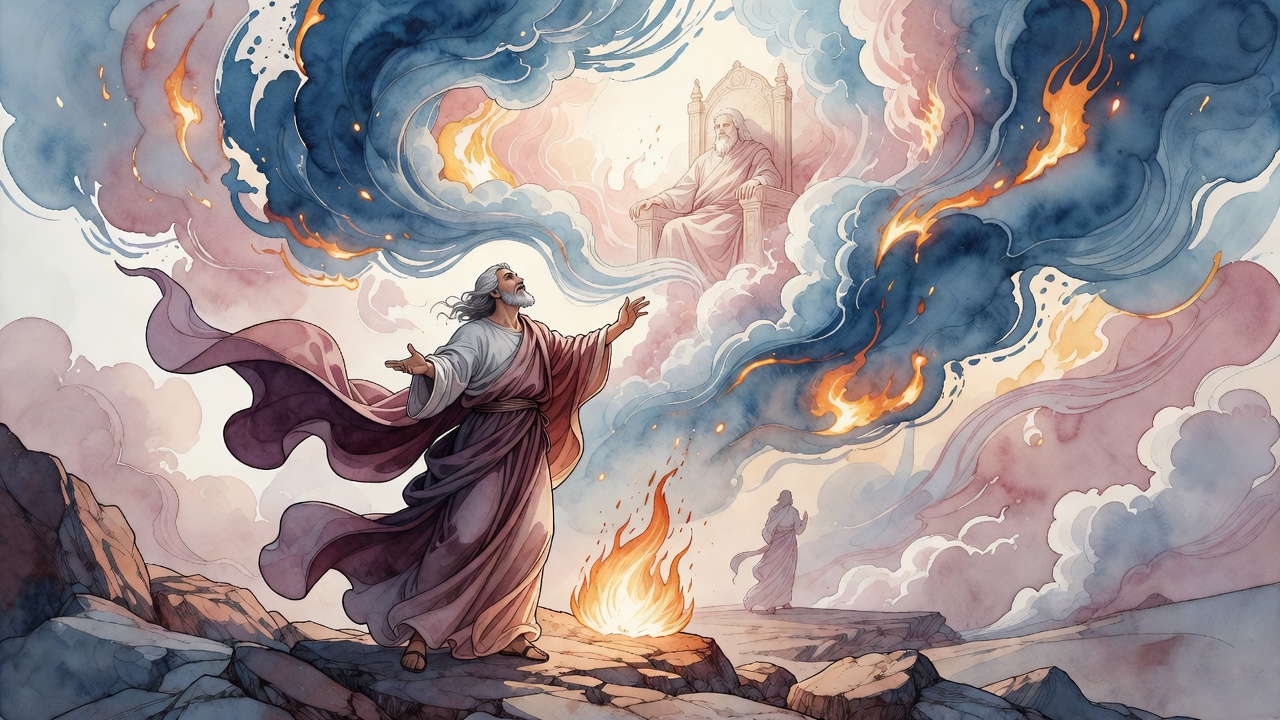
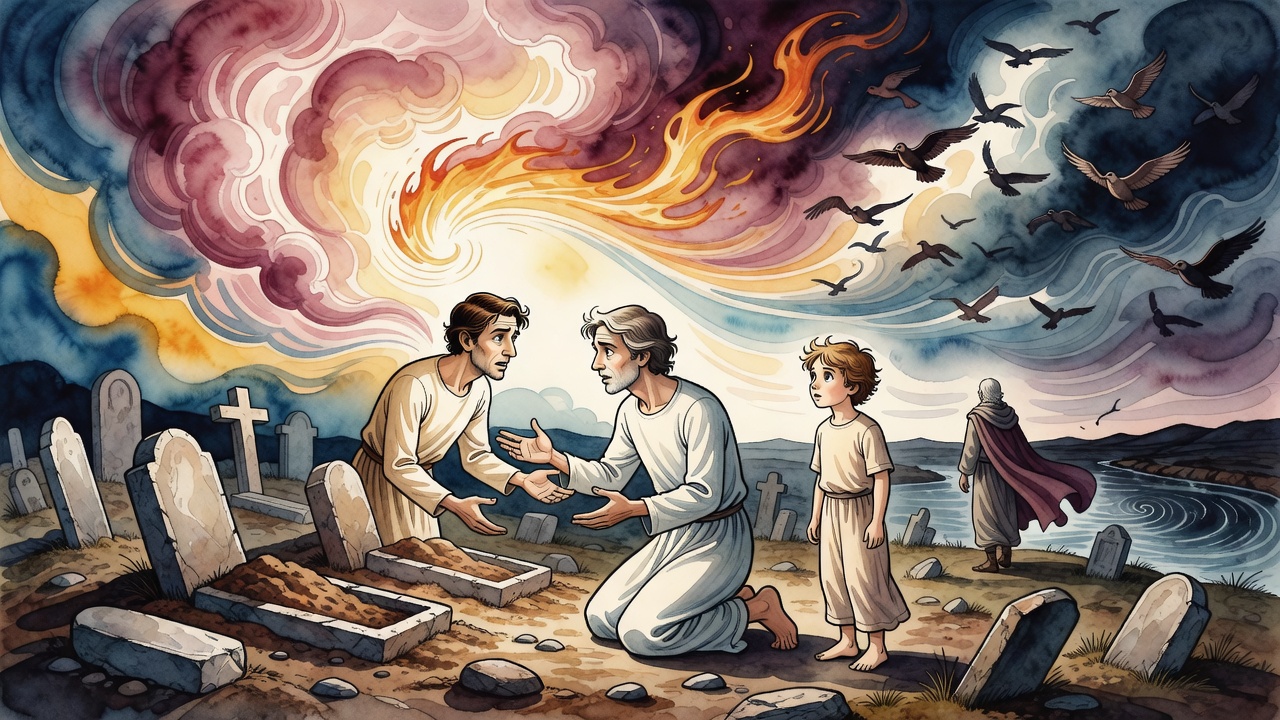
For years the woman's arms stayed empty. Her husband, a pious man who kept every commandment, could not bear her silence at the table any longer. One night he walked out to the cemetery, knelt among the graves of the righteous, and prayed until his knees went numb. He did not stop when the wind rose. He did not stop when the sky at the edge of the world turned gray.
Toward dawn the earth stirred. Shapes climbed out from between the stones, thin and patient, the sheydim who keep to the graves. "We will give you a son," they said. "But he is ours to mark. On the eighth day you will bring him here, to this ground, and we will circumcise him." The man wanted a child more than he wanted to be safe. He agreed.
The Bargain That Kept Growing
The son was born. On the eighth day the father carried him back to the graves and let the sheydim cut the covenant into his flesh. Then he turned for home and lost the road. Fields he had crossed a hundred times folded shut around him. The sheydim rose again at his elbow. "We will lead you home," they said, "if you leave the boy with us for seven years. We will raise him. We will teach him." A lost man in the dark does not argue. He agreed.
Seven years later he came to collect his son, and the sheydim met him at the edge of their ground with one more request. "Give us a single year more. In that year he will learn the speech of the birds and the beasts." The father's jaw tightened, but the road home was theirs to give or to hide. He agreed a third time.
Two Birds Above the Brook
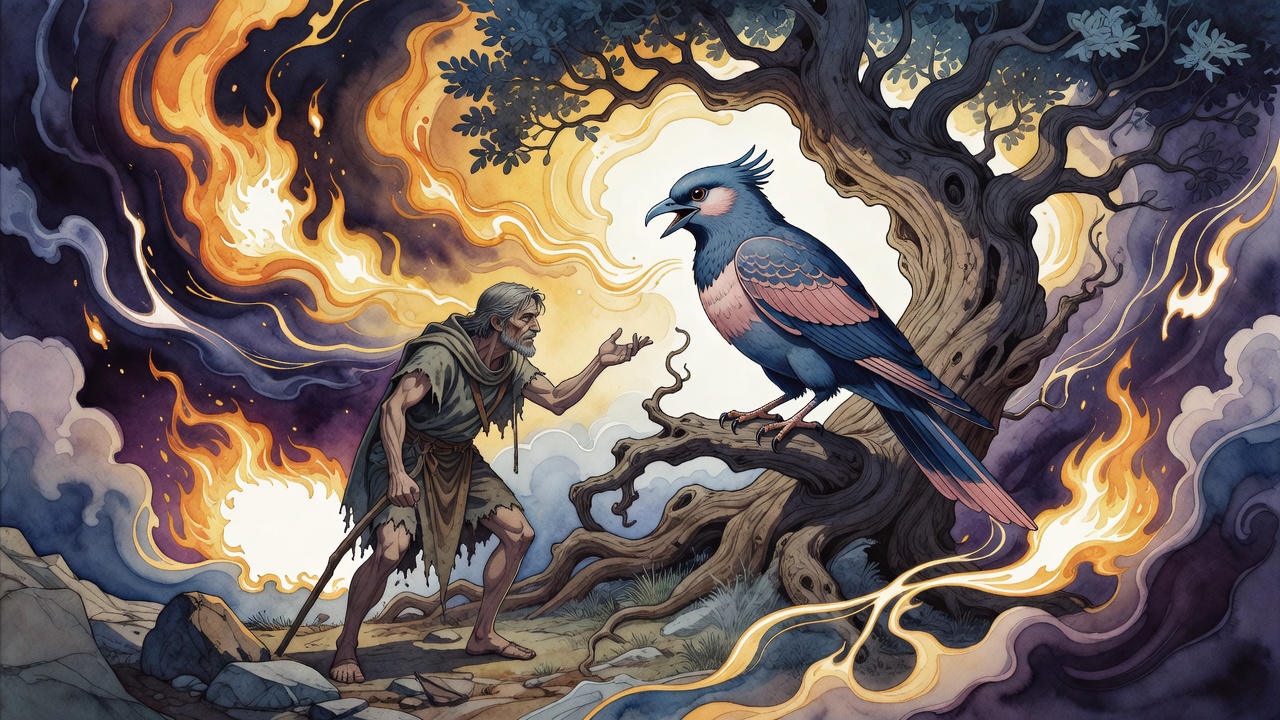
At eight years old the boy walked home beside his father at last. They came to a brook where two birds sat calling back and forth across the water. The boy listened. Then he laughed out loud, and a moment later he was weeping.
"Why do you laugh?" his father demanded. "Why do you cry?"
The boy answered without looking up. "The birds are saying that one day I will be a king. And that you, my father, will kneel before me and wash my hands and feet with your own hands before I sit down to eat."
The father heard only a child crowning himself above his own parent. Rage took him fast and clean. He seized the boy and threw him into the brook, and he walked home with empty hands and told himself the water had settled the matter.
The River That Would Not Keep Him
The water did not keep him. It carried the boy downstream and set him, coughing and alive, at the feet of a fuller who was beating cloth against the wet stones. The clothes-washer had no son. He took this one home, dried him, fed him, and raised him as his own, and never learned what the birds had promised.
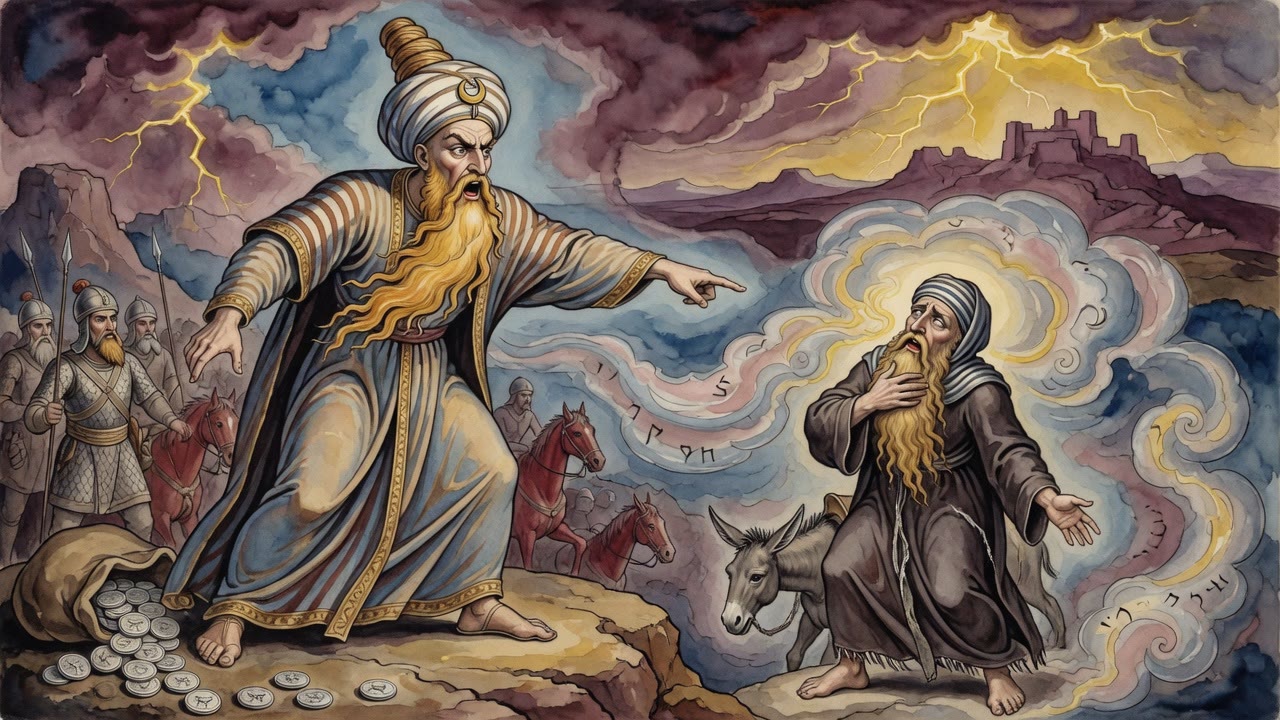
Far off in the capital of that kingdom, something began that no one could explain. Every day two birds gray with dust flew into the hall of the king and threw themselves down into his food, fouling every dish set before him. Diviners were called. None could say what the birds wanted. At last the king turned his anger on the Jews of his cities and gave them seven days. Find a man who can read these birds, he said, or be put to the sword.
A Basin, a Pitcher, and a Confession
The fuller heard the decree and remembered the strange boy the river had given him. He brought him before the throne. The young man stood beneath the two circling birds and listened the way he had once listened at the brook.
"They are the souls of two Jews," he said, "murdered by men of your own household. Their wives are still waiting at their doors, and do not yet know they are widows." He turned and named the murderers where they stood in the hall. The two dusty birds left the ceiling and dropped, and each settled on the head of a guilty man. The killers were dragged out and punished, and the young man was kept at court for the wonder of what he could hear.
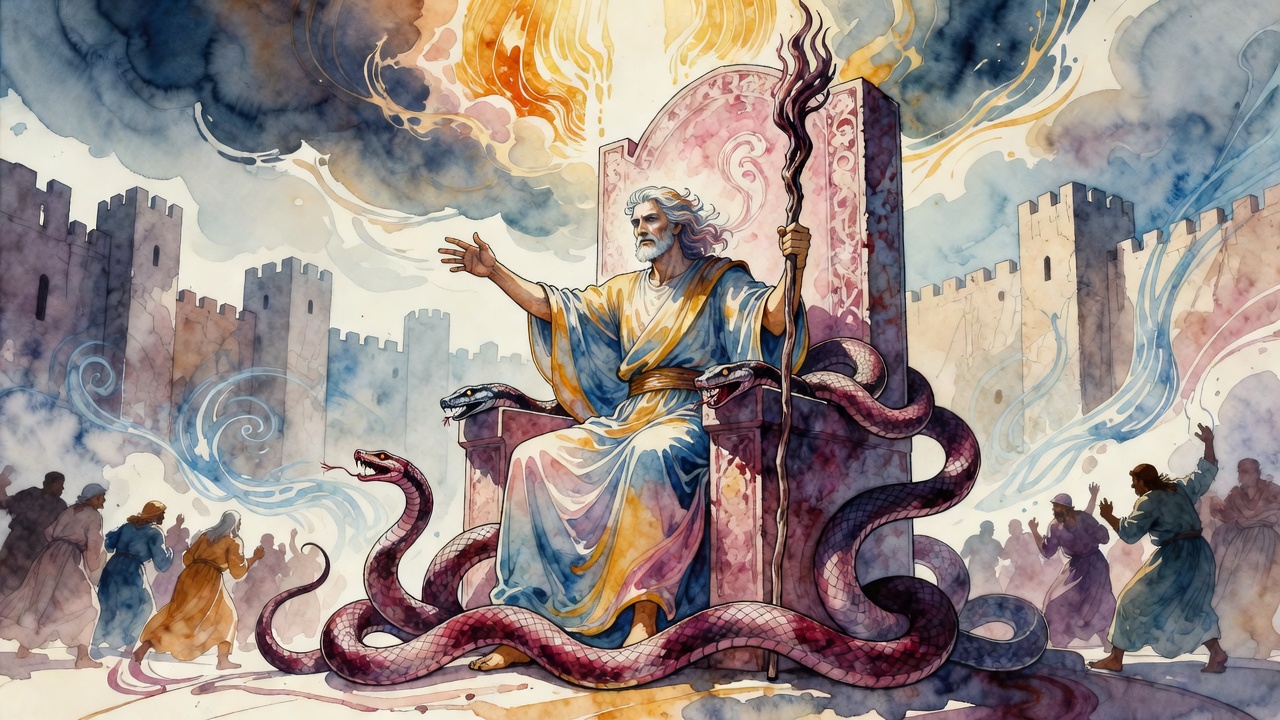
Years passed. His judgments were so clean that the court raised him until the crown itself came to rest on his head, and his name for justice traveled to villages he had never seen. In one of those villages an old woman still asked her husband, every season, where their son had gone. At last the old man told her the boy was long dead. She did not believe him. She demanded the grave. They quarreled until there was nothing left to do but carry the argument to the famous king who settled what no one else could.
The king heard them out, then sent every servant and counselor from the room and kept only the old man and the old woman. He called for water before the meal. A servant brought a basin and a pitcher and set them down. The old man, a guest before a king, bent to pour the water himself and reached for the royal hands to wash them. The king let his father's fingers close around his own. "Father," he said, "I am your son."
← All myths