5 min read

The Bride God Took Straight Out of the Brickyard

A betrothed girl was owed twelve months to get ready. Israel got no notice at all. The word came while their hands were still wet with Egyptian clay.

Curated by Arthur · Told by Maggid ·
Table of Contents
  1. He Would Not Wait the Year
  2. The Brick Under His Feet
  3. Every Man's Sword on His Own Thigh
  4. Black Tents on the Road
  5. The Flint Knives at Gilgal
The Bride God Took Straight Out of the Brickyard Click for full size

He Would Not Wait the Year

When a man asked for a girl in those days, she was owed twelve months before the wedding. A year to get her clothes together, her linens, her oils, whatever a household needed. Nobody was married out of a work yard.

Further east, a king took the women of his kingdom and put each one through a full year of preparation before she was brought in. Six months in oil of myrrh, which some say was pressed from boxwood and some say was oil of unripe olives, which strips the hair off the body and softens the skin. Then six months more in perfumes.

God did none of that.

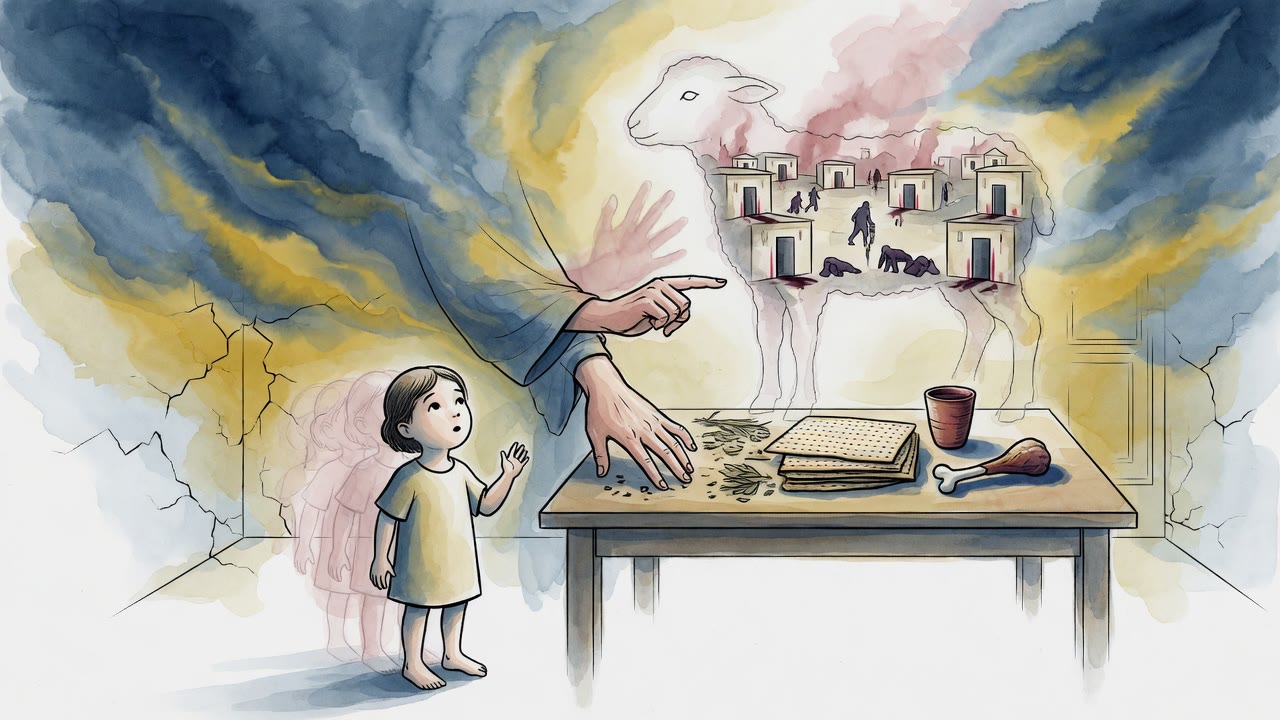
He came for Israel while their hands were still in the mortar. No year, no oils, no linens. They were standing in a brickyard in the delta with clay drying on their forearms, and the word arrived that they were going out that night.

The Brick Under His Feet

All the years they spent making bricks, there was a brick in heaven.

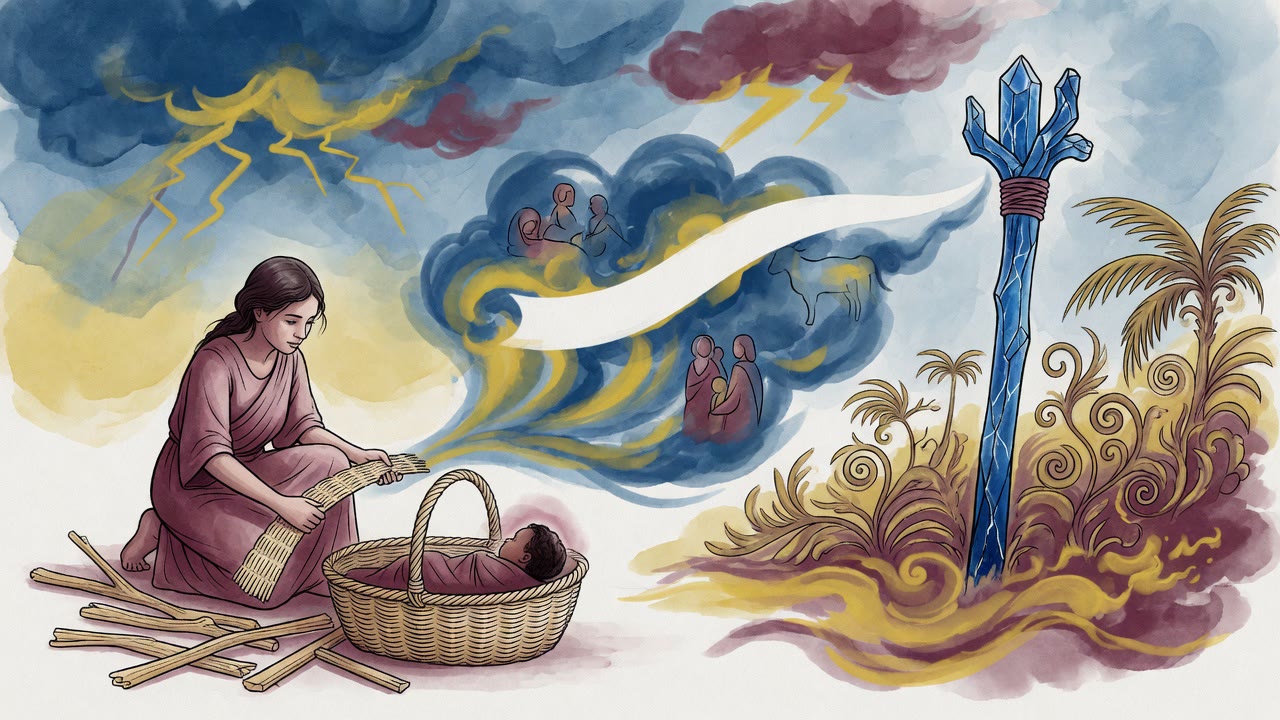
Under the feet of the God of Israel, where the pavement should have been, there was brickwork of sapphire, and the whole clear body of the sky above it. It was not decoration. It was the thing they were carrying all day, kept in the one place where it could not be missed.

Its shape printed itself on the sky over Egypt. Anyone in that country who looked up on a bright day could see the mark of a brick above him.

When they came out, it was lifted and put away where a brick is put away, and its basket went with it, and its trowel went with it. After that, the sky over them was only sky, clear of cloud, the way it looks when there is nothing in it at all.

Every Man's Sword on His Own Thigh

The lamb was already roasting when Moses came through the camp with the last condition. Nobody uncircumcised eats from this.

Half of them had never been circumcised. Egypt had run out of reasons to allow it and they had run out of will to insist. There were hours left before the meal.

Every man reached down and took the sword off his own thigh, and did it to himself, standing there.

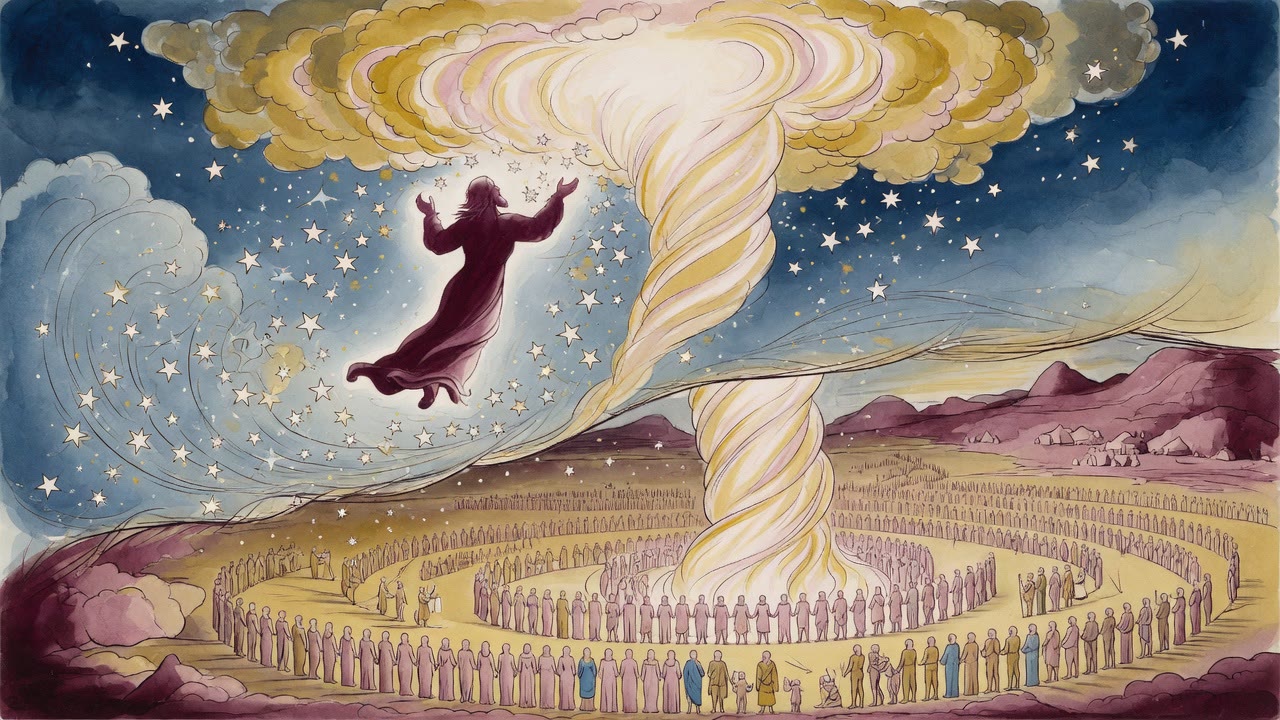
Then the three of them worked the line. Moses went along cutting. Aaron came behind him and drew the skin back. Joshua came last with water and made each man drink before he was allowed to lie down. Some tell it with Joshua holding the knife and Moses carrying the water, and either way the line moved all evening. Six hundred thousand men over the age of twenty, and six hundred thousand under it, and the smell of blood and roasting meat in the same street.

They ate standing up, with their sandals on.

Black Tents on the Road

What went out of Egypt did not look like a wedding party.

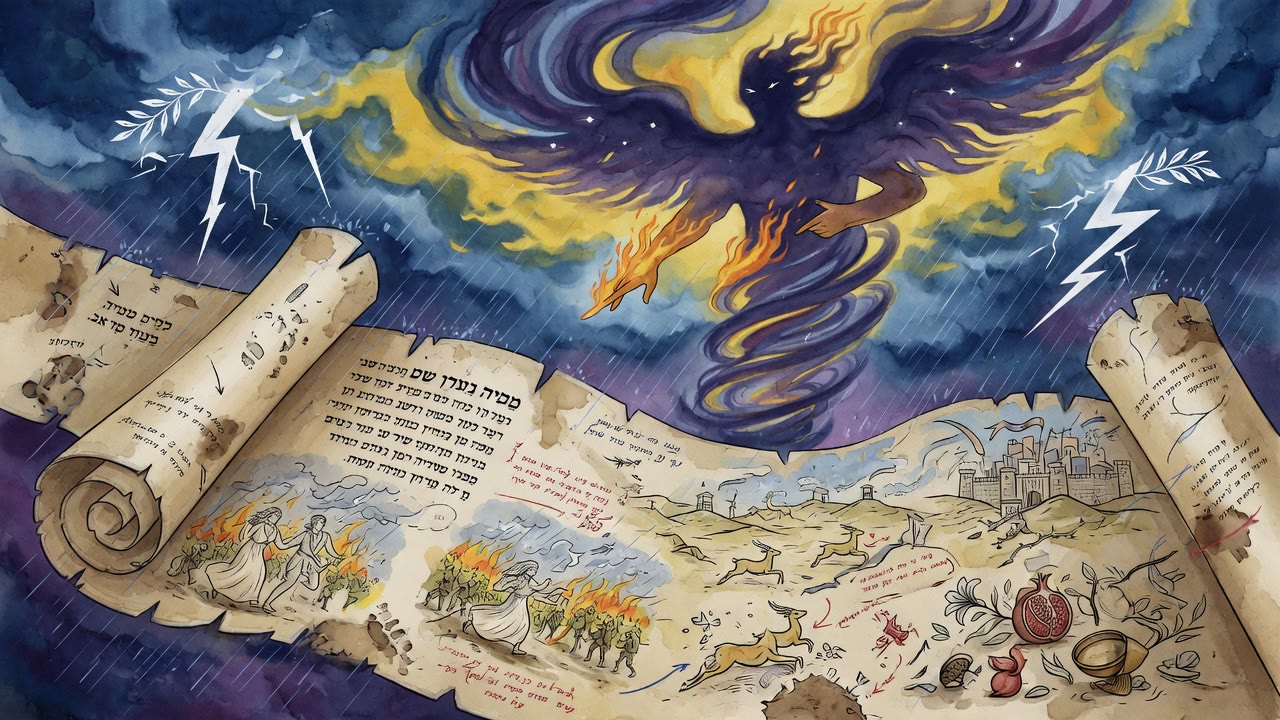
From a distance the camp looked like the tents of Kedar out in the desert, black goatskin gone stiff with smoke, torn along the seams, the kind of tent a traveler rides past without slowing down because there is obviously nothing in it worth stopping for.

Inside those tents were gems and pearls.

One of the bundles in that column was a coffin. Joseph had been sold to traders out of exactly those black tents, carried down into Egypt as freight, and had ended up holding the deed to the whole country his buyers had sold him into. They were carrying his bones home.

They walked out upright. That was the point of the posture, and it was noticed. No creature on that road frightened them.

The Flint Knives at Gilgal

Forty years later the whole thing had to be done a second time, because the sons born in the wilderness had not been done at all.

Joshua cut flint knives for himself on the plain by Jericho and circumcised the nation again at a rise in the ground east of the camp, and the place kept the name it earned that day. The Hill of the Foreskins. There are those who say the hill itself was made out of them, that the mound was not there before the morning and was there after.

Then they kept the Passover in the land, and the manna stopped.

Long after that, when the house in Jerusalem had been burned and the people were walking east again, the promise came back around in the same words. When you went down to Babylon, I went with you. When you come back to the chosen house, I am coming with you. As long as Israel is sitting in the ashes, so is he, and when it is time he will come up out of them the way a hen stands and shakes the ash out of her wings.


← All myths
From the tradition

Sources

3 sources

The texts behind this telling. Some cards carry a translation of the source; others are our own retelling of it, and each card says which. Every card links out to the original.

Shir HaShirim Rabbah 5:4Shir HaShirim Rabbah

Retold in our words. Read the original at the link below.The Sefaria Midrash Rabbah, 2022 · CC-BY

5) found in Shir HaShirim Rabbah.

The tents of Kedar, were known for being… well, not pretty. Black, tattered, worn. Outwardly, they seemed ugly. But the Rabbis of the Midrash (rabbinic interpretive commentary) ask us to consider what might be inside those tents. What if, despite the rough exterior, they held treasures – gems, pearls, untold riches?

This becomes a powerful metaphor for Torah scholars. The Rabbis suggest that Torah scholars, too, may appear "ugly and black" in this world – perhaps meaning they are humble, unassuming, or even socially awkward. But inwardly? They are filled with the riches of Torah: Bible, Mishna (the core of the Oral Torah), Midrash (interpretive stories), halakhot (Jewish laws), Talmud (the vast legal and ethical compendium), Tosefta (a collection of Tannaitic teachings), and aggada (stories and legends). The true value, the real beauty, lies within.

The Midrash doesn’t stop there. It continues to examine the verse, drawing further comparisons and contrasts. If the tents of Kedar don't require laundering, does that mean Israel is always pure? No, the verse counters, "Like the curtains of Solomon." Solomon's curtains get soiled and need cleaning. So too, Israel sins throughout the year, but Yom Kippur (the Day of Atonement) arrives to atone for them. As (Leviticus 16:30) states, “For on this day He will atone for you.” And (Isaiah 1:18) promises, “If your sins will be like scarlet, they will be whitened as snow; if they will be reddened like crimson, they will be like wool.” There is a cycle of imperfection and renewal, stain and cleansing.

What about stability? Are the Jewish people destined to wander like the nomadic tribes who used the tents of Kedar? Again, the verse provides an answer: "Like the curtains of Solomon," specifically, "the curtains of the One [of Whom it may be stated] that the peace is His, the One Who spoke and the world came into being." These curtains, the heavens themselves, haven't moved since creation. Rabbi Eliezer ben Yaakov adds, citing (Isaiah 33:20), "'A tent that will not be displaced [yatzan]' – it will not emerge [yetze] and will not move [yanua]." The Jewish people, despite their wanderings, are ultimately anchored by their covenant with God.

And what about freedom? Were the people of Kedar subject to the yoke of any creature? No! And Rabbi Ḥiyya teaches, drawing from (Leviticus 26:13), that God led Israel "upright," "without fear of any creature." This verse, referring to the Exodus from Egypt, is understood as alluding to the future redemption as well.

Finally, Rabbi Yudan brings in the story of Joseph. Joseph, sold to the tents of Kedar (Genesis 37:28), ultimately "purchased his purchasers," acquiring all the land of Egypt (Genesis 47:20). So too, Israel, as (Isaiah 14:2) prophesies, "They will be captors of their captors."

So, what's the takeaway? This Midrash on "Like the tents of Kedar" is a powerful reminder to look beyond the surface. To see the value in what might initially appear unattractive or unassuming. To trust in the ultimate stability of our connection to God. And to believe in the eventual triumph of the Jewish people. It's a message of hope, resilience, and the enduring power of inner beauty.

Full source
Shir HaShirim Rabbah 7:4Shir HaShirim Rabbah

Retold in our words. Read the original at the link below.The Sefaria Midrash Rabbah, 2022 · CC-BY

The Rabbis, in their insightful way, connect verses from different parts of the Bible to illuminate the Exodus story. They begin by focusing on the verse "Behold the bed [mitato]." Now, in this context, "bed" isn't just about a place to sleep. It's a symbol. And it leads to a deeper dive into the phrases "his tribes [matotav]" and "his clans." The Rabbis link "matot" to the phrase "The oaths of the tribes [matot]" found in (Habakkuk 3:9), drawing a parallel between the tribes of Israel and their solemn commitments.

Then comes "of Solomon [Shlomo]," but it's not just about King Solomon, son of David. The Rabbis cleverly add, "of the king [of Whom it may be said] that peace [shalom] is His." This connects Solomon, whose name means "peace," to God himself, the ultimate source of peace. Pretty neat, huh?

Next, the text speaks of "sixty valiant men." But who are these men? According to Shir HaShirim Rabbah, these represent the six hundred thousand Israelites who left Egypt, all those twenty years of age and above. And what about "the valiant of Israel?" Those are the six hundred thousand who departed Egypt from twenty years of age and below. A whole nation, young and old, ready to start anew.

Here’s where it gets truly interesting. "Each armed with a sword, trained in war; each man, a sword on his thigh." This isn't just about physical weapons; it's about spiritual readiness. When Moses relayed God's commandment, "All uncircumcised shall not eat from it" (Exodus 12:48), every single man grabbed his sword and circumcised himself. Imagine that scene. A mass act of faith and obedience, right there in the desert.

But who performed all those circumcisions? The text presents two fascinating opinions. Rabbi Berekhya suggests that Moses was the circumciser, Aaron uncovered the skin (a necessary part of the ritual), and Joshua gave them something to drink afterward. A real team effort! Others say it was Joshua who performed the circumcisions, Aaron who uncovered the skin, and Moses who provided the drink. This alternative version links to (Joshua 5:2), where God commands Joshua to "Make flint knives for yourself and circumcise the children of Israel again, a second time."

Why "a second time?" Because, according to this interpretation, they had already been circumcised once before! Immediately, "Joshua made flint knives for himself, and circumcised the children of Israel at the Hill of the Foreskins" (Joshua 5:3).

And what's the deal with this "Hill of the Foreskins?" Rabbi Levi offers a powerful image: that the hill was actually made from the foreskins themselves. Can you picture that? A physical evidence of their commitment to God, a mountain of sacrifice rising from the desert floor.

So, what do we take away from this midrashic (rabbinic interpretive commentary) exploration? It's more than just a story about circumcision. It's about the unwavering faith and dedication of a people preparing to enter into a covenant with God. It's a reminder that sometimes, the most profound acts of faith require courage, sacrifice, and a willingness to embrace the covenant, even when it's challenging.

Full source
Shir HaShirim Rabbah 8:1Shir HaShirim Rabbah

Retold in our words. Read the original at the link below.The Sefaria Midrash Rabbah, 2022 · CC-BY

The first reading, it’s a beautiful invitation. But as Shir HaShirim Rabbah, the rabbinic commentary on Song of Songs, reveals, there’s so much more going on.

The verse repeats, "With me from Lebanon, my bride, with me from Lebanon." The Rabbis ask, what’s the significance of Lebanon? Levanon in Hebrew, is cleverly connected to levenim, meaning bricks. The Holy One, blessed be He, is saying: “Come with Me from Lebanon.” But what does that even mean?

The commentary goes on to explain that normally, a virgin is given twelve months to prepare for her wedding once her husband asks to marry her, as we find in Ketubot 57a. She needs time to gather all her needs for the big day! But God didn't wait. As the Israelites were still toiling, still engaged in "mortar and bricks" in Egypt, He hastened to redeem them. He didn’t make them wait.

It's a powerful contrast to, say, the story of Ahasuerus in the Book of Esther, who subjected the women in his kingdom to elaborate beauty treatments: “Six months with myrrh oil [shemen hamor], [and six months with perfumes, and with women’s cosmetics]” (Esther 2:12). Rabbi Yehuda bar Yeḥezkel says that shemen hamor is oil of the boxwood. Rabbi Yannai says it's the oil of unripe olives, used to remove hair and soften the skin. But God’s love is different. He saw the suffering, and acted swiftly.

And that brings us to another powerful image: Rabbi Berekhya and Rabbi Yirmeya, citing Rabbi Ḥiyya bar Abba, recall Rabbi Levi ben Sisi's teaching from Neharde'a. They point to (Exodus 24:10): "They saw the God of Israel, and under His feet [was like the craftsmanship [kemaaseh] of sapphire brickwork]." Before the redemption from Egypt, they saw this vision. But after? The heavenly brick, representing the bricks of enslavement, was stored away, its purpose fulfilled. As Rabbi Berekhya says, it wasn't just the brick, but "it and all its accessories were placed there; it, its basket, and its trowel were placed." Wow.

Bar Kappara adds that until the Exodus, the impression of the brick was visible in the sky. But once Israel left Egypt, it disappeared, "as it is when it is clear of clouds," referring to the Targum Yerushalmi on (Exodus 24:10). The sign of their suffering was gone, replaced by a clear sky, a symbol of freedom.

The Holy One, blessed be He, then promises to always be with His people. "When you were exiled to Babylon, I was with you," as (Isaiah 43:14) states, "For your sake I was sent to Babylon." And the promise extends to the future: "When you return to the chosen House," – meaning the Temple – "I am with you. That is what is written: “With me from Lebanon, my bride." The Temple itself is linked to Lebanon because it was built with cedars from Lebanon!

But then Rabbi Levi asks a poignant question: Why "from Lebanon" and not "to Lebanon"? His answer is striking: First, God departs from the Temple, and then He exacts retribution from the nations of the world. It’s a powerful image of divine justice. Rabbi Berekhya adds that God exacts retribution from Esau and his chieftains at three junctures, citing the three-fold promise in (Isaiah 33:10): “Now I will arise, the Lord will say, [now I will ascend, now I will be exalted].”

And finally, Rabbi Shimon ben Rabbi Yannai paints a vivid picture: "As long as [Israel] is wallowing in the ashes, as it were, so is [the Holy One blessed be] He." Isaiah echoes this sentiment: "Shake the dust from you, arise and sit, Jerusalem" (Isaiah 52:2). At that moment, Zechariah proclaims, "Be silent all flesh before the Lord" (Zechariah 2:17). Because, as Rabbi Aḥa says, God is roused "like this hen that shakes its wings free from the midst of the ashes."

So, what does it all mean?

It's about remembering our past, the suffering and the redemption, and knowing that God is with us in both. It's about recognizing the symbols of oppression and celebrating their removal. It's about the promise of future redemption, and the assurance that even in exile, even in the ashes, God is present, ready to shake free and rise with us.

What "bricks" are holding you back today? And how can you find God in the midst of them, waiting to redeem you?

Full source