The Carob Planter and the Seventy-Year Sleep
A planter sets a carob for children he may never meet. Rabbi Yochanan and Honi sleep seventy years and wake into a world that already ate the fruit.
Table of Contents
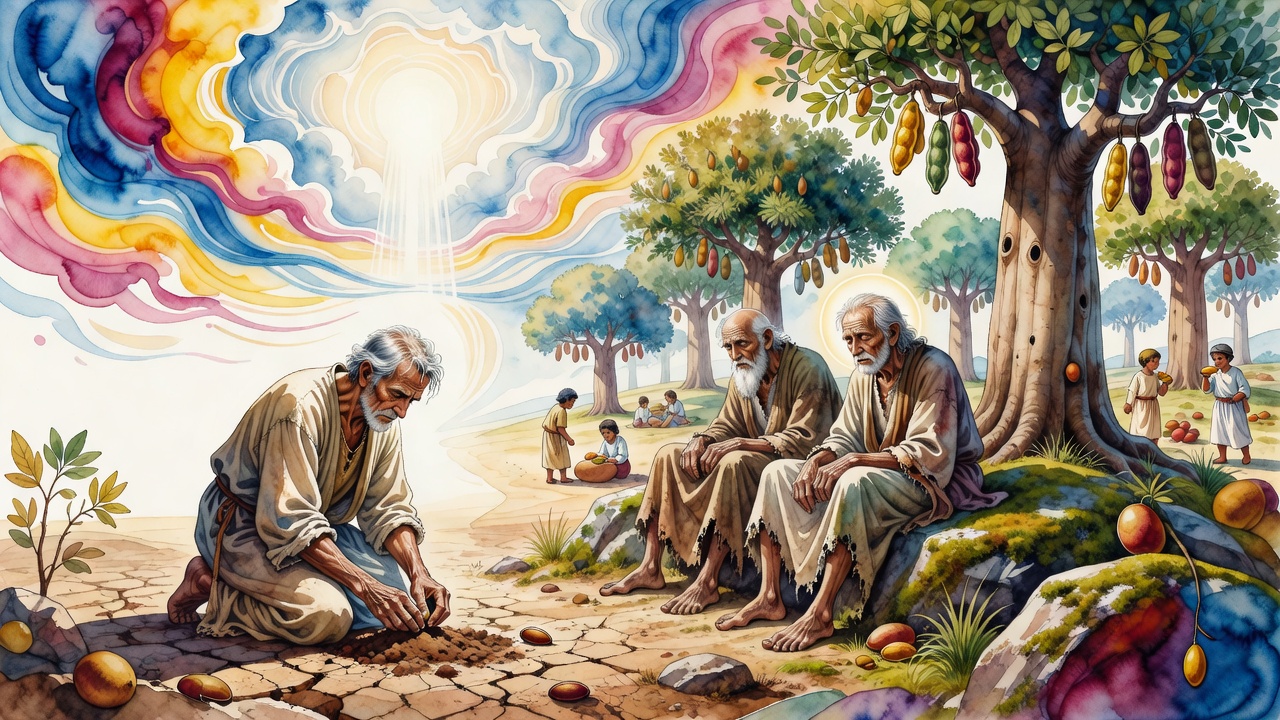
Rabbi Yochanan walked a road that dusted his cloak to the knees and stopped because a man was digging. The hole was deep enough for roots that would outlive the digger. A carob sapling lay beside the mound, leaves still pale from the nursery. Yochanan wiped sweat from his forehead and asked the only question that made sense to a man in a hurry for endings.
 Click for full size
"How long until this tree bears fruit?"
"Seventy years," the planter said, without looking up.
Yochanan laughed once, short. "And you will be alive to eat it?"
The planter set the sapling in the hole and packed earth with both palms. "I found this world full of carob trees. My fathers planted for me. I plant for my children." He stamped the soil flat and reached for water. The road went quiet except for the pour.
The Verse That Would Not Leave Him
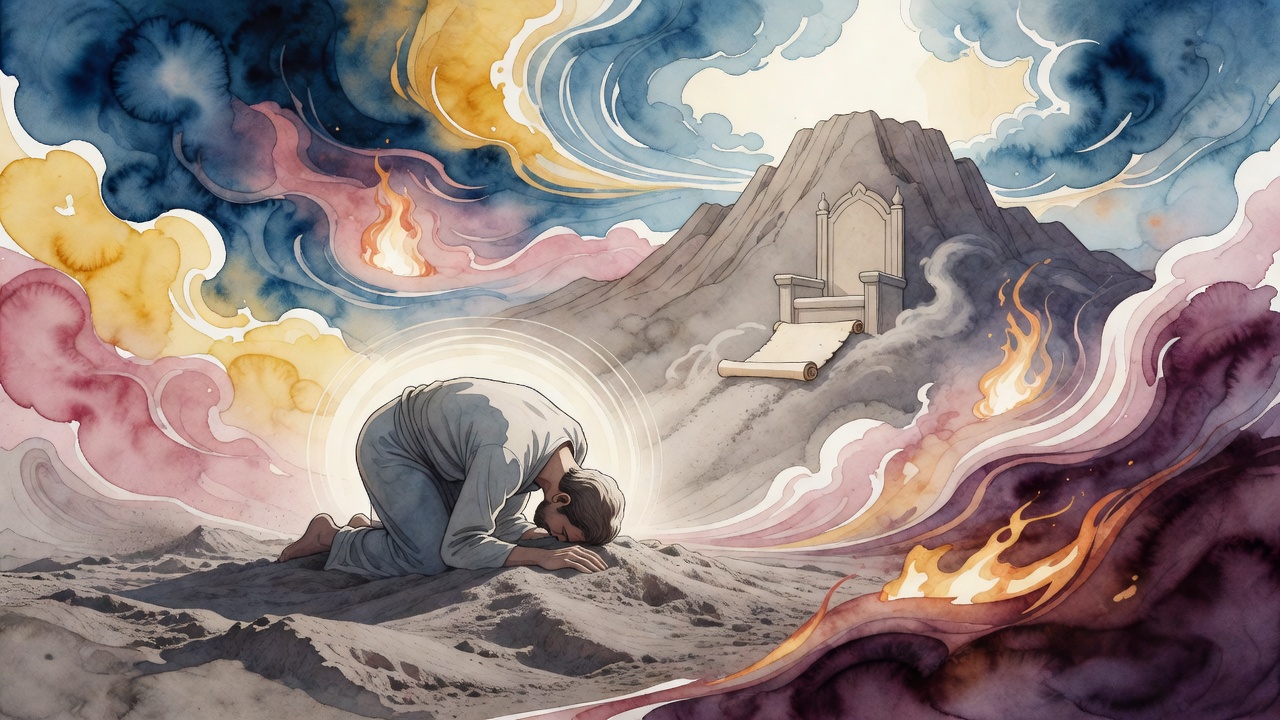
Psalm 126 had lived under Yochanan's ribs for years: when the Lord brings back the captivity of Zion, we will be like dreamers. He believed Jerusalem would rise again only through the merit of the tribes, and the verse would not finish its work in his mind. Return felt like sleep and waking at once. How does a people walk out of exile and not stagger? How does a city rebuilt not feel like a dream that might crack if you speak too loud?
He had asked heaven for understanding more than once. On that road, with carob dirt still under another man's nails, a heavenly voice answered. The request was granted. Sleep took him where he stood. The road, the planter, the pale leaves folded away.
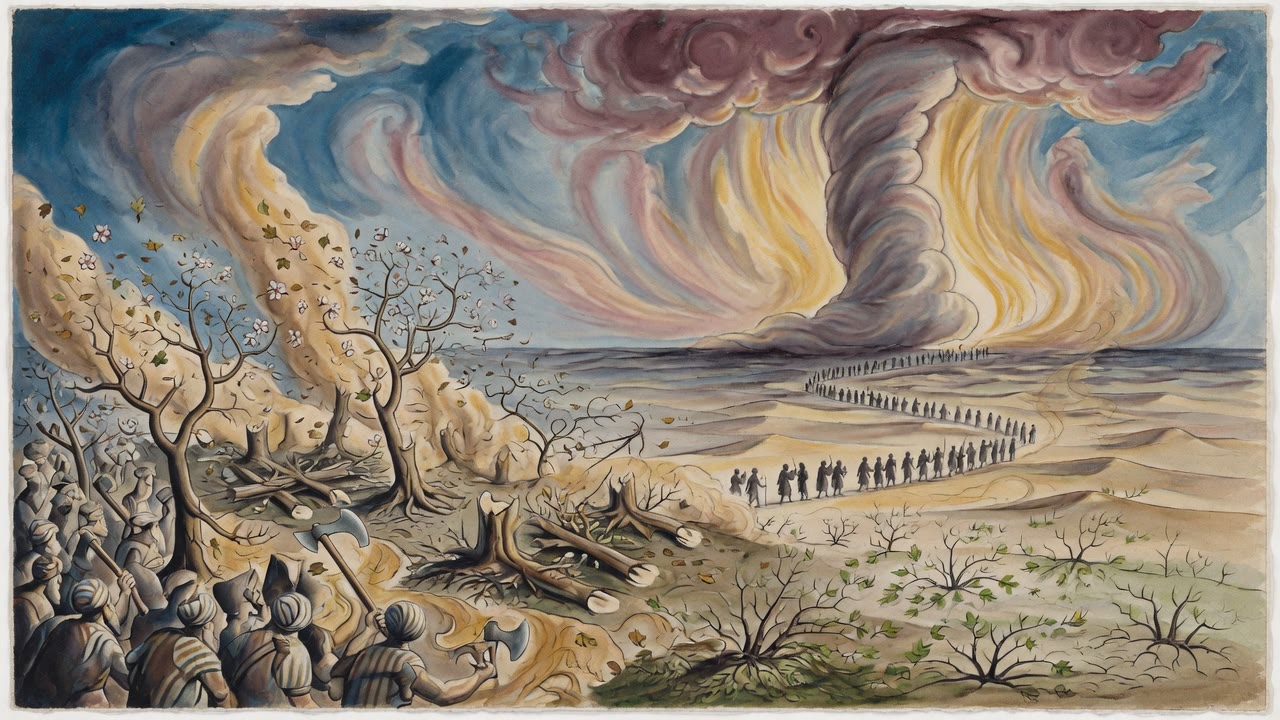
Seventy years passed without him. Empires shifted. Children became elders. The carob thickened and put out pods the color of old leather.
Waking to the Harvest
Yochanan opened his eyes on the same stretch of road and did not know it. The light sat differently. Walls that had been low were high. A man stood under a mature carob, pulling pods into a sack. Yochanan approached like a stranger borrowing a path.
"Are you the one who planted this tree?"
"I am," the man said. His hair was white. His hands still knew the bark.
Yochanan blessed him, and blessed God who had given such years. Awe and disorientation shared the same breath. The planter of the long bet had lived to taste the fruit. The sage who had doubted the timeline had slept through the entire wager. That is how the verse began to make a body for itself: captivity returned, and the ones who see it feel like dreamers because time folded while they were not watching.
Honi in the Cave
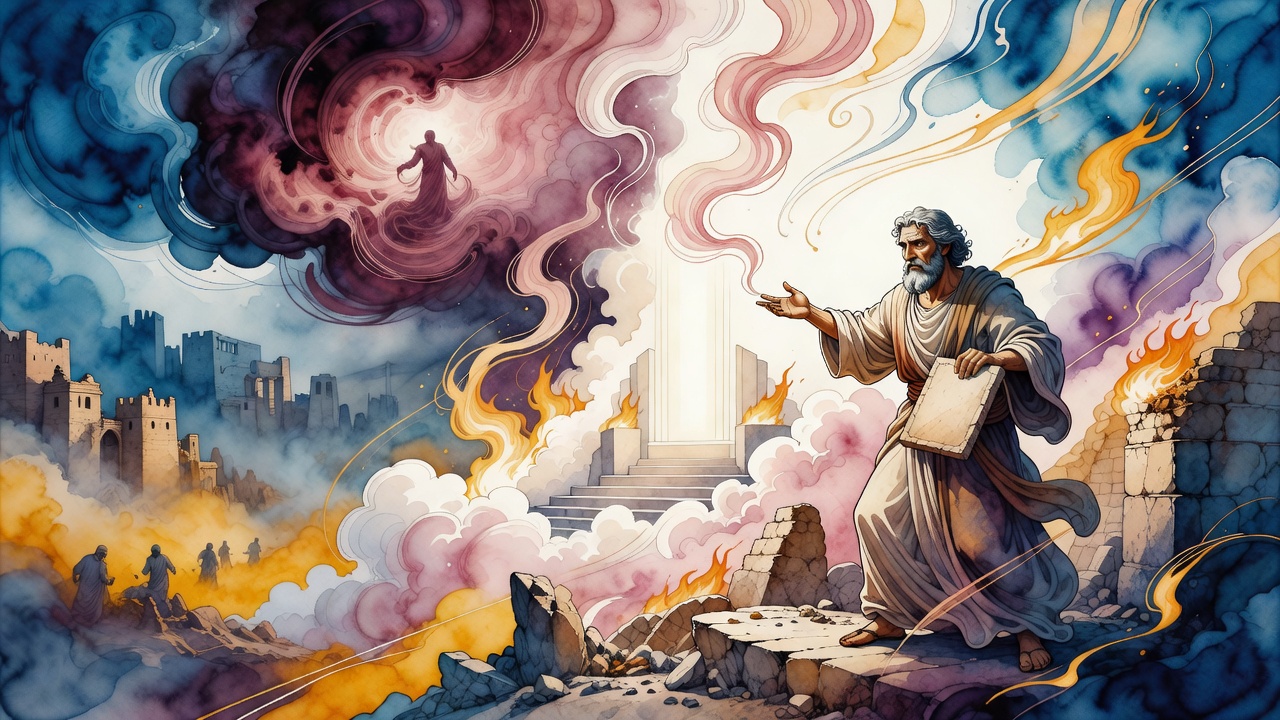
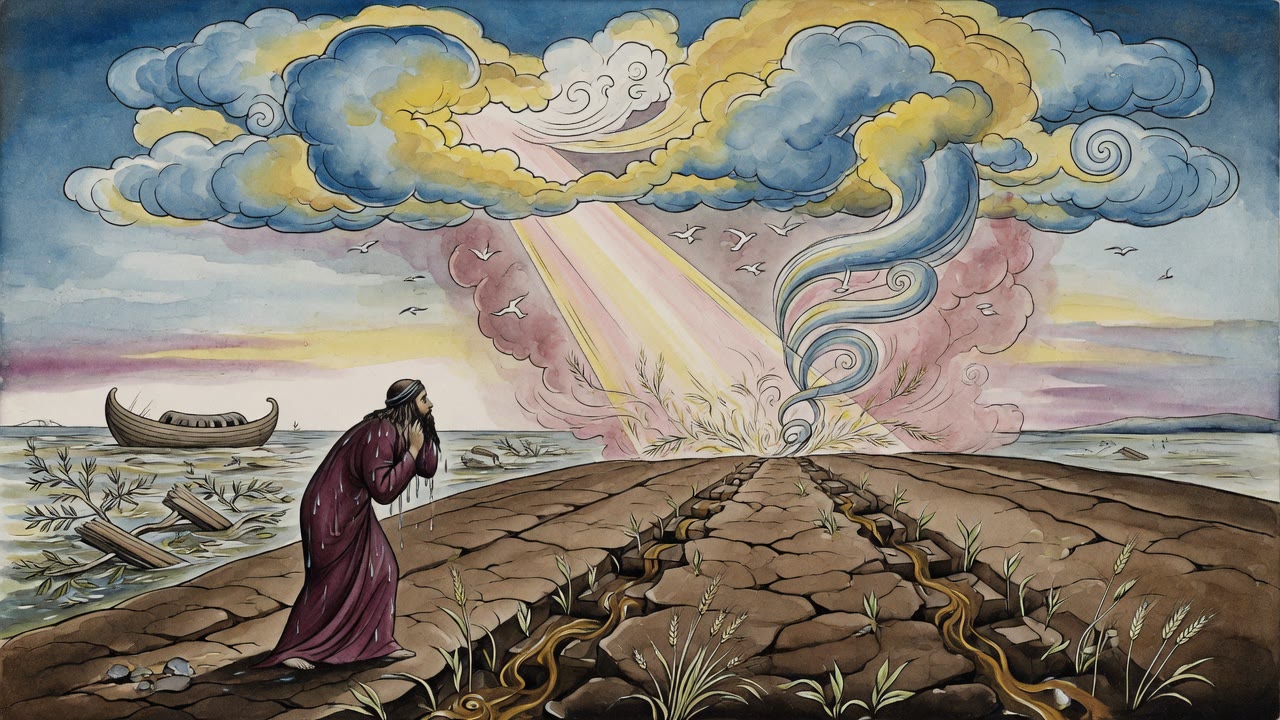
Honi the Circle Drawer knew another kind of waiting. Rain answered him when he drew a circle and refused to step out until heaven opened. Sages called him a well of living water in the study hall. He answered that he was only a soldier given orders. Near the ruins of the Temple he once sought solitude in a valley, sat in a cave, and prayed for rain. Water rose until the cave flooded and sleep took him the way it had taken Yochanan.
Seventy years. When Honi woke, olive groves had become vineyards and vineyards had become grain. He walked into a town and no face knew his name. He told the miracle of the cave. They stared. He walked farther, toward the place that had been home, and found a generation that had heard of Honi the way one hears of a grandfather's storm. Recognition came late and thin. The world he had served had moved on without needing his face at the gate.
He died after that waking. They said of him that he had fulfilled the psalm: when the Lord returns Zion's captivity, we will be like dreamers. Honi had lived the dream from the inside, sleeping across the rebuild of ordinary fields, waking into a map that no longer matched his feet.
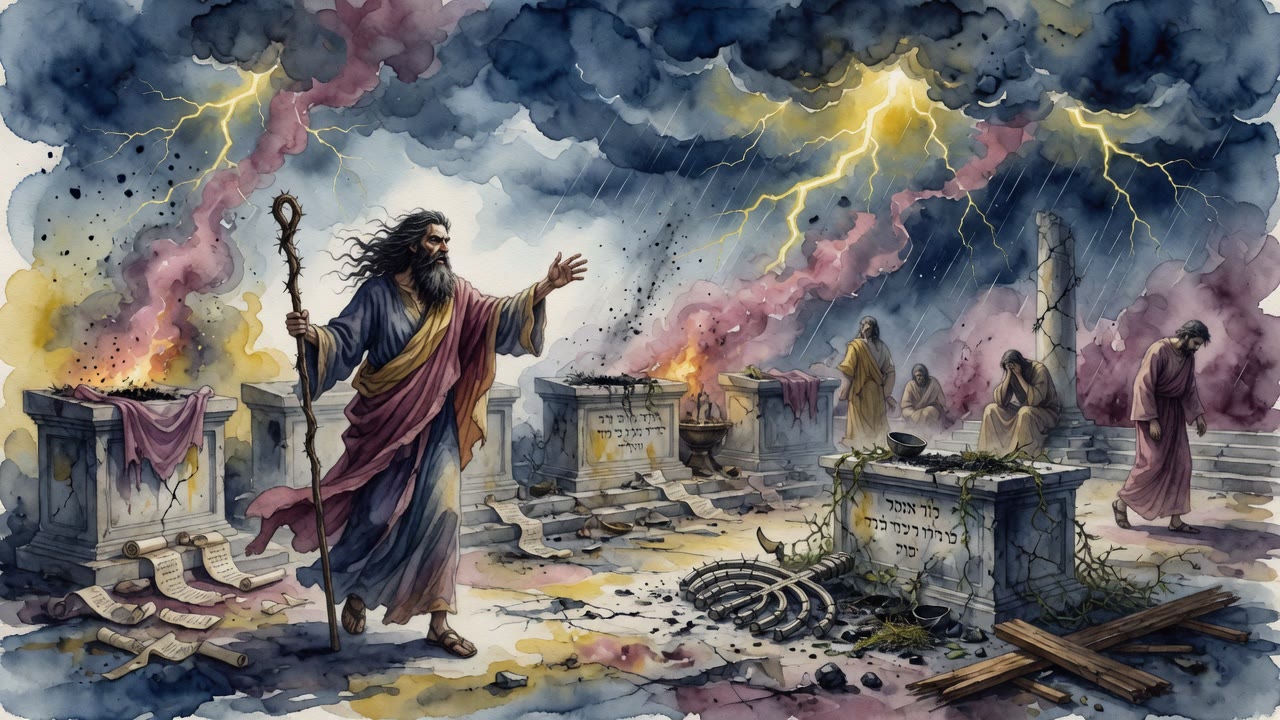
Consolation After the Long Rebuke
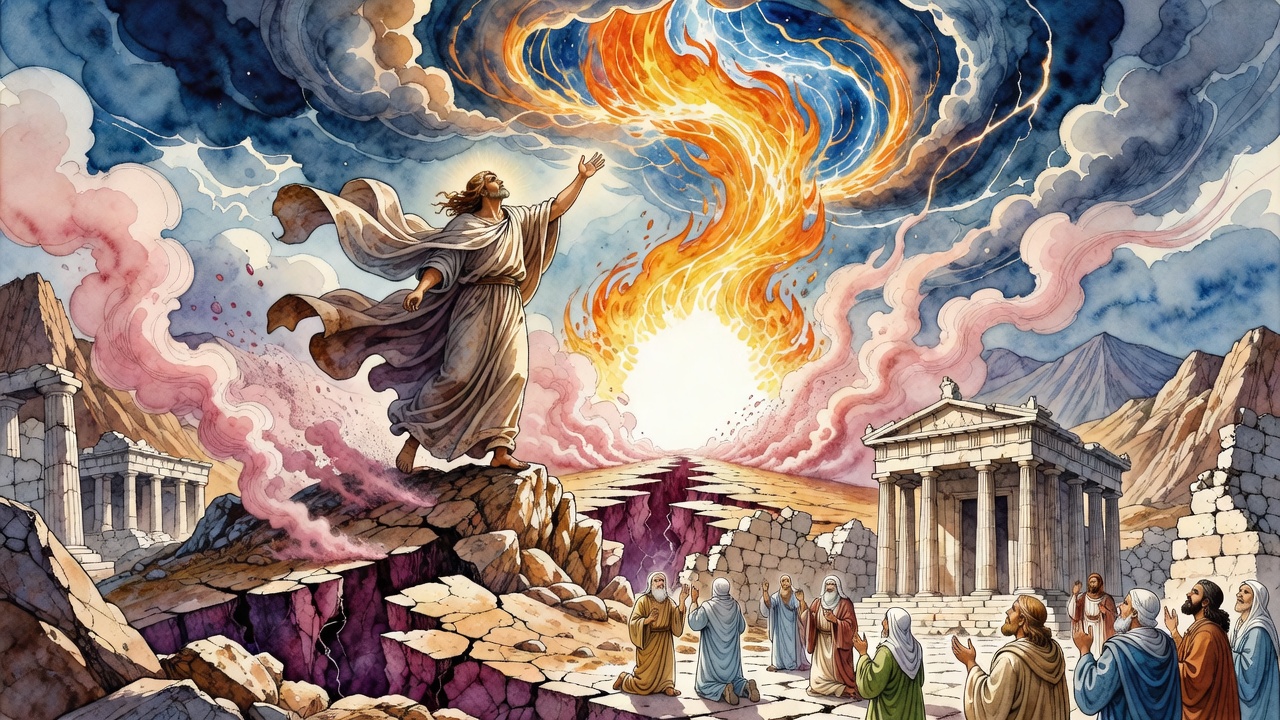
Exile is a rebuke with years for teeth. Prophets open with fire and most of them close with balm. Jeremiah watched the Temple fall and still the tradition argues whether his last line is rebuke or a sealed ending that leaves room for return. "Thus far are the words of Jeremiah" can be a door closed on Babylon's sink, or a line drawn so that comfort may begin after the page. Rabbi Yochanan, in that quarrel of readings, holds that even Jeremiah does not end only in lash. Somewhere the rebuke stops, and the possibility of healing is allowed to breathe.
The carob and the cave preach the same patience. You plant what you may not eat. You sleep through the middle of the promise. You wake and the world has already begun to keep a vow you only half believed. Zion's return does not arrive as a lecture. It arrives as disorientation, as a familiar road grown strange, as a man harvesting what he set in the ground when other men laughed.
Yochanan blessed the planter. Honi walked unknown through fields that had outgrown his memory. Both of them stand under the same psalm. The dream is not escape. The dream is what return feels like when seventy years compress into a single opening of the eyes.
← All myths