5 min read

Israel Pressed Its Face Into Dust and Waited

Rabbi Berechiah said that if God's kingdom is late, wait for it in the dust. Do your deeds with kindness, the midrash promised, and redemption comes at once.

Curated by Arthur · Told by Maggid ·
Table of Contents
  1. Face in the Ash
  2. Wait in Dust
  3. Homes Under Decree
  4. Do Not Trust Princes
  5. Rose and Mountain
Israel Pressed Its Face Into Dust and Waited Click for full size

Face in the Ash

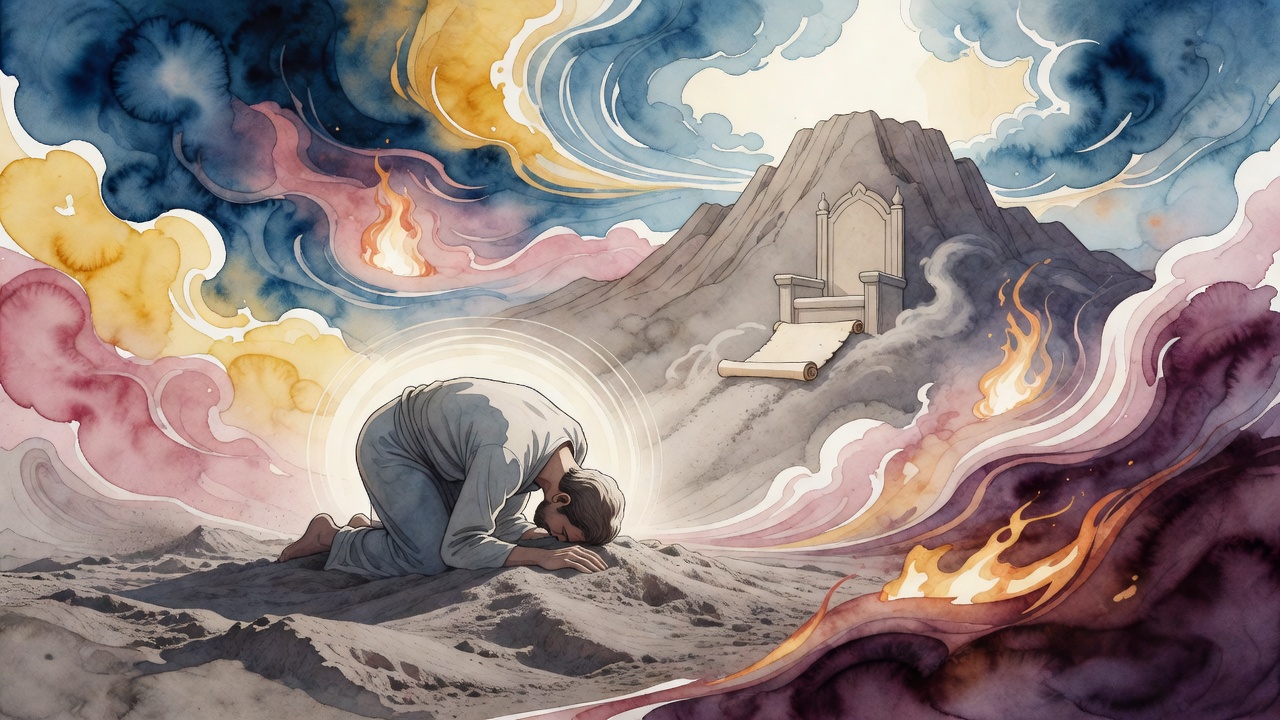
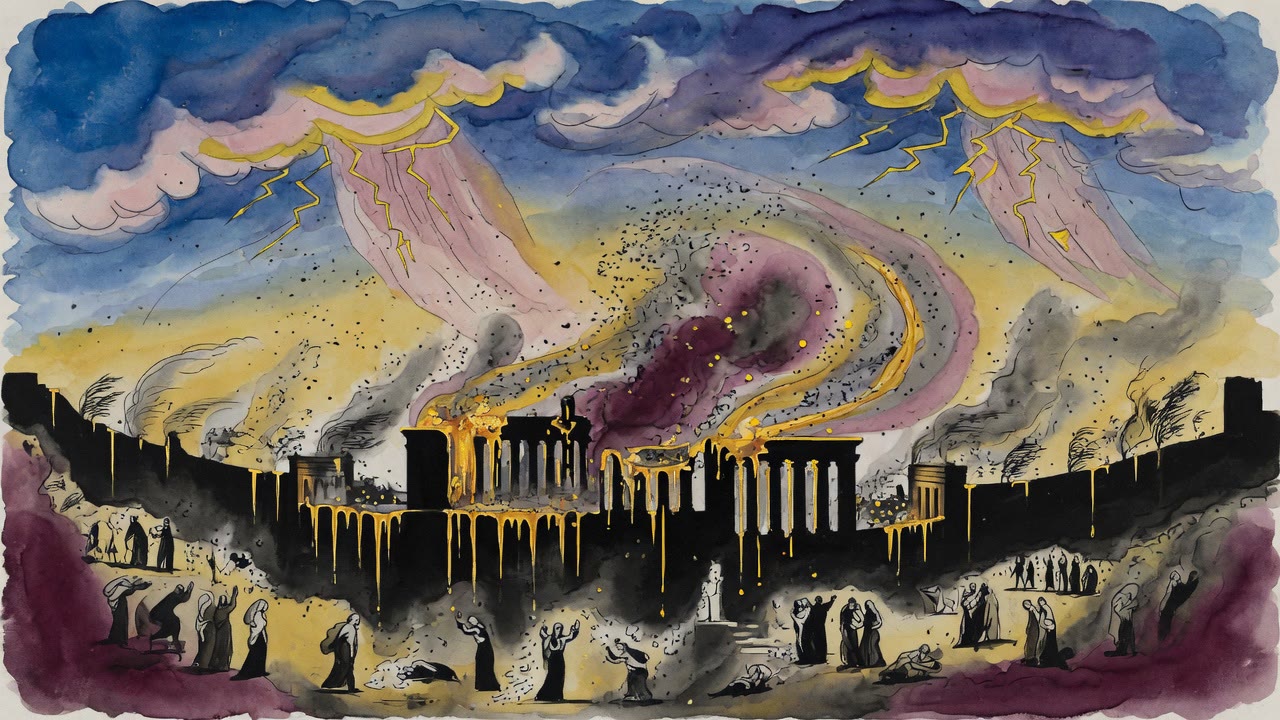
The soul of Israel lay cheek-down in dust. "For our soul is bowed down to the dust" (Psalm 44:26). Not a metaphor chosen for beauty in a quiet room. A posture forced by history and then claimed as inheritance by a people who refused to let the boot write the whole dictionary. God had told Abraham, "I will make your offspring like the dust of the earth" (Genesis 13:16). Dust can mean countless under the sun. Dust can also mean stepped on by every passing heel.

"Arise, walk through the land," the same God had said, as if the dust were also a path. Arise and bowed down lived in one bloodline like two brothers who will not leave the same tent. The people felt both sentences at once and did not know which one was winning on any given morning when the news from the empire was bad.

They pressed their faces lower and still listened for arise.

Wait in Dust

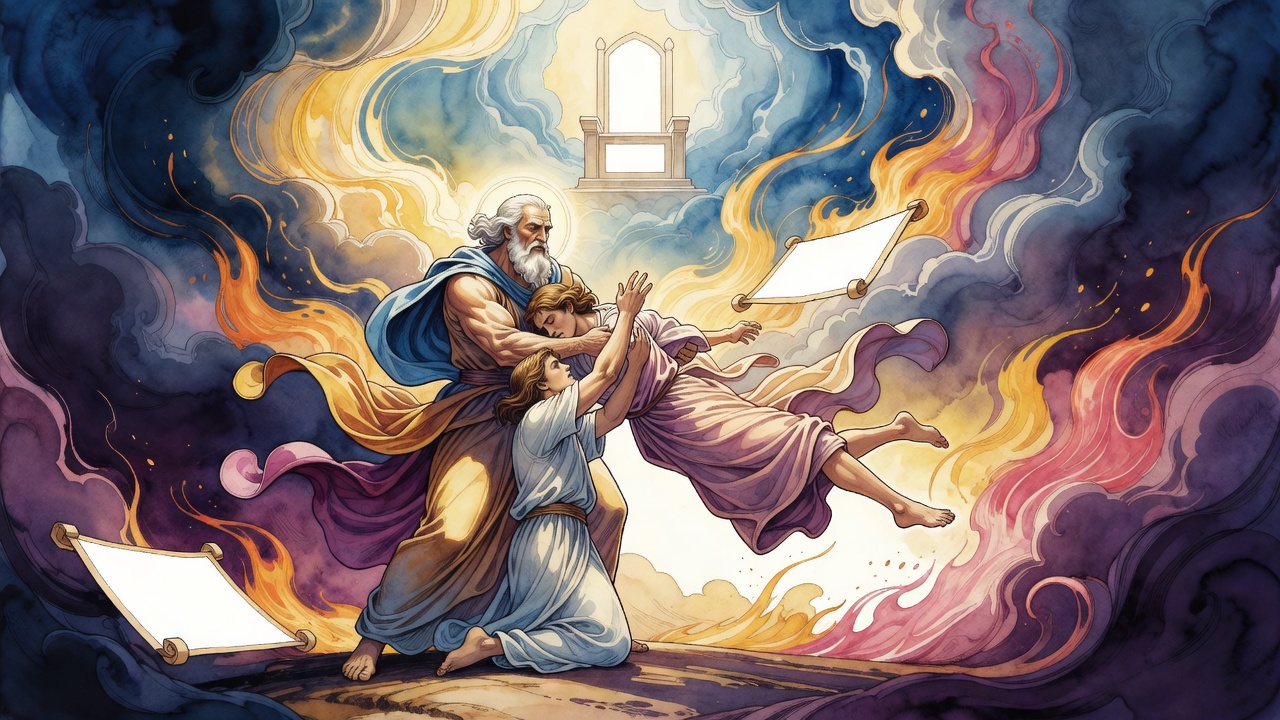
"Arise, help us," the psalm continued, and the teachers heard a bargain with mercy that did not require perfect merit. If merit stands, act with us. If not, act for the sake of Your Name. "And redeem us for Your mercy's sake." Rabbi Berechiah added a harder patience, the kind that scrapes the knees. If the kingdom of the true God delays, wait for it in dust, and it will be for salvation.

Wait in dust. Not parade in borrowed uniforms. Not pretend the exile is a spa with better food. Moisten your deeds like a rose, the midrash said, and redemption answers with the same wetness. Dry deeds stay dust and blow away. Wet deeds open and feed bees no one can see.

Israel learned to water small kindnesses while the large rescue took its time, years stacked on years like bricks without mortar.

Homes Under Decree

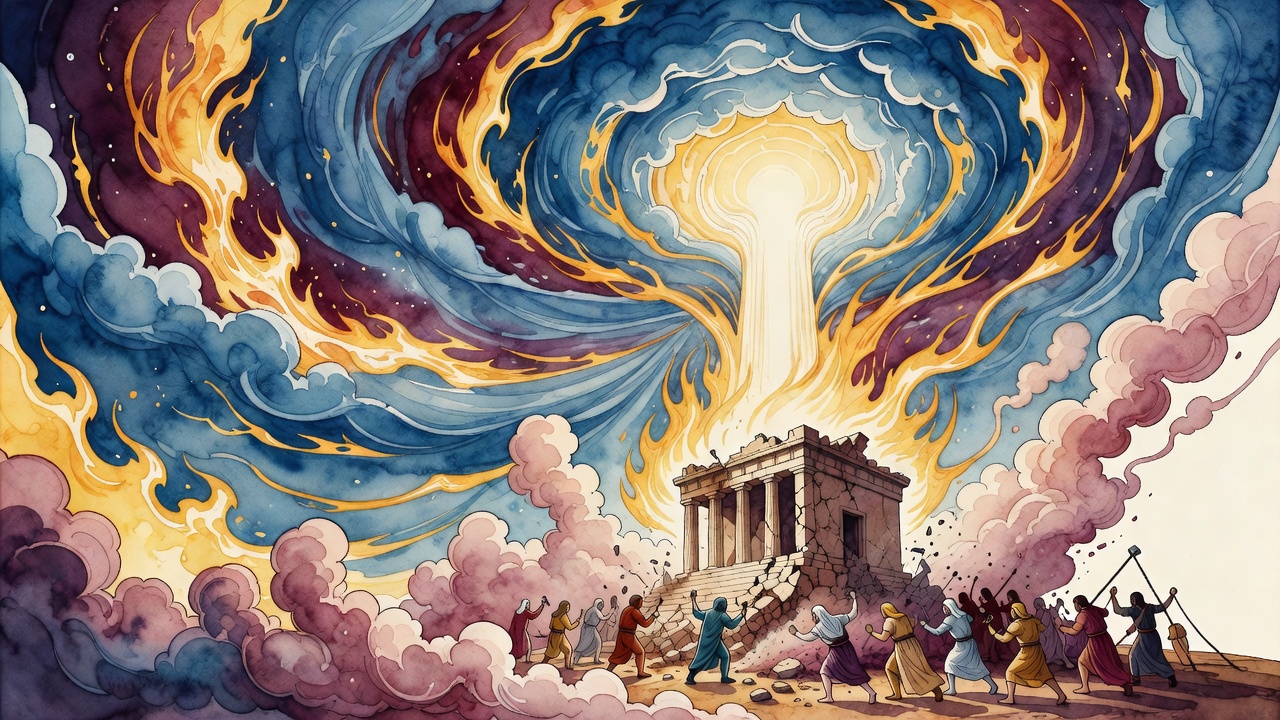
After the Temple fell, Rav heard a decree against the homes of the righteous, houses marked for ruin as if holiness itself had become a target (Isaiah 5:9). Bleak arithmetic for anyone who still lit a lamp for Torah. Rabbi Yochanan answered with a mountain that does not file petitions. "Those who trust in the Lord are like Mount Zion, which cannot be moved, but abides forever" (Psalm 125:1). As Zion would be restored stone by stone in the mind of God, so the settlements of the righteous would rise again when the decree had spent its breath.

Trust was not a mood for good weather. Trust was the refusal to relocate hope to a prince's table where the wine is free and the price is the soul. The mountain does not lobby. It abides while maps are redrawn around it.

"The rod of the wicked shall not rest on the lot of the righteous" (Psalm 125:3). Partnerships, marriages, and courts still felt the rod's shadow across the doorway, but the midrash insisted the shadow does not get the final lease on the house.

Do Not Trust Princes

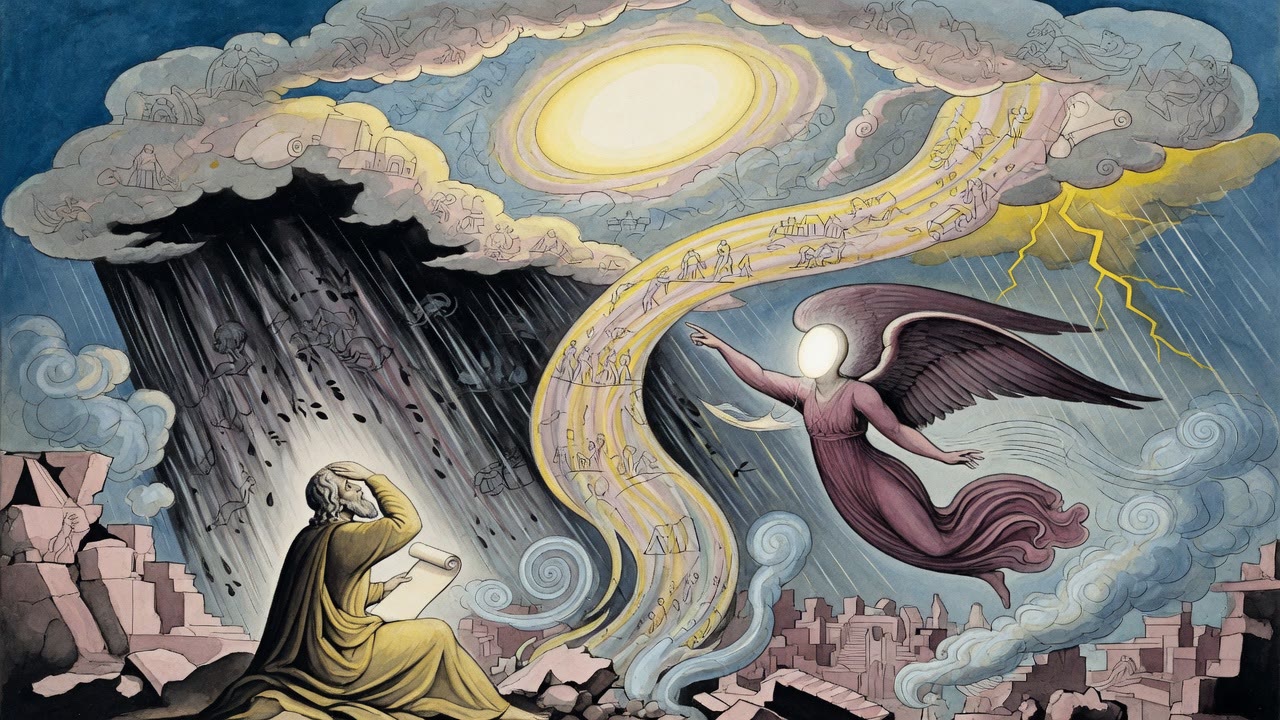
"Do not put your trust in princes, in a son of man, in whom there is no salvation" (Psalm 146:3). Jeremiah could sing praise while chains waited outside the verse. The midrash set living breath against the silence of Sheol (the shadowy underworld of the dead) with a cruelty that was also mercy. "The dead do not praise the Lord" (Psalm 115:17). "I will praise the Lord in my life." Praise is a present-tense act, not a bequest written for executors. If the mouth waits for perfect safety, the mouth may never open.

Princes die mid-sentence. Their breath leaves, and their plans return to earth as if the plans had always been dust with better stationery. The people with faces in dust still had lungs. That was the scandal and the hope: ash on the cheek, air in the chest, a song that refused to wait for a better government.

Hallelujah from the ground up, not from a throne room down.

Rose and Mountain

So the posture held through empires that did not learn Jewish names correctly. Cheek to ash. Deeds moistened. Eyes on a mountain that does not campaign and does not apologize for height. Abraham's dust-promise and Zion's unmoved ridge framed the same people in one picture that did not resolve into comfort. One image said you will be many underfoot. One image said you will not be moved when you trust.

Israel rose only as far as help arrived, then bowed again to wait without selling the wait to any mortal court that promised quick salvation for a small betrayal of the Name. The dust stayed on the cheek. The rose opened anyway in deeds no decree could tax. The mountain did not move, and the people measured themselves by that refusal.


← All myths
From the tradition

Sources

3 sources

The texts behind this telling. Some cards carry a translation of the source; others are our own retelling of it, and each card says which. Every card links out to the original.

Midrash Tehillim 44:2Midrash Tehillim

Retold in our words. Read the original at the link below.Rabbi Mike Feuer, Jerusalem Anthology · CC-BY

(Psalm 44:26) gets it. "For our soul is bowed down to the dust." But what does that really mean?

Well, the Rabbis of the Midrash Tehillim, a collection of interpretations on the Book of Psalms, saw something profound in that verse, connecting it all the way back to Abraham himself.

Rabbi Yitzhak points out that God tells Abraham in Genesis (13:16), "And I will make your offspring like the dust of the earth." That sounds…well, not exactly glorious, does it? But then, God tells Abraham to "Arise, walk through the land" (Genesis 17:3). So here we are, descendants of Abraham, seemingly destined for greatness, yet feeling "bowed down to the dust.

The Midrash (rabbinic interpretive commentary) doesn't leave us there, though. It offers a way out, a path upward. "Arise, help us," the Psalm continues (44:27). It's a plea, a cry for assistance. And the Rabbis see in this cry a vital understanding: if we have earned merit, act with us, and if not, act for the sake of Your Name, as it is said, "And redeem us for Your mercy's sake" (ibid. v. 27).

Rabbi Berechiah adds another layer. He says that if the kingdom of the true God delays, wait for it in dust, and it will be for salvation. Wait in dust. It's not about passive resignation, but about humble anticipation. About recognizing our place in the grand scheme of things, even when that place feels low.

Then comes this beautiful, almost poetic image: "Moisten your deeds like a rose, and immediately I will redeem you." Moisten your deeds. What does that even mean? The rose, in Jewish tradition, is often a symbol of beauty, of blossoming potential. So, to "moisten your deeds" is to infuse them with intention, with kindness, with love. To make them bloom. And according to the Midrash, that's the key to redemption.

And what follows? "To the conductor upon the lilies" (Psalm 45:1). Lilies, like roses, are symbols of hope and renewal. The Midrash suggests that by embracing humility, by seeking God's mercy, and by "moistening our deeds," we can move from feeling like dust to blossoming like flowers.

Even when we're feeling down, even when we're struggling, there's always hope for redemption.

Full source
Midrash Tehillim 125:1Midrash Tehillim

Retold in our words. Read the original at the link below.Rabbi Mike Feuer, Jerusalem Anthology · CC-BY

The rabbis don't stop there. They confront the harsh realities of life, especially the destruction of the Temple in Jerusalem. Rav says that after the Temple's destruction, a decree was issued against the homes of the righteous, destined to be destroyed (Isaiah 5:9). A bleak picture. But then, like a ray of light, Rabbi Yochanan offers a message of hope. He connects the steadfastness of Mount Zion with the promise of restoration: "The Holy One, blessed be He, will restore them to their settlements, as it is said, 'A Song of Ascents. Those who trust in the Lord are like Mount Zion, which cannot be moved, but abides forever' (Psalm 125:1)." Just as God will restore Mount Zion, so too will He restore the homes of the righteous. It's a beautiful promise, a reminder that even in the darkest times, hope remains.

The passage then takes an interesting turn, exploring the idea of divine justice in relationships. Reish Lakish expounds on the verse, "For the rod of the wicked shall not rest on the lot of the righteous" (Psalm 125:3), suggesting that a person is matched with a partner according to their deeds. This idea is further illustrated by Rabbi Yochanan, who uses the example of Rebecca. He notes that despite the verse saying "Behold, she is a virgin" (Genesis 24:16), the point is that even if a man didn't marry her for pure motives, the wicked shouldn't prosper through the righteous.

Then, Rabbi Abba bar Kahana offers another interpretation, drawing a parallel between the wicked Potiphar's wife and the righteous Joseph, showing how the rod of the wicked ultimately cannot rest upon the righteous.

The Midrash (rabbinic interpretive commentary) then shifts to a discussion of goodness, using a chain of associations to connect different aspects of Jewish tradition. "The Lord is good to the good," it says. This goodness is seen in Moses ("And she saw him, that he was good" – Exodus 2:2), in the Holy One, blessed be He ("The Lord is good to all" – Psalm 145:9), in the Torah ("For I give you good doctrine" – Proverbs 4:2), and in the Israelites ("The Lord is good to the good and to the upright in heart" – Psalm 125:4). It's a powerful affirmation of the inherent goodness in the world and in the Jewish people.

But what about those who stray from the path? The Midrash doesn't shy away from this question. Those who cause trouble, it says, will be led away by the Lord. Rabbi Yehoshua ben Levi warns against speaking ill of the disciples of the wise, saying that such behavior will lead to Gehenna, often translated as hell ("And the perverseness of their transgressions will lead them away" – (Proverbs 5:2)2). Yet, even in this warning, there's a glimmer of hope: "Peace be upon Israel, even when the Lord leads away the workers of iniquity."

Finally, Rabbi Yishmael offers a practical piece of advice: "If you see a disciple of the wise committing a transgression at night, do not think badly of him during the day, for perhaps he has repented." This speaks to the importance of giving people the benefit of the doubt, recognizing that everyone is capable of making mistakes and that repentance is always possible.

So, what does this all mean for us today? Perhaps it’s a reminder that even when things feel unstable, we can find strength in our faith, in our community, and in the enduring wisdom of the Torah. Perhaps it’s a call to judge others with compassion and to always believe in the possibility of redemption. And perhaps, most importantly, it’s a reminder that even in the face of destruction, hope can endure, like Mount Zion, unshakeable and forever.

Full source
Midrash Tehillim 146:1Midrash Tehillim

Retold in our words. Read the original at the link below.Rabbi Mike Feuer, Jerusalem Anthology · CC-BY

Midrash Tehillim, a collection of rabbinic interpretations of the Book of Psalms, grapples with this very question in its exploration of Psalm 146.

The verse "Hallelujah, my soul, etc." sparks a fascinating discussion. The prophet Jeremiah, as quoted in (Jeremiah 20:13), sings, "Sing to the Lord, praise the Lord," and the Midrash (rabbinic interpretive commentary) asks, why? The answer given is beautiful: because God saves the soul of the poor from the hand of evildoers. When the wicked are sent to Gehenna (hell) and the righteous are saved, that is a moment deserving of praise. It's a praise that never leaves the poor. It's a constant acknowledgement of God's deliverance.

It doesn't stop there. (Isaiah 57:19) declares, "I create the praise of the lips." It's not just about personal praise; it's about inspiring others. "Let all flesh bless His holy name." This leads to the declaration, "I will praise the Lord in my life; I will sing to my God as long as I exist."

King Solomon, in (Ecclesiastes 9:12), reminds us, "For man also does not know his time." If we don't praise while we're alive, when will we? The Midrash emphasizes that death isn't the time for praise. As (Psalm 115:17) says, "The dead do not praise the Lord," and (Psalm 6:6) echoes, "In death there is no memory of You." So who will praise God then? The answer rings out: "He who is alive, He who will praise You," not in Sheol (the underworld). (Ecclesiastes 9:10) reinforces this, stating, "For there is no work, nor knowledge, nor wisdom in Sheol."

Therefore, the Midrash concludes, "I will praise the Lord in my life." It's a call to action, a reminder to seize the present moment and offer our gratitude while we can.

The text then pivots to the famous verse in (Psalm 146:3): "Do not trust in princes, in mortal man, in whom there is no salvation." This isn't just about political figures; it's about the futility of relying on others for our salvation. We can't coast on the merits of our ancestors.

The Midrash illustrates this poignantly: A person shouldn't think, "Ishmael can say, 'Abraham is my father, and he will save me,' or Esau can say, 'Jacob was righteous, and he will save me, and I will escape through his merit.'" (Psalm 49:8) makes it clear: "No man can redeem the life of another." We can't rely on our family's righteousness to save us.

So, if we can't trust in princes or ancestors, what should we rely on? The answer is clear: on our own deeds. (Proverbs 9:12) says, "If you are wise, you are wise for yourself, and if you scoff, you alone will bear it." Each individual is responsible for their own actions and their own spiritual growth.

The Midrash beautifully connects this to our daily lives. (Proverbs 16:26) states, "A laborer's appetite works for him; his hunger urges him on." We can't eat from our father's actions. (Ecclesiastes 6:7) reminds us, "All man's labor is for his mouth," and 3:22 adds, "So I saw that there is nothing better for a man than to enjoy his work." Ultimately, (Psalm 128:2) encapsulates the message: "When you eat the toil of your hands, you are praiseworthy, and it is well with you."

The message of this Midrash is powerful and enduring. It's a call to action, urging us to praise God in the present moment, to take responsibility for our own actions, and to find meaning in our work. It's a reminder that we can't rely on others for our salvation; we must cultivate our own relationship with the Divine. So, what are you waiting for? What praise will you offer today?

Full source