5 min read

God Labored on the Temple and Nations Tore It Down

Heaven spoke the cosmos into place, then labored over one house. When the nations tore that handiwork to its foundation, the roar rose from on high.

Curated by Arthur · Told by Maggid ·
Table of Contents
  1. What the Mountain Was Holding
  2. Lower House, Upper Throne
  3. Speech for Worlds, Labor for One House
  4. Whatever Is For Me Does Not Slip

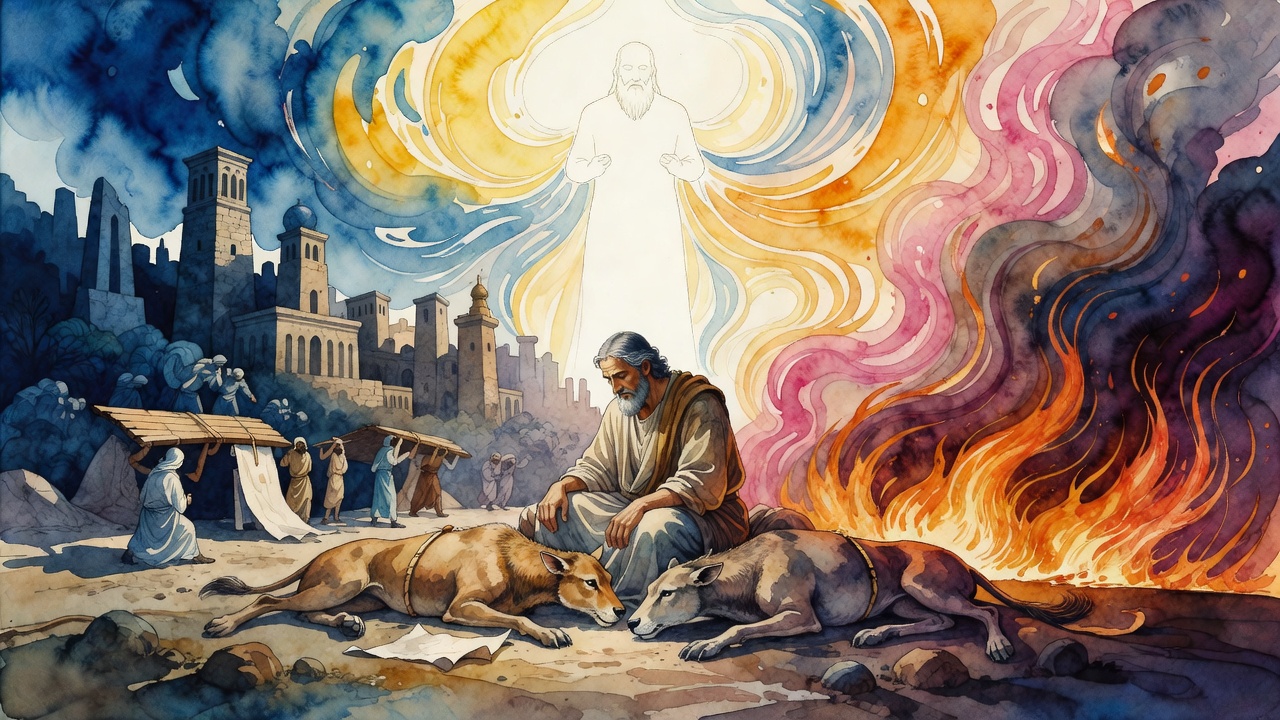
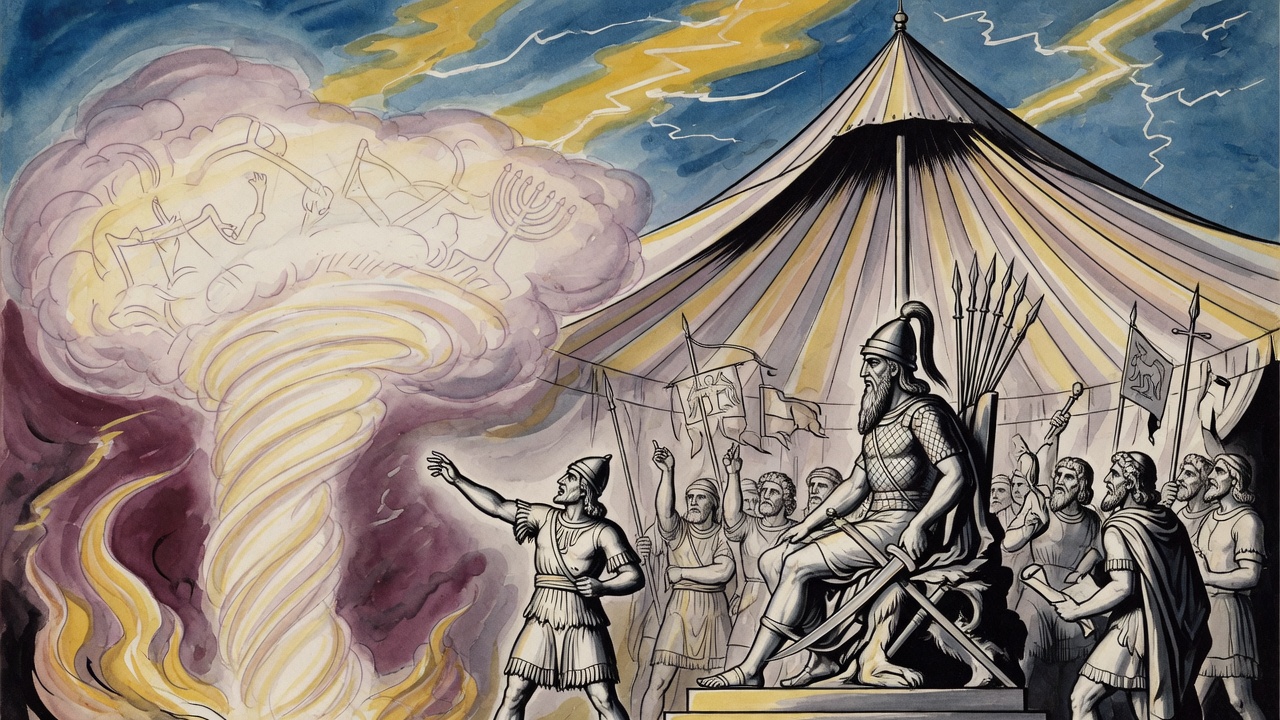
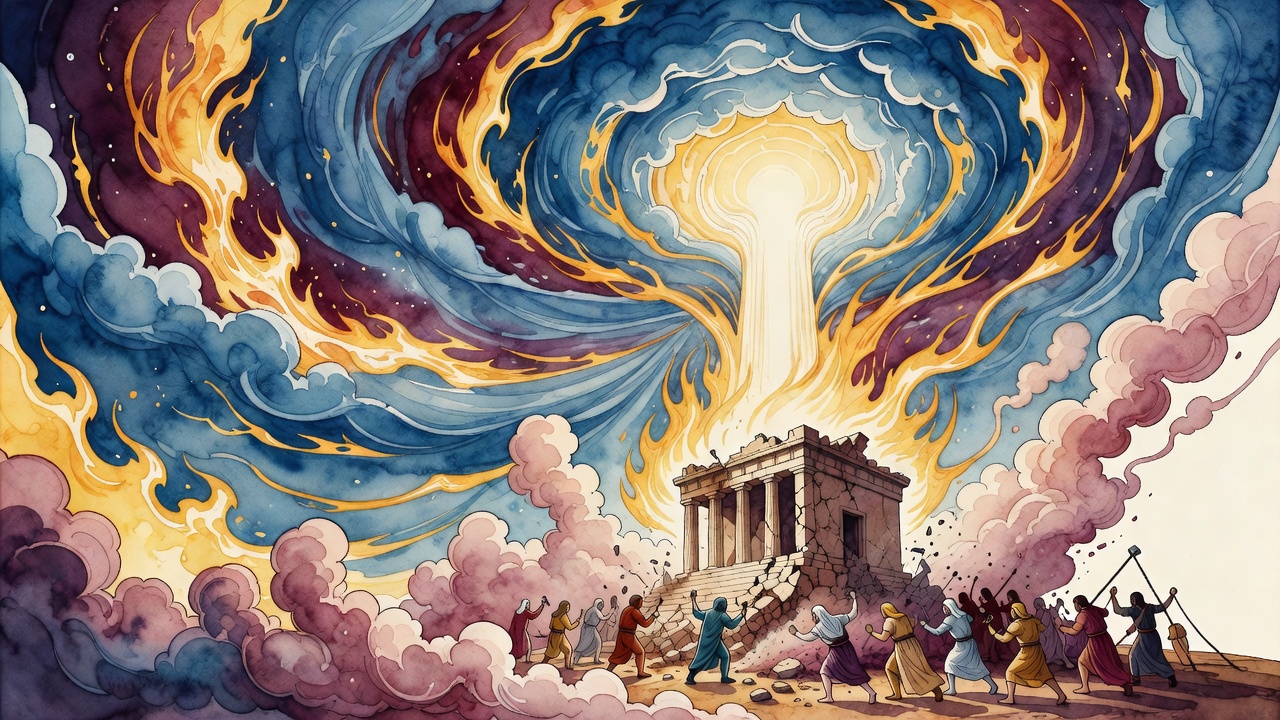
The crowbars bit first into the outer courses. Dust rose over Jerusalem. Men who did not fear the Name levered stone from stone while the mountain still remembered smoke and song. Jeremiah stood where a prophet still had room to stand and felt the boards of the world give way under a single house.
God Labored on the Temple and Nations Tore It Down Click for full size

Above the noise an older claim refused to leave. This house had not been spoken into being the way the heavens were. This house had been made.

The cosmos cost God a word. The Temple cost Him labor.

What the Mountain Was Holding

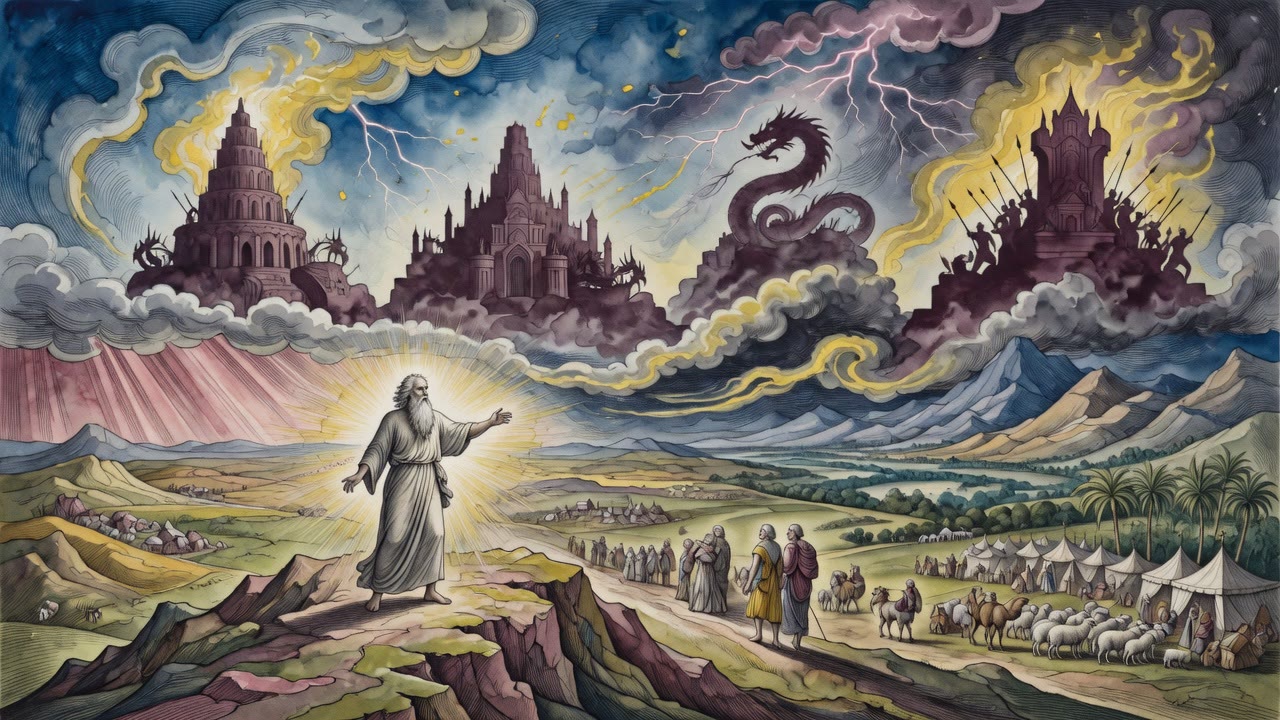
Before any enemy found a foothold, the mountain had already been named inside a chain of claims. Israel, the people God acquired. The Land, the height His right hand acquired. Abraham, blessed by Melchizedek as belonging to God Most High, Acquirer of heaven and earth. The Torah, Wisdom saying the Lord acquired her at the beginning of His way.

Those four claimings had been meant to lock into one motion. An acquired people enter an acquired land, carry an acquired teaching, and raise a house that also belongs to that claim. A wider count places five possessions in the Holy One's hand. Torah, heavens and earth, Israel, Abraham, and this Temple mount. The founding father and the mountain sit in the same inventory as the teaching and the nation.

Jeremiah watched strangers treat that inventory like ordinary quarried rock. He saw a soldier spit on his hands and shove the bar deeper. The stone complained. The claim did not answer in a language the soldier knew how to hear.

Lower House, Upper Throne

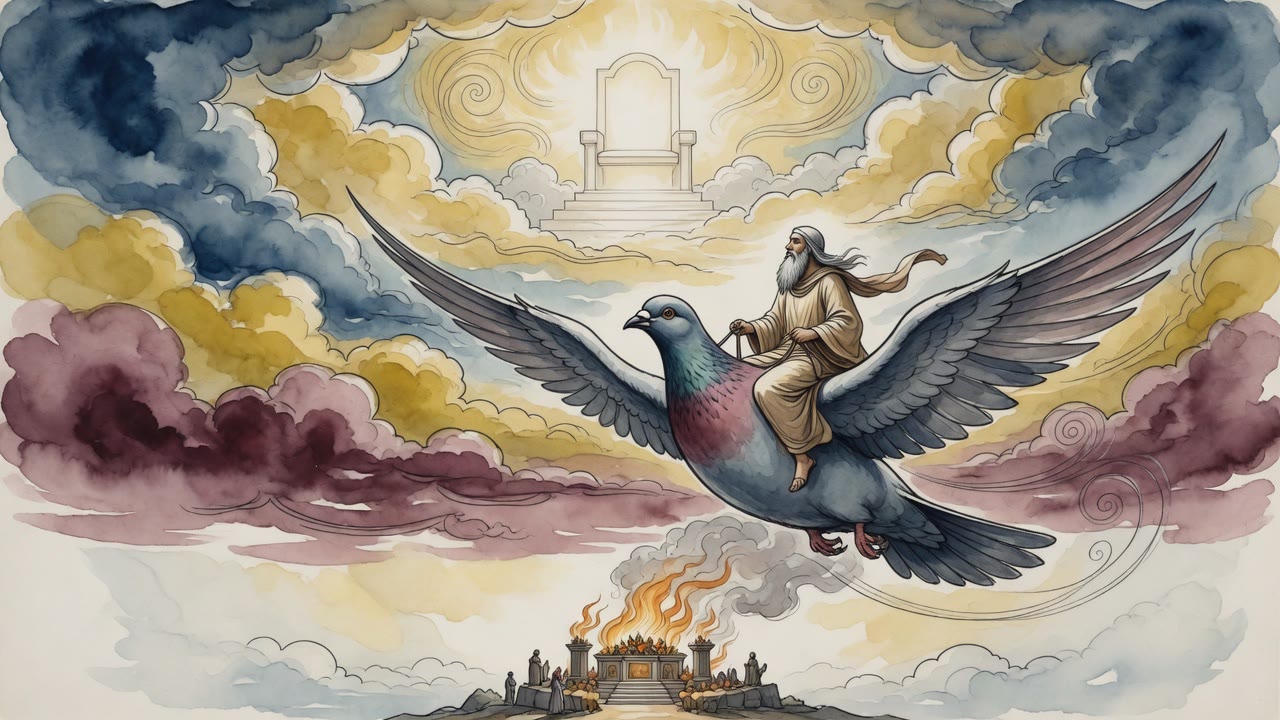
What acquisition names from one side, inheritance names from the other. Israel, Land, Temple, Torah. The Song of the Sea had already spoken of a place for God's dwelling, and the builders who once raised this court worked as if the earthly sanctuary sat precisely under the heavenly throne. Point for point. Lower answering upper.

They never saw the upper beams. They felt the weight. Every cubit answered a geometry no measuring reed could map. When the last gold leaf once caught the morning, the mountain and the throne above it were said to share one axis. Now the gold was going into bags. The axis still held in heaven. On the ground it looked like rubble.

Jeremiah stepped over a fallen beam and did not bless the day.

Speech for Worlds, Labor for One House

"By the word of the Lord the heavens were made." Speech. Easy on the surface of the verse. When Scripture turns to the sanctuary, the verb hardens. You have made. As if this one structure drew work from the Creator the way a craftsman draws sweat.

That is the detail that makes the grief crack open. The nations had heard with their own ears that the house was called God's handiwork, His one labor among a universe of spoken things. They rose up anyway. They tore it down to the foundation.

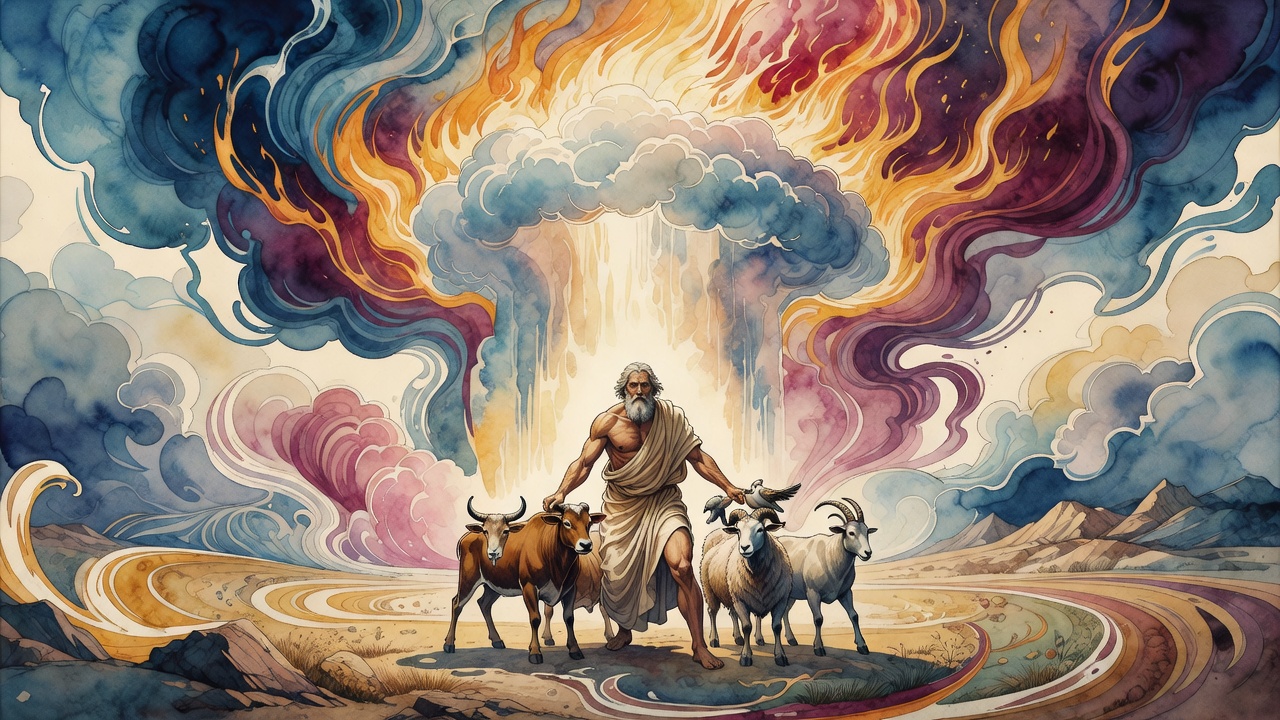
A mason's son in the enemy camp did not know he was prying at something God had not merely permitted but worked. He laughed when a course gave way. The stone still fell. From on high the Lord roared over the ruined dwelling men dared to lay waste, and Jeremiah heard the roar travel through the dust as if the air itself had a throat.

Whatever Is For Me Does Not Slip

Across the older books a small seal keeps returning. For Me. Priests to serve Me. Levites Mine. Israel My servants. Firstborn Mine. Land Mine. Jerusalem chosen for Me. David's line found for Me. Sanctuary built for Me. Altar, offerings, anointing oil, each stamped with the same two letters of claim.

Wherever that seal lands, the thing does not budge. Not in this world and not in the World to Come. Exile can interrupt. Fire can blacken the courts. The word does not let go.

So the crowbars win an afternoon and lose the argument. The house that cost God labor can be pulled to foundation stones, and still the claim stands. Israel remains acquired. The Land remains marked. Torah remains the teaching through which any future house will rise. Abraham's name stays among what the Holy One holds.

On the ruined mountain the dust settles. Foxes run the old steps. The upper throne has not moved. What was made for Him waits under the seal that says for Me, and the roar from on high has not finished its sentence.


← All myths
From the tradition

Sources

4 sources

The texts behind this telling. Some cards carry a translation of the source; others are our own retelling of it, and each card says which. Every card links out to the original.

Yalkut Shimoni on Torah 252:2Yalkut Shimoni on Torah

Translation of the source text.Torat Emet (Yalkut Shimoni) · CC-BY-NC

Four things are called an acquisition. Israel, as it is said, "this people whom You acquired." The Land of Israel is called an acquisition, as it is said (Psalms 78:54), "this mountain which His right hand acquired." Abraham is called an acquisition, as it is said, "And he blessed him and said, Blessed be Abram of God Most High, Acquirer of heaven and earth." The Torah is called an acquisition, as it is said (Proverbs 8:22), "The LORD acquired me at the beginning of His way." Let Israel, who are called an acquisition, come to the Land, which is called an acquisition, and build the Temple, which is called an acquisition, by the merit of the Torah, which is called an acquisition. Therefore it is said, "this people whom You acquired." (It is written in the verse, "And Blessed be Abram.")

Full source
Yalkut Shimoni on Torah 253:2Yalkut Shimoni on Torah

Translation of the source text.Torat Emet (Yalkut Shimoni) · CC-BY-NC

Four things are called an inheritance. Israel are called an inheritance, as it is said (Deuteronomy 9:29), "And they are Your people and Your inheritance." The Land of Israel is called an inheritance, as it is said, "in the land which the LORD your God gives you as an inheritance." The Temple is called an inheritance, as it is said, "on the mountain of Your inheritance." The Torah is called an inheritance, as it is said (Numbers 21:19), "and from Mattanah to Nahaliel." The Holy One, blessed be He, said: Let Israel, who are called an inheritance, come to the Land, which is called an inheritance, and build the Temple, which is called an inheritance, by the merit of the Torah, which is called an inheritance. "The place for Your dwelling": this is one of the matters in which the throne below is aligned opposite the throne above. And so it says (Psalms 11:4), "The LORD is in His holy Temple, the LORD's throne is in heaven." And it says, "I have surely built You a house of habitation, a place for Your dwelling forever." "You have made, O LORD": the Temple is beloved before the Omnipresent, for when the Holy One, blessed be He, created His world, He created it only by an utterance, as it is said (Psalms 33:6), "By the word of the LORD the heavens were made"; but when He built the Temple, it was, as it were, a labor before Him, as it is said, "You have made, O LORD." Woe to the nations of the world, what do they hear with their ears! Behold, the Temple is called His handiwork, and yet they rose up and destroyed it. They said (Psalms 137:7), "Raze it, raze it, down to its foundation in it." Concerning this, what does it say (Jeremiah 25:30)? "The LORD roars from on high, and roars mightily over His habitation"; "and His habitation they laid waste."

Full source
Yalkut Shimoni on Torah 304:1Yalkut Shimoni on Torah

Translation of the source text.Torat Emet (Yalkut Shimoni) · CC-BY-NC

In every place where "for Me" is stated, it does not budge, neither in this world nor in the World to Come. Of the priests it is written, "And they shall serve Me as priests" (Exodus 28:41). Of the Levites it is written, "And the Levites shall be Mine" (Numbers 8:14). Of Israel it is written, "For to Me the children of Israel are servants" (Leviticus 25:55). Of the heave offering it is written, "And they shall take for Me an offering" (Exodus 25:2). Of the firstborn it is written, "For Mine is every firstborn" (Numbers 3:13). Of the Sanhedrin it is written, "Gather to Me" (Numbers 11:16). Of the Land of Israel it is written, "For Mine is the land" (Leviticus 25:23). Of Jerusalem it is written, "The city which I have chosen for Me" (1 Kings 11:36). Of the kingdom of the House of David it is written, "For I have seen among his sons a king for Me" (1 Samuel 16:1). Of the Sanctuary, "And they shall make Me a sanctuary" (Exodus 25:8). Of the altar, "An altar of earth you shall make for Me" (Exodus 20:21). Of the offerings, "You shall observe to offer to Me in its appointed time" (Numbers 28:2). Of the anointing oil it is written, "This shall be a holy anointing oil to Me" (Exodus 30:31). Thus, in every place where "for Me" is stated, it does not budge, neither in this world nor in the World to Come.

Full source
Yalkut Shimoni on Torah 74:4Yalkut Shimoni on Torah

Translation of the source text.Torat Emet (Yalkut Shimoni) · CC-BY-NC

And there are those who say: five acquisitions. Torah; and heaven and earth; and Israel; Abraham; and the Holy Temple, as it is written, "And He brought them to His holy border, this mountain His right hand acquired" (Psalms 78:54).

Full source