6 min read

The Cedar Dragged Before the Vine in Zion's Ruins

Baruch weeps in the smoking rubble of the Temple and dreams a forest of empires falling until one cruel cedar is dragged before the Messiah's vine.

Curated by Arthur · Told by Maggid ·
Table of Contents
  1. The Scribe Among the Ruins
  2. A Forest of Empires and a Single Vine
  3. Twelve Woes Counted to the End
  4. The Cedar Dragged to Mount Zion
  5. The Fountain of Unfading Flowers
The Cedar Dragged Before the Vine in Zion's Ruins Click for full size

The Scribe Among the Ruins

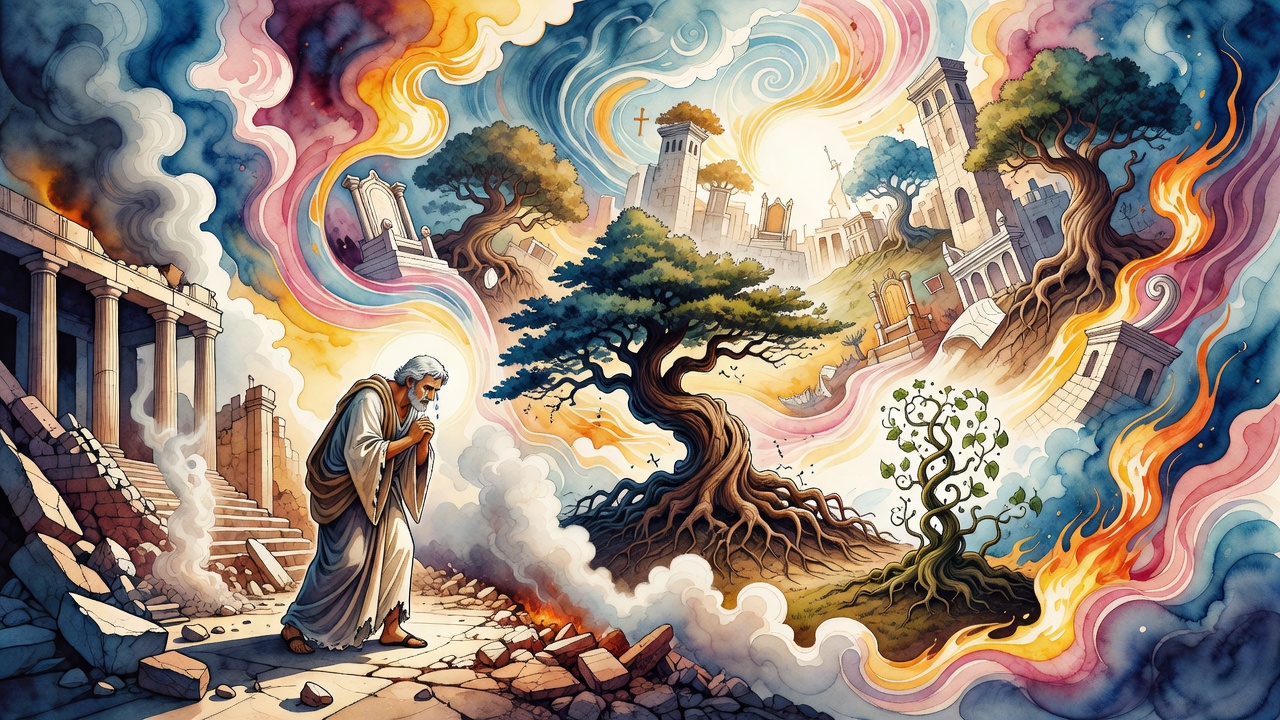
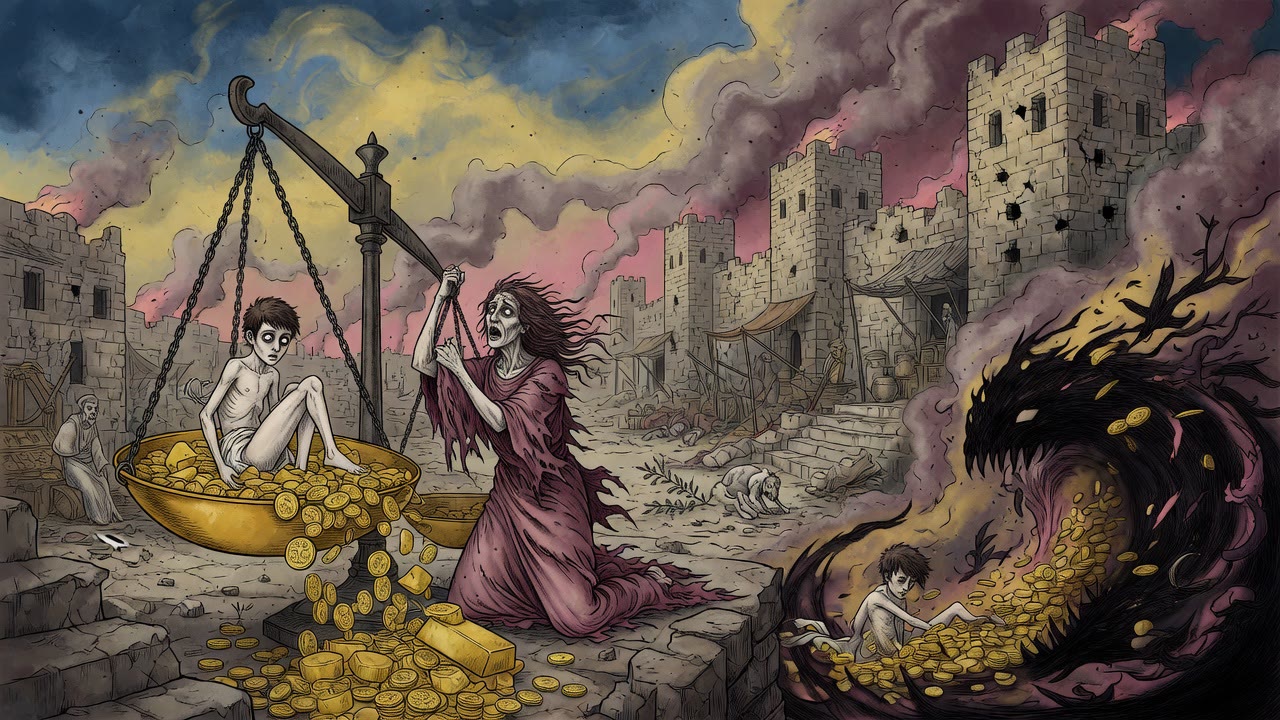
Baruch climbed to the place where the Temple had stood and sat down in the rubble. Where the high priest had once burned incense there was only dust, and the smoke of a burned city still hung over Zion. He wept until his eyes ached. No amount of weeping felt equal to it. "Our glorying has been made into dust," he said, "and the desire of our soul into sand."

Then a voice fell from the height of heaven like a stone. "Stand on your feet, Baruch, and hear the word of the mighty God." God told him he would be kept alive through the worst of what was coming, kept as a witness. One day the proud cities of the nations would cry out, "Why has the Mighty One brought this punishment upon us?" and Baruch would be the one to answer them. "You who have drunk the strained wine, now drink the dregs," he was to say. "He did not spare His own children when they sinned. Why should He spare you?"

A Forest of Empires and a Single Vine

Exhausted by grief, Baruch fell asleep among the stones, and a vision opened over him. A forest rose across a plain, vast and dark, ringed by rugged mountains. It covered everything. Then from the far side a single vine appeared, and beneath it a fountain, quiet at first. The water climbed into waves. The waves crashed against the forest and tore the trees out by their roots. They flattened the mountains. They kept coming until the whole forest was gone.

Gone except one. One massive cedar still stood on the emptied plain. The fountain came to rest before it, and the vine opened its mouth to speak.

Twelve Woes Counted to the End

Baruch woke and begged to understand, and God unfolded the shape of the end. The forest was a line of empires. The first kingdom, the one that had burned Zion, would itself be crushed by a second. The second would fall to a third. A fourth would rise harsher and more evil than all the others combined, exalting itself higher than the cedars of Lebanon, hiding the truth, drawing the wicked to it like beasts creeping into a dark wood.

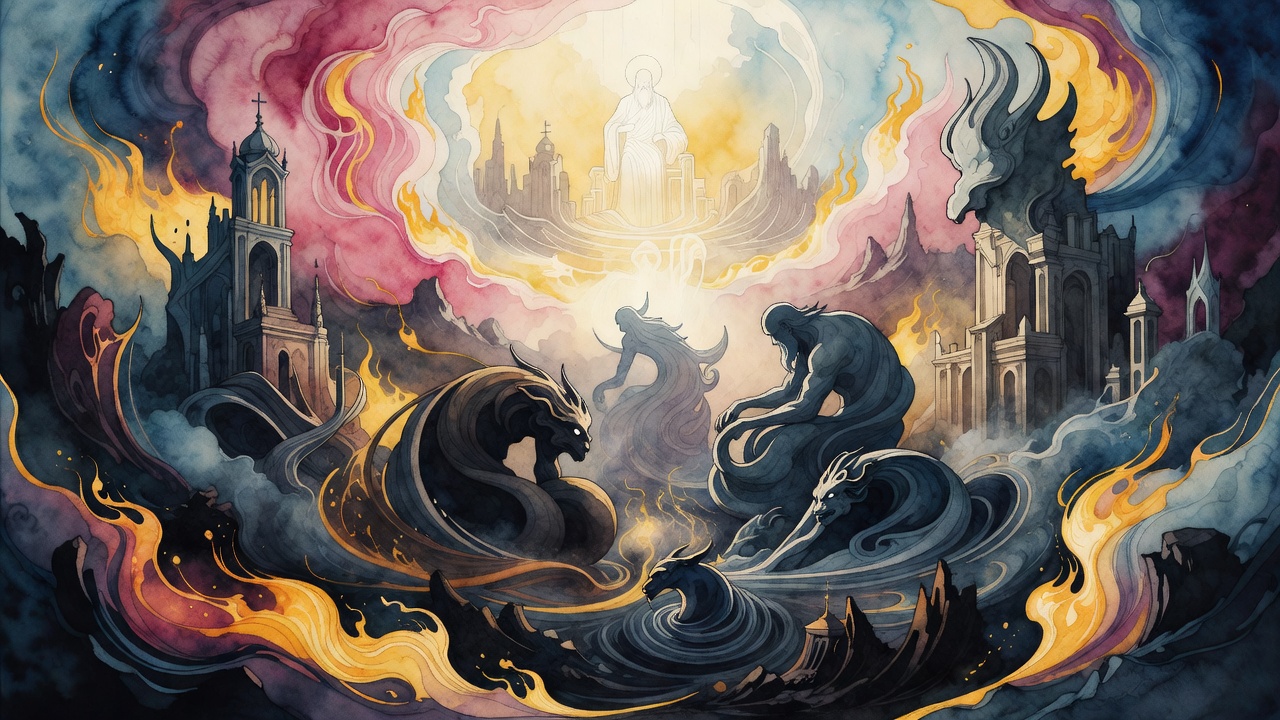
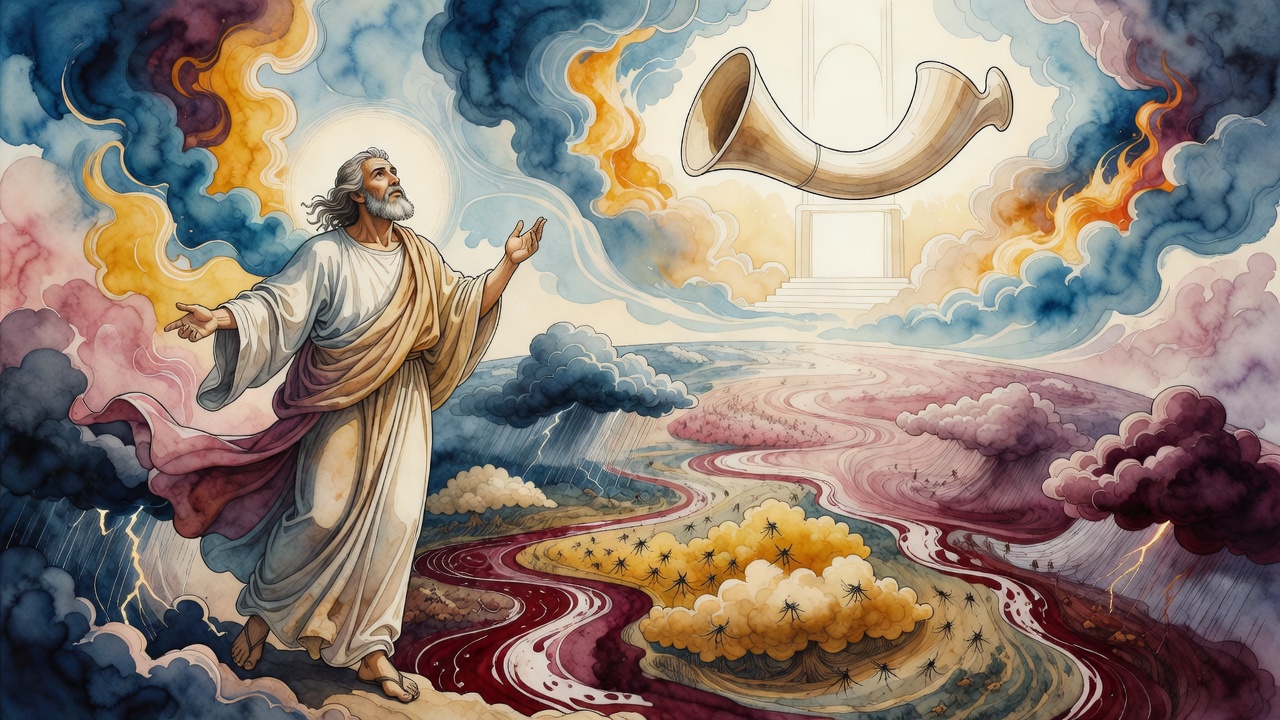
The time before that empire's fall was cut into twelve parts, and each part carried its own horror. First, commotions. Then the slaying of the great ones, kings cut down. Then death on a vast scale, then the sword let loose, then famine and the withholding of rain, then earthquakes that shook the foundations of the world. The seventh part the vision would not show. Then swarms of Shedim pouring out of the dark, then fire falling from the sky, then plunder without measure, then open wickedness, and last of all a confusion in which every earlier woe mingled with the rest until no one could tell them apart. "Whoever understands shall then be wise," God said. "The Messiah shall then begin to be revealed."

The Cedar Dragged to Mount Zion

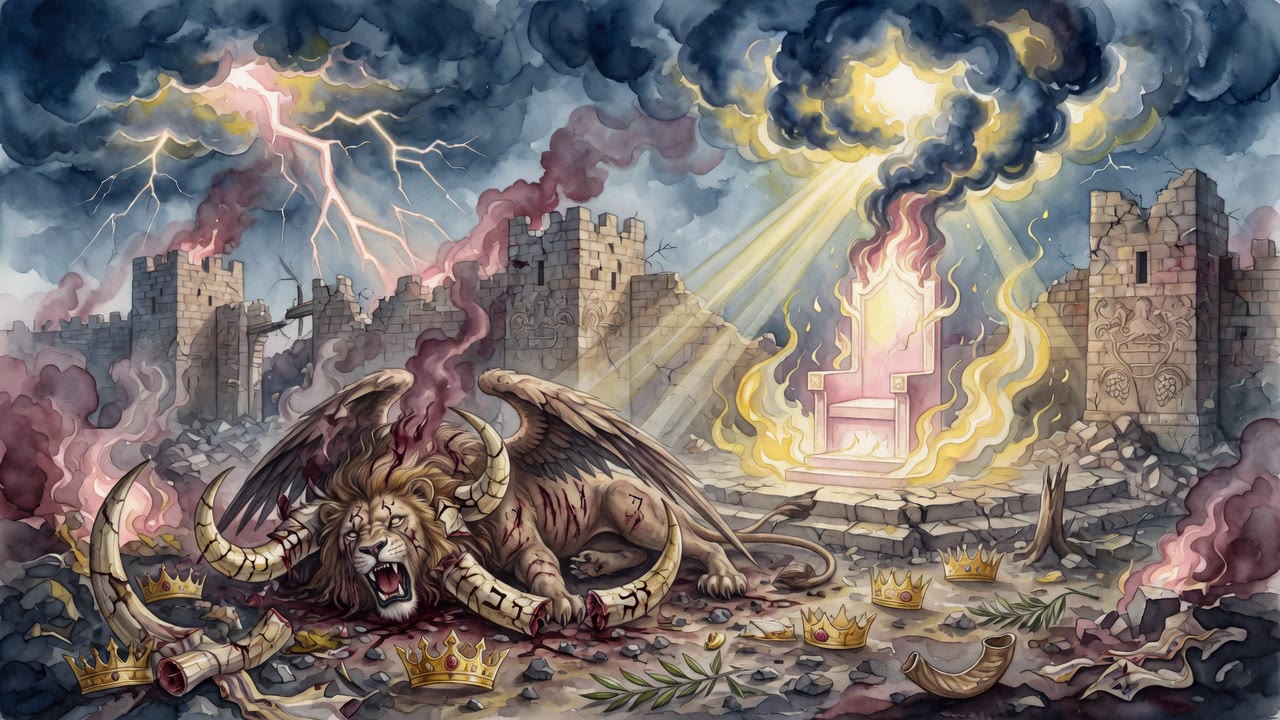
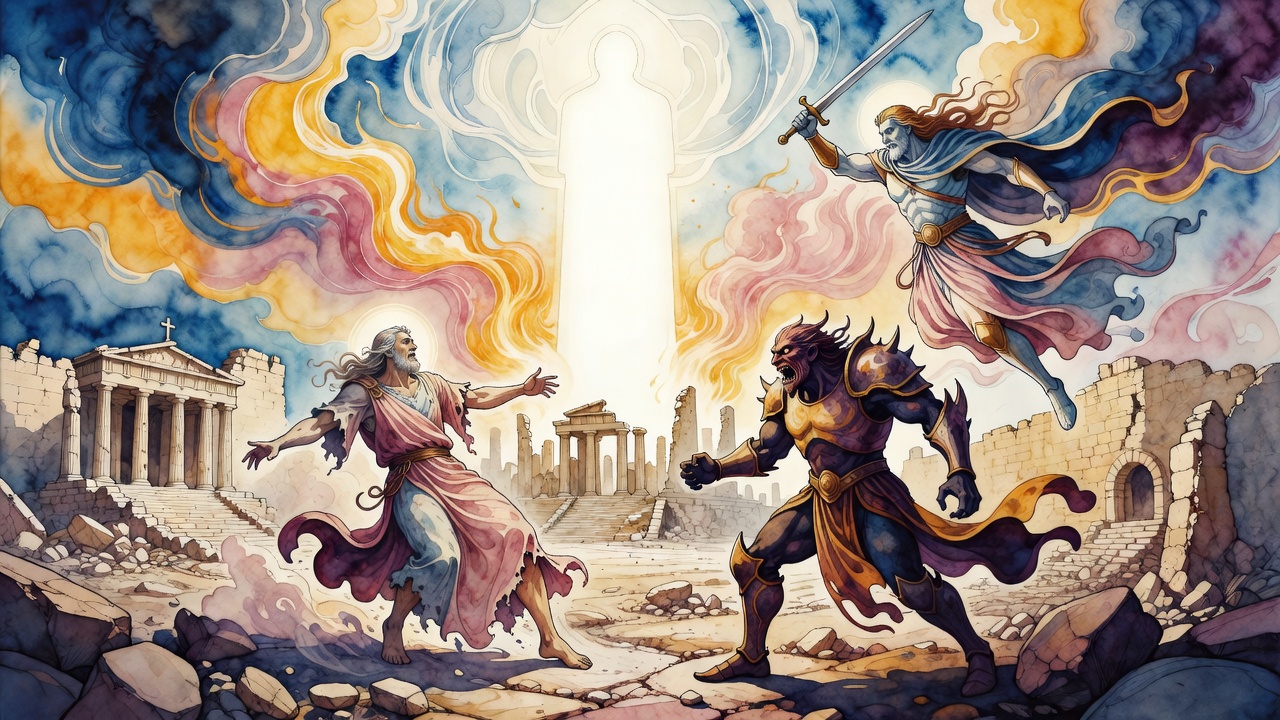
When the fourth empire's hour came, the vine was revealed as the Messiah, the fountain and the vine together. Its multitudes were uprooted. The last ruler of that age was taken alive, bound in chains, and dragged up to Mount Zion. There the Messiah set every crime before him, one impiety after another, every evil his armies had done. "Are you not that cedar left of the forest of wickedness," the vine said, "by whose means wickedness persisted all those years, and goodness never? You kept conquering what was not yours. You never showed compassion to what was. You lifted yourself up as one that could not be rooted out."

Then the sentence. "But now your time has sped and your hour has come. Depart, O cedar, after the forest that departed before you. Become dust with it, and let your ashes mingle together. Recline in anguish and rest in torment until your last time comes. And then you will be tormented still more." Baruch watched the cedar catch fire.

The Fountain of Unfading Flowers

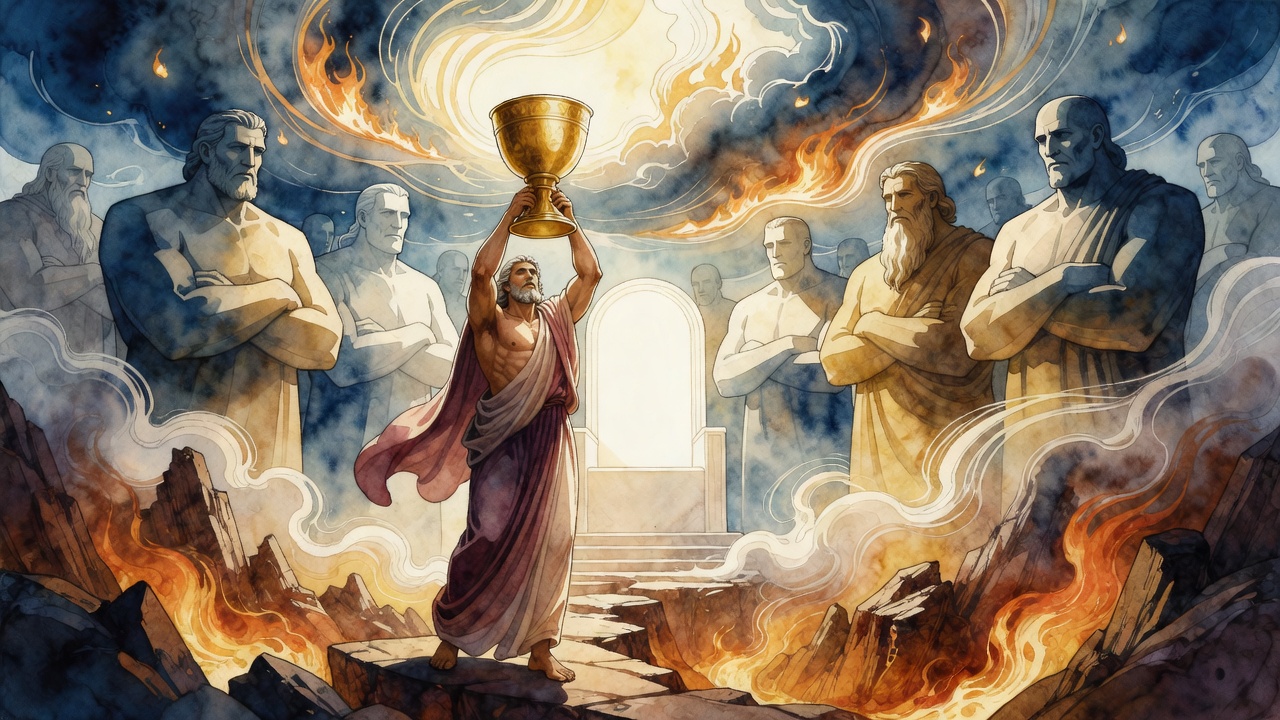
As the cedar burned, the vine grew. It spread across the whole plain, and everywhere the water reached, the ground filled with flowers that would not fade. This was the world after the woes had spent themselves. Behemoth would come up from the land and Leviathan would rise from the sea, the two monsters God had made on the fifth day and hidden away for exactly this, and they would feed all who survived. Every vine would carry a thousand branches, every branch a thousand clusters, every grape a barrel of wine. The treasuries of souls would open, and the righteous who had died in hope would rise together, the first of them glad and the last not grieving.

God had told Baruch the hardest thing last. The fall of Jerusalem was not the end of the plan but its trigger. "I have taken away Zion that I may more speedily visit the world in its season," God said. "The times shall hasten. The seasons shall speed." What looked like the death of everything was a clock beginning to run. Baruch was to fast seven days, taste no bread, drink no water, speak to no one, and then return, and the rest of the unsearchable way would be shown to him. He rose from the ash of the Temple and went to wait.


← All myths
From the tradition

Sources

3 sources

The texts behind this telling. Some cards carry a translation of the source; others are our own retelling of it, and each card says which. Every card links out to the original.

2 Baruch 35-402 Baruch

Retold in our words. Read the original at the link below.R. H. Charles public-domain English translation (1913) · Public Domain

Baruch went to the holy place, the place where the Temple once stood. And sat down on the ruins. The ground where the high priest had once offered sacrifices and placed fragrant incense was now dust and rubble. He wept. He wished his eyes were springs and his eyelids fountains of tears, because no amount of weeping felt adequate for what Zion had become.

"Our glorying has been made into dust, and the desire of our soul into sand."

Exhausted by grief, he fell asleep among the ruins. And in his sleep, he saw one of the most extraordinary visions in all of Jewish apocalyptic literature.

A vast forest stretched across a plain, surrounded by lofty, rugged mountains. The forest was enormous, it covered everything. Then, from the opposite direction, a single vine appeared. Beneath it flowed a fountain, peaceful at first, then rising into great waves that crashed against the forest. The waves tore out the trees by their roots. They toppled the mountains. They leveled everything in their path until the once-mighty forest was reduced to nothing.

Nothing except one cedar. One massive cedar, still standing.

The vine approached the last cedar. And then, impossibly, the vine opened its mouth and spoke.

"Are you not that cedar which was left of the forest of wickedness? By whose means wickedness persisted all those years, and goodness never? You kept conquering what was not yours. You never showed compassion to what was. You extended your power over those far from you and held fast those who drew near in the toils of your wickedness. You lifted yourself up as one that could not be rooted out."

Then the verdict: "But now your time has sped and your hour has come. Depart, O cedar, after the forest that departed before you. Become dust with it. Let your ashes mingle together. Recline in anguish and rest in torment until your last time comes. And then you will be tormented still more."

Baruch watched the cedar burn. And as it burned, the vine grew, spreading across the entire plain, which filled with unfading flowers. He awoke.

He prayed for understanding, and God gave it. The forest represented a succession of world empires. The first kingdom that destroyed Zion would itself be destroyed and subjected to the next. That kingdom too would fall. A third would rise and be destroyed. Then a fourth, more harsh and evil than all the others combined, would rule for ages, exalt itself beyond the cedars of Lebanon, hide the truth, and draw the wicked to it like beasts creeping into a dark forest.

But when the time of that fourth empire's destruction arrived, the principate of God's Messiah would be revealed, the fountain and the vine. The Messiah would uproot the empire's multitudes. The last leader of that age would be captured alive, bound in chains, and dragged to Mount Zion. There the Messiah would convict him of every impiety, laying out before him every evil deed his armies had committed.

Then the Messiah would put him to death.

And the Messiah's kingdom would stand forever, until the world of corruption reached its end and the promised times were fulfilled. The forest would be ash. The vine would bloom eternally. And the plain that once lay in darkness would be filled with flowers that never fade.

Full source
2 Baruch 27-302 Baruch

Retold in our words. Read the original at the link below.R. H. Charles public-domain English translation (1913) · Public Domain

Twelve catastrophes. Stacked on top of each other. Each one worse than the last. This is what God revealed to Baruch about the end of the world. And it reads like a countdown to annihilation.

"Into twelve parts is that time divided," God declared, "and each one is reserved for what is appointed to it."

In the first part, commotions. The stirring of unrest across the earth. In the second, the slaying of the great ones. Kings and rulers cut down. In the third, death on a massive scale. In the fourth, the sending of the sword. War unleashed without restraint. In the fifth, famine and drought, the withholding of rain. In the sixth, earthquakes and terrors that shake the foundations of the world.

The seventh part is lost, the ancient text simply says "wanting," a gap in the manuscript where some horror once stood, now erased by time itself.

In the eighth, a multitude of specters and attacks of the Shedim, the demons of Jewish tradition, swarming out of the darkness. In the ninth, the fall of fire from the sky. In the tenth, robbery and oppression on a scale beyond reckoning. In the eleventh, wickedness and depravity. And in the twelfth, the confusion born from all eleven woes mingling together, each feeding the others, compounding into total chaos.

The woes would not come in neat succession. They would overlap. Bleed into each other. "Some shall leave out some of their own and receive from others," God explained. The result would be so disorienting that the people living through it would not even recognize they were witnessing the consummation of the ages.

"Nevertheless," God added, "whoever understands shall then be wise."

Baruch asked whether these calamities would strike one place or the whole earth. God's answer was absolute: "Whatever will befall will befall the whole earth. All who live will experience it." But there was a caveat. God would protect those found in the land of Israel during those days.

And then, after all twelve woes had spent themselves, the promise that made every catastrophe bearable: "The Messiah shall then begin to be revealed."

With the Messiah's arrival would come wonders beyond imagination. Behemoth would emerge from the land and Leviathan would rise from the sea, those two primordial monsters that God had created on the fifth day of creation and hidden away for this very moment. They would become food for all who survived. The earth would yield its fruit ten-thousandfold. Every vine would grow a thousand branches. Every branch a thousand clusters. Every cluster a thousand grapes. Every single grape would produce an entire barrel of wine.

Winds would carry the fragrance of aromatic fruits every morning. Clouds would distill the dew of healing every evening. And the treasury of manna, the same heavenly bread that fed Israel in the desert, would descend from on high once more.

Then came the resurrection. When the time of the Messiah was fulfilled, the treasuries of souls would be opened. The righteous who had fallen asleep in hope would rise. They would come forth together in one great assemblage, the first rejoicing and the last not grieved, for all would know that the consummation of the times had arrived.

But the souls of the wicked, witnessing all this, would waste away. For they would know that their torment had come, and their perdition had arrived.

Full source
2 Baruch 13-202 Baruch

Retold in our words. Read the original at the link below.R. H. Charles public-domain English translation (1913) · Public Domain

Baruch stood on Mount Zion. The ruins smoked beneath him. And then a voice fell from the height of heaven like a stone.

"Stand on your feet, Baruch, and hear the word of the mighty God."

God told him he would be preserved, kept alive through the worst of it. So that he could serve as a witness. When the prosperous cities of the nations would one day cry out, "Why has the Mighty One brought this punishment upon us?" Baruch would be the one to answer them. His reply would be devastating in its simplicity: "You who have drunk the strained wine, now drink the dregs. The judgment of the Most High has no respect of persons. He did not spare His own children when they sinned. Why should He spare you?"

God had punished Israel as if they were His enemies, precisely because they were His beloved. They were chastened so they might be made holy. But the nations who trampled the earth and used creation unrighteously, who were ungrateful for every kindness, their turn was coming.

Baruch struggled with this. He knew that sinners were many, and that they had lived in prosperity before departing from the world unpunished. He pressed God with the hardest question a faithful person can ask: "What advantage is there in righteousness? Those who had knowledge of You, who feared You, who never left Your ways, they were carried off. And on their account You showed no mercy to Zion."

His voice cracked with the weight of it: "Who will comprehend Your judgment? Who will search out the depths of Your way? Who among those ever born has found the beginning or end of Your wisdom? We have all been made like a breath, ascending involuntarily, dying without our will, never knowing what befalls us in the end."

But even in despair, Baruch saw a distinction. The righteous depart this world without fear, he realized, because they have a treasury of good works stored up with God. They leave trusting, hoping, joyful. "But as for us who remain, woe to us, who are shamefully treated now and look forward only to worse."

God's reply cut through the anguish with blade-sharp logic. He posed a question about Adam, who lived nine hundred and thirty years yet transgressed what he was commanded. What did all that time profit him? It brought death, not just on himself, but on every generation after. Then consider Moses, who lived only a hundred and twenty years but brought the law to the children of Jacob and lit a lamp for the entire nation of Israel. Whose life was better spent?

"It is not the length of a life that matters," God declared. "It is what is done with it."

And yet the people had chosen darkness over Moses' lamp. God had set before them life and death, calling heaven and earth as witnesses (Deuteronomy 30:19). They chose death anyway, knowingly, willfully, with the law right in front of them.

Then came the most startling revelation of all. God told Baruch that He had taken away Zion on purpose, not to destroy, but to accelerate. "I have taken away Zion that I may more speedily visit the world in its season. The times shall hasten. The seasons shall speed. The years shall pass more quickly than the present years."

The fall of Jerusalem was not the end of God's plan. It was the trigger for everything that came next. Baruch was commanded to fast seven days, eat no bread, drink no water, speak to no one. And then return. God would reveal His unsearchable ways and the method of the times, which were coming and would not delay.

Full source