5 min read

God Cut Ten Horns From Israel and Promised Return

When Jerusalem fell, the rabbis counted ten severed horns: patriarchs, Torah, priesthood, prophecy, Temple, and Israel itself.

Curated by Arthur · Told by Maggid ·
Table of Contents
  1. Abraham and Isaac Lost Their Horns
  2. Torah and Priesthood Were Cut
  3. The Temple and Israel Fell Together
  4. The Severed Horns Waited

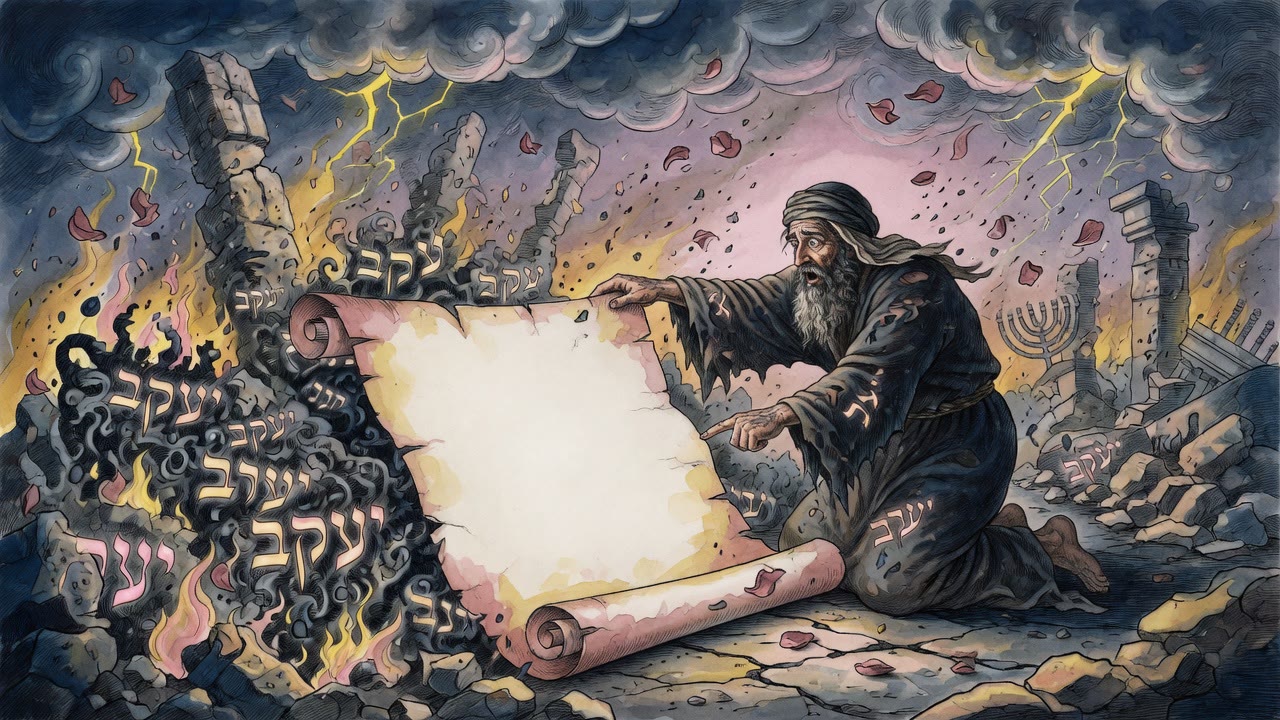
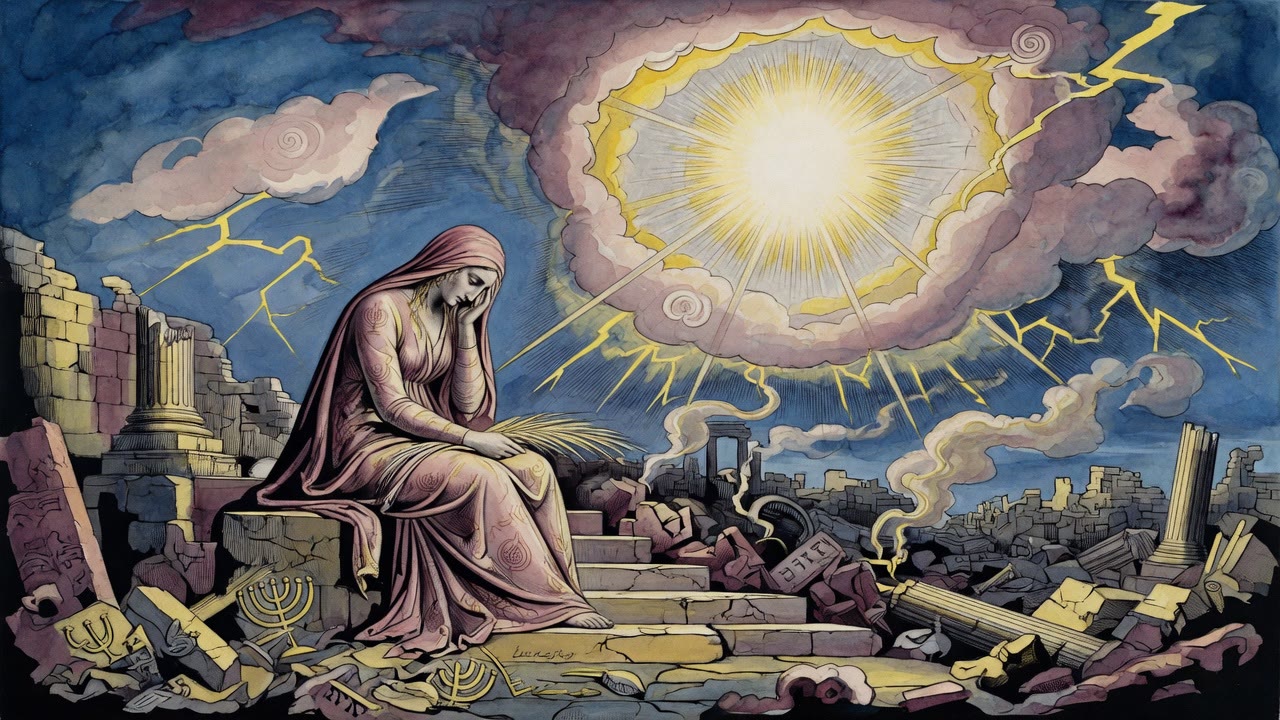
After Jerusalem fell, the rabbis counted what had been cut away.
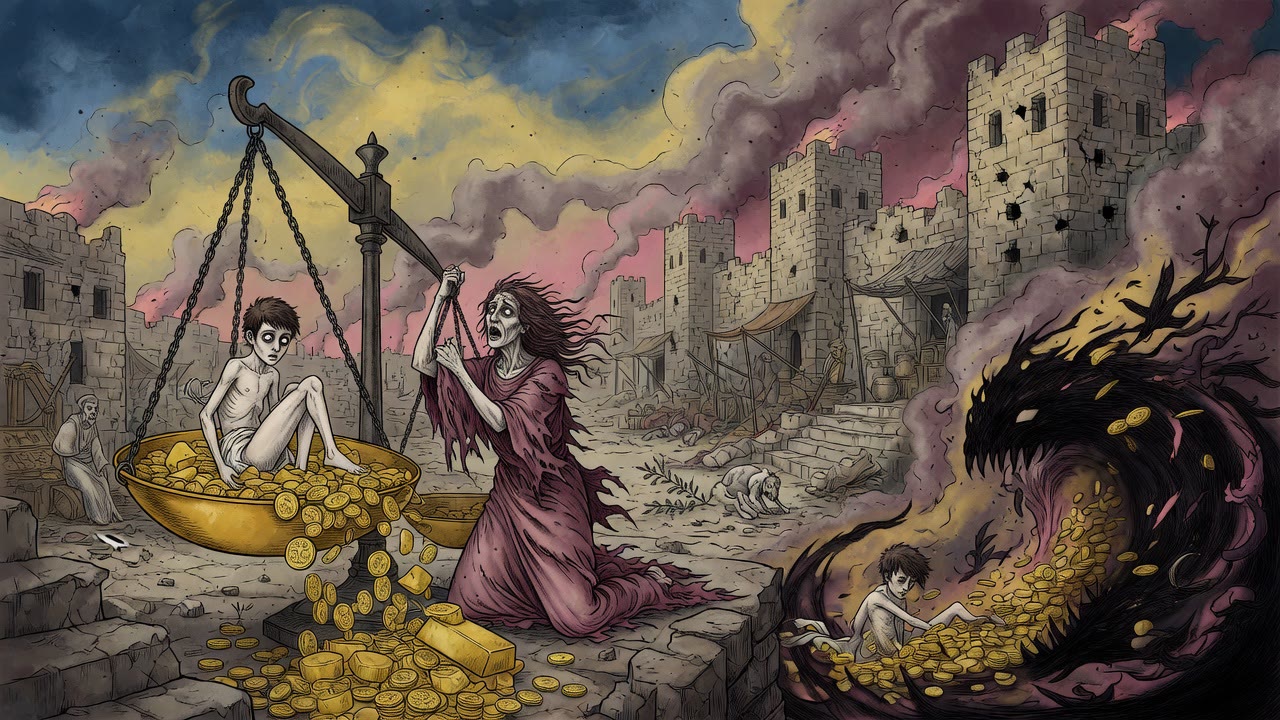
The verse said God severed all the horn of Israel in burning wrath. It could have remained a single image, power broken like an animal's horn at the root. But the word all would not let them stop. If all the horn had been severed, how many horns had Israel carried?

They counted ten.

Abraham and Isaac Lost Their Horns

The first horn belonged to Abraham. It was hidden in the language of the vineyard, in the fruitful corner where the beloved planted and expected grapes. The corner was keren, horn, and the rabbis heard Abraham there, the first rooted strength of the people.

The second belonged to Isaac. A ram had been caught by its horns in the thicket when the knife hovered over him. Isaac lived because another creature's horns became entangled at the right moment. That horn was not decoration. It was substitution, rescue, and the soundless beginning of all later ram's-horn cries.

The third belonged to Joseph, whose blessing gave him the horns of an aurochs. Joseph's strength pushed outward, tribe against enemy, survival through famine, power inside exile without losing the face of Jacob's son.

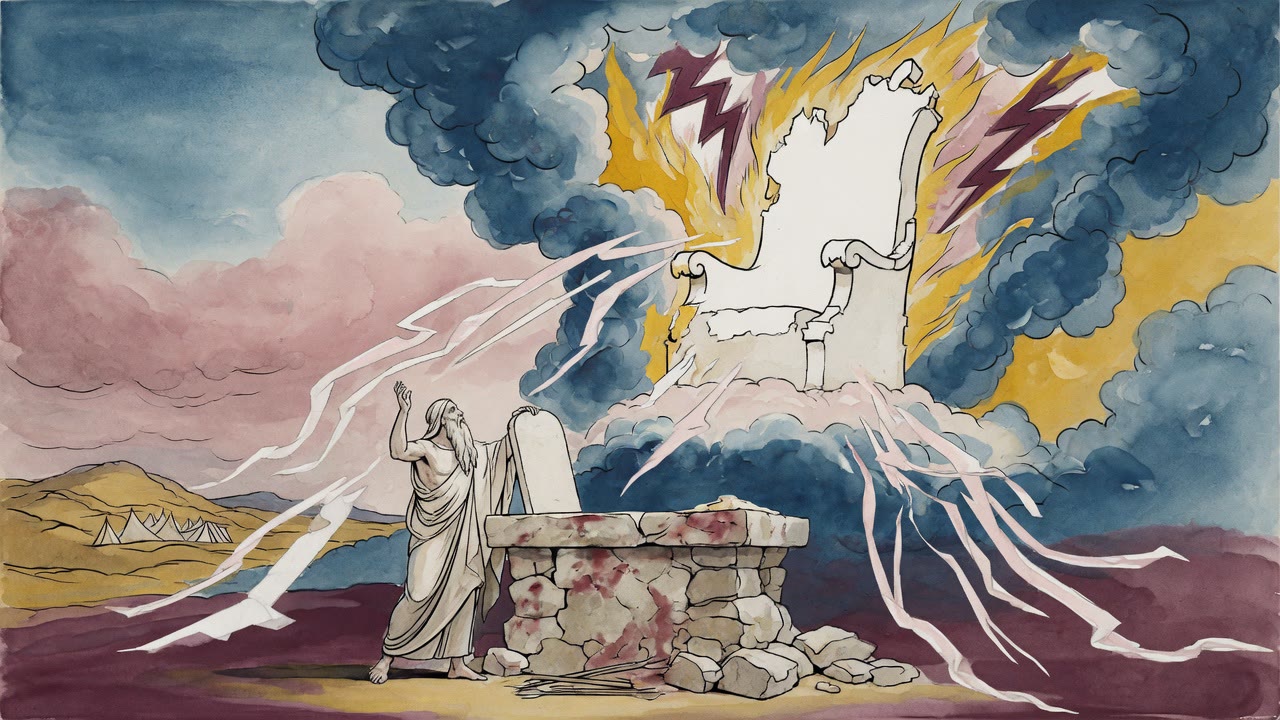
Then came Moses, whose shining face carried the same root. Light itself became a horn on him, radiance breaking from skin after speech with God.

Torah and Priesthood Were Cut

The fifth horn was Torah. It came from the rays in God's hand, the hidden power given at Sinai and carried through words, study, judgment, memory, and the stubborn refusal to let Israel become only a nation with land and kings.

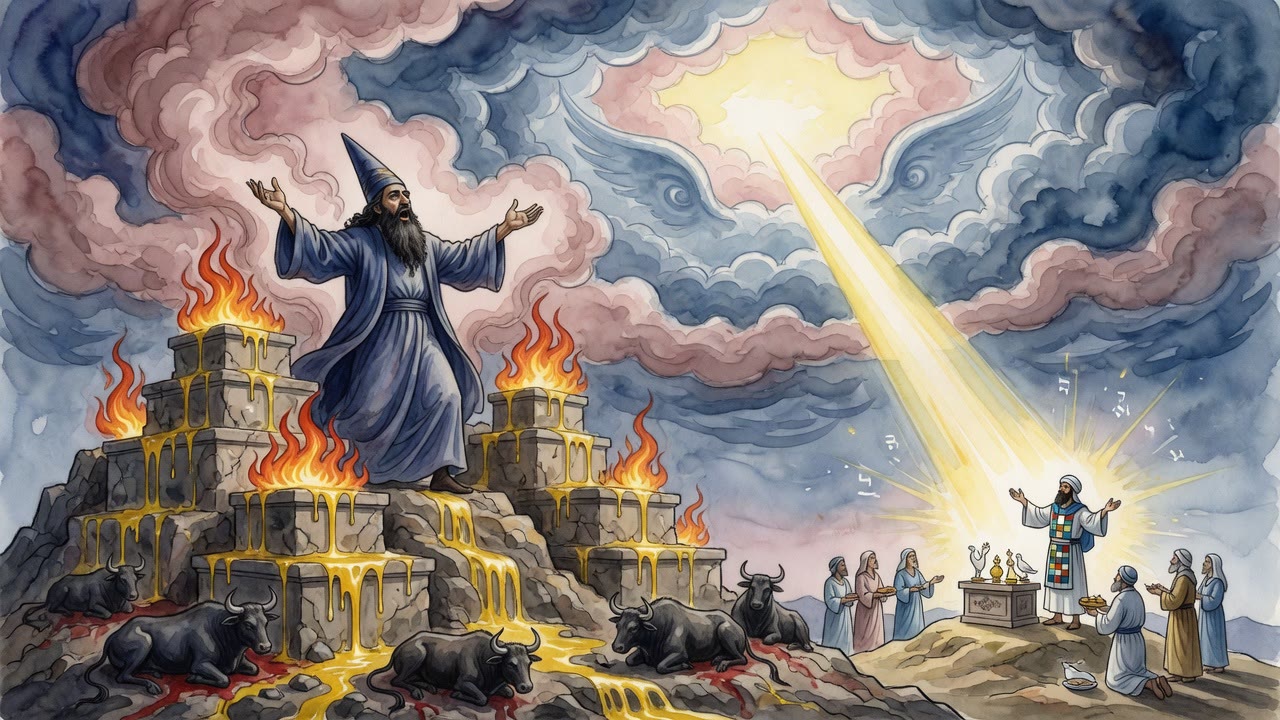
The sixth horn was priesthood. Honor raised high, service at the altar, blessing lifted with hands. When the Temple stood, the priest did not merely perform ritual. He stood at the crossing where blood, fire, bread, incense, and forgiveness moved between earth and heaven.

The seventh horn belonged to the Levites, singers and servants of the sanctuary. Their horn rose in music, in the ordered breath of worship. A city can survive many silences, but when the Levites stop singing, something inside the world goes mute.

The eighth horn was prophecy. Hannah had once sung that her horn was exalted in God, and prophecy carried that exalted speech forward: warning, rebuke, consolation, vision, and the dangerous mercy of being told the truth before judgment arrives.

The Temple and Israel Fell Together

The ninth horn was the Temple itself. Not stones only. Not architecture only. The Temple was the place where the other horns gathered: priesthood, Levites, Torah, prophecy, kingship, pilgrimage, offering, and the Divine Presence that made walls more than walls.

The tenth horn was Israel.

That last one is the hardest. If Israel's own horn was severed, the injury was not merely institutional. It reached the people's name. Abraham's promise, Isaac's rescue, Joseph's strength, Moses' light, Torah, priest, Levite, prophet, Temple, all of them culminated in a people whose power had now been broken in public.

Some added an eleventh possibility: the horn of Messiah. Even that hope, in the season of wrath, seemed cut down before it could rise.

The Severed Horns Waited

The counting sounds like inventory, but it is really grief trying to keep the pieces from disappearing. A broken thing unnamed can vanish. A broken thing counted is being guarded for return.

The nearby lament over Judah's strongholds sharpens the count. Jerusalem had boasted that water, fire, or iron would surround it against the enemy. Then iniquity brought the strongholds down. The horns were not cut from a weak people, but from a people that had mistaken inherited strength for immunity.

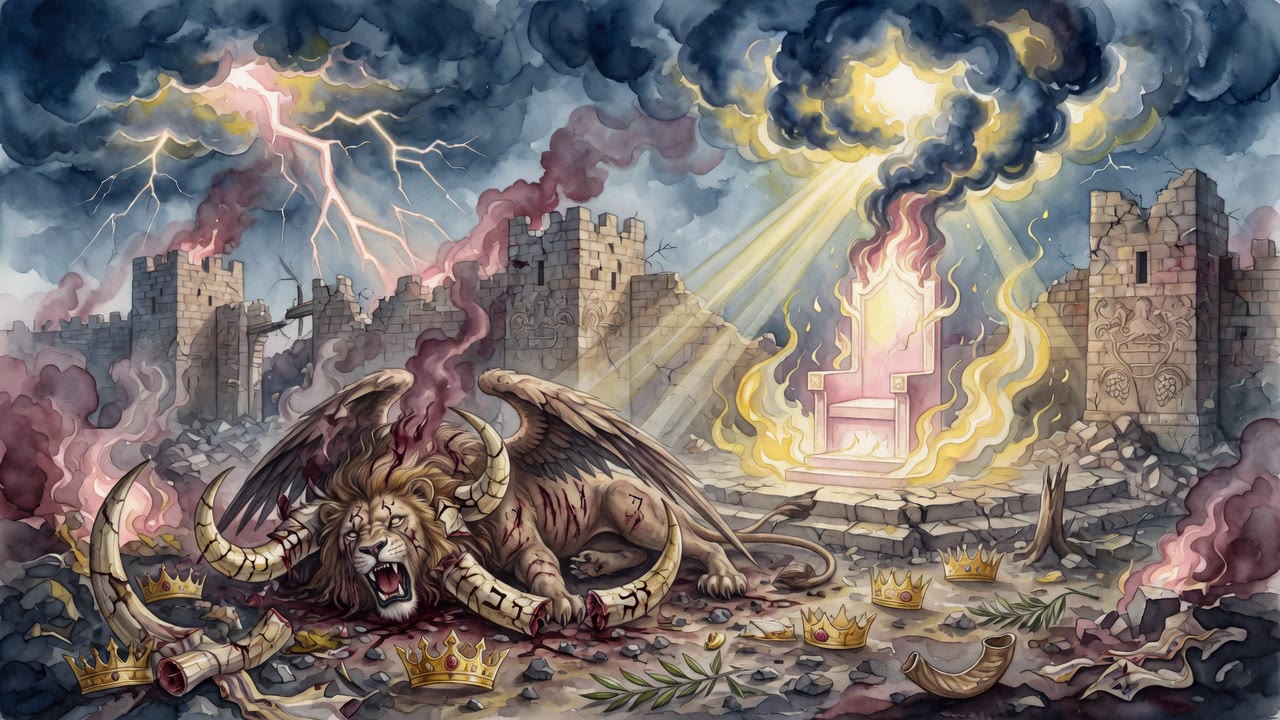
The rabbis did not count the horns to admire loss. They counted because the same tradition that says God cut them also knows God can raise horns again. The shofar can sound from the memory of Isaac's ram. Torah can be studied without a palace. Prophecy can leave words behind after prophets are gone. Israel can carry a severed horn through exile and still know what shape was taken.

Jerusalem fell, and the people looked at the stump of their strength. Ten horns gone. Perhaps eleven. But the act of naming each one refused the final triumph of ruin. Abraham was still named. Isaac was still named. Joseph, Moses, Torah, priesthood, Levites, prophecy, Temple, Israel, the hope of Messiah, all still named.

Wrath had severed them. Memory held the roots.


← All myths
From the tradition

Sources

3 sources

The texts this telling draws on, in full. Open a card to read inline, or expand it for a wider, quieter read.

Eikhah Rabbah 2:6Eikhah Rabbah

“He severed in his enflamed wrath all the horn of Israel; He retracted His right hand from before the enemy. He burned in Jacob like flaming fire, consuming all around” (Lamentations 2:3).“He severed in his enflamed wrath all the horn of Israel.” There are ten horns: the horn of Abraham, the horn of Isaac, the horn of Joseph, the horn of Moses, the horn of Torah, the horn of priesthood, the horn of Levites, the horn of prophecy, the horn of the Temple, the horn of Israel, and some say, the horn of the Messiah.The horn [keren] of Abraham, as it is stated: “My beloved had a vineyard in a fruitful corner [keren]” (Isaiah 5:1).77The Sages identify the term “beloved” in the verse as referring to Abraham. See, similarly, Eikha Rabba Prologue 24; Eikha Rabba 1:1. The horn of Isaac, as it is stated: “Caught in the thicket by its horns” (Genesis 22:13). The horn of Joseph, as it is stated: “His horns are the horns of aurochs” (Deuteronomy 33:17). The horn of Moses, as it is written: “The skin of his face was radiant [karan]” (Exodus 34:29). The horn of Torah, as it is written: “Rays [karnayim] from His hand to him” (Habakkuk 3:4). The horn of priesthood, as it is written: “His horn is raised high in honor” (Psalms 112:9).78This verse refers to honor [kavod], a term used particularly in regard to priests; see, e.g., (Exodus 28:2), 40 (Maharzu). The horn of the Levites, as it is stated: “All of these were sons of Heiman, the king's seer in matters of God, to raise the horn” (I Chronicles 25:5).79The reference is to a family of Levites. The horn of prophecy, as it is written: “My horn is exalted in the Lord” (I Samuel 2:1). The horn of the Temple, as it is written: “From the horns of the aurochs; answer me (Psalms 22:22).80The midrash (rabbinic interpretive commentary) elsewhere (Midrash Tehillim 102) relates that David prayed to God that He save him from an auroch, and promised to build the Temple in return (Maharzu). The horn of Israel, as it is stated: “He raised a horn for His people” (Psalms 148:14). And some say the horn of the Messiah, as it is stated: “Exalt the horn of His anointed one” (I Samuel 2:10).81The word Messiah [mashiaḥ] literally means “anointed one.”All of them were placed on the heads of the Israelites, and when they sinned they were taken from them. That is what is written: “He severed in His enflamed wrath all the horn of Israel.” They were given to the nations of the world. That is what is written: “Concerning the ten horns that were on its head, and the other that arose, and before which three fell” (Daniel 7:20), and it is written thereafter: “And the ten horns: From this kingdom, ten kings will arise, and another will arise after them, and he will be different from the earlier ones, and he will subdue three kings” (Daniel 7:24). When Israel repents, the Holy One blessed be He will restore them to their place. That is what is written: “All the horns of the wicked I will sever, while the horns of the righteous shall be raised” (Psalms 75:11). The horns that the Righteous One of the world severed, when will He restore them to their place? When the Holy One blessed be He exalts the horn of His anointed one, as it is written: “He will give strength to His king and exalt the glory of His anointed one” (I Samuel 2:10).“He retracted His right hand from before the enemy.” Rabbi Azarya said in the name of Rabbi Yehuda ben Rabbi Simon: When iniquities were the cause and the enemies entered Jerusalem, they took the mighty of Israel and bound their hands behind them. The Holy One blessed be He said: ‘I wrote in the Torah: “I will be with him in distress” (Psalms 91:15), and now My children are wallowing in distress and I am in comfort?’ As it were, “He retracted His right hand.”82The Hebrew phrase in the verse, usually translated “He retracted His right hand,” can also be translated “He put His right hand behind Him.” God does not respond to the atrocities and indignities committed by the enemy to His people, as though His hands are tied behind His back.Ultimately He revealed it to Daniel. That is what is written: “But you, go to the end” (Daniel 12:13). [Daniel] said to Him: ‘To give an accounting?’ The Holy One blessed be He said to him: “And rest” (Daniel 12:13). He said to Him: ‘Will I rest forever?’ He said to him: “You will stand” (Daniel 12:13). He said to Him: ‘With whom, with the righteous or with the wicked?’ He said: “To your fate” (Daniel 12:13), with the righteous. He said to Him: ‘“At the end of days [hayamim]” (Daniel 12:13),83This is when all the dead, righteous and wicked, will arise for judgment. or at the end of the right hand [hayamin]?’84This is when God will reveal His right hand and bring salvation to the righteous. He said to him: ‘To the end of the right hand; that right hand that is subjugated. I put an end to My right hand.85I put an end to the restrictions on My right hand. When I redeem My children, I will have redeemed My right hand.’ That is what David said: “So that Your beloved ones be saved, deliver Your right hand and answer me” (Psalms 60:7).

Full source
Eikhah Rabbah 2:5Eikhah Rabbah

“He destroyed, in His ire, the strongholds of the daughter of Judah.” Rabbi Yudan said: Each and every castle that was in Jerusalem was not fit to be conquered in any less than forty days. Rabbi Pinḥas said: In any less than fifty days. But since iniquity caused [their downfall], “He destroyed, in His ire, the strongholds of the daughter of Judah, He brought them to the ground.”“He profaned a kingdom and its princes.” “He profaned a kingdom,” this is Israel, just as it says: “You will be for Me a kingdom of priests and a holy nation” (Exodus 19:6). “And its princes,” these are the guardian angels On High. You find that until the enemies came, Jeremiah would say to them: ‘Repent so you will not go into exile.’ They said to him: ‘If the enemies will come, what can they do to us?’ One [Israelite] said: ‘I will surround it with a wall of water.’ Another said: ‘I will surround it with a wall of fire.’ Another said: ‘I will surround it with a wall of iron.’76Each of them boasted that they could accomplish this by invoking the name of an angel (Matnot Kehuna). The Holy One blessed be He said to them: You are using that which is Mine. The Holy One blessed be He rose and changed the names of the angels. The one appointed over water, He tasked over fire; the one appointed over fire, He tasked over iron. They would invoke their names below, but they did not respond to them. That is what is written: “I profaned the sacred princes” (Isaiah 43:28). When the iniquities were the cause and the enemies came, they began invoking: So and so angel, come and perform such and such matter. [The angel] would say to him: ‘It is not within my ability, as I am excluded from it.’Another matter, “He profaned a kingdom and its princes.” “He profaned a kingdom,” this is Zedekiah king of Judah. “And its princes,” these are the guardian angels On High.

Full source
Midrash Shmuel 4:3Midrash Shmuel

"My horn is exalted in the LORD" (1 Samuel 2:1). There are ten horns: the horn of Abraham, "My beloved had a vineyard on a fruitful hill", literally, "on a horn, the son of oil" (Isaiah 5:1); the horn of Isaac, "and behold, a ram caught in the thicket by its horns" (Genesis 22:13); the horn of Moses, "and Moses did not know that the skin of his face shone", that is, sent forth horns of light (Exodus 34:29); the horn of the Torah, "and his brightness was as the light; he had horns coming out of his hand" (Habakkuk 3:4); the horn of Joseph, "his firstling bullock, majesty is his, and his horns are the horns of the wild-ox" (Deuteronomy 33:17); the horn of the priesthood, "he has scattered, he has given to the needy; [his horn shall be exalted in honor]" (Psalms 112:9); the horn of the Levites, "all these were the sons of Heman the king's seer in the words of God, to lift up the horn, etc." (1 Chronicles 25:5); the horn of prophecy, "my horn is exalted in the LORD" (1 Samuel 2:1); the horn of the Temple, "from the horns of the wild-oxen You have answered me" (Psalms 22:22); and the horn of Israel, "and He has lifted up a horn for His people" (Psalms 148:14).

Full source