5 min read

Resh Lakish Heard Jacob's Name in Every Verse of Ruin

A third-century sage reading Lamentations notices that Jacob's name appears in every verse of destruction and refuses to let it pass.

Curated by Arthur · Told by Maggid ·
Table of Contents
  1. The Name That Keeps Appearing in the Rubble
  2. Why Jacob and Not Israel
  3. The Patriarch Who Feels Every Blow to His Children
  4. The Ten Horns That Were Severed
  5. A Grief That Runs in All Directions at Once

The Name That Keeps Appearing in the Rubble

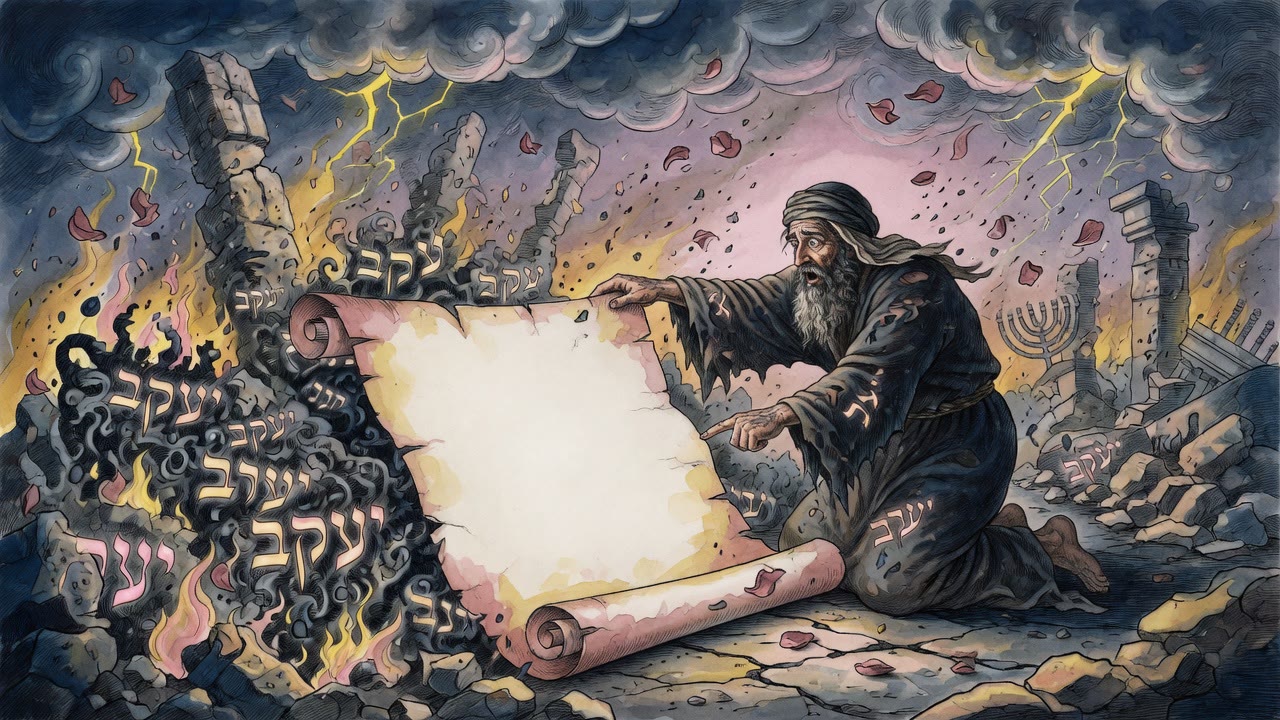
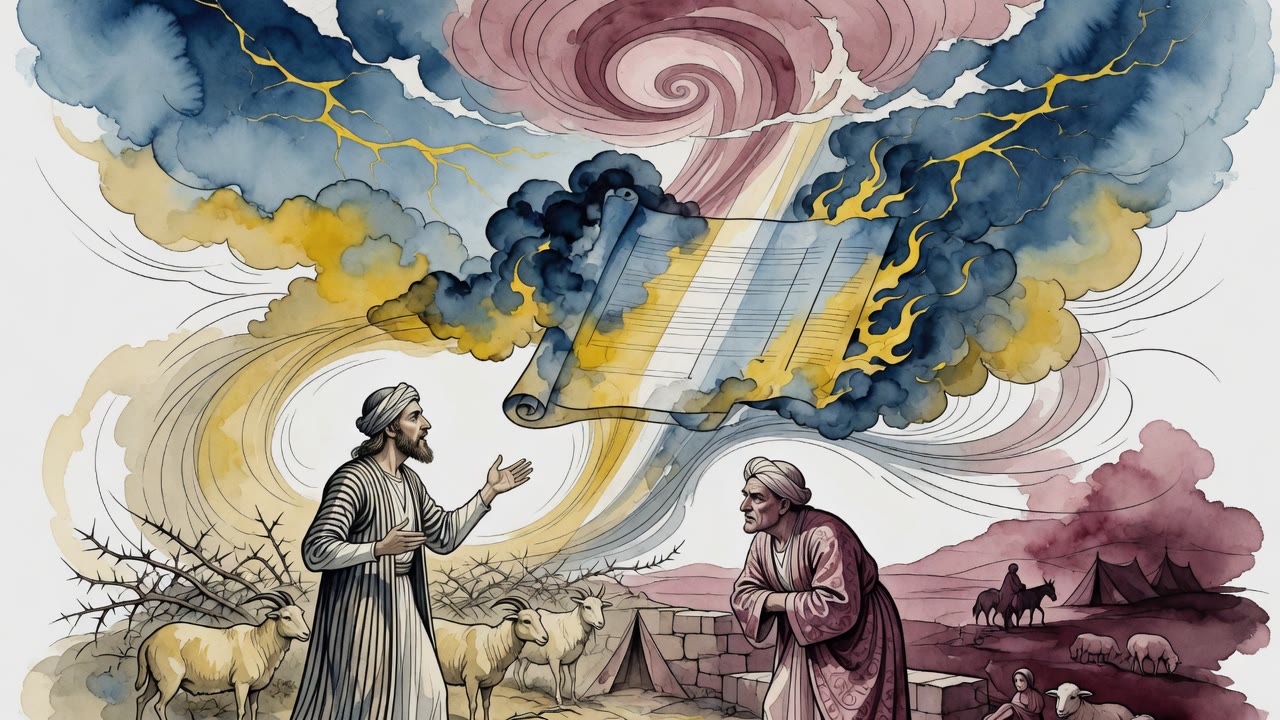
Rabbi Shimon ben Lakish was reading the book of Lamentations when the pattern stopped him. It was not difficult to notice once you looked for it. Every time a catastrophe falls in the text, the name that appears is Jacob. Not Israel. Not the people, not the nation, not the community. Jacob.

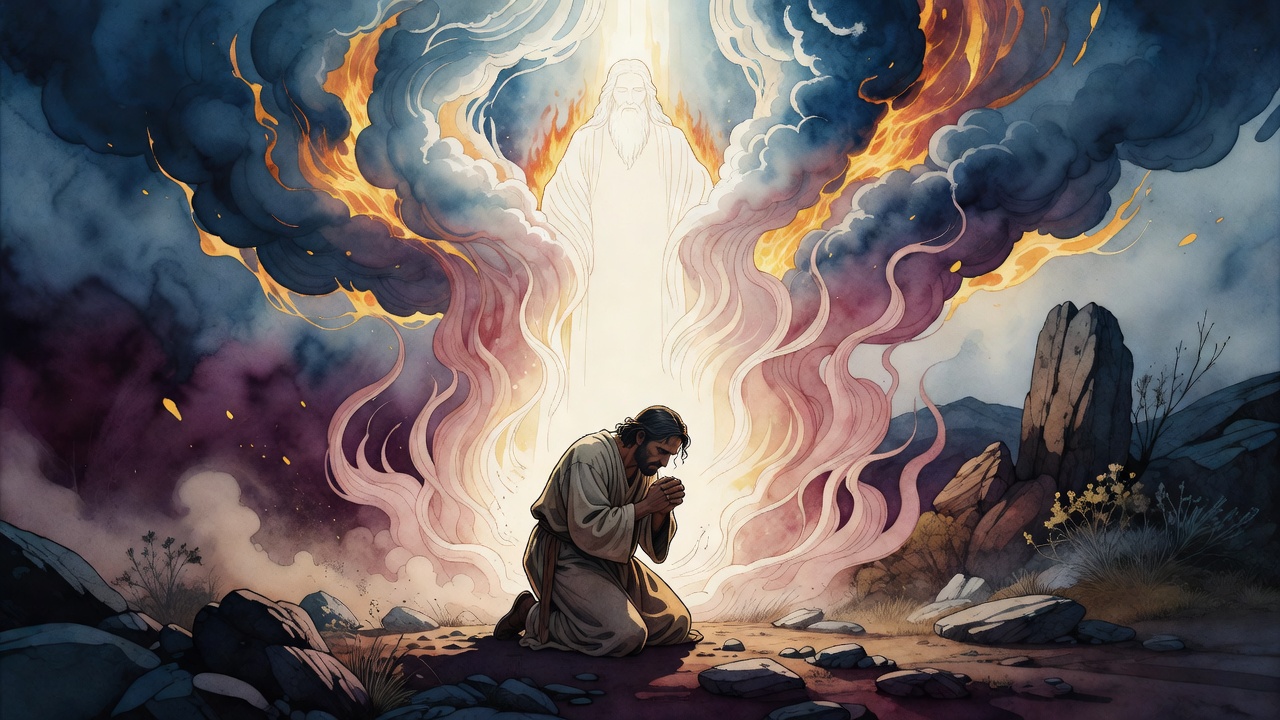
He burned in Jacob like flaming fire, consuming all around. He retracted His right hand from before the enemy. He severed in his enflamed wrath all the horn of Israel. The verses pile devastation on devastation, and Jacob is the name that takes the weight of each blow.

Resh Lakish was not the kind of scholar who accepted a textual pattern without pressing it until it yielded a reason. He had come up as a gladiator before he became a rabbi. He approached a problem the way he had once approached an opponent: directly, without flinching, until something gave.

Why Jacob and Not Israel

The question matters because this people carries two names. They are called Jacob, which is the birth name of the patriarch, the name he received when he came into the world grasping his brother's heel. And they are called Israel, the name God gave him after he wrestled through the night at the ford of Jabbok. Two names, two registers of identity, and the texts of the Hebrew Bible use both.

So why, when devastation comes, does Lamentations reach for Jacob and not Israel?

Resh Lakish found the answer in the nature of the name itself. Jacob means heel-grasper, and more than that, it carries the root of the word for deception, for going around something rather than confronting it directly. The rabbis often noted that Jacob's name contains the shadow of cunning, the willingness to take a crooked path when a straight one is blocked.

The Patriarch Who Feels Every Blow to His Children

Here is the reading Resh Lakish gave in Eikhah Rabbah: Jacob feels every blow. When suffering falls on his descendants, it falls also on him. The name that appears in the verses of destruction is Jacob because Jacob, even after his death, even after his transformation into Israel, cannot be separated from the pain of his children. He is still there in the rubble of Jerusalem, still present in the exile, still named in every verse of catastrophe because the grief is his grief.

This is not a metaphor for abstract communal suffering. It is a claim about the nature of a patriarch's relationship to his descendants. Abraham, Isaac, Jacob: the three who define the covenant are not simply ancestors. They are bound to every generation that comes after them with a bond that suffering cannot break. When Jerusalem burned, Jacob burned with it.

The Ten Horns That Were Severed

A second tradition in the same text counts what was lost. There are ten horns in Israel, ten sources of power and sanctity. The horn of Abraham. The horn of Isaac. The horn of Joseph. The horn of Moses. The horn of Torah. The horn of priesthood. The horn of the Levites. The horn of the elders. The horn of the prophets. The horn of the Temple.

The verse says God severed all the horn of Israel in his enflamed wrath. The commentators understood this not as a vague statement about national weakness but as a specific inventory of loss. Each horn named something that had been strong and was now cut. The priesthood was gone. The Temple stood in ashes. The prophets had fallen silent. The elders were scattered. The count of what was lost was as precise as the count of what had existed.

A Grief That Runs in All Directions at Once

What makes Resh Lakish's reading remarkable is that it refuses to keep the grief historical. Lamentations was written after the fall of Jerusalem, in the specific aftermath of a specific catastrophe. But the rabbinic reading of it reaches backward to Jacob and forward to every exile that followed. The text becomes a document that describes not one destruction but the entire structure of how suffering works in Jewish history.

Jacob at the base of it, still feeling every blow. Ten horns severed but not forgotten. A name that appears in every verse of ruin because the ruin belongs to the name as much as the name belongs to the ruin.


← All myths
From the tradition

Sources

2 sources

The texts this telling draws on, in full. Open a card to read inline, or expand it for a wider, quieter read.

Eikhah Rabbah 2:7Eikhah Rabbah

This midrash from Eikhah Rabbah, the midrash on the book of Lamentations, interprets the verse describing God's wrath, He burned in Jacob like a flaming fire, consuming all around (Lamentations 2:3). The teaching is brought in the name of Rabbi Shimon ben Lakish, known as Resh Lakish, a leading sage of the Land of Israel famed for his sharp readings of Scripture.

Resh Lakish draws an unexpected lesson from the choice of the name Jacob in the verse. He observes that when calamity comes upon the people, it is felt under the name Jacob, the humbler name associated with struggle and hardship. The proof is the verse itself, which speaks of fire burning in Jacob, the name used precisely when suffering is described.

But the teaching does not end in sorrow. Resh Lakish balances it with a complementary observation about joy. When good comes, he says, it too is sensed first under the name Jacob, for relief reaches the same people who endured the affliction. To prove this he cites the verse, When the Lord restores the fortunes of His people, Jacob will rejoice and Israel will be glad (Psalms 14:7), where both names appear in a moment of gladness. The midrash thus reads the two names of the patriarch as markers of the two faces of Israel's experience. The same nation that bears the brunt of calamity under the name Jacob is also the one that will taste the fullness of redemption, so that the very name carrying the memory of suffering also carries the promise of future joy.

Full source
Eikhah Rabbah 2:6Eikhah Rabbah

“He severed in his enflamed wrath all the horn of Israel; He retracted His right hand from before the enemy. He burned in Jacob like flaming fire, consuming all around” (Lamentations 2:3).“He severed in his enflamed wrath all the horn of Israel.” There are ten horns: the horn of Abraham, the horn of Isaac, the horn of Joseph, the horn of Moses, the horn of Torah, the horn of priesthood, the horn of Levites, the horn of prophecy, the horn of the Temple, the horn of Israel, and some say, the horn of the Messiah.The horn [keren] of Abraham, as it is stated: “My beloved had a vineyard in a fruitful corner [keren]” (Isaiah 5:1).77The Sages identify the term “beloved” in the verse as referring to Abraham. See, similarly, Eikha Rabba Prologue 24; Eikha Rabba 1:1. The horn of Isaac, as it is stated: “Caught in the thicket by its horns” (Genesis 22:13). The horn of Joseph, as it is stated: “His horns are the horns of aurochs” (Deuteronomy 33:17). The horn of Moses, as it is written: “The skin of his face was radiant [karan]” (Exodus 34:29). The horn of Torah, as it is written: “Rays [karnayim] from His hand to him” (Habakkuk 3:4). The horn of priesthood, as it is written: “His horn is raised high in honor” (Psalms 112:9).78This verse refers to honor [kavod], a term used particularly in regard to priests; see, e.g., (Exodus 28:2), 40 (Maharzu). The horn of the Levites, as it is stated: “All of these were sons of Heiman, the king's seer in matters of God, to raise the horn” (I Chronicles 25:5).79The reference is to a family of Levites. The horn of prophecy, as it is written: “My horn is exalted in the Lord” (I Samuel 2:1). The horn of the Temple, as it is written: “From the horns of the aurochs; answer me (Psalms 22:22).80The midrash (rabbinic interpretive commentary) elsewhere (Midrash Tehillim 102) relates that David prayed to God that He save him from an auroch, and promised to build the Temple in return (Maharzu). The horn of Israel, as it is stated: “He raised a horn for His people” (Psalms 148:14). And some say the horn of the Messiah, as it is stated: “Exalt the horn of His anointed one” (I Samuel 2:10).81The word Messiah [mashiaḥ] literally means “anointed one.”All of them were placed on the heads of the Israelites, and when they sinned they were taken from them. That is what is written: “He severed in His enflamed wrath all the horn of Israel.” They were given to the nations of the world. That is what is written: “Concerning the ten horns that were on its head, and the other that arose, and before which three fell” (Daniel 7:20), and it is written thereafter: “And the ten horns: From this kingdom, ten kings will arise, and another will arise after them, and he will be different from the earlier ones, and he will subdue three kings” (Daniel 7:24). When Israel repents, the Holy One blessed be He will restore them to their place. That is what is written: “All the horns of the wicked I will sever, while the horns of the righteous shall be raised” (Psalms 75:11). The horns that the Righteous One of the world severed, when will He restore them to their place? When the Holy One blessed be He exalts the horn of His anointed one, as it is written: “He will give strength to His king and exalt the glory of His anointed one” (I Samuel 2:10).“He retracted His right hand from before the enemy.” Rabbi Azarya said in the name of Rabbi Yehuda ben Rabbi Simon: When iniquities were the cause and the enemies entered Jerusalem, they took the mighty of Israel and bound their hands behind them. The Holy One blessed be He said: ‘I wrote in the Torah: “I will be with him in distress” (Psalms 91:15), and now My children are wallowing in distress and I am in comfort?’ As it were, “He retracted His right hand.”82The Hebrew phrase in the verse, usually translated “He retracted His right hand,” can also be translated “He put His right hand behind Him.” God does not respond to the atrocities and indignities committed by the enemy to His people, as though His hands are tied behind His back.Ultimately He revealed it to Daniel. That is what is written: “But you, go to the end” (Daniel 12:13). [Daniel] said to Him: ‘To give an accounting?’ The Holy One blessed be He said to him: “And rest” (Daniel 12:13). He said to Him: ‘Will I rest forever?’ He said to him: “You will stand” (Daniel 12:13). He said to Him: ‘With whom, with the righteous or with the wicked?’ He said: “To your fate” (Daniel 12:13), with the righteous. He said to Him: ‘“At the end of days [hayamim]” (Daniel 12:13),83This is when all the dead, righteous and wicked, will arise for judgment. or at the end of the right hand [hayamin]?’84This is when God will reveal His right hand and bring salvation to the righteous. He said to him: ‘To the end of the right hand; that right hand that is subjugated. I put an end to My right hand.85I put an end to the restrictions on My right hand. When I redeem My children, I will have redeemed My right hand.’ That is what David said: “So that Your beloved ones be saved, deliver Your right hand and answer me” (Psalms 60:7).

Full source