Parshat Bereshit6 min read

The Chaos and the Flash Before the First Morning

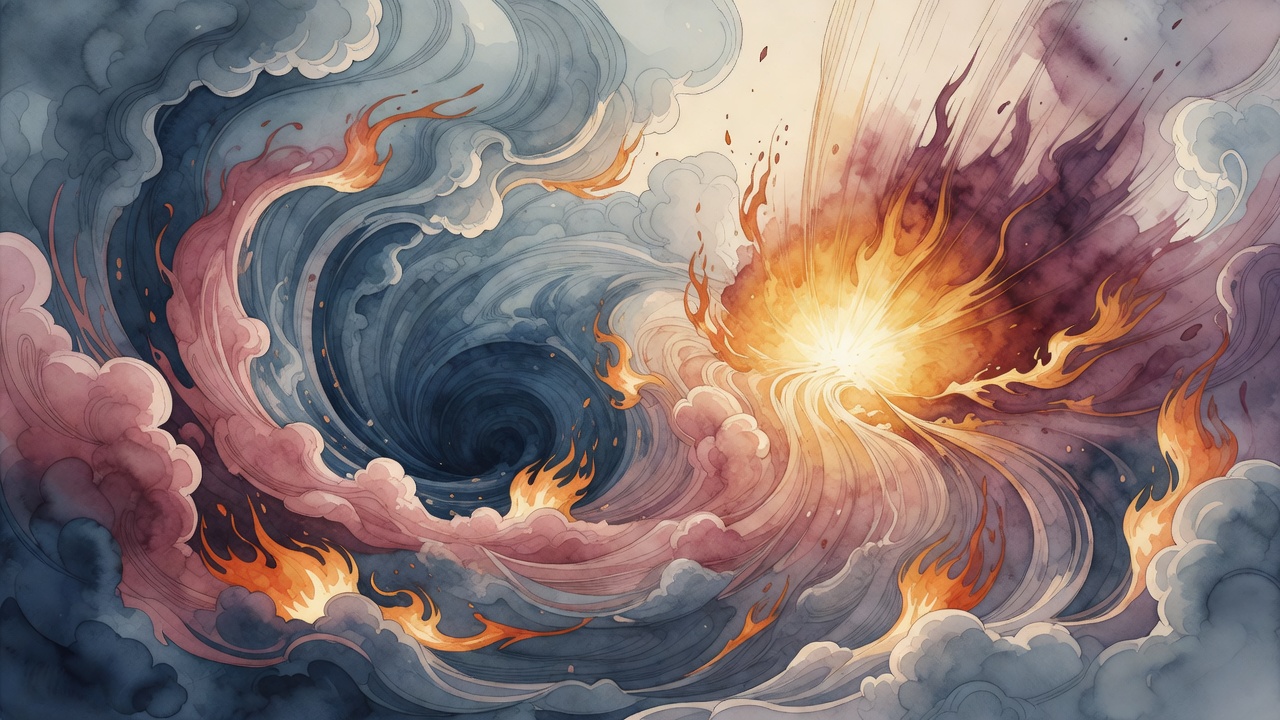
Darkness welled up out of the Endless like shadow in folds of heavy cloth, and chaos was its child. Other sages saw one flash, an oak inside an acorn.

Curated by Arthur · Told by Maggid ·
Table of Contents
  1. Before the First Word, Only the Endless
  2. Darkness Rises from the Unnamed Source
  3. Wisdom Emanates as the Veil of Light
  4. The Chaos That Would Not Become Nothing
  5. A Rival Vision, the Whole World in a Single Flash
The Chaos and the Flash Before the First Morning Click for full size

Before the First Word, Only the Endless

Before there was a morning to break, before there was an above and a below, before the deep had a face for darkness to settle upon, there was only the Endless. It carried no name, for no mouth had yet been made to speak one. It had no edge, for nothing stood beyond it to press against. It filled all and it was all, and there was no second thing anywhere that could turn toward it and say, "There you are, and here am I." Light had not been born, so it could not be called bright. Dark had not been born, so it could not be called dark. It simply was, without beginning and without rim, and it kept no memory of a time when it had not been.

Darkness Rises from the Unnamed Source

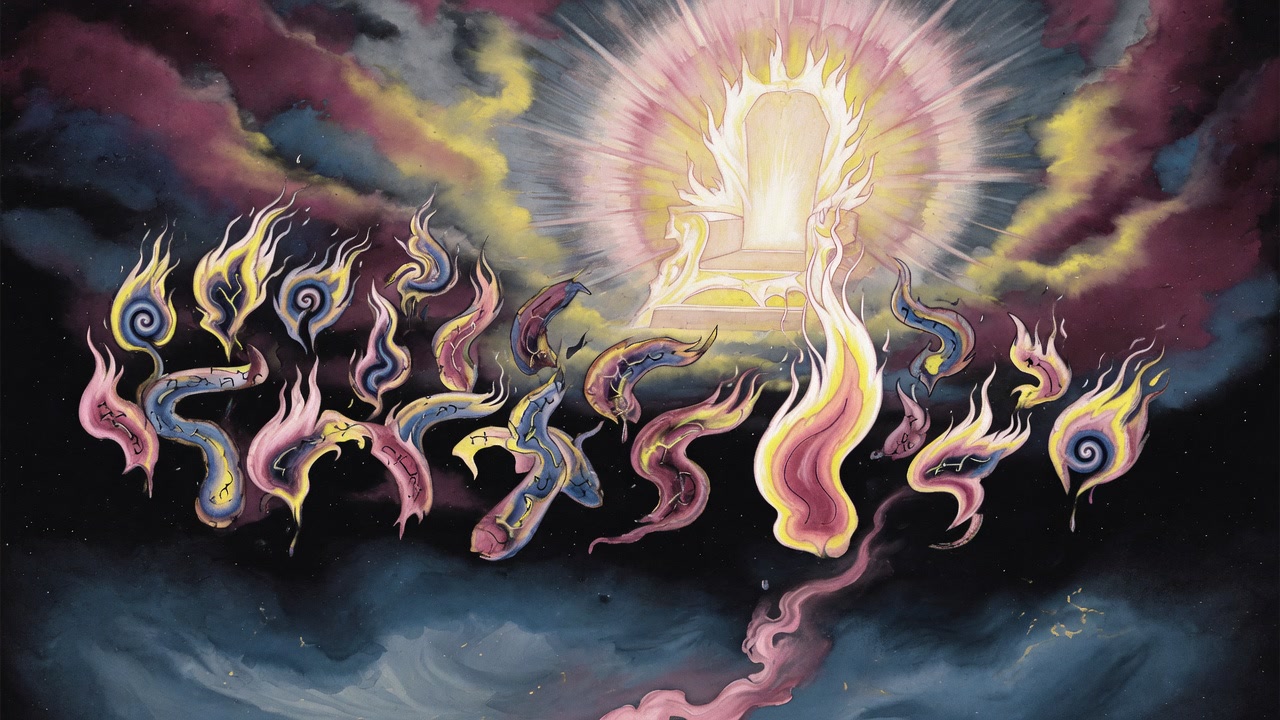
Out of that fullness the first thing stirred, and the first thing was darkness. It did not fall upon the Endless from outside, for there was no outside. It welled up from within, the way a shadow gathers in the folds of a heavy cloth, and it spread until it was a presence in its own right, thick and patient and old. From the darkness a second thing came, and this was the strangest birth of all, for out of the darkness sprang tohu and vohu, chaos and emptiness, the churning formlessness that the later scrolls would name at the very opening of the world. Chaos did not arrive from nowhere and it was not the oldest thing. It was the child of darkness, and darkness was the child of the Endless, each thing drawn out of the one before it like water drawn hand over hand from a well that has no bottom.

Wisdom Emanates as the Veil of Light

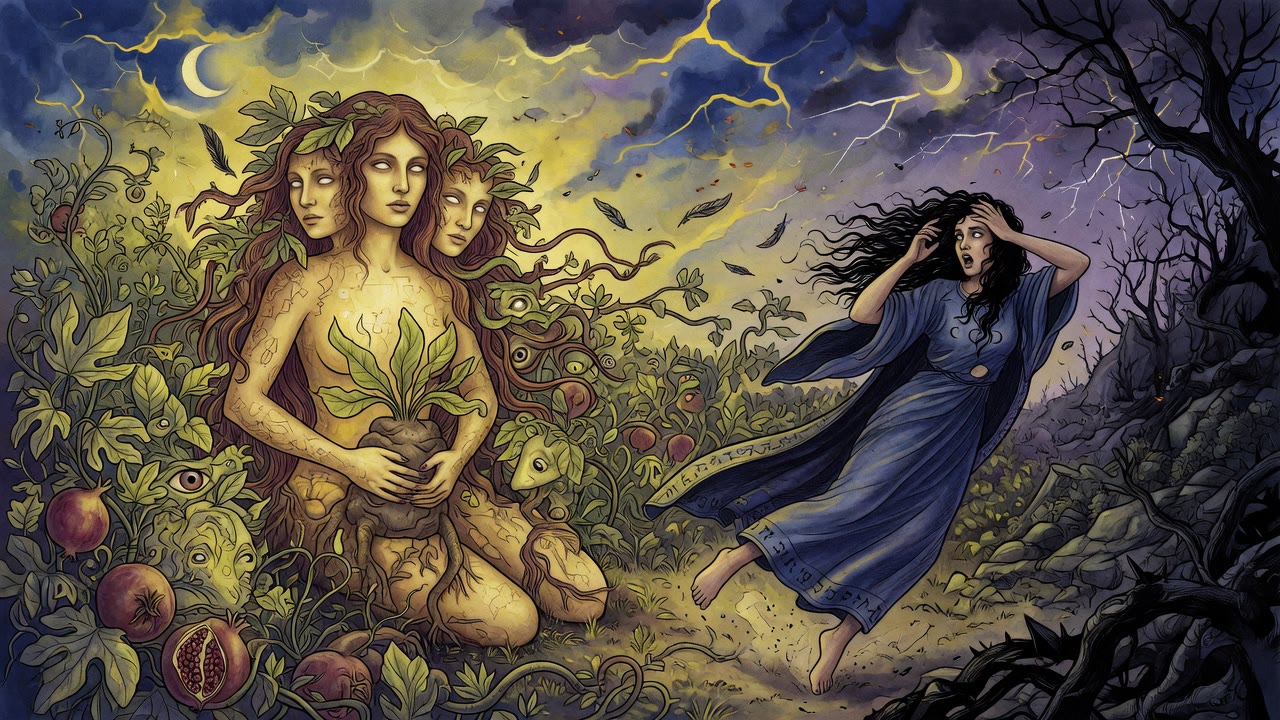
The Endless did not stop with darkness. It brought forth deathless ones, powers and presences beyond counting, and set them stirring in the space that chaos had opened. And then it did something tender. It looked, if the Endless can be said to look, and it cast a likeness of itself outward, a reflection that carried a name of its own. She was called Wisdom, Ḥokhmah in the old tongue, and she came into being as light. Not a lamp and not a star, but the first light, the light that would one day be commanded aloud when a voice said, "Let there be light," and there was. Wisdom stood between the worlds like a curtain drawn across a doorway. Below her lay chaos and everything that would be shaped from it. Above her burned the blinding source that no creature could look upon and live. She was the veil and she was the seam, and through her the fire of the Endless reached the darkness gently enough not to burn it away.

The Chaos That Would Not Become Nothing

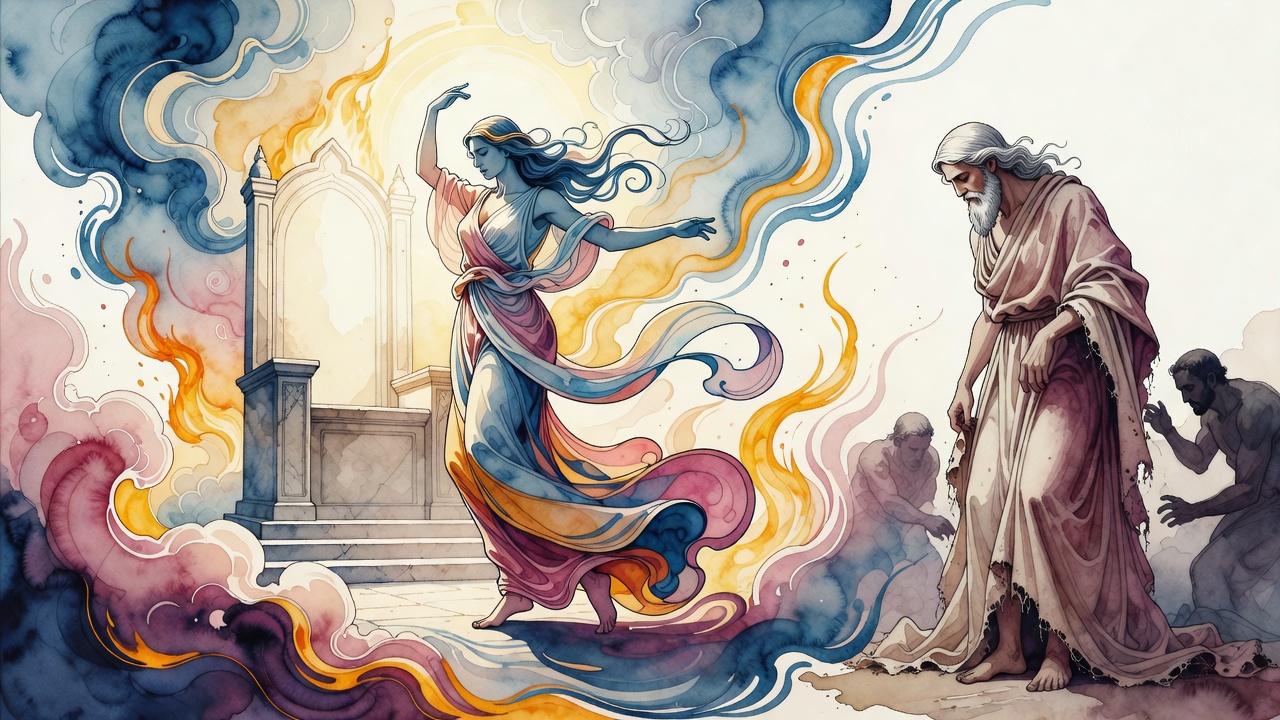
So the ground was laid, and it was not solid ground. It was tohu and vohu, waste and void, the leftover emptiness of that long descent from the Endless through darkness into churning form. When the ordered world came at last, it did not come onto a clean and open field. God stretched it over the old emptiness the way a weaver stretches cloth across a frame, and the emptiness held the pattern taut from beneath. Every firmament, every gathering of the waters, every seed and beast and morning of the six days was hung above that ancient chaos, which had not been undone but only covered, only ordered, only put to work. The world that endures is the world that was raised over the ruin of what came first, and in its deep places and its dark waters it still remembers the formlessness it was born to overcome.

A Rival Vision, the Whole World in a Single Flash

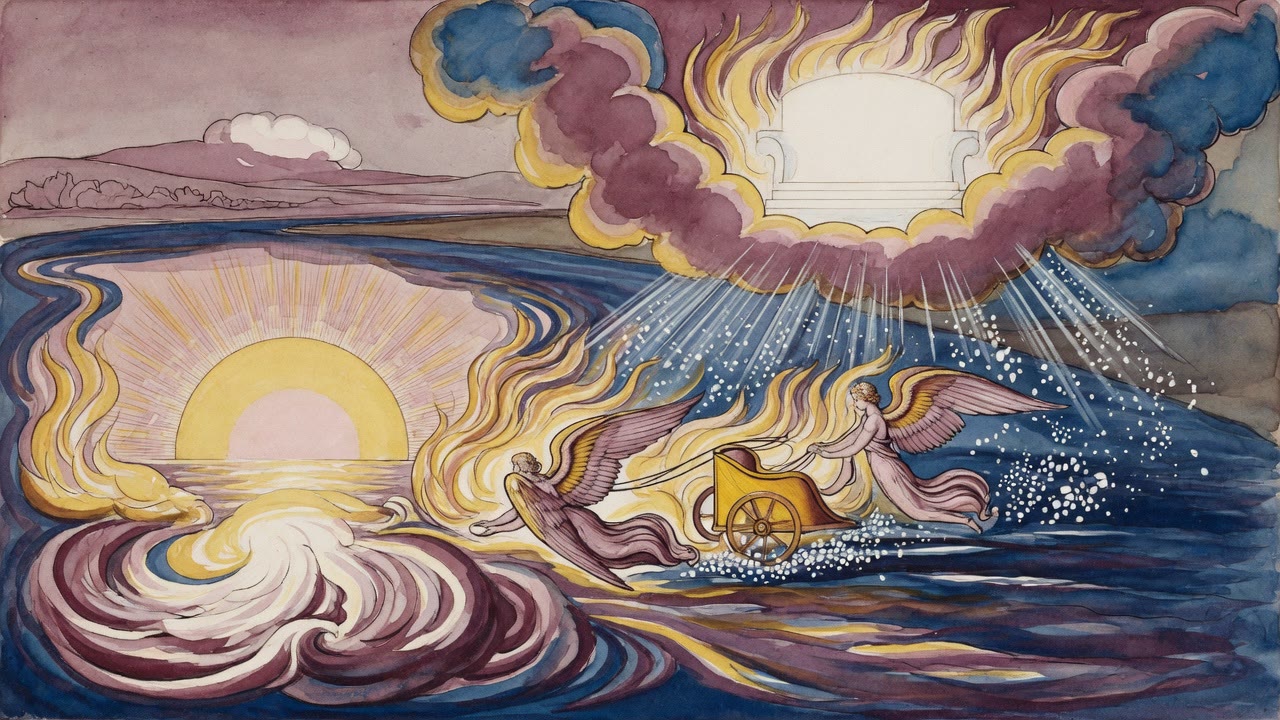
There were sages who saw the beginning otherwise, and they told of no long unwinding through darkness at all. They told of an instant. In their telling the whole of it, heaven and earth and every generation that would ever walk the ground, sprang into being together, all at once, on one single day. They found the hint hidden in a single phrase, "on the day that they were created," and they held it up like a key. Not heaven first and earth after, not light on the first day and stars on the fourth, but everything, complete, in one blaze.

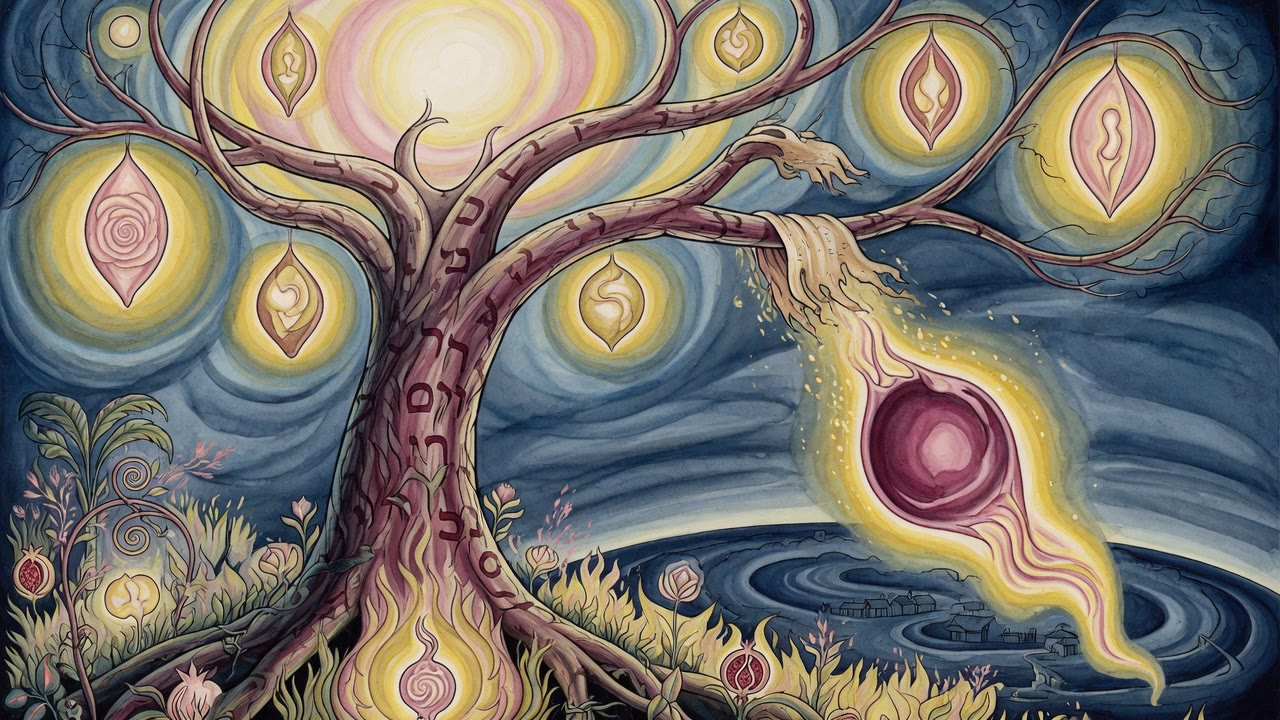
And yet, they said, it stood there in the way a whole tree already stands inside one small seed. The oak is folded in the acorn, root and trunk and every leaf it will ever open, waiting only for rain and time to draw it out. So the universe stood folded in that first instant, all its ages and all its unfoldings pressed into a single point, and the six days were not the making of the world but the slow opening of what had already been made whole. Two visions faced each other across the same darkness. In one, creation is the survivor of a long fall, order stretched thin over an older chaos. In the other, it is a single flash that has never once stopped unfolding. Both look back to the same silence before the first word, and neither can reach behind it, to the Endless that has no rim and keeps no memory of a beginning.


← All myths
From the tradition

Sources

2 sources

The texts behind this telling. Some cards carry a translation of the source; others are our own retelling of it, and each card says which. Every card links out to the original.

Zohar 1:16bZohar

Retold in our words. Read the original at the link below.Sefaria-hosted English translation · CC-BY

The Bible tells us that in the beginning, the earth was tohu and vohu – usually translated as "unformed and void," but really meaning something closer to chaos and emptiness. But where did that come from? Was there just… nothing?

Some ancient traditions suggest something even more primordial: darkness. But where did darkness come from?

In a fascinating ancient myth found in, On the Origin of the World, an ancient text preserved in a collection of early manuscripts, this darkness emanated from an infinite source, something that existed before absolutely everything else. This source, unnamed and unknowable, birthed darkness, and from that darkness sprang tohu and vohu – chaos itself. It's a bit like peeling back layers of an onion, each layer revealing a more fundamental "before."

This idea, by the way, isn't just some isolated weirdness. It’s deeply rooted in Jewish thought. The authors of these ancient texts, who were heavily influenced by Jewish ideas, were essentially offering their own commentary on the Genesis creation story, probing the origins of that initial chaos. They took that phrase "darkness was upon the face of the deep" (Genesis 1:2) and ran with it, imagining darkness not just as a condition, but as a primal force.

But it doesn't stop there. This infinite source also brought into being immortal beings, all kinds of divinities. And, crucially, it emanated a likeness, a reflection of itself, known as Ḥokhmah, Wisdom. This Wisdom took the form of primordial light. The very first thing God creates in Genesis is light. And here, in this ancient myth, Wisdom is intimately connected to that light. In fact, Wisdom acts as a veil, separating humanity from the divine realm above.

This concept of emanation – the idea that creation unfolds from a central source in successive stages – is a key element that would later become central to Kabbalah, particularly the system of the ten sefirot, divine attributes through which God manifests in the world. This myth suggests that chaos itself is not arbitrary, but rather the product of a chain reaction stemming from the ultimate source.

The figure of Wisdom, Ḥokhmah, plays a significant role in Jewish mystical thought. Some Jewish sources identify Ḥokhmah with the primordial light, and certain traditions really amplified her importance. She becomes almost a co-creator, a partner in the divine act of bringing the universe into being.

So, next time you read the opening lines of Genesis, remember the layers beneath the surface. Remember the darkness before the light, the infinite source before the darkness, and the question that lingers: what came before even that? Maybe the most profound truths are found not in the answers, but in the endless quest to understand the questions.

Full source
Midrash ha-Ne'elamZohar (Midrash HaNeelam)

Retold in our words. Read the original at the link below.Sefaria-hosted English translation · CC-BY

Like one moment there’s nothing, and the next, BAM! The whole shebang is right there in front of you? Jewish tradition has a fascinating take on creation that might resonate with that feeling.

Forget the step-by-step, day-by-day account we read in the beginning of Genesis (Genesis 1:1-31). Some mystical texts suggest something far more instantaneous. The whole universe, they say, popped into existence all at once!

That. Not just heaven and earth, but everything – all created in a single moment, on the very same day. Where do we find this idea? Well, it's hinted at in (Genesis 2:4): "Such is the story of heaven and earth on the day that they were created." That little phrase, "on the day that they were created," becomes the key.

The Midrash (rabbinic interpretive commentary) ha-Ne'elam, found within the Zohar Hadash (specifically, folios 2d and 13d), explores this concept. It paints a picture of a universe born in a flash. But wait a minute, how does that reconcile with the six days of creation The familiar version gives us?

Here's the clever part: according to this view, everything was created simultaneously, but in a state of potential. The entire tree is already there, encoded within that tiny seed, just waiting for the right conditions to unfold. So too, the entire universe, with all its future generations and unfolding events, existed in potential from that very first instant.

It almost sounds like a very ancient echo of the modern Big Bang theory! The idea that everything sprang forth from a single point of origin. It’s a powerful image: this burst of creative energy, this cosmic seed containing all of reality.

Of course, this interpretation doesn't negate the more familiar creation story. Instead, it offers another layer of understanding. As Louis Ginzberg retells in Legends of the Jews, citing Midrash Rabbah, the potential for all subsequent creation was already there.

Perhaps the entire universe, in all its complexity and wonder, was born in a single, glorious instant. And maybe, just maybe, we’re still witnessing the unfolding of that very first moment.

Full source