The Dot Over Lot Marked What He Already Knew
Lot woke in the cave and understood what had happened to him. The next night his younger daughter poured the wine and he drank it anyway.
Table of Contents
 Click for full size
The Cave Above the Ash
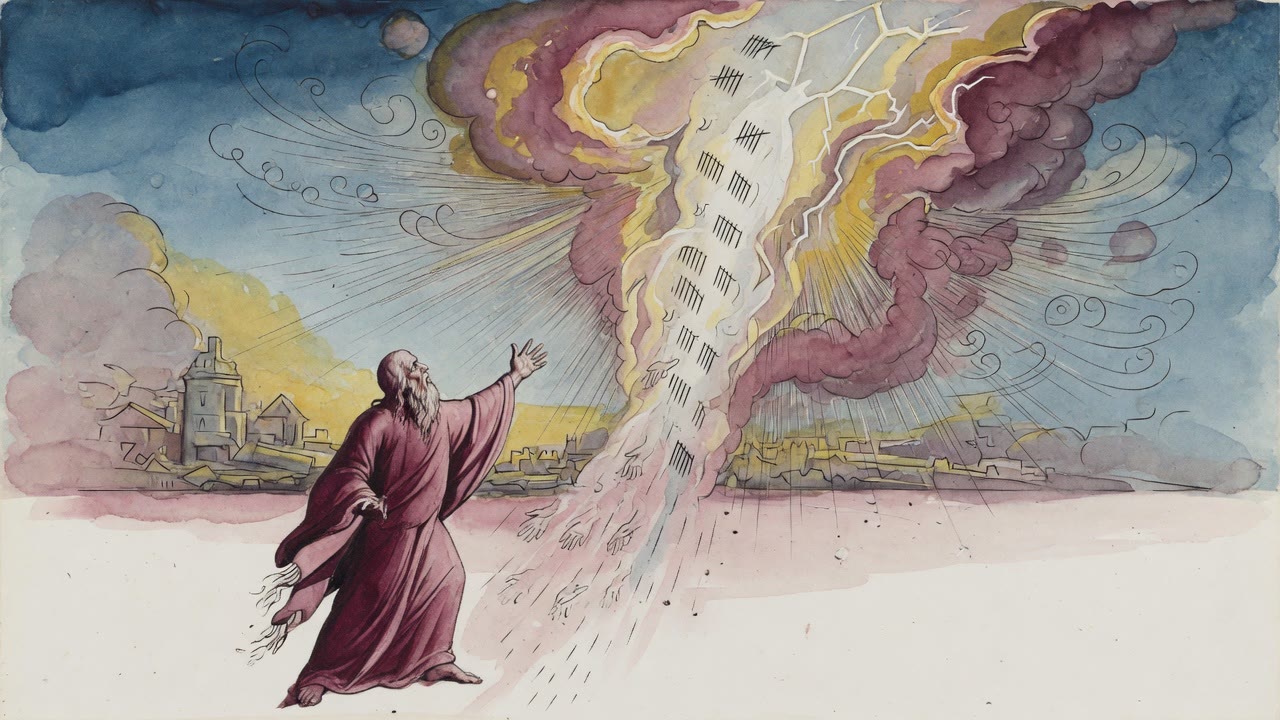
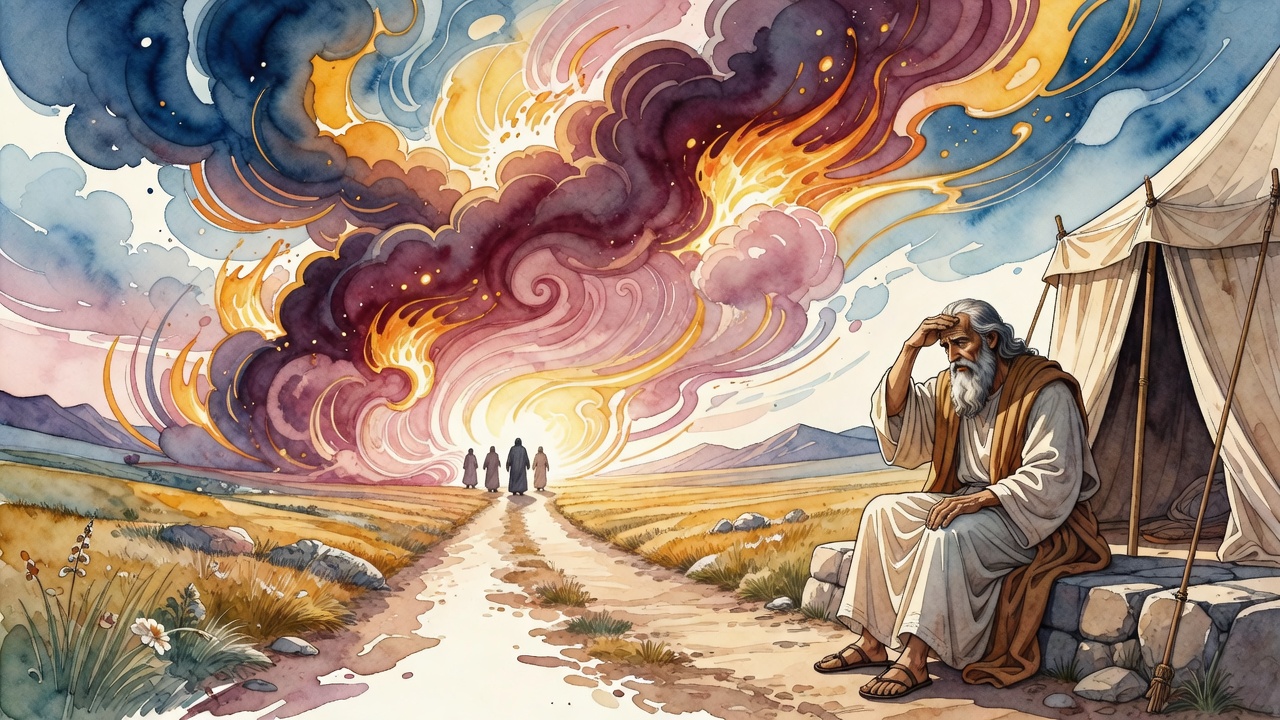
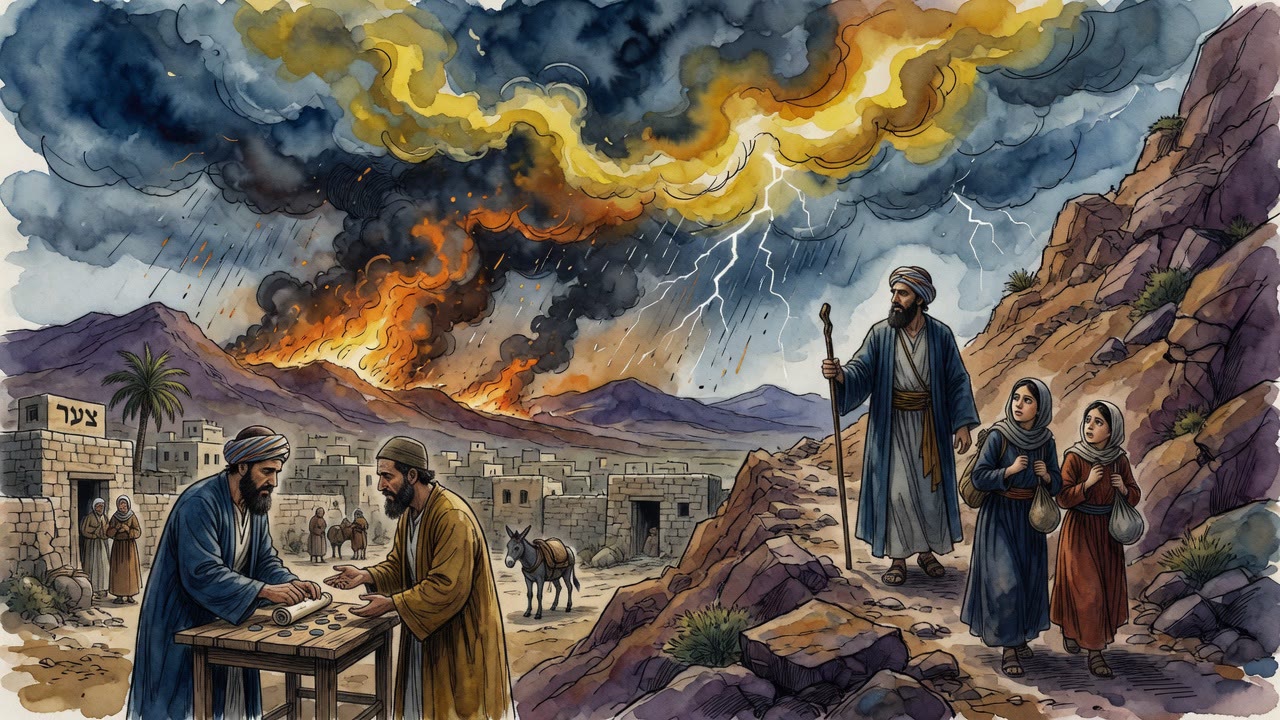
The smoke was still going up off the plain when they found the cave.
Lot had come out of Sodom with two daughters and no wife. He had bargained for the small town first, then been afraid of it and gone up into the hills instead, and now the three of them were in a hole in the rock with the cities burning behind them and nothing ahead of them but stone.
The daughters had watched fire come down on every settlement they had ever seen. They had passed the pillar of salt on the road. As far as they could tell from that ledge, the world of men was finished, and the last three people in it were sitting in a cave.
The Night With the Dot
The elder one worked out what she was going to do and did not discuss it with her father.
She gave him wine. She kept giving it to him. When she lay down beside him he did not know she was there, and the tradition is exact about that, because it matters for what happens next.
When she got up, he knew.
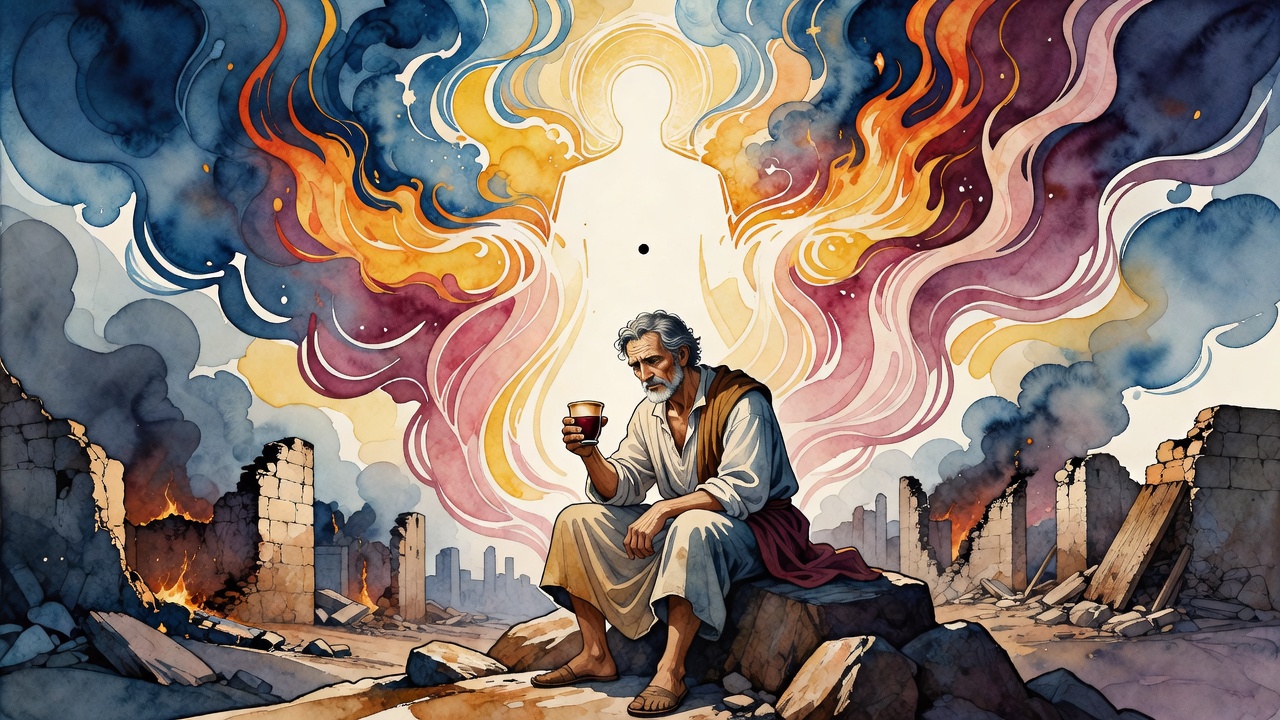
Whatever the wine had been doing, it stopped doing it in that instant. He understood where he was and who had just been lying next to him and what had happened in the dark of that cave, and the understanding arrived on him whole, in the space of one movement, while she was standing up.
Heaven, the sages say, was on her side. She had done it because she believed the human line was ending and she meant to keep it going, and that intention was accepted.
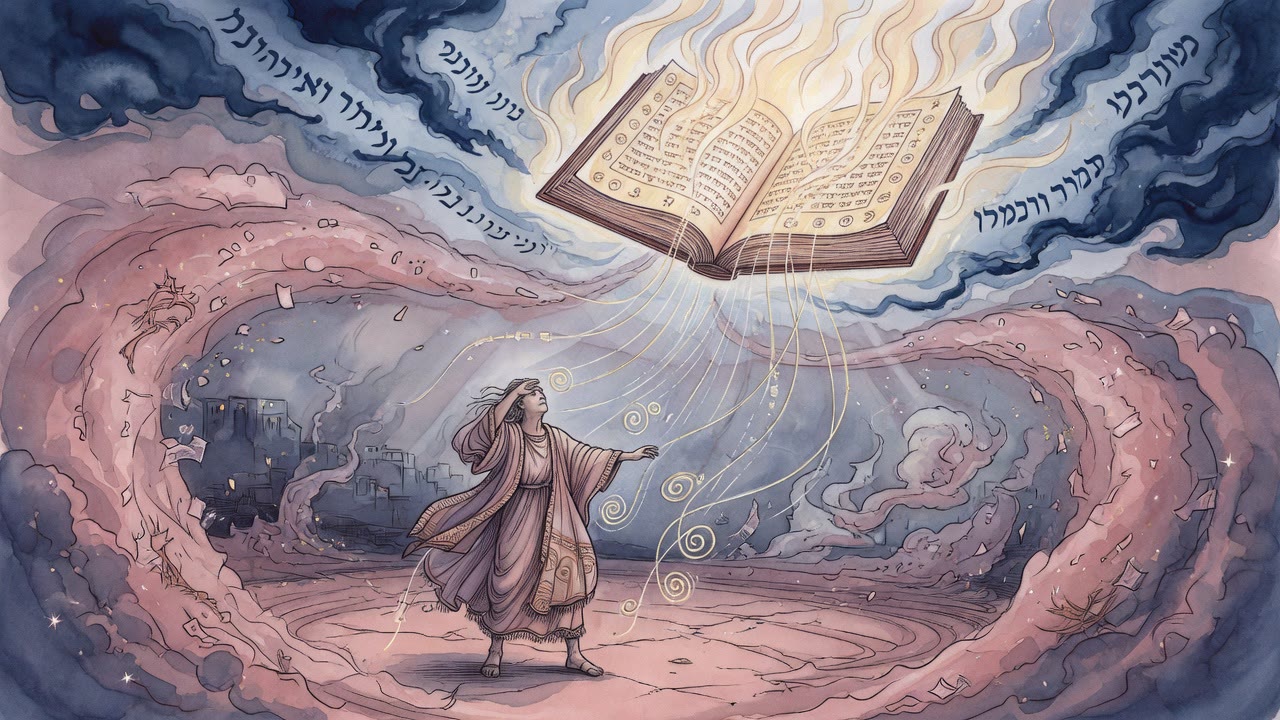
The scribes marked the moment. Over the word that says she arose, in the Torah scroll itself, there is a single point of ink.
The Night Without One
He should have refused the cup the next evening. That is the whole charge, and it is not complicated. He had knowledge now. A man who has been made a party to something in his sleep and then wakes up knowing it has one job the following night, which is to stay awake.
The younger daughter came with the same plan.
He drank.
She was more careful than her sister had been. She took pains that he would not feel her at all, not lying down and not getting up, and the verse about her rising carries no dot over it. Nothing marks her. She kept herself hidden and the page keeps her hidden.
One point of ink, in a scroll, on one word, is the entire difference between the two nights. The mark that is missing belongs to a daughter who covered her tracks. The mark that stays belongs to a father who found out and drank anyway.
Abraham Had Already Said It Out Loud
The strange thing is how much warning had been in the family.
Lot's uncle had gathered his own household and told them what he had seen, the whole of it, the way an old man tells the children something he wants them frightened by. Abraham named the judgment on the giants and the judgment on the Sodomites, how those people died for their wickedness and their uncleanness and the way they corrupted one another, and he told his sons to guard themselves from all of it, so that their name would not become a curse and their whole lives a hissing.
Lot had not only heard the warning. He had lived in the demonstration. He had sat in the gate of that city, argued with his neighbors at his own door, and been dragged out by the wrists by two visitors while the men outside were still groping for the handle.
He had seen exactly what the land does. Then he lifted the cup a second time in a cave that still smelled of the smoke.
What Walked Out of the Cave
Both daughters conceived, and both sons became nations.
Moab and Ammon would sit along the eastern edge of Israel's story for the next thousand years, sometimes as enemies, sometimes as kin at a wary distance, and one of them would eventually send a widow named Ruth to Bethlehem. The Torah does not hide where they started. It gives the cave, the wine, and the two risings.
Outside, meanwhile, the world had not ended after all. There were other tents over the next ridge, other bloodlines, ordinary mornings continuing in every direction, and the daughters had been wrong about the whole premise.
What remains from that night is smaller than a grain of sand. Every scribe who copies the verse has to stop, lift the pen, and set the point down over the word for her rising, exactly there and nowhere else. Get it wrong and the charge moves to a different word.
← All myths