The Earth Atoned While Blood Still Dried
Raiders left his brother in the furrow. The farmer packed a sack for the ships. Rabbi Meir kicked a clod loose and would not let him go.
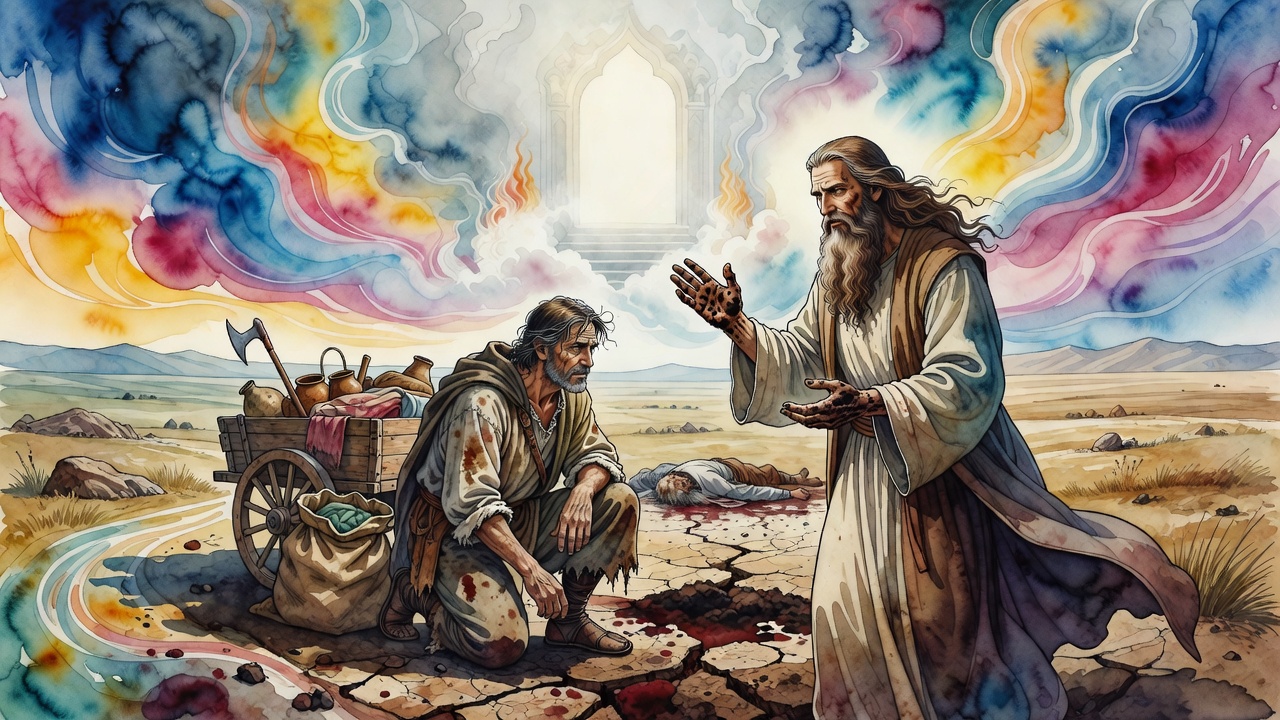
The sack was already tied when Rabbi Meir reached the gate. Inside: a knife, a cloak, a little silver. Outside: a furrow with a brother's blood dried into the dust, and a plow still stuck where the raiders had not bothered to steal the grain.
 Click for full size
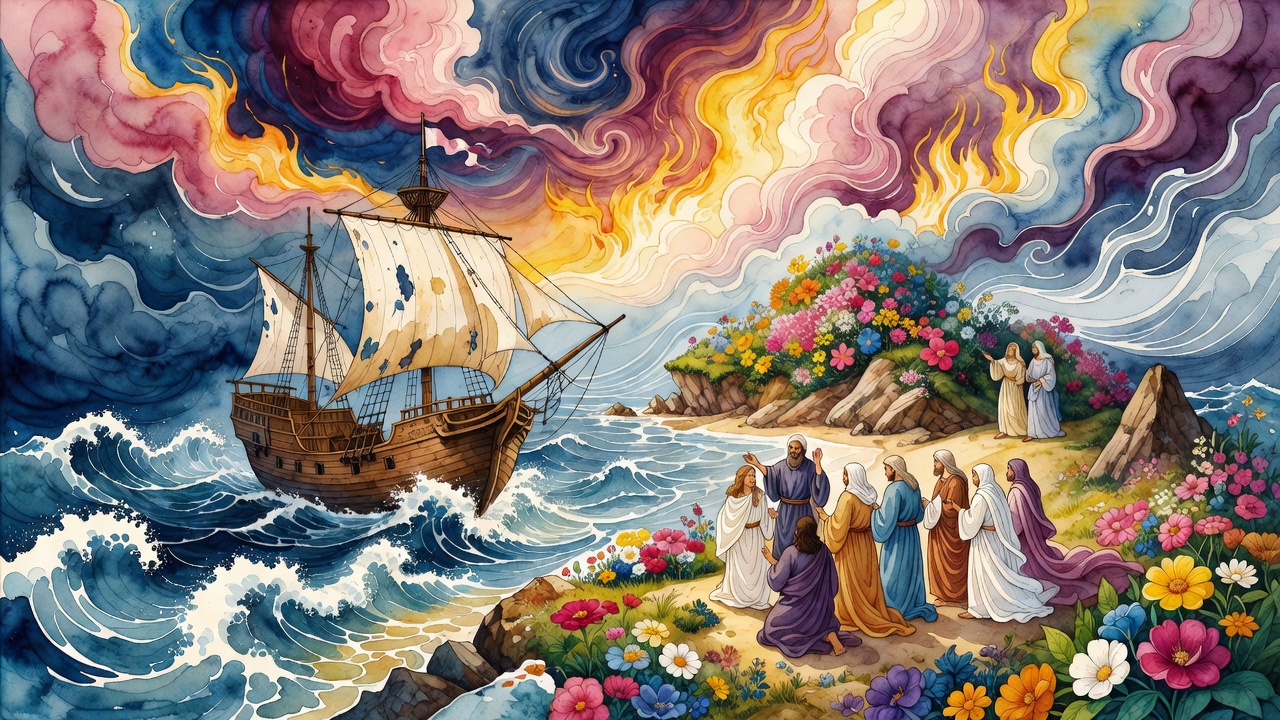
Hanan stood with the sack on his shoulder. His wife held the child against her hip and watched the west road, the one that ran toward ships and hire and a life that would not grow out of this soil.
"We leave," Hanan said. "The land keeps killing its people."
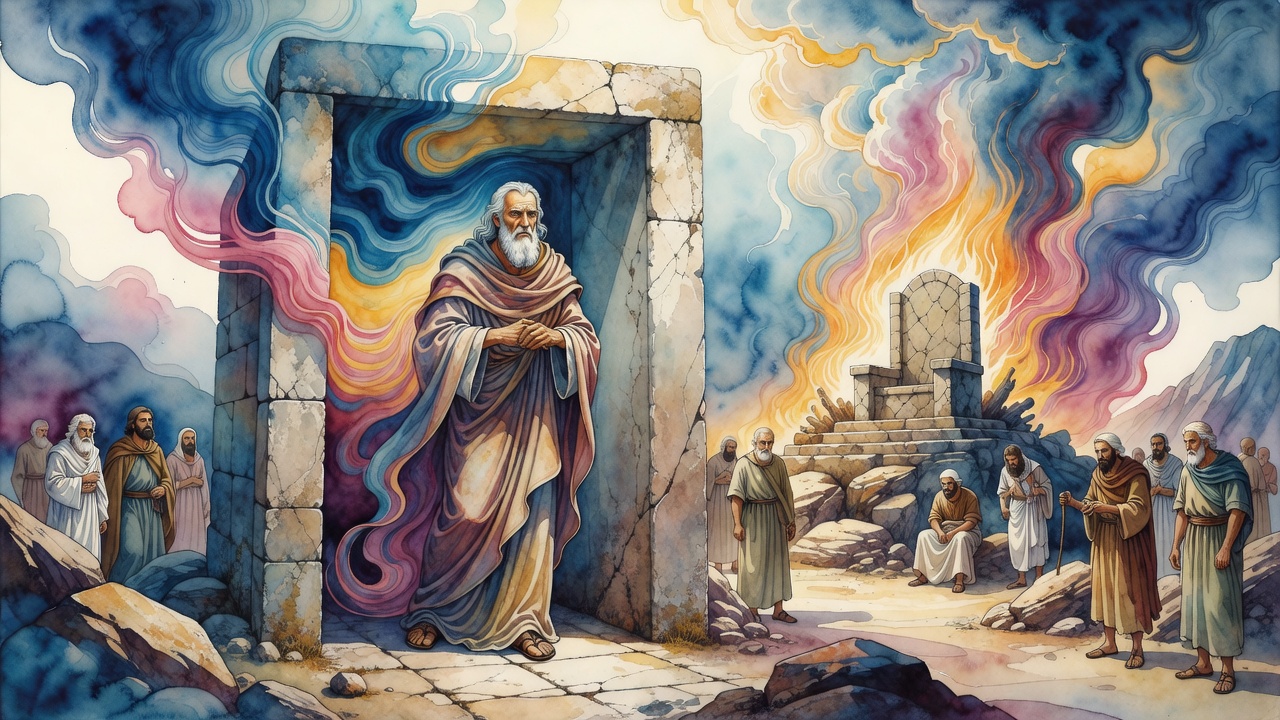
Meir set his palm on the gate post as if the wood itself were a witness. Dust filmed his ankles. He asked whether the body had been buried. He asked whether the living still meant to walk away from the ground that had taken them in.
The Sack at the Gate
Hanan showed him the sack. Meir did not laugh at it. He had seen sacks like this after other raids, other fires, other years when the nations entered the inheritance and poured blood like water (Psalm 79:1, 79:3).
He kicked a clod loose with his heel and held it up. Soil ran between his fingers and stuck under his nails.
"His earth will atone for His people," Meir said (Deuteronomy 32:43). "This ground is not standing by. It drinks. It carries. It files a claim when you sleep on it and a claim when you die on it."
Hanan's mouth twisted. "My brother's blood is in that clod. You call that a claim?"
"I call it counted," Meir said. "When Israel falls by the sword of the nations, heaven does not shrug. The wound rises. It atones in the world to come for those who held the covenant while the blade came down."
The child cried once and stopped. Dry barley heads moved in the wind. Hanan's wife shifted the weight on her hip and did not fetch a second sack.
Soil in His Hand
Meir led them into the field, past the dark stain in the furrow. He set the clod back into the cut and pressed it flat with his sandal until stain and clean earth shared one surface.
"Whoever lives in the Land of Israel, recites the Shema (שמע), Hear O Israel, morning and night, and speaks the holy tongue," he said, "is a son of the world to come."
Hanan spat dust. "I can say the Shema on a ship."
"You can," Meir said. "You will not have this ground under the words. You will not have the soil that drinks what the nations spill and still speaks for you before the Throne."
Hanan watched the pressure of that foot. The sandal left a print across the stain. The print stayed.
The Lamp and the Ledger
Night came hard. They sat on low stools while oil burned down in a clay lamp. Meir did not fill the quiet with soft talk. He ordered memory the way a general orders a line.
"When affliction comes," he said, "remember the days of the world. Not because the wound is small. Because the wound is not the whole map. Consolations wait thicker than this grief. Reflect on the years of generation upon generation. The age of the anointed king stretches. Three generations stand in that doubling, sun and moon still watching while fear of God holds (Psalm 72:5)."
Hanan's fists stayed closed on his knees. "I want my brother breathing."
"I want that too," Meir said. "Wanting does not unlock the grave. Remembering the larger ledger keeps you from selling the field for a ticket to a softer country."
He spoke of a day when Israel would ask the Father and hear, when the Teacher would no longer hide behind a garment, when ears would catch a word from behind and eyes would see the Teacher plain (Isaiah 30:20-21). Not a promise that raiders would vanish by morning. A horizon tall enough to stand under while the room still smelled of iron.
The lamp guttered. Meir pinched the wick. The dark finished the sentence.
Shema at the Furrow
At first light Hanan stood where his brother had fallen. He did not open the sack. He covered his eyes and spoke the Shema in the holy tongue until the words left his mouth clean. His wife answered from the doorway. The child copied the last syllables without knowing what they bought.
Meir watched from the gate, then walked the boundary stones and set one back that the raiders' horses had kicked aside. Small work. The land took the correction the way it takes rain: without speech, without thanks.
By midday Hanan had untied the sack. He scraped dried blood from the plow handle until wood showed again. He spoke Hebrew to the boy while they set the yoke. When fear rose in his throat, he forced the memory Meir had planted. Consolations stacked higher than the raid. Generations still unborn. A Teacher not forever hidden. The fear did not leave. It shared the field with something heavier.
That evening the Shema rose again from the same doorway. No miracle sealed the road against the next blade. What changed was quieter. A man who had chosen the ship chose the furrow, with soil still dark under Meir's nails and a verse about earth that atones locked behind his teeth.
Years later travelers asked why he stayed on a strip so often bruised. He pointed at the ground first, not at the sky. "It bears what I cannot," he said. "I recite. I speak the tongue. I sleep on what it carries."
← All myths