The East Wind Became God's Fire of Judgment
One wind blew all night at the sea. It dried a road for Israel and drowned Egypt in the same water. The rabbis called that one act, seen twice.
Table of Contents
 Click for full size
The Wind Drove Back the Water
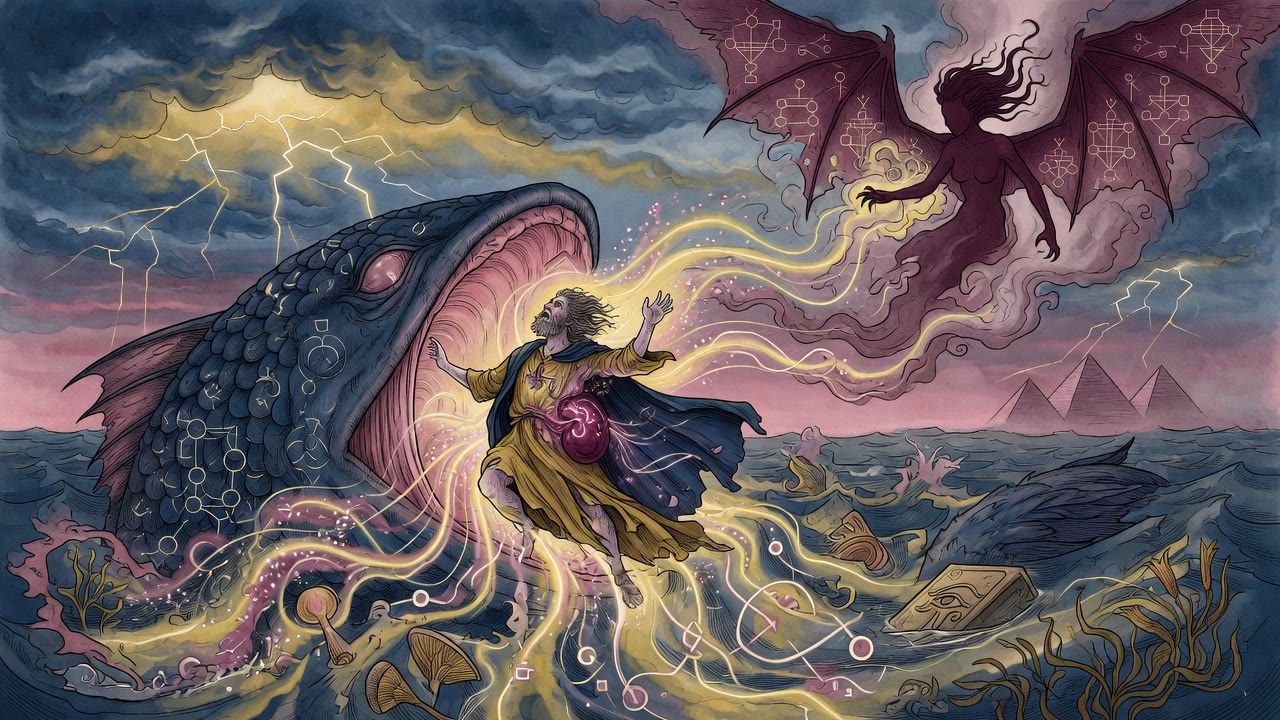
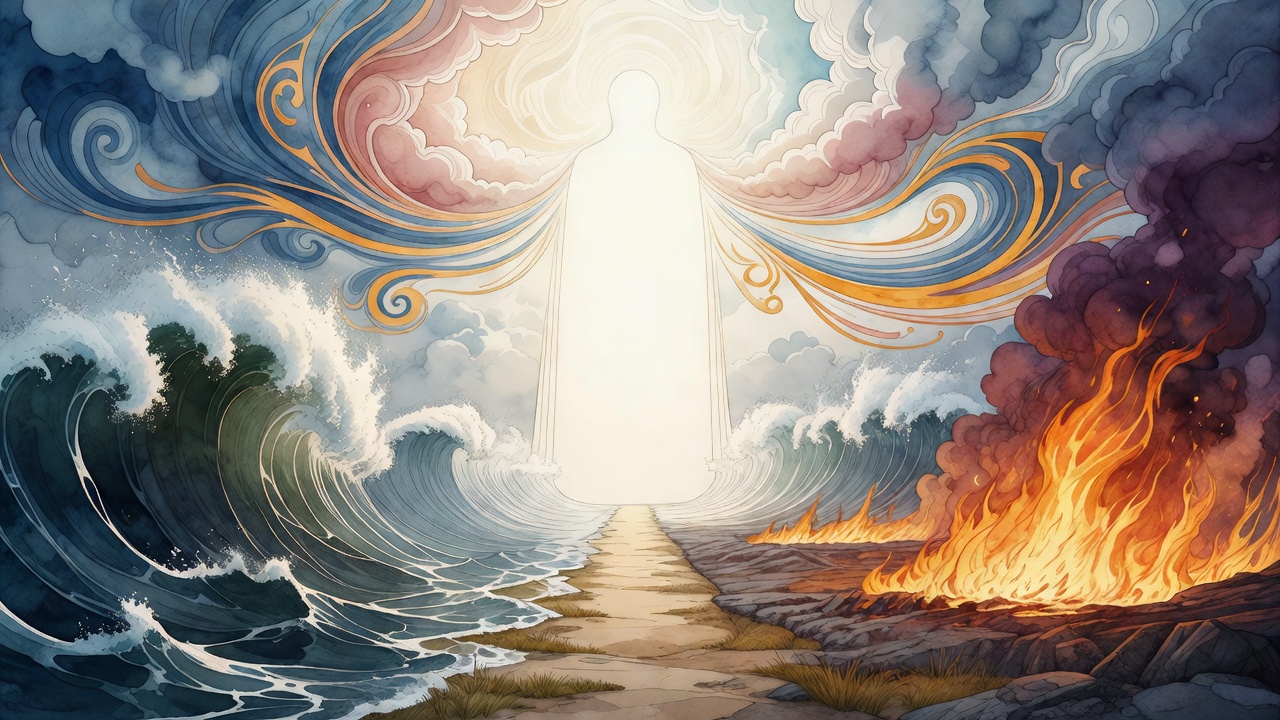
Israel stood at the edge of the sea, the Egyptian army closing from behind, and God sent an east wind. Not a breeze. A strong east wind that blew all night, driving the water back on both sides, drying the ground between the walls of water so an entire people could walk through without sinking in mud.
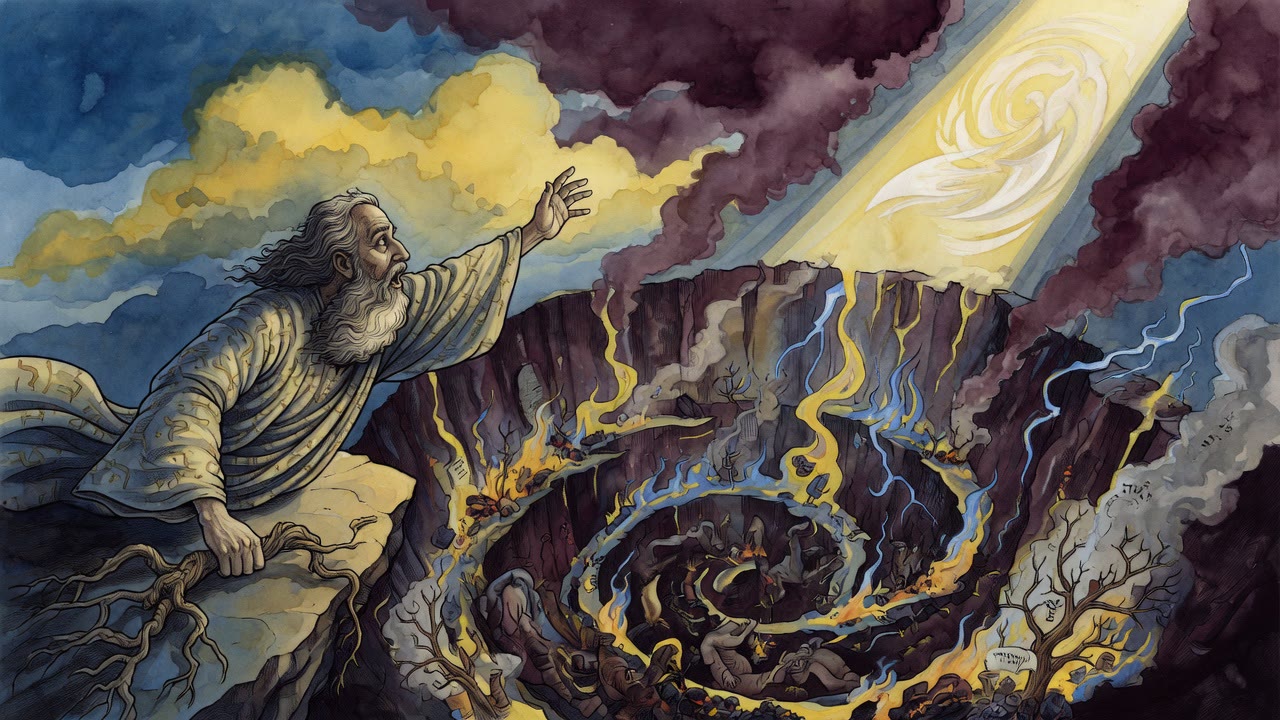
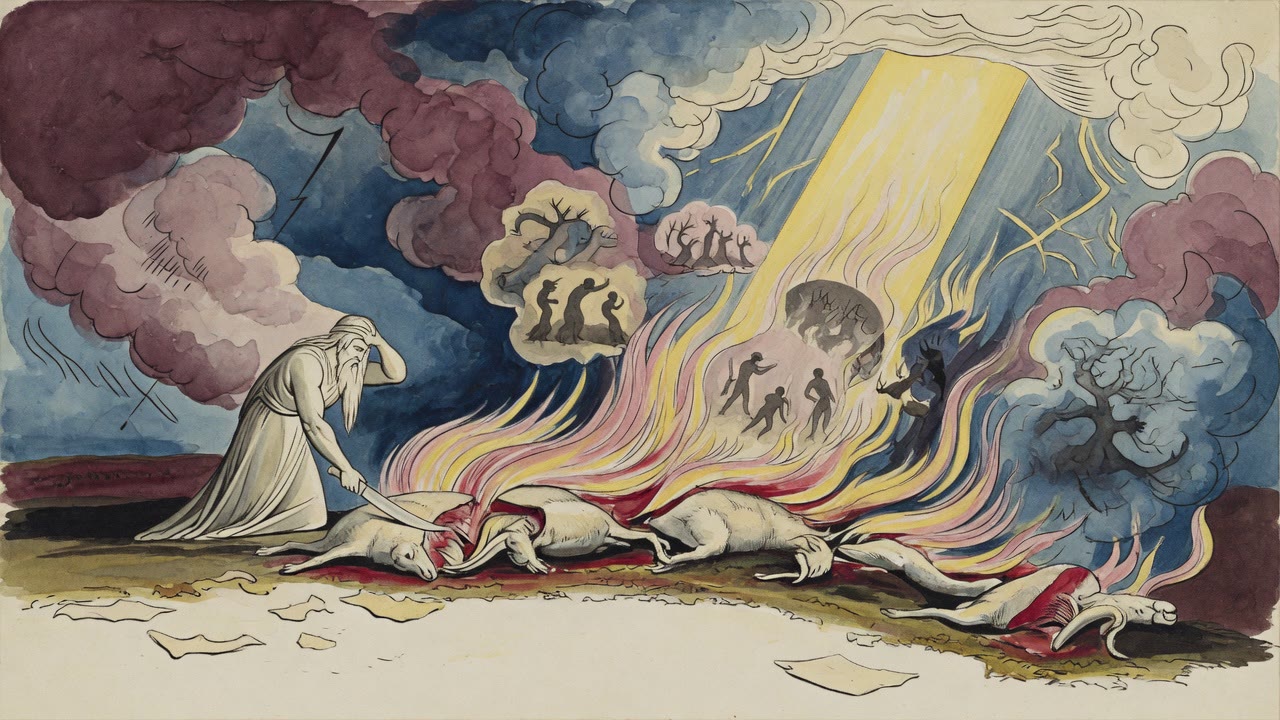
The Mekhilta heard more than weather in that wind. It stretched the image back to Isaiah's prophecy of Tafteh, the burning place of judgment, where the breath of God burns like a stream of sulfur. The same east wind. The wind that opened the road for Israel is the wind that feeds the fire prepared for the wicked.
One force. Two outcomes. The difference was not in the wind.
The Sea Opened and the Furnace Waited
Israel walked on dry ground between walls of water while the east wind blew. Egypt entered the same passage and found it different. The Mekhilta does not say the water was arranged differently for Egypt. It was the same water, the same wind, the same physical fact of a miraculous path through the sea. But Egypt experienced that path as a trap, not a road. The walls came down on them.
The wind that rescued Israel was not gentle. It was the same breath that Isaiah associated with the place of final judgment. The Mekhilta holds both experiences, the rescue and the destruction, were carried by the same force. Redemption and judgment are not two separate divine actions. They are one action witnessed from two sides.
To stand before that wind as Israel stood, moving through it toward the other shore, was to pass through something that was also a fire. They walked through it unburned. Egypt walked through it and did not come out the other side.
Four Classes Stand Before Judgment
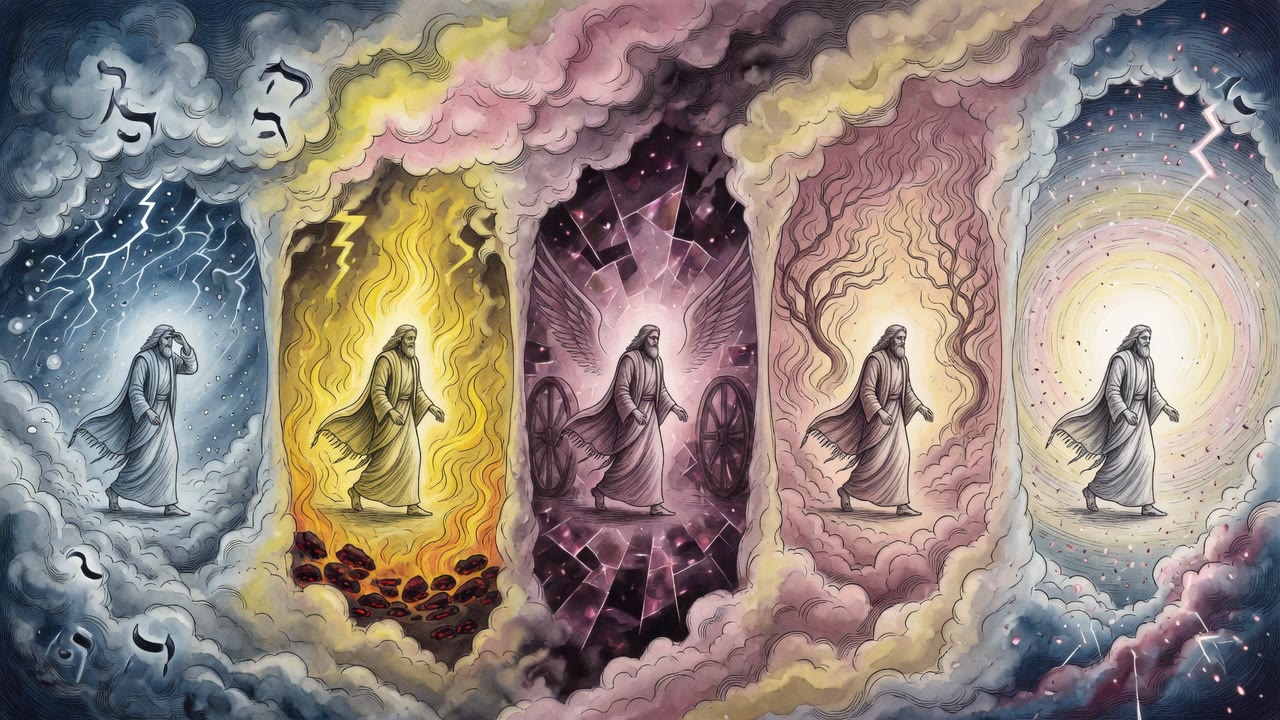
The Mekhilta extends the east wind image into a teaching about how human beings stand before divine judgment. There are four classes: the one who sins and causes others to sin, the one who does not do good but does not cause others to do evil, the one who repents, and the one who sees another's sin and remains silent when they had power to object.
Each class has a different relationship to the wind. Repentance is what turns the wind from a fire into a road. The person who turns back from their error is not walking into the east wind but with it. The east wind at the sea was not simply Egypt's punishment. It was a disclosure of a universal fact: the wind of divine judgment runs in a particular direction, and a person's position relative to that direction depends on what they have done and whether they have turned.
The Wind Stretched Across Time
The Mekhilta's east wind is not locked in the Exodus. It moves from the sea to Isaiah's prophecy to the rabbinic discussion of how judgment operates in the present. The detail from one scene becomes a key that opens the framework behind all the scenes.
That is the Mekhilta's method and its theology. The Torah is not a collection of historical events. It is a disclosure of how God moves through the world, and every detail, a wind, a direction, a location, carries information about that movement. The east wind at the sea tells of the wind that has always blown and will blow until judgment is complete.
← All myths