The Exile Prophecies Came True in Cruel Literal Ways
Jehoiachin walked out of Jerusalem to save it. Zedekiah watched his sons die, and his own tears finished the work iron could not do.
Table of Contents
 Click for full size
The Young King Walked Out
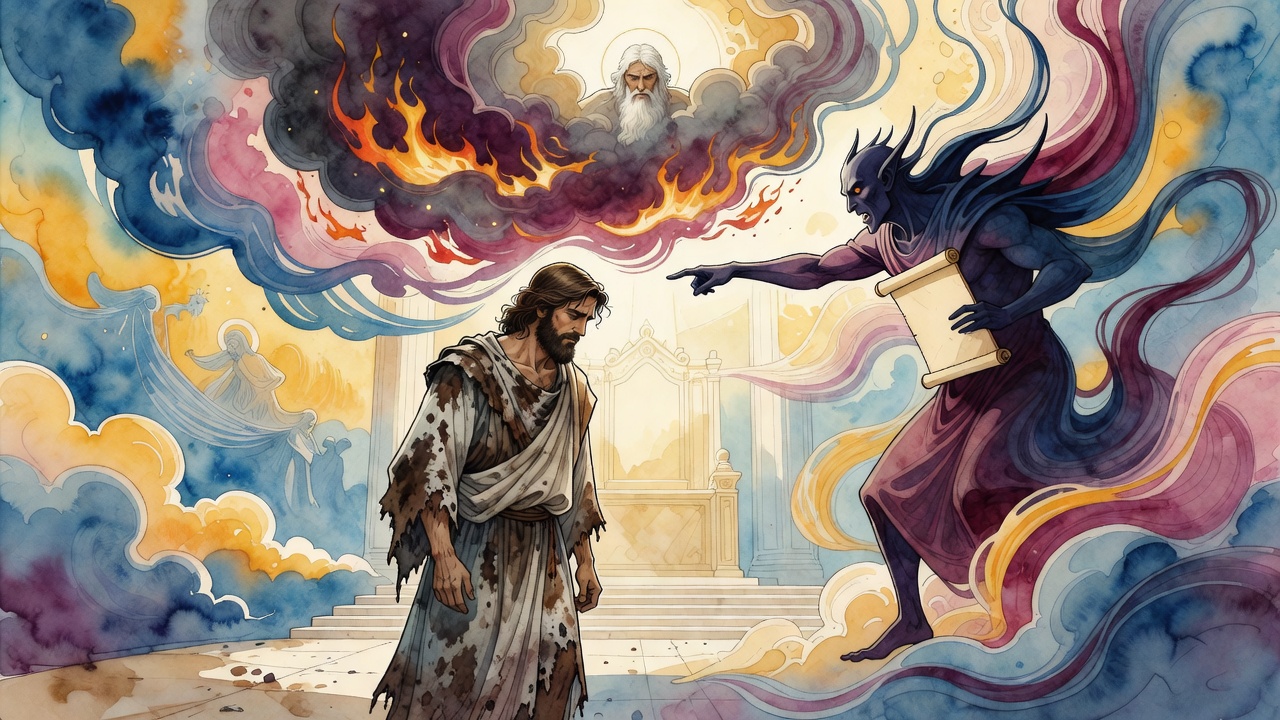
Jehoiachin inherited the throne of Judah while Nebuchadnezzar's army was already at the gates. He was young. He was pious. He understood the arithmetic of sieges. A city with its king inside it fights. A city without its king has nothing left to defend.
He walked out.
Before he handed himself over, he made the Babylonian commanders swear an oath. Spare the city. Spare the people. Take me instead. The commanders swore. Jehoiachin walked into captivity believing he had traded one life for thousands.
The Babylonians broke the oath the moment it became inconvenient. They exiled the king, his mother, and ten thousand of the nobility and scholars of Judah. Every judge, every sage, every scribe who could read Torah at the level Jerusalem required, gone. The city left behind was a city without its mind. An earlier deportation, when they took Jehoiakim, had already carried three hundred of the nobles, among them the prophet Ezekiel. The second wave finished the emptying.
Zedekiah Thought Two Prophecies Could Not Both Be True
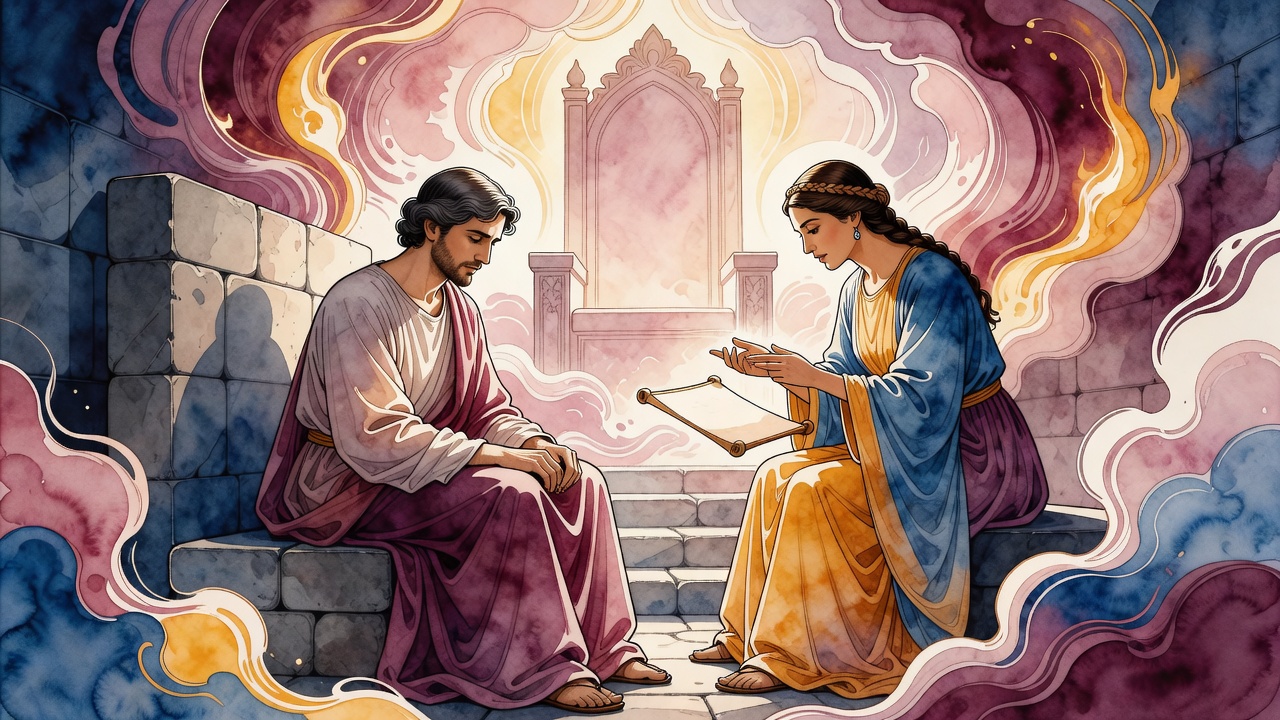
Jehoiachin had a throne. His uncle Zedekiah received one from the Babylonians after the first exile, a vassal king in a diminished kingdom. He swore loyalty to Nebuchadnezzar. Then he broke the oath and sent to Egypt for help.
Jeremiah told him exactly what would happen. Pharaoh's army would turn back before it reached Jerusalem. Nebuchadnezzar would return. The city would fall. Zedekiah himself would see Nebuchadnezzar face to face before the end, but he would not see Babylon. Both prophecies were correct. Both prophecies seemed, at the moment they were spoken, to contradict each other. How does a man see his conqueror and then not see the country he is taken to?
Zedekiah decided the contradiction meant the prophet was wrong. He did not make peace. He ran.
Iron Could Not Blind Him
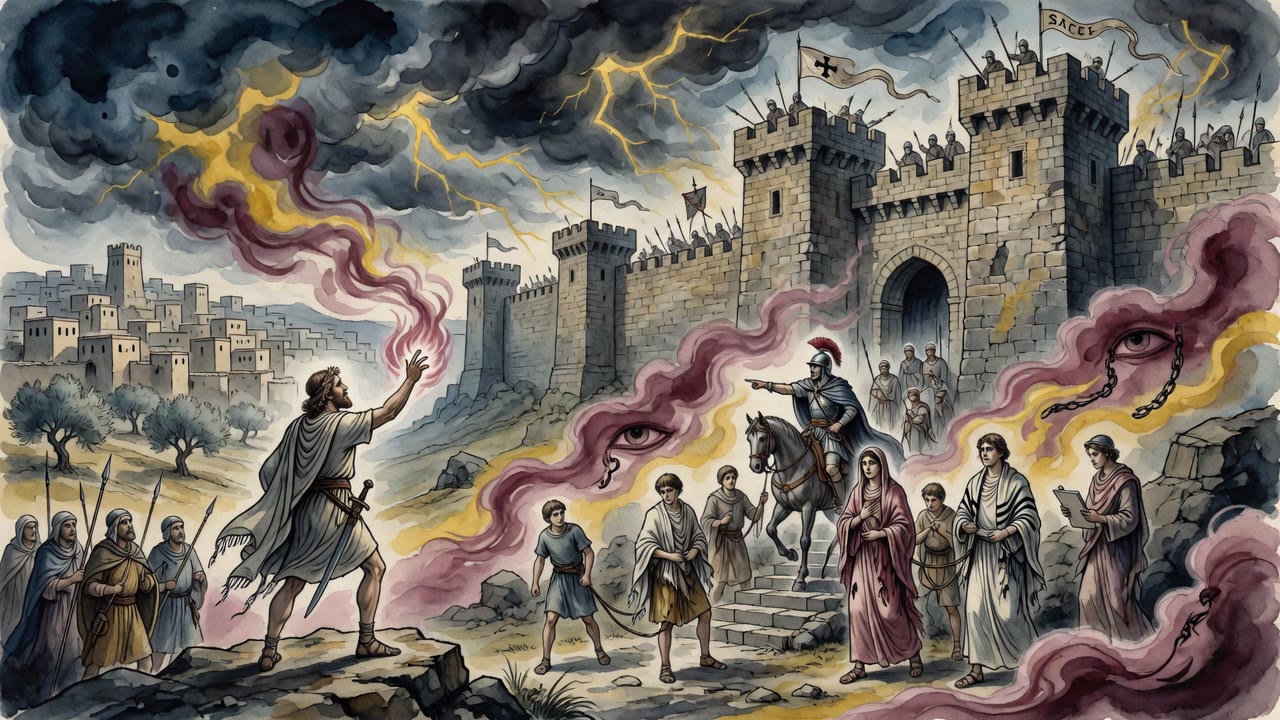
They caught him at Jericho. They brought him before Nebuchadnezzar at Riblah. He looked at the man who had broken him. The man looked back. That was the prophecy of seeing.
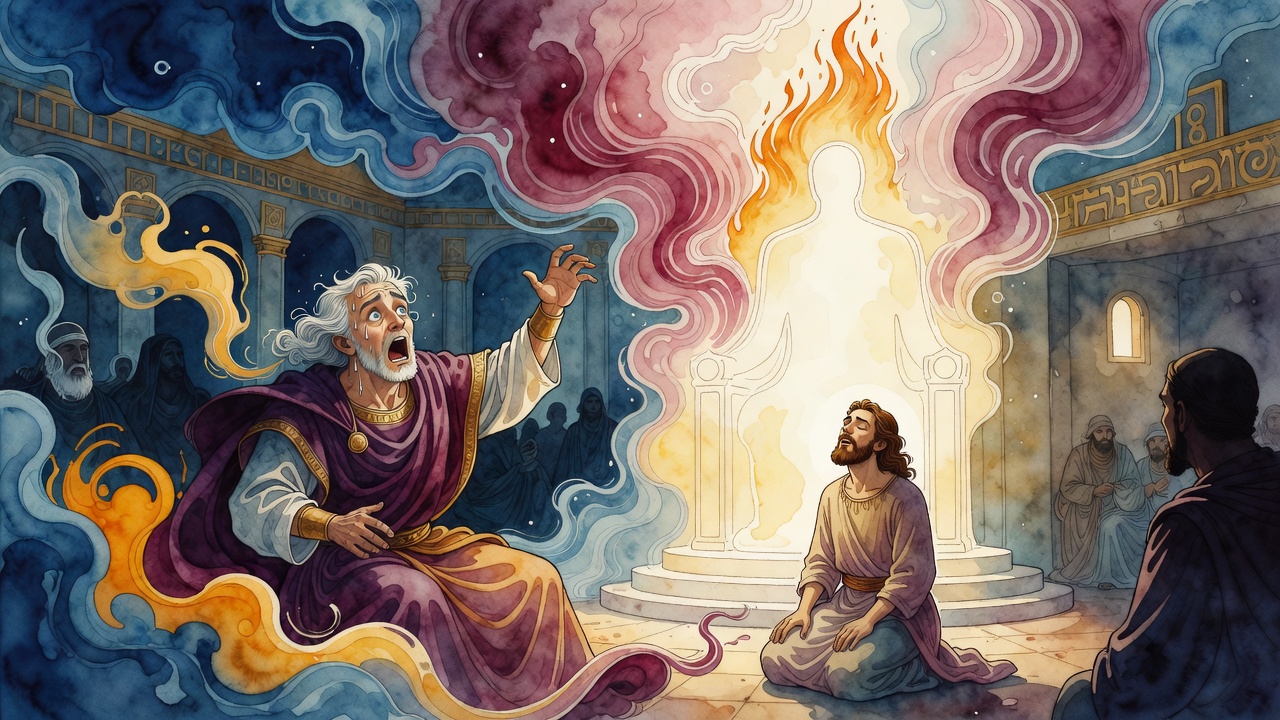
Zedekiah asked to be killed before his children, so he would not have to watch their blood. His children asked to be killed first, so they would not have to watch their father die. Nebuchadnezzar had resolved worse things than either of them named. In the sight of their father, the sons were killed. Then the soldiers went to work on Zedekiah's eyes.
He had been endowed with the eyes of Adam. The iron lances forced into them were powerless to destroy his sight. Vision left him only because of the tears he shed over the fate of his children. He wept without stopping. The weeping finished the work the iron could not do. He arrived in Babylon blind. He never saw it. Both prophecies were true, and the cruelty was that they were both true at the same time, through the mechanism of his own body. The exile prophecies had come true in a literal way no court could have drafted.
A Ghost Asked for a House of Stone
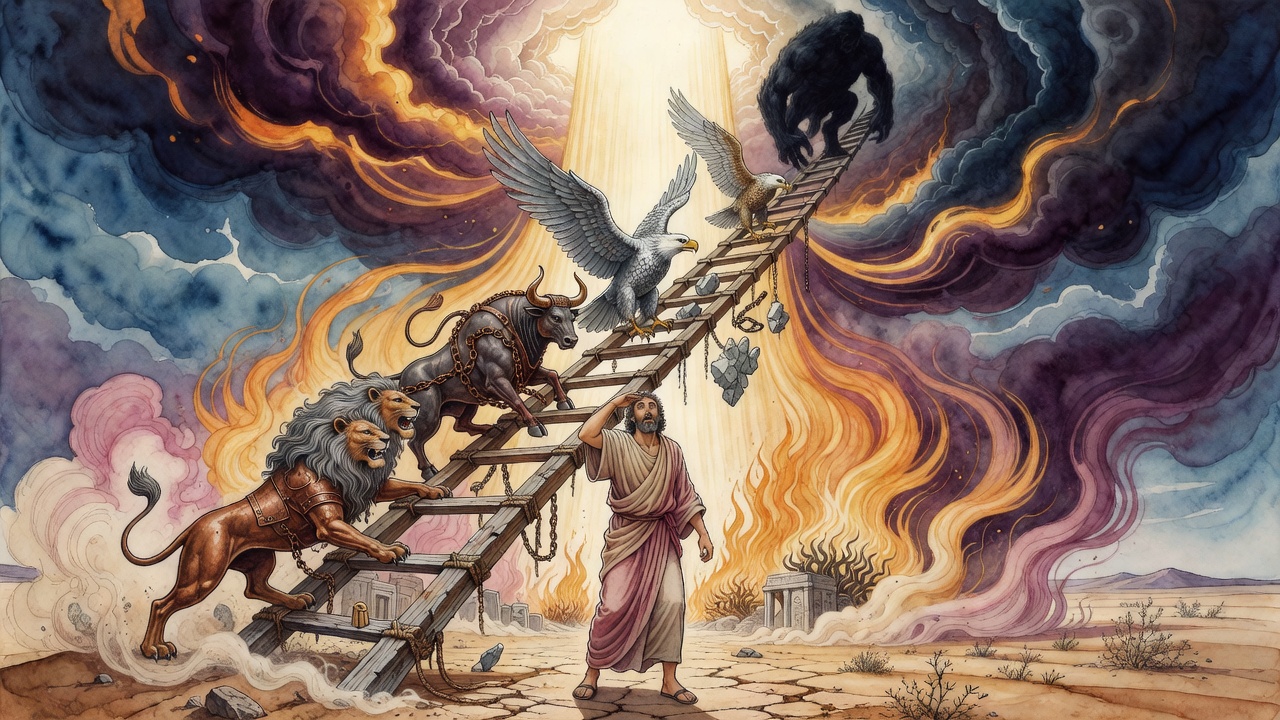
Years later, in the Babylonian exile, a rich Jew who had no child dreamed a man standing in his sleep. "I am Barozak," the figure said. "I am one of the princes led into captivity with Jeremiah. I am one of the just. If you will erect a handsome mausoleum for me, you will be blessed with progeny."
The Jew did as he had been bidden. He who had been childless shortly after became a father. Barozak's tomb became a landmark. It stood near the tomb of Ezekiel, which was itself one of the pilgrimage sites of the Babylonian Jewish community. Two graves near each other: the prophet who saw the chariot and the valley of dry bones, and the obscure prince whose ghost walked until someone put his name in stone.
Jehoiachin walked out and the city fell anyway. Zedekiah ran and was caught and was blinded by his own grief after iron failed. Barozak died unnamed and walked until a childless house remembered him, and then a child was born. The cruel literal ways of the fall did not stop at the living. Even the dead had to bargain for a marker, and the marker went up in the same dirt as Ezekiel's.
← All myths