Parshat Tazria5 min read

No Sculptor Can Shape a Child From One Drop as God Does

No sculptor of flesh could shape a man front and back at once, or raise a whole child from a single white drop kept alive in the dark.

Curated by Arthur · Told by Maggid ·
Table of Contents
  1. The Man Formed Front and Back
  2. One Drop, Three Hundred Colors
  3. Nine Months in the Sealed Dark
  4. The Law Whispered in the Dark
  5. Job on the Ash-Heap
No Sculptor Can Shape a Child From One Drop as God Does Click for full size

The Man Formed Front and Back

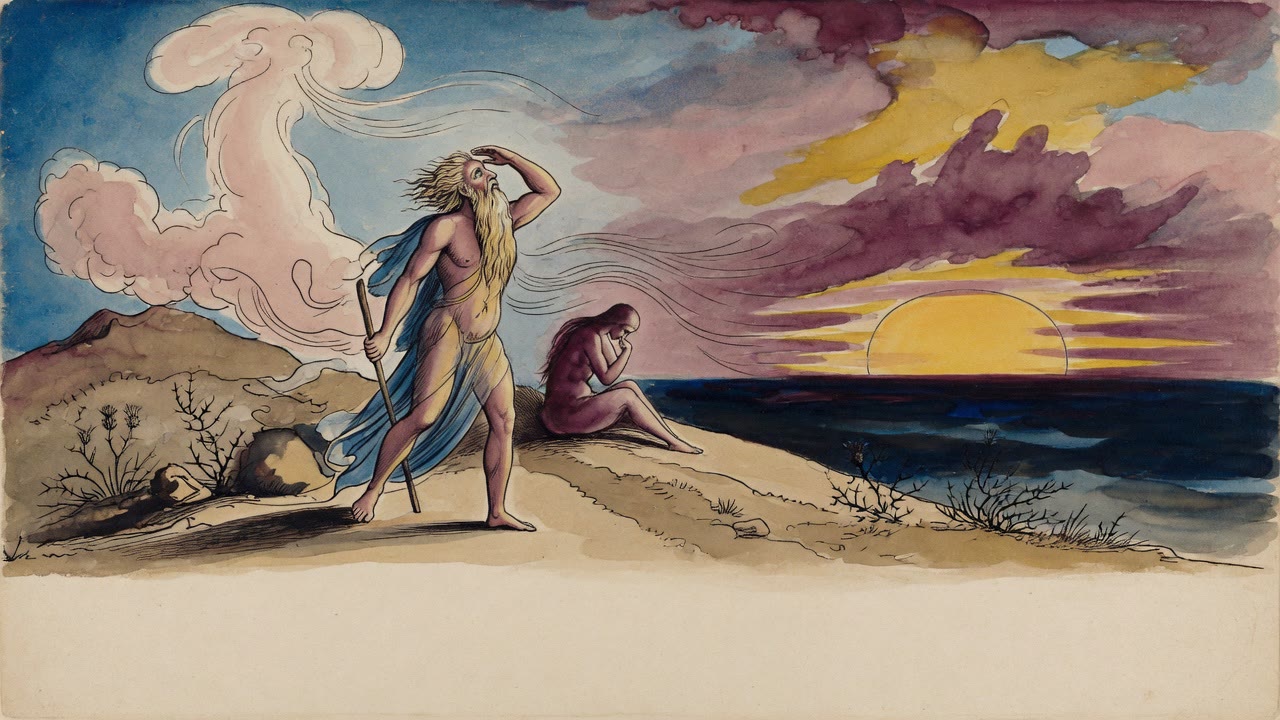
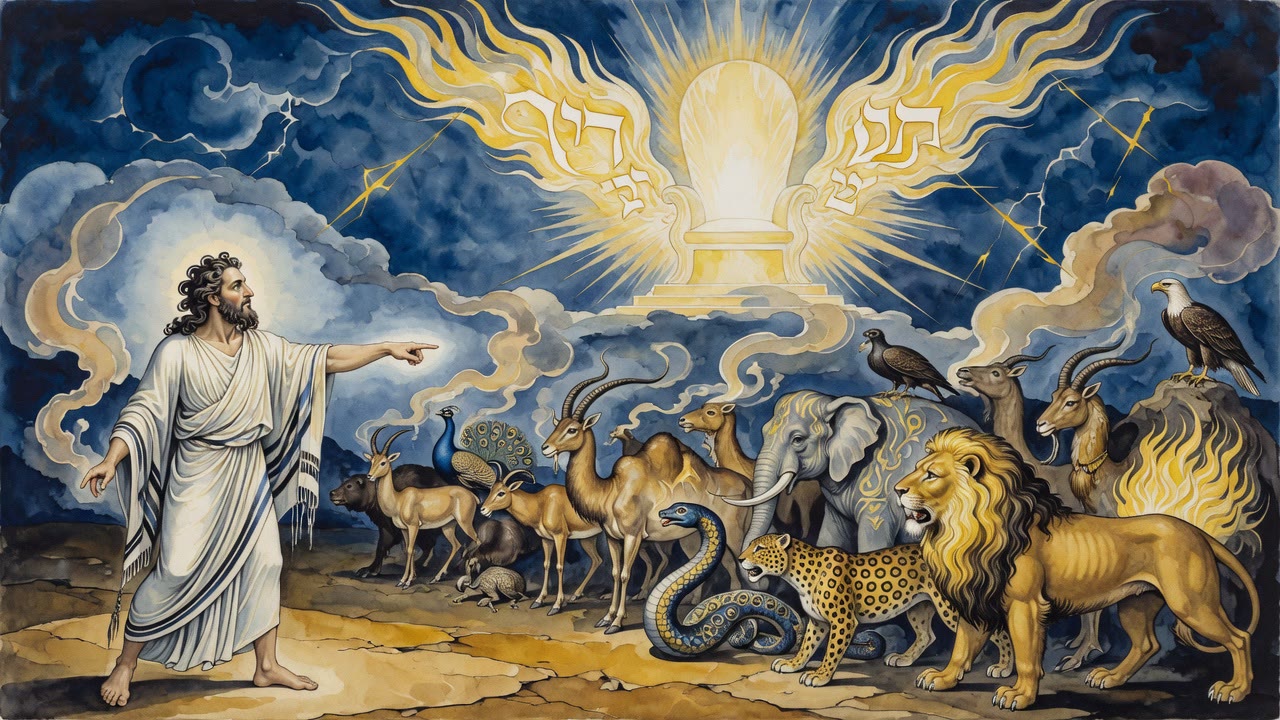
No sculptor of flesh could have managed it. When God bent over the red clay on the sixth day, He did not work the way a potter works, one side first and the back left for later. He laid His hands on the figure behind and before at the same instant, and the man rose from the ground with a face turned each way, male and female pressed into one body. Every wild beast, every bird of the field, He had shaped with a single forming. This one He formed twice over, once for the world that was beginning and once for a world not yet made. Part of him reached back before the beginning: the wind that had moved over the face of the waters (Genesis 1:2), before there was light, was already his soul, waiting for the clay it would fill.

The man opened his eyes last of all the creatures. "After He had made every beast and every bird," Adam said, "He made me." He had come into a world already crowded, already fed and watered and singing, and he understood that he had been held back for the end, the final work of a long day, the one the Fashioner had labored over from first light to dusk.

One Drop, Three Hundred Colors

A king who wants an image summons his artisans. They grind their pigments, a dish for every shade, and after all their mixing the painted face stares back and says nothing. It cannot praise the hand that made it. It cannot make a face of its own.

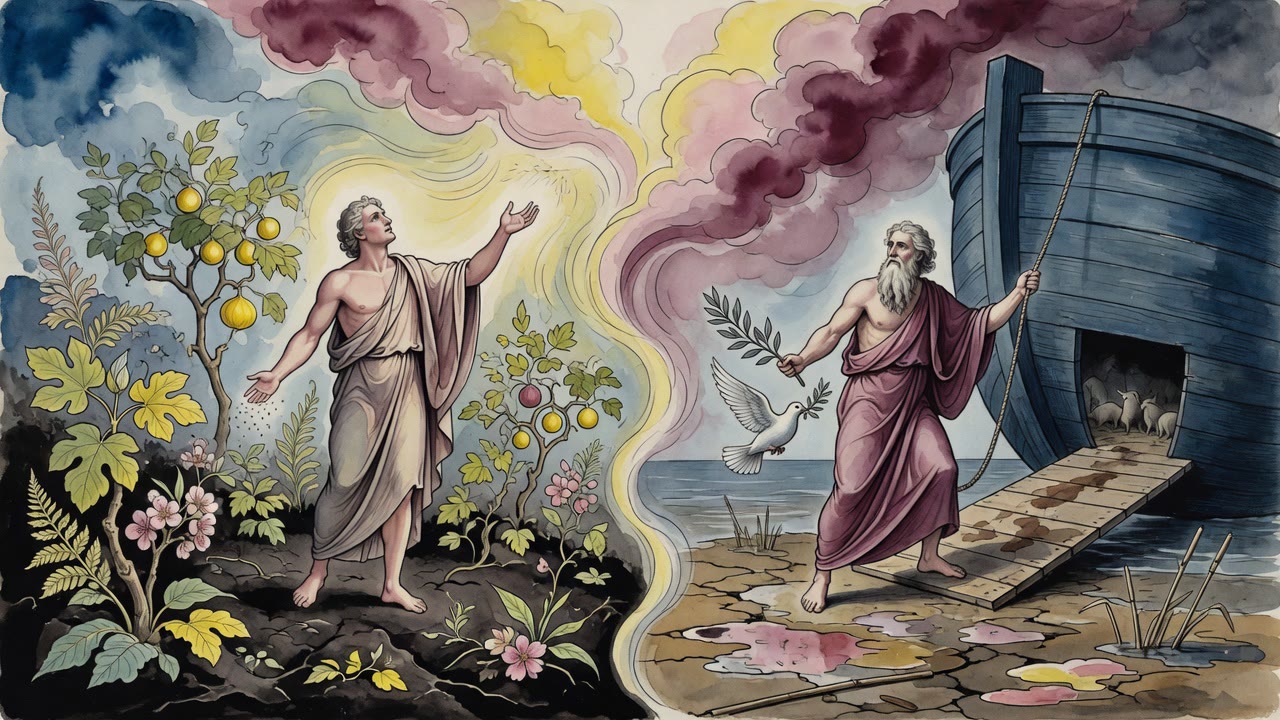
The Rock (tzur, צור) works otherwise. From one drop, a single bead of white, He raises up the peacock, and out of that colorless bead come three hundred and sixty-five kinds of color, the blue throat and the hundred eyes burning in the tail. And not the peacock only. From one drop of white He assembles a human being, the bone and the blood and the wet machinery of a face, and when the work stands up it does not stay mute like a painted board. It stands before Him and praises. His image goes on to make an image of its own: the woman He forms bears a child and forms another like herself, a maker made out of a drop.

Nine Months in the Sealed Dark

Shut a grown man in a bathhouse and leave him a single day, and his spirit begins to fret inside him, the heat pressing, the walls close. But the Fashioner takes a formed thing no larger than a folded hand and shuts it in the dark of the belly for nine months, and its spirit does not fret. He keeps it there. He holds its breath for it. Curled in a place with no light and no air a grown man could use, it is fed without eating and kept without waking, and the small heart goes on beating in the black. If the woman's seed comes first, a son takes shape in that dark; if the man's comes first, a daughter.

The Law Whispered in the Dark

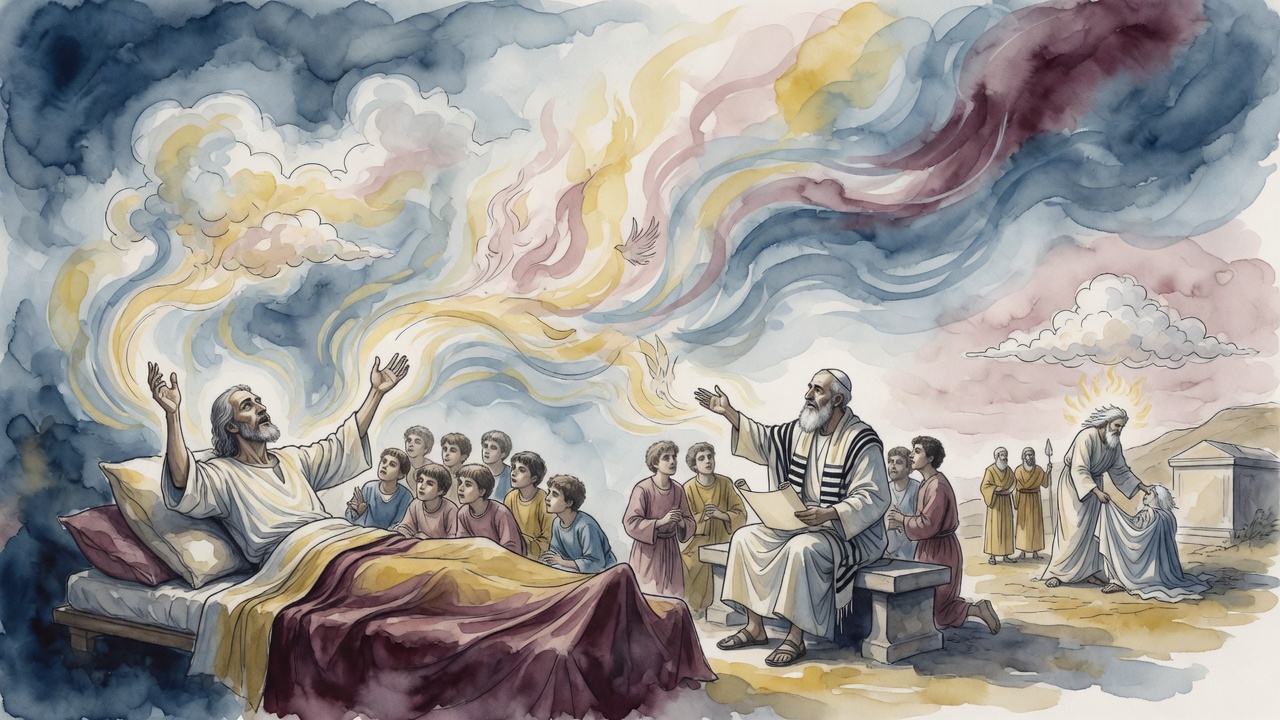
And the child is not only kept. Before it leaves the womb it is taught. In the dark the Fashioner leans close and tells it what to eat and what to refuse, this is clean for you and this is unclean (Leviticus 11:29), the whole of the Torah spoken over it while it floats unborn. The child takes the commandments upon itself there, in the belly, before it has drawn a breath or seen a face. Only when it has accepted all of them is it brought out. A woman conceives and bears a child (Leviticus 12:2), and the newborn comes into the light already bound to a covenant it agreed to in the dark, exactly as the first man came last into a finished world and knew he had been made on purpose.

Job on the Ash-Heap

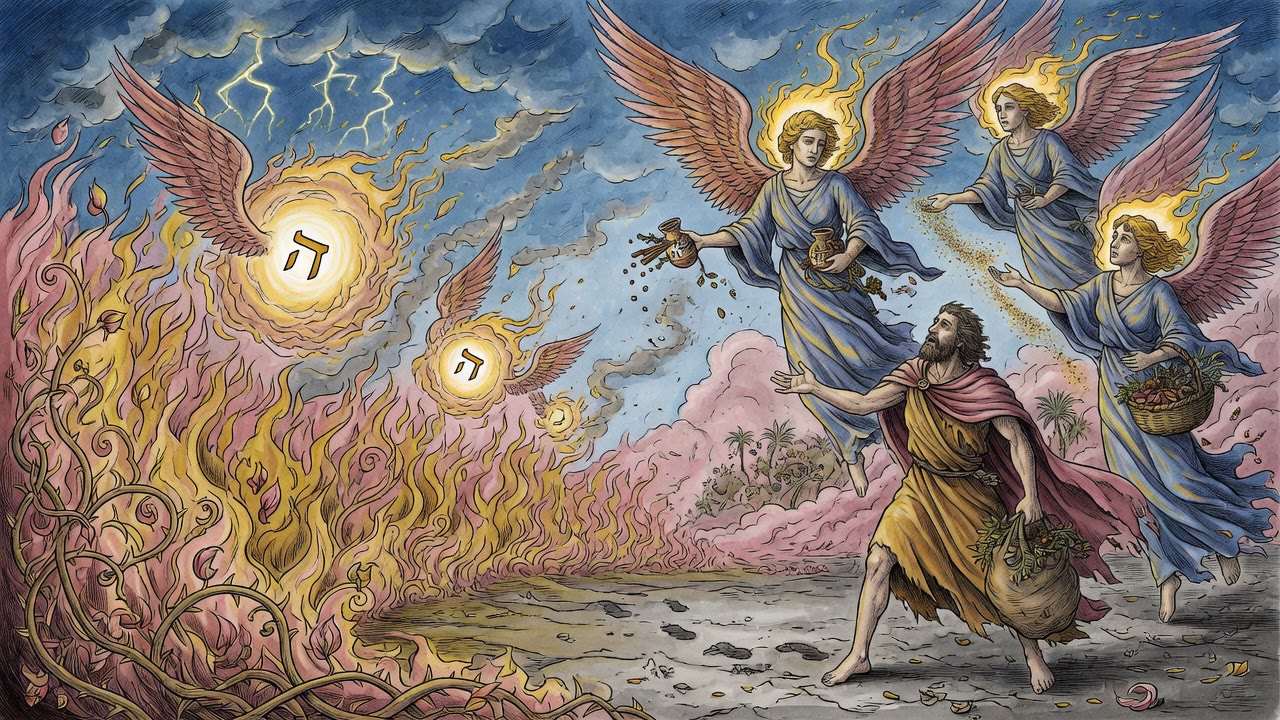
Job, scraping his sores on the ash-heap, watched the world do these things and could not hold them in his mind. He saw a woman labor and bring a whole man out of her own body. He saw a ship ride open water and not go under, moving finger over finger across the deep. He looked at a child that had been a single drop and was now a person with a name, and the wonder of it ran past the edge of everything he knew. "I will fetch my knowledge from afar," he said (Job 36:3), because the thing in front of him, a life fashioned out of nothing his hand could point to, came from a workshop no eye had entered and no craftsman of flesh could copy. There is no Rock, no Fashioner, like this one.


← All myths
From the tradition

Sources

3 sources

The texts behind this telling. Some cards carry a translation of the source; others are our own retelling of it, and each card says which. Every card links out to the original.

Midrash Tanchuma Buber, Tazria 2:1Midrash Tanchuma Buber, Tazria

Translation of the source text.Midrash Tanchuma (Buber), Public Domain, on Sefaria · CC-BY-SA

Another interpretation of "When a woman emits seed" (Leviticus 12:2). This is what Scripture says: "Behind and before You have formed me, and You have laid Your hand upon me" (Psalms 139:5). The verse speaks of the first Adam. [Rabbi Yochanan] said: It is written concerning him two formations, two yods, "And the Lord God formed (va-yiytzer) the human" (Genesis 2:7), one formation in this world and one for the world to come. But concerning the beast, the wild animal, and the bird, only one formation is written: "And the Lord God formed (va-yitzer) out of the ground every wild animal of the field" (Genesis 2:19). Therefore it says "Behind and before You have formed me."

Rabbi Shimon ben Lakish says: "Behind" refers to the work of the sixth day, and "before" to the work of the first day. What is the reason? For Rabbi Shimon ben Lakish said: "And the spirit of God hovered upon the face of the waters" (Genesis 1:2), this is the soul of the first Adam. Therefore it says "Behind and before You have formed me": "behind" to the work of the sixth day, and "before" to the work of the first day.

Rabbi Eleazar ben Pedat says: "Behind" refers to the work of the sixth day, and "before" to the work of the sixth day. How so? Six things did the Holy One, blessed be He, create on the sixth day, and these are they: living soul, beast, creeping thing, wild animal of the earth, Adam, and Eve. And the soul of Adam was created first, as it is said, "Let the earth bring forth a living soul" (Genesis 1:24); and "living soul" is none other than the soul of Adam, as it is said, "And the human became a living soul" (Genesis 2:7). Behold, "before" refers to the work of the sixth day, and "behind" to the sixth day, since He was occupied with him all of the sixth day. Thus "Behind and before You have formed me": "behind" to the work of the sixth day, and "before" to the work of the sixth day.

Rabbi Shmuel bar Nachmani said: What is "behind and before"? Two faces, male and female. Thus it says "Behind and before You have formed me."

Adam said: After the Holy One, blessed be He, created every beast and wild animal, He created me. So too this infant: before it goes forth from its mother's womb, the Holy One, blessed be He, commands it concerning this, "Eat," and concerning that, "Do not eat", "and this is unclean for you" (Leviticus 11:29). And once it has accepted upon itself, in its mother's womb, all the commandments that are in the Torah, afterward it is born, as it is said, "When a woman emits seed and bears a male" (Leviticus 12:2).

Full source
Midrash Tanchuma Buber, Tazria 3:2Midrash Tanchuma Buber, Tazria

Translation of the source text.Midrash Tanchuma (Buber), Public Domain, on Sefaria · CC-BY-SA

Another interpretation: "There is no Rock (tzur) like our God" (1 Samuel 2:2). Flesh and blood fashions (tzar) a form: he speaks, yet his form does not speak; and he praises his form. But the Holy One, blessed be He, His form stands and praises before Him.

Another interpretation of "There is no Rock like our God": Flesh and blood, when he seeks to fashion a form, how many pigments he must bring before he fashions it! But the Holy One, blessed be He, fashions a form out of a single drop. Come and see the peacock, which has in it three hundred and sixty-five kinds of colors, and it is formed from a single drop of white. And do not say this of a bird only, but even of a human being: from a single drop of white he is formed, as it is said, "When a woman conceives seed and bears a male" (Leviticus 12:2). Thus, "There is no Rock like our God."

Another interpretation: A king of flesh and blood fashions a form, but his form does not make a form. But the Holy One, blessed be He, fashions a form, and His form makes a form: for He fashions the woman, and the woman gives birth and makes a form like herself, "When a woman conceives seed" (Leviticus 12:2).

Full source
Midrash Tanchuma Buber, Tazria 4:1Midrash Tanchuma Buber, Tazria

Translation of the source text.Midrash Tanchuma (Buber), Public Domain, on Sefaria · CC-BY-SA

[Another interpretation: "If a woman conceives seed and bears a male" (Leviticus 12:2).] If the woman comes first, she bears a male; if the man comes first, she bears a female. Rabbi Avin the Levite son of a Rabbi said: Scripture hinted to you, "if she bears a female", if the man comes first, she bears a female; if the woman comes first, she bears a male, as it is said, "If a woman conceives seed and bears a male." Rabbi Hiyya bar Abba said: Therefore the male is ascribed to the woman and the female to the man, as it is said, "Behold, Milcah, she also has borne children to Nahor your brother: Uz his firstborn, and Buz his brother" (Genesis 22:20-21), and "Bethuel begot Rebekah" (ibid. 22:23). And so it says, "The concubine of Caleb, Maacah, bore Sheber and Tirhanah. She bore also Shaaph the father of Madmannah, Sheva the father of Machbenah and the father of Gibea; and the daughter of Caleb was Achsah" (I Chronicles 2:48-49), thus the females were ascribed to the man and the males to the woman; therefore it is said, "If a woman conceives seed." Rabbi Aybu said: The Holy One, blessed be He, performs an act of wonders with this man. A person who is placed in a kamon for one day, his soul does not convulse upon him; but that infant is placed in his mother's belly nine months, and the Holy One, blessed be He, keeps him. Our Rabbis said: The Holy One, blessed be He, performed an act of wonders with this man. A person who is placed in a bathhouse for one day, his soul frets upon him; yet the infant is placed in his mother's belly nine months and his soul does not fret upon him, [because the Holy One, blessed be He, performs with him an act of wonders]. Job said, "I will fetch my knowledge from afar" (Job 36:3); for Job would see human beings, a woman bearing a man, and the ship floating amid the waters finger upon finger, and he was astonished at these things, and said, "I will fetch my knowledge from afar"; therefore it is written, "If a woman conceives seed."

Full source