5 min read

The Fattened Calf Broke the Farmer's Yoke

A farmer raised a calf on the best feed, then watched it snap the wood. Sifrei names fat kings. Treaties in the land become traps dressed as peace.

Curated by Arthur · Told by Maggid ·
Table of Contents
  1. The Calf That Would Not Plow
  2. Blessing That Forgot Its Job
  3. Handshakes That Become Traps
  4. When Mercy Was Forced to Wear Armor
  5. Wood, Treaties, and the Neck
The Fattened Calf Broke the Farmer's Yoke Click for full size

The Calf That Would Not Plow

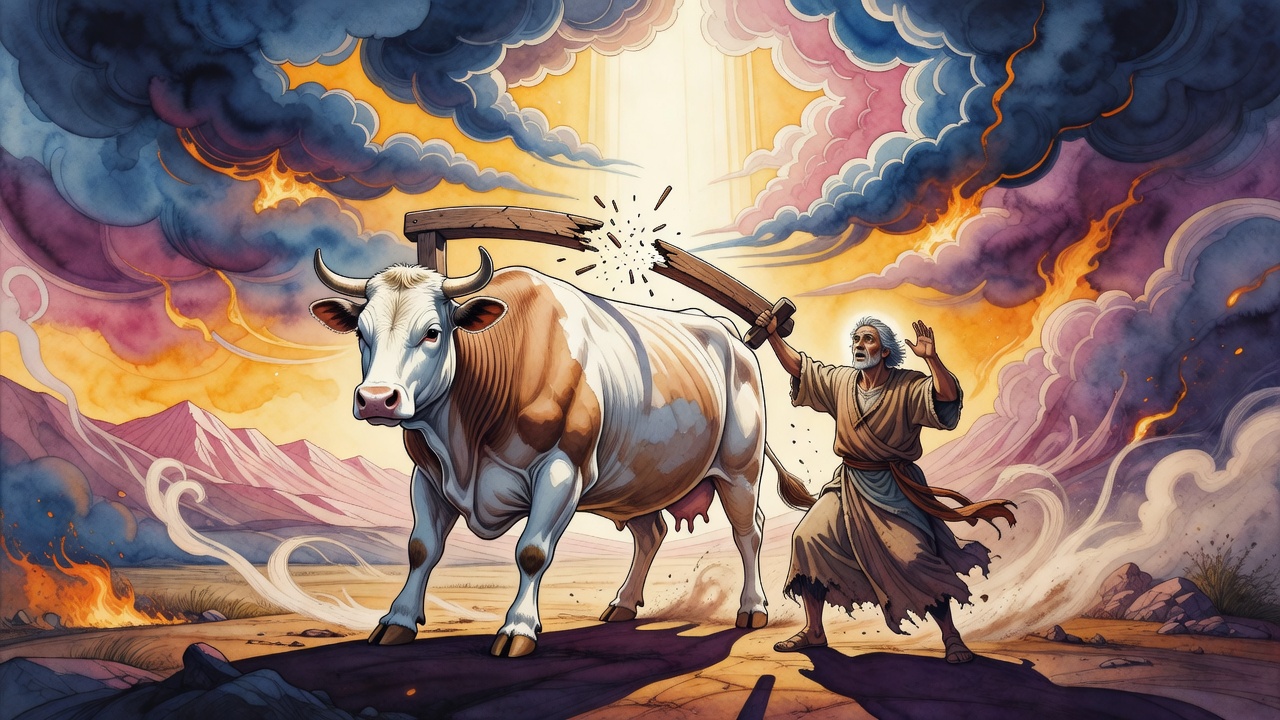
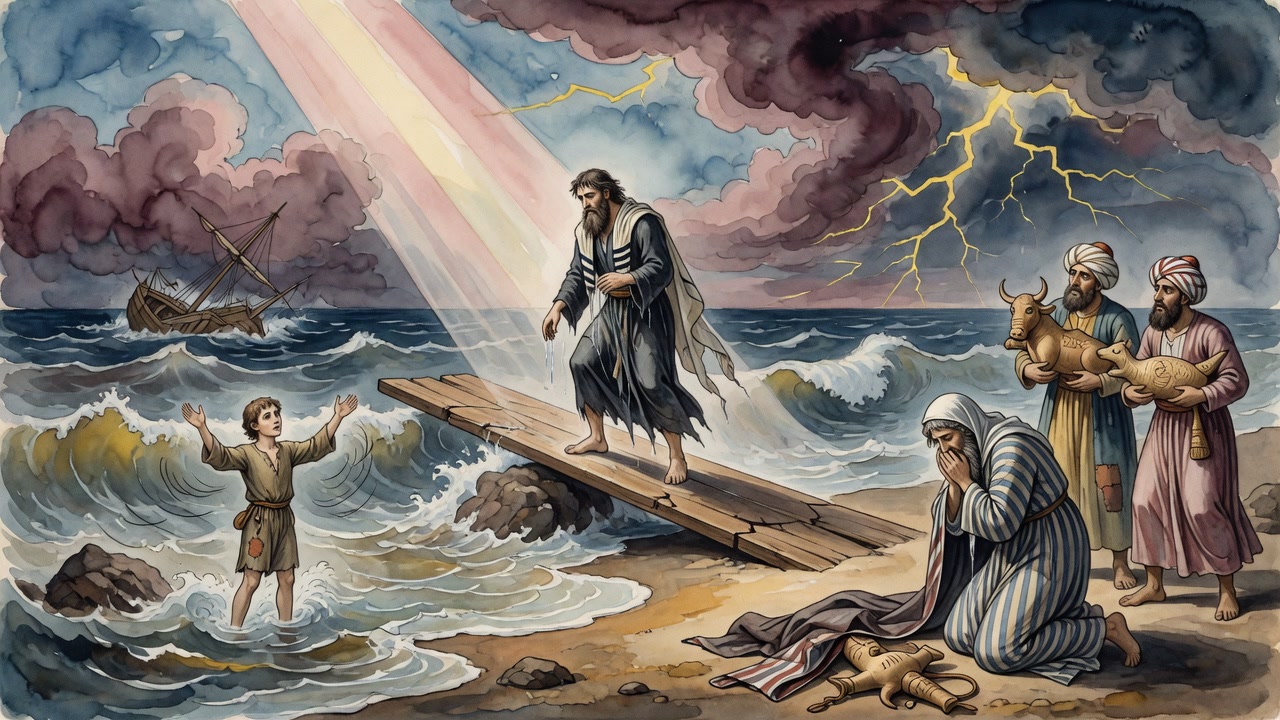
A farmer chose a calf and fed it the best vetch. He brushed the coat until it shone. He was not raising a pet. He was raising a back strong enough for a yoke and a field that needed turning. On the day of the wood, the animal bolted. It broke the yoke, snapped the ends, and ran as if freedom were only the opposite of useful work.

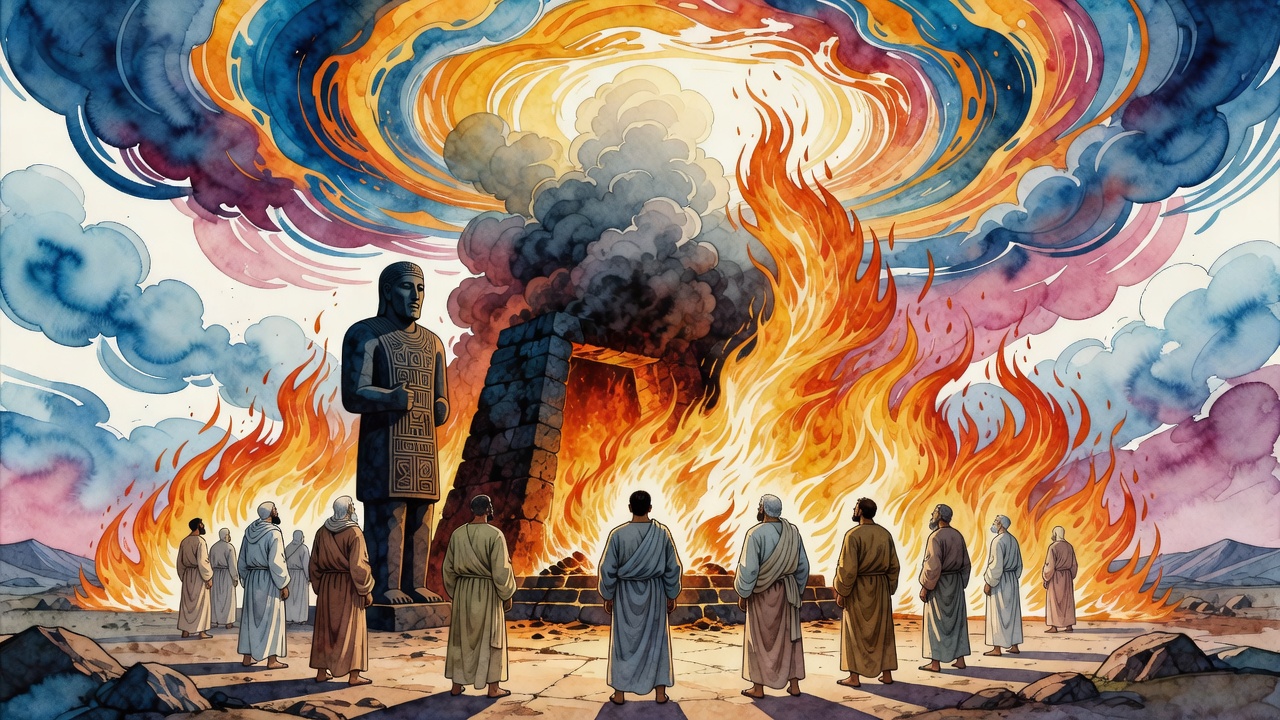
Jeremiah heard wood yokes break in a people's history. Sifrei Devarim sets the mashal against Israel's fat seasons. "You grew fat. You grew thick. You were covered with fat." Days of Yeravam. Days of Achav. Days of Yehu. Or again: Achaz, Menasheh, Yehoyakim. Different thrones. Same swelling. Same refusal when the work of covenant asked for a neck.

Blessing That Forgot Its Job

Prosperity is not the villain in the parable. The villain is the moment blessing is mistaken for exemption. The calf was loved into strength and then used the strength to flee the purpose of the love. Kings sat heavy on cushions while the people learned the same lesson in national scale: full barns, thin obedience.

Deuteronomy had already warned that fat can become a kind of deafness. The midrash only names the reigns so the ear can attach faces to the swelling.

Handshakes That Become Traps

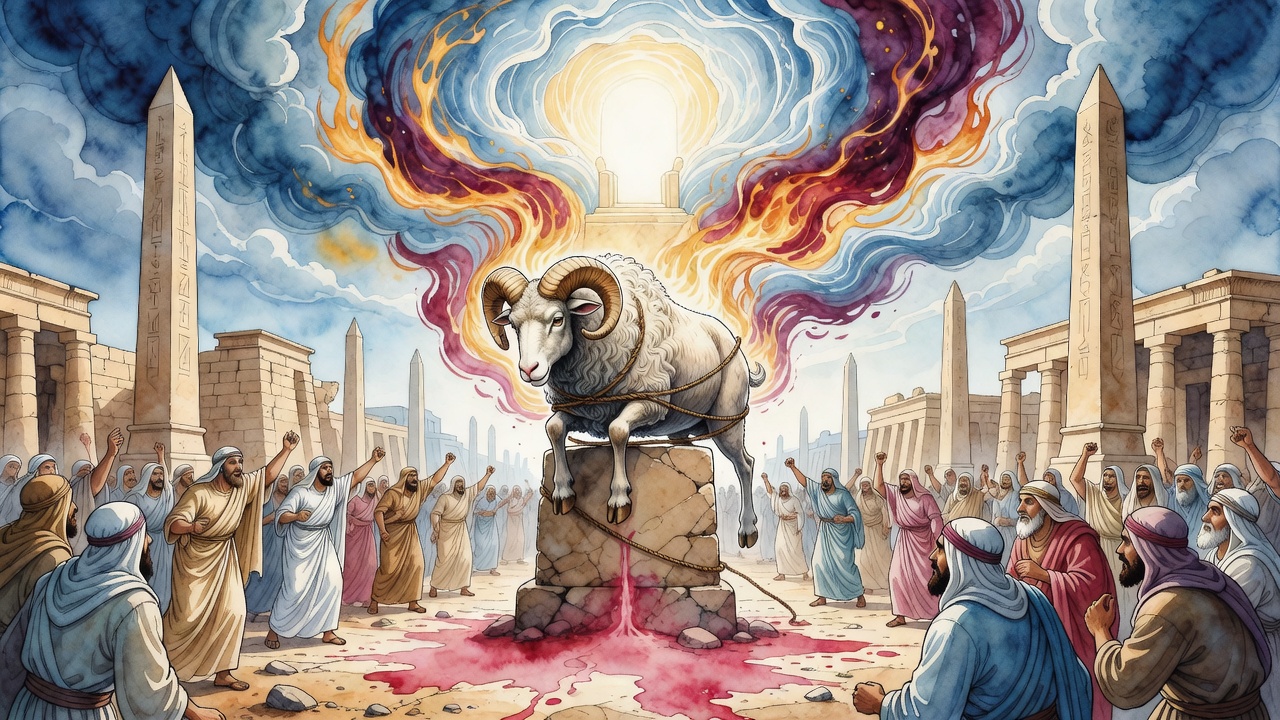
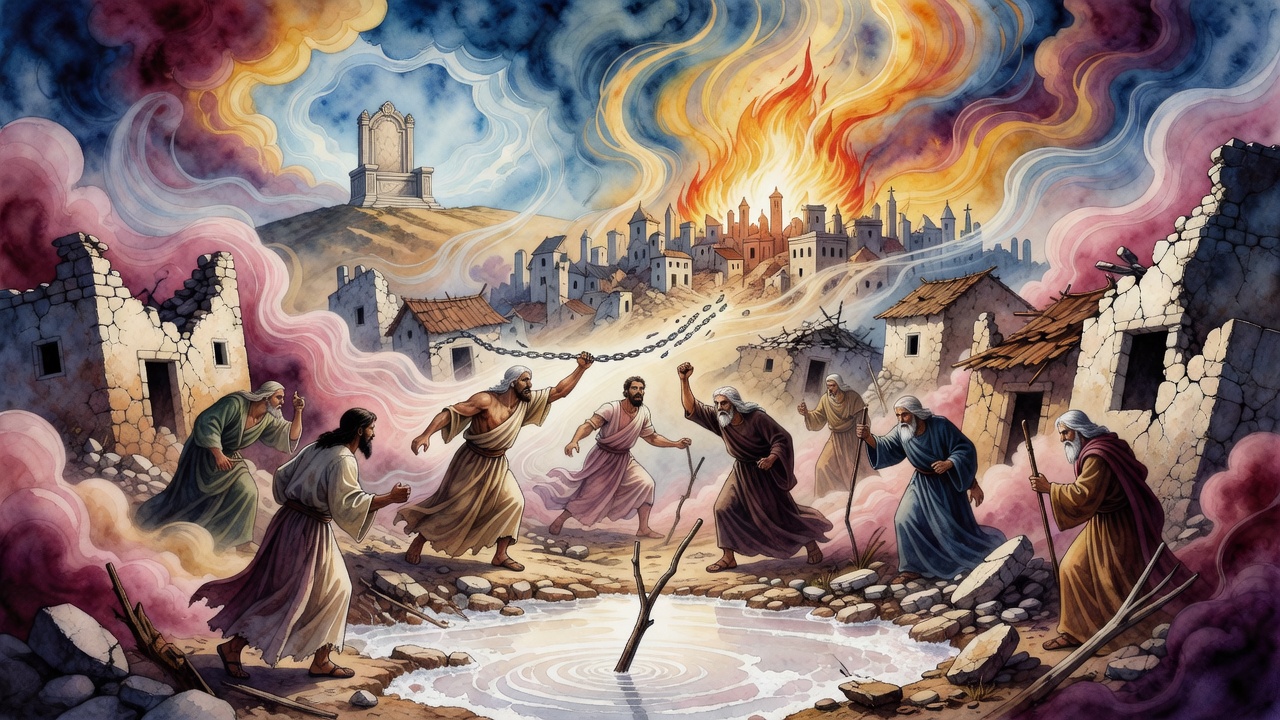
God told Moses the land would not be lost first to better armies. It would be lost to treaties. Targum Pseudo-Jonathan sharpens Exodus into a stumble-stone, a taqlata. Strike a covenant with the inhabitants Israel was meant to displace, and the agreement becomes a trap under the next generation's feet.

A local king offers daughters and a quiet shrine on the hill "only for them." A century later the camp knows the taste of other offerings. Judges is a long proof of handshakes that seemed wise in the room where they were signed.

When Mercy Was Forced to Wear Armor

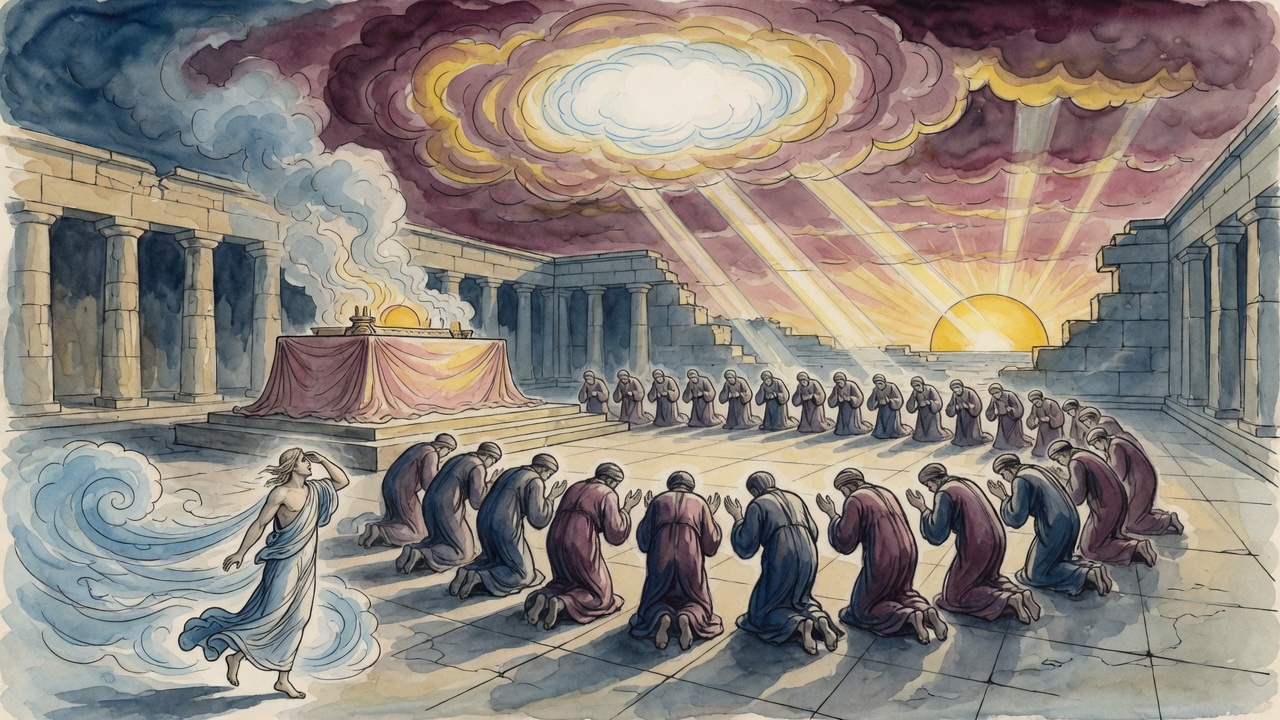
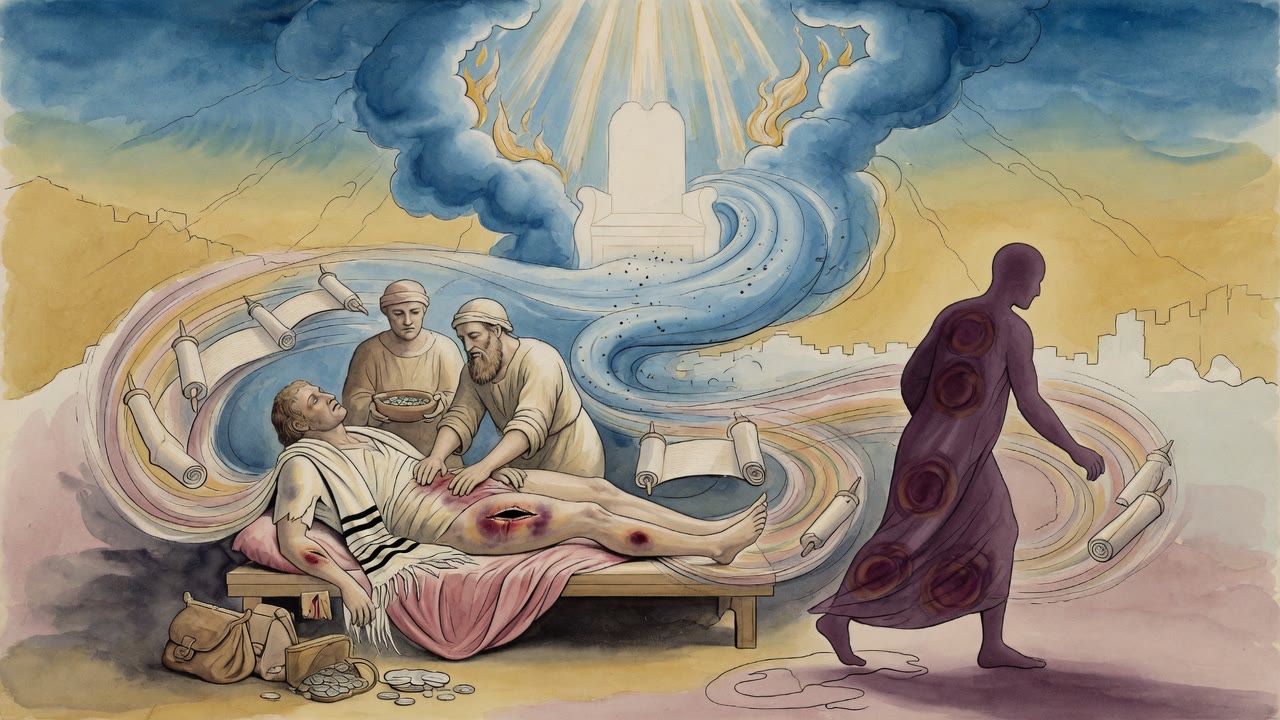
If Israel walks in the statutes, rain and bread follow. Israel did not. They attributed to the Lord what was not right, and then met plagues the scroll had not listed. Midrash Tanchuma hears Hosea: My God will reject them because they did not heed Him. Isaiah's forsaking is read as a people making God seem worth forsaking, bending the merciful Name until it must act as enemy.

Heavens like iron. Dew withheld. Nations suffering beside Israel because the pipe of blessing was clogged with rebellion. The fat calf and the iron sky are one story told from belly and from weather.

Wood, Treaties, and the Neck

Put the images on one table. A broken plow-yoke. A signed peace that smuggles idols. A land that will not feed the people who rewrote the terms of their planting. The farmer is not cruel for wanting the calf to pull. The Holy One is not cruel for wanting a blessed people to wear the work that blessing requires.

Somewhere a later king will feel the wood on his neck again and remember that fat was never the goal. The goal was a field turned, a land kept, a Name left unbroken by the deals that look soft and cut deep.

In Samaria a king who thickened on tribute still hears, if he is honest, the crack of wood from the parable. In a border town a father signs away a daughter's future to a local alliance and tells himself it is diplomacy. A generation later his grandson bows at a hill shrine and does not remember the signature, only the habit. That is how a taqlata works. It waits under the foot until the foot is confident.

Rain fails. Bread thins. The people invent new reasons that spare their necks. Tanchuma will not spare them. Israel made the merciful God wear the face of an enemy by the weight of what they attributed to Him that was not His. Hosea names the rejection. The iron sky is not a mood. It is a consequence with weather for a body.

Yeravam's calves of gold were political tools dressed as worship. Achav's table was full while Naboth's vineyard became a crime scene. Later kings stacked fat on fat until the yoke looked optional. Sifrei's farmer had never made the yoke optional. He had made the calf strong for work, and the strength became the instrument of flight.

The neck must return. The soft treaty that sells the next generation must break. Statutes wait to be walked while the barns are still full enough to make the choice mean something. Fat without work is only a delayed fall.

The land listens for footsteps that match the old command more than for speeches about security. Treaties that smuggle idols always claim security. The midrash answers with a stumble-stone and a broken wooden yoke and a sky like iron, until the neck remembers what blessing was for.


← All myths
From the tradition

Sources

3 sources

The texts behind this telling. Some cards carry a translation of the source; others are our own retelling of it, and each card says which. Every card links out to the original.

Sifrei Devarim 318:5Sifrei Devarim

Retold in our words. Read the original at the link below.Sifrei by Rabbi Shraga Silverstein · CC-BY

The ancient sages certainly did. They saw it happening all the time, and they used stories, analogies, mashalim, to help us understand why.

Sifrei Devarim 318 gives us a perfect example: Imagine a farmer raising a calf. He pampers it, feeds it the best vetch, grooms its coat until it shines. Why? To prepare it for the hard work of plowing, of course! He’s investing in its future usefulness.

Then comes the day to put the yoke on the grown animal. Instead of accepting its role, the calf bolts. It rebels! It breaks the yoke, snaps the ends, and runs wild. As Jeremiah laments (28:13), "You broke yokes of wood…"

So, what's the nimshal, the lesson being taught here? Well, the Sifrei connects this image to the periods of Israelite history marked by prosperity followed by…well, not so much.

The verse from Deuteronomy says, "You grew fat." But what does it really mean? The text offers a historical interpretation. "You grew fat" – this refers to the days of Yeravam. Then, "you grew thick" – that was in the days of Achav. And finally, "you were covered with fat" – all during the reign of Yehu.

It’s a progression. A fattening, a thickening, a covering. An overabundance, perhaps?

But the text doesn't stop there. It offers another, almost eerily similar, interpretation: "You grew fat" – in the days of Achaz. "You grew thick" – in the days of Menasheh. "You were covered with fat" – all in the days of Yehoyakim.

Two different sets of kings, two different periods of perceived prosperity, yet the same outcome implied. The people grew complacent, perhaps? Spoiled? They forgot their purpose, like that calf who rejected the yoke.

What are we to make of this? Is it simply a condemnation of wealth? I don't think so. It seems more about the dangers of forgetting our responsibilities, of allowing comfort to blind us to our higher calling. Of rejecting the "yoke" – the obligations and commitments – that give our lives meaning and direction.

It’s a powerful reminder that true growth isn’t just about accumulation; it’s about how we use what we have, about accepting the responsibilities that come with blessing, and about not breaking the very yokes that are meant to guide us. Are we tending our calves wisely? Or are we setting them up to break free in ways that ultimately harm us all?

Full source
Targum Pseudo-Jonathan on Exodus 34:12Targum Pseudo-Jonathan on Exodus

Retold in our words. Read the original at the link below.The Targum of Jonathan ben Uzziel, trans. J. W. Etheridge, London, 1862 · Public Domain

Having promised to drive out the six nations, God gave Moses a warning about the mistake that would undo everything.

Targum Pseudo-Jonathan, the Aramaic paraphrase of the Torah, renders it with the sharpness of a prophet's rebuke. "Take heed to you, lest you strike covenants with the inhabitants of that land into which you are to enter; that it may not be a taqlata, a stumbling-block, unto you" (Exodus 34:12).

The danger, the Targum warns, is not primarily military. Israel will not lose the land to superior armies. Israel will lose it to treaties. To handshakes. To political accommodations that seem sensible in the moment and become idolatry in the following generation.

The Aramaic word taqlata means literally a trap, something you fall over. The Targum is painting a picture of the future. Israel enters the land, strikes a convenient arrangement with a local king, lets his daughters marry Israelite sons, tolerates a shrine on the hill "just for them," and a century later the whole camp is sacrificing to Baal.

History would prove the warning precise. The book of Judges is one long demonstration of what happens when Israel forgets this verse. Every national collapse begins with a treaty that seemed reasonable at the time.

Takeaway: The compromise that looks diplomatic in the present becomes the stumbling-block of the future. Jewish survival depends on knowing which accommodations are simply forbidden.

Full source
Midrash Tanchuma, Bechukotai 2Midrash Tanchuma

Retold in our words. Read the original at the link below.Townsend 1989 translation of Midrash Tanhuma, S. Buber Recension · CC-BY

(Lev. 26:3:) “If you walk in My statutes….” This text is related (to Hos. 9:17), “My God will reject them because they did not heed Him….” The Holy One, blessed be He, said, “I have said that you would be set in security, as stated (in (Amos 9:1)5), ‘And when I plant them in their land, [they shall never again be uprooted]….’ When? (Lev. 26:3, 5:) ‘If you walk in My statutes […] You shall eat your fill of bread.’ But you did not so act.” Instead (according to II Kings 17:9), “The Children of Israel attributed things which were not right to the Lord.” [So] I have also set upon you things which I did not write in My Torah. [It is so stated] (in Deut. 28:61), “Moreover [the Lord will bring upon you] every disease and every plague which is not written [in this book of the Torah].” Now what were the “things they attributed, which were not right to the Lord?” As Isaiah said (in Is. 1:4), “They have forsaken the Lord […];” do not say, “They have forsaken ('zbw) [Me],” but “They,” as it were, “have made me worth forsaking ('yzbw) (i.e., caused me to be cruel).” Now I was called (in Exod. 34:6), “The Lord, the Lord, a merciful and gracious God.” But through their sins, they have made Me cruel and changed My trait of mercy to cruelty, as stated (in Lam. 2:5), “The Lord has become like an enemy, He swallowed Israel.” It also says (in Is. 63:10), “But they rebelled, and grieved His holy spirit; then He became their enemy, and Himself made war against them.” Therefore, Hosea said, “Who has brought this about for you? [It was] because you did not heed Him, (in Hos. 9:17), ‘My God will reject them because they did not heed Him.’” It is also written (in Deut. 28:65), “And among those nations you shall find no peace. Another interpretation (of Lev. 26:3, 4, 14, 19) “If you walk in My statutes…, then I will give you your rains in their season…. But if you do not heed Me…. I will make your heavens like iron”: It also says so (in Hag. 1:10), “For that reason the heavens over you have withheld dew, and the earth has withheld its produce.” Because of your sins, the nations are also afflicted. R. Joshua ben Levi said, “If the nations had known that they are afflicted because of the sins of Israel, they would have raised two armies to guard each and every person of Israel in order that they keep the Torah and not sin. However, it was not enough for the nations that they were not watching over Israel, but in addition they stopped them from [fulfilling] the commandments.” As when Israel sins, all the whole world is afflicted, as stated (in Hag. 1:10), “For that reason the heavens over you have withheld dew.” But if [the Israelites] do not sin, all the world is blessed on their account, as stated (in Gen. 26:4), “and through your seed shall all the nations of the earth be blessed.” The Holy One, blessed be He, said to Moses (in Exod. 20:19-20), “You yourselves have seen that I spoke with you from the heavens. Along with Me you shall not make gods of silver, nor shall you make for yourselves gods of gold.” So if you sin [and pray to me], I will not answer you, as stated (in Zech. 7:13), “And it came to pass that, as He called, and they did not heed; ‘So let them call, and I will not heed,’ [says the Lord of hosts].” Therefore (according to Exod. 20:20), “Along with Me you shall not make gods of silver.”

Full source