6 min read

The Fire That Waits for Israel to Sing First

In seven palaces of fire the chariots pass the sanctus upward, but the whole burning host must wait in silence until Israel sings the first note.

Curated by Arthur · Told by Maggid ·
Table of Contents
  1. The Descender Braces Before the Chariot
  2. Fire Passes the Song From Palace to Palace
  3. The Command That Silences the Host
  4. Shemaiel at the Window of the Lower Firmament
  5. The Ones Who Sing Too Soon Are Burned
  6. The Song That Unmakes the Decree
The Fire That Waits for Israel to Sing First Click for full size

The Descender Braces Before the Chariot

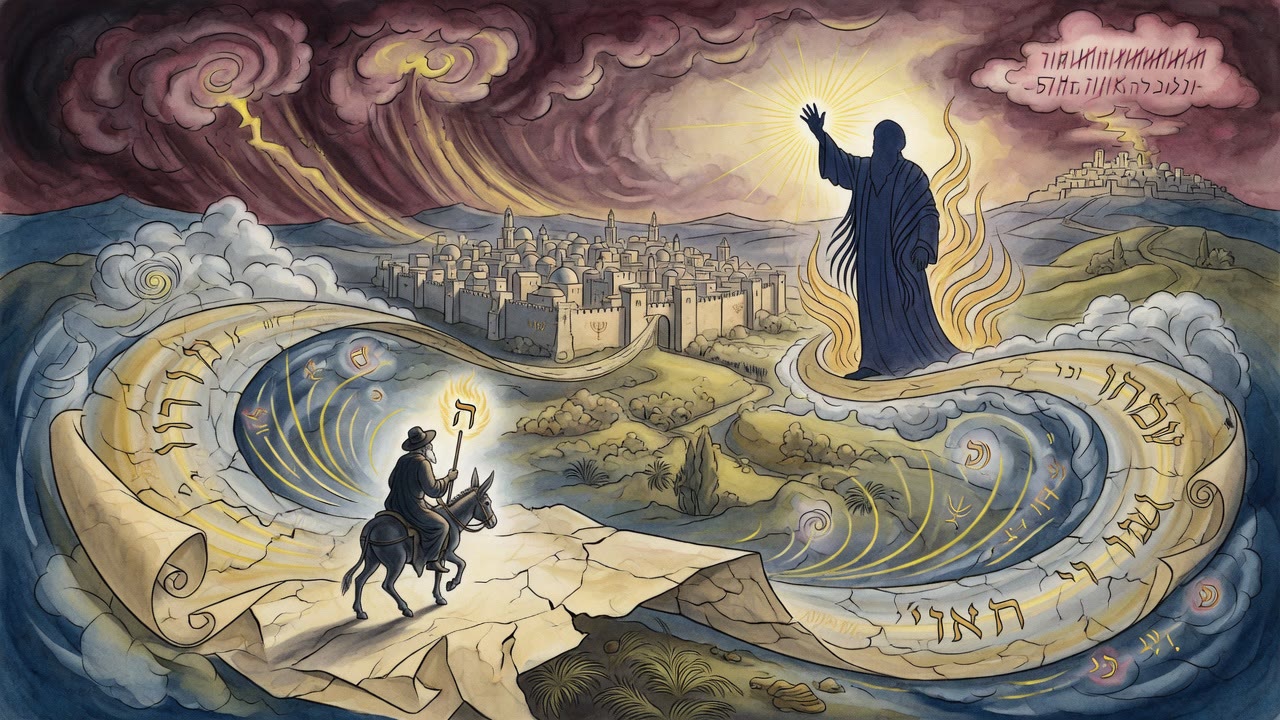
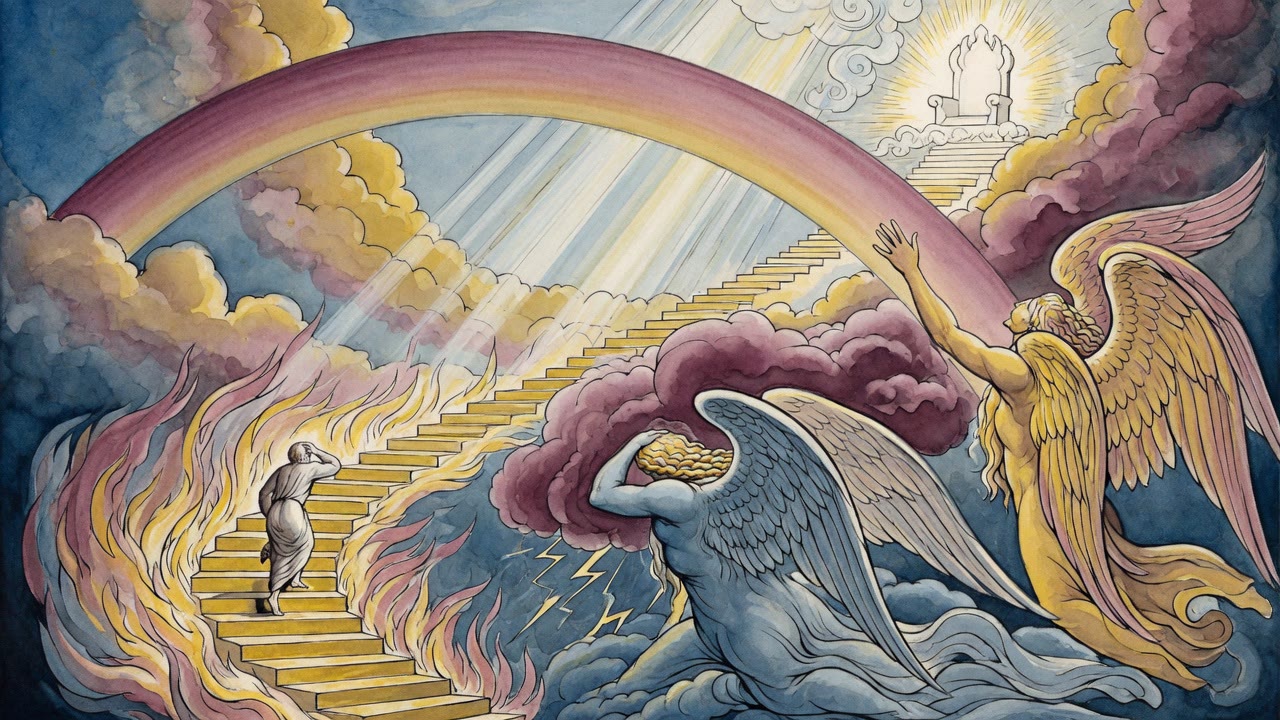
He stands with all his strength, because a body that goes slack in that place is a body that falls. Rabbi Akiva has come to the edge of the Chariot, and the air here is not air. It is the pressure of the Throne. He does not close his eyes. He was told that the happy man is the one who keeps them open, who gazes and does not turn away, who watches everything done before the Throne of Glory and lives to carry the report back down. So he sets his feet against the trembling and looks.

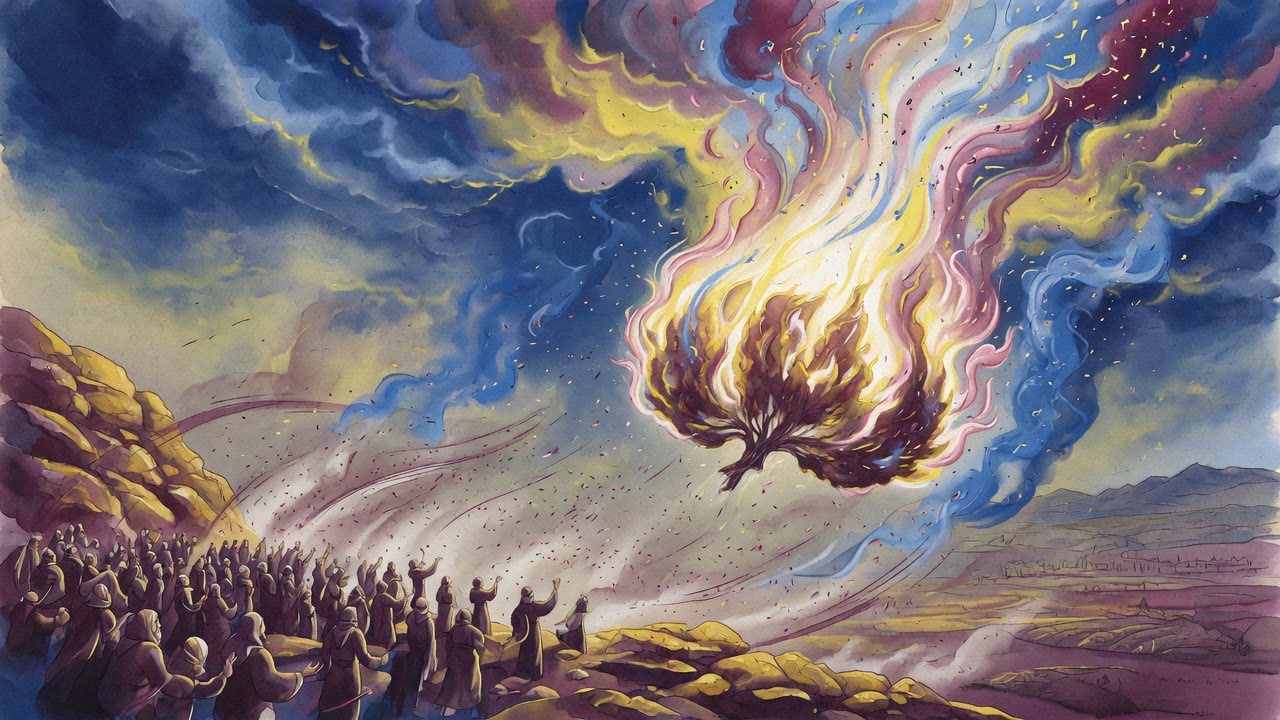
Seven palaces open in front of him, one inside the other like halls of a house too large for the world. In the first, the chariots are made of fire.

Fire Passes the Song From Palace to Palace

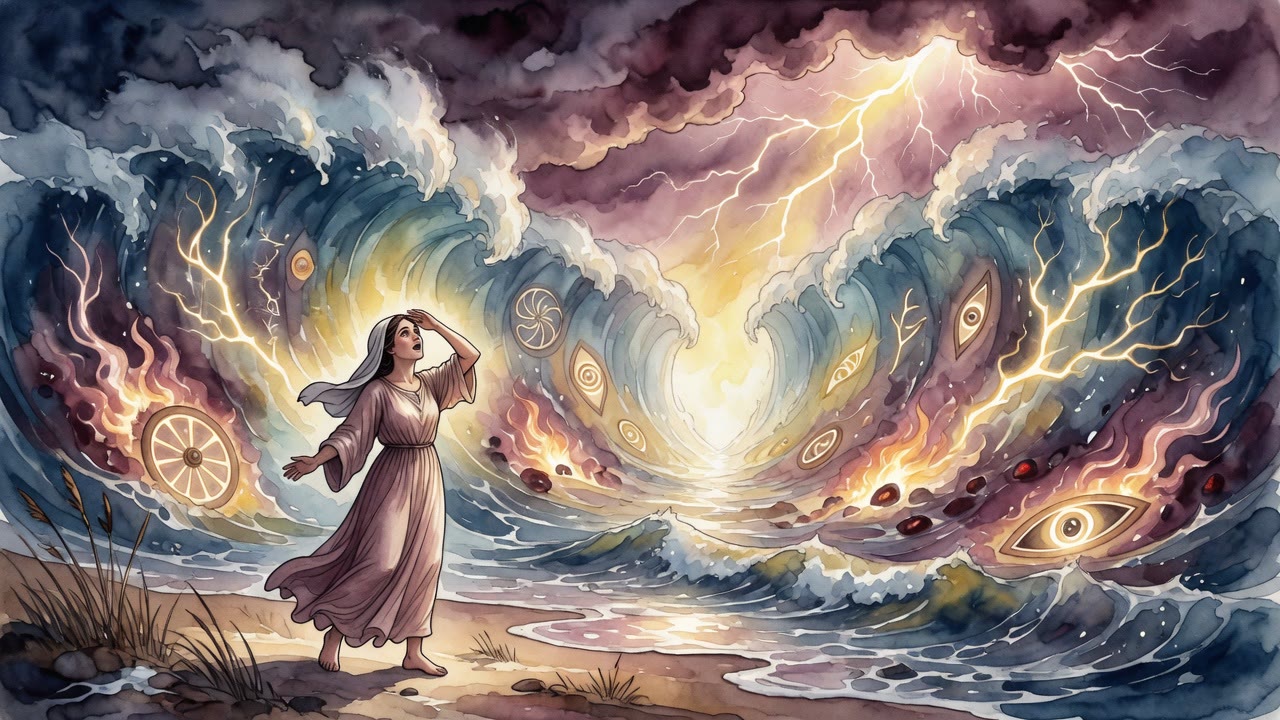
The chariots of the first palace open their mouths and the words come out burning. "Holy, holy, holy is the LORD of hosts. The whole earth is full of His glory." When the last word leaves them their flames come apart. They scatter like a thrown handful of sparks, gather again, and the gathered fire runs forward into the second palace, carrying the sentence up with it.

In the second palace new chariots take the fire and answer, "Blessed be the glory of the LORD from His place," and again the flames break and re-form and climb. Palace by palace the praise changes and rises. "Blessed be the name of the glory of His kingdom." "Blessed be the LORD, mighty over all the Chariot." The fire never stops moving. Each hall hands the burning words to the hall above it, until in the seventh palace the chariots cry the whole of it: "Who is like God, living and enduring? His praise is in the highest heavens." They speak a Name that Akiva cannot hold in his mouth, and they seal it, "the LORD God of Israel."

He watches the song reach the top of the seventh hall. There it stops. It does not go through the last door on the strength of angels.

The Command That Silences the Host

Rabbi Ishmael learned why. Around the Throne of Glory stand thousands upon thousands and myriads upon myriads, the living creatures and the wheels and the seraphim, ranked to the right of the Throne and to the left, and their whole purpose is to sing. When the hour of song arrives they open their mouths.

And rivers of fire come. Hills of flame rise up and stand between the host and the Throne, and out of the fire comes a voice, and the voice belongs to the Holy One. "Be silent before Me. Every angel, every living creature, every wheel, every seraph that I made, be silent, until I have first heard the voice of the song of Israel My children."

So the burning host waits. Ten thousand mouths hold their praise unspoken. The whole ranked army of heaven, wheel aligned against wheel and wing against wing, stands still and listens downward.

Shemaiel at the Window of the Lower Firmament

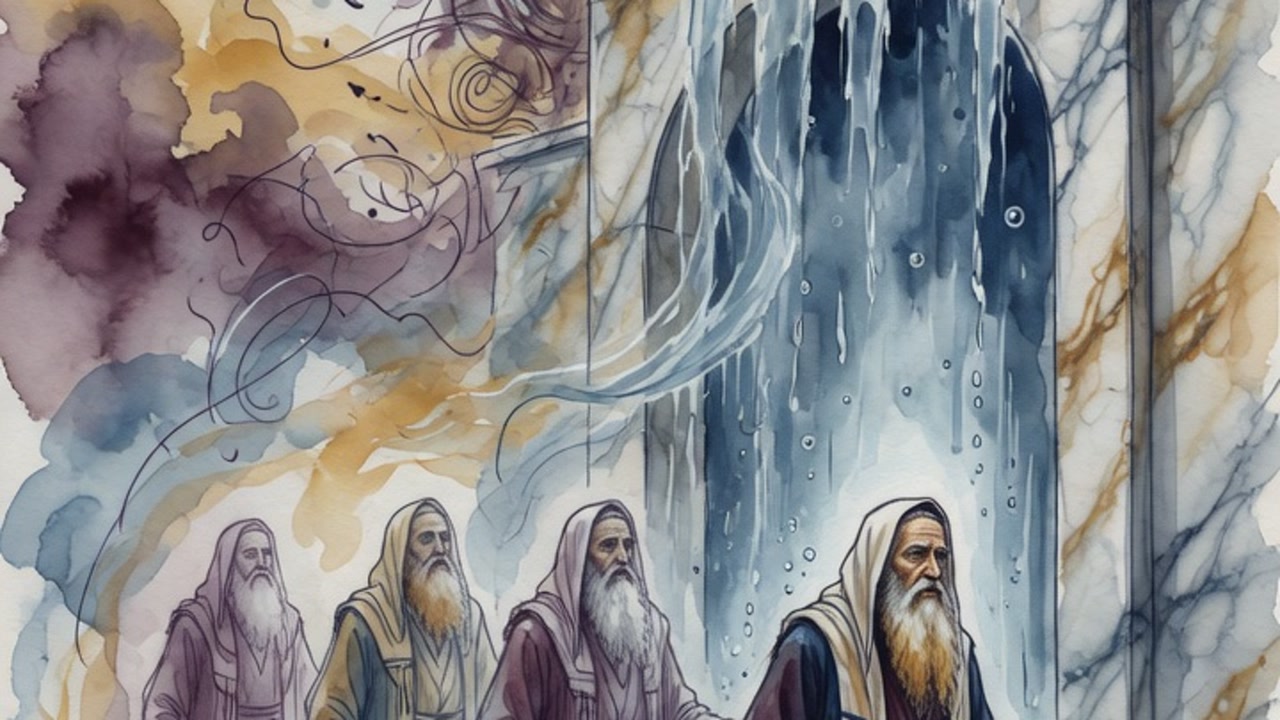
One prince does not wait with the others. Shemaiel, great and honored and terrible, goes down to the windows of the lowest firmament and presses himself against them to listen. He is listening for a sound that rises from the earth, from the synagogues and the houses of study, where men who do not know he is there are singing. Israel opens. Only when Israel has opened does anyone above have permission to answer.

Shemaiel catches the song and turns and makes it heard through every firmament, before the living creatures and the wheels and the seraphim and the stars. Now the answer is allowed. Now, and not before, every angel of every firmament opens above and says, "Holy, holy, holy."

But they cannot sing as they are. They have spent the day down in the labors of the world, walking among human beings, and the smell of mortal bodies clings to them. So they throw themselves into the rivers of fire. They go under a hundred times. They scour themselves three hundred and sixty-five times, once for every day of the sun's year, until the human odor is burned off and they shine like the angels of Aravot again. Then they climb, each waiting on the permission of the one beside him, up a ladder made of the rivers of fire, into the presence of the Throne.

The Ones Who Sing Too Soon Are Burned

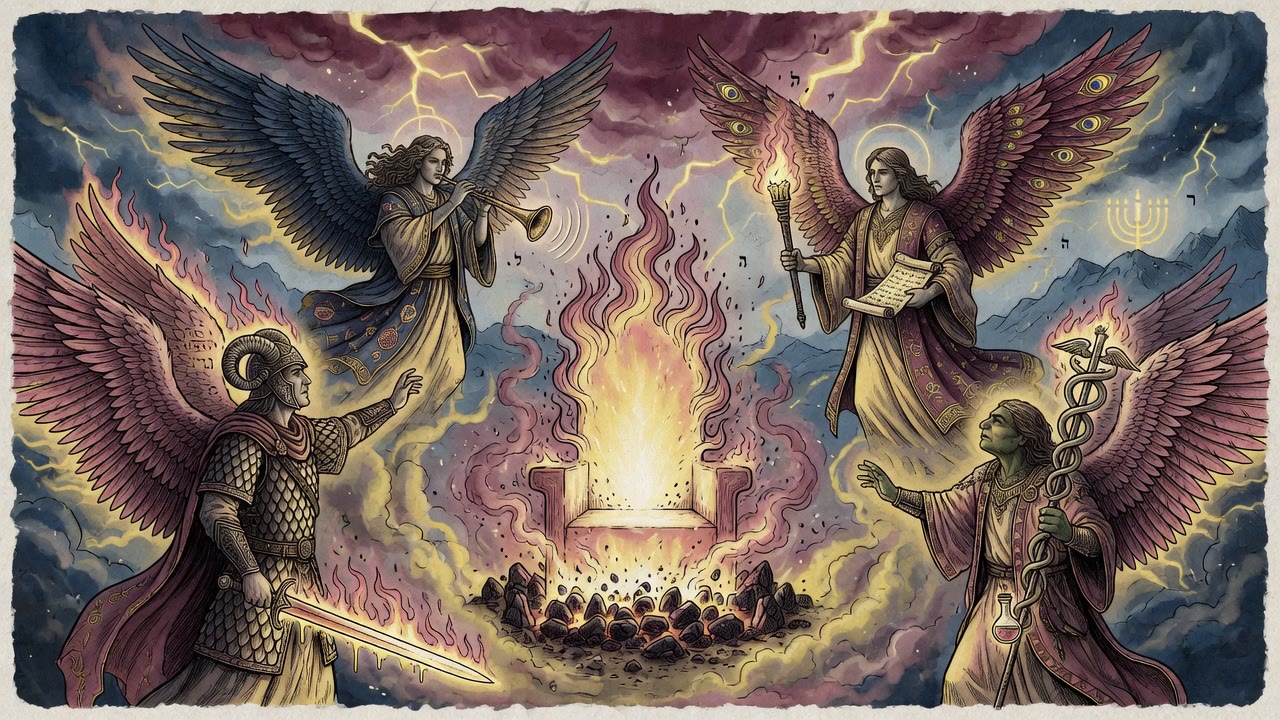
At the top they stand in a terror that shows on them. They sweat. They cover their faces with their own wings so their eyes will not fall on the likeness in the Chariot, and the Holy One turns His face from them. The living creatures crown themselves with a thousand thousand lights and wrap themselves in garments of fire, and even they are not spared the trembling.

There is one law here, and it has no mercy. No angel may come a breath early and none a breath late. They are one measure and one strength for exactly this reason, so the song leaves every mouth in the same instant. Any one of them who runs ahead of his fellow, any one who lags behind, falls into the River of Fire and is burned, and thousands upon thousands fall. Heaven sings in one voice or it does not sing at all.

The Song That Unmakes the Decree

Below all of it, unaware that he has silenced the seraphim, a man in a house of study sings first.

This is what Akiva watches when he stands with all his strength and does not turn away. He watches whose voice heaven holds its fire to hear. He gazes into the Chariot and sees what is decided at the Throne, the commandments and the powers and the good decrees, and he sees the good decrees go out and cancel the harsh ones, sees a sentence already written against the world struck through before it can fall. The song that started in a low room, that Shemaiel carried up through the windows, that the whole burning host waited in silence to follow, comes back down as a verdict lifted.

He holds his footing a moment longer. Then he goes down to tell it.


← All myths
From the tradition

Sources

3 sources

The texts behind this telling. Some cards carry a translation of the source; others are our own retelling of it, and each card says which. Every card links out to the original.

Maaseh Merkavah, Maagarim sections 34-40 (JTS 8128 witness)Maaseh Merkavah

Translation of the source text.Academy of the Hebrew Language Maagarim, Maaseh Merkavah digital transcription, lead witness New York JTS 8128 (permission covered) · Permission Covered

In the first hekhal (palace), chariots of fire say: "Holy, holy, holy is the LORD of hosts; the whole earth is full of His glory." And their flames of fire scatter and gather to the second hekhal [to the third hekhal], and they say: "Holy, holy, holy is the LORD of hosts; the whole earth is full of His glory." In the second hekhal, chariots of fire say: "Blessed be the glory of the LORD from His place." And their flames of fire likewise scatter and gather in the third hekhal, and they say: "Blessed be the glory of the LORD from His place." In the third hekhal, chariots of fire say: "Blessed be the name of the glory of His kingdom forever and ever, from the place of the house of His Shekhinah." And their flames of fire scatter and gather to the fourth hekhal, and they say: "Blessed be the name of the glory of His kingdom forever and ever, from the place of the house of His Shekhinah." In the fourth hekhal, chariots of fire say: "Blessed be the LORD, living and enduring forever and to all eternities, mighty over all the Chariot." And their flames of fire scatter and gather to the fifth hekhal, and they say: "Blessed be the LORD, living and enduring forever and to all eternities, mighty over all the Chariot." In the fifth hekhal, chariots of fire say: "Blessed be the holiness of His kingdom, from the place of the house of His Shekhinah." Their flames of fire scatter and gather to the sixth hekhal, and they say: "Blessed be the holiness of His kingdom, from the place of the house of His Shekhinah." In the sixth hekhal, chariots of fire say: "Blessed be the LORD, Lord of all the Power, and ruler over all the Chariot." And their flames of fire scatter and gather to the seventh hekhal, and they say: "Blessed be the LORD, Lord of all the Power, and ruler over all the Chariot." In the seventh hekhal, chariots of fire say: "Blessed be the King of the kings of kings, the LORD, Lord of all the Power. Who is like God, living and enduring? His praise is in the highest heavens; the sanctities of His kingdom are in the heaven of heavens; His might is in the innermost chambers. On this side, 'Holy,' and on that side, 'Holy,' and they utter song continually; and they make mention of the name of GHWZYY [divine epithet], the LORD God of Israel, and they say: 'Blessed be the name of the glory of His kingdom forever and ever, from the place of the house of His Shekhinah.'"

Full source
Otzar Midrashim, Hekhalot, Chapter from the Chapters of Hekhalot, Israel's song before the angelsOtzar Midrashim, Hekhalot, Chapters of Hekhalot

Translation of the source text.Otzar Midrashim, New York, 1915 + JewishMythology.com faithful English Beta translation · Public Domain

Rabbi Ishmael said: Fortunate are you, Israel. How beloved they are before the Holy One, blessed be He, more than the ministering angels. For when the ministering angels seek to sing above, first rivers of fire and hills of flame come around the Throne of Glory. The Holy One, may He be blessed, says to them: Be silent before Me, every angel, every living creature, every wheel, and every seraph that I created, until I first hear and listen to the voice of the song and praise of Israel My children.

As it is said, "When the morning stars sang together, and all the sons of God shouted" (Job 38:7). This is the company of angels. When is there glory in heaven? As it is written, "Be exalted above the heavens, O God; Your glory is over all the earth" (Psalms 57:6, 57:12).

Thousands and myriads of ministering angels stand to the right of the Throne, and corresponding to them on the left of the Throne. Between the rivers of fire they surround and stand. The great princes stand appointed over every troop and every host, to the right of the Throne and to the left of the Throne, and they teach them to say song and melody for the glory of the King of kings, the Holy One, blessed be He.

When the time comes to say song, Shemaiel, the great, honored, and awesome prince, stands at the windows of the lower firmament to hear and listen to the voice of the songs and praises that rise from the earth, from synagogues and houses of study, and to make them heard by the inhabitants of Aravot. Why does he do this? Because the ministering angels have no permission to say song until Israel first opens with song, as it is said, "Exalt the LORD our God, and bow at His holy mountain" (Psalms 99:9). These are the ministering angels. And every angel of every firmament, when they hear the songs and praises said below, opens above: "Holy, holy, holy" (Isaiah 6:3).

Why is his name called Shemaiel? Because he stands at every gate and makes heard the voice of the songs and praises that rise from the earth out of synagogues and houses of study, before every firmament and before the holy living creatures, the wheels, the seraphim, and the stars of splendor.

After he hears and makes it heard to all the angels of every firmament, immediately companies upon companies, forces and hosts of ministering angels, descend into rivers of fire, rivers of flame, and rivers of blaze, and immerse themselves in them one hundred times. At that hour they examine themselves three hundred sixty-five times, corresponding to the days of the solar year.

Do ministering angels have flux and impurity, such that they need immersion? Rather, these are the ministering angels appointed over the labors of the world, who descend every day to place peace in the world. When the time for song arrives, they ascend to the firmament; and because of the odor of human beings, who are subject to flux and impurity, they immerse themselves in fire, peer and beautify themselves in fire, wash and make themselves shine in fire, and sanctify themselves in fire, until they make themselves holy and sanctified, pure and purified, and return to be like the angels of Aravot.

Afterward they call to one another and ascend inside the rivers of fire, each with the permission of the other. They sing and move themselves in the light of flashing radiance. Afterward they ascend by a ladder of rivers of fire, each with the permission of the other, with praise, with laud, with psalm, with exultation, and with song, until they reach the forces of Aravot, the chashmalim of purity, the cherubim and wheels, the holy living creatures and the wheels of the chariot, the glories of face and the winged ones, and the high and exalted Throne.

Immediately they stand in trembling, in sweat, in purity, in holiness, in awe, and in humility, and they cover their faces with their wings so that they will not look at the likeness of the Glory that dwells in the chariot. They stand in companies of thousands upon thousands and towers of myriads upon myriads, camps without searching out and hosts without number. How many mountains of fire and hills of flame stand before the Throne of Glory. At that hour the Holy One, blessed be He, sits upon the Throne of Glory, and His glory fills all the earth, as it is said, "The whole earth is full of His glory" (Isaiah 6:3).

The holy living creatures sanctify and purify themselves even more than they do. Each living creature has a thousand thousand crowns of kinds of lights bound to its head. They put on a garment of fire, wrap themselves in a garment of flame, and cover their faces with their wings, and the Holy One, blessed be He, turns His face away from them.

Why do the holy living creatures and the splendid wheels sanctify, purify, dress, and wrap themselves from ancient days more than the ministering angels, wheels, chashmalim, seraphim, cherubim, winged ones, wheels of the chariot, and the host above, each of these ministering angels having its own matter? Because the chariot is set upon their faces, the power of the Name is upon their heads, the Shekhinah is above them, and rivers of fire pass between them. Therefore they are directed, ready, radiant, purified, beautified, and refined in light seven times, and all of them stand in awe, fear, purity, and holiness, with one voice, one utterance, and one melody.

Not only this, but thousands upon thousands and myriads upon myriads of angels fall into the River of Fire and are burned, because there is no one early or late among them, no one who lowers or raises in song and holiness before the King of kings, the Holy One, blessed be He. Any one of them who is earlier or later than his fellow in song is burned in the River of Fire.

Even among the holy living creatures there is no one early or late, because the measure of their stature is one and their strength is one. The four legs of the Throne are aligned opposite one another, wheel opposite wheel, wheel opposite wheel, living creature opposite living creature, wing opposite wing. Their mouths open in great song, in awe, fear, trembling, sweat, dread, quaking, purity, and holiness, with a voice of noise and with melody, and they serve the chariot with the voice of songs, praises, and laudations.

At that hour the holy ones sanctify, the pure ones praise, the watchers exalt, the wheels magnify, and the angels sing. They are divided into three rows of thousands upon thousands and myriads upon myriads. One company says, "Holy," and falls on its face. One company says, "Holy." And one company says, "Holy is the LORD of Hosts; the whole earth is full of His glory" (Isaiah 6:3). Why do they not say, "Blessed is the glory of the LORD from His place" (Ezekiel 3:12)? Because the Shekhinah is in every place. But in the future, the Shekhinah will return to its place for holiness, and it will say, "Blessed is the glory of the LORD from His place."

Full source
Maaseh Merkavah, Maagarim section 42 (JTS 8128 witness)Maaseh Merkavah

Translation of the source text.Academy of the Hebrew Language Maagarim, Maaseh Merkavah digital transcription, lead witness New York JTS 8128 (permission covered) · Permission Covered

Rabbi Akiva said: Happy is the person who stands with all his strength and brings up song before the blessed ones of the LORD God of Israel, and gazes upon the Chariot, and sees all that is done before the Throne of Glory, upon which the blessed ones of the LORD God of Israel are seated, and beholds what pertains to commandment, and to power, and to statutes, and to good decrees, which annulled harsh decrees from the world.

Full source