Parshat Bereshit6 min read

The First Man Entered Eden as a Priest Enters the Sanctuary

Formed in a field and carried into Eden only on the fortieth day, the first man tended the holiest ground on earth like a priest before an altar.

Curated by Arthur · Told by Maggid ·
Table of Contents
  1. Adam Waited Forty Days Outside the Garden Wall
  2. The Angels Carried Him In to Till and Keep
  3. The Woman Was Brought In on the Eightieth Day
  4. Seven Years of Guarding the Holy Trees
  5. The Statute Written for Every Mother
The First Man Entered Eden as a Priest Enters the Sanctuary Click for full size

Adam Waited Forty Days Outside the Garden Wall

Adam was shaped in the open country, far from any gate. Dust of the field pressed into a form, breath forced into the nostrils, and then a man lay in the land where he had been made. The garden was somewhere else. It stood walled and waiting, and no hand reached to bring him toward it. Not on the first day. Not on the seventh.

He remained in the land of his making while heaven kept count. One week passed, then another, then a third. The watchers who had seen him draw his first breath left the gate shut. A number of days had to run their course before a creature of dust could be let onto holy ground, and the number was forty.

When the fortieth day closed, the counting ended.

The Angels Carried Him In to Till and Keep

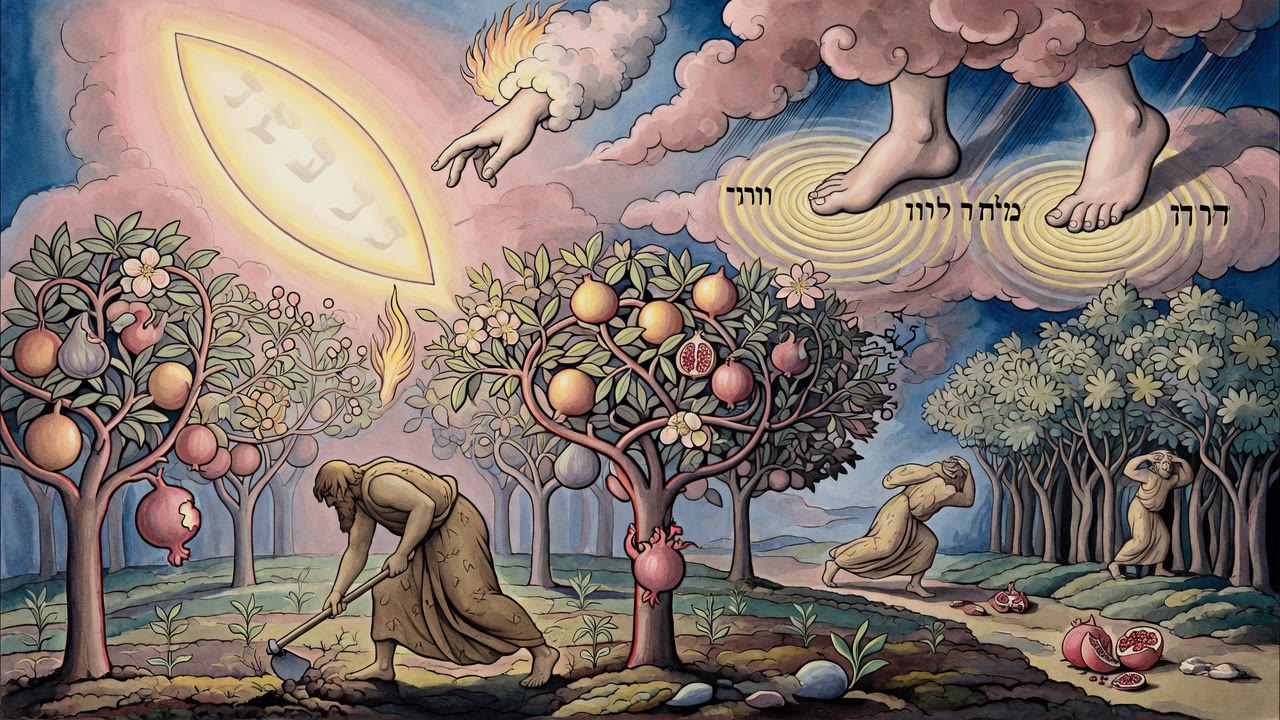
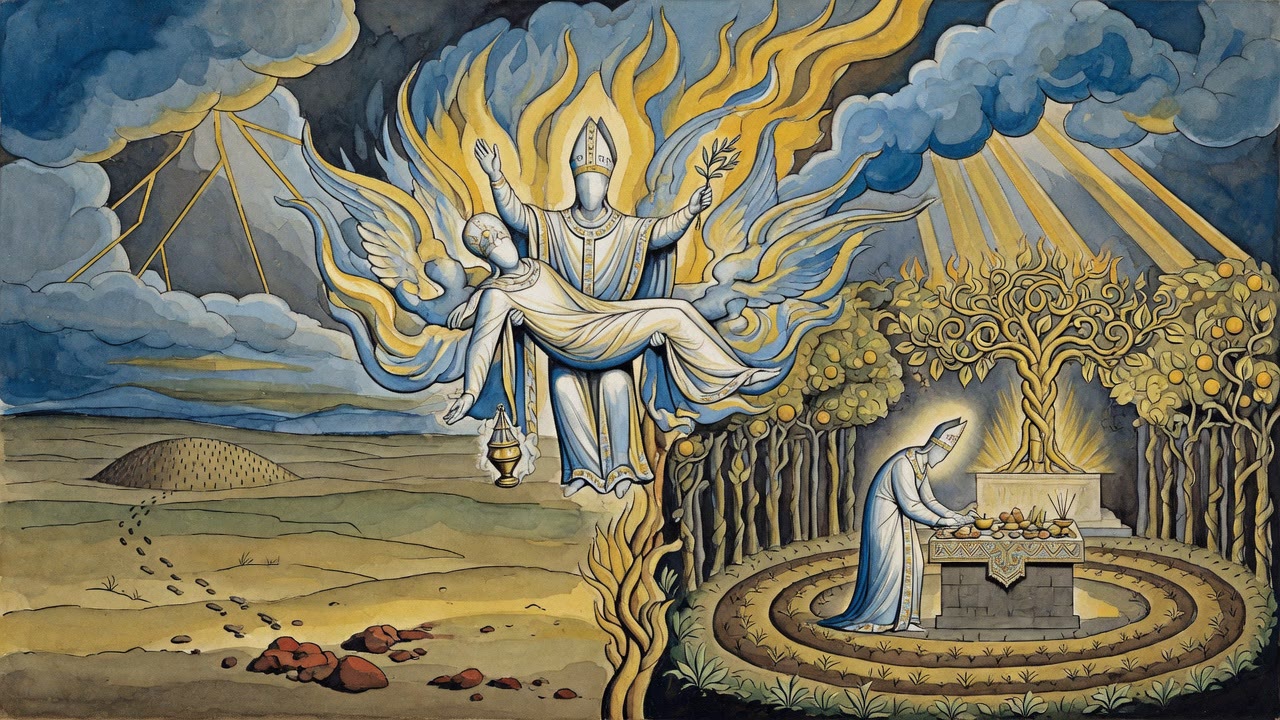
Then the watchers lifted him from the field and carried him through the gate, into the Garden of Eden. The air changed as he crossed it. Every tree inside was holy. The soil under those trees was holier than all the rest of the earth, and this was no orchard a man could stroll into on a whim. It was the one ground set apart from every other ground, and a body had to be reckoned clean enough before it was allowed across the threshold.

Inside, work was given to him. He was set to till the garden and to keep it, and the watchers taught him everything the ground required, how to tend it and coax it and guard it. He labored there naked and did not know that he was naked, and no shame touched him. He drove off the birds that came down for the fruit, and the beasts, and the cattle. He gathered what ripened and ate, and set the rest aside, some for himself and some held back and kept.

He was the first keeper the garden had ever known. Before him no one had walked its rows or watched its walls, and after him it would need keeping still, because a place this holy could be spoiled by a single unclean thing crossing in. So the work was not idleness dressed as chores. It was guard duty at the edge of the most sacred ground that existed, and the guard had been counted and washed clean by forty days of waiting before he was trusted with it.

The Woman Was Brought In on the Eightieth Day

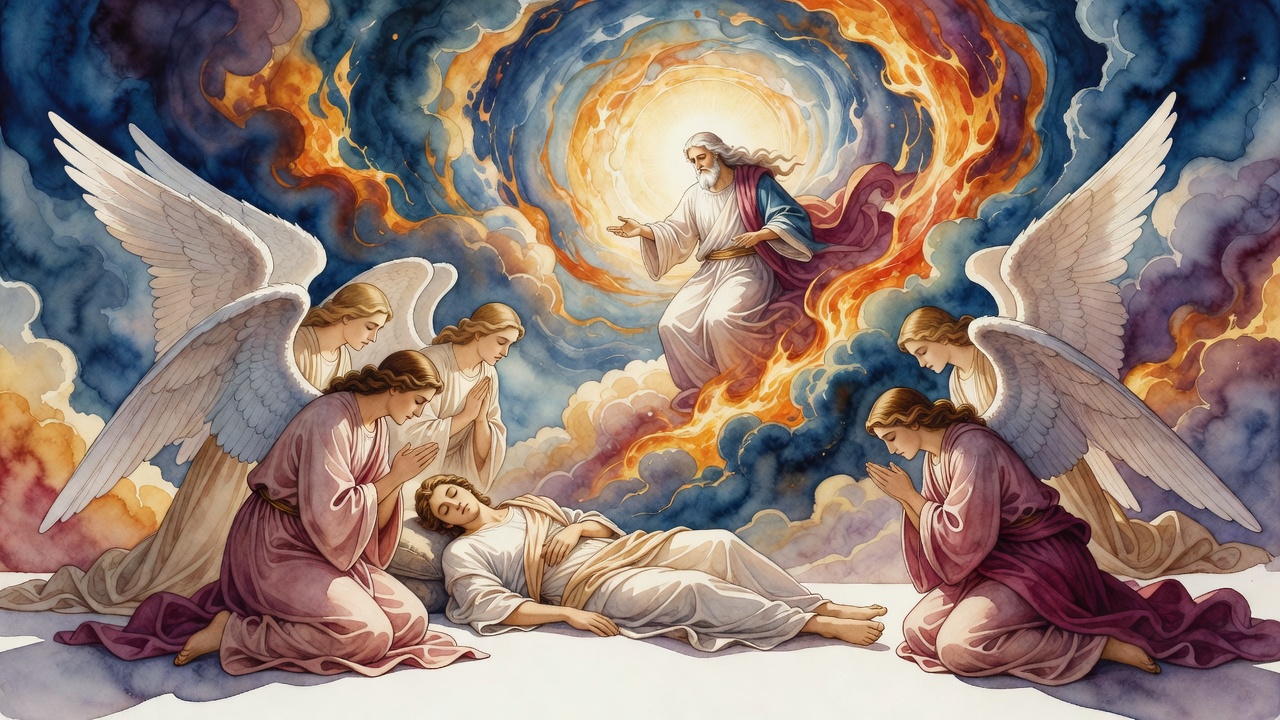
She had been taken from his side in the first week, a rib closed over with flesh, and shown to him in the second. Eve was made. But she was not carried into the garden when he was. While Adam tilled the holy ground alone, she waited, as he had waited, outside the wall.

Her count ran longer. Forty days, and then forty more. The garden did not open for her a day early. Holiness kept its own arithmetic, and her number was eighty, and eighty was what she waited. Only when the eightieth day was complete did the watchers bring her through the same gate, onto the same soil, under the same holy trees. Twice the man's waiting, to the day. Then the two of them stood in the garden together.

Seven Years of Guarding the Holy Trees

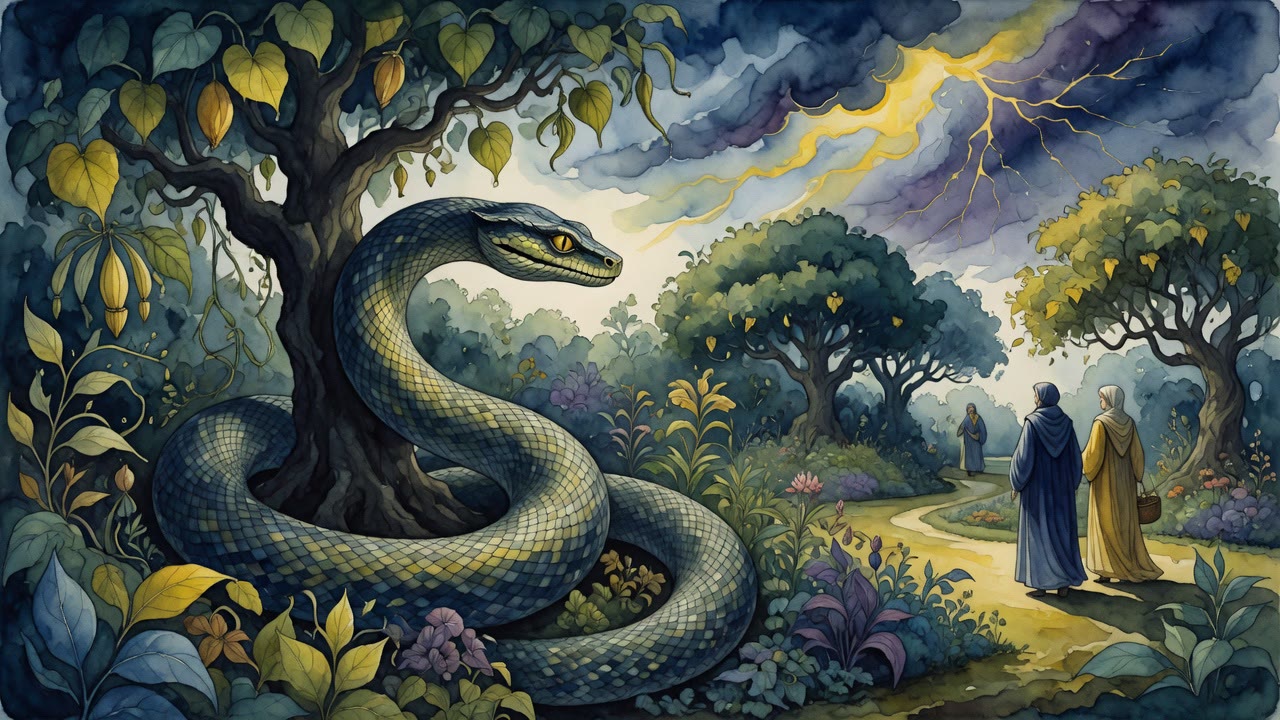
For seven years they tended it. Not a season of ease among the flowers, but service, the kind a minister keeps before an altar that must never be defiled. Adam tilled and Eve kept, and the garden stayed unspoiled under their hands. They watched the walls for the birds and the beasts. They gathered the fruit in its time. They ate, and set aside what was left, and the residue they stored was watched too, kept back and set apart the way holy things are set apart.

Nothing unclean could enter here. That was the whole reason a man had lain forty days in a field, and a woman eighty, before either was allowed to cross. The garden was the holiest place on the earth. Everything planted in it was holy. To walk among those trees was to stand where dust had no natural right to stand, and the long counting at the gate was the price of the standing.

The Statute Written for Every Mother

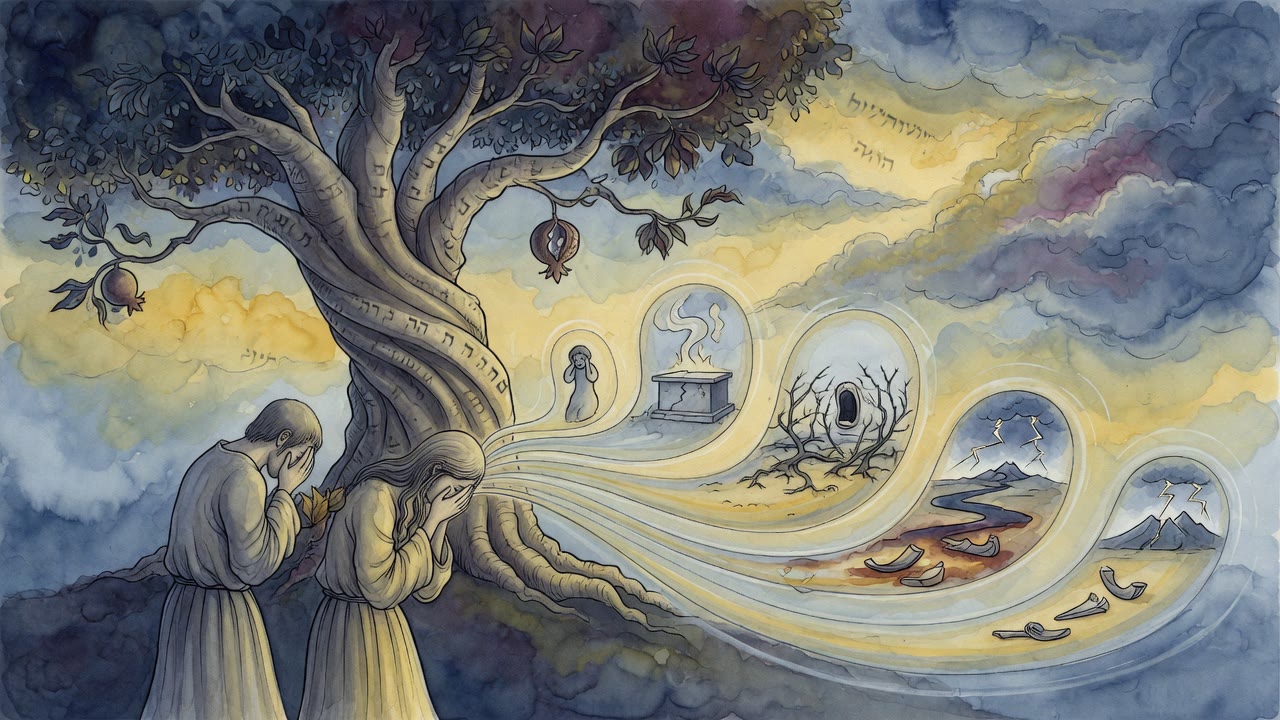
The angels wrote the pattern on the tablets of heaven, and it did not stay in the garden. It followed every woman who would ever give birth.

A woman who bears a son counts forty days. She does not touch anything holy in that time, and she does not come near the sanctuary. A woman who bears a daughter counts eighty, fourteen days in the blood of her pain and sixty-six in the blood of her cleansing, until the full eighty are done. Only then may she approach the holy place. The count that had kept the first man outside the garden for forty days now kept every mother of a son from the sanctuary for forty. The count that had kept the first woman outside for eighty now kept every mother of a daughter for eighty.

The gate of Eden and the door of the sanctuary became the same threshold, guarded by the same number of days. A mother waiting out her time at the edge of the holy place was standing where Adam once stood in the field, and where Eve once stood beyond the wall until the morning she was carried in.


← All myths
From the tradition

Sources

2 sources

The texts behind this telling. Some cards carry a translation of the source; others are our own retelling of it, and each card says which. Every card links out to the original.

Book of Jubilees 3:25Book of Jubilees

Retold in our words. Read the original at the link below.Sefaria Community Translation · CC-BY

Book of Jubilees turns to Adam and Eve Tended Eden for Forty Days.

So, what was life like in Eden, according to Jubilees?

Apparently, it involved a lot of gardening.

The text specifies that "in the first week of the first jubilee, Adam and his wife were in the Garden of Eden for seven years tilling and keeping it." Seven years! That's quite a long apprenticeship in paradise.

Tilling and keeping.. What does that even mean in a perfect world? Jubilees continues, "and we gave him work and we instructed him to do everything that is suitable for tillage." So, GOD Himself gave Adam instructions.

And what did this divinely ordained gardening entail? "And he tilled (the garden), and was naked and knew it not, and was not ashamed." This reminds us of the Genesis account, of course, highlighting their innocence. But Jubilees adds another layer: responsibility.

Adam wasn’t just frolicking among the flowers. He "protected the garden from the birds and beasts and cattle, and gathered its fruit, and ate, and put aside the residue for himself and for his wife [and put aside that which was being kept]." He was a protector, a provider. Even in paradise, there was a need for stewardship. He had to guard against outside threats, the birds, the beasts, the cattle. He had to harvest, to manage resources, to plan for the future.

It paints a picture of Adam not just as an innocent bystander, but as an active participant in maintaining the Garden’s perfection. It suggests that even in a state of grace, there was purpose, there was work, there was a need for responsibility.

Perhaps that’s the real message here. That even in the most ideal circumstances, we are meant to cultivate, to protect, and to care for the world around us. Maybe that's a lesson we can all take to heart, no matter where our own "garden" may be.

Full source
Book of Jubilees 3:20Book of Jubilees

Retold in our words. Read the original at the link below.Sefaria Community Translation · CC-BY

It’s a perspective that illuminates ideas about purity, holiness, and the very special status of the Garden of Eden.

The passage in question focuses on the period after a woman gives birth. Specifically, it deals with what we might call a period of purification. According to the Book of Jubilees, after giving birth, a woman undergoes a period where she's considered to be in a state requiring ritual purification. For a male child, this period lasts forty days. But. And this is key, for a female child, it extends to eighty days: fourteen days in the blood of her pain, and sixty-six days in the blood of her purification. Thus, a total of eighty days.

Why the difference? Well, that’s a question that has sparked much discussion over the centuries. The text itself doesn't explicitly state the rationale, but it clearly establishes a distinction based on the sex of the child.

Here's where things get really interesting. The passage continues: "And when she had completed these eighty days we brought her into the Gan Eden (the Garden of Eden, paradise)"–the Garden of Eden–"for it is holier than all the earth besides, and every tree that is planted in it is holy."

Wait, what? Brought her to the Garden of Eden?

It's important to understand that the Book of Jubilees isn’t necessarily describing a literal physical journey in every instance. Instead, it might be referring to a symbolic or spiritual return to a state of purity and connection with the divine. The Garden of Eden, in this context, represents the ultimate state of holiness and closeness to God. By undergoing the purification process, the new mother is, in a sense, prepared to re-enter this sacred space, symbolically or otherwise.

The text concludes by emphasizing the importance of adhering to these prescribed periods. It states that there was ordained a statute regarding childbirth, specifying that a woman should not touch any hallowed thing, nor enter the sanctuary, until the days of purification for the male or female child are completed.

This highlights the significance placed on ritual purity and separation in ancient Jewish tradition. The mikdash, or sanctuary, the place of ultimate holiness, was off-limits until the prescribed time had elapsed. This waiting period underscored the idea that entering sacred space required a state of ritual cleanliness, and that childbirth involved a process of becoming ritually pure again.

It offers a glimpse into a worldview where ritual purity, the holiness of the Gan Eden, and the rhythms of life were deeply intertwined.

Full source