Parshat Bereshit6 min read

The Five Silent Screams That Followed the First Sin

Adam pointed at Eve, Eve at the serpent, and no one would hold the guilt. Then five cries slipped loose into a world too deaf to hear them.

Curated by Arthur · Told by Maggid ·
Table of Contents
  1. The Voice Walking in the Cool of the Day
  2. The Finger That Pointed at the Woman
  3. The Ground Cursed for the Sake of Bread
  4. Five Cries Loosed Into the World
  5. The Scream at the Edge of the Shekhinah
The Five Silent Screams That Followed the First Sin Click for full size

The Voice Walking in the Cool of the Day

The juice was still wet on their fingers when they heard the walking.

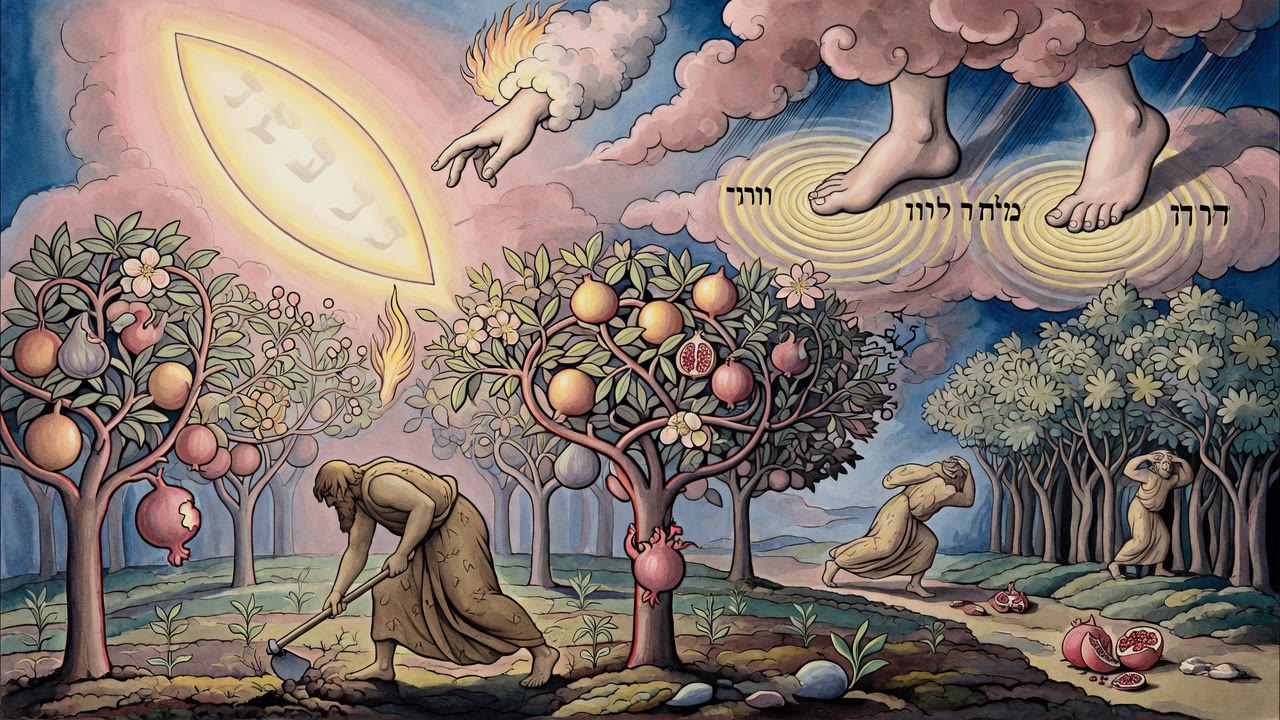
Adam knew that sound. He had heard it every evening since the sixth day, the sound of God moving through the trees in the cool of the day. Every other evening it had drawn him forward. Tonight it drove him backward, into the deepest brush of the garden, dragging Eve by the wrist. They crouched behind trunks that had never before been a place to hide. Their hands were still full of stolen sweetness, and for the first time they knew they were naked.

"Where are you?" the voice asked, though the One who asked already knew.

Adam answered from the leaves. "I heard You in the garden, and I was afraid, because I am naked, and I hid myself."

"Who told you that you were naked? Have you eaten from the tree I commanded you not to touch?"

The Finger That Pointed at the Woman

Here was the moment the whole world would inherit.

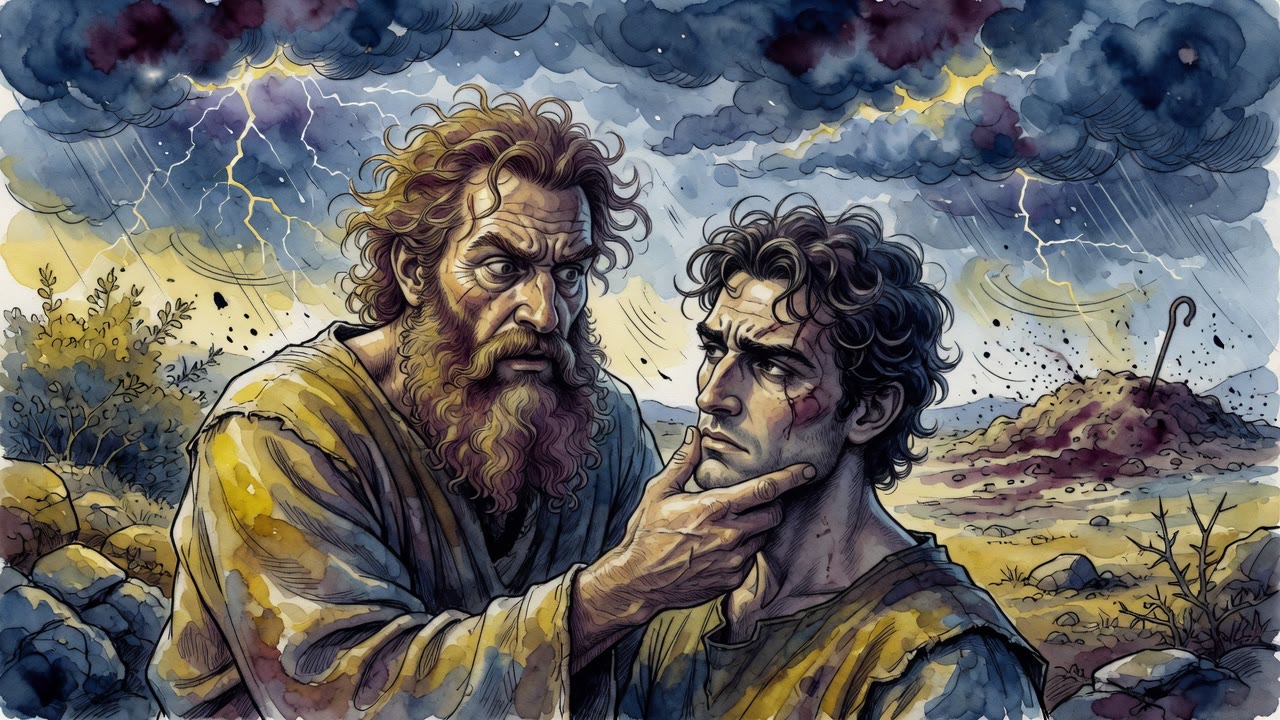
Adam did not fall to his knees. He did not say, "I ate, and I am sorry." He lifted his hand and aimed it at the woman beside him. "The woman," he said. "The woman You gave to be with me. She gave me the fruit, and I ate." In one breath he accused two at once, the wife for handing it over and the One who had made her.

God turned to Eve. "What is this you have done?"

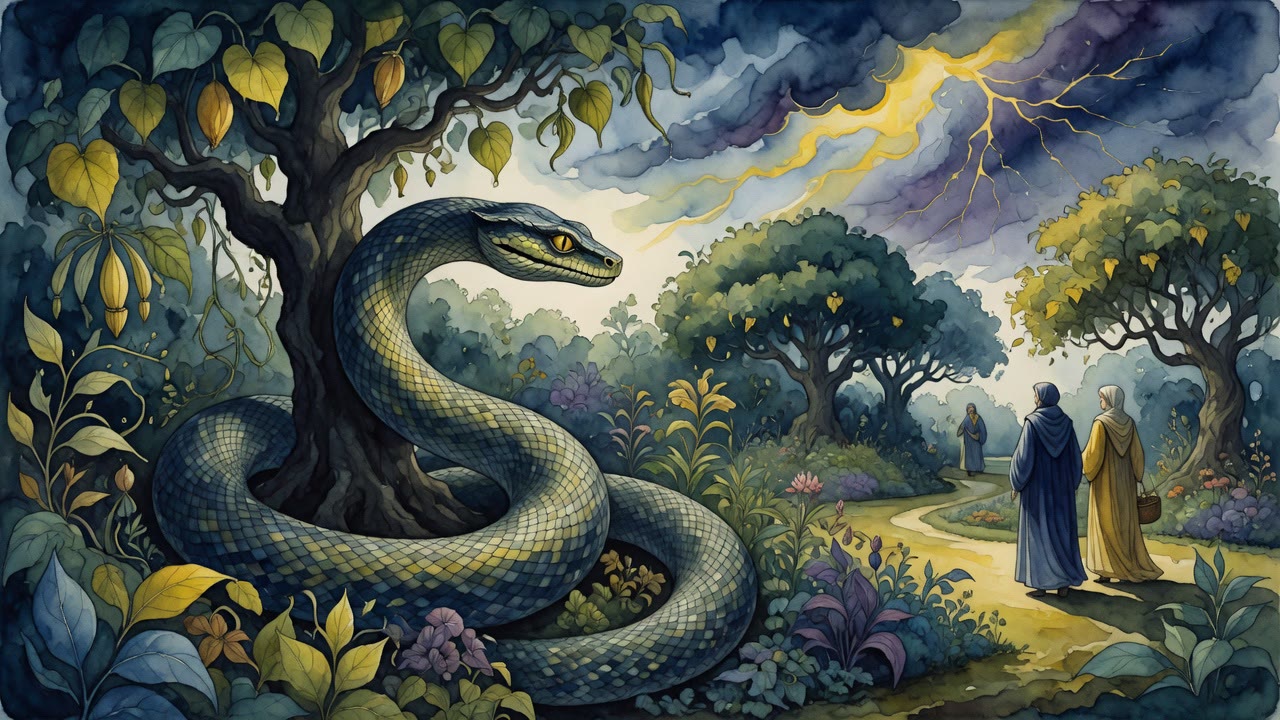
Eve did not fall either. She pointed lower, down toward the coils in the grass. "The serpent," she said. "The serpent deceived me, and I ate."

The serpent had no finger to raise and no one left beneath it to blame. The guilt had recoiled through the whole of creation and found nothing at the bottom to hold it. No one would carry the blame. So each would carry a sentence instead.

The Ground Cursed for the Sake of Bread

God spoke to the serpent first. It would go on its belly now, its legs taken from it where it lay, and it would eat the dust of the ground it had crawled so proudly across. Between it and the woman's children there would be war without end, heel against head, forever.

Then God turned to the man, and the sentence was long, because Adam had listened to a voice that was not God's and obeyed it.

"Because you listened to the voice of your wife and ate from the tree I forbade you, cursed is the ground for your sake." The earth itself would turn against the one who had been set as its master. "When you work it, it will not give you its strength. Thorns and thistles it will bring up for you, and in the sweat of your face you will eat bread."

It did not stop at hunger. God laid out the whole shape of the life to come, and it was a litany of effort that never pays. Adam would labor and grow weary and find no rest. He would be bitterly pressed and never taste sweetness. Heat would scorch him and cold would pinch him in the same day. He would toil greatly and gain no wealth. He would grow fat, and still he would die. And the animals he had named, the beasts over whom he had been made king, would rise against him, because he had not kept the one command he was given.

The gate closed behind them. But something had already slipped out ahead of them into the world.

Five Cries Loosed Into the World

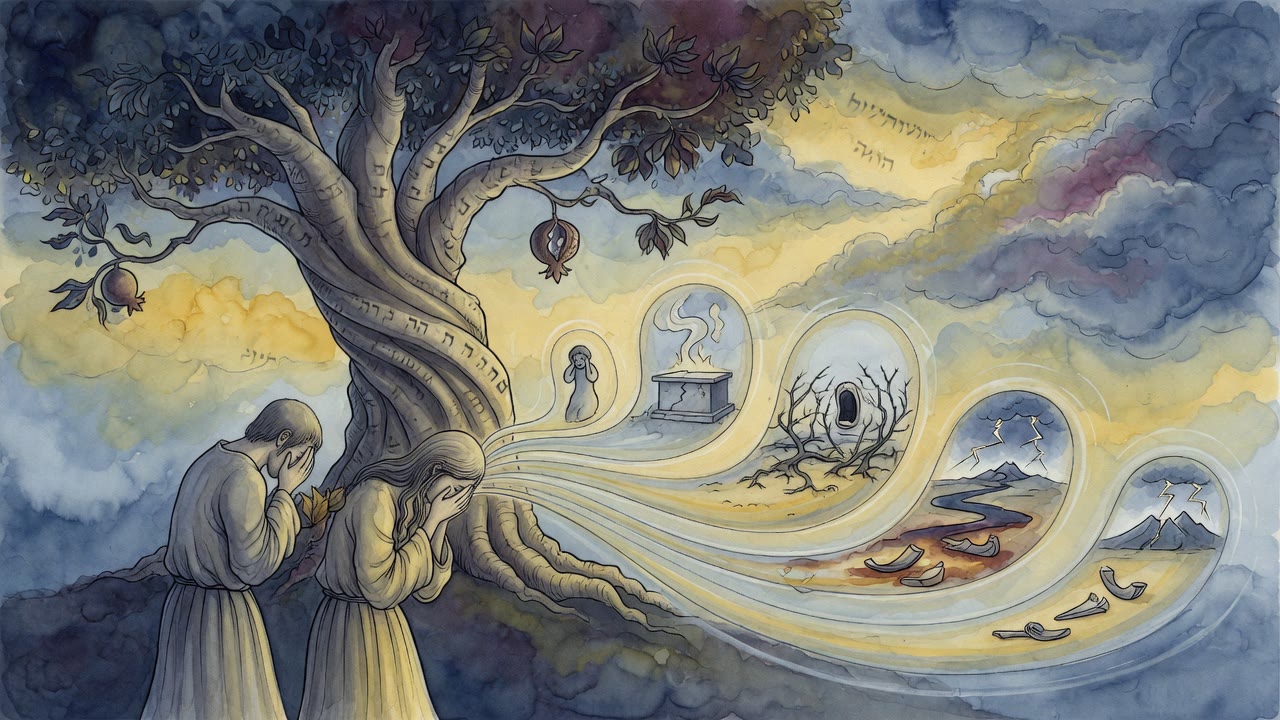
The wound in Eden did not stay in Eden. From the moment the sentence was passed, five cries began to travel the earth, and not one of them could be heard by any ear made of flesh.

The first was the cry of a fruit tree at the instant the axe bites through its trunk. A tree that had fed the world screams as its life is severed, and the orchard around it stands silent as though nothing has happened.

The second belonged to the serpent again. When it drags itself out of its own skin, splitting the husk of the self it can no longer wear, it cries at the tearing, and the grass does not stir.

The third was the cry of a woman put out of her marriage, sent from the house that had been hers, her grief loud enough to crack the pillars of the world and heard by no one on the street she walks.

The fourth was the cry of an infant forced from the warm dark of the womb into the cold width of the world, screaming at a threshold it never asked to cross.

The Scream at the Edge of the Shekhinah

The fifth cry was the loudest, and the most hidden of all.

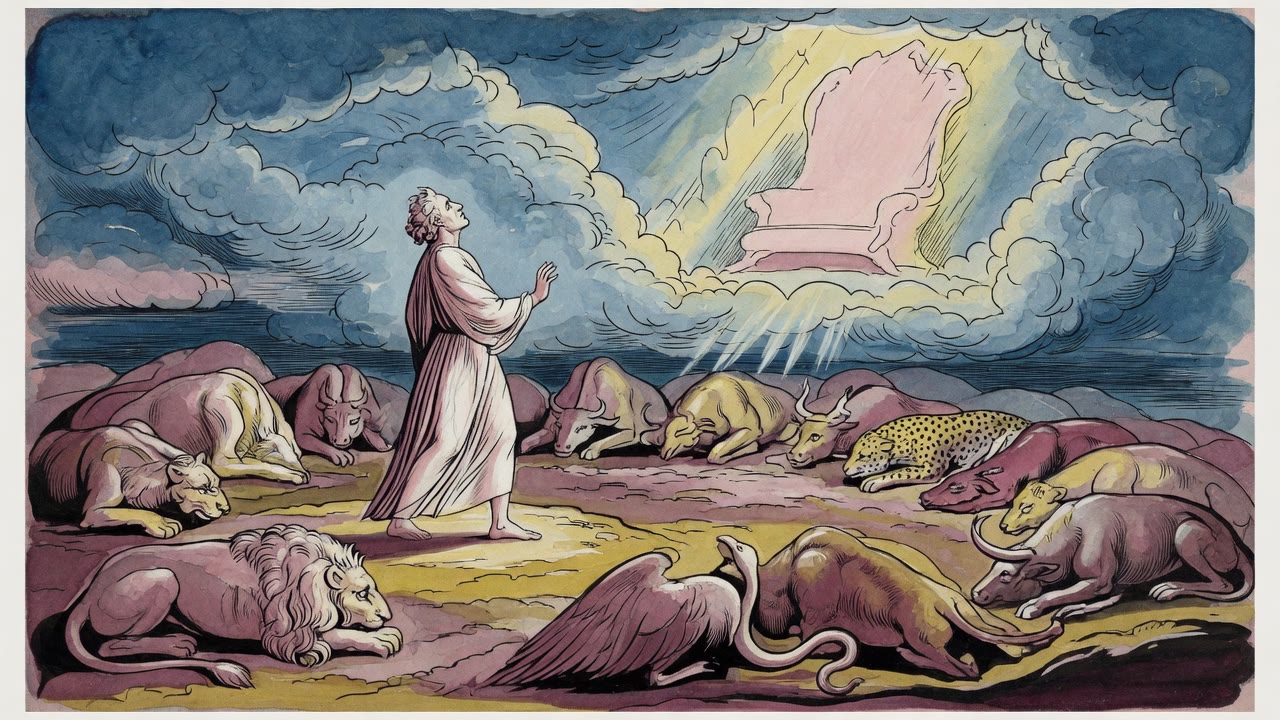
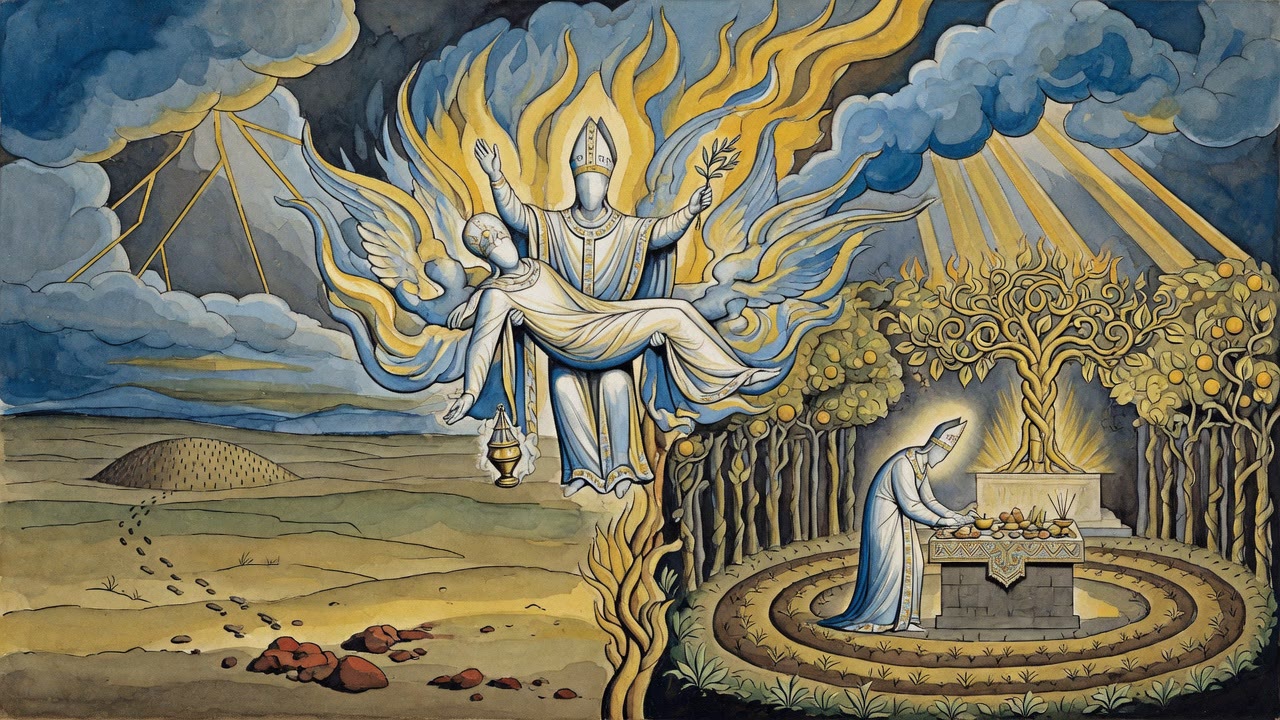
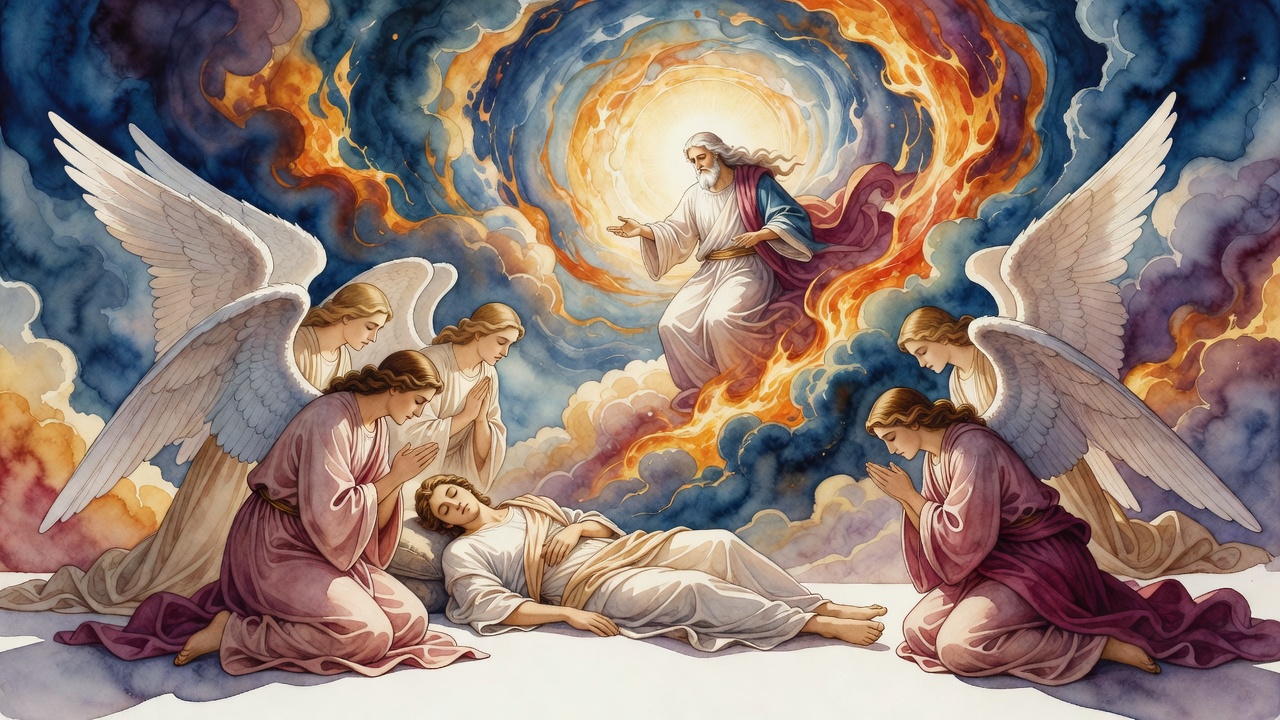
It is the scream of the soul at the instant it is torn from the body. The soul does not go quietly, and it does not go blind. At the very edge of leaving, it lifts its eyes and beholds the Shekhinah (שכינה), the Divine Presence it has hungered for since it first entered the flesh. In that seeing it screams, because no one can look upon that face and remain. "For man shall not see Me and live," God had said. The soul sees, and cries out, and is gone.

Five screams, loosed from one stolen mouthful. They circle the earth still, through the felling of trees and the shedding of skins, through broken houses and birthing rooms and deathbeds, a whole wounded creation wailing at a pitch no living ear was built to catch. The first pair aimed their fingers and passed the guilt down the line until it fell off the edge of the world. And the world has been screaming after them ever since, too high and too low for anyone to hear.


← All myths
From the tradition

Sources

2 sources

The texts behind this telling. Some cards carry a translation of the source; others are our own retelling of it, and each card says which. Every card links out to the original.

Legends of the Jews 2:113Legends of the Jews

Retold in our words. Read the original at the link below.The Legends of the Jews by Louis Ginzberg (1909) · Public Domain

Everyone was pointing fingers.

The classic story. Adam, confronted by God, doesn't exactly take responsibility. Instead, as Ginzberg retells it in Legends of the Jews, Adam tries to shift the blame: "It was her, God! She gave me the fruit." But it doesn't stop there. Oh no.

Eve, in turn, accuses the serpent. It's a cosmic blame game!

God, being God, sees through it all. He doles out justice, and it's a sobering assessment of what life will now be like for Adam. It's more than just leaving the Garden; it's a fundamental shift in the human experience.

What does God say, exactly? "Because thou didst not obey My commands, but didst hearken unto the voice of thy wife, cursed is the ground in spite of thy work." Ouch. It's a harsh assessment, setting the stage for a world of toil.

The earth itself turns against Adam. "When thou dost cultivate it, it will not yield thee its strength. Thorns and thistles shall it bring forth to thee, and in the sweat of thy face shalt thou eat bread." The very act of survival, of providing for oneself, becomes a struggle.

But the curse doesn't stop at physical labor. God continues, painting a picture of hardship and disappointment. "Thou wilt suffer many a hardship, thou wilt grow weary, and yet find no rest. Bitterly oppressed, thou shalt never taste of any sweetness. Thou shalt be scourged by heat, and yet pinched by cold. Thou shalt toil greatly, and yet not gain wealth. Thou shalt grow fat, and yet cease to live."

It's a litany of suffering, a world where effort doesn't always equal reward. A world where comfort and ease are replaced by hardship and struggle.

And finally, a chilling detail: "And the animals over which thou art the master will rise up against thee, because thou didst not keep my command." The natural order is disrupted. The harmony between humans and animals is broken.

This wasn't just about eating a piece of fruit. It was about disrupting a divinely ordained order, and the consequences, according to these legends, were far-reaching, shaping the very nature of human existence.

How much of our own struggles can be traced back to that moment? And what does it mean to live in a world shaped by these ancient narratives?

Full source
Pirkei DeRabbi Eliezer 34:4Pirkei DeRabbi Eliezer

Retold in our words. Read the original at the link below.Pirke de Rabbi Eliezer, trans. Rabbi Gerald Friedlander, London (1916) · CC-BY

Pirkei DeRabbi Eliezer, a fascinating collection of stories and teachings, explores just that. Specifically, Chapter 34 reveals five silent screams that traverse the world, unseen and unheard.

What are these unseen wails?

First, there's the silent scream of a tree being felled – specifically, a fruit-bearing tree.

Then comes the serpent. When a serpent sheds its skin, it releases a cry of transformation, a shedding of the old self. Why is that a silent scream? Perhaps because transformation, while necessary, can be a painful, isolating process.

Next, we have the cry of a divorced woman. Oof. That one hits hard. The pain and disruption of a broken marriage reverberating across the world, yet remaining unheard by most. It's a stark reminder of the silent suffering that often accompanies personal loss and societal shifts.

And then, the cry of a newborn infant entering the world. Wait, a silent cry? But babies cry loud! Perhaps this refers to a deeper, primal scream, the shock of transition from the safe, nurturing womb to the vast, unknown world.

Finally, the most profound of all: the cry of the soul departing the body. Pirkei DeRabbi Eliezer tells us that the soul doesn't leave the body until it beholds the Shekhinah – the Divine Presence. This moment of transition, of ultimate separation, is marked by a cry that resonates across existence, yet remains inaudible to the living. It's a moment of awe and terror, of ultimate loneliness and profound connection.

It’s interesting that this text connects this moment with a verse from Exodus (33:20): "For man shall not see me and live." This suggests that the act of truly seeing the Divine is so overwhelming that it can only be experienced at the very edge of existence, at the moment of death.

These silent screams, these unheard cries… they paint a vivid picture of the hidden pains and transitions that shape our world. They challenge us to listen more closely, to be more attuned to the suffering and transformation happening all around us, even when it's beyond our immediate perception.

Do these silent screams resonate with you? What other unheard cries might be echoing through the universe? Maybe the point isn't to actually hear them, but to be more aware of the unseen and unheard moments that make up the tradition of existence.

Full source