6 min read

The Fist That Holds the Sea and the Word That Caught the Sky

The heavens ran outward forever until one word caught them, the sun rides hidden in a tent of fire, and a single fist holds every sea.

Curated by Arthur · Told by Maggid ·
Table of Contents
  1. The Sky That Would Not Stop Running
  2. The Rider Asleep Inside a Tent of Fire
  3. The Fist That Closed Around Every Sea
  4. The Warrior Wearing the World Like Armor
The Fist That Holds the Sea and the Word That Caught the Sky Click for full size

The Sky That Would Not Stop Running

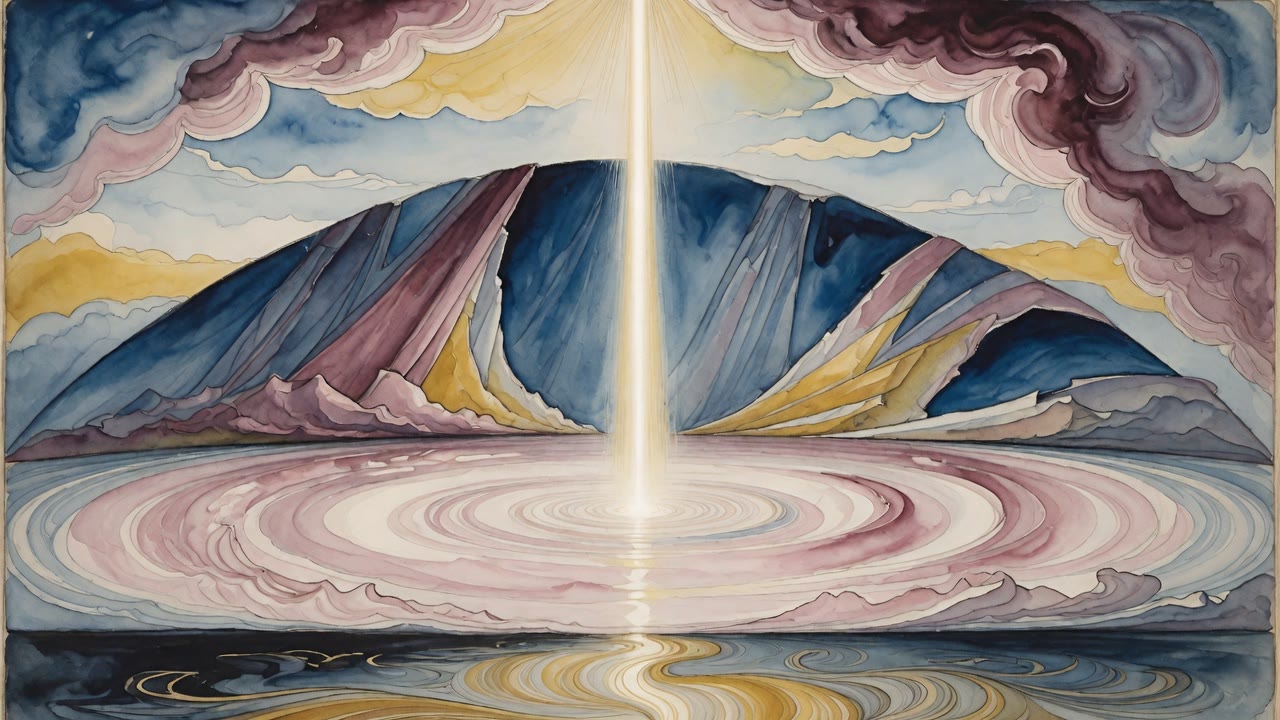
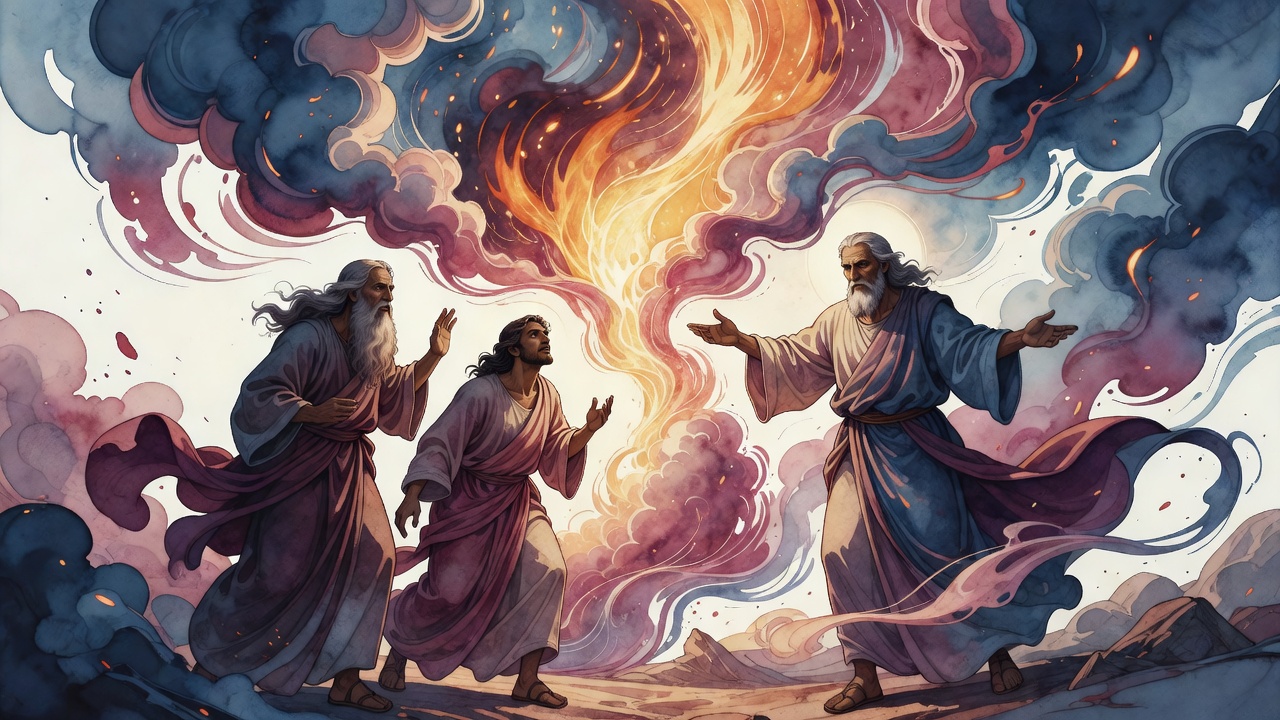
In the first hour the heavens went out like a breath and did not come back. They stretched. They kept stretching. One firmament pulled away from the next until five hundred years of travel lay between them, and still the far edge raced outward into the dark, hunting for a wall that was not there. Nothing in the making of the world could catch it. Distance answered only to more distance.

Then a voice went out across the widening dark. One word. God said, "Enough." The heavens heard it and stopped where they stood. Had that word stayed unspoken, the sky would be ballooning still, wider every hour, past any number a mouth could count. Two words had built the frame of everything. One to open it. One to shut it.

The Rider Asleep Inside a Tent of Fire

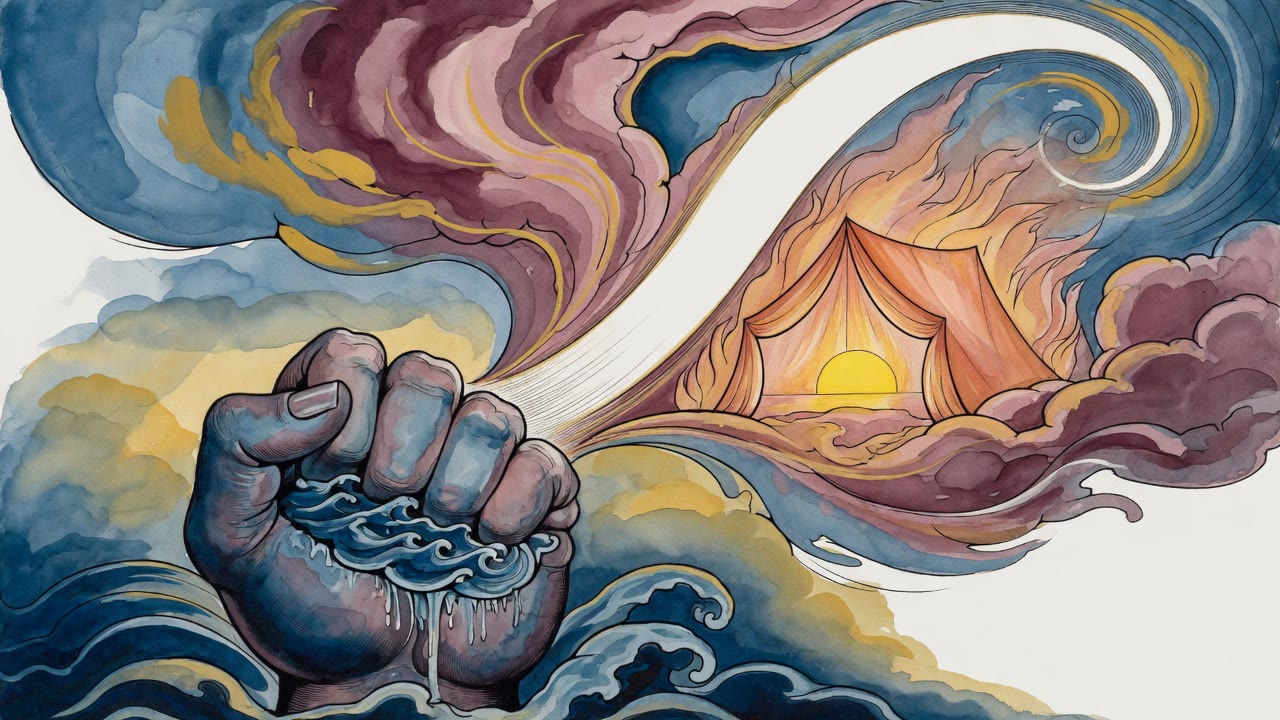
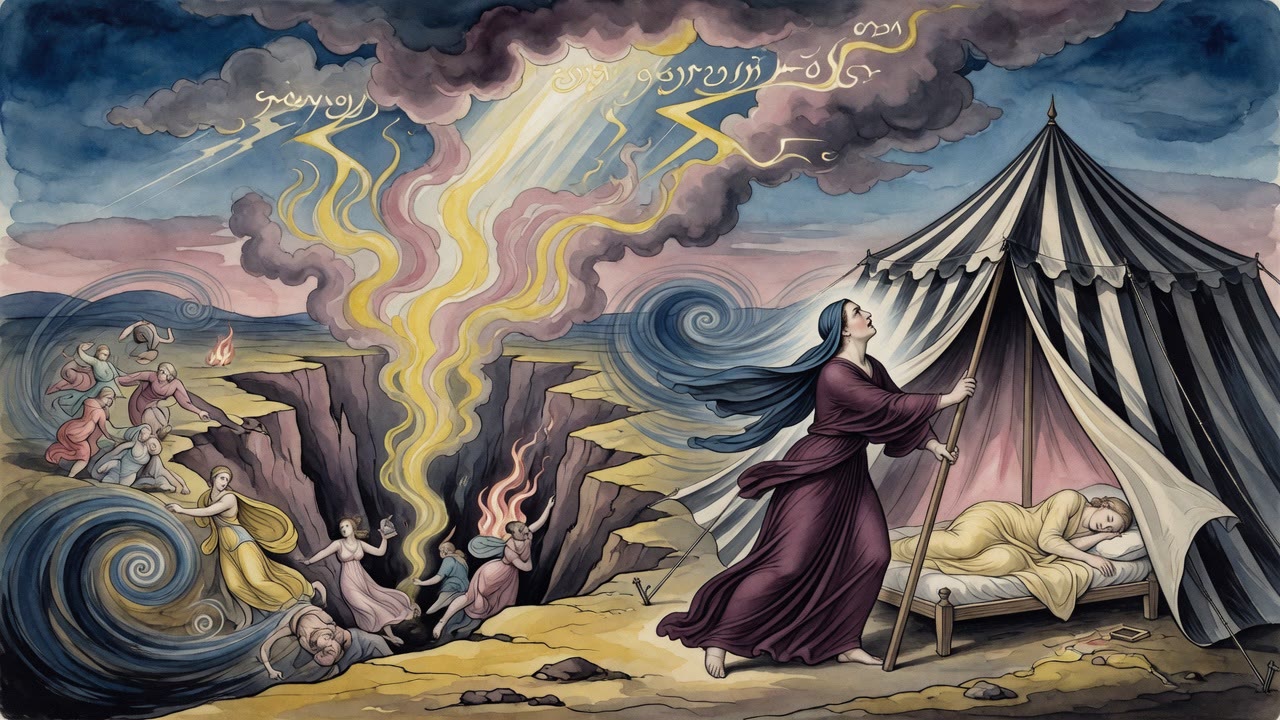
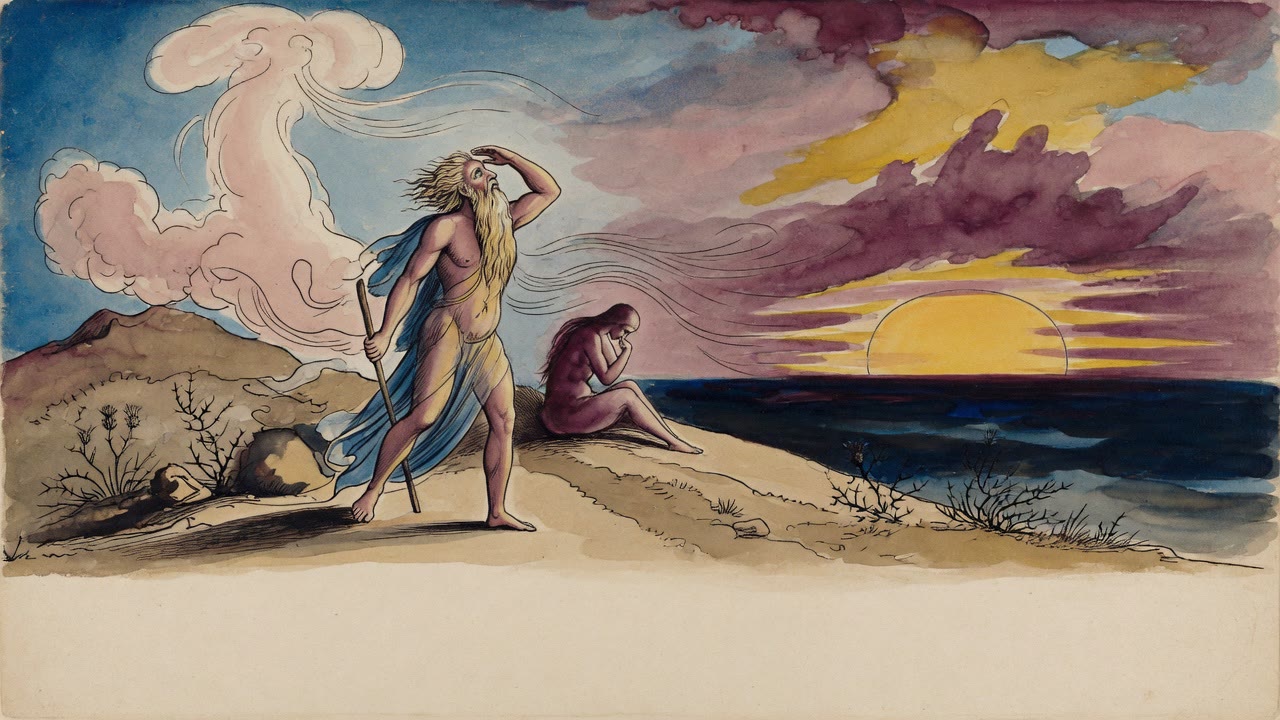
Inside that frame a rider woke each dawn in the east. The sun came forth crowned like a bridegroom stepping from his chamber, glad as a warrior to run his road, and it never rode naked across the sky. God had pitched a tent for it, a sheath against the heat of its own face. Before the sun set out, God led it first through a pool of water and cooled the fire in its cheeks, so that the thing meant to warm the world would not walk out and burn the world instead.

In summer its face blazed down. In winter the same face turned to ice, and only the fire buried in its heart kept the cold from killing every green thing under it. All day it crossed the vault behind its curtain. At dusk, at the western rim, it bowed low toward the One who lit it and said, "Master of the universe, I have done everything You asked." Then it went down, and the tent went down with it.

There will come a day when the upper firmament rolls back like a scroll and God lifts the tent off the sun for good. On that day nothing will stand between its bare face and the earth. For those who kept faith, God will raise a second tent, a shelter of shade against the naked heat, and gather them under it while the sun burns unhidden overhead.

The Fist That Closed Around Every Sea

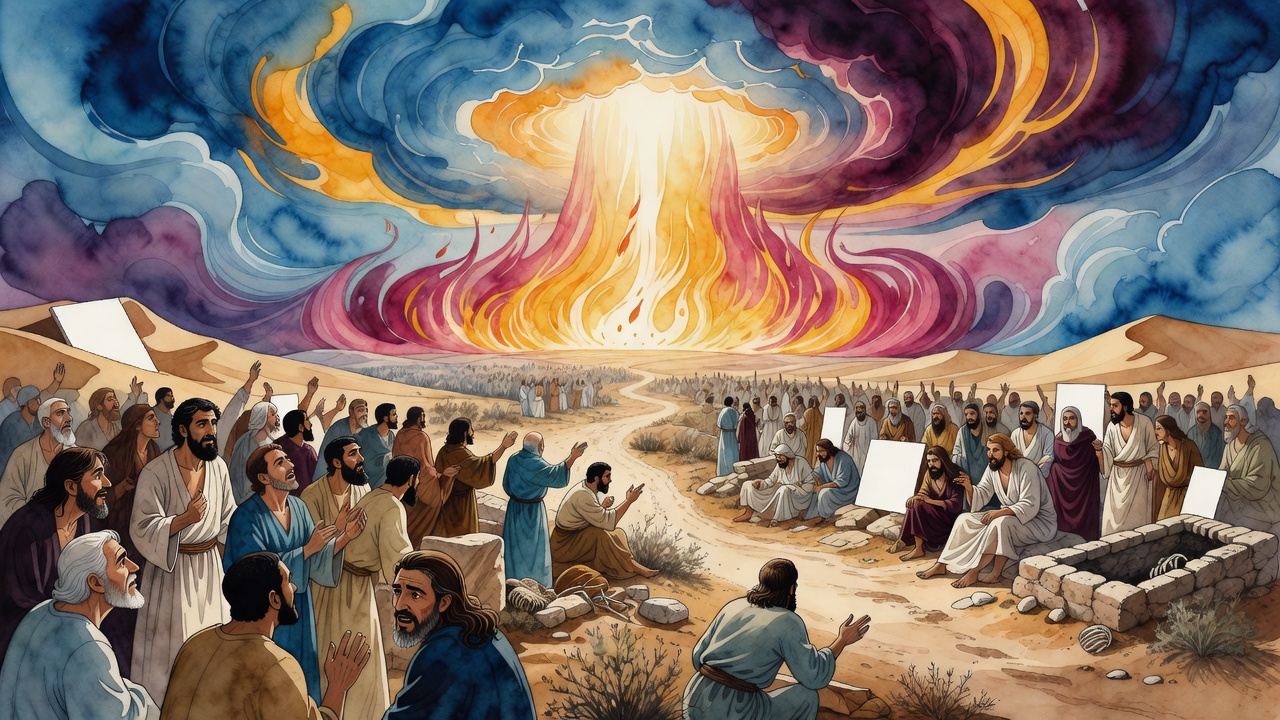
The hand that pitched the tent was larger than the tent, larger than the frame, larger than the running sky it had caught. When that hand closed, all the water of the world lay in its hollow. Every sea. Every river feeding every sea. The whole weight of the deep sat cupped in a single fist and did not spill. And a fist is only part of a hand. From the size of the fist the size of the arm could be guessed, and from the arm the shoulder, on and on past any place a mind could follow.

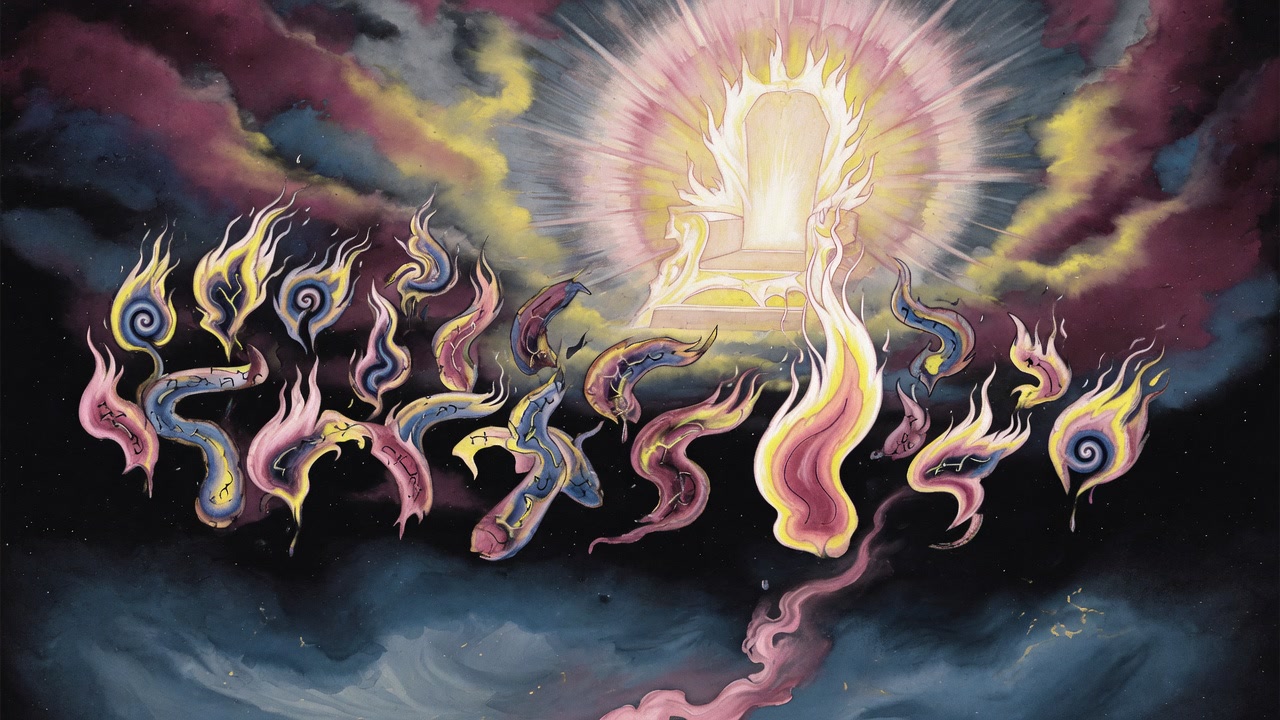
One finger of that hand went out and measured the dust of the dry earth, grain by grain, the way a merchant levels a cup with the edge of one finger. If a finger could mete out every particle of soil, the rest lay beyond guessing. High above it all stood the throne of glory, and the heavens themselves, wide as they were, running as far as they had run before the word caught them, could not stretch far enough to hold that throne. The seat was greater than the room built for it.

The Warrior Wearing the World Like Armor

So where does such a One sit? A rider goes out to war on a great horse, and his armor and his cloak hang down over the animal on every side and cover it. A quick glance says the horse carries the man. A longer look tells the truth. The horse is only the thing beneath the rider. The rider does not belong to the horse. He hangs his whole weight and gear upon it and stays himself, and the horse holds only what it is given to hold.

The world is that horse. God is that rider. This is why one of His names is not a name at all but a place. Makom, the Place of the world. The world does not contain Him the way a room contains a lamp. He contains the world the way a fist contains the sea. Long ago it was sung, "Lord, You have been our dwelling place in every generation," and the singers meant it plainly, that the generations live inside Him and He inside nothing at all. The oceans sit in the hollow of the hand. The sky sits inside the word that stopped it. The throne sits above the heavens that cannot reach it. And all of it, sun and tent and pool and running firmament and cupped sea, sits inside the One that nothing at all sits outside of.

At the far western edge the sun finished its bow and dropped below the world. Behind it the sky held exactly where it had been told to hold, not one span wider, because the word still stood over it. And the hand that could have closed around the whole of it stayed open, holding, letting the small warmed world go on turning inside its grip.


← All myths
From the tradition

Sources

4 sources

The texts behind this telling. Some cards carry a translation of the source; others are our own retelling of it, and each card says which. Every card links out to the original.

Bamidbar Rabbah 12:4Bamidbar Rabbah

Retold in our words. Read the original at the link below.The Sefaria Midrash Rabbah, 2022 · CC-BY

The idea starts with this: it's a five-hundred-year journey between one firmament and the next! That's how vast the cosmos is conceived. And according to tradition, the sun travels this immense distance under the cover of a tent. As it says in (Psalm 19:5), "He placed in them a tent for the sun."

The sun rising in the east, not just as a ball of fire, but as a king riding forth in a chariot, crowned like a bridegroom. Think Apollo, but make it Jewish! The imagery is powerful.

The sun's temperament changes with the seasons. In summer, its face is fiery, blazing down upon the earth. But in winter, that face turns icy. Were it not for the fire within, it's said, nothing could endure the cold. That's quite a balancing act!

As the sun sets in the west, it bows down before God, declaring, "Master of the universe, I have fulfilled all Your commands." What a powerful image of cosmic obedience!

But what about this tent? The Midrash (rabbinic interpretive commentary) Tanhuma describes it more like a sheath, saying, "The sun is kept within its sheath, but during the Tammuz solstice, it emerges from its sheath to ripen fruits." (Ve-Atah Tetzaveh 6). So, this tent, this sheath, serves a vital purpose. Genesis Rabbah (6:6) explains it beautifully: "The orb of the sun is kept within a sheath, in front of which there is a pool of water. When the sun comes out, God tempers its strength in the water, so that as it goes forth it will not incinerate the world." It’s a cosmic tempering mechanism, a way to keep the sun’s immense power from destroying everything.

The imagery of the sun's chariot? We find hints of that in (2 (Kings 23:1)1), which mentions "the chariots of the sun." And the idea of the upper firmament rolling open? That echoes (Isaiah 34:4): "The heavens shall be rolled up like a scroll." These images are woven together to create a tradition of myth.

The Jerusalem Talmud (Y. A.Z. 3) describes the tent of the sun as a pool of water, where God diminishes the sun's power before it goes forth each day. It's a recurring theme: the sun's intensity needs to be controlled, managed, so it sustains rather than destroys.

All of this, the tent, the bridegroom imagery, it all stems from (Psalms 19:5-6): "He placed in them a tent for the sun, who is like a groom coming forth from his chamber, like a hero, eager to run his course." The sun isn't just a celestial body; it's a powerful, almost divine figure, fulfilling its purpose with vigor and precision.

Now, here's a fascinating twist. Some scholars, like those mentioned in "The Metamorphosis and Enthronement of Enoch," suggest that the descriptions of the angel Metatron bear a striking resemblance to these sun myths. Could the myth of Metatron be a remnant of an even older sun myth within Judaism? It's a tantalizing possibility.: Metatron, often seen as the highest of the angels, bathed in divine light… It certainly sparks the imagination.

And what about the End of Days? Tradition says that God will roll open the upper firmament and remove the tent from the sun. But don't panic! On that day, God will create a tent for the righteous, sheltering them from the searing heat of judgment. A final act of protection, a cosmic refuge. (See Numbers Rabbah 12:4, Pesikta de-Rav Kahana Supplement 2:1, Pirkei de-Rabbi Eliezer 6, Midrash Tehillim 19:13, Sefer ha-Zikhronot 34, and Zohar 1:9a for more on this!)

Remember the angels guiding its path, the three letters of God’s name on its heart. Remember the myths that remind us that even the most powerful forces in the universe are held in balance, guided by a higher power. And maybe, just maybe, you'll feel a little more connected to the vast, wondrous story of creation itself.

Full source
Midrash TanhumaMidrash Tanchuma

Retold in our words. Read the original at the link below.Townsend 1989 translation of Midrash Tanhuma, S. Buber Recension · CC-BY

Midrash Tanchuma turns to Creation By Word.

According to Midrash Tehillim, if God hadn't intervened, if God hadn't spoken another word – "Enough!" – the heavens would still be ballooning outwards, stretching into infinity. Time itself wouldn't stop the expansion.

One word to create, another to contain.

This reminds me of the story of the golem. You know, that being made of clay, brought to life through mystical means? A classic tale. The golem is given a task – say, bringing water. But without specific instructions to stop, the golem just keeps bringing water, and bringing water, until the whole place is flooded. No malicious intent, just a literal interpretation of the command. No one said "Enough!"

There's a parallel here, a lesson perhaps. Creation needs both the initial spark and the guiding hand. The boundless energy and the defined boundary.

And doesn't this echo something we hear about today? The Big Bang theory? The universe expanding from a single point? It’s wild how ancient wisdom can sometimes resonate with modern scientific thought.

The Raziel ha-Malakh, a book of mystical secrets, hints at the power held within language, within the very letters themselves. It’s not just the meaning of the words, but their inherent energy, their ability to shape reality.

So next time you read about creation, remember the word. Remember the ongoing expansion, the need for containment. Remember that maybe, just maybe, the universe is still listening for that next divine instruction.

Full source
Midrash Tanhuma-YelammedenuMidrash Tanchuma

Retold in our words. Read the original at the link below.Townsend 1989 translation of Midrash Tanhuma, S. Buber Recension · CC-BY

Honestly, some of the answers are.

Take, for instance, the idea of God's hand. We find in (Isaiah 40:12), "Who measured the waters with the hollow of His hand?" The tradition takes this to mean that even God's fist is so immense, so vast, that it could contain all the oceans of the world! for a second. All the oceans. Held in a fist. We can begin to comprehend the greatness of God from the size of His fist, as it is said.

It doesn't stop there.

The same verse continues, "and meted earth's dust with a measure." According to Midrash (rabbinic interpretive commentary) Tanhuma-Yelammedenu, Bereshit 5, this suggests we can also get a sense of God's greatness from the size of His finger. If His finger can measure out all the dust of the earth, how colossal must the rest of Him be?

These images aren’t meant to be taken literally, of course. They’re meant to stretch our understanding, to push the boundaries of what we think is possible. They are not meant to be precise.

And then there's the question of God's dwelling place, the kiseh hakavod, the throne of glory. Even the heavens, as expansive as they are, stretching out beyond the seas, encompassing all the lands, inhabited and uninhabited...even they cannot contain God's throne! It's a truly staggering thought.

Now, there are entire esoteric texts dedicated to describing God's gigantic size and characteristics. The best known of these texts is Shi’ur Komah ("Measurement of the Stature"), and less comprehensive descriptions of God’s size are found throughout rabbinic literature, as here from Midrash Tanhuma-Yelammedenu.

Why this fascination with size? Why this attempt to quantify the unquantifiable?

Perhaps it's because understanding even a little bit about God's immensity helps us understand a little bit about our own place in the universe. When we realize how vast and powerful the Creator is, we also realize how precious and significant each of us must be, to be noticed, to be cared for, to be loved by such a Being.

The bigger we imagine God, the smaller we might feel. But maybe, just maybe, that feeling of smallness opens us up to something bigger than ourselves.

Full source
Yalkut Shimoni on Torah 117:2Yalkut Shimoni on Torah

Translation of the source text.Torat Emet (Yalkut Shimoni) + Sefaria Community Translation · CC-BY-NC

And he arrived at the place – Why do we use a pseudonym and call the Holy One ‘place’ (makom)? Because He is the place of the world and the world is not His place. R’ Yosi ben Halifta said ‘we don’t know whether the Holy One is the place of the world or if the world is His place. From that which is written “…Behold, there is a place with Me…” (Shemot 33:21) it appears that He is the place of the world and the world is not His place.’

R’ Yitzchak said ‘from that which is written “…which are the abode for the God Who precedes all…” (Devarim 33:21) we cannot know whether the Holy One is the abode of the world or whether the world is His abode. From that which is written “O Lord, You have been our dwelling place throughout all generations.” (Tehillim 90:1) we see that the Holy One is the abode of the world and the world is not His abode.

This is like a mighty mounted warrior, whose armor and garments hang down around his steed. The horse is secondary to the rider, the rider is not secondary to the horse. This is that which is written “Only that You rode on Your steeds with Your chariots of salvation.” (Habakuk 3:8)

Full source