Parshat Bamidbar6 min read

Israel Cried That Egypt Was Better Than the Desert

Thirst and graves turned the camp against the road out of Egypt. God answered that the desert had been a palace, not a wasteland.

Curated by Arthur · Told by Maggid ·
Table of Contents
  1. Have I Been a Desert to You
  2. Seven Clouds and a Rolling Well
  3. When the Merits Fell Away
  4. The Desert That Received Him

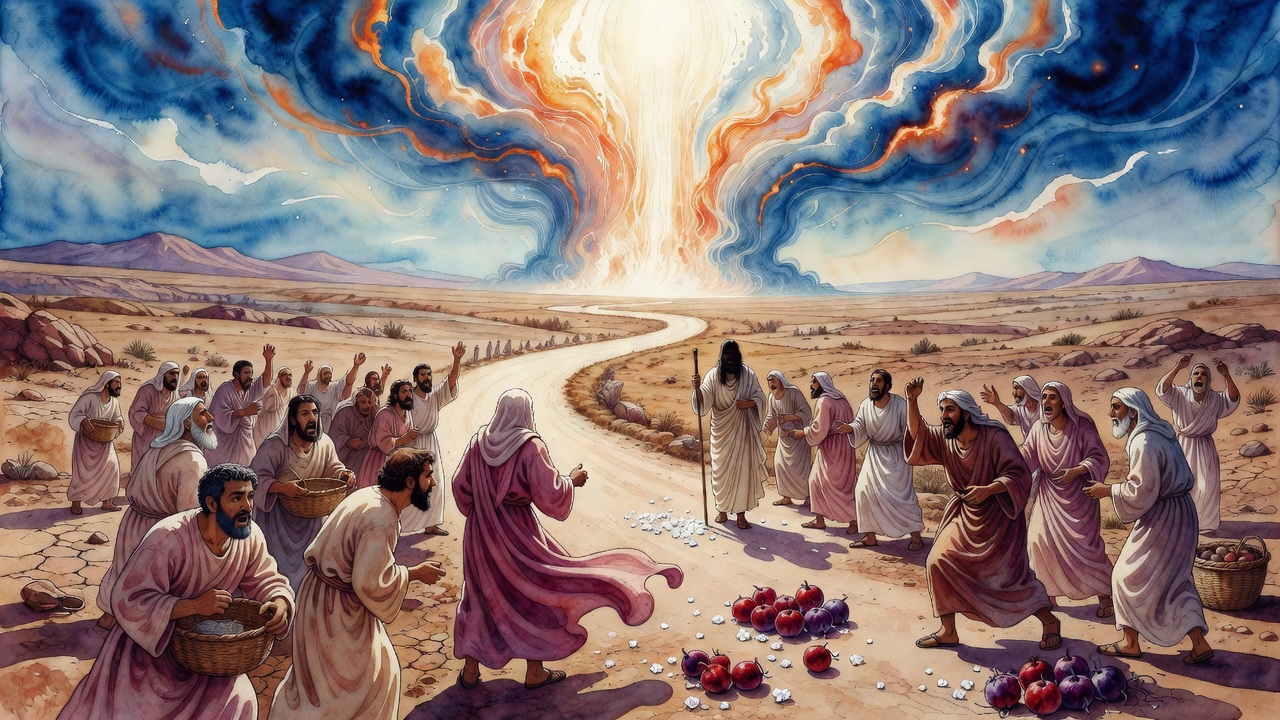
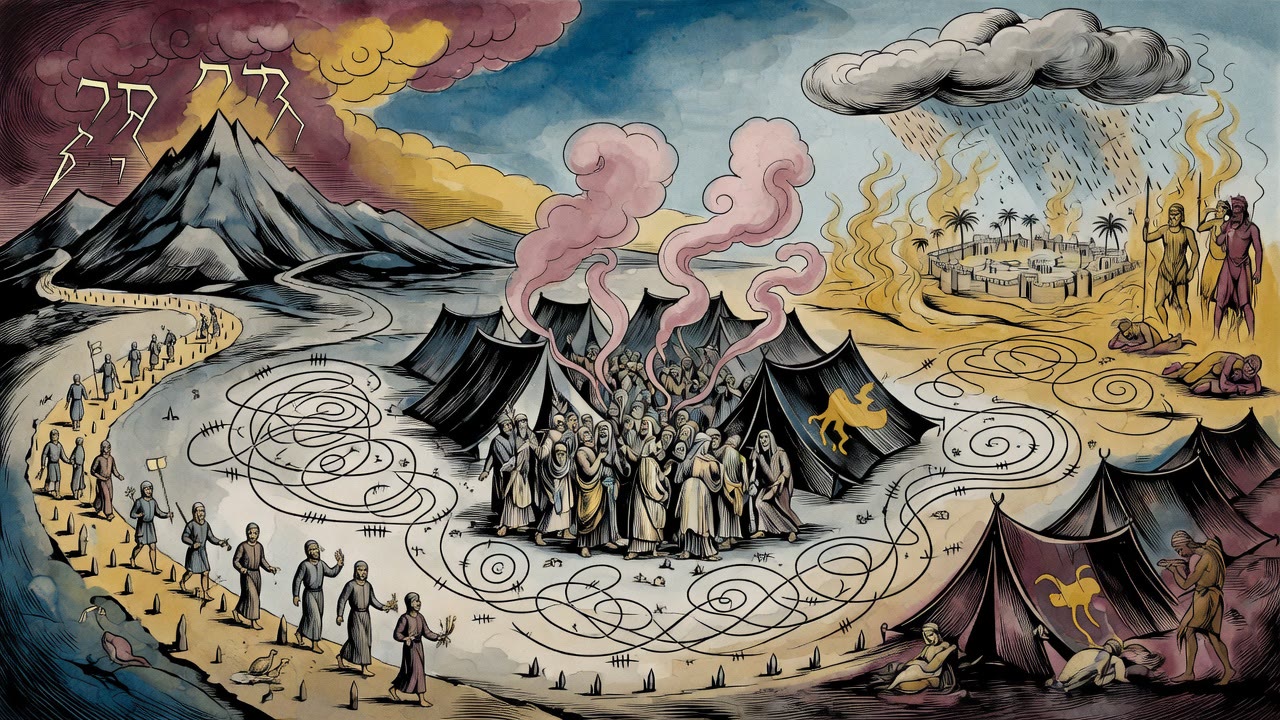
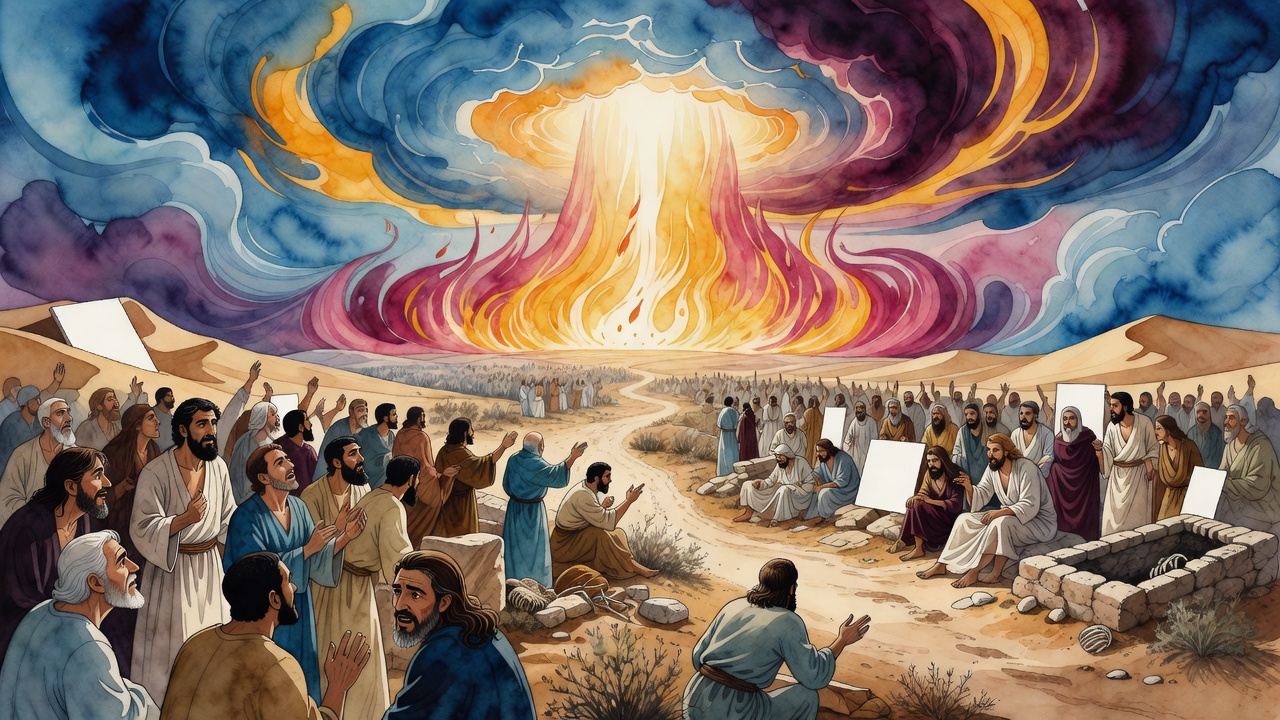
The people stood in the heat with cracked lips and empty skins and turned on Moses as if he had invented thirst. Dust rose around their ankles. Children cried in the shade of carts. A woman slapped a waterskin and heard only the dry knock of leather on leather. Someone pointed back along the track toward Egypt and said the word that always waits in a tired camp.
Israel Cried That Egypt Was Better Than the Desert Click for full size

"Why did you bring us up from Egypt to die in the desert?"

The cry ran tent to tent. Egypt had been brick and lash, but Egypt had also been a known river and a known grave. The desert looked like a mouth without a bottom. Graves without markers. A people who had walked out under a pillar now argued that slavery had been safer than freedom without water. Moses covered his face with his hand for a moment, then dropped it. The complaint was already in the air.

Have I Been a Desert to You

The answer did not come as a lecture first. It came as a counter-image pressed against their faces. The Holy One spoke as if standing in the middle of their complaint, voice filling the open waste. "Have I been a desert for Israel? Did I act like a desert to you?"

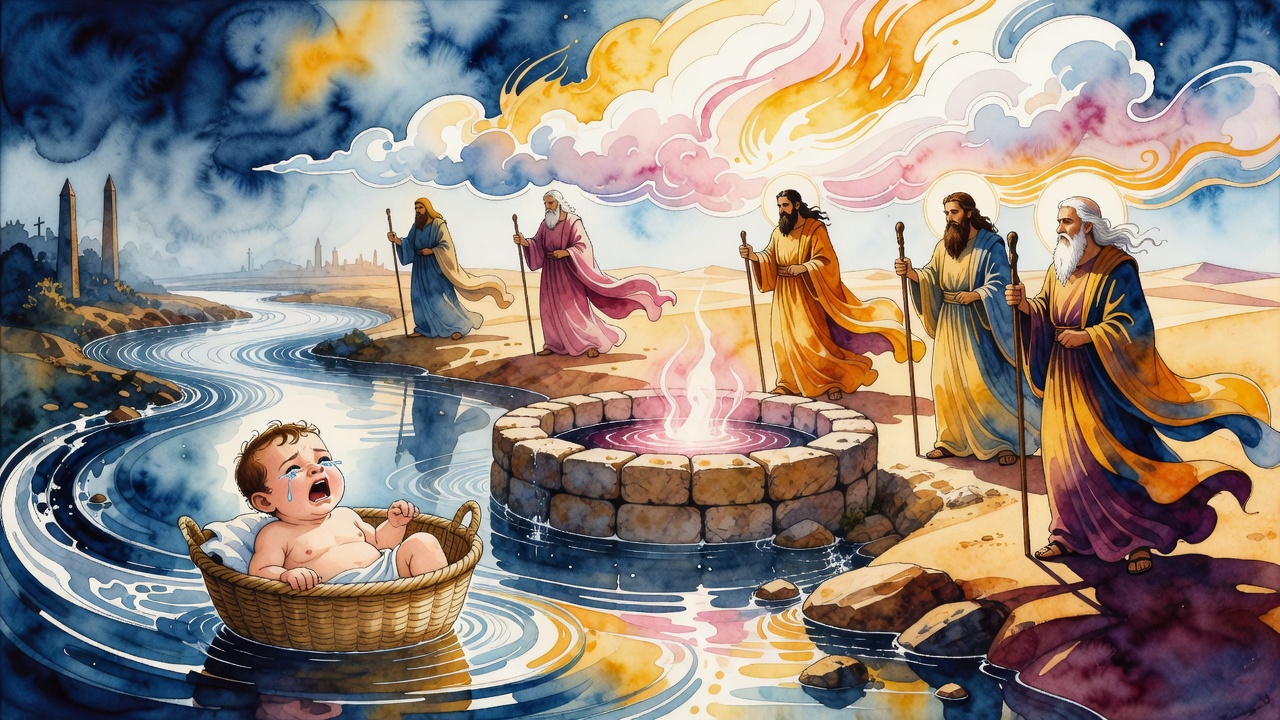
A king of flesh and blood leaves his palace for the waste and finds neither palace food nor palace drink. When God took them from Pharaoh, He made them recline the way kings dine, the road itself bent into couches. He claimed He had not sent even three fleas to trouble them. He named three redeemers sent to serve them, not to be fed by them: Moses, Aaron, and Miriam.

The camp heard the rebuke and still felt the dry tongue against the teeth. Memory of bricks is short. Memory of thirst is now. A man will rewrite a whole rescue if his child is crying for water.

Seven Clouds and a Rolling Well

Through Moses' merit the manna fell, thin as frost on the ground at dawn, enough for a day and no storehouse for fear. Women gathered it in baskets. Children tasted it and argued over the flavor. Through Aaron's merit seven clouds wrapped them: one above, one below, one on each side, and one going before that struck snakes and scorpions, leveled mountains and valleys, and burned thornbush into smoke columns that made the kings of east and west ask who came up from the desert like pillars of smoke.

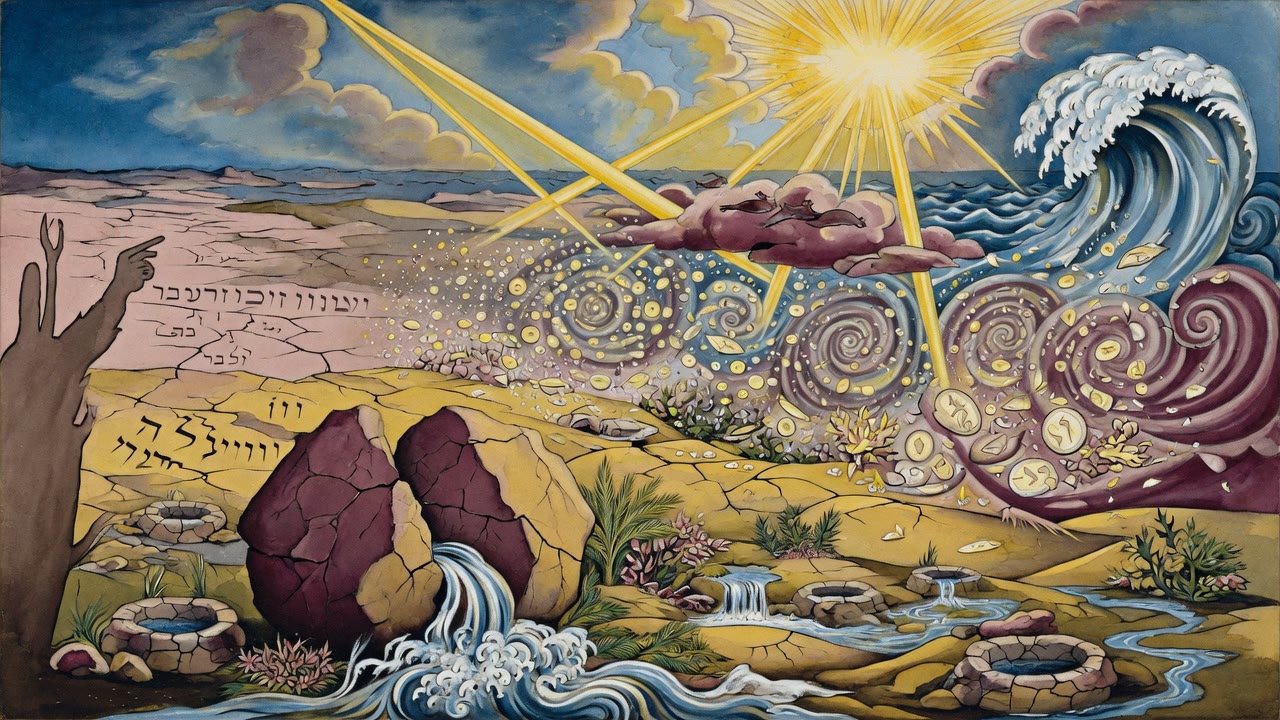
Through Miriam's merit the well traveled. It moved like a boulder, like a hive, like a ball rolling with the standards. When the camp rested and the Tabernacle rose, the rock settled in the court of the Tent of Meeting. The princes stood beside it and called, "Rise up, O well," and water answered, cold and sudden. Clothes did not wear out on their bodies. A child's garment grew as the child grew, seams stretching without a tailor. Quail came when the people demanded meat and paid for the demand in graves at the edge of the camp.

Still a voice in the ranks preferred the river of Egypt to the well that followed them. The body under pressure does not always count miracles. It counts the last hour without a drink and calls the whole road a curse.

When the Merits Fell Away

They would learn later what the desert had been holding up, gift by gift, life by life. When Miriam died and was buried, the congregation found no water, and the well's absence taught her price in a single dry morning. When Aaron died, the sun struck the road without cloud cover, and the temper of the people grew short on the way, skin burning, eyes hard. When Moses died, the manna ceased on the next day, and the ground no longer fed them for free.

In the hour of the cry, those deaths had not yet come. The gifts still stood around them like walls. The people still called the road a death trap. God answered that He had been light for them by His own glory, not darkness, and that He had not delayed a promised good. The complaint was not only thirst. It was a rewriting of the entire rescue as a mistake, a wish to climb back into the oven of Egypt because the open air felt too large.

Moses walked among them and heard the word Egypt spoken like a longing. He struck nothing that day. He carried the shout upward and waited.

The Desert That Received Him

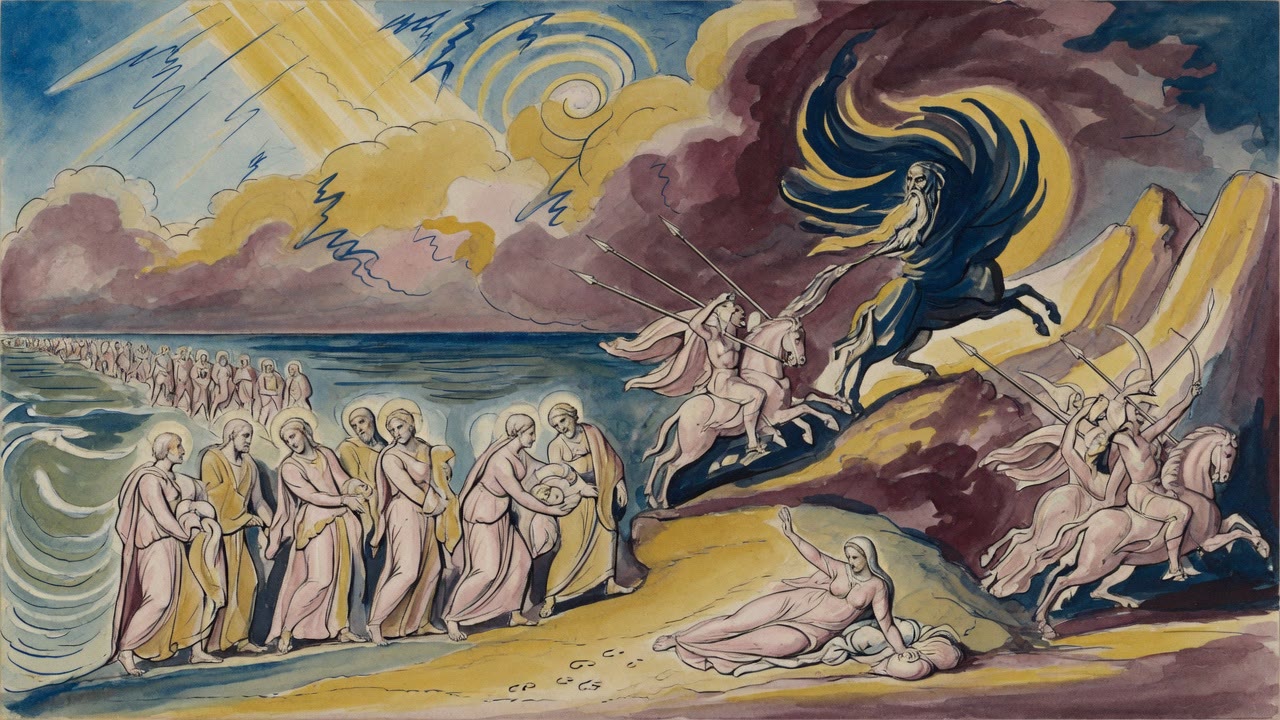
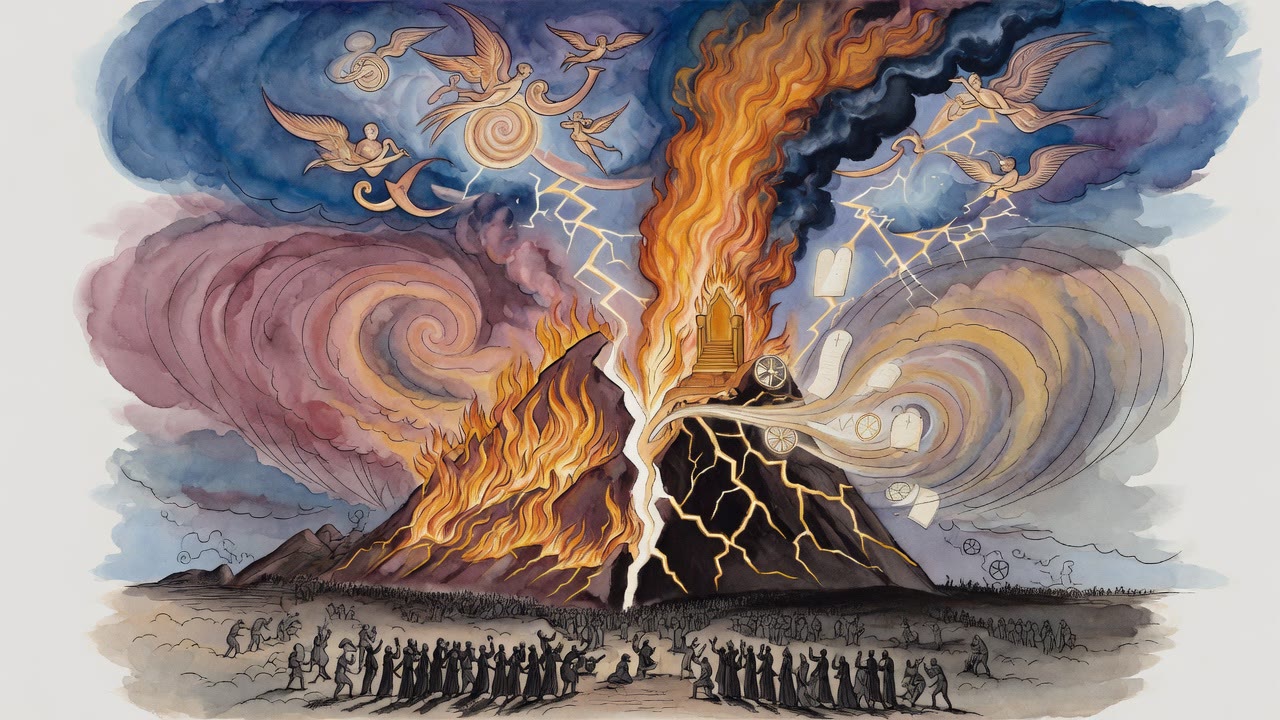
Against their panic ran another picture, older than this morning's thirst. The sea fled when He came. The mountains danced and fled at Sinai. The wasteland received Him and lifted its voice. A prince enters cities and they run from him. He enters a ruined place that praises him and says, here I will build a lodging, here I will dwell. So the Holy One chose the desert as lodging when palace cities would not hold His coming, and the arid land was told it would be glad.

The people who stood in that chosen lodging called it a graveyard. They measured God the way a man measures a fist he cannot see: oceans held in a hollow hand, dust of earth meted on a finger, a throne of glory the heavens themselves cannot contain, and still they asked whether the One who held all water would let them die dry among thorns. The scale of the Presence did not quiet the small panic in the throat. Moses bore the shout. The cloud still went before them, crushing snakes under its edge. The well still waited for the next command to rise.

No one in the ranks took the cry back that day. The road went on into heat and haze. Egypt stayed behind like a bad dream that felt, for one dry hour, like home.


← All myths
From the tradition

Sources

2 sources

The texts behind this telling. Some cards carry a translation of the source; others are our own retelling of it, and each card says which. Every card links out to the original.

Midrash Tanchuma, Bamidbar 2Midrash Tanchuma

Retold in our words. Read the original at the link below.Townsend 1989 translation of Midrash Tanhuma, S. Buber Recension · CC-BY

(Numb. 1:1:) “Then the Lord spoke unto Moses in the Sinai desert.” This text is related (to Jer. 2:31), “0 generation, understand the word of the Lord, ‘Have I been a desert for Israel or a land of thick darkness?’” The Holy One, blessed be He, said to Israel, “Because you said to Moses (in Numb. 21:5), ‘Why did you bring us up from Egypt to die in the desert?’ (Jer. 2:31:) ‘Have I been a desert for Israel?’ Did I act like a desert to you? Is it customary for a king of flesh and blood, when he leaves for the desert, [to find] easy living [there] just like that which he had found in his palace, either [palace] food or [palace] drink? However, when you were slaves to Pharaoh in Egypt and when I brought you out from there, I had you lie down on couches, as it states (Exod 13:18), ‘And the Lord made the people circumvent (Vayasev) through the desert.’” What is [the meaning of] ”circumvent?” It teaches that He made them recline in the way that kings dine (mesavin), reclining upon their beds. “And I did not even bring three fleas to trouble you. And I even raised up three redeemers for you to serve you, as stated (in Micah 6:4), ‘and I sent Moses, Aaron, and Miriam before you.’” Through their merit, Israel was able to travel. Through the merit of Moses there was manna, as stated (Deut. 8:3), “And He subjected you to hunger [and then gave you manna to eat].” Through the merit of Aaron I surrounded you in clouds of glory, as stated (Exod. 13:21), “And the Lord went in front of them during the day [in a pillar of cloud. And it is written (in Ps. 105:39), “He spread a cloud for a cover.” There were seven clouds: one from above, one from below, one from each of the four directions, and one going before them. [That last one] smote snakes and scorpions, leveled the mountains and valleys for them, and burned the thornbushes so that they sent up smoke. When all the kings of the East and West saw this, the peoples of the world said (in Cant. 3:6), “Who is this that comes up from the desert [like columns of smoke]?” It is also written (in Deut. 29:4), “your clothes did not wear out from upon you.” In the case of a baby, all the time that it was growing, its garments and clothes were growing along with it. Now the well [came] through the merit of Miriam, who uttered a song by the waters [of the Reed sea]. R. Berekhyah the Priest said in the name of R. Levi, “[The matter is comparable to] a king of flesh and blood who has a province. So he sends high ranking people into its midst to conduct their affairs and administer their justice. Who has to be responsible for their maintenance? Do not the people of the province have to be responsible for their maintenance? But the Holy One, blessed be He, did not act like that. Instead he sent out Moses, Aaron, [and Miriam], as stated (in Micah 6:4), ‘and I sent Moses, Aaron, and Miriam before you.’” Thus through their merit, Israel was sustained. The manna was through the merit of Moses. You yourself know that it is so. When Moses passed away, what is written (in Josh. 5:12)? “The manna ceased on the next day (i.e., the day after Moses died).” The clouds of glory [came] through the merit of Aaron. You yourself know that it is so. When Aaron passed away, what is written (in Numb. 21:4)? “But the temper of the people grew short on the way,” because the sun was shining down upon them (without a cloud cover). And the well [came] through the merit of Miriam, since it is stated (in Numb. 20:1-2), “and Miriam died there and was buried there. Now the congregation had no water.” And how was [the well] constructed? Like a kind of boulder or a type of hive or a type of ball. It rolled along and came with them on the journeys. When the standards [for each tribe] came to rest and the tabernacle arose, the rock would come and settle down in the court of the tent of meeting. Then the princes would stand beside it and say (in the words of Numb. 21:17), “Rise up, O well”; and the well would rise up. After that, I brought them quails (cf. Numb. 11:31). (Jer. 2:31:) “Have I been a desert for Israel?” Have I treated you like a desert? (Ibid., cont.) “Or a land of utter darkness?” Did not I become a light for you, a light by My own glory? It is so stated (in Exod. 13:21:) “And the Lord went….” Another interpretation (of Jer. 2:31): What is the meaning of “utter darkness? Have I [ever] said to you that I am bringing a benefit and delayed it? Utter darkness (rt. 'pl) can only be a term of delay, as it is used (in Exod. 9:32), “But the wheat and the spelt were not hurt, because they ripen late (i.e., are delayed: rt. 'pl).” Joshua said (in Josh. 21:45), “Not a thing has failed (npl) of any good thing which the Lord (your God) promised unto (you); it all came to you.” [And how are we to understand the rest of the verse] (in Jer. 2:31), “why did my people say, ‘we have let loose (radnu - rt. rwd)’?” What is the meaning of “radnu?” The word is mishnaic (as in ter. 10:3), “one who removes (rwdh) a hot loaf�� (adhering to an oven). They (i.e., Israel) said, “When the bread is baked in the oven and is taken out of it, can it stick to the oven again? Now we in Jerusalem were as in an oven, as stated (in Is. 31:9), ‘says the Lord, who has a fire in Zion and has an oven in Jerusalem.’ Now You exiled us to Babylon. ‘What do you still want from us?’” [That is the meaning of] (Jer. 2:31:), “why did my people say, ‘radnu’” (i.e., he has already removed us from the oven of Jerusalem). Another interpretation (of Jer. 2:31), “why did my people say, ‘radnu?” What [is the meaning of] “radnu (rt. rwd)?” Compare what is said (in I Kings 5:4), “For he subjugated (rwdh) everything beyond the river (i.e., West of the Euphrates), from Tipsah to Gaza.” They said to [the Holy One, blessed be He,], “You have destroyed for us the sanctuary, and You have taken away your Divine Presence from us. ‘Now what do You still want from us?’” (Jer. 2:31) [Why did my people say, “He has dominion over us (radnu)]”; He said to them, “Would that I were now in the desert, where I did those miracles for you.” And so does it state (in Jer. 9:1), “Would that I were in the desert, at an inn for wayfarers….” Where? Where I was praised, as stated (in Is. 42:11), “Let the desert and its cities lift up [their voice].” [The matter] is comparable to a prince who entered a metropolis. When the inhabitants of the metropolis saw him, they fled. He entered a second one, and [again] they fled from him. He entered into another city that was ruined (harevah); and when the inhabitants saw him, they praised him. That prince said, “This city is better than all the metropolises. Here I will build myself a lodging place; here I will dwell.” Similarly, when the Holy One, blessed be He, came to the sea, it fled from Him, as stated (in Ps. 114:3), “The sea saw [Him] and fled.” He revealed Himself on Mount Sinai, [it also] fled, as stated (in Ps. 114:4), “The mountains danced like rams.” When he came to the desert wasteland (harevah), it received Him and praised Him, as stated (in Is. 42:11), “Let the desert and its cities lift up [their voice].” He said, “This city is better than all of the cities. Here I will build a lodging place.” When He came down into its midst, they began rejoicing, because the Holy One, blessed be He, was dwelling in their midst, as stated (in Is. 35:1), “The desert and the arid land shall be glad, and the wilderness shall rejoice and blossom like a crocus.”

Full source
Midrash Tanhuma-YelammedenuMidrash Tanchuma

Retold in our words. Read the original at the link below.Townsend 1989 translation of Midrash Tanhuma, S. Buber Recension · CC-BY

Honestly, some of the answers are.

Take, for instance, the idea of God's hand. We find in (Isaiah 40:12), "Who measured the waters with the hollow of His hand?" The tradition takes this to mean that even God's fist is so immense, so vast, that it could contain all the oceans of the world! for a second. All the oceans. Held in a fist. We can begin to comprehend the greatness of God from the size of His fist, as it is said.

It doesn't stop there.

The same verse continues, "and meted earth's dust with a measure." According to Midrash (rabbinic interpretive commentary) Tanhuma-Yelammedenu, Bereshit 5, this suggests we can also get a sense of God's greatness from the size of His finger. If His finger can measure out all the dust of the earth, how colossal must the rest of Him be?

These images aren’t meant to be taken literally, of course. They’re meant to stretch our understanding, to push the boundaries of what we think is possible. They are not meant to be precise.

And then there's the question of God's dwelling place, the kiseh hakavod, the throne of glory. Even the heavens, as expansive as they are, stretching out beyond the seas, encompassing all the lands, inhabited and uninhabited...even they cannot contain God's throne! It's a truly staggering thought.

Now, there are entire esoteric texts dedicated to describing God's gigantic size and characteristics. The best known of these texts is Shi’ur Komah ("Measurement of the Stature"), and less comprehensive descriptions of God’s size are found throughout rabbinic literature, as here from Midrash Tanhuma-Yelammedenu.

Why this fascination with size? Why this attempt to quantify the unquantifiable?

Perhaps it's because understanding even a little bit about God's immensity helps us understand a little bit about our own place in the universe. When we realize how vast and powerful the Creator is, we also realize how precious and significant each of us must be, to be noticed, to be cared for, to be loved by such a Being.

The bigger we imagine God, the smaller we might feel. But maybe, just maybe, that feeling of smallness opens us up to something bigger than ourselves.

Full source