Parshat Bereshit6 min read

Six Raw Elements Waited While God Built the World Alone

Before heaven and earth, six raw elements lay in the dark, and God built the world alone, refusing every angel who could later claim a share.

Curated by Arthur · Told by Maggid ·
Table of Contents
  1. Before Anything, Six Raw Materials Waited in the Dark
  2. The Only Counsel He Would Take
  3. He Stretched the Heavens Until He Said Enough
  4. The Corner He Left Unfinished as a Dare
  5. The Angels Came Late by Design
Six Raw Elements Waited While God Built the World Alone Click for full size

Before Anything, Six Raw Materials Waited in the Dark

God and His great name. Nothing else.

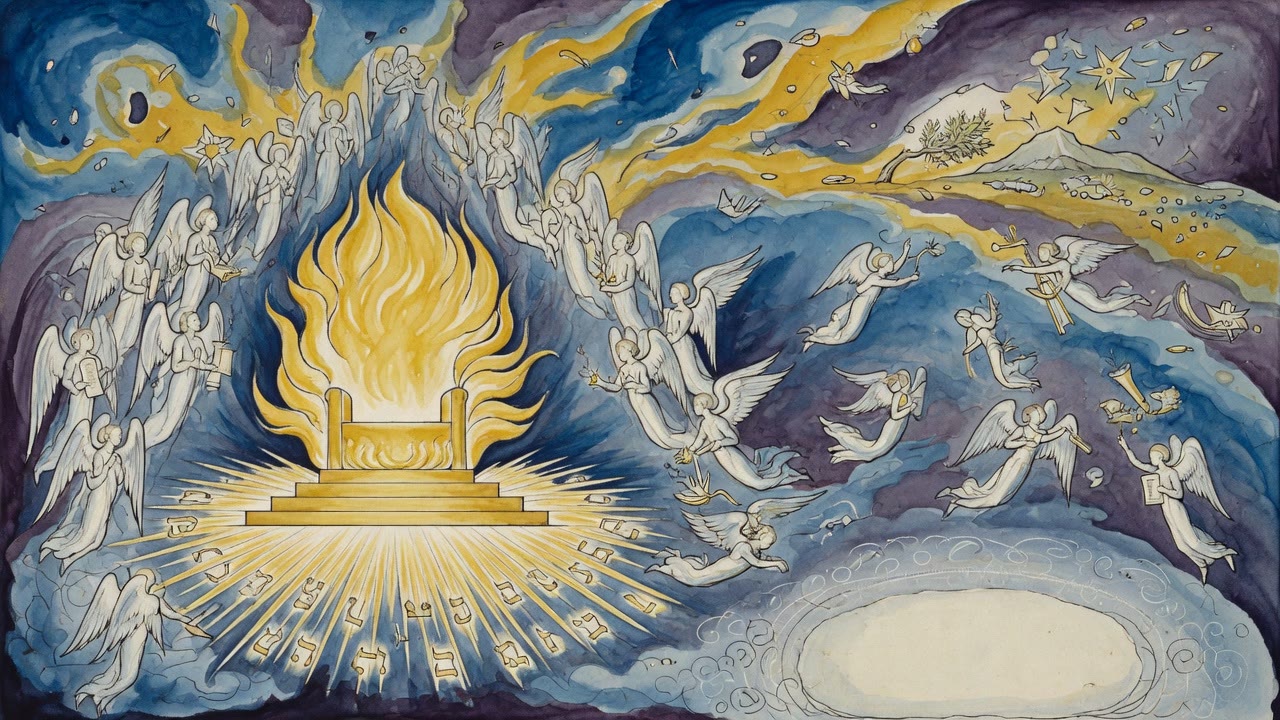
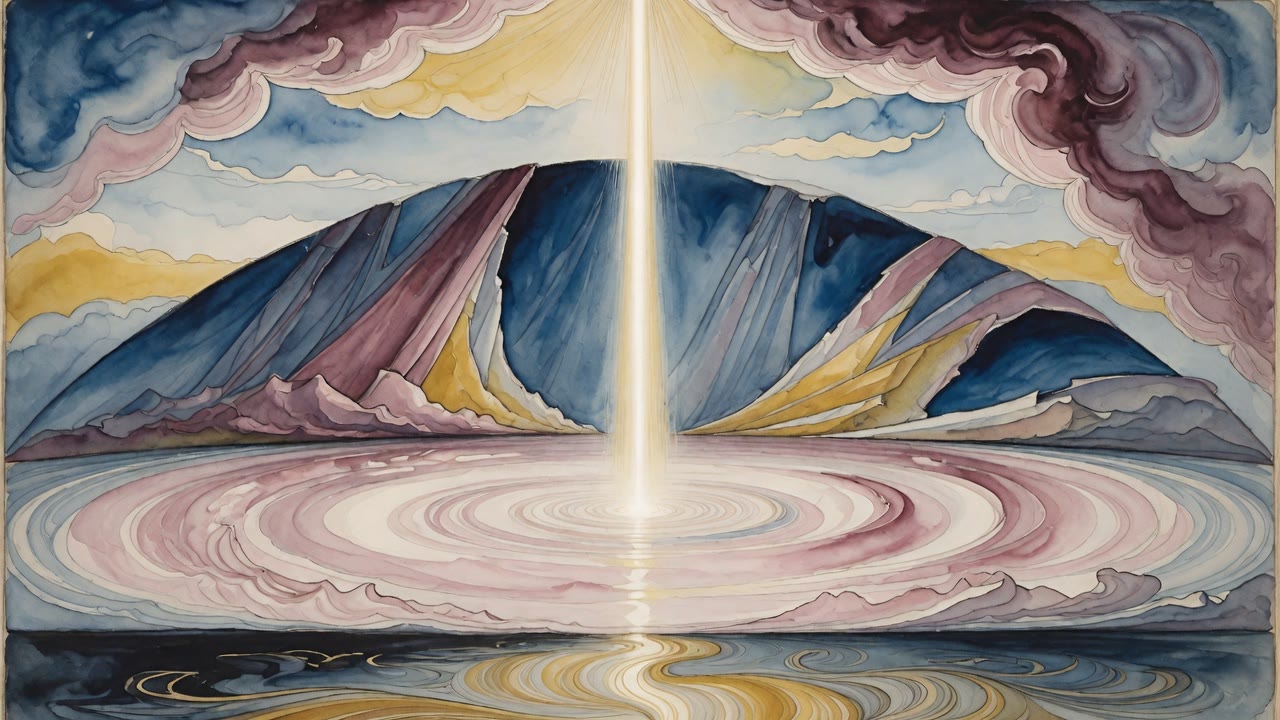
Before there was a sky to hang light on or ground to catch a shadow, six raw things lay ready in the emptiness, and not one of them carried a maker's mark from any other hand. There was light and there was darkness. There was tohu, the wild formlessness, and bohu, the yawning void. There was wind, and there was water, and the wind of God moved over the face of that water while the deep sat black and unbroken beneath it.

These were the stuff of the first day, laid out like a builder's materials before a single wall goes up. No angel had carried them there. No counselor had sorted the light from the dark. The Holy One traced the shape of a world in front of Himself, over and over, and it kept collapsing, the way a palace refuses to stand when a king starts laying stones before he has drawn the foundations, the doorways, the exits. So He drew. Alone.

The Only Counsel He Would Take

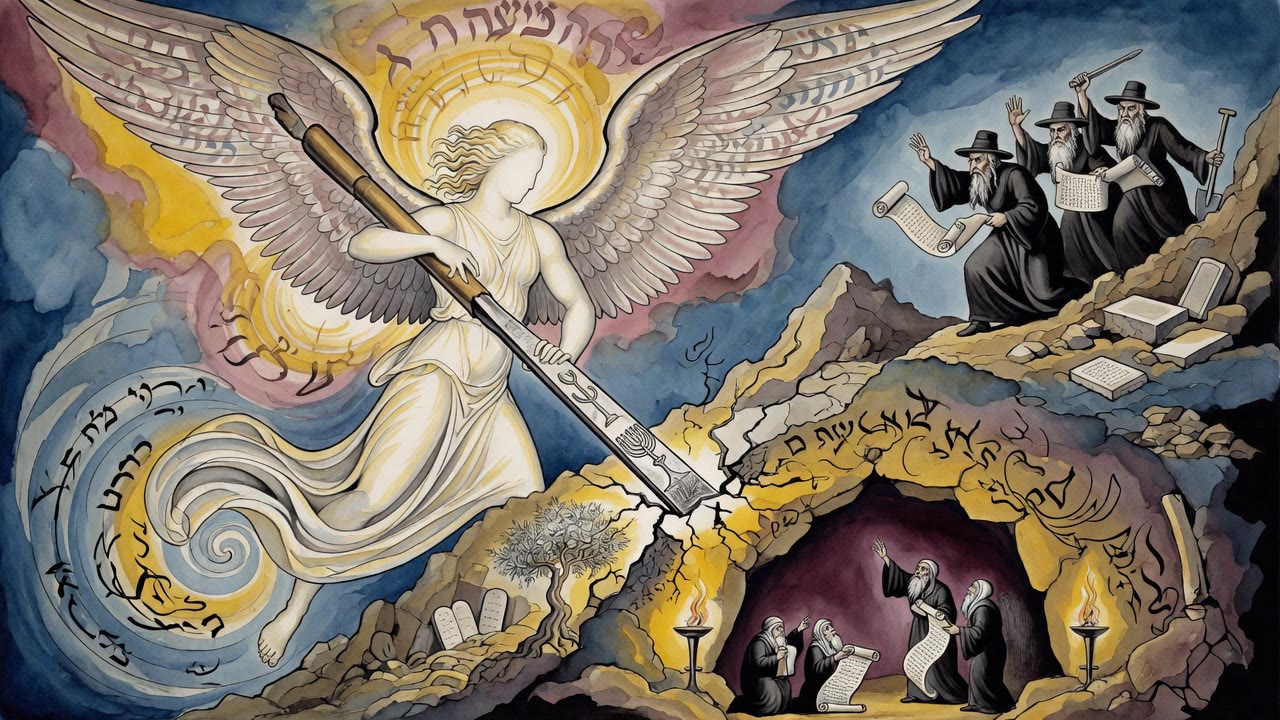
Once, before the first day, He took counsel. Not with an angel. Not with a prince of heaven. He turned to the Torah, whose hidden name is Tushiyah, sound wisdom, older than the world by the width of a thought.

"Master of the worlds," she said, "a king with no army and no camp, over what does he rule? A king with no people to cry his praise, where is his honor?"

The words pleased Him. He would make a world, and fill it, and be acclaimed in it. But no company of shining messengers stood in that room. Only His own wisdom, which was less a partner than His own voice turned back on Him. Any kingdom without counsel is no kingdom, the Sages would say, and they meant the counsel a king keeps inside his crown, never a rival at his elbow with a hand on the throne.

He Stretched the Heavens Until He Said Enough

Then the work began, and He did it with His own body.

He was wrapped in light like a robe. He took hold of the hem of that light, His own garment, and pulled, and the brightness stretched out across the nothing like a curtain drawn over a doorway. It ran on and on. It would have run forever. So He spoke to it. "Enough," He said. Dai. And the heavens stopped where the word caught them and held fast. From that command He carries a name to this day, Shaddai, the One who said "Enough" to a sky that did not know when to stop.

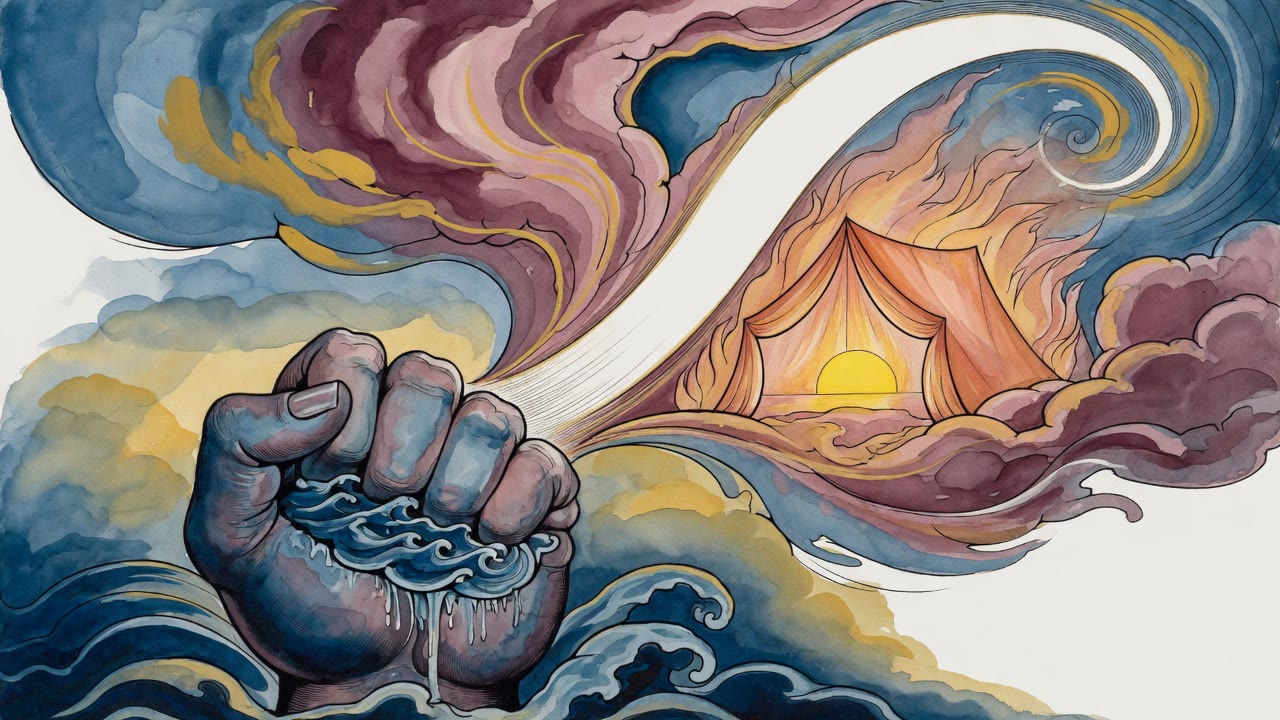
For the earth He reached beneath His own throne of glory, where the snow lies, took up a fistful, and threw it down onto the waters. The water met the cold and seized and thickened, and the loose dust of the ground was made from it. He hung the beams of His high chambers in those same waters and set the deep of the ocean between the rim of the sky and the rim of the earth, so the whole frame floated fastened to nothing but His word.

The Corner He Left Unfinished as a Dare

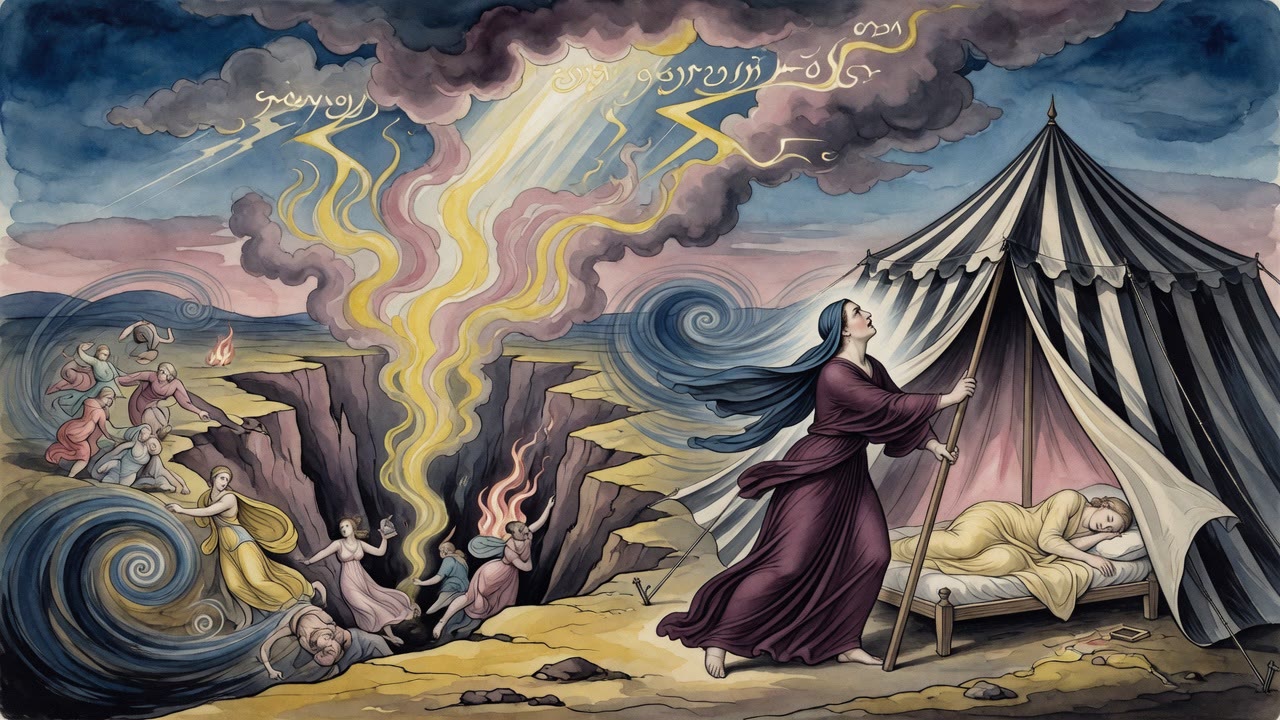
He raised four winds at the four corners of the world. Out of the east He sent light. Out of the south, the dews and rains of blessing. Out of the west, darkness. And the north He began, and then He stopped, and left a raw edge in the sky where the work simply broke off.

He left it open on purpose. "Anyone who calls himself a god," He said into the empty north, "let him come and finish this corner I have left. Then all will know he is a god." No one came. No hand reached out of the dark to close the seam. The north stayed unfinished, a gap in the heavens with a challenge hanging in it, and out of that broken corner spilled the harmful spirits and the tremors, the demons and the lightnings and the thunder, and evil breaking loose upon the world.

The Angels Came Late by Design

And the angels? They were nowhere near the first day.

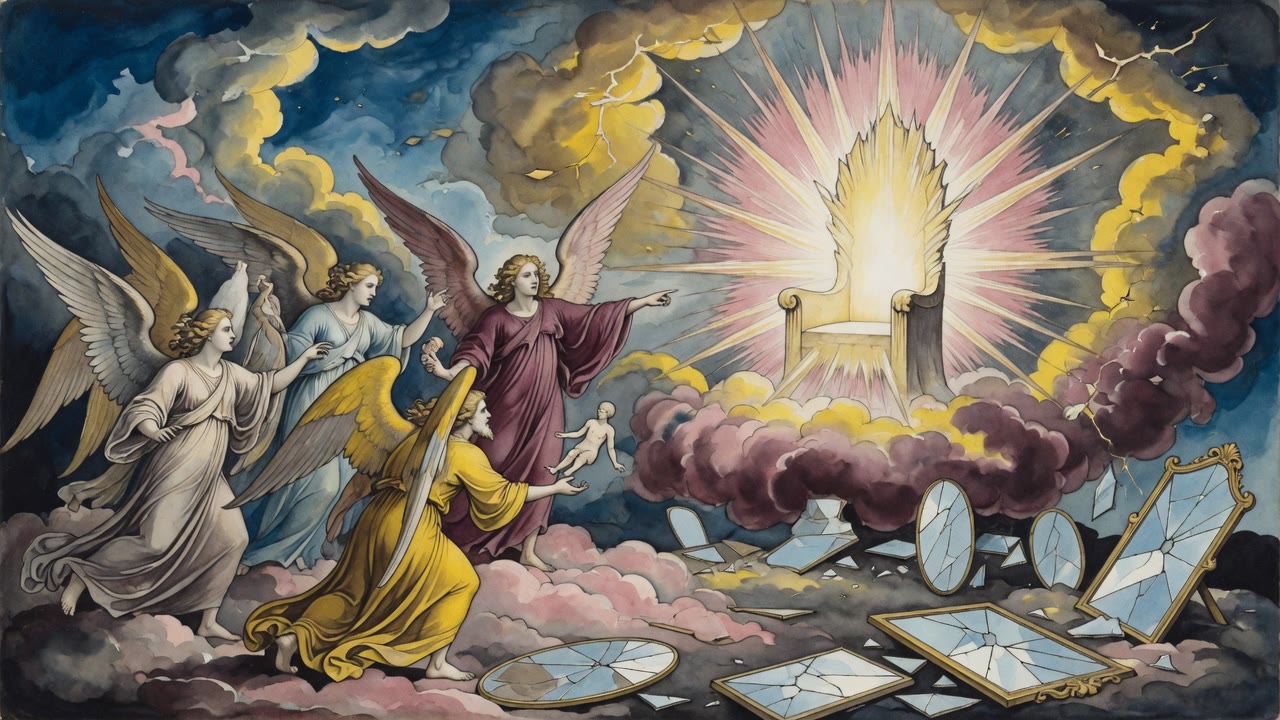
The Sages argued about when exactly the ministering angels were made. R. Johanan set them on the second day, when God roofed His upper chambers in water and made His messengers into spirits and winds. R. Hanina pushed them to the fifth, reasoning that the winged seraphim who fly on their two wings must belong to the day the birds were told to fly above the earth. Second day or fifth. On one thing the argument would not bend. Never the first.

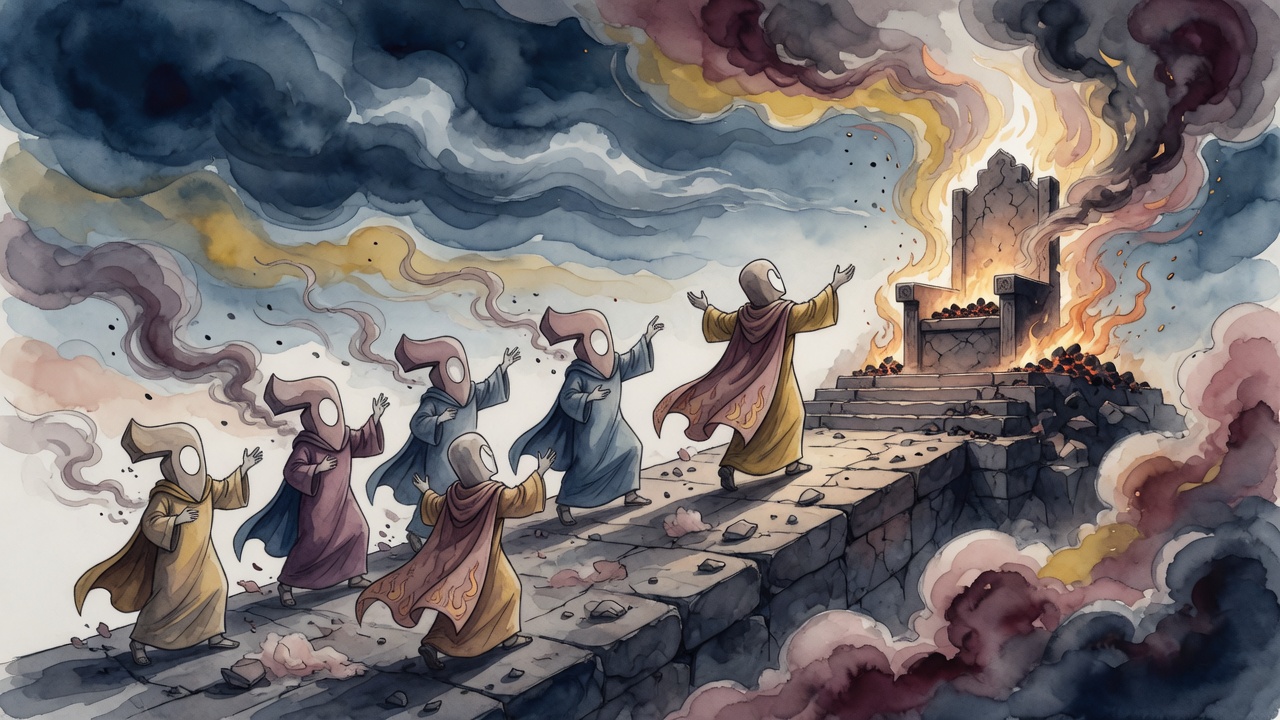
Because if a single angel had been standing there when the heavens were stretched, someone would swear the angel helped. Michael holding up the north, they would say, and Gabriel the south, the two of them pulling the sky taut between them like servants raising a tent for their master. The first verse of the Torah shuts that mouth before it opens. Elohim bara. God created. One name, one verb, one worker in an empty world, stretching light out of His own garment with no one at His side to take the credit or the blame.

The corner in the north is still open. No god has come to finish it.


← All myths

From the tradition

Sources

2 sources

The texts behind this telling. Some cards carry a translation of the source; others are our own retelling of it, and each card says which. Every card links out to the original.

Pirkei DeRabbi Eliezer 3Pirkei DeRabbi Eliezer

Translation of the source text.Pirke DeRabbi Eliezer, Sefaria Vocalized Edition · Public Domain

Rabbi Eliezer ben Hyrcanus opened: "Who can express the mighty acts of the LORD, or make heard all His praise?" (Psalms 106:2). Now is there any person in the world who is able to express the might of the Holy One, blessed be He, or to make heard all His praise? Even the ministering angels are unable to recount but a portion of His mighty acts! Yet it is fitting for us to expound concerning what He has done and what He is destined to do, so that the name of the Holy One, blessed be He, may be exalted through His creatures whom He created from one end of the world to the other, as it is said: "One generation shall praise Your works to another" (Psalms 145:4).

Before the world was created, the Holy One, blessed be He, and His great name alone existed, and it arose in thought to create the world. And He was tracing out the world before Him, but it would not stand. They made a parable: To what is the matter comparable? To a king who wishes to build his palace; if he does not first trace upon the ground its foundations, its entrances and its exits, he does not begin to build. So too the Holy One, blessed be He, traced out the world before Him, and it would not stand until He created repentance.

Seven things were created before the world was created, and these are they: the Torah, Gehinnom, the Garden of Eden, the throne of glory, the Temple, repentance, and the name of the Messiah.

The Torah, from where? As it is said: "The LORD acquired me as the beginning of His way, before His works of old" (Proverbs 8:22). "Before" means before the world was created. Gehinnom, from where? As it is said: "For Topheth has long been prepared" (Isaiah 30:33). "Long ago," before the world was created. The Garden of Eden, from where? As it is said: "And the LORD God planted a garden in Eden in the east (mikedem)" (Genesis 2:8). "From of old (mikedem)," before the world was created. The throne of glory, from where? As it is said: "Your throne is established from of old" (Psalms 93:2). "From of old," before the world was created. The Temple, from where? As it is said: "A throne of glory, exalted from the beginning" (Jeremiah 17:12). "From the beginning," before the world was created. Repentance, from where? As it is said: "Before the mountains were born" (Psalms 90:2), and it is written: "You return man to dust" (Psalms 90:3). "Before," before the world was created. The name of the Messiah, from where? As it is said: "Before the sun his name shall continue" (Psalms 72:17). And another verse says: "And you, Bethlehem Ephrathah, who are little to be among the thousands of Judah... and his origins are from of old (mikedem)" (Micah 5:1). "From of old," before the world was created.

Immediately the Holy One, blessed be He, took counsel with the Torah, whose name is Tushiyah, to create the world. She answered Him and said: Master of the worlds, if there is no army and no camp for a king, over what does he rule? And if there is no people to acclaim the king, where is the honor of the king? The Master of the world heard, and it was pleasing to Him. The Torah said: Through me the Holy One, blessed be He, took counsel to create the world, as it is said: "Mine is counsel and sound wisdom (tushiyah)" (Proverbs 8:14), and so on. From here the Sages said: Any kingdom that has no counselors, its kingdom is no kingdom. And from where do we learn this? From the kingdom of the house of David, which had counselors, as it is said: "And Jonathan, David's uncle, was a counselor, a man of understanding and a scribe" (1 Chronicles 27:32). And the kingdom of the house of David had counselors; and as for every other person, how much more is it good for them, as it is said: "And he who listens to counsel is wise" (Proverbs 12:15). And another verse says: "And in an abundance of counselors there is deliverance" (Proverbs 11:14).

Eight things were created on the first day, and these are they: heaven and earth, light and darkness, unformed and void, wind and water, as it is said: "And the spirit of God hovered over the face of the waters" (Genesis 1:2). And some say: also day and night, as it is said: "And there was evening and there was morning, one day" (Genesis 1:5). And eight on the second day, and these are they: the well and the manna and the staff and the rainbow and the writing and the inscribed text and the priestly tunic and the harmful spirits. And ten things arose in thought: Jerusalem, and the spirits of the patriarchs, and the ways of the righteous, and Gehinnom, and the waters of the flood, and the second tablets, and the Sabbath, and the Temple, and the ark, and the light for the World to Come.

From what place were the heavens created? From the light of the garment of the Holy One, blessed be He, in which He is clothed. He took of it and spread it out like a robe, and they stretched and went on until He said to them: Enough (dai), and therefore His name is called Shaddai, for He said to the heavens "Enough," and they stood still. And from where do we know that they were created from the light of His garment? As it is said: "Wrapping Himself in light as a robe, stretching out the heavens like a curtain" (Psalms 104:2).

From what place was the earth created? From the snow that is beneath the throne of glory; He took it and cast it upon the waters, and the waters congealed and the dust of the earth was made, as it is said: "For He says to the snow: Become earth" (Job 37:6).

The foundations of the heavens are held fast in the waters of the Ocean, for the waters of the Ocean stand between the ends of the heavens and the ends of the earth, and the ends of the heavens are held fast upon the waters of the Ocean. For the waters of the Ocean are between the ends of the earth and the ends of the heavens, and the ends of the heavens are spread out upon the waters of the Ocean, as it is said: "He who lays the beams of His upper chambers in the waters" (Psalms 104:3).

The structure of the heavens rises above like a sphere. It is like a spread tent, its edges below and its center above, and all the children of men dwell beneath it. So too are the heavens: their edges below and their center above, like a tent, as it is said: "And He spreads them like a tent to dwell in" (Isaiah 40:22).

There are four winds in the world: the wind of the eastern corner, the wind of the western corner, the wind of the southern corner, the wind of the northern corner. The wind of the eastern corner, from there light goes forth to the world. The wind of the southern corner, from there dews of blessing and rains of blessing go forth to the world. The wind of the western corner, from there darkness goes forth to the world. The wind of the northern corner, from there the storehouses of snow and storehouses of hail, and cold and heat and rains go forth to the world. Another interpretation: the wind of the northern corner, He created it but did not finish it. He said that anyone who claims to be a god, let him come and finish this corner that I have left, and all will know that he is a god.

And there is the dwelling place for the harmful spirits and the tremors, for the spirits and the demons and the lightnings and the thunders. And from there evil goes forth to the world, as it is said: "From the north evil shall break forth" (Jeremiah 1:14). With ten utterances the world was created, and these are they: "And God said: Let there be light" (Genesis 1:3), "And God said: Let there be a firmament" (Genesis 1:6), "And God said: Let the waters be gathered" (Genesis 1:9), "And God said: Let the earth sprout" (Genesis 1:11), "And God said: Let there be luminaries" (Genesis 1:14), "And God said: Let the waters swarm" (Genesis 1:20), "And God said: Let the earth bring forth" (Genesis 1:24), "And God said: Let us make man" (Genesis 1:26), "And God said: Behold, I have given to you" (Genesis 1:29), "And God said: It is not good for man to be alone" (Genesis 2:18). And with three He encompassed it, and these are they: with wisdom, with understanding, and with knowledge, as it is said: "The LORD by wisdom founded the earth, by understanding He established the heavens; by His knowledge the deeps were split open" (Proverbs 3:19-20). And with these three the Tabernacle was made, as it is said: "And I have filled him with the spirit of God, with wisdom and with understanding and with knowledge" (Exodus 31:3). And with these three the Temple was made, as it is said: "He was the son of a widow woman of the tribe of Naphtali, and his father was a man of Tyre, a worker in bronze; and he was filled with wisdom and understanding and knowledge" (1 Kings 7:14). And with these three it is destined to be built, as it is said: "By wisdom a house is built, and by understanding it is established, and by knowledge the chambers are filled" (Proverbs 24:3-4).

And with these three He is destined to give three good gifts to Israel, as it is said: "For the LORD gives wisdom; from His mouth come knowledge and understanding" (Proverbs 2:6). And these three were given doubled to the King Messiah, as it is said: "And the spirit of the LORD shall rest upon him, the spirit of wisdom and understanding" (Isaiah 11:2), and so on.

Full source
Midrash Tanchuma Buber, Bereshit 1:1Midrash Tanchuma Buber, Bereshit

Retold in our words. Read the original at the link below.Midrash Tanhuma, S. Buber Recension, trans. John T. Townsend (1989) · CC-BY

Open the Torah to its first verse and you find God alone. No angels, no counselors, no assistants. The Midrash Tanchuma Buber, Bereshit 1:1, a compilation edited in the Buber recension published by Solomon Buber in Vilna in 1885, pounces on that silence and turns it into a creation debate between rabbis.

The argument over day two

R. Johanan held that the angels were created on the second day. His proof was (Psalm 104:3-4), which speaks in a single breath of God roofing His upper rooms in the waters (day two, when the firmament was made) and of God making His angels spirits. Same verse, same day.

R. Hanina disagreed. He argued for the fifth day. His proof was (Genesis 1:20), "let fowl fly above the earth", because the verb ye'ofef (fly) is also used of the seraphim in (Isaiah 6:2), who "with two wings he did fly." If angels share a verb with birds, they share a day.

Why not the first day?

Here the midrash reveals its real concern. Why did the Holy One deliberately withhold the angels from day one? The answer cuts against every mythology of divine committees: "So that the heretics would not say Michael was standing in the north with Gabriel in the south, and together they spread out the heavens and the earth."

The rabbis were drawing a sharp line. Creation was not teamwork. If angels had been around on the first day, someone would inevitably claim they helped. By delaying them until day two (or five), the Torah slams the door on that reading. "The Holy One created them by Himself", as (Genesis 1:1) says plainly: Elohim bara, God alone created.

R. Judah and R. Nehemiah on the pace

The midrash then shifts to a second debate. R. Judah reads the repeated phrase "and it was so" across six days as proof that creation unfolded gradually, a full work-week. R. Nehemiah reads "let the earth bring forth" (Genesis 1:24) as proof that everything was already potential in the first instant, and the six days were just its unfolding into visibility. Both positions are preserved. The midrash does not choose.

The takeaway: the question of when angels were created is really a question about who did the creating. Jewish theology has a single answer. God, unassisted. And the timing of the angels is arranged precisely to protect it.

Full source