5 min read

The Generation with a Dog's Face and a False Messiah

Shabbetai Tzvi gave up his claim to be the Messiah. His followers kept quoting the Zohar. A rabbi sent Moshe Chassid to Italy to set up a press against them.

Curated by Arthur · Told by Maggid ·
Table of Contents
  1. Foxes, Flattery, and Metal Riches
  2. The Zohar Turned into Shrapnel
  3. Exile as a Printing Press
  4. Footsteps That Feel Like Collapse
  5. The Mouth That Would Not Stay Closed

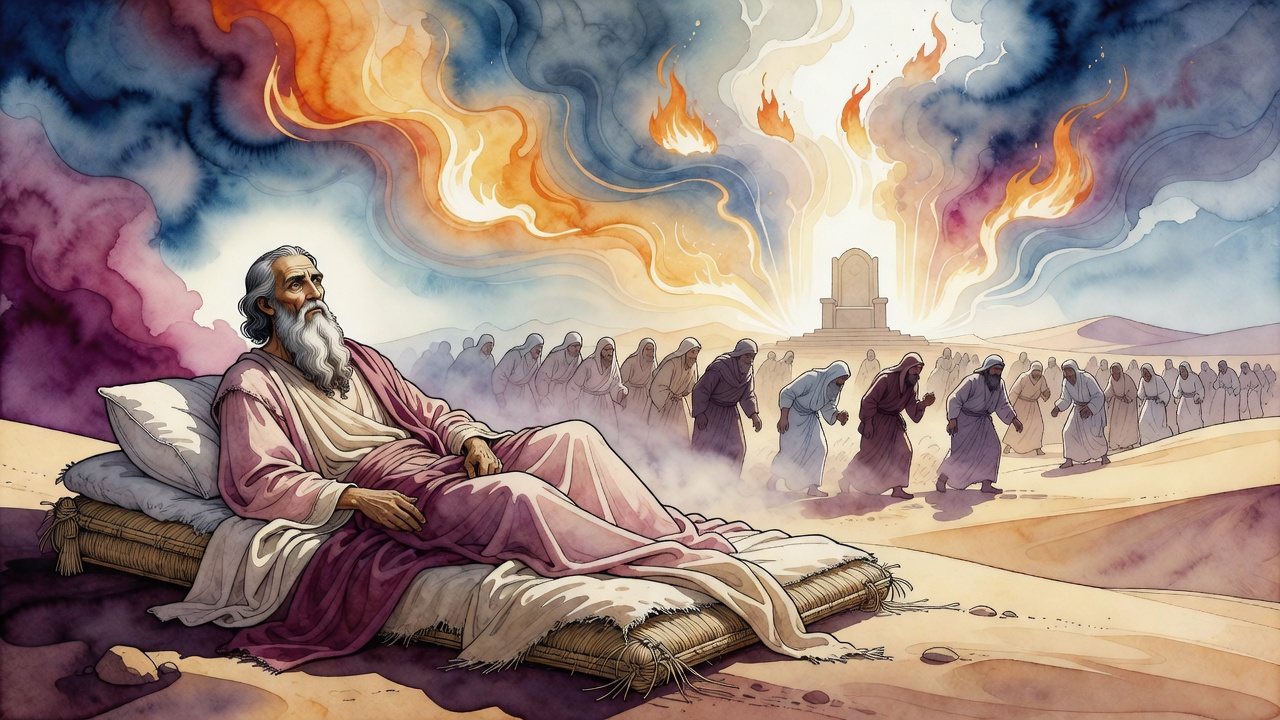
The author of the mantle of books looked at his age and did not reach for soft nouns. I see the face of the generation as the face of a dog, he wrote, without a doubt. Truth had gone thin. Deception ran thick. A few righteous voices still spoke, and the noise drowned them. Young ones fell into nets. Power passed from fallen hands to fallen hands. He named the hour with an older phrase: the footsteps of the Messiah. Then he added the cost. Woe to the generation in which it has arisen.
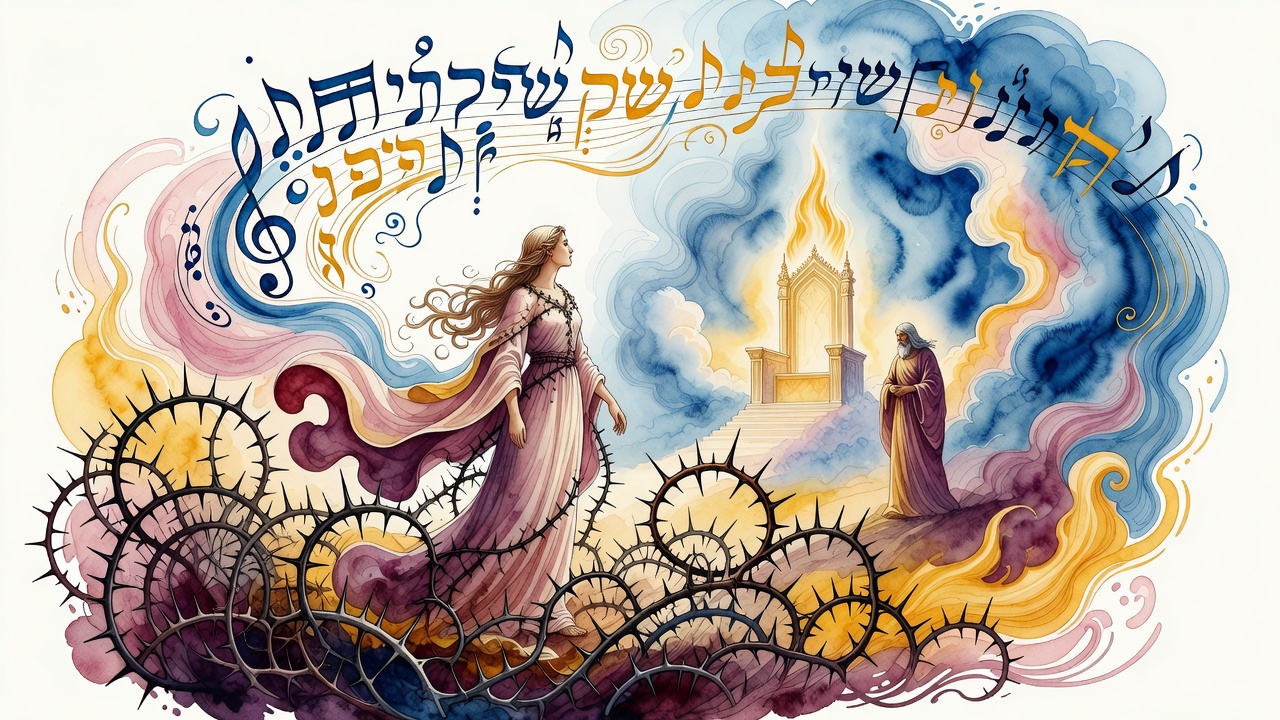
The Generation with a Dog's Face and a False Messiah Click for full size

Foxes, Flattery, and Metal Riches

Rich homeowners sat on metal wealth while the poor in understanding held offices and silenced those who actually knew. People sold their souls for praise and became puppets of flatterers. Small foxes, not grand dragons, set the snares. Hypocrisy learned to wear a prayer shawl. The wise went deaf and dumb with fear. The picture is ugly on purpose. A dog's face in this idiom is not zoology. It is shameless appetite without loyalty, a generation that pants after the wrong masters.

Into that weather walked the afterlife of Shabbetai Tzvi. The man who had claimed messiahship and then broken the claim under Ottoman pressure still had a faction. Followers carried teachings the polemic calls false doctrine, a snare for the scattered holy flock. The author says he came to the land to testify and warn, crying like a trumpet until his teeth ached. The image is physical. Warning hurts the warner.

The Zohar Turned into Shrapnel

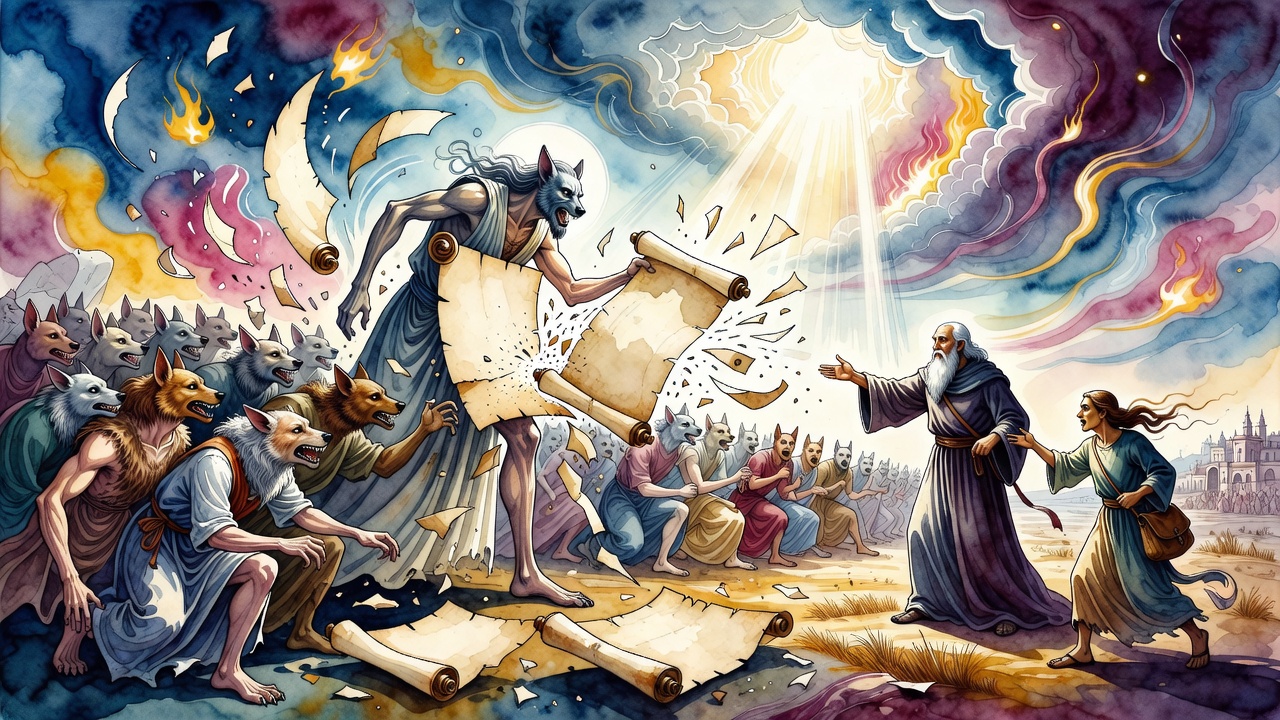
Heretics took the Zohar and made it stones of affliction, stumbling blocks, bullets and shrapnel. Words meant to lift became ammunition. The polemic calls them raging bears and roaring lions who spread venom with sentences of holiness. Hope is the easiest door for a thief. Tell a tired people that redemption is scheduled and that the mystical book proves it, and even careful minds lean forward.

Some left a rabbi's presence confused, went back to the Zohar, and found only what they named the cunning serpent's misleading words. The sharp-witted pious rabbi ordered isolation and study until the enchanter's mouth could be answered. Scholars spent weeks and months in the texts and concluded the faction's arguments were void, empty, filled with evil spirits. The rabbi rejoiced, then renewed a decree of exile against Rabbi Moshe Chassid, sending him to Italy to proclaim the truth and establish a press against the sect still stirring there.

Exile as a Printing Press

Moshe Chassid's road was not a vacation. Exile here is a weaponized mission. Carry responsa. Print. Answer the impious of falsehood where they have already begun to work. The war for the Zohar's meaning moves with wagons and type, not only with sermons in a home town. Italy becomes a front because rumor and print do not respect the old borders of a kehillah.

Judgment language in the polemic is volcanic. Tables of filth. Rejected faction. Cursed abomination. The heat measures how close the wound still sits. Shabbetai Tzvi was not a distant myth for these writers. He was a living scar that still twitched when certain names and certain "secrets" were spoken in study houses.

Footsteps That Feel Like Collapse

Jewish tradition knows how to read catastrophe as prelude. The dog-faced generation is framed as ikvesa d'Meshicha, the heels of the messianic age, when disorder thickens before dawn. The text refuses cheap comfort. Woe to the generation that hosts those footsteps. Redemption's approach, if that is what the chaos means, does not excuse the foxes. It indicts anyone who uses messiah-talk to smash the people of God.

So the polemic holds two truths in one hand. The age is sick enough to be a sign. The faction that hijacks the Zohar for a failed messiah is still a snare that must be cut. Hope is not the same as gullibility. Footsteps are not a license for every claimant who can chant a sefirah (one of kabbalah's ten divine emanations).

The Mouth That Would Not Stay Closed

What remains, after the insults and the decrees, is a picture of Jews fighting over the keys to their own library while empires and clocks keep moving. A rabbi sends a student across seas with ink. A generation pants. A book of glory is drafted into a civil war of meaning. The false messiah's name becomes a curse formula. The true work is slower: isolate, study, answer, print, warn until the teeth ache.

That is the myth shape here. Not a sea splitting, but a people refusing to let their mystical heart be stolen by a faction that already lost its king and would not admit the loss. The dog's face is the warning. The Italian press is the counter-move. Between them stands every reader who has to decide whether a shining claim about the end of days is light or lure.


← All myths
From the tradition

Sources

3 sources

The texts behind this telling. Some cards carry a translation of the source; others are our own retelling of it, and each card says which. Every card links out to the original.

Mitpachat Sefarim 1:8Mitpachat Sefarim

Retold in our words. Read the original at the link below.Sefaria Community Translation · CC-BY

A "cursed abomination" and a "rejected faction," their tables overflowing with. well, let's just say very unpleasant things. The Zohar, that foundational text of Jewish mysticism, and its companion, the Ra'aya Mehemna, are cited as sources for these descriptions, supposedly detailing even the specific colors of this repulsive scene. Anointed with filth, utterly contemptible. Who are they talking about? And why such extreme language?

The text continues, mentioning a "Book of Zealotry" where all this is supposedly laid bare. It seems some people took issue with these claims. After leaving the presence of a certain Rabbi, they went back to the Zohar, poring over its words, trying to find the evidence. But what did they find? Confusion. They felt misled, as if a "spirit of confusion" had taken hold. All they saw were "deceptive and misleading words spoken by the cunning serpent." Strong words,.

The accusers believed the compilers of the Zohar themselves were painting a false picture, "with fraudulent intentions and disgraceful fabrications." This was serious stuff. So serious, in fact, that the Rabbi decreed that these doubters were to isolate themselves and do nothing but examine the matter until they could definitively silence the "enchanter's mouth", until they could answer the questions and doubts raised.

Why such a strong reaction? Well, the "sharp-witted pious Rabbi" was deeply disturbed. He felt there was a lack of wisdom and discernment among these "impure lips." He, blessed be his memory, was more focused on legal debates than on the deeper "wisdom of truth". Following his orders, these scholars spent weeks, even months, poring over texts. They concluded that the arguments of this "faction" were "void, empty, and filled with evil spirits." Ouch.

Then, the pious Rabbi rejoiced. And he renewed a decree of exile against Rabbi Moshe Chassid, ordering him to travel to Italy to proclaim the truth. Why Italy? Because, as the Rabbi had heard, even there, rebellious individuals from the "accursed sect of the false Messiah, Shabbetai Tzvi" were stirring up trouble. Shabbetai Tzvi, the 17th-century figure who claimed to be the Messiah, and whose messianic claims caused a huge schism in Jewish communities. The Rabbi instructed Rabbi Moshe Chassid to establish a printing press in Italy to publish his responsa, his legal rulings, against these "impious individuals of falsehood."

So, what’s going on here? We see a snapshot of a community wrestling with theological disputes, accusations of heresy, and the ever-present threat of false messianism. The vivid, almost violent language used in the beginning highlights the intensity of these disagreements. It's a reminder that within Jewish tradition, as in any vibrant and complex religious landscape, there have always been debates, disagreements, and passionate defenses of what is considered truth.

This passage isn't just a historical curiosity; it's a window into a world where ideas mattered deeply, where spiritual truth was worth fighting for, and where the lines between orthodoxy and heresy were constantly being drawn and redrawn. And how will future generations interpret our own passionate disagreements?

Full source
Mitpachat Sefarim 1:38Mitpachat Sefarim

Retold in our words. Read the original at the link below.Sefaria Community Translation · CC-BY

Mitpachat Sefarim turns to Shabtai Tzvi and Divine Judgment.

The author declares, with a fervor that's almost palpable, that their aspiration since arriving in the land has been to testify to the people and warn them. But what's the danger? What's this "snare" they speak of?

It's the "cursed men," the "adherents of the false doctrine of Shabtai Tzvi." Now, Shabtai Tzvi was a 17th-century figure who declared himself the Messiah, only to later convert to Islam. This caused a huge crisis of faith in the Jewish world. His followers, even after his apostasy, continued to propagate his teachings, which were seen as heretical and deeply dangerous by many.

The author of Mitpachat Sefarim sees these followers as a grave threat. They cry out "like a trumpet," their "teeth ache" from the intensity of their warnings. This isn't just a casual observation; it's a desperate plea to protect the "scattered holy flock," to "restore the outcasts," and to "bind up the injured."

The concern is so great, the author fears the approach of days when there is "no delight," when the "hand of the wicked seeks to shatter the people of God." They envision a "Valley of Destruction," filled with heretics seeking to destroy Israel with their false doctrines.

But there's hope! The author declares, "For all my salvation and all my desire, for iniquity shall not sprout from the dust of Jacob, and wickedness shall be consumed like thorns." It's a powerful statement of faith, a belief that despite the dangers, the Jewish people will endure.

And what about the Zohar? The author accuses these heretics of taking the Zohar, a foundational text of Jewish mysticism, and twisting it, turning it into "stones of affliction and stumbling blocks, like bullets and shrapnel." It's a stark warning about the dangers of misinterpreting sacred texts. The author sees these figures as "raging bears and roaring lions," using the very words of holiness to spread venom.

How can something meant to uplift and enlighten be twisted into something so destructive? What responsibility do we have to protect sacred texts from misuse and misinterpretation? And how do we discern truth from falsehood when faced with conflicting interpretations?

Full source
Mitpachat Sefarim 1:28Mitpachat Sefarim

Retold in our words. Read the original at the link below.Sefaria Community Translation · CC-BY

In Mitpachat Sefarim, a collection of Jewish writings whose name literally means "wrapping of books," we find a raw, unflinching look at a generation seemingly gone astray. The author doesn't mince words: "I see the face of the generation as the face of a dog, without a doubt." Ouch.

It's important to remember that hyperbole is often used to make a point in Jewish literature. So, what does this "dog-faced" generation really look like? The text goes on to explain. Even though there are a few righteous people, the author laments, their voices are drowned out. Deception and corruption are rampant. It's like the descendants of Canaan, who, according to tradition, were cursed to be untruthful, have embraced falsehood completely. Truth? Nowhere to be found.

These aren’t just problems with the obviously wicked; the rot has spread everywhere. Even the young and innocent are falling prey. The author notes a painful reality: the "fallen ones" are inheriting power and passing it on, solidifying their grip on things. Echoing the prophet Isaiah, the text observes that "They will mock them and rule over them."

There’s a glimmer of hope woven in. The author sees this chaos as a sign – a sign of the ikvesa d'Meshicha (ikvot ha-Mashiach) – the "footsteps of the Messiah." These tumultuous times, as painful as they are, might just be the prelude to redemption. But as the text says, "Woe to the generation in which it has arisen." It's a heavy burden to bear.

The critique doesn't stop there. The author skewers the wealthy, those "rich homeowners, with their metal riches," comparing them to cherubs – ironic, considering their lack of spiritual depth. Meanwhile, the "poor in understanding" – those lacking wisdom – are the ones in power, oppressing the weak and silencing those who actually possess knowledge. Those who once had strength are now "deaf and dumb, feeble and afflicted." It’s a world where the wise are afraid to speak.

It's a time, the text declares, for "foxes, small foxes that ensnare." These aren't grand villains, but petty deceivers, weaving webs of lies and manipulating others for their own gain. Hypocrisy reigns supreme. People are willing to sacrifice their own souls for praise, becoming mere puppets controlled by those who flatter them. And worst of all, these manipulators are the ones "testifying about those who are incomparable to them in wisdom, fear of God, and great deeds" – tearing down the truly worthy.

Reading these words, written so long ago, it's hard not to feel a chill. How much of this resonates today? How often do we see those who shout loudest being given the most attention, regardless of their merit? How often do we see truth sacrificed at the altar of popularity?

Mitpachat Sefarim paints a bleak picture, but it's not without purpose. It’s a call to be vigilant, to resist the tide of falsehood, and to seek out true wisdom, even when it's drowned out by the noise. And perhaps, most importantly, to remember that even in the darkest of times, the hope of redemption remains. Maybe, just maybe, these "footsteps of the Messiah" are closer than we think.

Full source