A Voice Woke a Man to Pray Because the Shekhinah Cannot Rise Alone
He woke with a rebuke already under his ribs. She said she had no strength to rise. The Zohar on the shelf had stayed shut for years.
Table of Contents
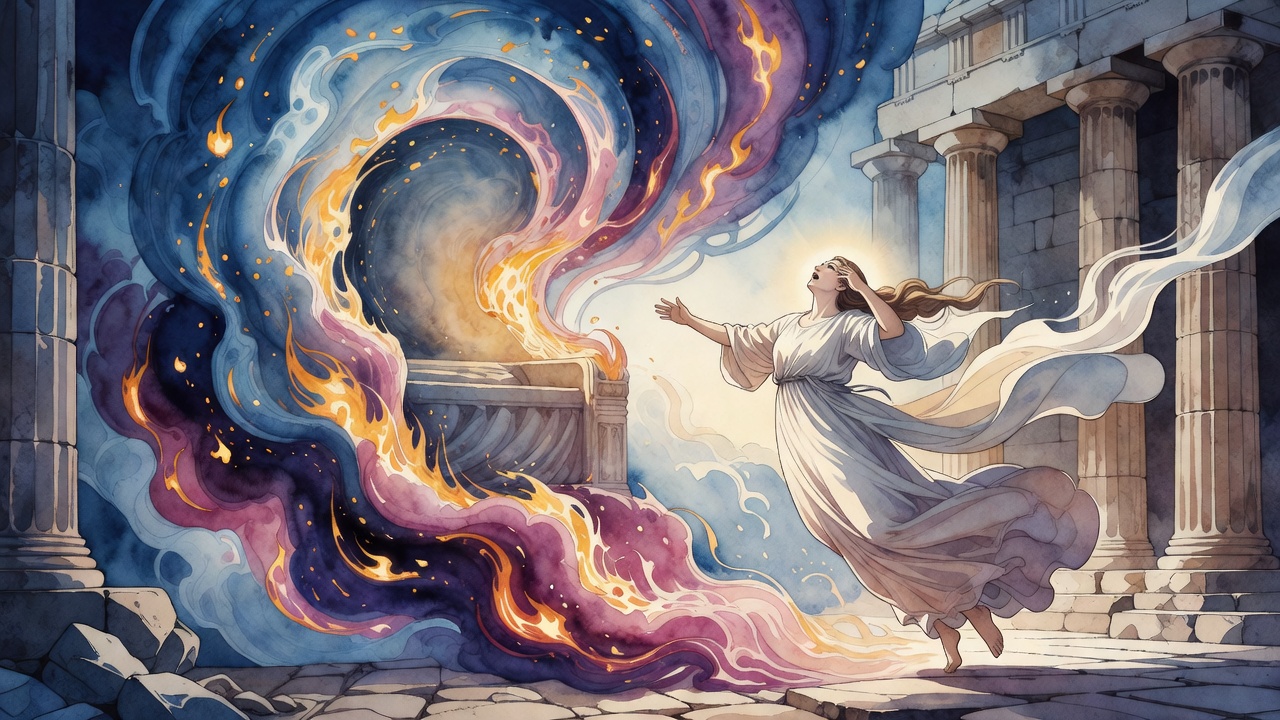
He sat up in the dark with a sentence already burning under his ribs. "Wake and arise for the holy Shekhinah (שכינה), the Divine Presence, for you have an empty heart, empty of understanding." He had not opened a book. The rebuke was already in the room, as if someone had stood over the bed all night waiting for the eyes to open.
 Click for full size
Nearness Without a Grasp
He sat on the edge of the mattress and felt the emptiness the voice had named. She was already within him. The Presence that dwells in creation was in his chest, and still he could not acquire her. He pressed a palm to his breastbone as if pressure could invent understanding.
On the shelf the Zohar lay shut beside volumes of practical law he knew how to use. The law books looked thinner suddenly. Not because law is small. A body with only law and no inner Torah is a lamp with oil and no flame.
He stood. He did not light the lamp yet. The dark made the rebuke louder.
Call Out, She Said
A voice said, "Call out." He knew the line from Isaiah as liturgy (Isaiah 40:6). In his mouth it had always been a prophet's commission. Tonight it was an urge in the bones of Israel, a throat trying to lift what exile had bent.
She answered. "What shall I call?" Life is nothing more than grass. People wither. Intentions wither. They perform commandments the way animals eat grass, without thought. They do kindness for themselves and call it love.
The answer landed like a hand on easy piety. He tried to pray and heard his own voice as grass would sound if grass could form consonants.
"I have not the strength to lift myself from the dust," she said. "Life is grass."
The Closed Spine on the Shelf
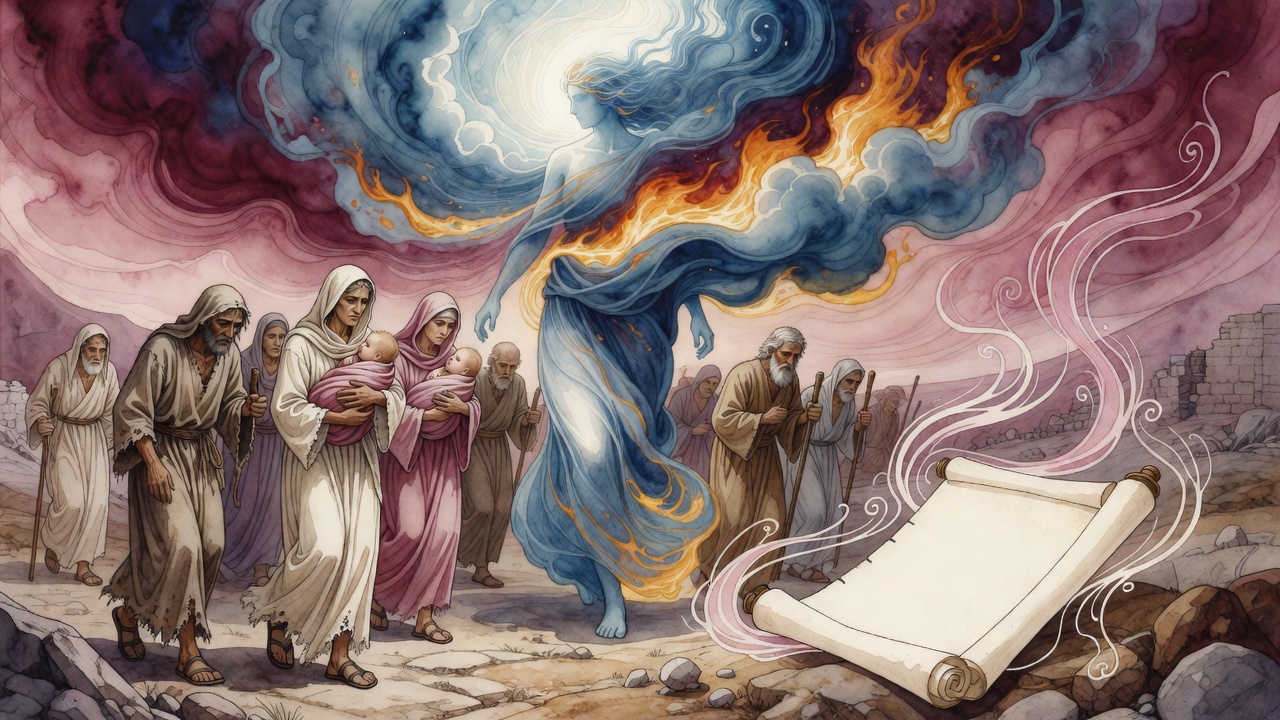
He had seen the newspapers. Ruin in the streets. The worst climbing over the better. He had not connected any of it to a closed book on a Jewish shelf. The connection now felt plain, and it shamed him.
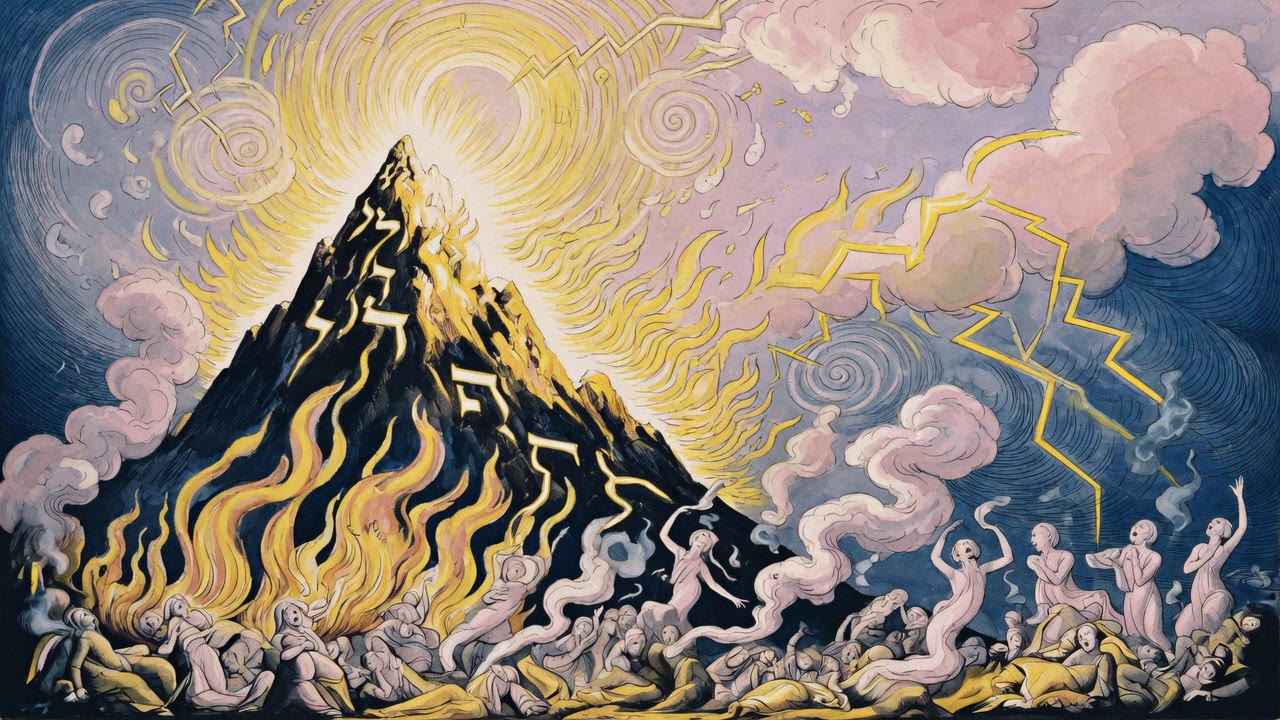
When Israel leaves the inner Torah shut, the outer forces among the nations grow teeth. The worst rise. The gates of ruin stand open. Redemption waits in the hall because a people treated the Zohar as optional spice for eccentrics.
He would not spit on the deeds that keep hands clean. The charge was different. A people that only polices the outer without feeding the inner becomes a wall without a house behind it. The Shekhinah does not rise on walls alone.
He Opened It Anyway
He lit the lamp. He took the Zohar down and opened it as if opening a window in a room that had gone stale for years. Dust lifted. So did a fear of not understanding. He read anyway, one line, then another, his mouth dry.
At dawn he bound tefillin, the leather prayer boxes on arm and head, with more attention than yesterday. Attention is a form of waking. He learned one passage slowly enough to hurt. Pain of effort is not holiness by itself. It is a rung.
Outside, merchants began their noise. The noise was not evil. It became dangerous only when it was the only music left in the house.
The Messiah Waited in the Hall
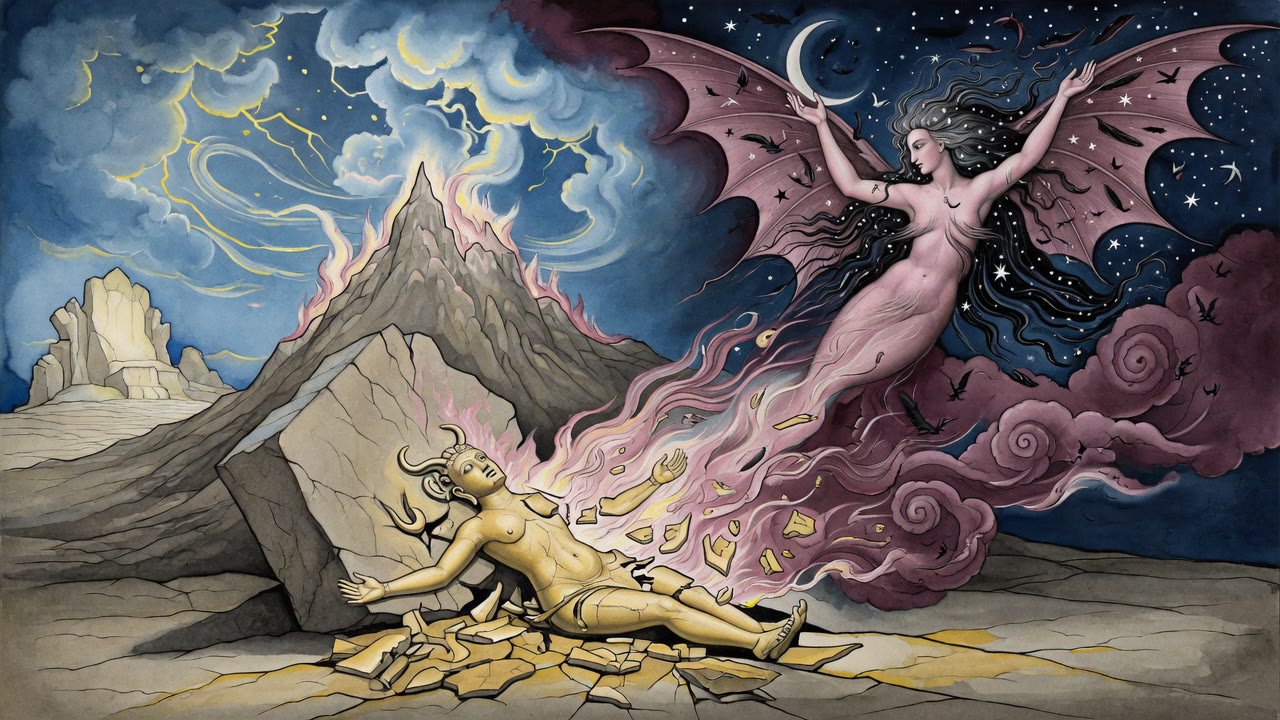
Delay is not always a mystery sealed in heaven. Sometimes delay is the sum of closed books and shrugging shoulders. He did not claim to hasten the end by one night of study. He claimed only that his sleep had been part of a larger sleep.
Days stacked. Some mornings the empty heart felt less empty. Some mornings the grass answer returned and he nearly shut the book again. He kept a small practice. Wake. Speak toward her elevation. Study a page that scares him. Do a deed that costs. The sequence was not magic. It was apprenticeship to a Presence that refuses to be flattered by speed.
He began to hear other people differently. The neighbor who only argued law sounded like a man stacking bricks for a house he would not enter. The neighbor who only chased secrets without deeds sounded like a man lighting incense in a ruin. He wanted both fire and walls.
One evening he stood by the shelf and did not feel the Zohar as heavier than stone. He felt it as a door. Behind the door someone still asked, "What shall I call?" He answered with a life that had started, at least, to rise when called, and to call when rising felt impossible.
Grass still withered. The calling continued.
← All myths