5 min read

How Israel Heals the Limping Shekhinah on Foreign Roads

When Israel fell, the Presence went out poor and storm-tossed. Return, Torah, and love of souls begin her healing.

Curated by Arthur · Told by Maggid ·
Table of Contents
  1. On the Road Out
  2. The Lesser Letter in Exile
  3. Torah Handled Like Unwanted Goods
  4. Souls With One Father
  5. Turning on the Dusty Road
How Israel Heals the Limping Shekhinah on Foreign Roads Click for full size

On the Road Out

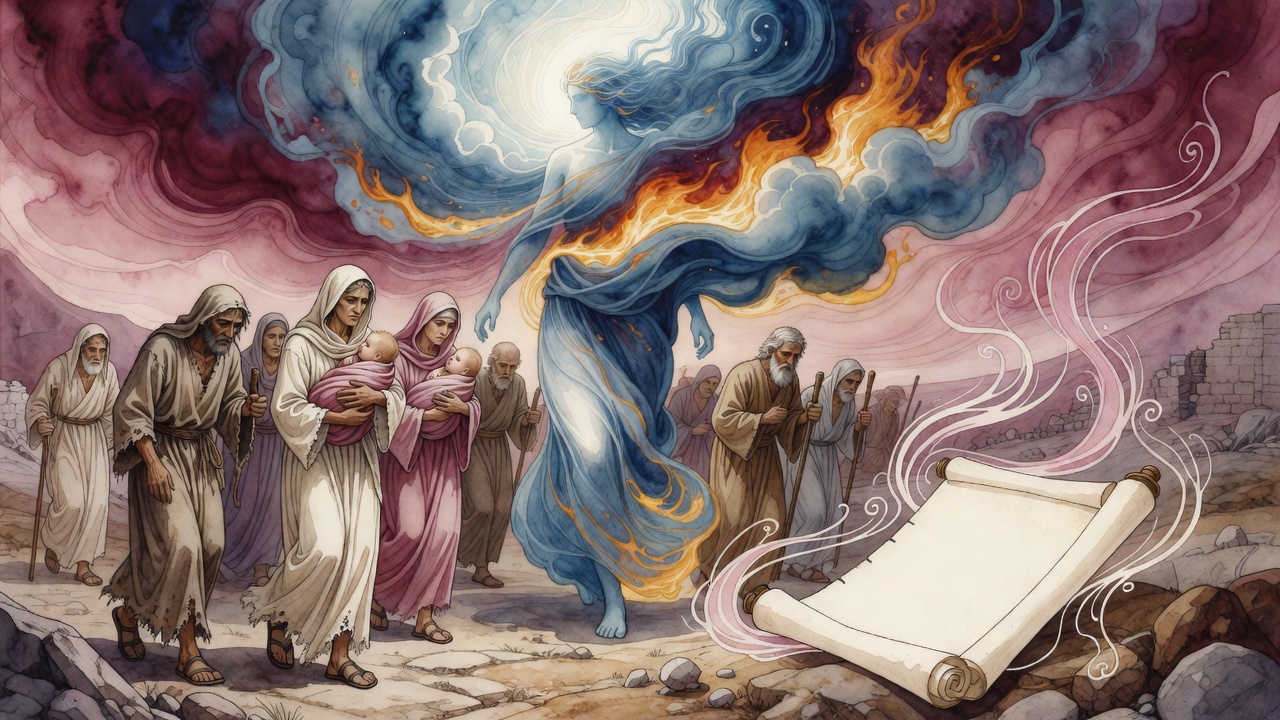
The column left the burning city at the hour when smoke turns the sun into a dull coin. Children carried water. Men carried names of the dead. Something else walked with them that no Babylonian tally-man could count. The Shekhinah (the Divine Presence), the Presence that had filled courts and gold, went out poor, storm-tossed, without comfort, as the prophet had named a suffering woman (Isaiah 54:11). She did not float above the refugees. She limped in the dust of their ankles.

A boy asked his grandfather where God was if the House was gone. The old man did not point at the sky alone. He pointed at the column. "With us," he said, and the answer was heavier than comfort. If the Presence shares the road, then every cruelty on that road strikes more than human flesh.

The Lesser Letter in Exile

The teachers of the Tikkunei Zohar would later speak of the lesser Hei, the letter that stands for the Shekhinah in exile. Afflict her and you afflict the world-structure that holds divine nearness. Father and Mother aspects on right and left bend to receive Torah and precepts as the medicine that draws the letters back toward one Name. "Return, O Israel" is not only private regret (Hosea 14:2). It is cosmic first aid.

"And returns and is healed" (Isaiah 6:10) becomes a map: human turning, then healing that is larger than the human. Fruitfulness, making and multiplying good, is part of that healing. The world was not formed for chaos but to be inhabited (Isaiah 45:18). Empty living, clever and barren, leaves the Presence in the storm.

Torah Handled Like Unwanted Goods

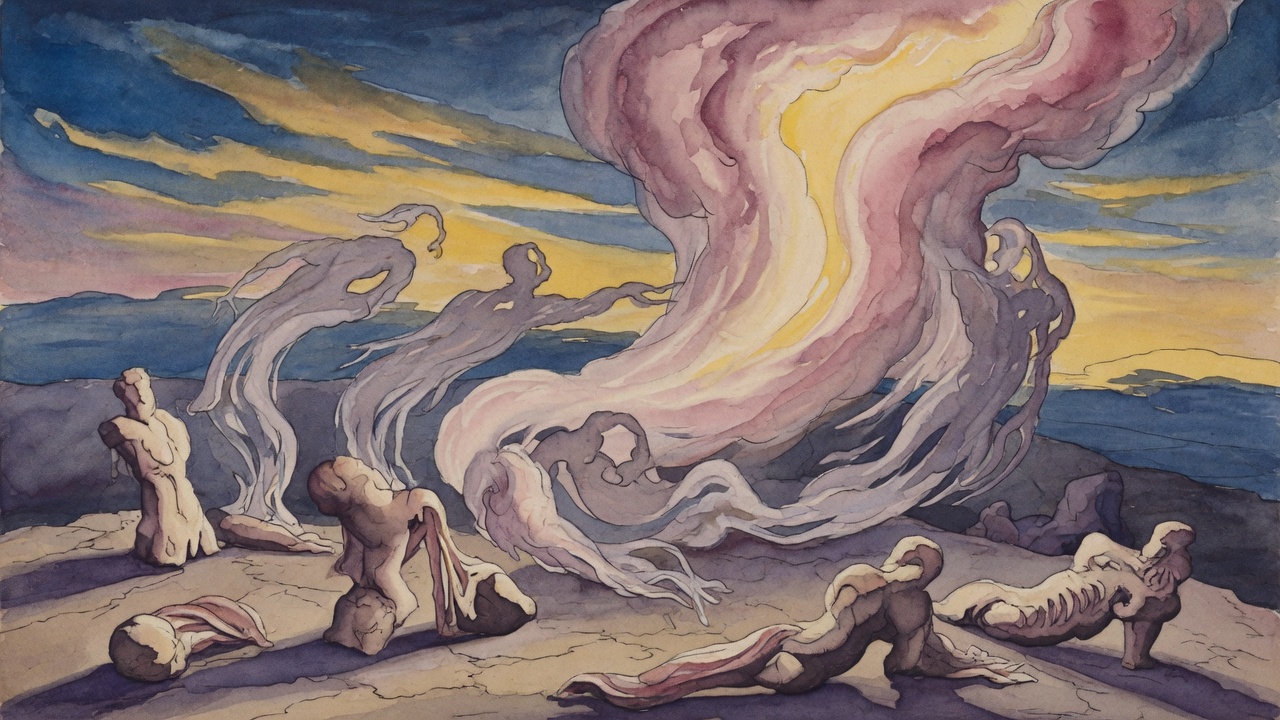
Another wound comes from study that never enters. People busy with pages at the hour that is "neither night nor day," half-committed, treat the inner light of Torah as if no one in the world wanted it. They become, in the image of the Tikkunim, like a blind person feeling along a wall: contact without sight. Outer letters thicken. Inner light thins. The ego feeds. The world outside mirrors the imbalance, surface without depth.

On the exile road that kind of study is a second displacement. The Shekhinah does not need more cleverness that refuses to be changed. She needs words that open the heart until return is possible. A scholar who withholds the inner teaching from those who could receive it leaves the column thirstier than Babylon already made it.

Souls With One Father

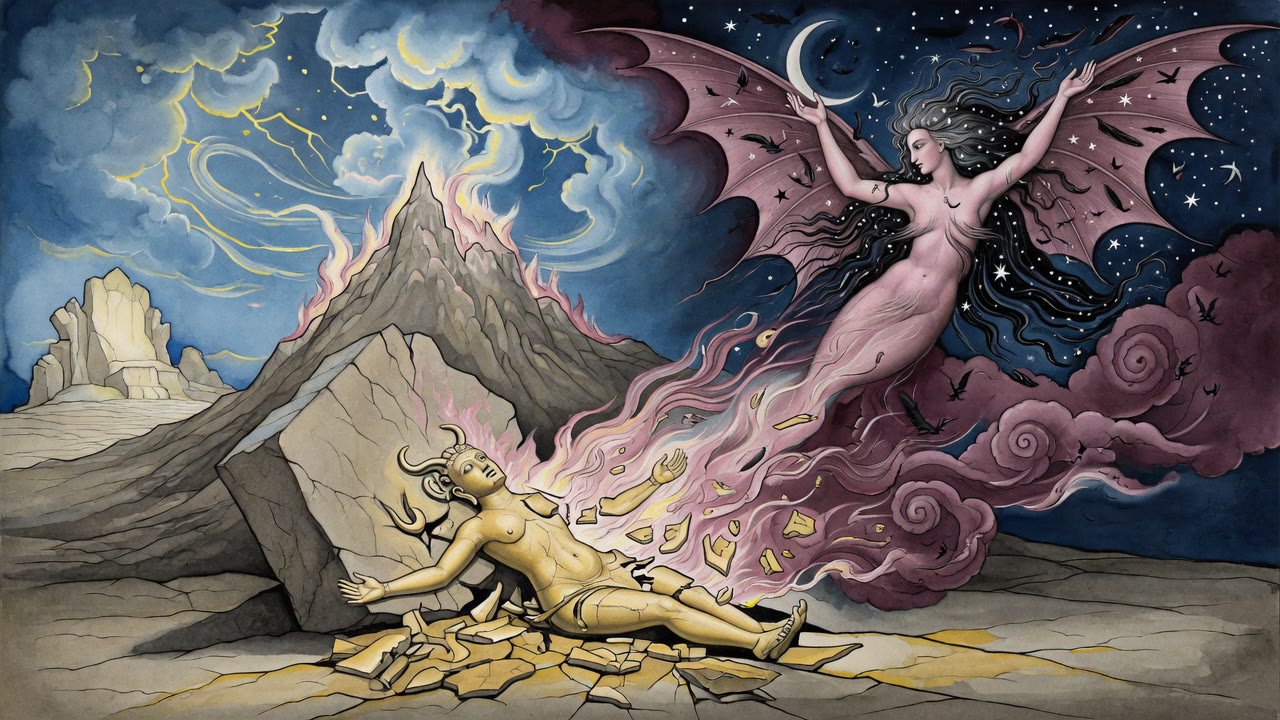
Rabbi Schneur Zalman would teach a repair that looks like ethics and is also structure. Love your fellow as yourself (Leviticus 19:18). Look at bodies and love dies in competition. Look at souls, all rooted in one Father, and love becomes reasonable. God's light rests in a unified vessel. Cracks of hatred among Jews are cracks the Shekhinah cannot inhabit. "Bless us, our Father, all of us as one" is architecture, not sentiment.

Even the far ones are to be drawn with cords of love, in the way of Aaron, unless a companion in Torah has been rebuked and has hardened past the duty of hate-the-deed. Exile multiplies far ones. The temptation is contempt. The medicine is the shared root.

Turning on the Dusty Road

Somewhere between the ruined gate and the foreign river a woman in the column began to whisper psalms without looking holy. A man returned a stolen skin of water. Two enemies from the old city walked a mile without reopening their case. Small turnings. The midrashic and kabbalistic ear hears the Shekhinah catch her breath in such moments. The limp does not end in a single mile. The companionship does not end either.

Israel still walks roads that are not Jerusalem. The Presence still refuses to stay behind as museum light in a memory of gold. She limps where the people limp, and she heals as they return, learn with depth, and love across the stupid borders of ego. That is not a soft story. It makes every private cruelty public in heaven, and every private repair a beam under her feet.

At the river the column stopped to drink and some men began to trade blame for the fall of the city. The old grandfather who had pointed at the Presence in the dust told them to lower their voices. If she limps with us, he said, then mocking one another is kicking her feet. They did not all listen. Exile is not an automatic school of kindness. It is a road where kindness must be chosen while feet bleed.

Still the books would be written. Still the Tanya would insist on one Father for rival bodies. Still the Tikkunim would name her poverty and demand return. The Shekhinah's limp is not a legend to make defeat pretty. It is a claim that heaven refused to stay home when the people were dragged out. Answer that claim with contempt and the storm thickens. Answer it with teshuvah, deep Torah, and love, and the road, while still long, holds a companion who can be healed as you heal.


← All myths

From the tradition

Sources

3 sources

The texts behind this telling. Some cards carry a translation of the source; others are our own retelling of it, and each card says which. Every card links out to the original.

Tikkunei Zohar 119:11Tikkunei Zohar

Retold in our words. Read the original at the link below.Sefaria-hosted English translation · CC-BY

The Tikkunei (spiritual repair) Zohar, a core text of Kabbalah, suggests that those feelings might be more profound than we realize. It connects our personal actions to the cosmic balance, specifically to the suffering of the Shekhinah (the Divine Presence).

Who is the Shekhinah? It's a Hebrew word often translated as "Divine Presence," the immanent aspect of God that dwells within creation, particularly within the Jewish people.

The text Why? Because of the affliction we cause to the "lesser Hei," which is exiled. Now, the Hei (ה) is a letter in the Hebrew alphabet, and in Kabbalah, letters aren't just letters. They're symbols, pathways to understanding deeper mysteries. The "lesser Hei" here represents the Shekhinah, and her exile reflects the brokenness and suffering in the world. She is called “O poor-one – ‘aniyah, tempested, without comfort,” a quote from (Isaiah 54:11).

The Divine Presence, exiled and suffering because of our actions.

So, what can we do? The Tikkunei Zohar continues, saying that "Father and Mother descend on the right and the left, to receive V-H within them, which are Torah and precept." "Father and Mother" here refer to higher Sefirot, divine attributes, and the "V-H" refers to letters of the divine name, representing Torah and mitzvot (commandments), precepts or commandments. Through engaging with Torah and performing mitzvot, we can help to heal this cosmic rift, to bring the Shekhinah back from exile.

The mystery of the matter, the Tikkunei Zohar tells us, lies in the verse from (Isaiah 6:10): "... and returns and is healed." And in (Hosea 14:2): "Return O Israel, to Y”Y ELoQeYKha" – Return, O Israel, to the Lord your God. The path to healing the world, to alleviating the suffering of the Shekhinah, begins with our own return, our own teshuvah (repentance), our own repentance and reconnection.

And it gets even more practical. The text links this concept to the mitzvah, the commandment, to "be fruitful and multiply." This isn't just about physical procreation; it's about creation in all its forms. It’s about bringing forth goodness, kindness, and holiness into the world. The Shekhinah, the text says, embodies this principle, citing (Isaiah 45:18): "... not for chaos did He create it, but to inhabit it did He form it..."

There's a warning, too. The Tikkunei Zohar states that "Any scholar who withholds from Her, the 'time' – 'onah of the recitation of the Sh'ma, is as if he withheld from Her blessings from above." The Sh'ma is a central Jewish prayer, a declaration of God's unity. Withholding from its recitation, especially for a scholar who should know better, is seen as withholding blessings from the Shekhinah. 'Onah refers to a set time, a duty, even a marital obligation. The idea is that we have a responsibility to connect with the Divine, to nurture the Shekhinah, through prayer and study.

So, what does all this mean for us today? It suggests that our actions, even the seemingly small ones, have cosmic significance. Our engagement with Torah, our performance of mitzvot, our commitment to bringing more light into the world – all of these contribute to the healing of the Shekhinah, to the restoration of cosmic balance. It's a profound responsibility, but also a profound opportunity. Are we ready to answer the call?

Full source
Baal HaSulam's Introduction to Zohar 71:1Baal HaSulam's Introduction to Zohar

Retold in our words. Read the original at the link below.Sefaria-hosted English translation · CC-BY

He paints a vivid picture of people engaging with Torah, but missing something fundamental.

He argues that many people, even those deeply involved in studying Torah, are actually diminishing its inner light, its pnimiyut (inner aspect). They treat it, he says, "as if it is something that no one in the world wants." Ouch.

Why? Because they're only engaging with it at a time that is "neither night nor day." It's that liminal space, that in-between time, where things aren't quite clear. It's a metaphor for engaging with Torah superficially, without genuine commitment or seeking its deeper meaning.

The Tikkunei (spiritual repair) Zohar, a companion work to the Zohar, explores this idea further. It suggests that when we neglect the inner dimensions of Torah, we become like a blind person "feeling his way around a wall." We're touching the surface, but we're not truly seeing.

So, what's the consequence of this superficial approach?

Baal HaSulam says that it strengthens our own chitzoniyut (external aspect), our ego, our focus on benefiting our bodies and worldly desires. And not only that, but it also strengthens the external aspect of the Torah itself – the literal interpretation, the rules and regulations without the soul.

He's saying there's an imbalance. When we prioritize the external, we starve the internal. Like a plant without water, the deeper meaning withers.

And here's the kicker: this imbalance doesn't just affect us. It affects the entire world. Baal HaSulam argues that when we strengthen the external aspects of Torah, we simultaneously strengthen all the external aspects of the world. This happens "at the expense of the internal aspects, each category following its essence."

What does that mean? It means that everything is connected. Our individual approach to Torah has ripple effects, influencing the balance between the external and internal in the world around us.

Pretty heavy stuff. Or are we just feeling our way around the wall, content with the surface level? Are we nourishing our souls, or just feeding our egos?

Baal HaSulam's words are a powerful call to look deeper, to seek the pnimiyut, and to strive for a more balanced and meaningful engagement with the Torah, and with life itself.

Full source
Tanya, Likkutei Amarim, Chapter 32Tanya (Likkutei Amarim)

Retold in our words. Read the original at the link below.Kehot Publication Society English Translation via Sefaria (CC-BY-NC) · CC-BY-NC

"You shall love your fellow as yourself" (Leviticus 19:18). Hillel the Elder called this the entire Torah, with everything else being commentary. Chapter thirty-two of the Tanya explains how to actually do it.

The key, says Rabbi Schneur Zalman, is which part of the other person you are looking at. If you focus on bodies, his body versus your body, his interests versus yours, his status versus yours, love is impossible. Bodies are separate. They compete for the same resources. Every gain for him is a potential loss for you.

If you focus on souls, the picture reverses. All Jewish souls share a single root in the one God. They are, in the Tanya's language, "all of a kind, and all having one Father." Siblings from the same parent. The more weight you give to the soul and the less weight you give to the body, the more natural it becomes to love the other person, because at the soul level, there is no "other." You are one.

This is why people who prioritize their physical existence cannot sustain genuine love. Their love is "dependent on a thing" (Avot 5:16), conditional, transactional, subject to change when circumstances shift. But love rooted in the shared divine source of all souls is unconditional, because the source never changes.

The Tanya addresses an obvious objection: what about people who sin? Aren't we supposed to hate the wicked? Yes. But only under specific conditions. The obligation to hate applies only to someone who is your "companion in Torah and commandments," whom you have personally rebuked, and who has refused to change. For everyone else, Hillel's instruction applies: "Be of the students of Aaron, loving peace and pursuing peace, loving people and drawing them near to Torah." Even total strangers. Even people who seem far from observance. The Tanya says you should draw them close with bonds of love. And perhaps the light of your love will inspire their return.

At the cosmic level, this love is not just an ethical imperative. It is a structural necessity. God's light can only rest in a unified vessel. Disunity among souls creates cracks that the Shechinah cannot inhabit. The prayer says: "Bless us, our Father, all of us as one." Only as one.

Full source