5 min read

Shekhinah Smashes Idols While Lilith Rules Night

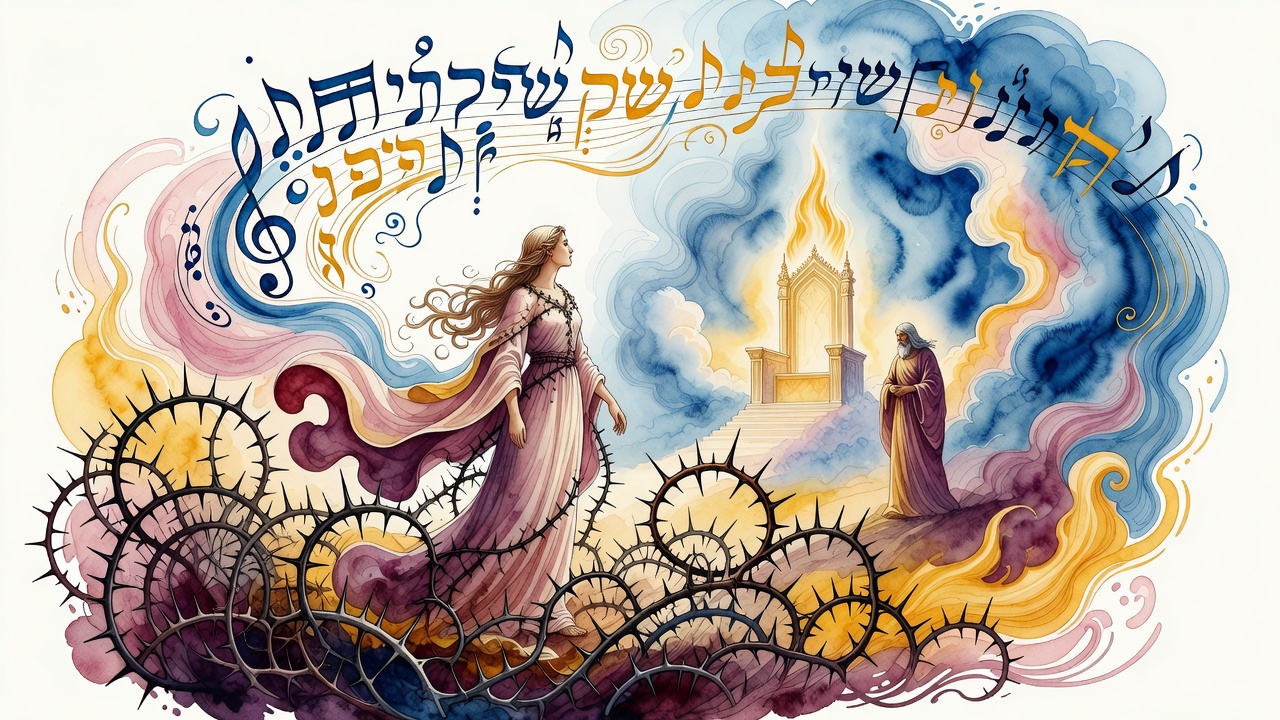
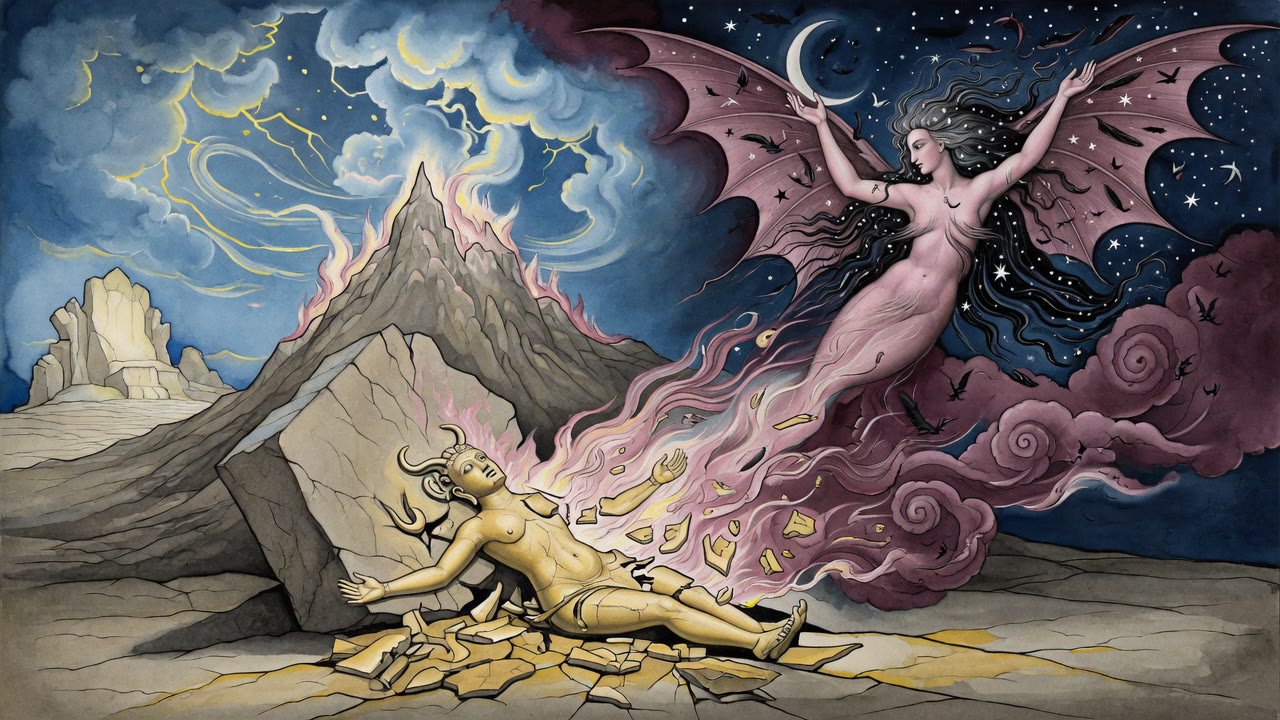
A stone of presence smashes the false image and becomes a mountain. Lilith holds the night while the Shekhinah, the Divine Presence, gathers what broke.

Curated by Arthur · Told by Maggid ·
Table of Contents
  1. When the False Image Falls
  2. Night Named in the Body
  3. Lylyt, Mother of the Mixed Multitude
  4. Two Hands in One Exile

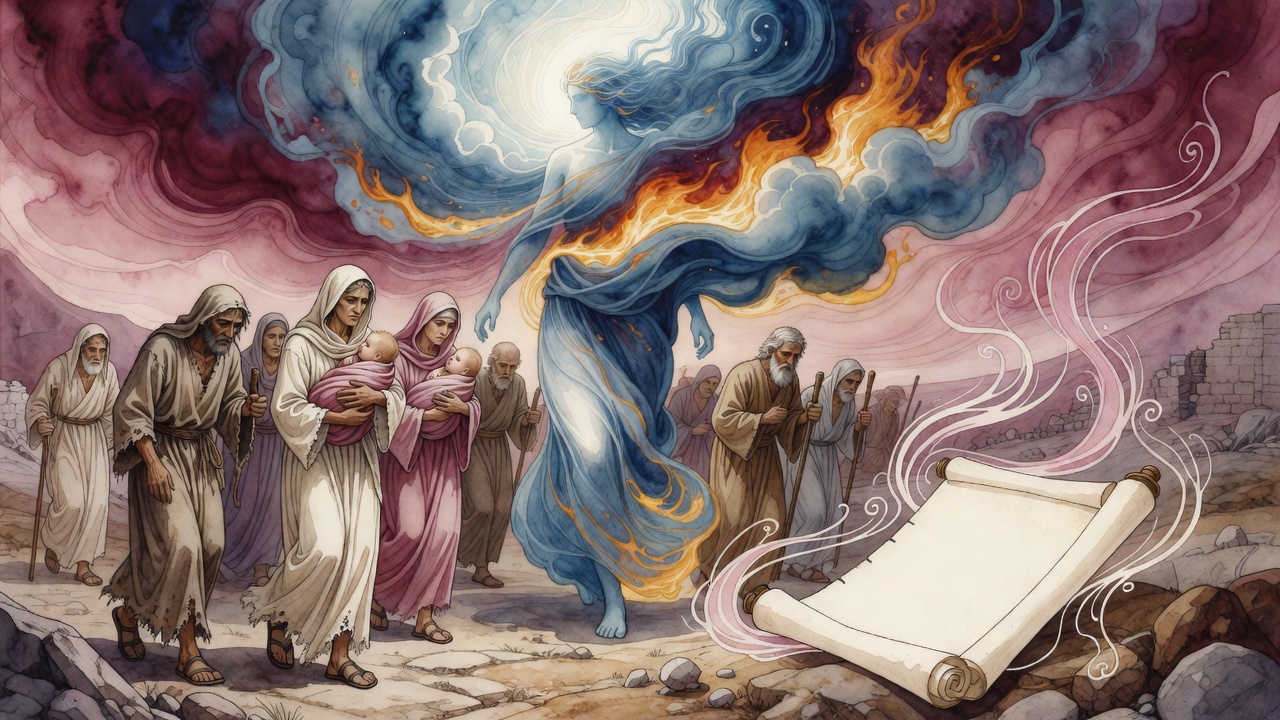
She moves through the wreckage with both hands full. Shards of silver faces, cracked wood of gods that never answered, dust from pedestals that once looked permanent. The Shekhinah (שכינה), the Divine Presence that dwells inside the world, does not only weep in exile. She smashes.
Shekhinah Smashes Idols While Lilith Rules Night Click for full size

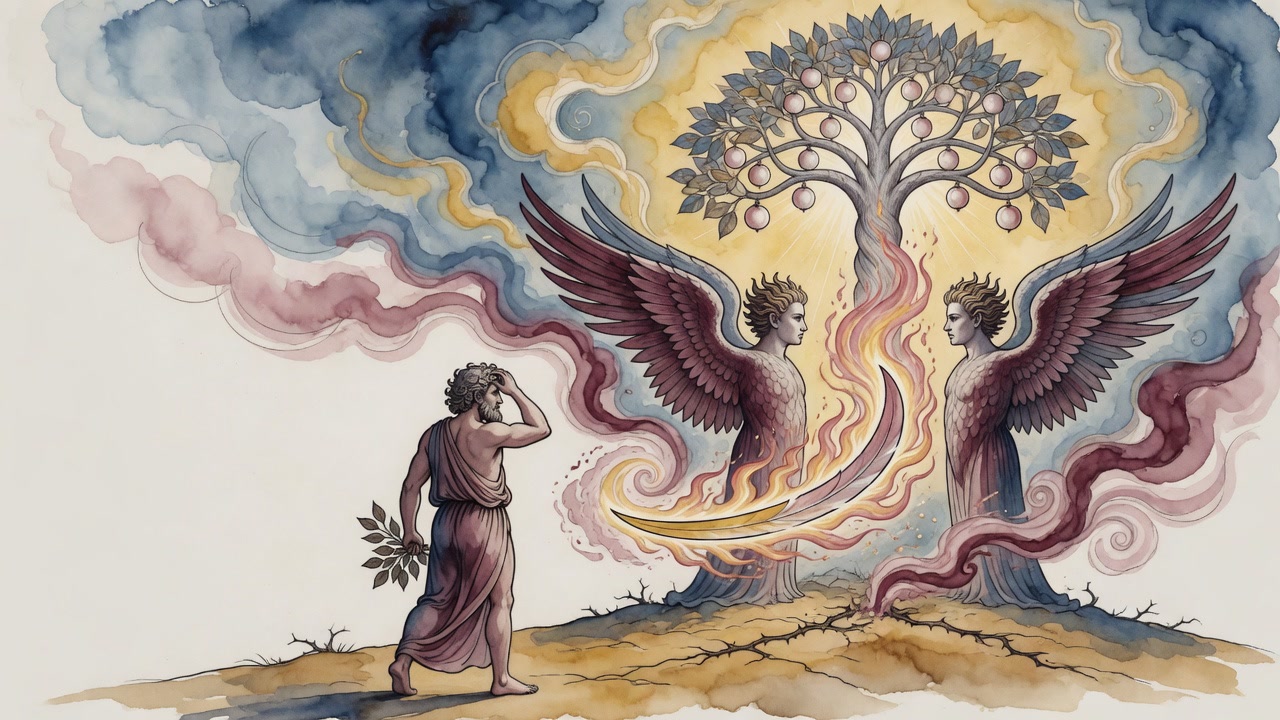
The Tikkunei Zohar names her the stone that smashes the icon of idol worship. Not a polite sermon. A stone. Impact first. Then the stone that struck becomes a huge mountain and fills the earth, as Daniel saw when the statue fell (Daniel 2:35). Clearance is not the end. Clearance is how glory finds room.

When the False Image Falls

Idols here are not only statues in a market. They are anything that steals the eye from the One, false beliefs, swollen possessions, desires that demand to be served like kings. She shatters the stand-in so the real Presence can flood the space the lie occupied.

Isaiah had already sung the result. The earth is full of His glory (Isaiah 6:3). The mystical reading pairs smash and fill. Break the counterfeit, and the true weight of holiness expands until it has nowhere left to be ignored. Repair begins with refusal.

Watch the sequence without softening it. First the strike. Then the mountain. Then a world that can no longer pretend the statue was necessary. The Shekhinahs labor in exile is not only comfort for the broken. It is demolition of the substitutes people clutched while the Temple burned and the people scattered.

Night Named in the Body

On the other side of the same map sits a darker anatomy. The Tikkunei Zohar speaks of a liver with seventy veins, matching seventy appointed ones, and an extra lobe that pushes the count toward seventy-two. The extra lobe is tied to a snake called the wife of whoring. Leftovers of that force fall to the spleen, named as darkness.

Genesis already named the darkness. And the darkness He called night, laiylah (Genesis 1:5). The mystical body reads that night as dominion in exile, a zone where a hostile feminine force rules the mixed places, the half-committed edges of the people.

Organs become a map. Liver, veins, spleen, night. The teaching will not keep evil abstract. It places predation inside the body of the world, in the wet dark places where leftover desire pools after holiness has been refused.

Lylyt, Mother of the Mixed Multitude

The text names her Lylyt, Lilith, mother of the mixed multitude, the erev rav who left Egypt with Israel without fully joining the covenant. She is not a modern mascot. She is exile wearing a face, the night-side that thrives when Israel is scattered and the Presence is far from her full house.

While the Shekhinah (the Divine Presence) gathers pieces toward repair, Lilith feeds on leftover desire and broken loyalty. One force clears idols so glory can spread. The other nests in the dark organs of a wounded cosmos and claims the children who never finished becoming Israel.

The mixed multitude is a warning with teeth. Leaving Egypt is not the same as receiving Sinai. Liliths motherhood is over those who travel with the camp and still keep a private altar to appetite. Night is her working hour because night hides the half-turn away from the covenant.

Two Hands in One Exile

The drama is not a war of equal gods. Both figures move under the single sovereignty of the Holy One. The Shekhinahs stone still serves the King. Liliths night is still a permitted darkness, not a rival throne. The human stake is which current a person feeds.

Smash what pretends to be divine, and the mountain of presence grows. Nurse contempt and half-loyalty, and the night-mother finds another vein. Exile is the field where both labors run at once, until the gathering finishes and the night loses its lease.

A person waking before dawn can feel both pressures. The urge to clear a false loyalty. The urge to hide inside an easier dark. The Tikkunei Zohar will not resolve the tension with a slogan. It leaves the stone and the night both active until repair completes its mountain.

At the edge of a ruined market a silver face lies in two pieces. Night thickens around a side street where half-loyal footsteps hurry. The stone of presence has more work to do. The night-mother has more veins to claim. Exile keeps both labors open until the mountain of glory finishes filling what the idols left empty.


← All myths
From the tradition

Sources

2 sources

The texts behind this telling. Some cards carry a translation of the source; others are our own retelling of it, and each card says which. Every card links out to the original.

Tikkunei Zohar 48:14Tikkunei Zohar

Retold in our words. Read the original at the link below.Sefaria-hosted English translation · CC-BY

Broken promises, broken systems, broken hearts. What if I told you that even in the face of such destruction, there's a force, a She, that's actively shattering the idols we cling to, paving the way for something truly glorious?

The Tikkunei (spiritual repair) Zohar, a foundation of Kabbalistic thought, speaks of exactly this. It tells us that She is the "stone that smashes the icon of idol worship." But who is this "She," and what idols are we talking about?

Well, the Tikkunei Zohar doesn't explicitly name Her. But within the Kabbalistic tradition, it is often associated with the Shekhinah, the Divine Presence, the immanent aspect of God that dwells within creation. As for the idols, think of anything that distracts us from the Divine, false beliefs, material possessions, ego-driven desires. Anything that keeps us from seeing the truth of interconnectedness.

The text goes on to quote (Daniel 2:35): "…and the stone which smashed the idol became a huge mountain and filled the earth." Imagine that for a moment. This tiny stone, this force for good, obliterates the false image and transforms into something immense, something that permeates everything. It's a powerful image of transformation and redemption. The smashing isn't the end; it's the beginning of something new.

And what happens after the idol is smashed? According to (Isaiah 6:3), "…the earth is full of His glory." The Tikkunei Zohar sees a direct connection between the destruction of the false and the revelation of the Divine. It's as if by clearing away the obstacles, we create space for God’s presence to fill the void.

But She doesn’t just smash and leave. The text paints a picture of Her ascending, rising higher and higher, until even the angels are left wondering, "Where is the place of His glory to praise Him?" It's a beautiful image of the Divine Presence exceeding all boundaries, transcending all limitations.

This ascension leads to a profound statement: "Blessed is the glory of Y”Y from His place" (Ezekiel 3:12). In Hebrew, "from His place" is mimkomo. So what does this mean?

The Tikkunei Zohar connects Her ascent to “the Infinite,” which it identifies as Yod, the head of Aleph. Now, this is where it gets a little deep into Kabbalistic symbolism. Yod (י) is the smallest letter in the Hebrew alphabet, representing the seed of all creation, while Aleph (א) is the first letter, symbolizing the unity of God. The idea is that She ascends to the very source of creation, to the undifferentiated unity of the Divine. The Infinite, the source of all that is.

So, what does all this mean for us? The Tikkunei Zohar isn’t just some ancient text; it’s a mirror reflecting our own lives.

It suggests that even when things seem broken, there's a force at work, a Divine Presence actively clearing the way for something greater. We can actively participate in this process, by examining our own idols, by striving for truth, and by opening ourselves to the possibility of transformation. Perhaps our own individual efforts, like tiny stones, can contribute to that "huge mountain" that fills the earth with glory.

Full source
Tikkunei Zohar 103:17Tikkunei Zohar

Retold in our words. Read the original at the link below.Sefaria-hosted English translation · CC-BY

The Tikkunei (spiritual repair) Zohar, a key text in Kabbalah, opens a window into just that – a mystical anatomy where organs aren't just organs, but symbols of cosmic forces.

Tikkunei Zohar 103. It’s a wild ride.

The passage speaks of the liver. Not just any liver, but one with seventy veins. These seventy veins? They correspond to "the seventy appointed-ones." Think of them as spiritual authorities, perhaps angelic beings, overseeing aspects of creation. And the liver itself, along with its extra lobe, totals… seventy-two. Numbers hold such power in Kabbalistic thought, offering clues to deeper meanings.

Here's where it gets really interesting. This "extra lobe" of the liver is associated with a snake, described as "the wife of whoring." Whoa. Strong imagery. The text goes on to say that the leftovers of this "wife of whoring" are taken by the spleen, which is identified with darkness.

Darkness. The Tikkunei Zohar then quotes (Genesis 1:5): "...and the darkness He called ‘laiylah’…" Laiylah. Night. So, what’s the connection? The text suggests that this "night," this darkness, is where this force, this "wife of whoring", holds dominion. And that dominion? It's in exile. Exile, in Kabbalah, often refers to the separation of the Shekhinah (the Divine Presence) from the higher realms, a state of spiritual disconnect.

And who is this figure lurking in the shadows of exile? The text identifies her as Lylyt – yes, Lilith – "the mother of the mixed multitude." The "mixed multitude" (erev rav) is a term often used to describe those who joined the Israelites during the Exodus from Egypt, but who were not fully committed to the covenant. She's also called "the laughter of the fool", some versions say the spleen itself is "the laughter of the fool", which hints at delusion and misdirected energy.

What are we to make of all this? Well, the Tikkunei Zohar isn't just giving us a biology lesson. It's using the human body as a microcosm to explore the forces of good and evil, light and darkness, that are constantly at play in the cosmos and within ourselves.

Because of her, because of Lilith and this realm of darkness, the text quotes (Job 7:9): "As the cloud has finished and gone, so one who has descended to she-ol will not rise." She-ol is the underworld, the realm of the dead. The verse suggests a sense of finality, a lack of return. And this, the Tikkunei Zohar concludes, is "the more righteous than he it swallows." A chilling thought.

What does it mean? Some interpretations suggest that even the righteous can be consumed by these forces of darkness. It's a sobering reminder of the constant vigilance required on the spiritual path. We have to actively work against the forces that seek to pull us down, to keep us in that state of exile, separated from the Divine.

What do you take away from this passage? The Tikkunei Zohar isn’t meant to be taken literally, but rather as a symbolic map for working through the complexities of the spiritual world. It invites us to look within ourselves, to identify the "livers" and "spleens" of our own souls, and to strive for wholeness and connection in the face of darkness.

Full source