Shekhinah Enters the Husks After the Temple
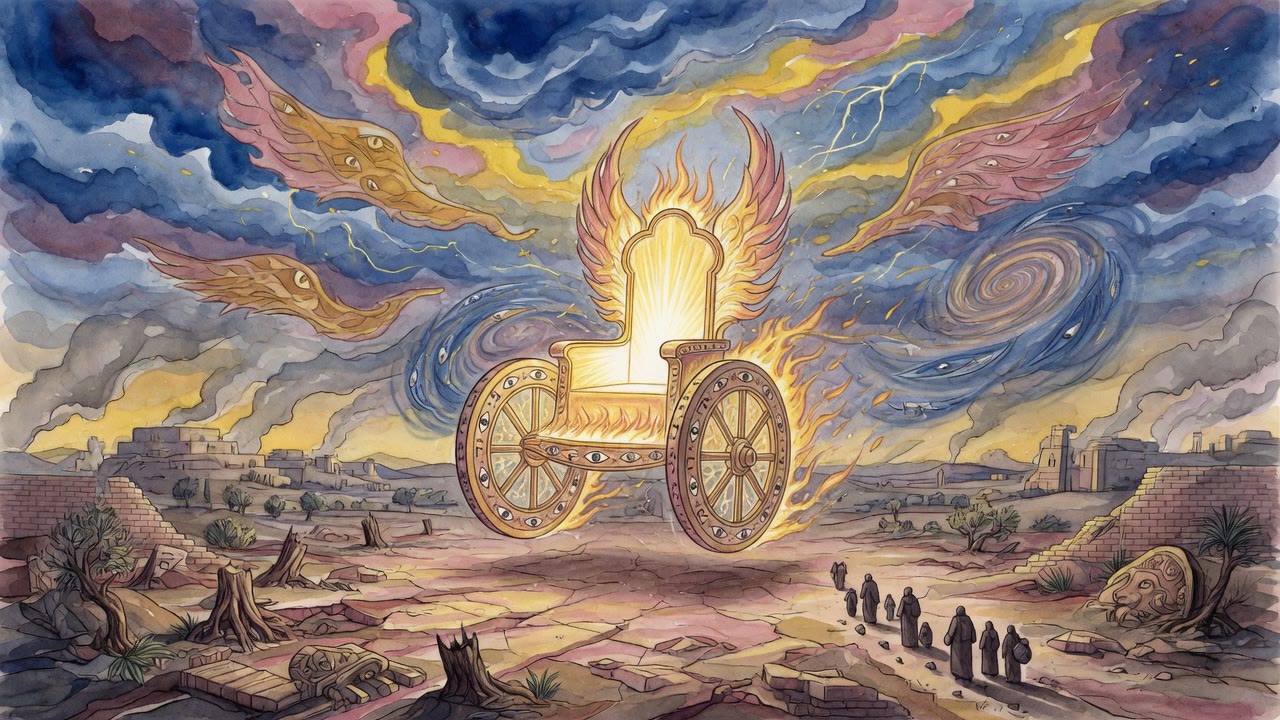
The Temple burned and God's presence went into exile too. She walked down into the dark shells to lift out the sparks trapped there.
Table of Contents
 Click for full size
Ash Where the Gates Stood
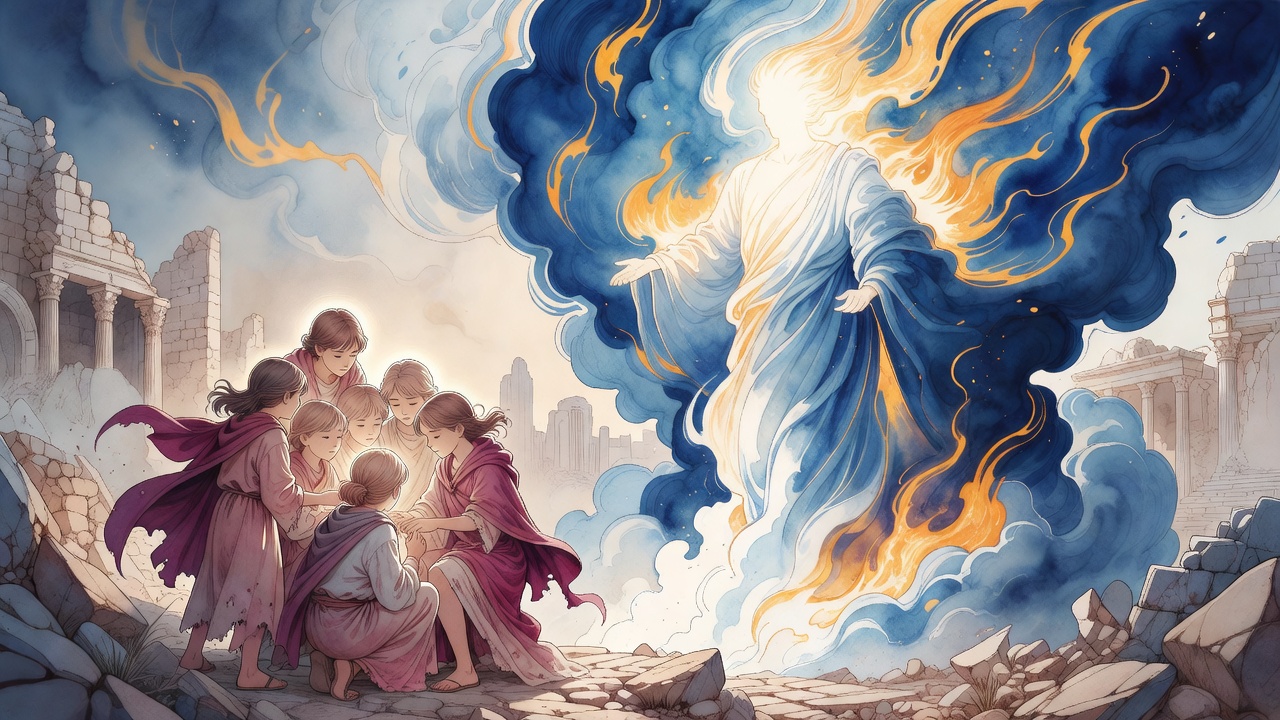
The stones of the Temple did not fall alone. When Jerusalem's house burned, the Shekhinah (שכינה), the Divine Presence, went into exile with the people. Bricks can be stacked again. A presence that leaves leaves a hole that architecture cannot fill.
Smoke wrote black letters on the sky. Priests without a courtyard walked like men who had lost a limb and still tried to lift it. In the alleys, survivors counted what could be carried. None of them could pack the Presence. She left on her own terms, and the terms were exile.
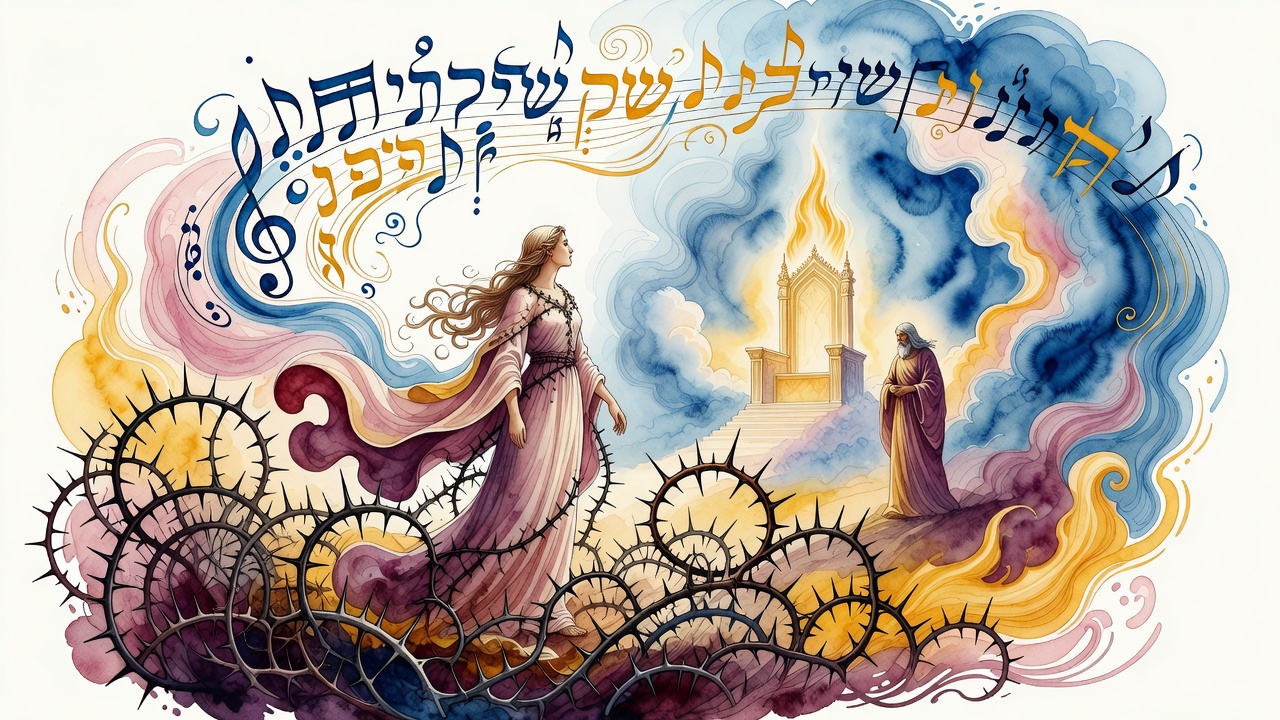
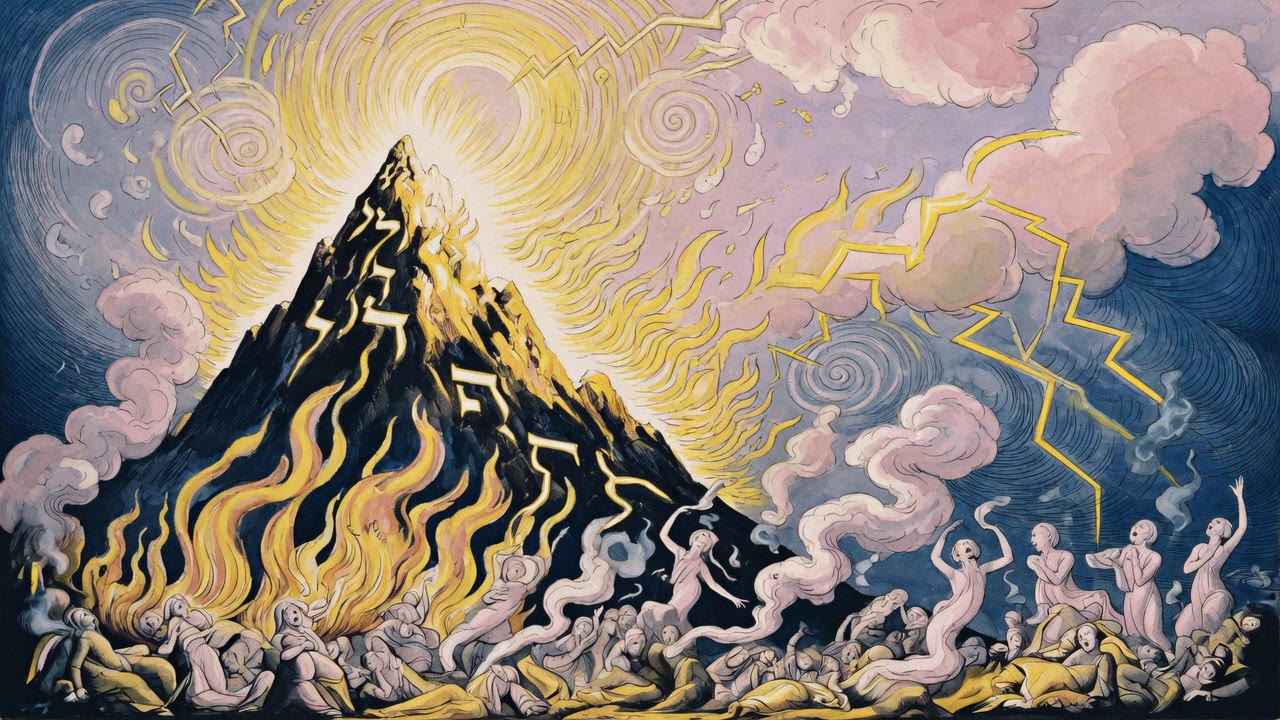
Souls weakened by sin had already slipped among the kelipot (קליפות), the husks, dark shells that hold sparks the way mud holds gold. The sparks could not climb home. They flickered in places no priest's knife could reach. The Shekhinah (the Divine Presence), named a consuming fire (Deuteronomy 4:24), stepped into that darkness on purpose.
Fire Among the Shells
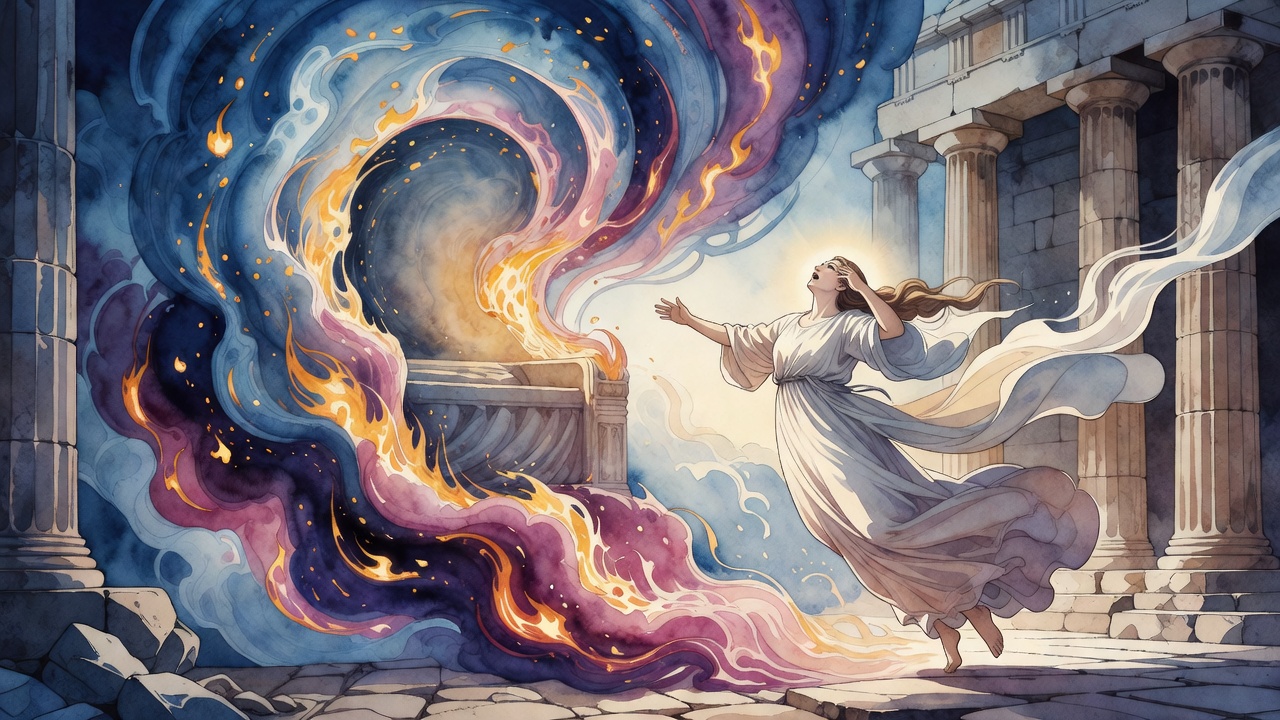
She did not enter the husks as a tourist. She entered as a gatherer. Spark by spark, from head-work to foot-work, the Presence moves through the Scoundrel Man's territory, the embodiment of the negative field, lifting light that forgot it was light. Until the last low sparks rise, the work of exile continues.
The Messiah waits on that completion. When the feet reach the feet, when the gathering runs from crown to sole, redemption stops being a rumor. A verse about feet on the Mount of Olives becomes more than geography (Zechariah 14:4). It becomes the end of a scavenger hunt conducted by fire.
Human bodies become the next vessels. Elevated sparks reenter life, not as abstract charts, but as people who wake with a hunger for repair they cannot name. A child born after the ruin may carry a spark that once sat in a husk. The exile of the Presence is also a logistics of return.
In the dark between shells, fire does not chat. It finds. It lifts. It refuses to leave a last spark as acceptable loss.
Heaven as the Inner Room
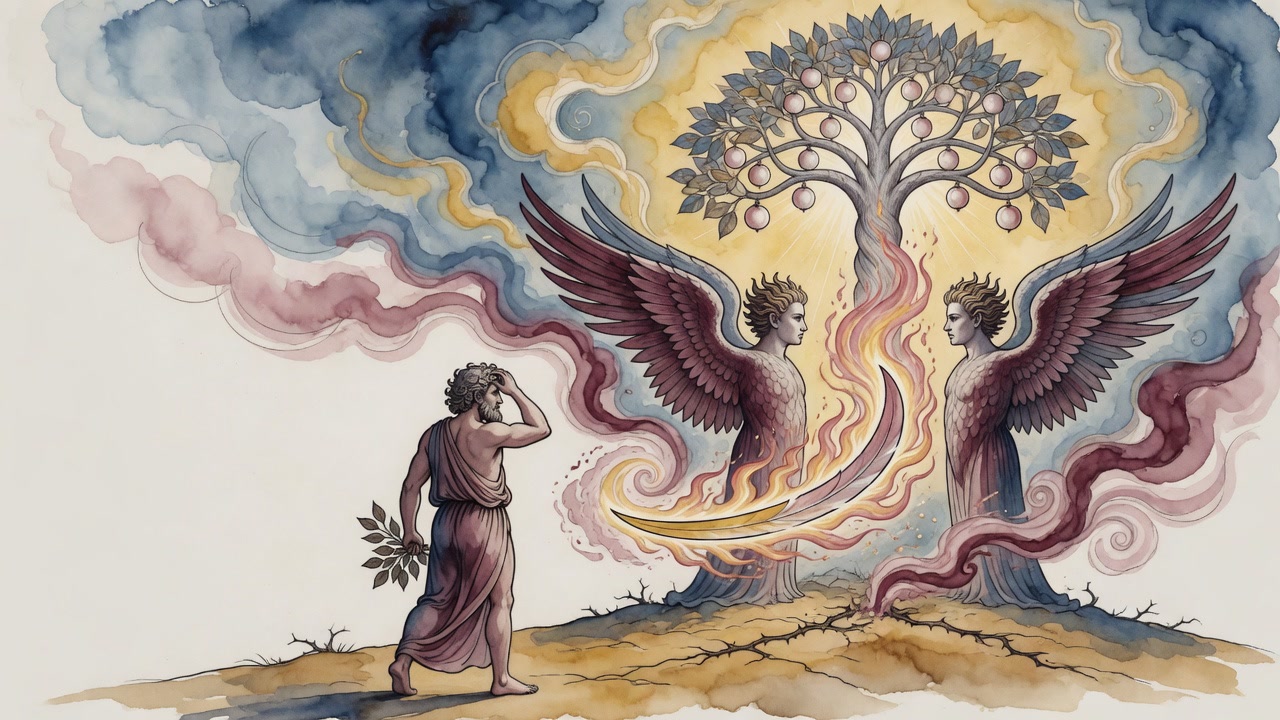
While Jerusalem's sanctuary lies open to sky and soldiers, another temple never loses its roof. The whole universe stands as God's house. Heaven is the Kodesh Hakodashim (קודש הקדשים), the Holy of Holies of all existence. Angels serve as priests who do not retire. Stars hang as offerings of pure light in the upper courts.
This is not a second city built of cloud as a mirror of stone. It is larger. Every layer of creation belongs to the service. A sunrise is not scenery. A raindrop is not accident. Breath itself joins the liturgy of a world that is already sanctuary, even when the local altar is ash.
The exile of the Presence and the cosmic temple do not cancel each other. The husks are real. The stars still burn as offerings. God can be sought in the high pure rooms and still be found walking the lowest shells for the sake of a single trapped spark. A soldier who loots a candelabrum cannot loot the sky.
Night after night the star-offerings keep their posts. Angels keep their stations. The outer courts of matter still hold the service while the inner human world learns the long math of husks.
Until the Feet Meet
A survivor in a ruined court looks up and sees offerings that no army can loot. Another survivor looks inward and feels a fire that will not leave the dark alone. Between those two gazes the exile runs. The Shekhinah does not wait politely outside the kelipot. She works the refuse heap until light remembers its name.
When that work finishes, feet will meet feet and the long gathering will close. Until then every act that frees a spark, every refusal to thicken a husk, joins the same labor that began when the Temple's last beam fell. The true temple of God includes the market, the prison, the night road, and the star that will not stop giving light.
In the meantime the husks still click shut around the careless. The Presence still pries them open. Redemption is not a parade scheduled for comfort. It is a retrieval operation under a sky that remains holy even when the earth forgets how to bow.
Ash cools. Stars do not. Between them the Shekhinah keeps walking, fire in the shells, until the last spark stands free and the feet finally meet. A widow sweeping stone dust from a doorway does not know she is part of the retrieval. A student who refuses a cheap cruelty may be moving a spark one inch toward home. The cosmic temple does not wait for perfect people. It waits for the work to finish.
← All myths