Parshat Haazinu7 min read

The Hairy Ones Israel Fed and the Boy Who Read Them Down

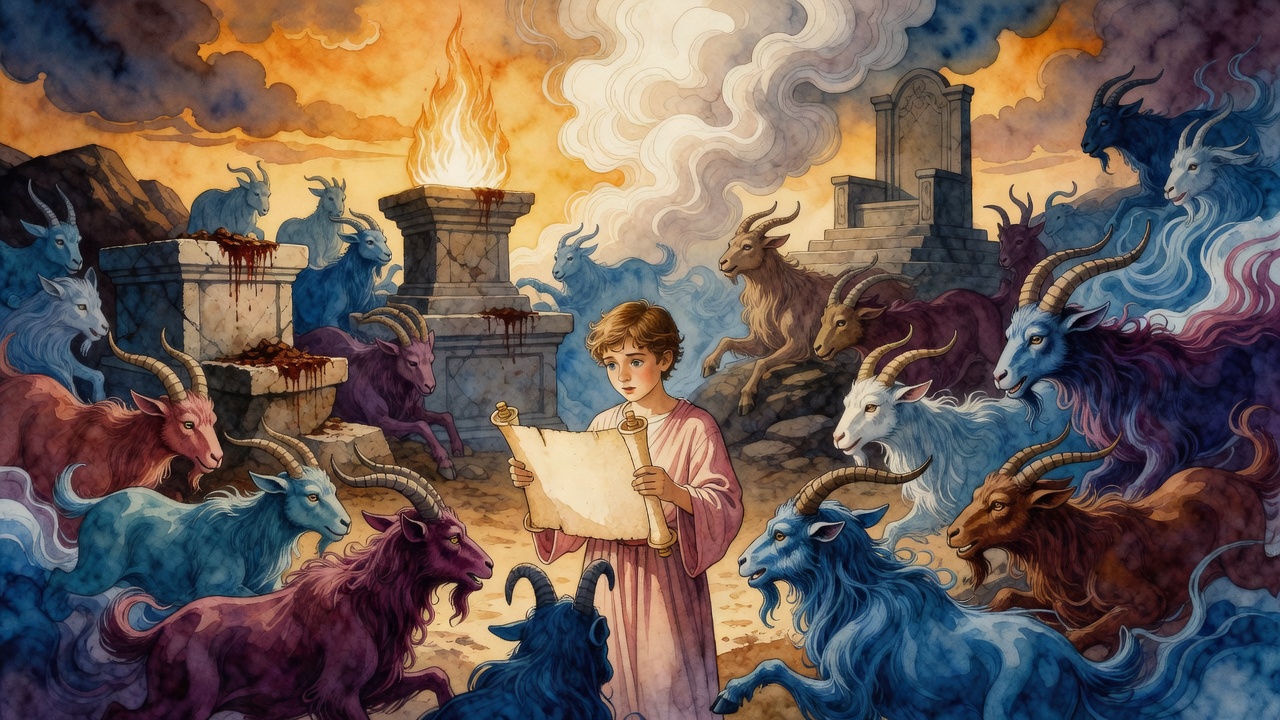
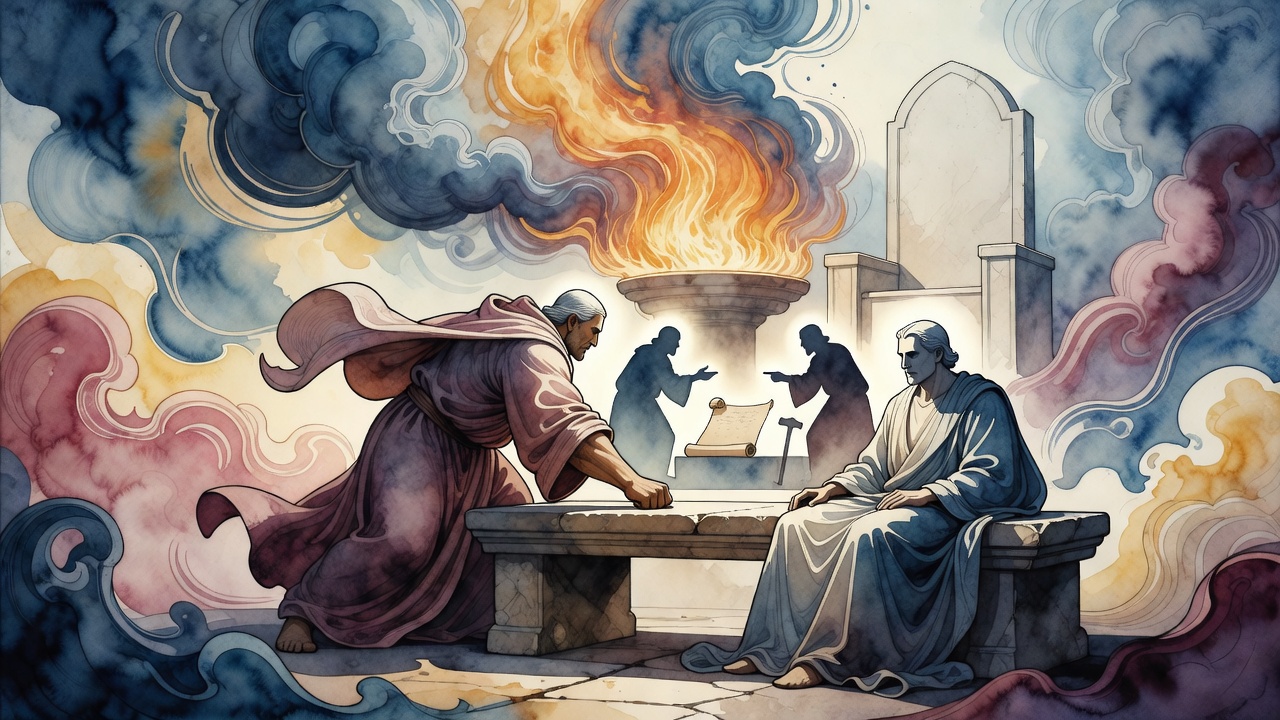
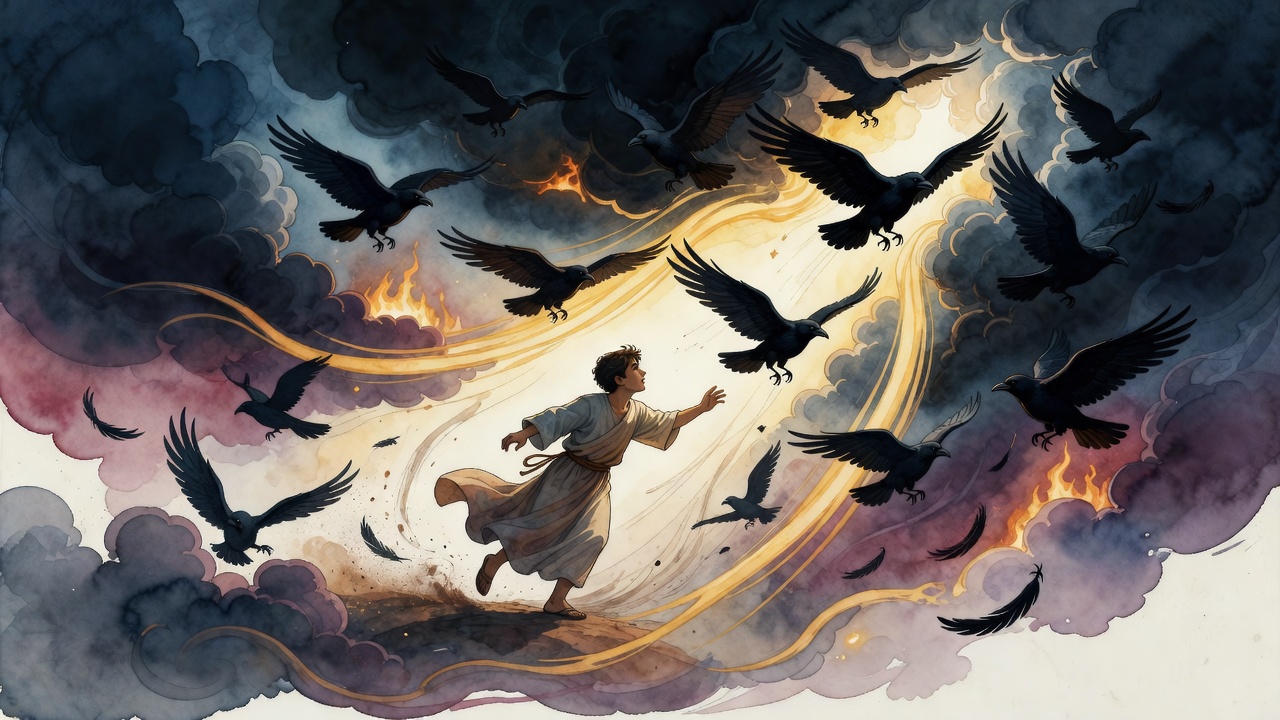
Goat-shaped spirits swarm a boy the first time he opens the words, and behind them stand the altars where his fathers poured out blood.

Curated by Arthur · Told by Maggid ·
Table of Contents
  1. The First Page and the Leaping Shapes
  2. Blood Poured Out for Things That Gave Nothing Back
  3. The Molds That Went Out From Jerusalem and Shomron
  4. Ahaziah Sends to Ekron and Elijah Meets the Runners
  5. The Spirits That Cannot Bring Up Their Own Dawn
  6. Rabbi Bana'ah Names the Two Ways the Words Can End
The Hairy Ones Israel Fed and the Boy Who Read Them Down Click for full size

The First Page and the Leaping Shapes

The scroll came open across the boy's knees and the room went loud.

Nothing in it had moved. The teacher stood where he had stood since morning. But small hooves scrabbled across the back of the boy's neck, the smell of goat and singed hair came down over the page, and the first line of writing slid apart under his eyes like silt off a stone.

He flattened his hand on the parchment to hold it down.

"There is something on me," he said.

"Se'irim," the teacher said, without looking up. "The hairy ones. They leap on a man the first day he opens the words. Like goats turned loose on new grass."

The boy could hear them chewing.

"In the burnt cities where nobody sweeps, they dance," the teacher said. "Isaiah saw them dancing there. They have found somewhere new."

The boy asked where such things came from, and the teacher sat down, because that answer was older than the schoolhouse.

Blood Poured Out for Things That Gave Nothing Back

There had been altars. Not the great one in Jerusalem. Small ones. A flat stone on a hilltop, a hole scraped in the dirt beside it, and a man coming up at dusk with a kid goat under his arm, fingers dug into its throat to keep it quiet.

He cut it over the hole and let the blood go down into the ground.

The sun had at least ripened his barley, and the stars had steered his uncle home from Tema. Bowing to those would still have drawn anger out of heaven, a lesser anger that leaves a door open. He bowed to none of them. He fed the hole, and what drank there had never grown a stalk of anything for anybody.

Sheydim, the old word calls them. No-gods. Things that avail nothing at all.

They took payment anyway. A sheyd gets into a man and settles there and rides him, and the household learns to watch his hands.

The Molds That Went Out From Jerusalem and Shomron

What the fathers fed had no names anybody could look up. Even the nations did not recognize these gods. New arrivals, freshly come, and no priest in Tyre could name what they came from.

Which is why the caravans were so strange.

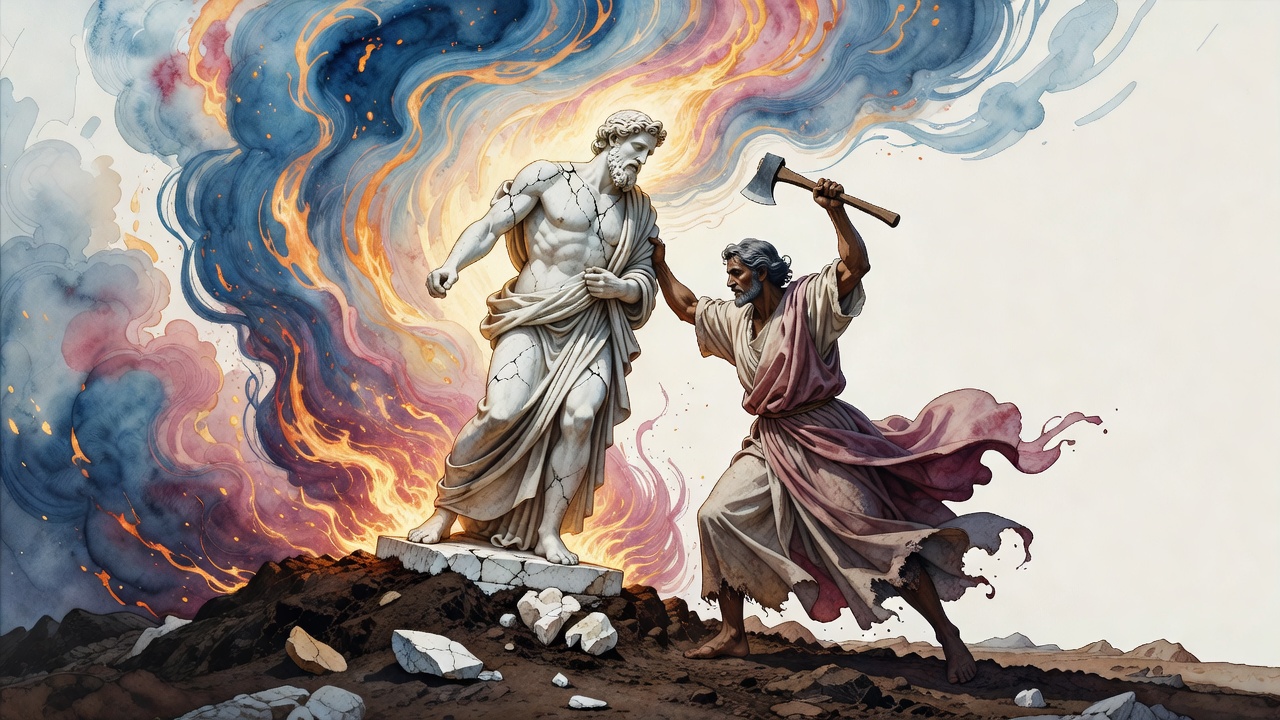
Clay molds went out packed in straw, north and west, and the workshops that got them pressed metal into the hollows and sold what came out. A trader would turn one of the finished figures over in a market in Sidon, look at the horns and the little braced legs, and say to the man beside him, "This is a Jewish image."

He was right. The patterns came from Jerusalem. The patterns came from Shomron. Two cities that should have exported nothing but instruction were tooling emptiness for the trade, and when a conqueror's hand swept those idol-kingdoms off the map, the workshops had no argument.

Ahaziah Sends to Ekron and Elijah Meets the Runners

Generations later a king fell.

Ahaziah went through the lattice of his upper room in Shomron and landed badly, and from the bed he could not get out of he did what his fathers had trained him to do. He picked men who could run and sent them to Ekron to ask whether he would live.

They took the road out of the city. A man was standing in it.

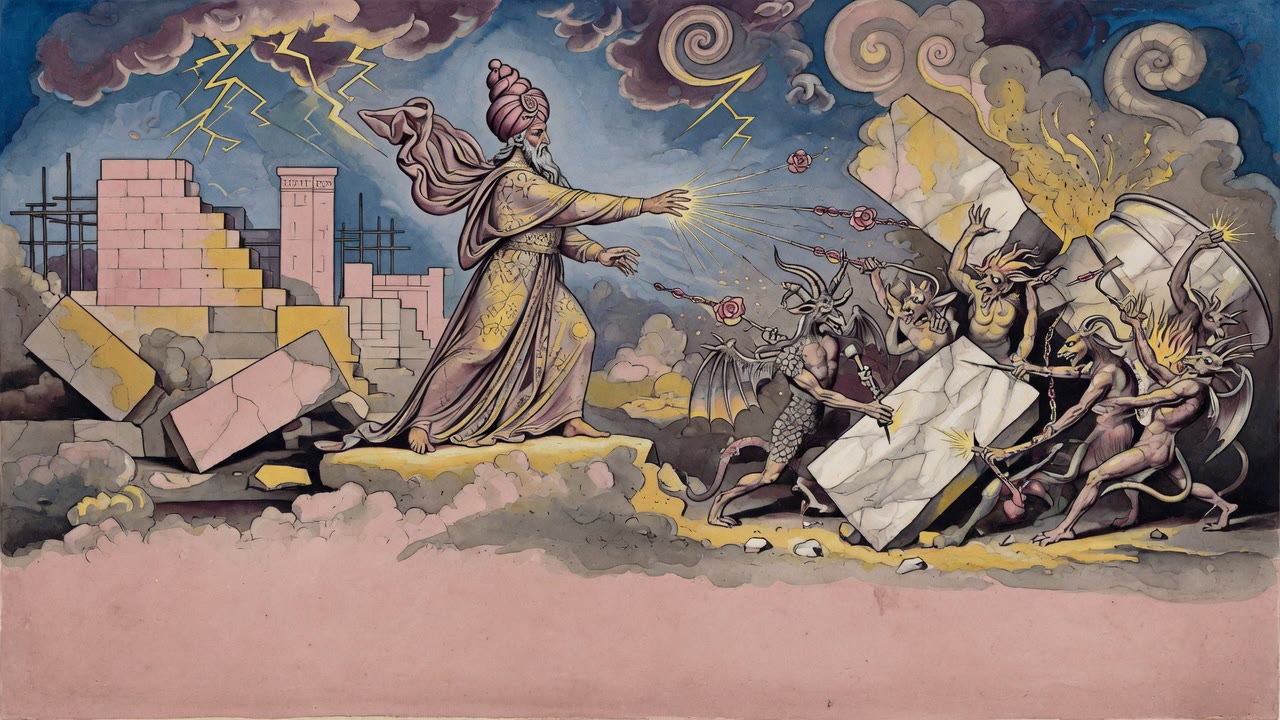
"Is it because there is no God in Israel," Elijah said, "that you are going to inquire of the god of Ekron?"

The runners turned back without the answer they were sent for. They carried a different one, and the king heard he would not be getting up.

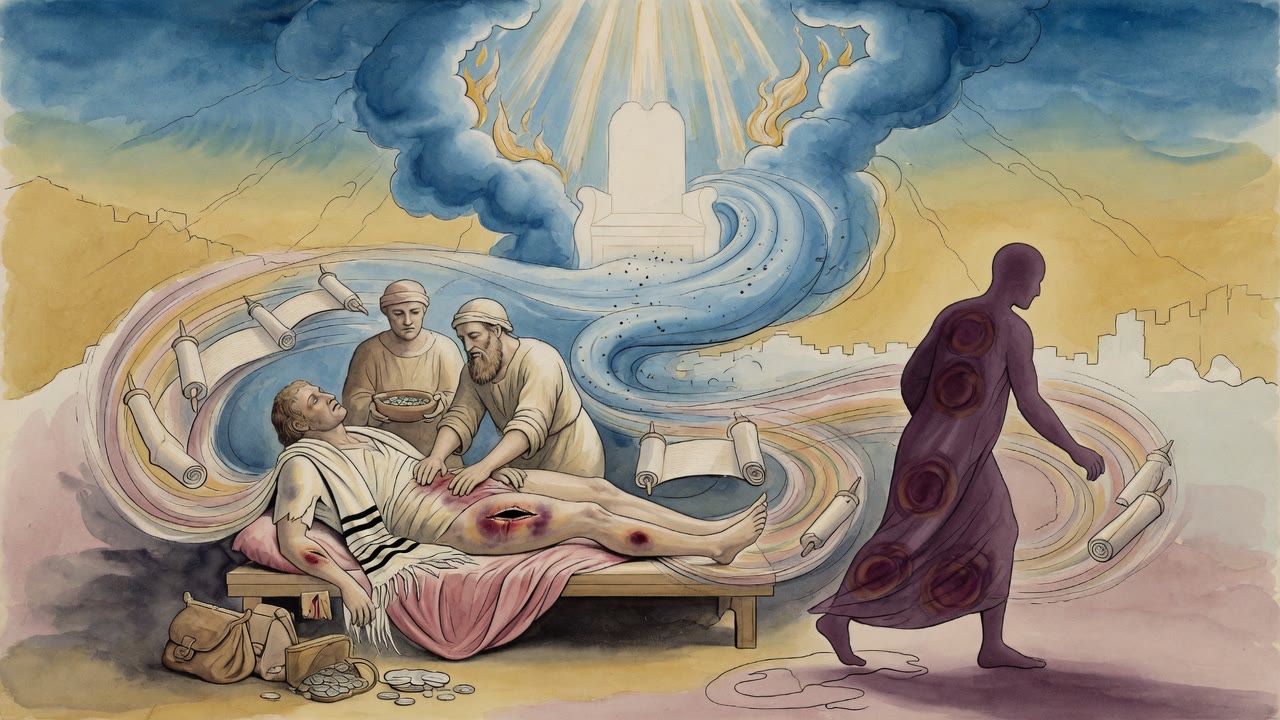
That was the loud version. The quiet version happened in houses at night with the shutters closed, a woman with a voice in her belly, a man who could bring thin speech up out of the floor for a dead relative the customer had paid to reach. Whoever kept such a spirit in Israel stood under a death sentence. The business went on anyway, because the dead are cheaper than a judge and they never say no.

The Spirits That Cannot Bring Up Their Own Dawn

"Inquire of the ghosts," the neighbors kept saying. "Inquire of the familiar spirits."

What Israel was handed to say back was a question. Should a people not inquire of its own God? The nations keep gods who are dead, and their makers resemble them the way a casting resembles its mold. Whoever clings to the Lord is alive, the words go, present tense, this morning.

In the study house Rabbi Yochanan and Resh Lakish pulled at the same half verse from Isaiah, about those for whom there is no dawn. Rabbi Yochanan read it against the nations. No dawn for them.

Resh Lakish went further down. "The ghosts and the familiar spirits cannot bring the dawn up even for themselves," he said. "They are set in the dark, fixed in it. And a man is paying them to tell him about tomorrow morning."

Somebody asked whom to go to instead.

The answer had a street address. Go up to the priests, and to the judge who is in office in those days, and stand there while they teach.

Rabbi Bana'ah Names the Two Ways the Words Can End

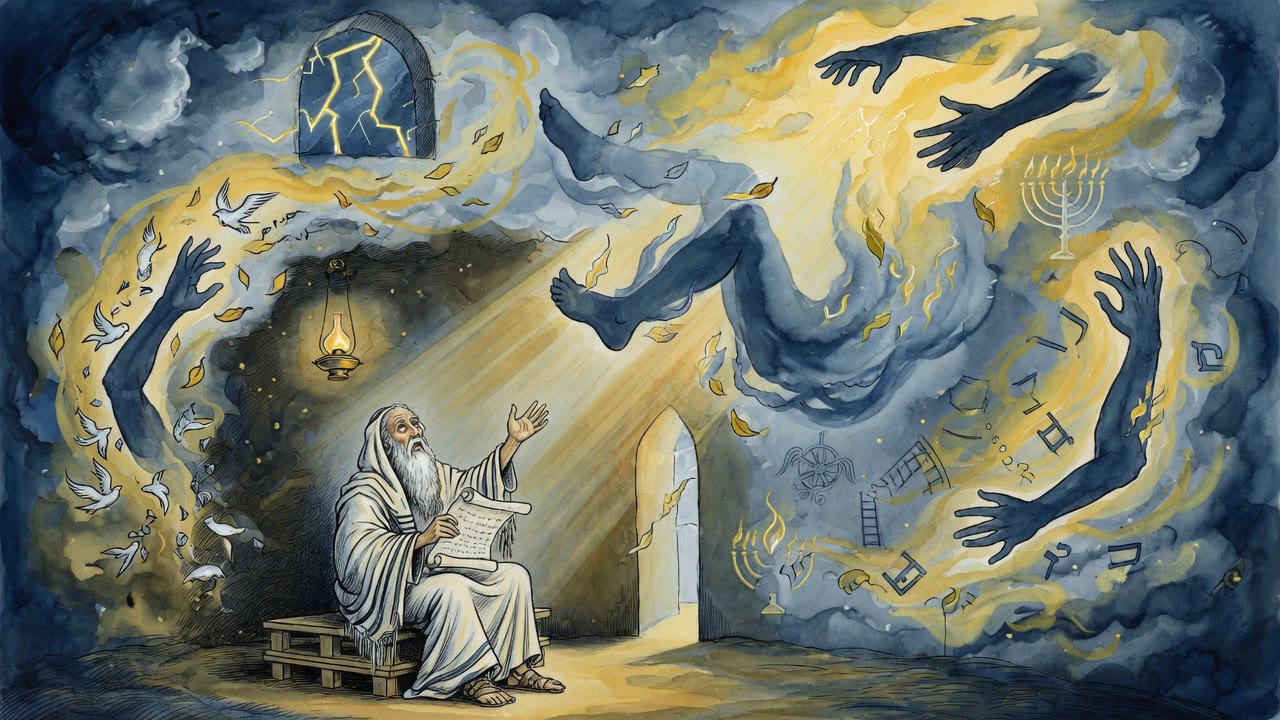
The lamp had burned low. The boy had not taken his hand off the parchment, and the hooves were still there, lighter now, the way a flock goes quiet once it stops being afraid of a field.

"Rabbi Bana'ah used to say there are two ways this ends," the teacher said. "Learn the words for their own sake and they turn into an elixir of life inside you. Life to those who find them, healing to all his flesh. Learn them to get called a name in the market, and the same words are a killing drug."

He tapped the line the boy was pinning down. The verse promises teaching that comes down like rain, ya'arof, and Bana'ah heard in that word the other thing it does, the neck of the heifer broken in the wadi where nothing is sown.

"Many she has laid low," the teacher said. "All her slain are a mighty host."

The boy looked at the first word for a long time. Then he read it out loud.

Something on his shoulder shifted its weight, the way a goat shifts when it is deciding whether to stay.

He read the second word.


← All myths
From the tradition

Sources

3 sources

The texts behind this telling. Some cards carry a translation of the source; others are our own retelling of it, and each card says which. Every card links out to the original.

Sifrei Devarim 306:27Sifrei Devarim

Retold in our words. Read the original at the link below.Sifrei by Rabbi Shraga Silverstein · CC-BY

You're not alone.

Sifrei Devarim 306 uses a pretty wild image to describe this feeling: "as se'irim upon the herbage." What are se'irim? Think demons, or goat-like spirits. The text suggests that when you first dive into Torah study, it can feel like these little demons are jumping all over you, overwhelming you. It even references (Isaiah 13:21), where we read, "and se'irim will dance there."

Why this chaotic image? Because learning Torah, especially at the beginning, is challenging! It can feel foreign, confusing, even frustrating. But the Sifrei Devarim isn't trying to scare us off. It's just acknowledging the initial struggle.

Here's where it gets interesting.

Rabbi Bana'ah offers a different, powerful perspective. He says that if you learn the words of Torah for their own sake – for the pure love of learning and understanding – then they become "life" to you. He points to (Proverbs 4:22), which says, "For they are life to him who finds them, and to all his flesh healing." That's a pretty amazing promise!

But there's a catch.

Rabbi Bana'ah continues: if you don't learn Torah for its own sake, if your motivations are impure, then the Torah can actually "kill" you. Now, this isn't a literal death, of course. It's a spiritual death. A death of the soul.

He then makes a fascinating connection to the word ya'arof in a verse we won't quote directly for sensitivity's sake. Rabbi Bana'ah links this word to arifah, meaning "breaking the neck," as in (Deuteronomy 21:4). The association paints a stark picture: Torah, when approached incorrectly, can be destructive.

Finally, he throws another curveball, citing (Proverbs 7:26): "For she has taken many lives; the number of its victims is legion." Whoa. Is Torah some kind of dangerous seductress?

Not exactly.

The key takeaway here isn't that Torah is inherently dangerous, but that our INTENTION matters. If we approach Torah with humility, with a genuine desire to learn and grow, then it can be a source of immense life and healing. But if we approach it with arrogance, with ulterior motives, or without proper respect, it can lead us astray.

So, the next time you find yourself wrestling with a new concept, remember the se'irim. Acknowledge the initial struggle. But more importantly, remember Rabbi Bana'ah's teaching: approach the learning with a pure heart, and the Torah will bring you life. And, perhaps, that sometimes the things most worth learning are the hardest to begin.

Full source
Sifrei Devarim 318:14Sifrei Devarim

Retold in our words. Read the original at the link below.Sifrei by Rabbi Shraga Silverstein · CC-BY

That feeling isn't new. Our ancestors wrestled with it too, and the ancient text Sifrei Devarim (a commentary on the Book of Deuteronomy) speaks directly to this.

It quotes Deuteronomy, saying "They sacrificed to demons, which availed naught." What does that even mean?

The text goes on to explain: If people were worshipping things that at least tangentially benefit the world – the sun, the moon, the stars – well, God's anger wouldn't be as intense. But to turn to things that offer absolutely no benefit, things that are actively detrimental? That's where things get really serious. These detrimental things are described as sheidim, demons. The Sifrei Devarim explains that a shed, or demon, enters a person and overpowers them.

So, it's not just about worshipping the wrong thing, but about being consumed by something harmful and empty.

Then comes the phrase, "gods they had not known." The Sifrei Devarim interprets this to mean that even other nations didn't recognize these "gods." They were novel, untested, and ultimately, hollow. "New ones, newly come," the text continues. And here's where it gets really interesting.

"Whenever a gentile saw it he would say 'This is a Jewish image.'" Wait, what?

The text then cites (Isaiah 10:10): "Just as my hand has overpowered the kingdoms of the false god. And their graven images are from Jerusalem and Shomron." The Sifrei Devarim draws a fascinating, and rather damning, conclusion: Jerusalem and Shomron, two key Israelite cities, were actually supplying the molds for these idols! They were mass-producing emptiness. The very places that should have been centers of spiritual strength and devotion were, in a sense, exporting spiritual emptiness to the rest of the world.

It's a stark reminder that the pursuit of something shiny and new doesn't guarantee fulfillment. It also reminds us that systems can be corrupted, even those that are ostensibly "holy." The Sifrei Devarim challenges us to examine what we truly value, what we're investing our energy in, and whether it's leading us towards something meaningful or just deeper into the void.

What molds are we creating? What are we exporting to the world? And, more importantly, are those things truly nourishing, or are they just empty idols in disguise?

Full source
Midrash Tanchuma Buber, Emor 3:1Midrash Tanchuma Buber, Emor

Translation of the source text.Midrash Tanchuma (Buber), Public Domain, on Sefaria · CC-BY-SA

SPEAK UNTO THE PRIESTS. What is written above on this matter? AND A MAN OR A WOMAN IN WHOM THERE IS A GHOST OR A FAMILIAR SPIRIT, etc. (Leviticus 20:27). This is what Scripture says: AND WHEN THEY SAY UNTO YOU, INQUIRE OF THE GHOSTS AND OF THE FAMILIAR SPIRITS (Isaiah 8:19). The Holy One, blessed be He, said to Israel: If they say to you, Inquire of the ghosts, and forsake the God who is in heaven, say to them, SHOULD NOT A PEOPLE INQUIRE OF ITS GOD? (ibid.). Just as Elijah said to Ahaziah, IS IT BECAUSE THERE IS NO GOD IN ISRAEL, etc.? (2 Kings 1:3). Why should we forsake the Life of the worlds? BUT THE LORD IS THE TRUE GOD, [HE IS THE LIVING GOD AND THE EVERLASTING KING] (Jeremiah 10:10). And it is written, BUT YOU WHO CLEAVE UNTO THE LORD YOUR GOD ARE ALIVE (Deuteronomy 4:4). Therefore let us inquire of the living God; but [the god of] the nations of the world is dead, LIKE THEM SHALL BE THOSE WHO MAKE THEM (Psalms 115:8). What is written after it? TO THE TORAH AND TO THE TESTIMONY; [IF THEY SPEAK NOT ACCORDING TO THIS WORD, IT IS BECAUSE THERE IS NO DAWN FOR HIM] (Isaiah 8:20). Rabbi Yochanan and Rabbi Lakish: Rabbi Yochanan said, The Holy One, blessed be He, said: If they do not speak according to this word to the nations of the world, who have no dawn. [And Rabbi Lakish says: WHO HAS NO DAWN, ] the ghosts and the familiar spirits do not bring up the dawn even for themselves, for they are set in darkness, and all the more so for the nations of the world. And should you say, Of whom shall we inquire?, behold, it says, AND YOU SHALL COME UNTO THE LEVITICAL PRIESTS AND UNTO THE JUDGE, etc., ACCORDING TO THE TORAH THAT THEY SHALL TEACH YOU (Deuteronomy 17:9, 11).

Full source