5 min read

The Pious Man Smashed the Statue That Promised Gold

A marble statue spoke from the dirt and promised riches for a clean shelf. When it asked for a lamp, the axe came down.

Curated by Arthur · Told by Maggid ·
Table of Contents
  1. The Lamp on the Shelf
  2. Beasts Barred From the Altar
  3. Hair, Zeal, and Fire
  4. The Clean Place That Was a Trap
  5. Treasure Without a Master

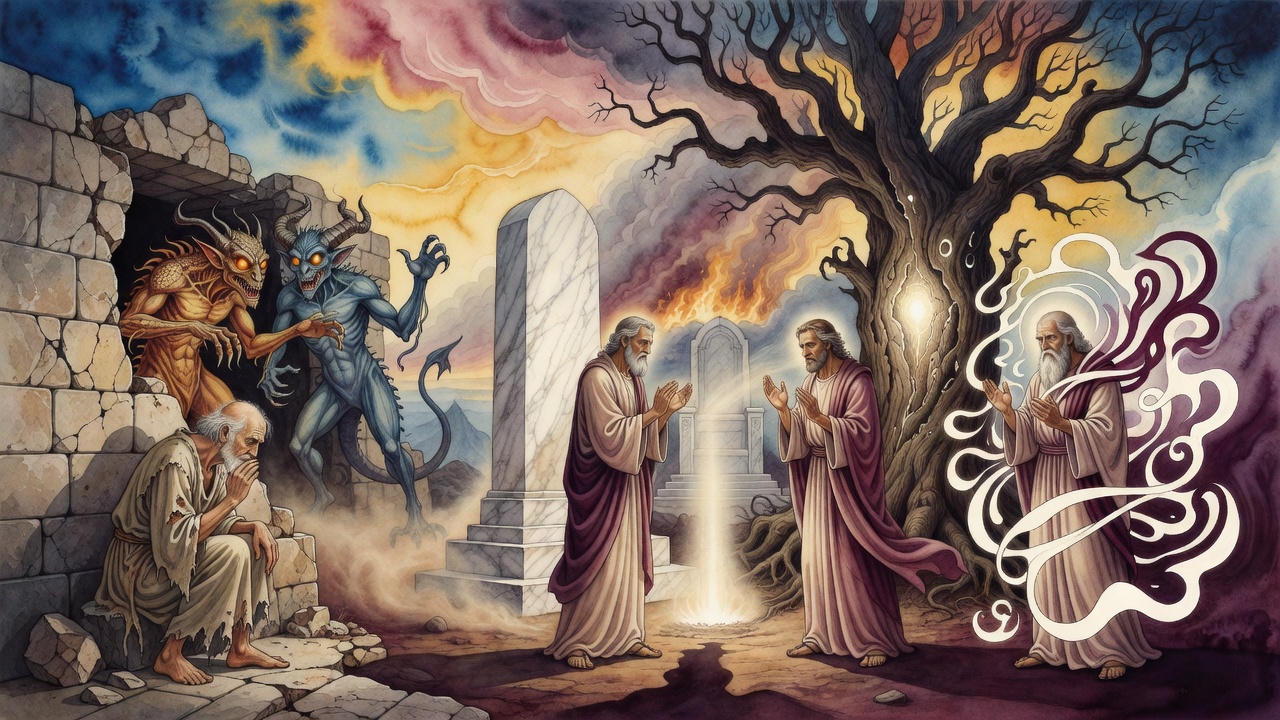
The shovel hit marble. A pious man digging in his ground uncovered a statue that should have been silent, and the statue spoke. It asked to be cleaned and set in a clean place within his house. In return it promised riches.
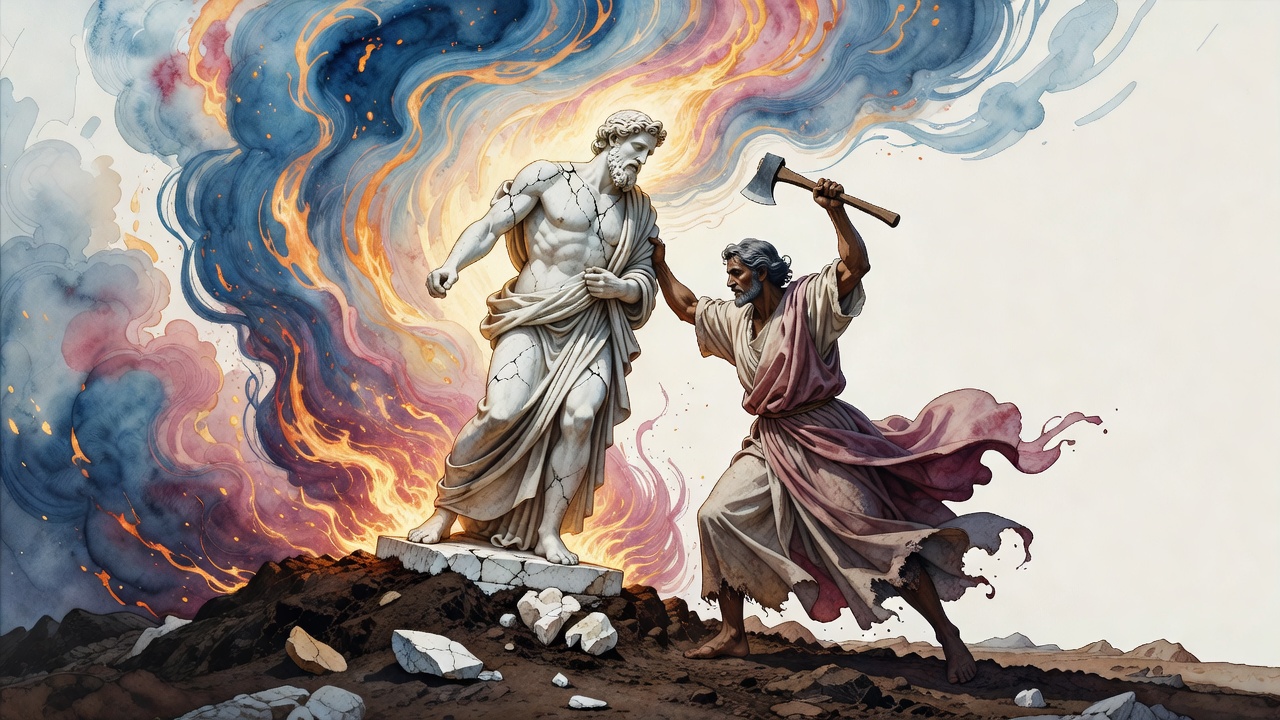
The Pious Man Smashed the Statue That Promised Gold Click for full size

For a time he obeyed. He washed the stone. He gave it a shelf. The arrangement seemed useful. One day the statue told him where a friend lay caught in a trap. He freed the friend and took a reward. Fortune looked like a straight road.

The Lamp on the Shelf

Then the statue asked him to light a lamp before it. The request was small in motion and enormous in meaning. A lamp before a form is not housekeeping. It is worship. The pious man understood the true demand hidden in the courtesy.

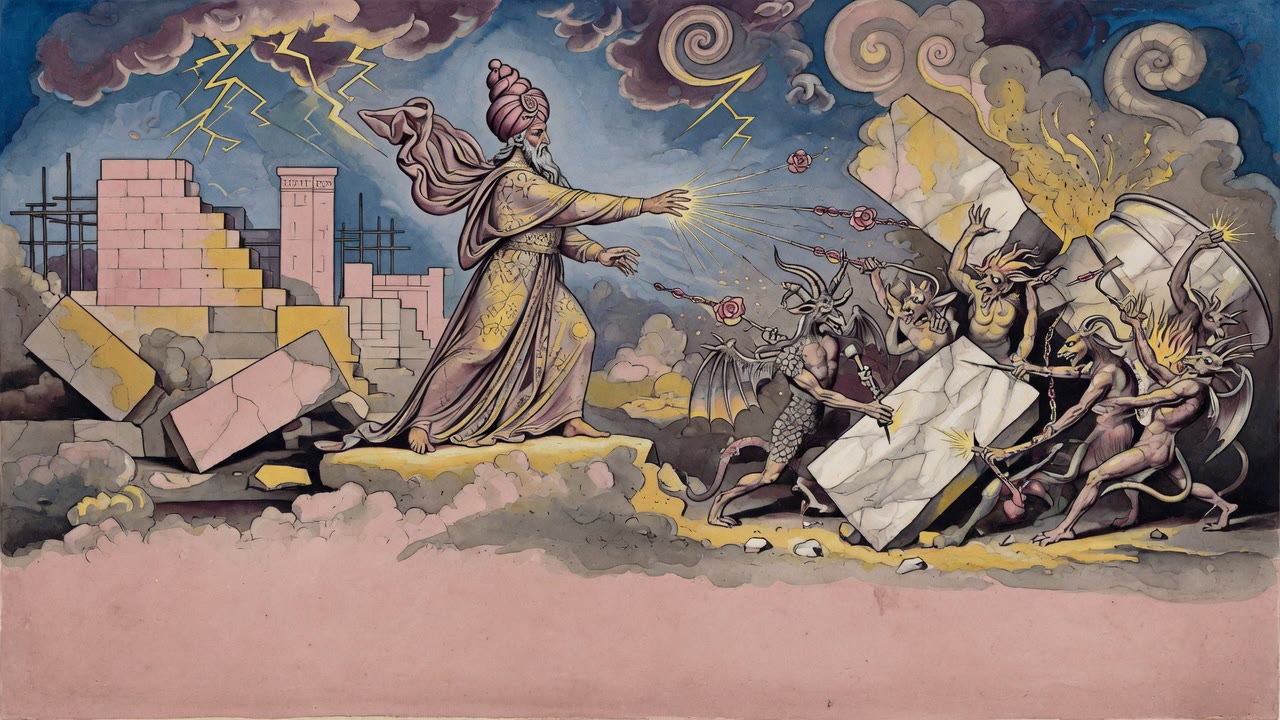
He lifted an axe. At once a demon emerged from within the marble and offered great riches if only he would spare the statue. The man refused the bribe as he had refused the lamp. He destroyed the idol utterly.

The following year he found a rich treasure buried in his garden. Heaven paid what the demon had only advertised. Faithfulness that rejects idolatry and resists purchase received its wage without a shelf of false gods.

Beasts Barred From the Altar

The same refusal runs through the laws of offerings. An animal that was itself worshipped as an idol is barred from the altar even if its body looks whole. A torn animal, mortally injured, is barred though pity might want to "use" it for heaven. Logic alone could not always carry the disqualification. The doubled phrase "from the cattle" steps in to shut the door.

What has been given to idolatry cannot be laundered into sacrifice by a clever argument. What is torn and dying is not a bargain gift for the King. The pious man's axe and the altar's exclusions speak one language: some things are too compromised to stand in holy space, however useful they pretend to be.

Hair, Zeal, and Fire

Devarim Rabbah hears in a long verse about children and idols a warning that reaches even the corners of the head. Rounding the hair in the Amorite style, growing a forelock for idolatrous fashion: these are not neutral grooming. They are ways of the nations that pull the body toward foreign worship. Forty lashes answer the style. Zeal answers the deeper crime.

"For the Lord your God is a consuming fire, a zealous God." The fire that forbids the Amorite cut is the same fire that forbids the lamp before marble. Idolatry is not only bowing in a temple of stone. It is every small surrender that trains the heart to serve what is not God.

The demon's offer of riches is the Amorite cut in another form: look like the nations, profit like the nations, keep a private idol that pays.

The Clean Place That Was a Trap

Notice how the statue began. Clean me. Set me in a clean place. Idolatry often arrives as hygiene and order, as a reasonable arrangement that helps a friend and fills a purse. Only later comes the lamp. The pious man's virtue was not that he never listened. It was that he knew the moment listening became kneeling.

Many would have negotiated. A smaller lamp. A shared credit. A secret shelf. He chose the axe while the promises were still loud.

Treasure Without a Master

When gold finally appeared in his garden, no voice rose from it. No demon claimed commission. The earth gave what earth gives when heaven wills, without a contract of worship. The man who smashed the statue could hold treasure without becoming its priest.

He had already practiced refusal when the lamp was requested. The treasure was only the sequel. Many stories end with the bribe accepted and the soul leased out by inches. This one ends with marble in pieces and a garden that pays without asking for a knee.

The friend freed from the trap remained free. The riches promised for worship remained a lie. Only the path that smashed the lie opened the ground. Idolatry is efficient at short kindnesses. It is bankrupt at the long debt of loyalty. The pious man paid the long debt with an axe and collected what demons cannot mint.

On the altar of the Temple, no worshipped beast and no torn carcass may climb. In a private yard, no speaking marble may keep a lamp. In the barber's chair, no Amorite cut may train the head toward foreign gods. Between those laws a single loyalty holds: the Name alone receives the light, and zeal is not embarrassment but the fire that keeps the shelf empty of idols.


← All myths

From the tradition

Sources

3 sources

The texts behind this telling. Some cards carry a translation of the source; others are our own retelling of it, and each card says which. Every card links out to the original.

Exempla of the Rabbis, No. 396Exempla of the Rabbis (Gaster, 1924)

Retold in our words. Read the original at the link below.The Exempla of the Rabbis, Moses Gaster (1924) · Public Domain

This brief tale, preserved among the Exempla of the Rabbis collected by Gaster, tests a pious man's loyalty against the lure of idolatry. While digging in the ground, a pious man uncovers a marble statue. To his astonishment the statue speaks. It asks to be cleaned and set in a clean place within his house, and in return it promises him riches.

For a time the man obeys, and the statue proves useful. One day it directs him to go and find his friend caught in a trap, to free him, and so to earn a rich reward. He does as he is told, rescues his friend, and is rewarded. The arrangement seems to bring only good fortune.

Then the statue asks the man to light a lamp before it. Here the pious man understands the true demand hidden in the request: the statue wishes to be worshipped, to receive the honor due only to God. He refuses. He takes up an axe to break the marble, and at that a demon emerges from within it, offering him great riches if only he will spare the statue. The man will not be bought. He destroys the idol utterly. The tale ends with his reward: the following year he finds a rich treasure buried in his garden. Faithfulness that rejects idolatry and resists bribery is repaid by Heaven, not by the demon's bargain.

Full source
Yalkut Shimoni on Torah 435:5Yalkut Shimoni on Torah

Translation of the source text.Torat Emet (Yalkut Shimoni) · CC-BY-NC

"From the cattle": to exclude the worshipped animal. But is this not derived by logic? If the harlot's hire and the price of a dog, whose overlay is permitted, are forbidden for the altar, then a worshipped animal, whose overlay is forbidden, all the more so should be forbidden for the altar. Or the reverse: if the harlot's hire and the price of a dog, which are forbidden for the altar, have their overlay permitted, then a worshipped animal, which is permitted for the altar, all the more so should have its overlay permitted. If so, you have nullified "You shall not covet the silver and gold upon them" (Deuteronomy 7:25). I will uphold "You shall not covet the silver and gold upon them" for a thing that has no breath of life in it, but for a thing that has the breath of life in it, since they are permitted, their overlay should be permitted; therefore Scripture says "from the cattle," to exclude the worshipped animal. And when it says "from the cattle" a second time, lower down, where Scripture need not have said it, it serves only to exclude the torn animal. But is this not derived by logic? If a blemished animal, which is permitted for ordinary use, is forbidden for the altar, then a torn animal, which is forbidden for ordinary use, is it not logical that it should be disqualified for the altar? Blood and forbidden fat prove otherwise, for they are forbidden for ordinary use yet valid for the altar. No: if you spoke of fat and blood, which come from a permitted thing, would you say the same of a torn animal, which is wholly forbidden? The pinching of the bird's neck proves otherwise, for it is wholly forbidden to a layman yet valid for the altar. No: if you spoke of the pinching of the bird, whose sanctity forbids it, would you say the same of this, whose sanctity does not forbid it; since its sanctity does not forbid it, it should not be disqualified for the altar. If you have answered thus, then when Scripture says "from the cattle" lower down, it serves only to exclude the torn animal.

Full source
Devarim Rabbah 2:18Devarim Rabbah

Retold in our words. Read the original at the link below.The Sefaria Midrash Rabbah, 2022 · CC-BY

It starts with a verse from Deuteronomy (4:25): "When you will beget children, and children’s children, and you will have been long in the land, and you will act corruptly and craft an idol, the image of anything, and you will perform evil in the eyes of the Lord your God, to anger Him." Pretty heavy stuff. But what does this verse really mean for us, today?

The Rabbis, in their infinite wisdom, dive right into a seemingly unrelated question: "Is it permitted for a person of Israel to round the corners of his head?" I know, it sounds like a complete non-sequitur! But stick with me.

The Sages, in this halakha (Jewish law), teach us that certain hairstyles are prohibited because they are "the ways of the Amorite." Now, who were the Amorites? They were an ancient people often associated with pagan practices. So, what hairstyles are we talking about? Specifically, cutting your hair in the "komi style" or growing a forelock. The komi style, as explained by some, involves shaving the sides of the head and leaving a "handle of locks" – essentially, a strip of hair down the middle. Others interpret kurtzin (the word used) as "ears," suggesting the hair is cut in a way that makes the ears look like handles (Etz Yosef). The punishment for this? Forty lashes.

Wait, there's more! Growing a forelock, the Rabbis say, is done "only for the sake of idol worship." And idol worship… well, that's about as serious as it gets. There's no harsher punishment, because, as the Torah states, God is "zealous" in this regard. Where do we see this? In the Ten Commandments themselves: "You shall have no other gods before Me… Because I am the Lord your God, a zealous God" (Exodus 20:3, 20:5). And again in Deuteronomy (4:24): "For the Lord your God is a consuming fire, a zealous God."

Now, here's where it gets really interesting. The Rabbis ask a profound question: "Since there is no substance to idols, why does it call them deities?" I mean, they're just wood or stone. Rabbi Pinḥas bar Ḥama gives a powerful answer: "In order to give a reward to everyone who forsakes it." God says, "Even though it has no substance, since a person forsakes it, I ascribe to him as though he had been worshipping something that had substance and came to Me." for a second. The act of turning away from something, even something empty, is seen as a significant act of devotion.

Rabbi Yehoshua ben Levi adds another layer: God says, "Since the punishment for idol worship is that harsh, I must caution them about it, so they will not say: Had He cautioned us we would have forsaken it." It's like God is saying, "I have to make sure you know how serious this is, so you can't claim ignorance later." He then tells Isaiah, "Do not think that perhaps I did not caution them against idol worship. Initially, before they came to Sinai to receive the Torah, I cautioned them against idol worship." This is derived from (Isaiah 48:5): "I told you beforehand; before you came, I announced it to you… lest you say: My graven image made them; my idol and my cast image commanded them."

So, God cautioned them through whom? Through Moses, His servant. And where do we see this? Right back at the beginning, in that verse we started with: "When you will beget children, and children’s children…" It's all connected!

What’s the takeaway here? It's not just about hairstyles or ancient idols. It's about the constant temptation to be led astray, to place our faith in things that ultimately have no substance. It’s a reminder that God, in His love and concern, has always cautioned us, guiding us towards a more meaningful and authentic life. It's up to us to listen. What idols – big or small – might be creeping into our lives today? And what can we do to turn away from them, towards something more real?

Full source