Parshat Tzav5 min read

The High Priest's Breastplate Answered Questions With Light

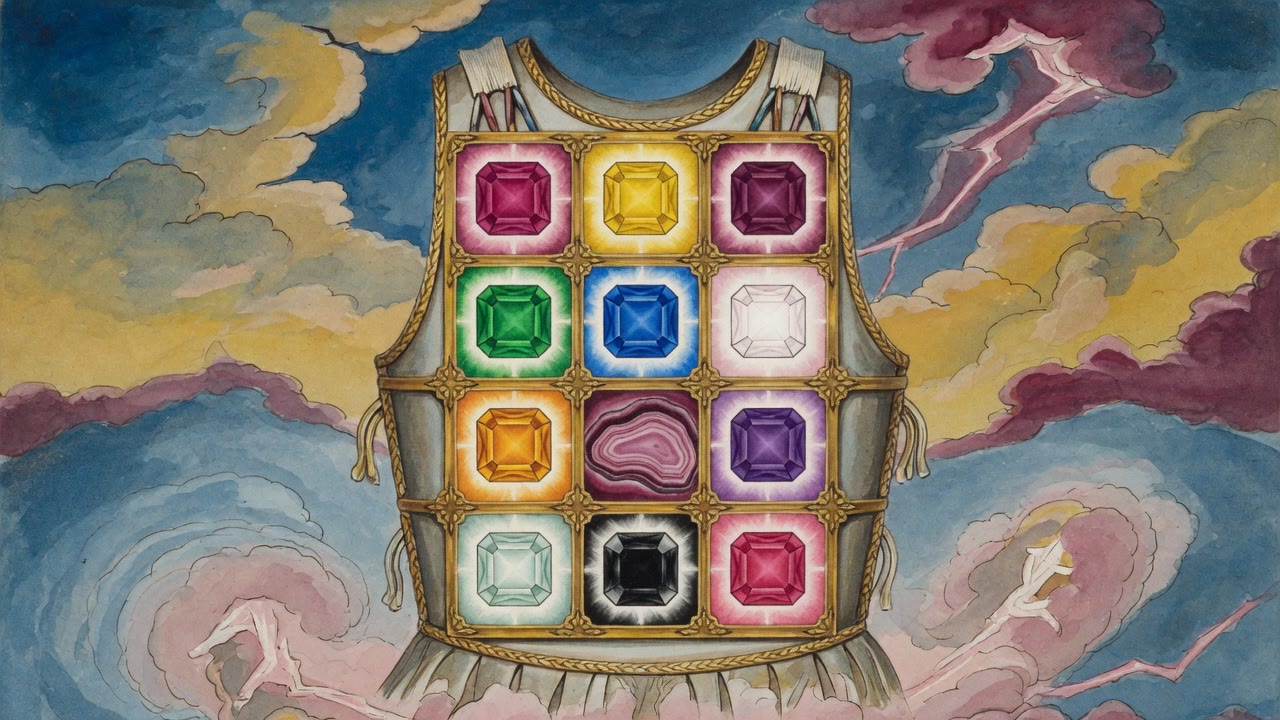
The high priest wore twelve gemstones on his chest, each engraved with a tribe's name. When someone asked a question, letters glowed to spell the answer.

Curated by Arthur · Told by Maggid ·
Table of Contents
  1. The Twelve Stones and What They Could Do
  2. How the Oracle Worked
  3. Priestly Garments as Instruments of Atonement
  4. The Name That Created Three Hundred and Ten Worlds

The Twelve Stones and What They Could Do

The high priest of Israel wore a breastplate over his heart, four rows of three stones, twelve total, each engraved with the name of one of the twelve tribes. The stones were not selected for decoration. Each one had a specific character. Reuben's stone was the ruby, deep red, and the tradition preserved by rabbinic sources says it was engraved with his name in black letters against the red ground. The other stones followed: emerald, carbuncle, turquoise, sapphire, diamond, jacinth, agate, amethyst, beryl, onyx, jasper. Twelve tribes, twelve stones, twelve names cut into mineral surfaces, carried over the priest's heart whenever he entered the Temple.

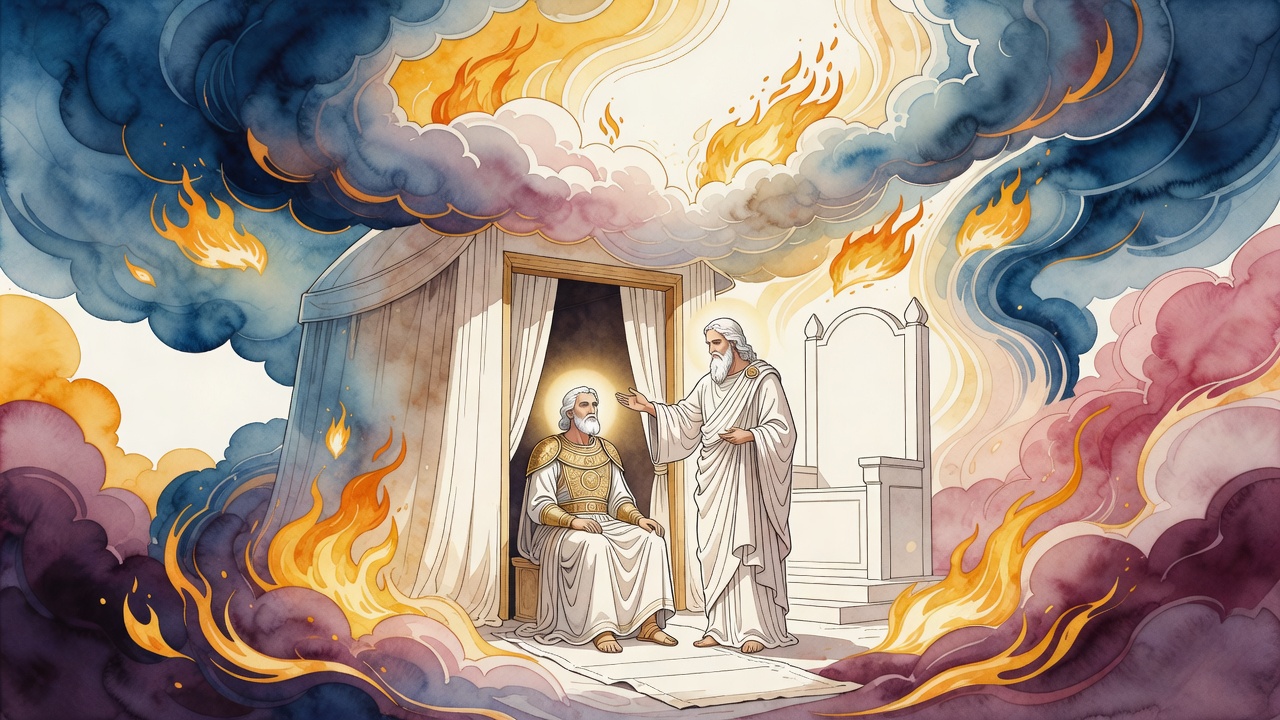
Inside the breastplate's fold, inserted between the layers of fabric, were the Urim and Tummim, their name meaning roughly lights and perfections, or answers that give light and complete. The nature of these objects was debated. The most widely accepted tradition held that they were a parchment or tablet inscribed with the Ineffable Name, placed inside the pouch. The Targum Jonathan saw them as something greater: a Name of seventy-two letters that had been used to create three hundred and ten worlds, written by Moses under divine instruction, sealed into the breastplate as an instrument of cosmic judgment.

How the Oracle Worked

When a question was brought before the high priest, the letters carved into the twelve stones would activate. Individual letters scattered across the names of the twelve tribes would glow, and the priest would read them in sequence to extract God's answer. The process required more than simply watching which letters lit up. The Talmudic sources are careful about this. The illuminated letters could be identified only by someone with the Divine Spirit resting on him. An ignorant priest standing before a glowing breastplate would see light but not meaning. The oracle was not automatic. It required the priest to have the capacity to receive what was being transmitted.

The historian Josephus, writing for a Roman audience in the first century CE, described the breastplate's function in terms his readers could grasp. The twelve stones blazed with supernatural light before a battle if God intended to grant Israel victory. The phenomenon was visible enough that Greeks who had studied Jewish practice, Josephus claims, knew about it and called the breastplate an oracle. When the brightness stopped appearing roughly two centuries before Josephus' time, he took it as a sign of divine displeasure.

Priestly Garments as Instruments of Atonement

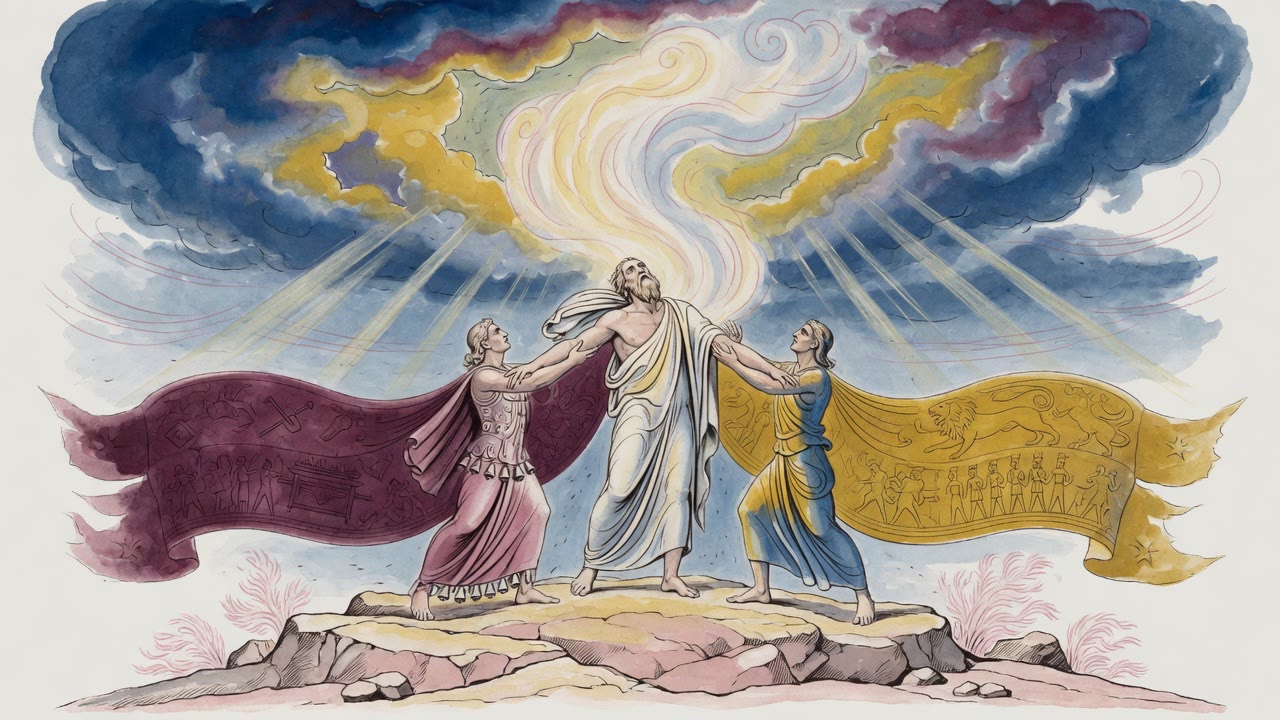
The breastplate was one piece of eight garments the high priest was required to wear while serving. Each garment had a function beyond its appearance. The golden headplate bearing the words Holy to God atoned for arrogant transgression. The tunic atoned for murder. The robe with its bells and pomegranates atoned for slander, the sound of the bells as the priest walked through the Temple making audible what the mouth should not have made audible. The linen pants atoned for sexual impropriety. The sash atoned for wayward thoughts of the heart. The turban atoned for the arrogance that elevated itself above God.

The breastplate, sitting over the priest's heart, atoned for corrupted judgment, for the abuse of courts and the distortion of verdicts. The idea running through the entire set of garments was that the priest's body functioned as an instrument of national atonement while he was serving. He was not merely a functionary following a rite. He was, in the moment of service, a walking mechanism of repair for every kind of human failure Israel had committed, his vestments targeting specific sins the way medicine targets specific injuries.

The Name That Created Three Hundred and Ten Worlds

The Targum Jonathan's version of the Urim and Tummim went further than any other source. According to its expanded reading of Exodus 28, Moses did not simply place a Name-inscribed parchment in the breastplate. What he inserted was a Name of seventy-two letters, written expressly for this vessel, potent enough to have created three hundred and ten worlds and currently serving as the instrument through which God's judgments were made known to Israel in real time. This Name was not accessible to anyone who touched the breastplate from the outside. It could only be activated by the appropriate prayer, offered by a priest worthy of the answer he was asking for.

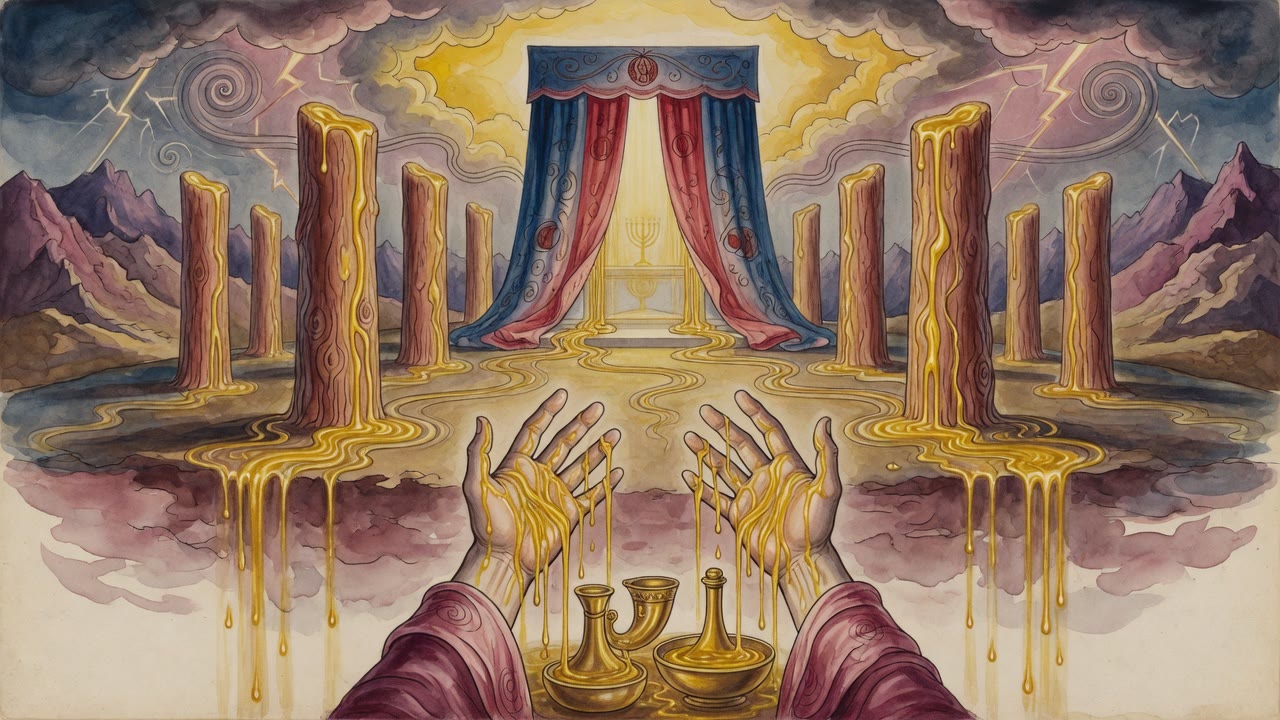
The Urim and Tummim disappeared with the First Temple. They were listed among the five things absent from the Second Temple, along with the anointing oil Moses had made, the Ark, the heavenly fire, and the Divine Spirit that animated prophecy. The Second Temple priests served without the breastplate's inner light, without the letters that had once glowed to tell kings whether to go to war. What remained of the oracle was the frame, the twelve stones still present, still worn, but the animating Name was somewhere else.


← All myths

From the tradition

Sources

6 sources

The texts this telling draws on, in full. Open a card to read inline, or expand it for a wider, quieter read.

Legends of the Jews 3:49Legends of the Jews

Forget polls and focus groups. In ancient Israel, sometimes the answer came from… a breastplate.

Specifically, the breastplate of the Kohen Gadol, the High Priest. This wasn't just some fancy piece of religious garb, oh no. It was a conduit, a direct line to divine guidance, using a mysterious mechanism known as the Urim ve-Tummim (אוּרִים וְתֻמִּים).

The breastplate itself was adorned with twelve precious stones, each representing one of the twelve tribes of Israel. Think of it – a dazzling array of colors, each gem pulsating with significance. But what did these stones do?

Well, according to the Legends of the Jews, as retold by Ginzberg, these weren't just pretty decorations. They were integral to the High Priest's ability to receive oracular sentences. When the king or the head of the Sanhedrin (the Jewish high court) needed direction, they turned to the Kohen Gadol.

Imagine the scene: The High Priest, resplendent in his breastplate and ephod (a priestly garment), stands before the inquirer. He instructs them to look into his face, to present their question with utmost sincerity. Then, the High Priest gazes down at the breastplate. And this is where it gets really interesting.

He watches for which letters, engraved upon the stones, begin to shine with particular brilliance. The Zohar, that foundational text of Kabbalah, hints at the immense spiritual power contained within these stones, a power that could be activated through the High Priest's focused intention.

From these illuminated letters, the High Priest would then construct the answer. It’s like some kind of divine code-breaking!

Ginzberg gives a fascinating example. King David, on the run from Saul, asks the Urim ve-Tummim: Will Saul continue to pursue me? The High Priest, Abiathar, looks to the breastplate. He sees the letter Yod (י) in Judah's name, the letter Resh (ר) in Reuben's name, and the letter Dalet (ד) in Dan's name shining forth. Put them together, and you get Yered (ירד), meaning "He will pursue." Simple, direct, and potentially life-saving!

Now, was it actually that simple? Did the letters just light up like a celestial neon sign? Maybe. Maybe not. Midrash Rabbah suggests that the stones might have moved or even changed color in specific patterns, requiring careful interpretation by the High Priest.

Regardless of the exact mechanism, the underlying principle is clear: the Urim ve-Tummim represented a profound connection between the earthly realm and the divine will. It was a way to access wisdom beyond human understanding, to work through the complexities of leadership with a higher sense of purpose.

It makes you wonder, doesn’t it? In a world saturated with information, where do we turn for true guidance? What are the "stones" we look to for answers? And how can we cultivate the kind of focused intention necessary to discern the truth, even when it's hidden in plain sight?

Full source
Legends of the Jews 3:50Legends of the Jews

Forget Google; they had something far more intriguing: the Urim and Tummim.

The Urim (אוּרִים) and Tummim (תּוּמִים) – These weren't your average divination tools. The name itself hints at their purpose: "these answers spread light and truth." This wasn’t just about predicting the future; it was about accessing divine guidance. The oracle was always trustworthy. But here's the catch.

Not just anyone could tap into this divine hotline. You couldn’t just walk up, flash a priestly badge, and get answers. According to the legends, only a high priest who was "permeated with the Holy Spirit" and over whom rested the Shekhinah (שְׁכִינָה) – that's the divine presence, folks – only that kind of high priest could get the Urim and Tummim to work. Otherwise, the stones stayed silent. Like a cosmic paywall, only those with the spiritual credentials got through.

Why so exclusive? Well, think about the responsibility involved. These answers weren't just about finding a lost goat; they were about leading a nation, waging wars, and interpreting God's will. You wouldn't want just anyone messing with that. But when the right person, a worthy high priest, stood before the Urim and Tummim, ready to receive divine guidance, what happened? According to the legends, they received an answer to every inquiry. How? It's said that all the letters of the alphabet were engraved on these stones, "so that all conceivable words could be constructed from them." Imagine a spiritual Scrabble set, where the divine rearranged the letters to spell out the answer. What a concept!

So, what does this all mean for us today? We might not have access to the Urim and Tummim (though wouldn’t that be something?), but the story reminds us that true guidance, the kind that really matters, often comes when we're in the right spiritual state, when we're open to receiving something beyond ourselves. It's a reminder to cultivate that connection, to seek that inner light, so that when we ask the big questions, we're ready to hear the answers – even if they don't come spelled out in glowing letters.

Full source
Legends of the Jews 3:38Legends of the Jews

These weren’t just pretty rocks. Oh no. Each of the twelve stones corresponded to one of the twelve tribes of Israel, and according to the legends, they possessed unique properties and told stories of their own. Ginzberg, in his masterful Legends of the Jews, paints a vivid picture of these powerful gems.

Take Reuben, for example, the firstborn. His stone was the ruby. And not just any ruby! This one, according to tradition, had a very specific power: it promoted pregnancy. The Legends of the Jews tell us that if a woman grated the ruby and tasted it, she would be blessed with children. Why? Because it was Reuben who found the mandrakes, those ancient fertility-boosting plants, mentioned in the Torah (Genesis 30:14). The connection is clear: Reuben, fertility, the ruby – a powerful symbol linking the tribe to its patriarch and to the very essence of life.

Then there's Simeon. His stone was the smaragd, what we know today as the emerald. But this wasn't just any emerald, either. This one had a… shall we say, discerning quality. The Zohar tells us that this emerald would shatter if an unchaste woman even looked at it!

Why this particular property for Simeon? Well, the Legends of the Jews explains it’s a fitting stone for the tribe whose father, Simeon, was incensed by the actions of Shechem against his sister, Dinah. It was a constant reminder to the tribe, especially after the episode at Shittim (Numbers 25:1), where they engaged in immoral acts with the daughters of Moab. The stone served as a warning: uphold chastity, or face the consequences, just like the stone that shatters at the sight of impurity. It was a powerful symbol of morality and the potential for destruction when boundaries are crossed.

These aren't just quaint stories, are they? They're a way of understanding the character of each tribe, their strengths, their weaknesses, and their place in the interplay of Jewish history. These stones weren't just adornments; they were living symbols, constantly reminding the Israelites of their heritage and their responsibilities. What other secrets might these stones hold? What stories do they whisper to those who are willing to listen?

Full source
Antiquities III.7-8Antiquities of the Jews (Josephus)

The High Priest's breastplate could predict the outcome of wars. Josephus states this not as legend but as historical fact, the twelve gemstones mounted on the breastplate of the Kohen Gadol (High Priest) would blaze with supernatural light before a battle if God intended to grant victory. The phenomenon was so well known, Josephus claims, that even Greeks who studied Jewish law called the breastplate "the Oracle." He adds that this radiance ceased two hundred years before he wrote his Antiquities, because God had become displeased with Israel's transgressions.

The breastplate was just one layer of an extraordinarily complex wardrobe. Josephus describes every garment of the ordinary priests first, the linen breeches called Machanase, tied at the thighs; the full-length white robe called Chethone, fitted with sleeves and cinched by a brilliantly embroidered sash of scarlet, purple, blue, and gold that wound around the chest multiple times before hanging loose to the ankles. On the head, a turban called Masnaemphthes, swathed in linen and covered with a smooth cloth that hid every seam, because nothing unsightly could appear during sacred service.

The High Priest wore all of this, then added more. Over everything went a blue robe reaching to the feet, called Meeir, fringed at the hem with alternating golden bells and pomegranate-shaped tassels. So that every step Aaron took produced sound (Exodus 28:33-35). Over that went the Ephod, a short embroidered vest of gold and four colors, with two sardonyx stones on the shoulders engraved with the names of the twelve tribes, six on each side, in birth order.

The breastplate sat in the center of the Ephod, fastened by golden rings, blue ribbons, and chains of gold running to the shoulders. Twelve precious stones were set into it in four rows of three: sardonyx, topaz, emerald, carbuncle, jasper, sapphire, ligure, amethyst, agate, chrysolite, onyx, and beryl, each stone bearing the name of one of Jacob's twelve sons. Josephus marvels that these gems were so rare they could not be purchased at any price.

And then comes Josephus's most provocative claim, Moses designed every detail as a map of the universe. The Tabernacle's three divisions represented land, sea, and heaven. The twelve loaves meant twelve months. The Menorah's seven lamps meant seven planets. The four colors of the veils meant the four elements, linen for earth, purple for the sea, blue for air, scarlet for fire. The High Priest's blue robe signified the sky, his bells represented thunder, his pomegranates stood for lightning. Even the golden thread woven through the Ephod symbolized the splendor that illuminates all creation.

Full source
Targum Jonathan on Exodus 28Targum Jonathan

The priestly garments in (Exodus 28:1-43) are already elaborate in the Hebrew Bible. The Targum Jonathan turns them into theological weapons. Every piece of clothing becomes an instrument of cosmic power, atonement, and divine judgment.

The most extraordinary addition comes with the Urim and Thummim. The Hebrew text simply says to place them on the breastplate of judgment. The Targum explodes this into a full mystical description. The Urim, it says, "illuminate their words and manifest the hidden things of the house of Israel." The Thummim "fulfill their work to the high priest, who seeks instruction by them before the Lord."

Then the Targum goes further. Engraved within the Urim and Thummim was "the Great and Holy Name by which were created the three hundred and ten worlds." That same Name was "engraven and expressed in the foundation stone wherewith the Lord of the world sealed up the mouth of the great deep at the beginning." Whoever remembered that Name in the hour of necessity would be delivered.

The breastplate's four rows of gemstones are mapped to the four corners of the world. Each stone bears the name of a tribe, not as mere decoration but as a "memorial of righteousness." The Targum specifies seventy-one bells on the robe's hem, a number conspicuously matching the seventy-one members of the Sanhedrin (the supreme rabbinic court).

Each garment atones for a specific sin. The tunic expiates the shedding of innocent blood. The tiara expiates pride of thought. The golden plate on Aaron's forehead atones for "boldness of face." Anyone who approached the altar without proper consecration would be "consumed by the fiery flame from before the Lord."

The Targum transforms priestly clothing from ceremonial garb into armor against divine wrath and a conduit for the creative power that built the universe.

Full source
Targum Pseudo-Jonathan on Exodus 39:10Targum Pseudo-Jonathan on Exodus

When Betzalel finished the choshen, the breastplate of judgment, he did not simply sew a garment. He built a map of the world the House of Israel carries on its heart.

In Targum Pseudo-Jonathan on (Exodus 39:10), four rows of precious gems were set into the breastplate, corresponding with the four corners of the world. The first row held carnelian, topaz, and carbuncle, and upon them were engraved the names of three tribes: Reuben, Shimeon, and Levi. The meturgeman is careful here. The stones are not jewelry. They are witnesses. Each one carries a name, and each name carries a covenant.

Why engrave tribes on stone?

A name spoken is forgotten. A name written on parchment fades. A name cut into a precious stone endures. When Aharon stepped into the sanctuary with the breastplate over his heart, he was carrying every tribe into the presence of the Shekinah. No one was left outside. Not Levi, who had no land. Not Shimeon, whose portion would later be scattered. Not Reuben, whose birthright was forfeited. The stones remembered what the tribes sometimes forgot about themselves.

The four corners of the world

The four rows were not arranged by accident. The targumist tells us they corresponded to the four directions (Exodus 39:10). Heaven has corners, and the High Priest stood at the center of all of them when he entered the sanctuary. The breastplate was a miniature cosmos, fastened to a man's chest by chains of gold. Wherever Aharon turned, a tribe turned with him, and a corner of creation turned with the tribe.

The rabbis later taught that when the High Priest sought judgment, the letters on the stones would light up to spell out the answer, the Urim v'Tumim, lights and perfections. But before any letter lit up, the stones were already speaking. They were saying, simply, the names of Israel.

The takeaway: holiness remembers names. The breastplate teaches that to serve God is to carry your people with you, all of them, even the ones whose stories have gone quiet.

Full source