What the Ark of the Covenant Actually Did
The Ark traveled three days ahead of the camp and burned the snakes out of the road. The gold cherubim on its lid had the faces of boys.
Table of Contents
 Click for full size
The Box That Cleared Its Own Road
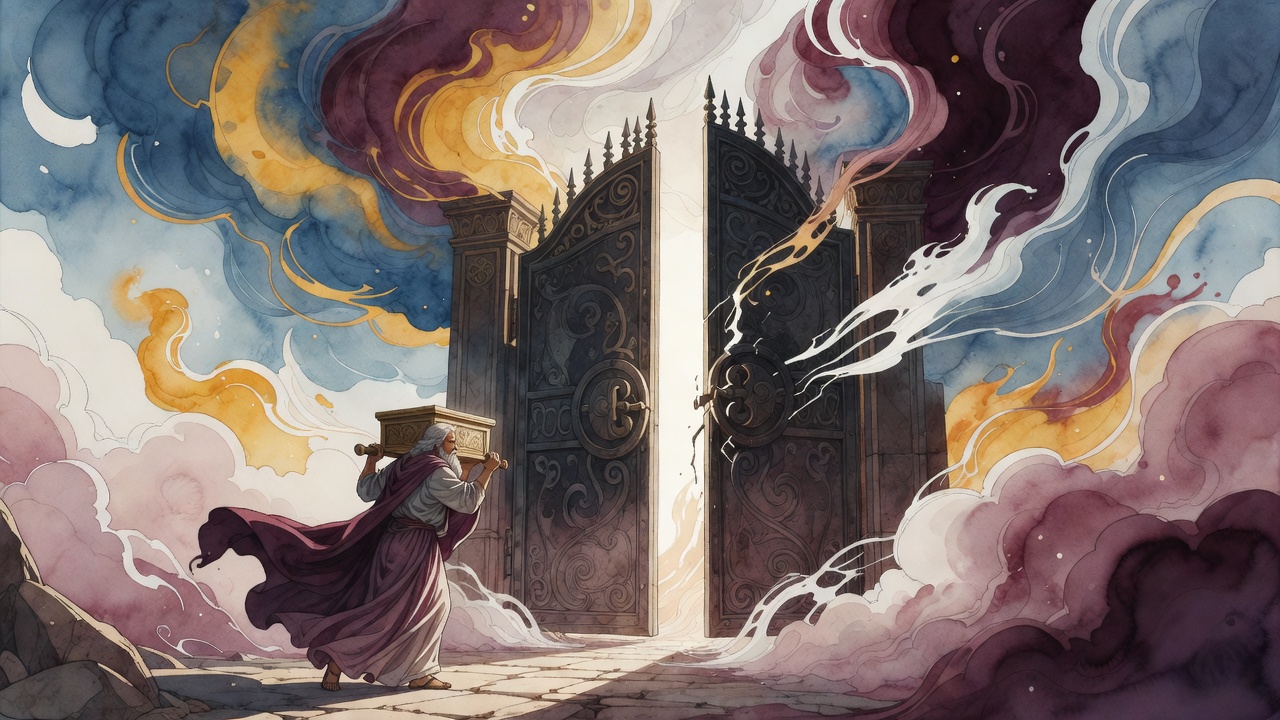
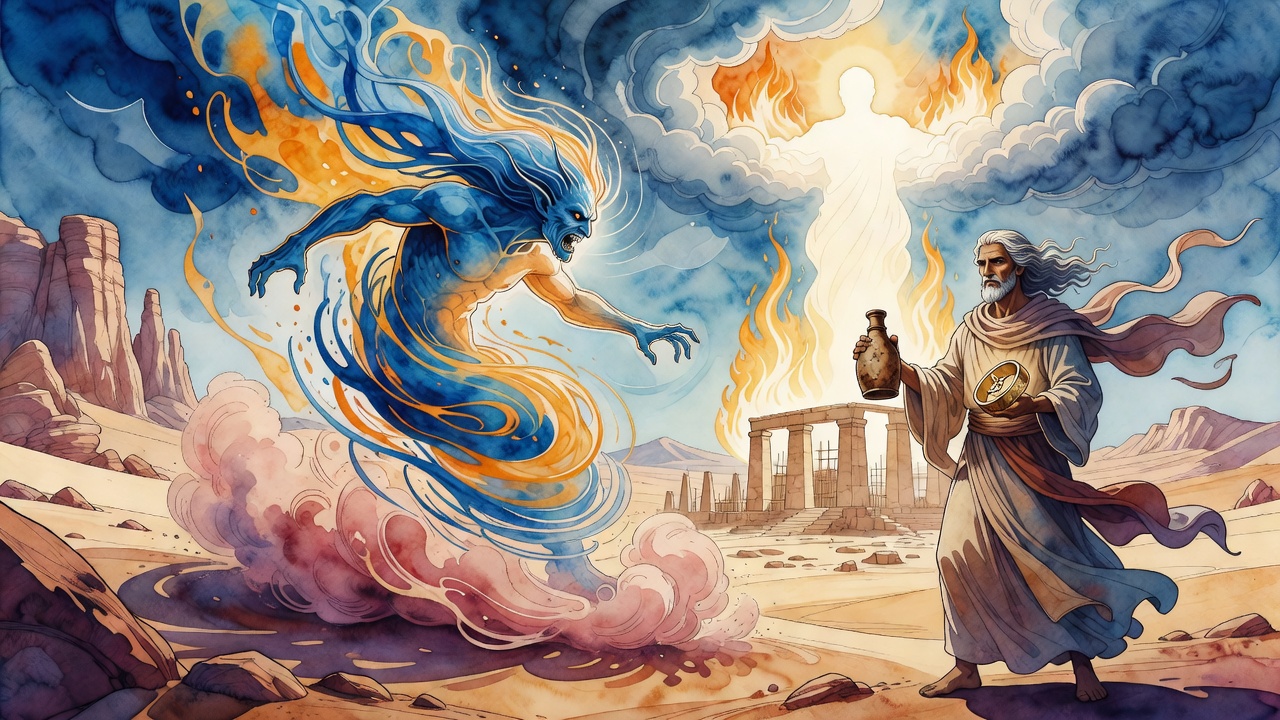
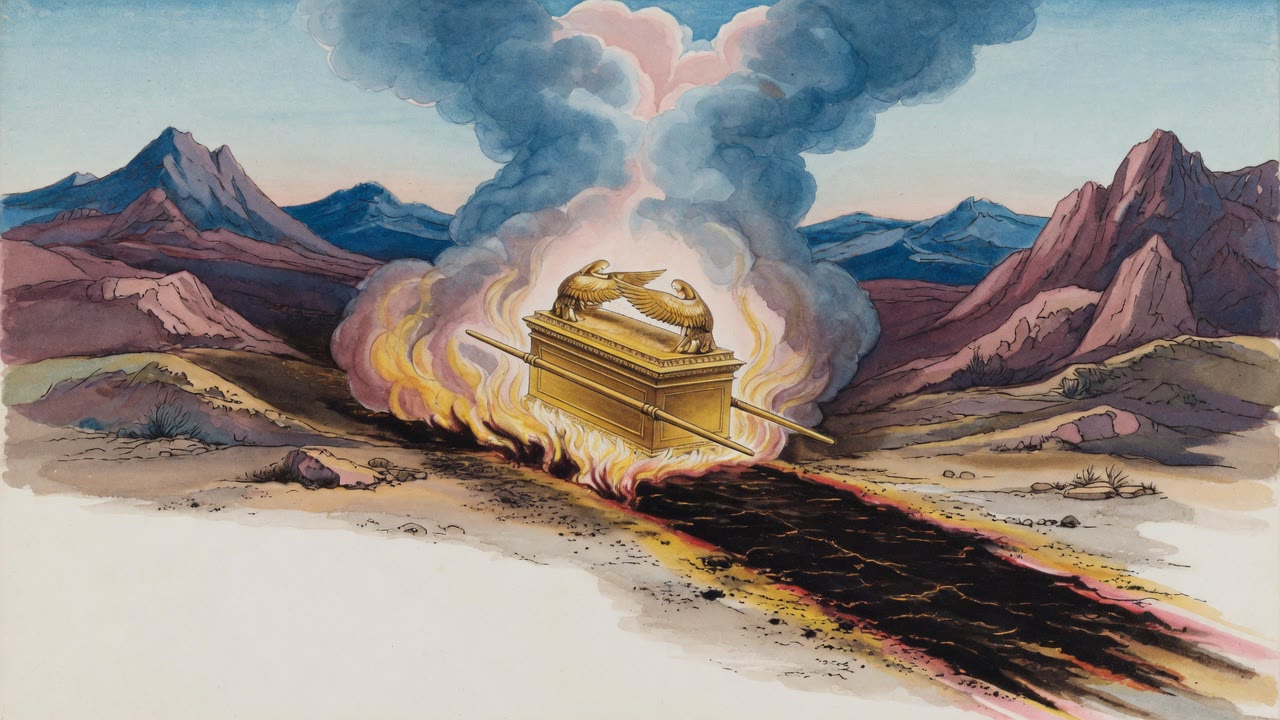
The Israelites did not carry the Ark through the wilderness. The Ark carried itself, and it cleared its own path. When the camp needed to move, the Ark went three days ahead of the main body, traveling through the terrain that lay before them, burning out the serpents and scorpions from the ground so that by the time the people arrived, the road was safe. It also leveled the mountains that stood in the way. The tradition is specific about this: the Ark flattened the high places and raised the low ones, doing in an afternoon what surveying teams could not have accomplished in years.
Two sparks emerged from between the Cherubim that sat on the Ark's lid whenever the column of cloud that guided the camp had a specific reason to stop or change direction. These sparks served as advance scouts, burning away whatever threat lay ahead. They were not sent by anyone. They were a product of what happened when the divine presence came into contact with the gold of the cover and the two golden figures facing each other with spread wings. The space between the Cherubim was the only location in the physical world where God's voice could be heard speaking to Moses. It was not a container. It was a contact point.
The Cherubim With Faces of Boys
The two Cherubim on top of the Ark were made of hammered gold, one piece with the cover, their wings spread upward and toward each other, their faces turned downward and inward toward the cover. The Talmud in tractate Yoma preserves a description that surprises people: they had the faces of boys. Not the terrifying multi-faced creatures of Ezekiel's vision. Not the winged guards at the edge of the Garden. Boys' faces, turned toward each other across the open space of the cover's width. When Israel was living in accordance with the covenant, the Cherubim's faces angled toward each other, as a man who has just reconciled with his beloved turns his face toward her. When Israel sinned grievously, the faces turned away, looking toward the interior of the Temple rather than at each other.
The Cherubim also served as a kind of record of the relationship between God and Israel. When Israel was faithful, they embraced. When Babylonian soldiers broke into the Holy of Holies at the Temple's destruction, they found the Cherubim tangled together in an embrace and mocked the sight. They did not understand what the posture meant. The embrace was the final record of what had been there before the city fell.
The Doors That Would Not Open
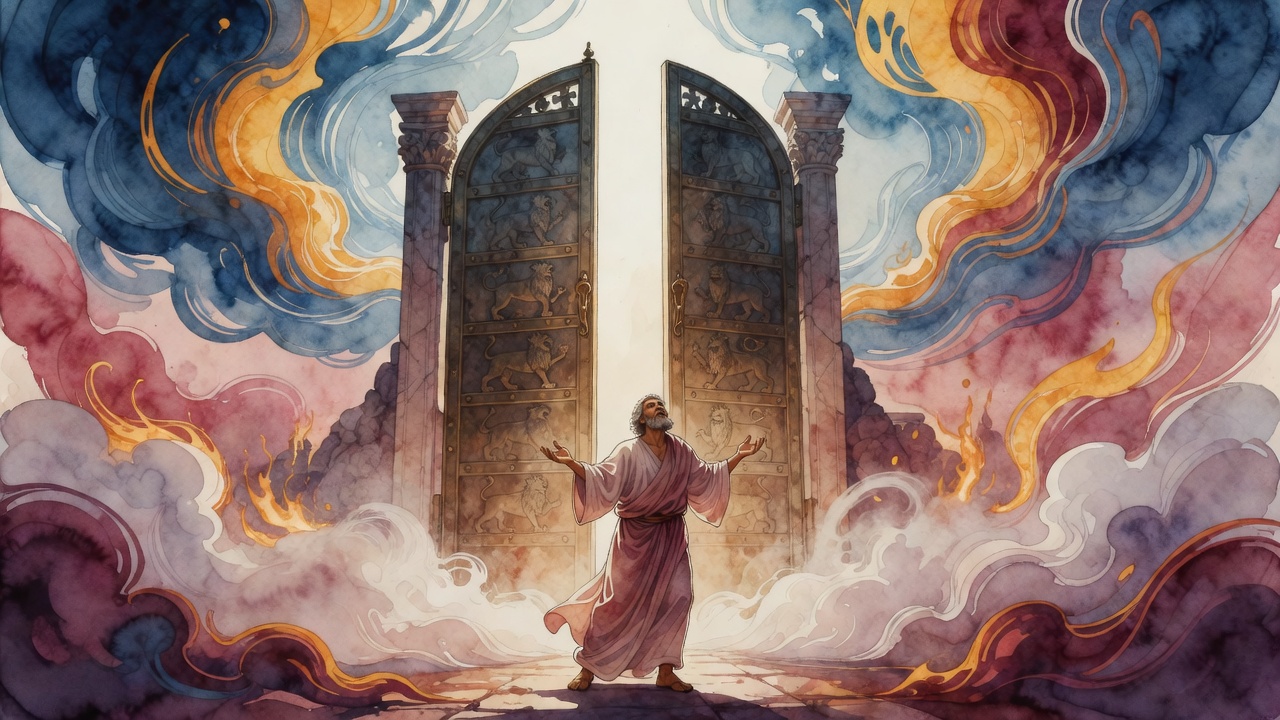
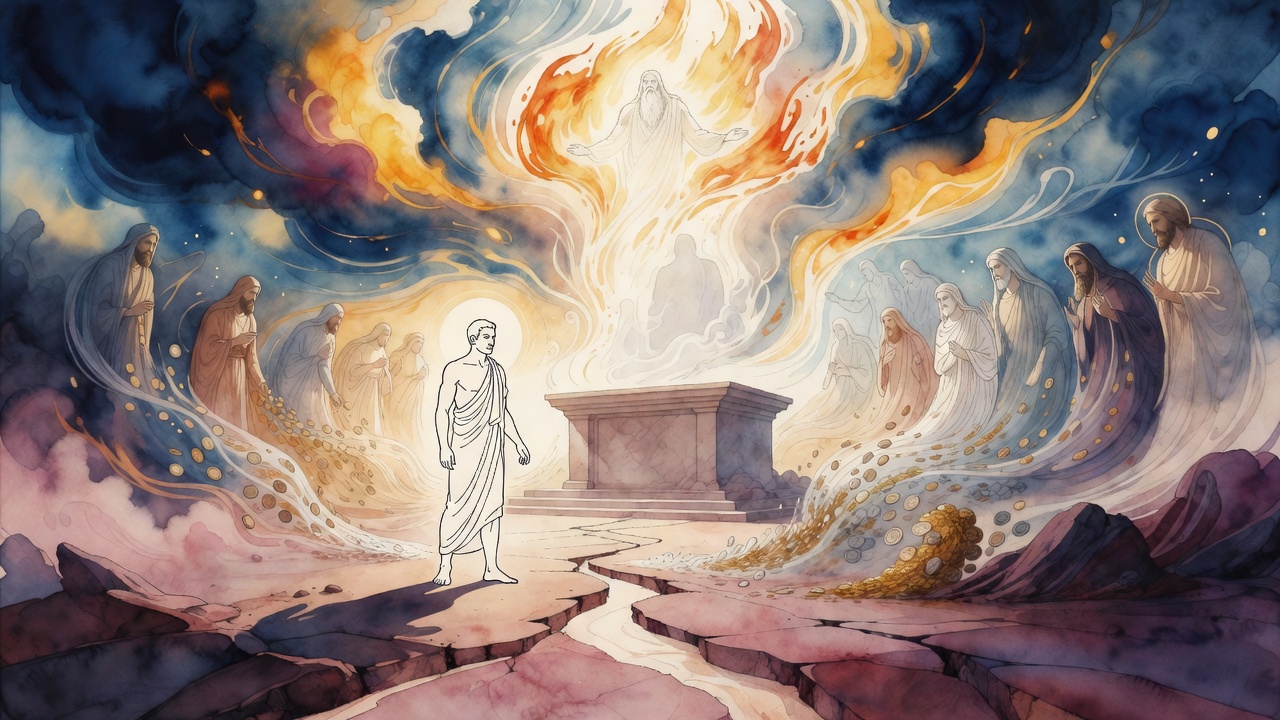
When Solomon completed the Temple and the day came to bring the Ark into the Holy of Holies, the great gates of the Temple sealed themselves and would not open. Solomon prayed. He offered twenty-four prayers and nothing moved. He called out to God by every divine name he knew and the gates remained shut. He tried the merit of his father David's righteousness. Still nothing.
Then he cried out: Lift up your heads, you gates, and be lifted up, you eternal doors, so that the King of Glory may enter. The gates shook in their hinges but held. He tried again. The voice from inside the Temple asked who this King of Glory was. Solomon answered: The LORD of hosts, He is the King of Glory. And then the gates opened. The tradition explains that the doors would not open for Solomon's own merit or any prayer he offered on his own behalf. They opened for his father's sake, for David who had wanted to build the Temple and had not been permitted to build it in his own lifetime. The honor that the Temple's dedication gave to David was what finally moved the hinges.
Jeremiah and the Cave on Mount Nebo
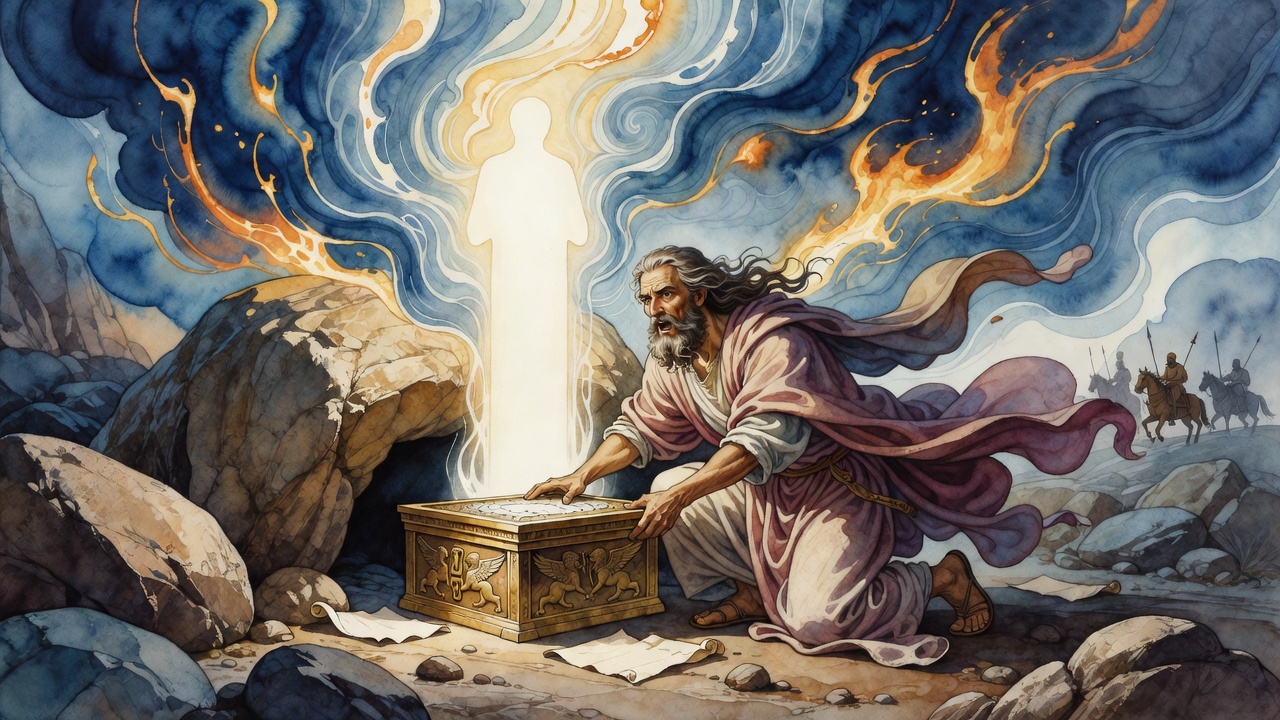
Before the Babylonians reached Jerusalem, Jeremiah knew what was coming. He took the Ark, the altar of incense, and the tent that Moses had made in the wilderness and carried them to Mount Nebo, the mountain from which Moses had seen the Land before he died. There, on God's instruction, he found a cave and sealed them inside. Some of the men who had come with him marked the spot so they could return and retrieve the Ark when the time of exile ended.
Jeremiah stopped them. He told them they would not be able to find it again. The place would remain unknown until God gathered his people from their dispersal, when he would reveal the hiding place and the glory of God would return and the cloud would cover the Ark as it had in Moses' day. A voice from the cave confirmed the sealing, saying the place would be unknown until God restored Israel, and at that moment the Ark would be brought out and shown to everyone, and those who see it will rejoice. The Ark was not lost. It was hidden. There is a difference, and the difference is the reason no one has found it.
← All myths