5 min read

The Humble King Who Cried Out and the Spears Turned Aside

Judah's mightiest king rose from his throne for every scholar, then met an impossible siege not with his sword but with one cry to heaven.

Curated by Arthur · Told by Maggid ·
Table of Contents
  1. The King Who Rose From His Throne
  2. A Commoner's Cloak Before the Prophet
  3. The Guard He Set at the Temple Mount
  4. The Ridge Where the Chariots Closed In
  5. The Cry That Turned the Spears Aside
The Humble King Who Cried Out and the Spears Turned Aside Click for full size

The King Who Rose From His Throne

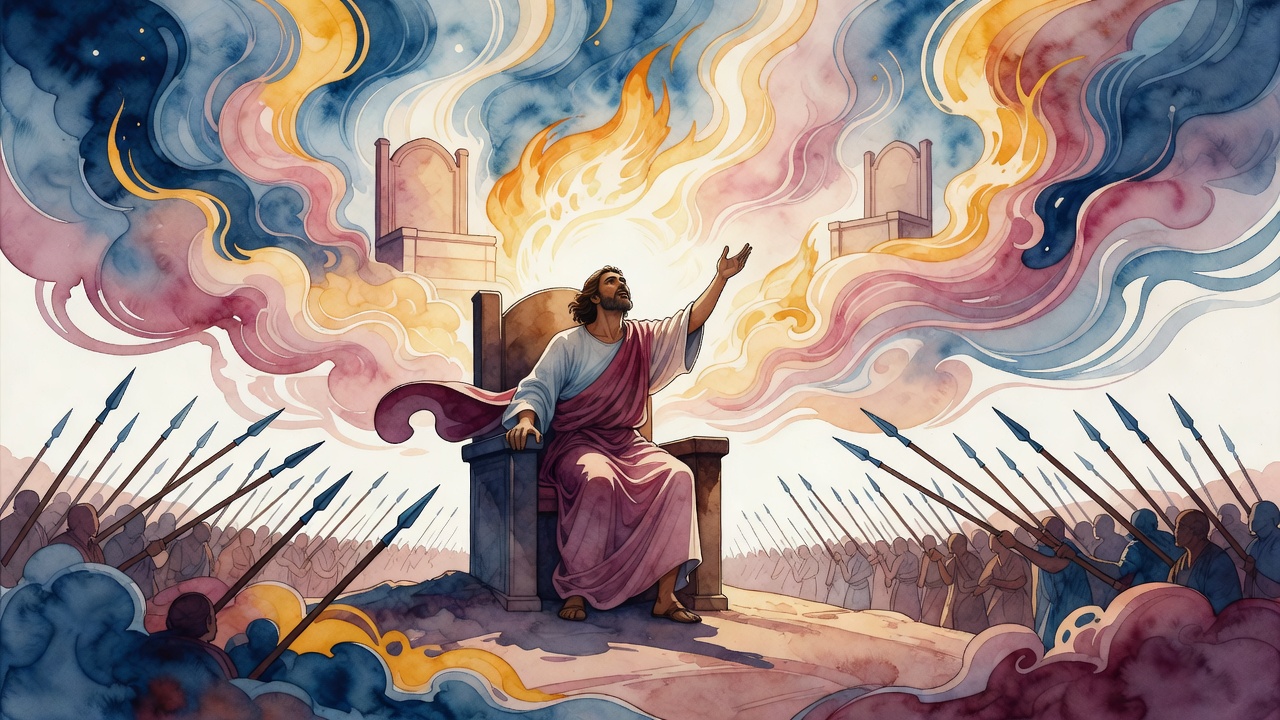
A scholar crossed the threshold of the royal hall, and the king came off his seat like a man hearing his own father's voice.

Jehoshaphat ruled a kingdom that could put whole nations in the field. Each division of his army carried at least one hundred and sixty thousand fighting men, spear on spear, and the ground shook when they mustered. He wanted for nothing. Gold, walls, chariots, grain, all of it was his.

But none of that held him to the throne when the scholar entered. He rushed down, threw his arms around the man, kissed him on both cheeks, and called out, "Rabbi, Rabbi." My teacher, my teacher. The most powerful man in Judah, clinging to a poor sage as though the sage were the one who wore the crown.

His father Asa had never done such a thing. Asa had little patience for scholars. Jehoshaphat went the other way entirely, and the whole court learned to watch a king who believed that wisdom outranked a diadem.

A Commoner's Cloak Before the Prophet

When word came that the prophet Elisha would receive him, Jehoshaphat did not dress for it the way a king dresses.

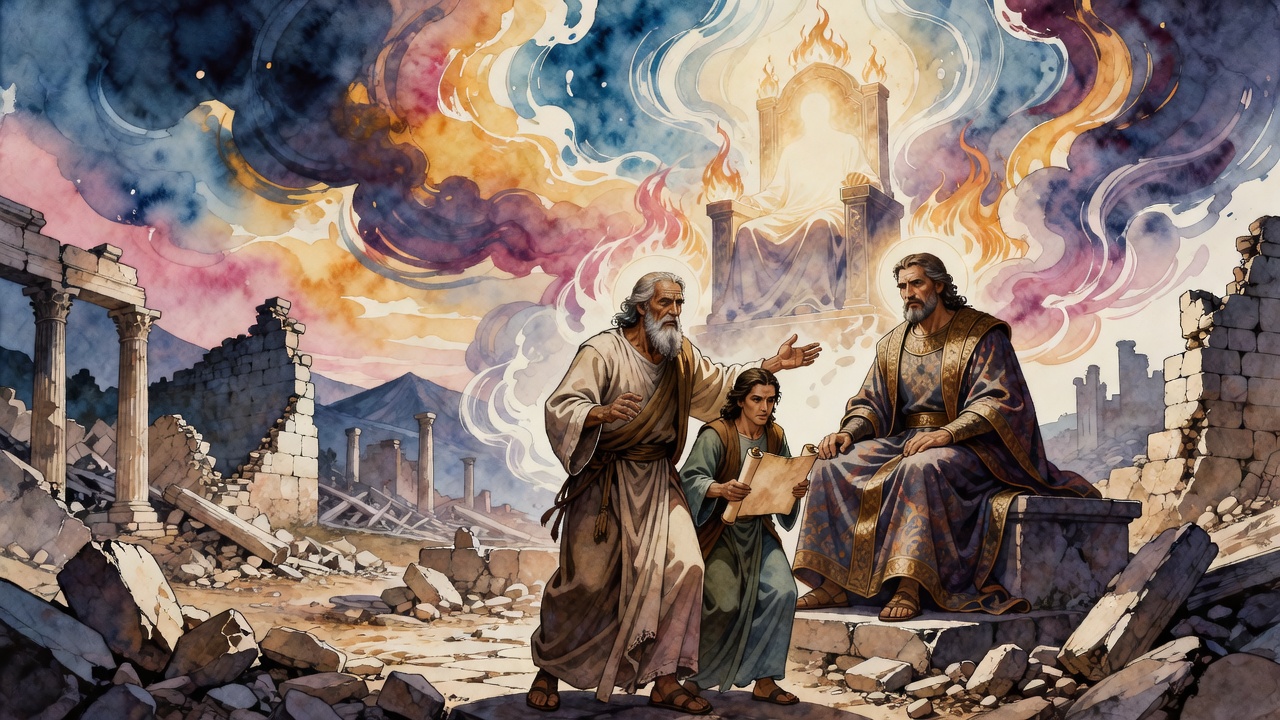
He left the royal purple in its chest. He put on the plain clothes of an ordinary man, the tunic a farmer or a porter might wear, and he went to stand before the prophet looking like nobody at all. A living conduit to God waited inside, and the king refused to arrive draped in his own importance.

He understood a thing most rulers never learn. A crown does not make a man taller before heaven. Before a prophet, a king is only one more petitioner, and Jehoshaphat wanted heaven to see him as exactly that.

The Guard He Set at the Temple Mount

Nowhere was his care fiercer than at the Temple.

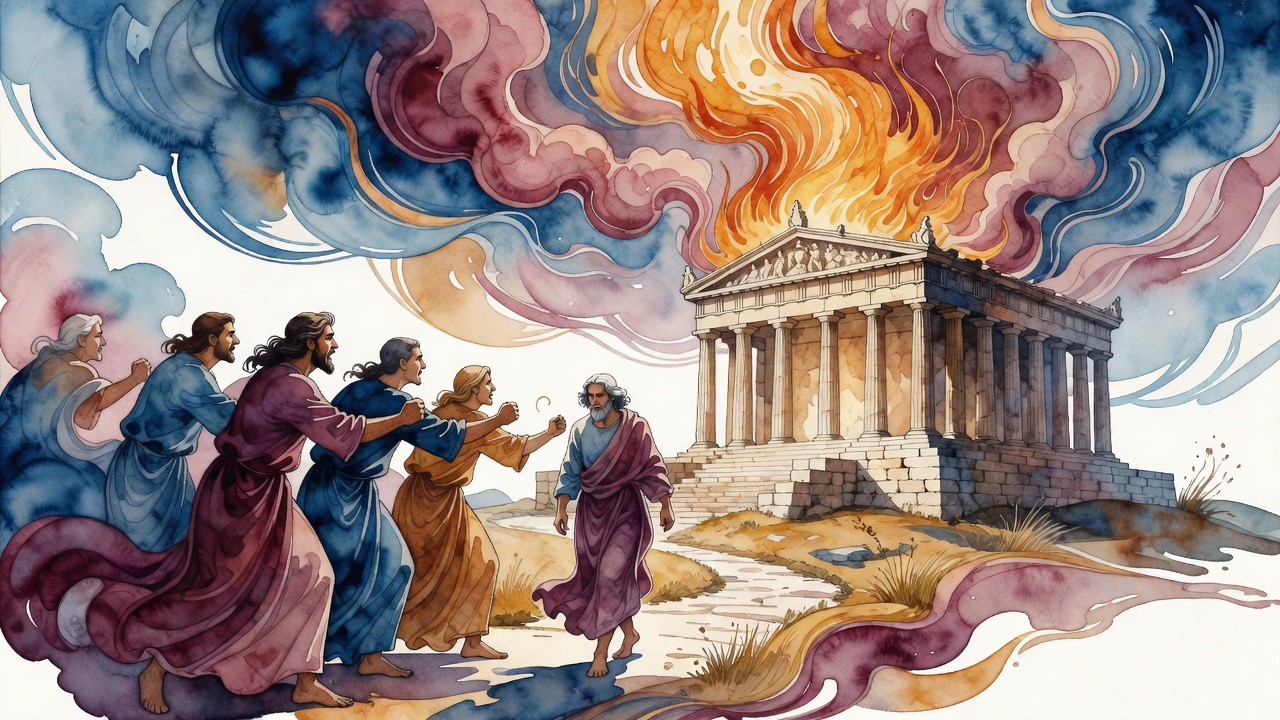
He guarded its sanctity down to the smallest detail, and he made a ruling that startled even the priests. A person who had contracted ritual impurity, then immersed and been cleansed, still could not climb the Temple Mount. Not yet. Not until the full span of the impurity had run its course, every hour of it.

Washing alone did not satisfy him. He wanted the holy approached slowly, with the whole weight of reverence, so that no one rushed up the mountain of God treating the sacred as a thing to be hurried. Where his father had wavered, Jehoshaphat set his trust in God without a crack in it, and he built that trust into the very stones his people were permitted to tread.

The Ridge Where the Chariots Closed In

Then the trust was tested with a blade at his throat.

He rode into battle against the Arameans. The field turned to chaos, iron on iron, horses screaming, men going down in the churned dirt, dust rising over all of it. Somewhere in that press an enemy soldier saw the king cut off from his guard, alone, and drove toward him.

The Aramean raised his sword. Jehoshaphat had no shield-wall left and no room to wheel his horse. He looked up the length of a stranger's arm at the edge coming down.

By every human measure it was finished. A king with a hundred and sixty thousand men to a single division, and here he was, one heartbeat from death, and not one of them could reach him in time.

The Cry That Turned the Spears Aside

He did not run. He did not swing.

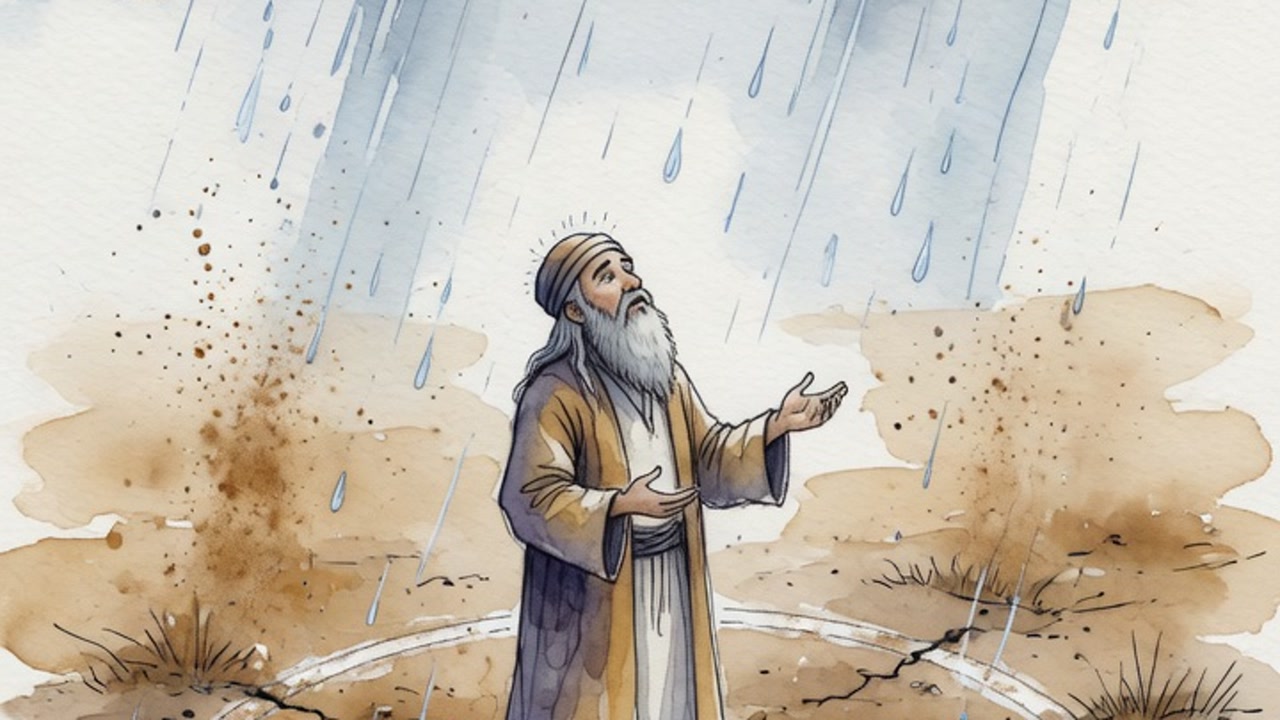
Jehoshaphat threw back his head and cried out to God, the same God he had honored in the plain cloak, the same God whose mountain he had guarded stone by stone. The prayer tore out of him all at once, the whole of a devoted life poured into a single shout for help.

And heaven answered. The sword did not fall. Something turned the Arameans away from him, some hand no chronicle would ever fully name, and the soldier who had marked the king for death veered off as though he had suddenly understood he was chasing the wrong man. The ring around Jehoshaphat opened. He was still standing.

The king who had emptied himself before scholars, before Elisha, before the gates of the holy, had emptied himself one last time in the dirt of the battlefield. The fight he could not win was won by something other than his sword.


← All myths
From the tradition

Sources

2 sources

The texts behind this telling. Some cards carry a translation of the source; others are our own retelling of it, and each card says which. Every card links out to the original.

Legends of the Jews 6:20Legends of the Jews

Retold in our words. Read the original at the link below.The Legends of the Jews by Louis Ginzberg (1909) · Public Domain

Legends of the Jews turns to Kingdom of Jehoshaphat.

His military? Forget about it! Each division of his army boasted at least one hundred and sixty thousand warriors. That’s a serious force. This guy had power in spades.

Despite all that wealth and might, Jehoshaphat was known for his anavah – his humility. for a second.

The Legends of the Jews tells a story that really highlights this. When Jehoshaphat went to see the prophet Elisha – a really important figure, a conduit to the divine – he didn't show up in all his royal finery. Nope. He dressed like one of the regular folks. He understood that true authority doesn't come from fancy clothes or a crown.

And it wasn’t just the prophets he respected. Unlike his father, who, let's just say, wasn't the biggest fan of scholars, Jehoshaphat went out of his way to honor them. Picture this: a scholar walks into Jehoshaphat's presence, and the king, this powerful ruler, actually gets up, rushes to greet him, and showers him with kisses and embraces, calling out, "Rabbi, Rabbi!" (My teacher, my teacher!).

Isn't that an incredible image? It speaks volumes about his character.

So, what can we learn from Jehoshaphat? He had the power, he had the wealth, but he also had something else, something arguably more important: respect for wisdom, respect for humility, and a genuine connection to the people around him. Maybe that's the real secret to good leadership, and maybe, just maybe, it’s a lesson we can all take to heart, no matter our station in life.

Full source
Legends of the Jews 6:21Legends of the Jews

Retold in our words. Read the original at the link below.The Legends of the Jews by Louis Ginzberg (1909) · Public Domain

He was a king who knew a thing or two about impossible situations.

Jehoshaphat, as we learn in Ginzberg's Legends of the Jews, was deeply devoted to the sanctity of the Temple in Jerusalem. He wasn't just going through the motions; he cared about the details. He even instituted a rule: Even if someone had undergone ritual purification after becoming ritually impure, they still couldn't go up to the Temple Mount until the required time of their impurity had passed. It was that important to him. for a second. It shows a deep commitment to holiness, to approaching the sacred with the utmost respect. Things that we hold sacred, where we strive for a higher level of purity and intention.

What really sets Jehoshaphat apart is his unwavering faith. Unlike his father, who apparently had his doubts, Jehoshaphat placed his complete trust in God.

This trust was put to the ultimate test.

Imagine this: Jehoshaphat is in the thick of battle with the Arameans. It's chaos, swords clashing, soldiers falling. Suddenly, an enemy soldier has him cornered. The soldier raises his sword, ready to strike the fatal blow. The utter helplessness?

Humanly speaking, it's over. There's no escape. It's an impossible situation.

But Jehoshaphat doesn't panic. He doesn’t try to fight his way out. He turns to God. He pours out his heart in prayer, begging for help.

And here’s the incredible part: His prayer is answered. Plainly, that God granted his request. We are left to imagine the nature of that divine intervention.

What does this story tell us? It's more than just a thrilling battle scene. It's about faith in the face of impossible odds. It's about turning to something bigger than ourselves when we feel utterly helpless. It’s about the power of prayer.

Maybe, just maybe, like Jehoshaphat, we too can find a way through our own impossible situations. Is it possible that unwavering faith can change the course of events?

Full source