Israel's Daughters Stared at Saul and Wept When He Died
A modest giant searching for lost donkeys is stalled by maidens drunk on his beauty, then dies for five sins as Israel's daughters weep in crimson.
Table of Contents
 Click for full size
The Donkeys That Wandered Off
The she-donkeys belonging to Kish had strayed into the hills, and Kish sent his son to bring them home. Saul went. He was young, and he was taller than any man in Israel, a head above the tallest shoulder in any crowd. He took a servant and climbed through the hill country of Ephraim, through the land of Shalishah and the land of Shaalim, and the animals were nowhere. Three days of walking turned up no donkeys, only ridgelines and dust and a boy who kept apologizing for dragging his servant so far from home.
Near the district of Ramah, Saul was ready to give up. "Come, let us turn back," he said, "or my father will stop worrying about the donkeys and start worrying about us." But the servant knew of a seer in that town whose every word came true, and pressed Saul to go up and ask where the animals had gone. So they turned toward the ascent that climbs to the town.
The Maidens Who Drew Out Their Directions
On the slope they met young women coming down to draw water, jars balanced on their hips. Saul asked them plainly, "Is the seer here?" A simple question, wanting a yes and a pointed finger.
That is not what he got. The maidens looked up at the tall stranger and could not stop looking. They answered him, and then they kept answering. "He is here, just ahead of you," they said. "Hurry, for he has come to the town today, and the people have a sacrifice at the high place. As you enter you will find him, before he goes up to eat, for the people will not eat until he comes and blesses the sacrifice. Go up now, and you will find him at once." They could have said three words. They said thirty. They fed their eyes on his face and were not satisfied, and they stretched the directions thin to keep him on the slope one breath longer.
The Cloud Bound Over the Prophet's Threshold
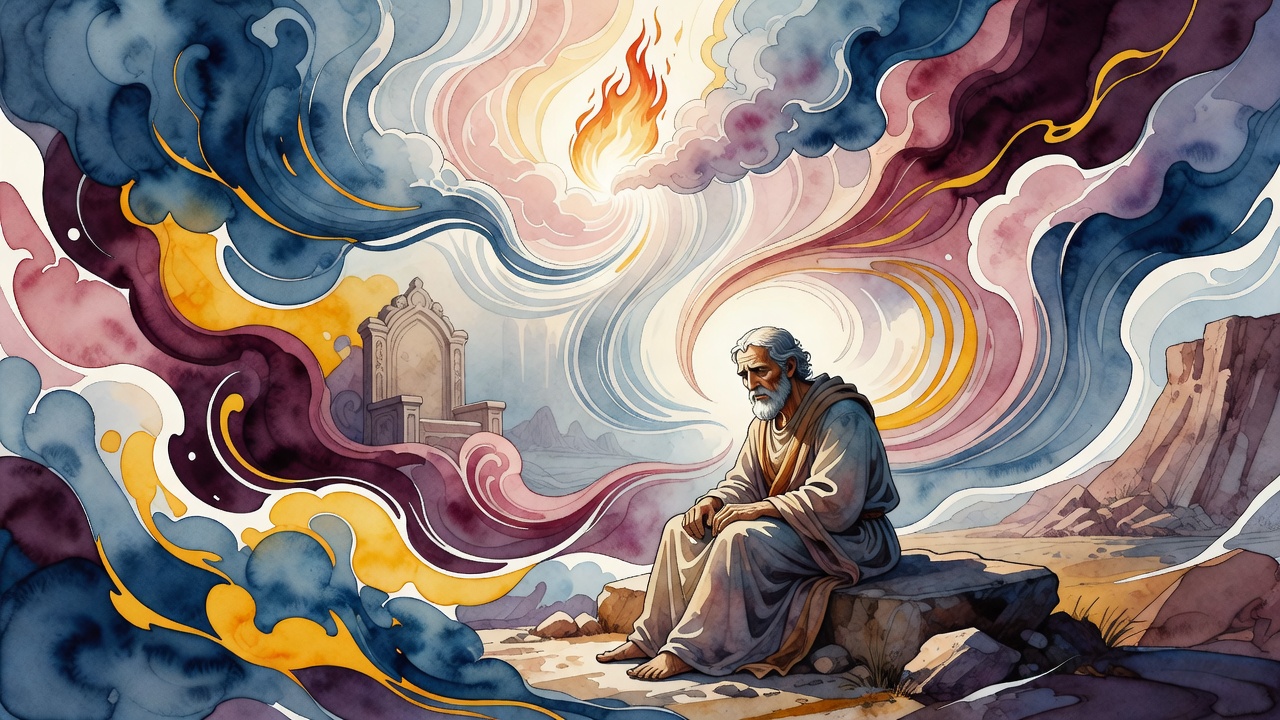
What the girls could not have known is why the road ran slow that day. Over the doorway of the seer's house a cloud hung, bound to the entrance the way a cloud once rested on the Tabernacle and would not lift until it was time to move. The hour had not arrived. The evening before, God had spoken into Samuel's ear about the man climbing toward him. "At this time tomorrow," He said, "I will send to you a man from the land of Benjamin, and you shall anoint him prince over my people Israel." The maidens' chatter was heaven holding the door, keeping Saul on the ascent until the appointed breath arrived.
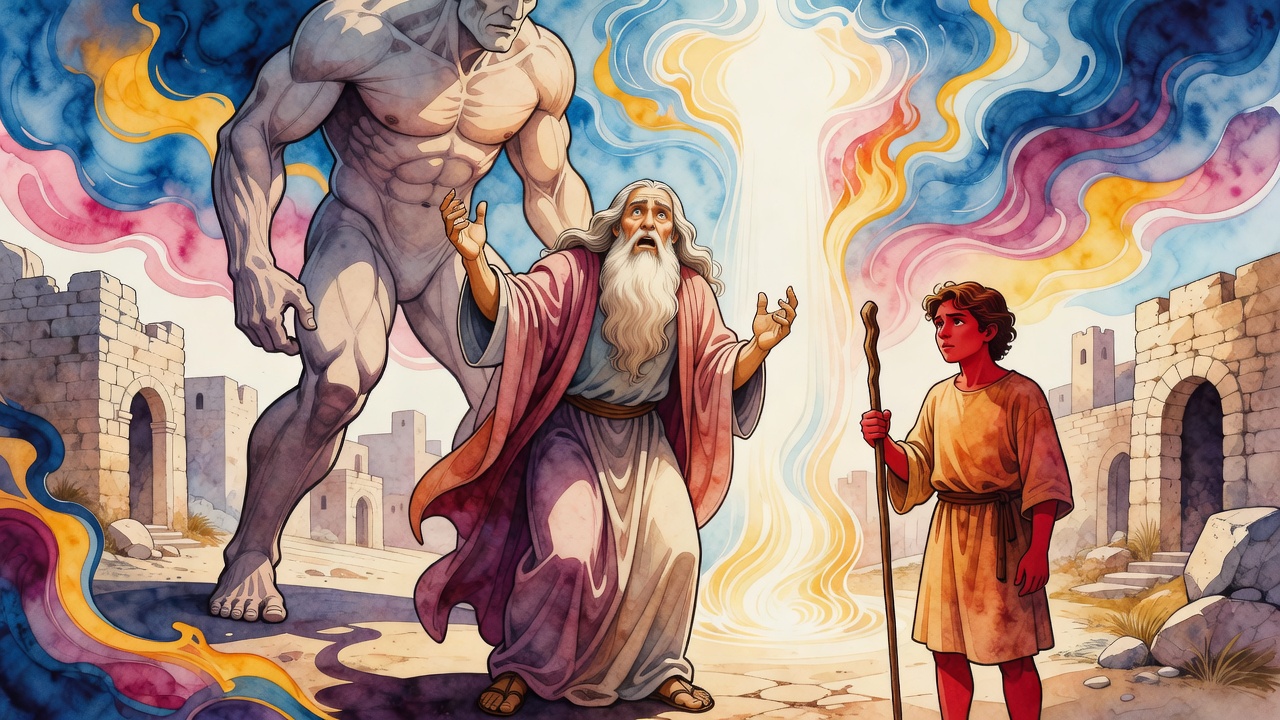
Then it arrived. Saul stepped through the gate, and Samuel was walking straight at him with a flask of oil already in his hand. The whole errand of the strayed animals turned out to have been an errand for a crown.
The Five Charges That Climbed Gilboa With Him
The crown weighed more than the search ever had. Years on, a scroll of Chronicles would name the reasons Saul died, five of them, each a moment his hands could not take back.
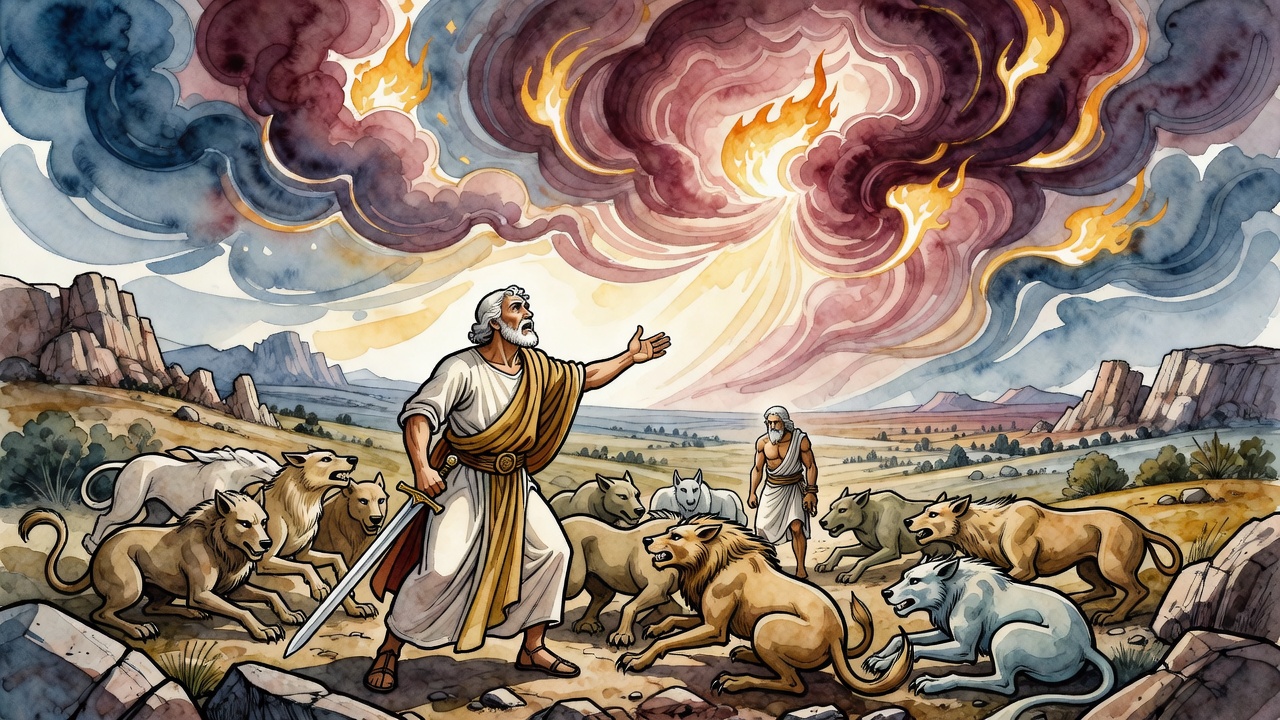
The first waited at Gilgal. Samuel had told him to sit tight seven days. But the Philistines massed on the ridge, his men leaked away into the caves, and on the seventh day he could not hold. He built the fire himself and sent up the burnt offering with his own hands. "I forced myself," he said afterward, "and offered it." The second was Agag, king of Amalek, whom he led home alive when the word of the Lord had told him to spare nothing that breathed. The third was Nob, the town of priests, which he put to the sword until its lanes ran empty. The fourth came on his last night alive, when he crept to a woman at En-dor who called up the dead and asked her what he would not ask God. And the fifth was quieter than the rest. In the field one day, as the priest lifted the ephod to inquire of heaven on his behalf, Saul said, "Withdraw your hand," and shut the question in the priest's throat.
Five refusals. He carried all five up the slope of Mount Gilboa, and there, with his sons falling around him, he fell on his own sword.
The Daughters Who Wept in Crimson
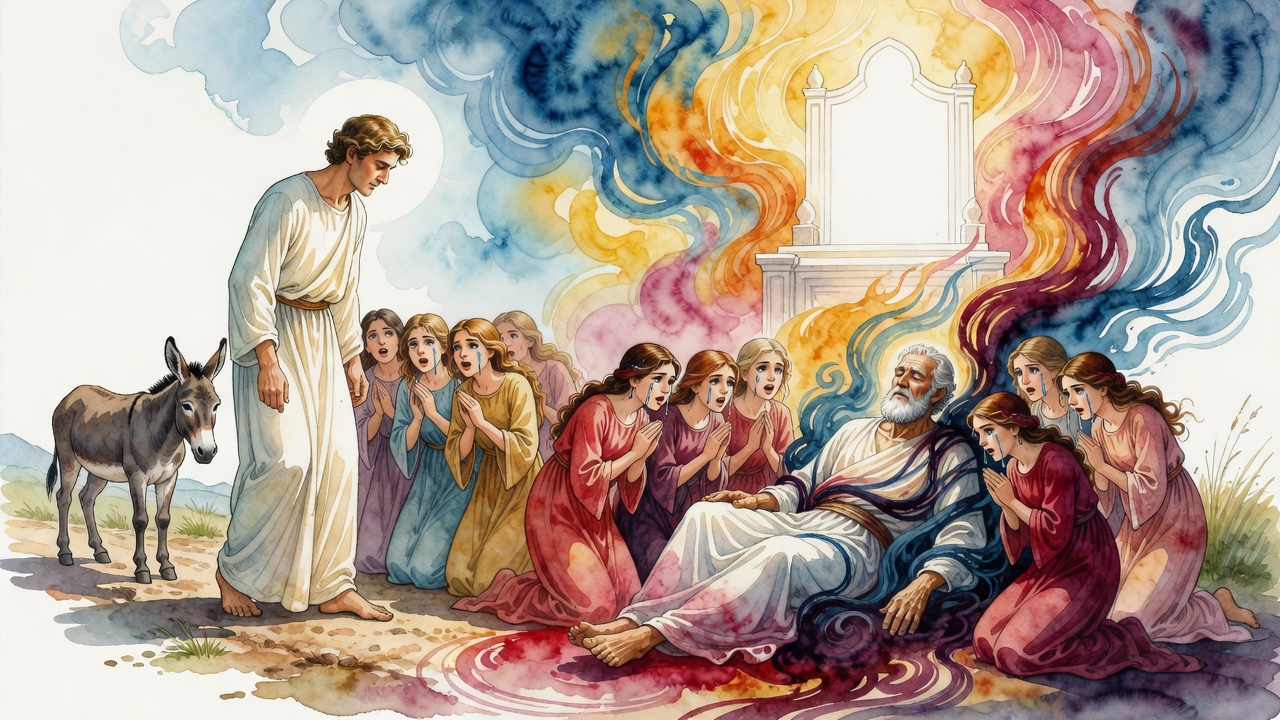
When word of the killing came down from the mountain, the women of Israel wept the loudest. Over the bodies David raised his lament and turned it toward them. "O daughters of Israel, weep over Saul, who clothed you in crimson, with delights, who put ornaments of gold upon your apparel."
They wept because it was true. While their husbands were away at the wars Saul had called, the king fed the households left behind and draped them in scarlet, for fine ornaments sit well only on a body kept soft and cared for.
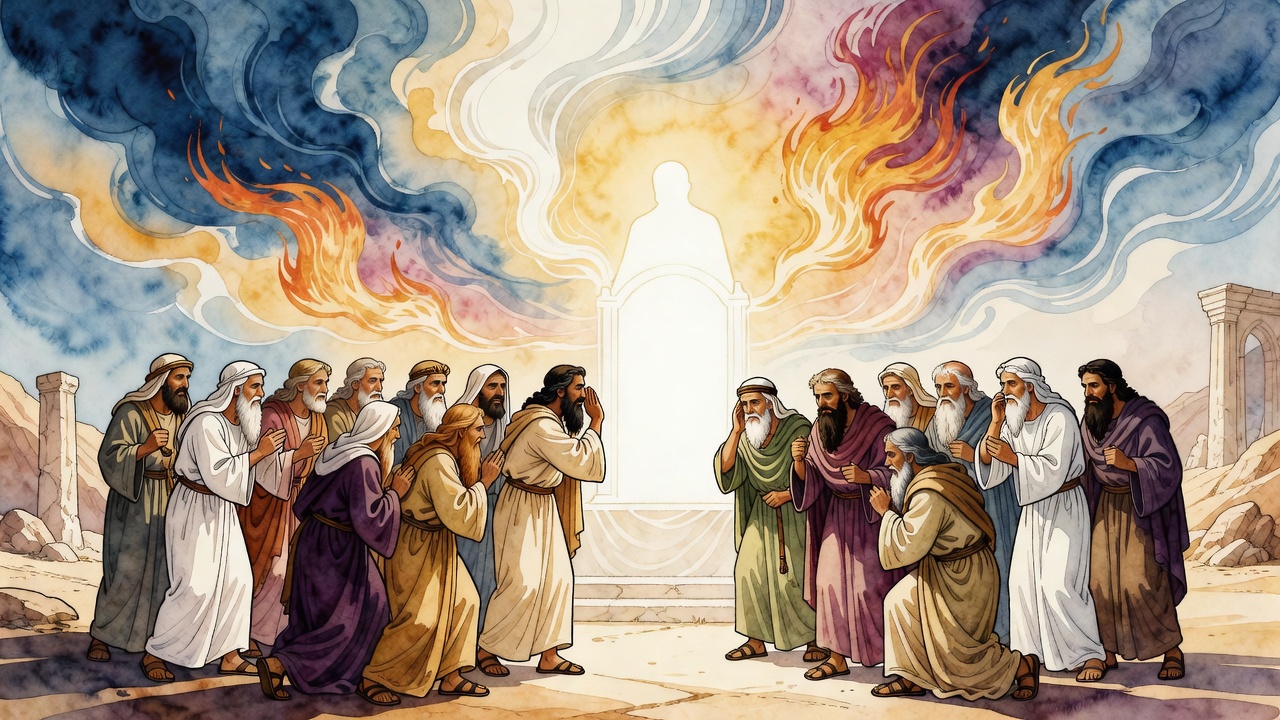
There was another kind of daughter here too. Among "the daughters of Israel" were the comely ones of the study house, the young scholars of the Sanhedrin (the high court of Jewish law). Whenever Saul heard a sharp point of the law come clean out of a student's mouth, he did not sit still on his throne. He rose, crossed to the young man, and kissed him on the mouth. The maidens on the ascent had gazed on his beauty and could not get their fill. The scholars had watched a king rise for a single true word and press it to his lips. Both stood, in the end, over the same body on Gilboa, and could not stop weeping.
← All myths